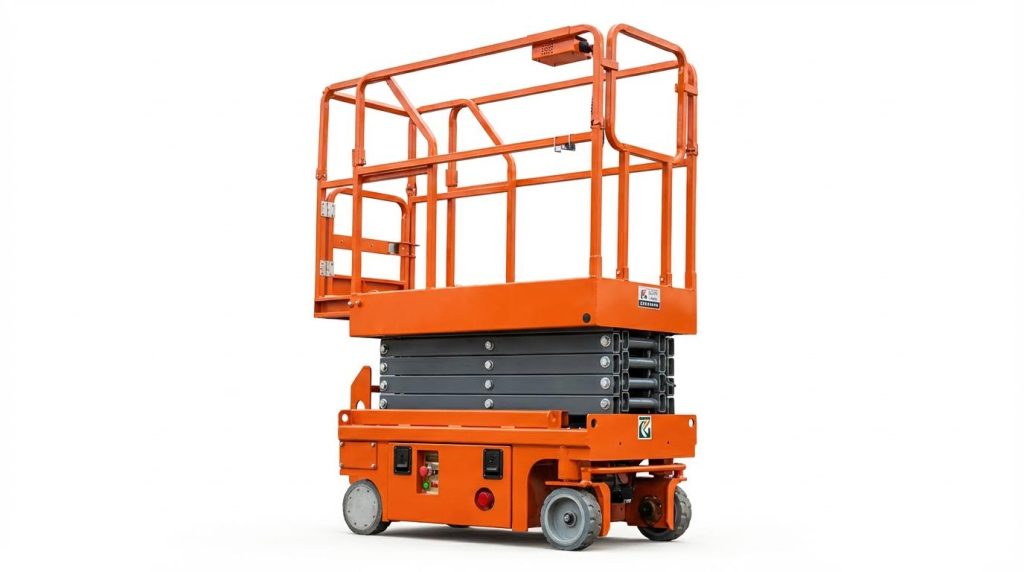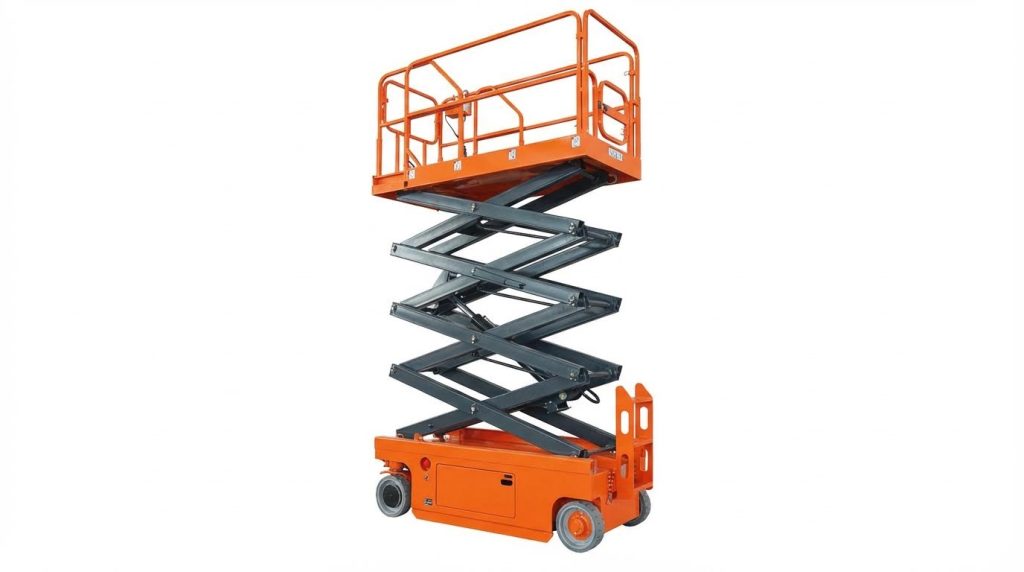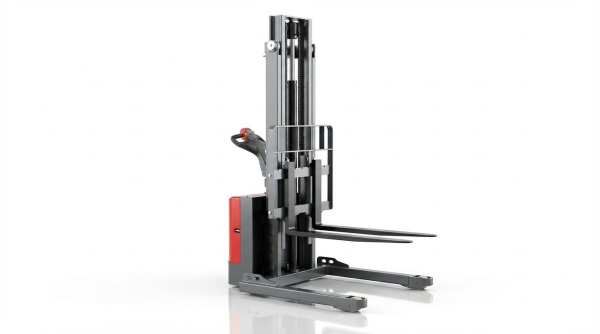
Warehouse teams often ask whether they can load a trailer with a walkie stacker and still stay within safe, efficient operating limits. This article explains the core stability, geometry, and safety constraints that govern walkie stacker use at loading docks and inside trailers. It then analyzes the specific operational risks of driving into trailers, and compares safer alternatives such as ride-on equipment, dock-integrated conveyor systems, AMRs, and self-propelled order picking machines. Finally, it provides practical decision guidelines so engineers, safety managers, and operations leaders can choose the right solution for each trailer loading scenario.
Core Limits Of Walkie Stackers In Trailer Loading
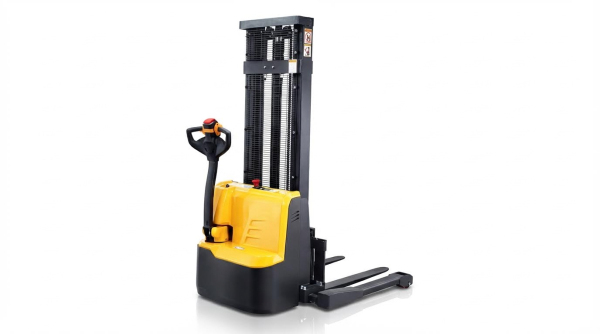
When you ask “can you load a trailer with a walkie stacker,” the core limits of the machine define the real answer. Walkie stackers were optimized for short internal transport and vertical stacking, not for driving deep into semi‑trailers. Their stability envelope, sensitivity to ground conditions, and restricted operator position all reduce safety margins in trailers. Understanding these constraints is essential before approving any trailer loading task with a walkie stacker.
Stability Triangle, Load Moment, And Tipping Risk
The stability triangle and load moment concepts largely determine whether you can load a trailer with a walkie stacker safely. A walkie stacker concentrates mass over a relatively narrow wheelbase, so the stability triangle is small compared with counterbalanced stacker trucks. When the operator drives onto a trailer, any trailer deflection, braking, or steering input shifts the combined center of gravity toward the triangle edge. High mast elevation, off‑center pallets, or exceeding the rated capacity at a given load center rapidly increase overturning moment and tipping risk. For trailer work, the stacker should typically travel with the load as low as practical, within the manufacturer’s transport height guidance, and never above the rated capacity printed on the data plate.
Ground Conditions, Dock Geometry, And Ramp Use
Ground and dock conditions often limit whether a battery-powered stacker can safely approach and enter a trailer. These machines rely on relatively small load wheels and drive tires, which amplify the effect of gaps, dock plates, and floor irregularities. If the dock leveler or bridge plate produces a steep slope or step, dynamic wheel loads can exceed trailer floor ratings or cause loss of traction. Slopes above roughly 7° already required special operating rules for walkie equipment, such as driving uphill forward and downhill in reverse, without turning or braking on the incline. Dock approaches must therefore provide low gradients, high‑friction surfaces, and dock levelers rated for the combined mass of truck, stacker, and load before trailer loading with a walkie stacker can be considered.
Visibility, Maneuvering Space, And Pedestrian Safety
Operator position and trailer geometry severely restrict visibility when you try to load a trailer with a walkie stacker. The operator walks behind or beside the truck, so their sightline to fork tips and pallet edges degrades rapidly inside an enclosed trailer. Narrow trailer widths and close pallet spacing reduce maneuvering space, which increases the probability of striking walls, posts, or already loaded pallets. Poor visibility also elevates collision risk with pedestrians at the dock face, especially if traffic control and marked walkways are absent. Safe operation requires low travel speeds, horn use at blind points, strict pedestrian exclusion zones around the trailer, and adequate interior lighting so the operator can judge clearances and fork height precisely.
Regulatory, Training, And Inspection Requirements
Regulatory frameworks for powered industrial trucks treated walkie stackers as specialized equipment requiring formal training and authorization. Operators needed instruction on stability principles, rated capacities, slope limits, and trailer‑specific hazards before they could decide if they should load a trailer with a walkie stacker. Pre‑operation inspections had to verify brakes, steering, horns, forks, hydraulics, and emergency controls, since any defect inside a trailer is harder to manage and evacuate. Employers were responsible for enforcing load limits, banning single‑fork use, and prohibiting practices such as using inertia to shift loads. Periodic maintenance, documented inspections, and adherence to the manufacturer’s trailer‑use recommendations were essential to keep operations compliant and to keep tipping, structural failure, and pedestrian impacts within acceptable risk levels.
Operational Risks When Driving Into Trailers
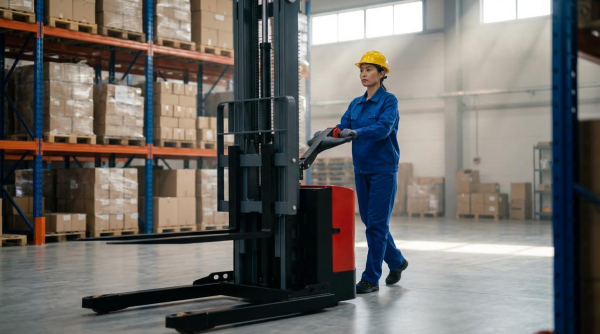
When asking “can you load a trailer with a walkie stacker,” engineers must first evaluate the dynamic risks inside the trailer. The interaction between stacker, trailer structure, dock equipment, and load stability determines whether the operation stays within a safe envelope. This section explains key mechanical and operational hazards that arise once a lift stacker crosses the dock threshold and enters the trailer.
Floor Strength, Trailer Deflection, And Wheel Loads
Trailer floors were often designed for distributed pallet loads, not concentrated wheel loads from walkie stackers. A typical walkie stacker imposes high point loads through small polyurethane or rubber wheels, especially under the drive wheel. When combined with a heavy pallet, the resulting wheel load can exceed local floor capacity and damage floor boards or crossmembers. Engineers should compare the trailer’s rated floor load (kN/m²) with calculated wheel contact pressures, including dynamic factors for braking and turning. Trailer deflection under concentrated loads can also change the stacker’s stability geometry, increasing tipping risk and affecting fork levelness. Before deciding that you can load a trailer with a battery-powered stacker, verify trailer floor ratings, inspect for corrosion or rot, and avoid operating over damaged or unsupported areas.
Slopes, Dock Levelers, And Transition Hazards
Driving from a level dock onto a trailer almost always introduces slopes and transitions. Dock levelers, dock plates, and trailer suspension deflection create short ramps that change the effective grade under the walkie stacker. Even modest slopes alter the load moment and shift the combined center of gravity toward the ramp edge, which raises the risk of uncontrolled rolling or tipping. Standards and manufacturer guidance typically limited walkie stacker operation on slopes above about 7°, and required specific travel directions on grades. Transition points at dock levelers or bridge plates also introduce impact loads and short wheelbase unloading, where only one axle carries most of the weight for a moment. This can overload the dock plate or trailer threshold and cause structural failure. To safely load a trailer with a walkie stacker, engineers should confirm dock plate capacity, check anti-slip surfaces, minimize slope angles, and enforce slow, straight crossings without turning or braking on the ramp.
Load Security, Fork Positioning, And Height Control
Inside a trailer, clearances are tight and surfaces may be uneven, so load control becomes critical. The operator must ensure the pallet is structurally sound, fully engaged on both forks, and wrapped or strapped so that unit loads cannot shift during acceleration or braking. Single-fork use, partial fork entry, or carrying loosely stacked goods significantly increases the chance of load drop or trailer wall impact. Fork positioning affects both stability and trailer damage: forks set too high risk striking roof bows or door headers, while forks set too low can dig into floorboards or dock plates. Good practice kept the load just 300–400 mm above the floor during travel and required forks fully lowered when unloaded. When evaluating whether you can load a trailer with a walkie stacker, confirm that operators can maintain low travel height, keep the mast tilted appropriately, and always face the direction with best visibility while respecting the trailer’s internal height limits.
Safer Alternatives For Trailer Loading Operations
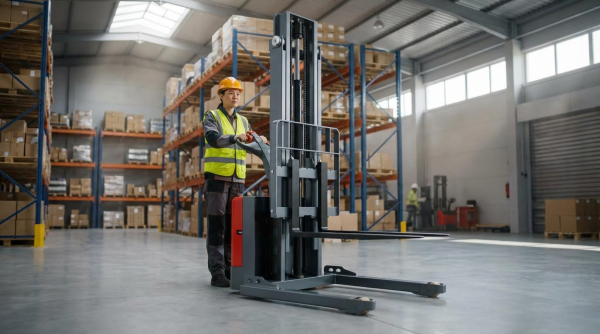
When engineers ask “can you load a trailer with a walkie stacker,” the real issue is risk versus control. Walkie stackers could enter trailers under tightly controlled conditions, but stability margins, floor loading, and visibility often fall below best-practice thresholds. Safer alternatives shift the task to equipment and systems designed for longitudinal travel in trailers, predictable wheel loads, and repeatable pallet positioning. The following options illustrate how to reduce tipping risk, trailer damage, and pedestrian exposure while maintaining or improving throughput.
Counterbalance Trucks, Reach Trucks, And Ride-On Stackers
Counterbalance forklifts handle trailer loading better than walkie stackers because they keep a larger stability triangle and predictable load moment when crossing dock levelers. Their pneumatic or cushion tyres distribute wheel loads more evenly, which reduces local floor stress on thin trailer decks. Reach trucks work well on docks with drive-in trailers only when the floor rating, dock leveler capacity, and mast clearance match the rated load; they excel at dock-to-rack transfer rather than deep trailer entry. Ride-on stackers bridge the gap between walkies and forklifts by adding operator protection, higher travel speeds, and better damped suspensions, but they still require verified trailer floor capacity and low ramp gradients. When evaluating “can you load a trailer with a walkie stacker,” compare these powered trucks on residual capacity at maximum fork height inside the trailer, turning radius in a 2.4 m wide box, and compliance with local powered industrial truck standards.
Dock-Integrated Conveyors And Trailer Belt Systems
Dock-integrated belt or slat conveyors remove most in-trailer driving, which directly addresses tipping and collision hazards associated with walkie stackers. Stationary belt systems with payloads around 25 000 kg and speeds near 6 m/min move entire rows of pallets with constant, well-known line loads on the trailer floor. Trailer-mounted belt or slat conveyors interface with the dock system at a defined height, so engineers can calculate axle loads, fifth-wheel loads, and dynamic factors with high confidence. These systems reduce manual handling of heavy cartons, climbing into trailers, and repeated ramp transitions that can destabilise a walkie stacker. For facilities questioning whether they should load trailers with a walkie stacker, conveyor-based loading often becomes the preferred solution once volume justifies the capital cost, because it decouples trailer motion from operator skill and shortens truck dwell time.
AMRs, Self-Propelled Carts, And Digital Dock Automation
Autonomous mobile robots and battery-powered self-propelled carts offer an alternative where trailers, docks, and flows are highly repetitive. AMRs use sensors and software to keep speed low, maintain safe distances, and avoid pedestrians, which mitigated collision risks that walkie stacker operators historically faced in congested docks. Self-propelled carts with certified designs and collision-avoidance algorithms move full pallet loads between staging lanes and dock positions while keeping wheel loads within defined limits. Digital dock automation platforms integrate AMRs, dock doors, levelers, and traffic lights into a single control layer, ensuring that no loading unit enters a trailer until chocks, restraints, and dock locks confirm a safe state. When teams ask “can you load a trailer with a walkie stacker,” these autonomous options demonstrate that the safer question is “how can software and robotics remove in-trailer driving altogether.”
Lifecycle Cost, Energy Use, And Maintenance Tradeoffs
From a lifecycle perspective, walkie stackers have low acquisition cost but high hidden cost when used at the edge of their design envelope, such as frequent trailer entry. Incident risk, trailer floor damage, and productivity losses from slow travel on ramps often outweigh the initial savings. Counterbalance trucks and ride-on stackers consume more energy per hour yet move more pallets per cycle, which lowers kilowatt-hours per tonne moved and reduces operator exposure time in the trailer. Conveyor-based and AMR solutions concentrate energy use in a smaller number of high-utilisation assets, simplify preventive maintenance, and reduce tyre and fork wear compared with daily trailer runs using walkie stackers. When deciding whether you can load a trailer with a walkie stacker, engineers should compare total cost per pallet moved over five to ten years, including training, inspections, downtime, and incident-related expenses, not just truck purchase price.
Summary And Practical Decision Guidelines
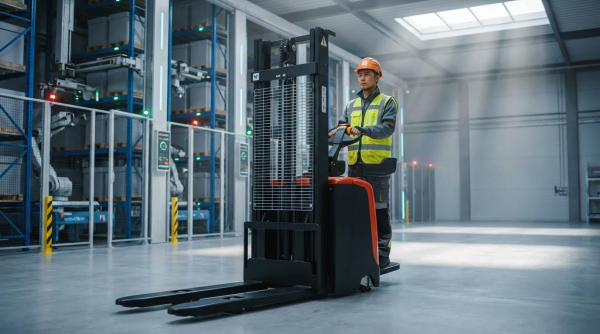
For operations asking “can you load a trailer with a walkie stacker,” the answer depended strongly on geometry, load, and risk tolerance. Walkie stackers worked best on flat, well-supported docks with short travel distances and controlled traffic. They were less suitable for driving fully into semi‑trailers, especially where floors deflected, slopes exceeded about 7°, or maneuvering space was tight. Safer outcomes relied on matching the equipment envelope to the trailer, not forcing the stacker to do a forklift’s job.
From a technical standpoint, decision makers first evaluated stability: rated capacity at the actual load center, stability triangle margins, and the load moment at the highest lift height used in the trailer. They then checked the interface: dock height versus trailer bed, dock leveler specifications, gradient of any ramp, and trailer floor design and condition. If any factor pushed the stacker close to its limits, alternatives such as ride‑on stackers, counterbalance trucks, or dock‑integrated conveyor and AMR systems offered lower whole‑life risk. These technologies also aligned better with emerging digital dock automation and real‑time monitoring trends.
In practice, a structured decision guideline helped. Use a walkie stacker only when the trailer can be loaded from the dock face or via very short, flat entry; the load stayed within the data‑plate rating; floor capacity and wheel loads were verified; and trained operators followed strict inspection and operating rules, including low travel height and controlled speed. Where high throughput, mixed trailer fleets, or poor ground conditions existed, investing in engineered systems such as belt or slat conveyors, self‑propelled carts, or AMRs typically reduced accidents and lifecycle cost. This balanced approach treated the walkie stacker as one tool in a broader trailer‑loading strategy, not a universal solution.