Walkie stackers answered the question “what is a walkie stacker” for modern warehouses that needed compact, pedestrian-operated lifting equipment. Engineers used them to bridge the gap between pallet jacks and forklifts, especially in dense storage environments. This article examined core functions and advantages, compared major walkie stacker types, and mapped them to aisle and racking layouts. It also reviewed key components, safety, maintenance practices, and closed with selection guidance for engineers specifying equipment for new or retrofit warehouse projects.
Core Functions and Advantages of Walkie Stackers
Walkie stackers played a central role in modern warehouse material flow. They bridged the gap between pallet jacks and forklifts, especially in dense storage environments. Understanding what is a walkie stacker, how it operated, and its duty limits helped engineers specify the right unit for each aisle, rack height, and shift pattern. This section outlined the operating principles, key performance metrics, and the specific advantages walkie stackers delivered in compact warehouse layouts.
What Is a Walkie Stacker and How It Operates
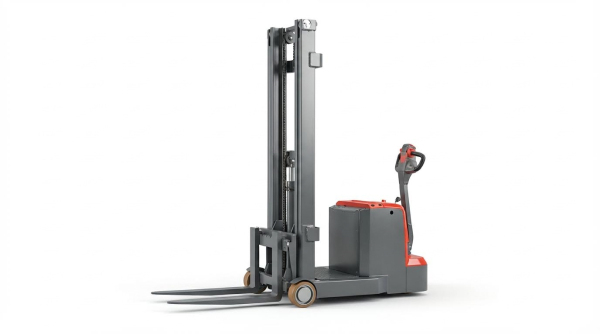
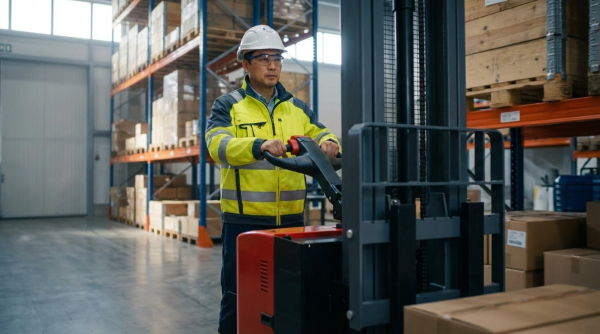
Engineers defined a walkie stacker as a pedestrian-operated, walk-behind pallet stacker with an integrated mast. It combined a pallet truck chassis, powered or manual lift system, and vertical mast to raise palletized loads to racking height. Electric walkie stackers used a traction motor and hydraulic pump powered by an onboard battery, while manual versions relied on a hydraulic pump actuated by a tiller or foot pedal. The operator walked behind or alongside the chassis, using a tiller arm to steer, modulate travel speed, and actuate lift and lower functions. Typical rated capacities ranged from 1,000 kilograms to about 2,000 kilograms, with lift heights often between 1.8 meters and 6.0 meters depending on mast design.
Walkie Stackers vs. Forklifts and Pallet Jacks
Compared with counterbalance forklifts, walkie stackers required a much smaller turning radius and narrower aisle widths. They operated primarily indoors on flat, smooth concrete and handled moderate lift heights without the emissions or noise associated with internal combustion trucks. Versus pallet jacks, a walkie stacker added a rigid mast and higher lift capability, enabling pallet placement into low and mid-level racking rather than floor-only moves. Pallet jacks remained superior for very short horizontal moves at floor level, with minimal capital cost and no mast structure. Walkie stackers offered a middle ground: higher vertical reach and better space utilization than pallet jacks, but lower travel speed, reach, and capacity than full forklifts. This trade-off made them attractive where storage density and cost control outweighed maximum throughput and travel distance.
Key Performance Metrics and Duty Cycles
When engineers asked what is a walkie stacker suitable for, they typically evaluated several quantitative metrics. Core parameters included rated capacity at a defined load center, maximum lift height, travel speed loaded and unloaded, and lift speed. Battery capacity, often expressed in ampere-hours, and charger characteristics defined the achievable duty cycle per shift. Manufacturers usually intended electric walkie stackers for light to medium duty, such as less than five operating hours per day or intermittent use in multi-shift sites with opportunity charging. Engineers also considered turning radius, minimum aisle width, and mast deflection under load to ensure compatibility with racking geometry and safety clearances. Matching these metrics to load profiles and cycle counts reduced premature wear, overheating, and battery degradation.
Advantages for Dense Warehouse Operations
Walkie stackers delivered distinct advantages in dense or space-constrained warehouses. Their compact chassis and pedestrian control allowed operation in narrow aisles where conventional forklifts could not turn safely. Electric units produced no exhaust emissions and low noise, which supported indoor use near food, pharmaceuticals, or retail customer zones. Lower purchase and operating costs compared with larger forklifts improved total cost of ownership in light to medium throughput applications. The operator’s close proximity to the load improved visibility at low speeds, which reduced racking and product damage when combined with proper training. Because regulations often treated walk-behind units differently from ride-on lift trucks, companies could streamline licensing and training programs while still complying with relevant safety standards.
Main Walkie Stacker Types and Use Cases
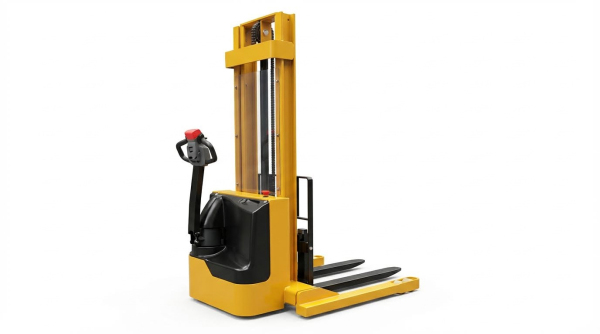
Engineers who ask “what is a walkie stacker” usually also need clarity on stacker types and their best-fit applications. Walkie stacker configurations directly influence aisle width requirements, lift height, throughput, and energy use. Selecting the wrong type often created bottlenecks in dense pallet storage and increased lifecycle cost. This section maps the main walkie stacker variants to technical use cases in modern warehouses.
Manual vs. Electric Walkie Stackers
Manual walkie stackers used a hand pump for lifting and operator push or pull for travel. Their typical rated capacity stayed below 1 000 kg with limited lift heights, which constrained use to occasional handling and short shifts. Electric walkie stackers used an electric drive motor and electro-hydraulic lift, usually powered by lead-acid or lithium-ion batteries. These units supported higher duty cycles, longer travel distances, and lift heights above 3 000 mm. For “what is a walkie stacker” queries focused on efficiency, electric designs provided better ergonomics, higher throughput, and more consistent performance across an 8-hour shift. Manual units remained viable only where pallet volumes were low and racking interfaces were minimal.
Standard and Ride-On Walkie Stackers
Standard walkie stackers operated as pedestrian walk-behind units with the operator walking beside or behind the chassis. They offered very small turning radii, which suited compact aisles and short travel distances under roughly 30 m per trip. Ride-on walkie stackers added a foldable or fixed platform plus riding controls, enabling higher travel speeds and reduced operator fatigue. These ride-on versions typically required formal powered industrial truck licensing under national or regional regulations. For facilities asking “what is a walkie stacker best used for,” the rule of thumb was walking units for confined zones and ride-on units for cross-warehouse transport and multi-shift operations.
Straddle, Reach, and Counterbalance Designs
Straddle walkie stackers used outrigger legs that extended around the pallet to carry load reaction forces. This configuration allowed handling of closed-deck pallets but required wider aisles to accommodate the legs. Reach walkie stackers incorporated a pantograph or telescopic mast section that extended the load forward from the chassis. This reach function let operators store pallets deeper into racking while keeping the truck body clear of beams, which reduced required aisle width. Counterbalance walkie stackers removed outriggers and relied on a rear counterweight to balance the load, similar to small forklifts. These units handled standard pallets and irregular loads but needed a larger turning circle and higher truck mass. Understanding these layouts helped engineers answer “what is a walkie stacker” in terms of its structural load path and stability envelope.
Application Mapping by Aisle and Racking Layout
Application mapping started with clear constraints: minimum aisle width, maximum lift height, pallet type, and daily pallet movements. Narrow aisles below roughly 2.5 m usually favored reach or compact straddle designs, while wider aisles allowed standard or counterbalance stackers. Low to mid-level racking below about 5 000 mm often matched straddle or standard walkie stackers, whereas higher racking required ride-on or reach models with stronger masts. For block stacking or dock work, counterbalance or reach designs handled mixed load sizes and frequent truck interface. When engineers investigated “what is a walkie stacker” for greenfield projects, they typically iterated between racking layout and stacker type to minimize aisle width without compromising stability, visibility, or evacuation routes.
Key Components, Safety, and Maintenance
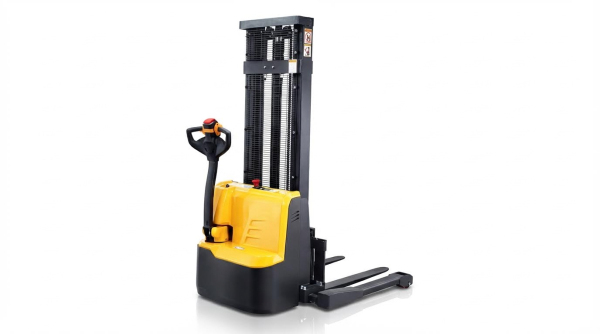
Understanding what is a lift stacker requires detailed knowledge of its structural modules, energy system, control architecture, and lifecycle maintenance. Engineers who specify or maintain these machines must link component design to safety performance and uptime. This section explains the main assemblies, functional safety layers, and maintenance practices that kept walkie pallet truck reliable in dense warehouse environments. It also connects typical failure modes with inspection routines so operators can prevent unplanned outages and incidents.
Mast, Forks, Chassis, and Drive System
The mast on a walkie stacker carried vertical loads and guided the carriage through steel channels using rollers or bushings. Designers sized mast sections and welds for rated capacity at maximum lift height, with a safety factor aligned to local lift‑truck standards. Forks transferred pallet loads into the mast; engineers checked fork thickness, taper length, and heel radius to avoid stress concentrations and permanent bending. The chassis housed the drive unit, counterweight, and steering pivot, and it defined the truck’s stability polygon relative to the load center distance. Electric drive systems used a traction motor, reduction gearbox, and drive wheel, providing controlled acceleration and regenerative or dynamic braking. For tight aisles, compact drive modules and low overall length reduced turning radius while maintaining sufficient ground clearance for typical warehouse floor tolerances.
Batteries, Chargers, and Energy Management
Most electric walkie stackers used lead‑acid traction batteries, although lithium‑ion packs gained adoption in high‑throughput facilities. Engineers sized battery capacity in ampere‑hours based on duty cycle, average current draw, and required shift length, typically targeting 80% depth of discharge. Correct charger matching prevented overcharge, excessive gassing, and plate damage, which shortened battery life. Operators checked electrolyte levels, terminal torque, and corrosion, then cleaned and neutralized acid residue to minimize leakage currents. Effective energy management combined planned charging windows, temperature control, and avoidance of frequent shallow opportunity charges for lead‑acid systems, which historically reduced overall cycle life.
Control Systems, Braking, and Safety Devices
Modern walkie stackers integrated electronic controllers that regulated traction and lift functions using MOSFET or IGBT power stages. The tiller head housed direction switches, speed control, horn, and lift or lower buttons, allowing the operator to walk behind the truck with good visibility. Braking systems usually combined electromagnetic service brakes on the drive motor with regenerative braking that fed energy back to the battery during deceleration. Safety devices included an emergency stop, key or PIN access, belly or “belly‑button” switch on the tiller to reverse the truck away from the operator, and interlocks that disabled travel when the tiller was in an upright or fully down position. Compliance with regional standards such as ISO and national lift‑truck regulations required validated stability, overload protection, and clear labeling of rated capacity versus lift height.
Inspection, Maintenance, and Failure Modes
Daily inspections focused on visible damage, mast wear, fork cracks, hydraulic leaks, tire condition, and verification that controls and safety devices functioned correctly. Scheduled maintenance intervals, often based on operating hours, included hydraulic oil replacement, filter changes, chain lubrication and tension checks, and detailed electrical inspections. Typical failure modes involved battery sulfation, worn mast rollers, leaking lift cylinders, damaged forks at the heel, and degraded control handles or wiring at high‑flex points. Early symptoms included uneven lifting, slow travel, abnormal noises, or intermittent control response, which operators documented in service logs. A structured maintenance program with checklists, torque specifications, and lockout or tagout procedures reduced unplanned downtime and supported safe operation throughout the stacker’s service life.
Summary and Selection Guidance for Engineers
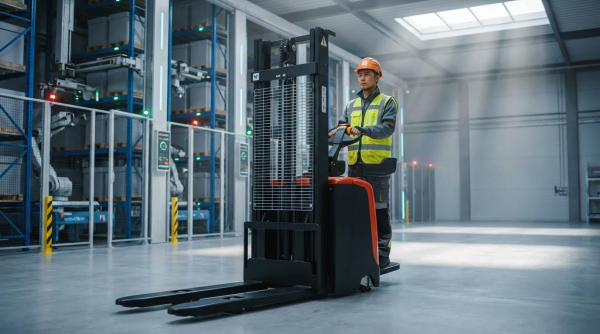
Engineers who ask what is a walkie stacker typically need a concise decision framework, not only a definition. A walkie stacker is a pedestrian-operated pallet stacker that lifts and transports unit loads in short-range warehouse workflows. It fills the gap between pallet jacks and ride-on forklifts, especially in dense racking and narrow aisles. Selecting the correct configuration requires aligning equipment capabilities with load, height, aisle, and duty-cycle requirements.
From a technical standpoint, the first filter is the operating profile. Light, intermittent handling on flat concrete floors can justify manual units, but electric walkie stackers suit multi-shift or higher throughput operations. Rated capacity, lift height, and residual capacity curves must match the heaviest pallet and highest racking level, including attachments and load center variations. Engineers should verify turning radius against aisle width and confirm whether straddle, reach, or counterbalance geometry fits the pallet type and rack design.
Energy and lifecycle considerations strongly influence total cost. Battery technology, charger type, and charging strategy affect availability and maintenance overhead. Proper energy management, operator training, and scheduled inspections extend component life and reduce unplanned downtime. Engineers should specify inspection intervals, lubrication points, and safety device checks in line with relevant standards and internal safety policies.
Looking forward, walkie stackers will increasingly integrate smarter control systems, improved ergonomics, and higher energy efficiency, while remaining a cost-effective alternative to larger trucks. For current projects, the balanced choice is to treat the walkie stacker as a system element: match its geometry and performance to the warehouse layout, codify operator training and maintenance routines, and periodically review field data to refine the specification for future procurements.