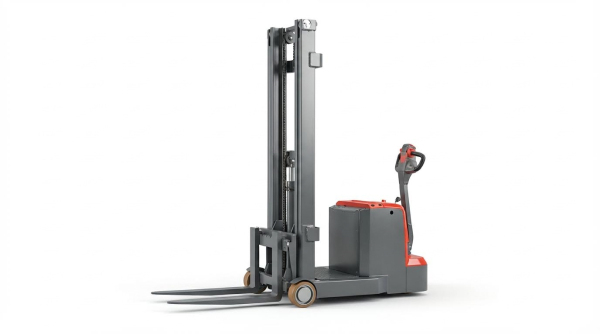
walkie stacker weight data affected every aspect of warehouse and logistics engineering, from slab design to trailer loading. This article examined typical truck masses and capacities, then translated these figures into floor pressure, joint detailing, and crack control requirements. It also linked stacker truck weight to trailer, ramp, and dock limits, including combined axle loads and gradeability. Together, these sections answered questions like “how much does a walkie stacker weigh” and showed why accurate mass data must drive layout, structural, and transport decisions.
Typical Walkie Stacker Weights And Capacities
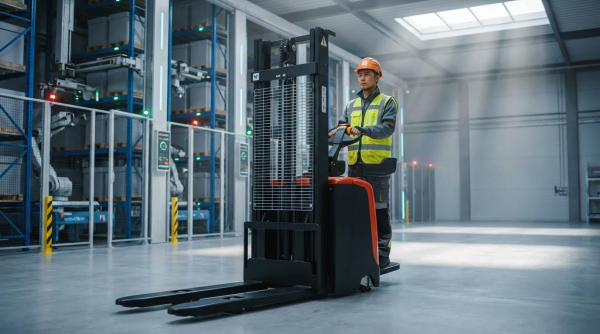
Engineers asking “how much does a walkie stacker weight” need to consider capacity class, battery system, and chassis design together. Typical electric walkie stackers in the 1.0–3.0 ton class showed service weights from roughly 1,070 kg up to about 5,470 kg, including the battery. These values drove floor loading, trailer planning, and equipment selection in dense warehouse environments. Understanding the relationship between rated capacity, service weight, and dimensions helped designers avoid slab overloading, bottlenecks, and under‑specified docks.
Common Capacity Ranges And Use Cases
Modern walkie stackers covered rated capacities from 1,000 kg to 3,000 kg. Units between 1,200 kg and 1,600 kg suited general pallet handling, block stacking, and low to mid-height racking in small to medium warehouses. Higher capacity units up to 3,000 kg targeted heavy pallets, dense storage, and applications with tall masts where stability margins had to remain high. When users searched “how much does a lift stacker weight,” they usually evaluated whether a 1.2 ton class suited light distribution work or a 1.6–3.0 ton class was necessary for production, beverage, or building-materials operations. Matching capacity to typical pallet mass, lift height, and aisle width minimized oversizing, which increased service weight and floor loads without adding value.
Service Weight By Capacity Class (1.0–3.0 Ton)
Service weight included the truck, battery, and standard equipment, and it rose nonlinearly with capacity. Typical 1,200 kg walkie stackers weighed about 1,070–1,248 kg, while 1,600 kg units weighed around 1,340–1,380 kg. Heavy-duty designs in the 1,800–3,000 kg range could exceed 4,000 kg, reaching approximately 4,169 kg at 1,800 kg capacity and roughly 5,470 kg at 3,000 kg capacity. This spread explained why a simple “how much does a battery-powered stacker weight” answer required a capacity reference. Higher capacity classes needed thicker masts, longer or reinforced forks, larger counterweight structures, and heavier drive units, all of which increased truck mass. Engineers used manufacturer service weight tables when checking slab bearing capacity, dock plate ratings, and elevator limits.
Battery Weight, Voltage, And Energy Use
Battery systems contributed a significant share of walkie stacker service weight. For 1,200 kg units, typical battery mass was about 175 kg, while 1,600 kg units used batteries around 230 kg. Higher capacity or long-duty models sometimes used modular packs, with individual batteries that could weigh roughly 27 kg each in dual configurations. Most industrial walkie stackers operated on 24 V systems, with capacities such as 24/180 Ah, 24/200 Ah, 24/270 Ah, or 24/300 Ah. Energy consumption under VDI test cycles ranged from about 0.95 kW to 1.59 kW, depending on capacity and duty. When users investigated how much a walkie stacker weighed, they had to account for battery swaps or upgrades, since installing a higher Ah pack could increase axle loads and floor pressure.
Dimensions, Speed, And Maneuverability Impacts
Overall dimensions and performance parameters directly influenced how walkie stacker weight interacted with the warehouse envelope. Electric walkie stackers typically measured about 1,780–2,400 mm in length and 800–1,000 mm in width, with lifting heights from roughly 2,830 mm up to about 5,430 mm. Turning radii ranged from approximately 1,440 mm to 1,667 mm, which determined the minimum aisle width and affected how dynamic loads moved across the slab. Typical travel speeds sat between 4.5 km/h and 6 km/h, with lower values under load. Polyurethane drive wheels around 230×70 mm, combined with defined front and rear treads near 522 mm and 390 mm, concentrated the service weight and payload into predictable contact patches. Designers used these dimensions and wheel footprints, together with truck mass, to calculate point loads, check gradeability limits of 5–6% loaded and up to 12% unloaded, and verify that floors, ramps, and docks could safely support the equipment in real operation.
How Walkie Stacker Weight Translates Into Floor Loads
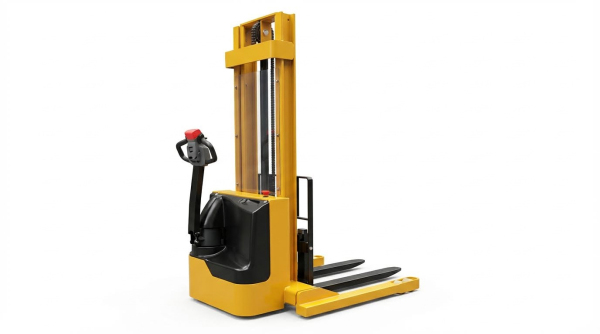
Engineers who ask “how much does a walkie stacker weight” usually need the number to verify floor capacity, not just to size transport. A walkie stacker with 1,200 kg rated capacity often weighs about 1,070–1,250 kg including battery, while 1,600 kg units reach roughly 1,340–1,380 kg. High‑capacity electric stackers above 1,800 kg capacity can exceed 4,000 kg service weight, so floor loading checks become critical. The floor must safely carry the combined mass of truck, battery, and payload under both static and dynamic conditions.
Static Vs Dynamic Loads From Stackers And Racking
Static loads arise from stored pallets, racking uprights, and parked stackers. Racking posts in high‑bay warehouses historically carried 7–8 US tons on contact areas of 80–100 mm², producing very high local stresses. Static loads from parked lift stacker equal the truck service weight plus any residual load, divided over the support wheels. Dynamic loads occur when the stacker accelerates, brakes, turns, or lifts at height, and these loads can exceed static levels due to impact and inertia. Floor design therefore uses load combinations that include moving truck loads, lifted pallets, and impact factors, not just nominal “how much does a walkie stacker weight” values.
Wheel Contact Area, Point Loads, And Floor Pressure
Battery-powered stacker usually run on polyurethane drive and load wheels, for example 230×70 mm drive wheels with narrow contact patches. The small contact area converts the truck’s service weight and payload into high point loads and floor pressures. For a 1,300 kg stacker plus 1,200 kg load, a single drive wheel can transmit several thousand kilograms per square metre, especially during braking or turning. Engineers must check that slab compressive strength, typically above 49 MPa, and surface hardness withstand these stresses without crushing or spalling. Accurate wheel spacing, tread dimensions, and expected load distribution are essential inputs when converting “how much does a walkie stacker weight” into design floor pressures.
Concrete Slab Design, Joints, And Crack Control
Warehouse slabs transfer stacker wheel loads through the concrete layer into the compacted sub‑base and subgrade. Designers account for high compressive strength but low tensile strength of concrete by adding reinforcement mesh or bars and by detailing joints correctly. Saw‑cut contraction joints at roughly one‑quarter to one‑third slab thickness control crack locations so that heavy stacker traffic crosses predictable, maintainable lines. Joint widths usually stay below 10 mm and should not coincide with concentrated point loads such as rack uprights or frequent wheel paths. When engineers know the actual service weight of the walkie stacker fleet, they can size slab thickness, reinforcement, and surface hardening to resist abrasion and repeated wheel loading.
Evaluating Existing Floors For Stacker Operation
When introducing walkie stackers into an existing facility, engineers first determine the real service weight of each truck and its maximum carried load. They then compare the resulting wheel loads and rack point loads with original slab design data, if available, or with conservative design tables for industrial floors. On‑site testing may include core sampling to verify concrete strength, measuring slab thickness, and assessing sub‑base quality and moisture conditions. Visual inspections focus on cracks, joint condition, rutting in wheel tracks, and any surface delamination that heavy stackers could worsen. If calculated loads from “how much does a walkie stacker weight” plus payload exceed the floor’s capacity, mitigation options include limiting truck size, reducing lift heights, adding local thickened slabs, or installing load‑spreading plates under racking.
Trailer, Ramp, And Dock Considerations For Stackers

Trailer, ramp, and dock design must reflect real stacker service weights, not just rated capacities. Engineers need accurate answers to “how much does a walkie stacker weight” before checking axle loads, ramp strength, and dock leveler ratings. Typical walkie stackers weighed between 200 kg and 500 kg for light units, but electric industrial models with 1,200 kg to 1,600 kg capacity often weighed 1,070 kg to 1,380 kg including battery. High-capacity walkie stackers up to 3,000 kg capacity reached service weights above 5,000 kg, which changed trailer and floor design assumptions.
Combined Weights, Axle Loads, And Legal Limits
Combined weight calculations start with the stacker service weight plus the lifted load and any pallets or attachments. For example, a 1,300 kg walkie stacker carrying 1,200 kg of product imposed at least 2,500 kg on the trailer deck, with higher local wheel loads. High-capacity walkie stackers in the 4,000 kg to 5,500 kg service weight range could push gross vehicle mass near legal road limits when combined with dense freight. Engineers should convert stacker wheel loads into axle loads on the trailer by considering wheel spacing and position relative to trailer axles. Compliance checks must reference regional road regulations for maximum axle group loads and gross combination mass, then back-calculate allowed cargo weight and number of stackers per trailer.
Load Distribution, Securing, And Tie-Down Strategy
Load distribution on the trailer must keep the center of gravity low and close to the longitudinal centerline. A common target was approximately 60% of total weight forward of the trailer midpoint and 40% toward the rear, while staying within kingpin and axle load limits. When placing a lift stacker, operators should align the drive wheel or heaviest end over structural beams rather than thin deck plates to avoid local yielding. Tie-down design used the stacker service weight as the base; lashing capacity needed to exceed at least 0.8 times the weight longitudinally and 0.5 times laterally under typical cargo securing standards. Chains or straps should attach to designated anchor points on the stacker chassis, with crossed tie-downs at each end to resist both lateral and longitudinal movement.
Ramps, Dock Levelers, And Gradeability Limits
Ramp and dock leveler ratings must exceed the combined weight of the manual pallet jack and its maximum intended load. If a stacker weighed 1,300 kg and routinely carried 1,200 kg, designers should size ramps for at least 2,500 kg plus a safety factor, often 1.5 or higher. Gradeability data for walkie stackers typically ranged from 5% to 6% when loaded and up to 8% to 12% unloaded, which limited safe ramp slopes. Excessive gradients increased motor current draw, reduced traction, and raised rollback risk, especially on wet or dusty steel dock plates. Dock leveler lip lengths and working ranges must accommodate stacker wheelbase and small polyurethane wheels, preventing hang-up at dock-to-trailer transitions and limiting impact loads on the lip hinge.
Planning For Elevators, Mezzanines, And Upper Floors
Planning vertical circulation for walkie stackers required accurate service weight data plus worst-case load scenarios. Elevator car ratings and door thresholds had to support the stacker weight plus any carried pallet, often totaling 2,000 kg to 3,000 kg for mid-capacity units. Engineers should check elevator floor plate stiffness and point load capacity at stacker wheel contact areas, since small wheels produced high local pressures. Mezzanine and upper floor design must consider both static parking loads and dynamic travel loads, including braking and turning of a 1,000 kg to 5,000 kg machine. Structural checks should cover slab punching shear at wheel locations, deflection limits for ride quality, and vibration under repetitive traffic. Clear height, turning radii, and guardrail design must all reflect actual walkie stacker dimensions and maneuvering envelopes.
Summary: Why Stacker Weight Data Must Drive Design
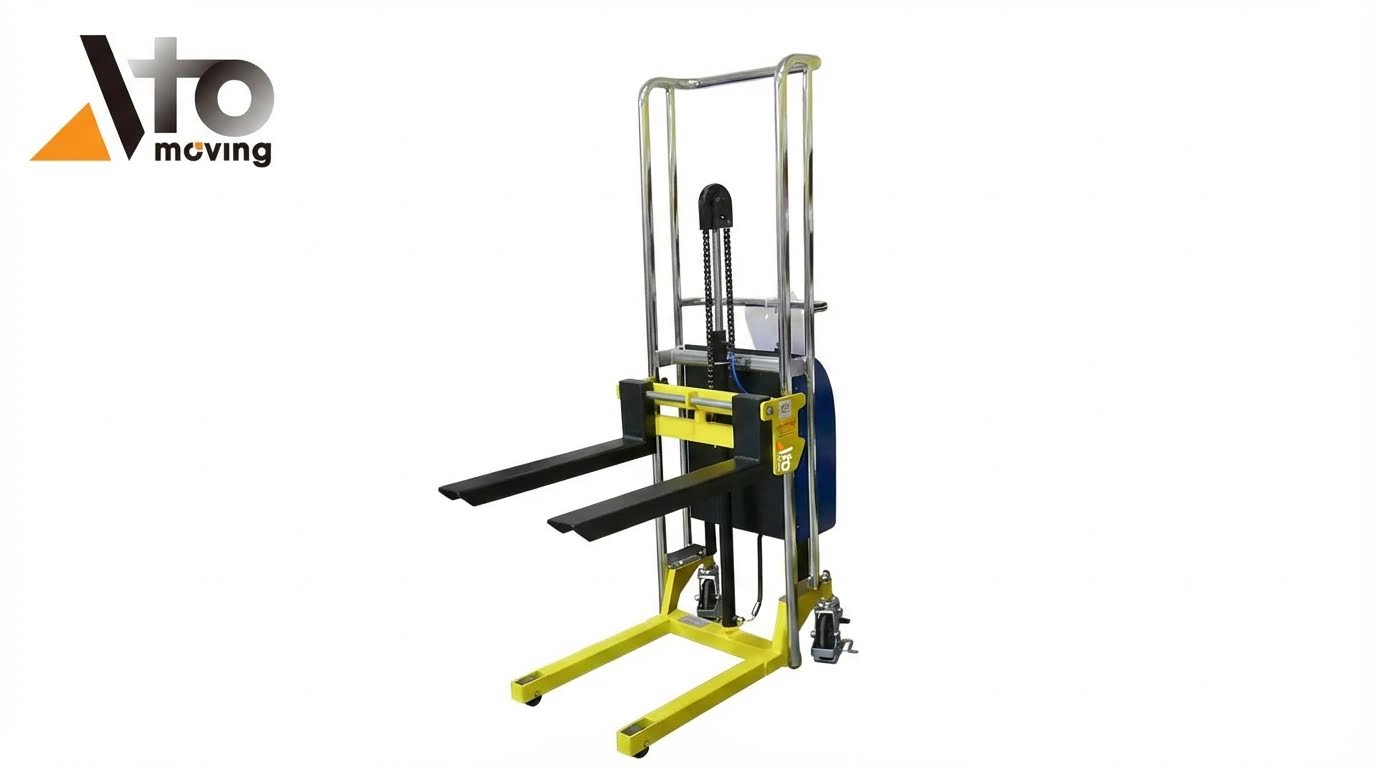
Engineers who ask “how much does a lift stacker weight” usually need more than a catalogue figure. They must link stacker service weight, rated capacity, and battery mass to floor design, trailer loading, and route planning. Typical walkie stackers carried 1,000 kg to 3,000 kg loads, while truck service weights ranged from roughly 1,070 kg for 1,200 kg units up to about 5,470 kg for 3,000 kg heavy-duty machines. These values directly governed floor bearing checks, axle load calculations, and equipment selection for upper levels or constrained structures.
From a structural perspective, stacker weight data had to feed into warehouse slab design and verification. Concrete floors already worked near limits under racking point loads of 7.7 to 8.8 US tons on contact areas of 80 to 100 square millimetres. Dynamic loads from handling equipment could approach 19.8 US tons along wheel paths. Underestimating actual stacker mass, including batteries that often exceeded 175 kg to 230 kg in 24 V systems, risked overstressing joints, inducing uncontrolled cracking, and accelerating rut formation along travel lanes.
Transport and access planning also depended on realistic walkie stacker weight ranges rather than optimistic brochure minima. Trailer loading required engineers to consider combined truck, load, and accessory weight against legal axle limits and target distributions near 60% front and 40% rear. Ramps, dock levelers, elevators, and mezzanines needed verification against worst-case service weights and gradeability limits of roughly 5% to 6% loaded and up to 12% unloaded. Ignoring these constraints could compromise braking performance, overtax lifting machinery, or violate local road regulations.
Future warehouse and logistics design would rely even more on precise stacker mass and performance data. Higher lift heights up to roughly 5,430 mm, compact turning radii near 1,440 mm to 1,667 mm, and energy-optimised drives with 1.3 kW to 1.7 kW traction motors increased the interaction between equipment and infrastructure. As automation and denser storage grew, engineers needed integrated digital models that combined battery-powered stacker weight, floor capacity, and structural response. Using accurate, manufacturer-stated service weights as primary design inputs helped balance throughput, safety, and compliance while allowing technologies like Atomoving stackers to operate efficiently within well-characterised limits.