Walkie stackers sat at the intersection of pedestrian-operated equipment and powered industrial trucks, which made their licensing status confusing for safety managers and supervisors asking “do you need a licence for a walkie stacker.” This article clarified how regulators classified walkie stackers, when a formal licence or operator card was and was not required, and how rules such as OSHA 29 CFR 1910.178 and CSA B335 applied in practice.
It then examined mandatory training frameworks, hands-on evaluation methods, and competency documentation that supported legal compliance and reduced incident rates. Finally, it explored engineering design limits, operational hazards, and emerging digital technologies before drawing together best-practice recommendations that aligned compliance, safety, and productivity objectives for lift stacker fleets.
Legal Requirements For Walkie Stacker Operation
Regulators treated the question “do you need a licence for a walkie stacker” differently from country to country. However, most frameworks focused on training, competency, and employer responsibility rather than a national high-risk work licence. Walkie stackers sat in the powered industrial truck family, so they attracted specific safety and training rules. Understanding these rules helped engineers, safety managers, and supervisors design compliant material-handling systems.
How Regulations Classify Walkie Stackers
Regulators classified walkie stackers as pedestrian‑operated or pedestrian‑controlled powered industrial trucks. Under OSHA in the United States, they fell into Class III electric motor hand trucks, which included walkie pallet jacks and walkie stackers. Canadian standards such as CSA B335-15 treated them as powered lift trucks, with separate emphasis on pedestrian operation and indoor use. Australian and similar jurisdictions usually did not classify them as high‑risk work equipment because the operator walked with the unit instead of riding it. This classification drove key obligations such as training content, inspection routines, and where a formal high‑risk licence was or was not required.
When A Formal Licence Is And Isn’t Required
In several jurisdictions, operators did not need a nationally recognised high‑risk work licence to use a walkie stacker. Authorities often argued that pedestrian‑operated stackers had lower kinetic energy, lower lift heights, and reduced collision potential compared with ride‑on forklifts. However, the absence of a national licence did not remove the need for structured training and documented competency. In the United States, OSHA required formal instruction, practical training, and evaluation for all powered industrial trucks, including walkie stackers, and employers typically issued an operator card that functioned like a licence. In Canada, CSA‑based programs delivered certificates that workplaces used as proof of qualification, even though they were not government licences.
Country-Specific Rules: OSHA, CSA, And Others
OSHA standard 29 CFR 1910.178(l) in the United States mandated that walkie stacker operators receive theory training, hands‑on practice, and a performance evaluation. Employers had to certify each operator with records listing the name, training date, evaluation date, and evaluator identity. In Canada, training aligned with CSA B335-15 and occupational health and safety legislation, with programs typically lasting a full day and requiring periodic refresher certification. Australian guidance treated walkie stackers as powered mobile plant but not as high‑risk work, so no HRW licence was needed; instead, training followed standards such as AS 2359.2 and local WHS regulations. Across regions, regulators converged on the same core principle: operators must prove competence on each specific truck type they use.
Employer Duty Of Care And Liability Exposure
Employers carried a legal duty of care to provide a safe workplace whenever staff operated lift stacker units. This duty required hazard identification, risk assessment, and suitable controls, including training, supervision, and engineered safeguards. Failure to train operators or to keep competency records increased liability exposure in the event of a collision, crush injury, or load drop. Regulators and courts often treated missing or outdated training documentation as evidence that the employer had not met its duty of care. Robust policies covering induction, refresher training, incident‑triggered retraining, and documented verification of competency reduced regulatory penalties, insurance costs, and downtime linked to manual pallet jack incidents.
Mandatory Training, Certification, And Records
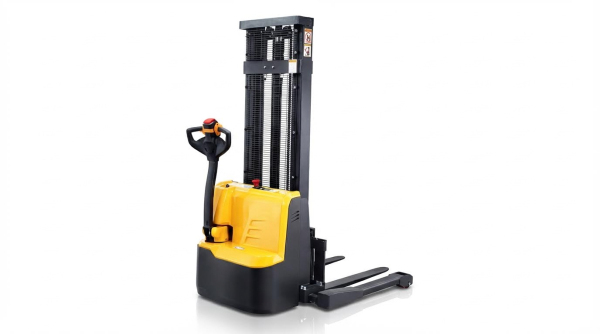
Regulators did not usually require a nationally recognised high-risk work licence for walkie stackers, but they still treated them as powered industrial trucks. That meant structured training, documented competency, and periodic reassessment remained mandatory under most safety frameworks. Employers who asked “do you need a licence for a walkie stacker” had to distinguish between a statutory HRW licence and site or nationally required operator certification. This section explained what competent training looked like, how to evaluate operators, and how records supported both compliance and safety performance.
Core Training Elements For Class III Trucks
Walkie stackers sat in Class III powered industrial trucks under OSHA and equivalent classifications. Core training therefore covered both general PIT theory and the specific characteristics of pedestrian-operated stackers. Formal instruction typically included equipment components, control functions, stability principles, and load charts. Courses addressed pre-operation inspections, including forks, mast, hydraulics, emergency stop, horn, and battery condition.
Safe operating theory formed a major component. Trainers explained line-of-sight limitations, the need to walk slightly ahead and to the side, and why trailing directly behind increased collision risk. Operators learned speed control in narrow aisles, racking approaches, stacking and destacking sequences, and safe parking and shutdown. Standards such as OSHA 29 CFR 1910.178, CSA B335, or AS 2359.2 defined minimum curriculum elements.
Training also addressed site-specific risks. Instructors linked generic principles to actual floor layouts, gradients, dock edges, and pedestrian routes. Even though a national HRW licence was not required in many jurisdictions, regulators still expected structured classroom content plus supervised practical exercises for each Class III truck type.
Hands-On Evaluation And Recertification Cycles
Hands-on evaluation verified that operators could apply theory in real tasks. Under OSHA 1910.178(l), evaluators had to observe operators performing representative maneuvers, such as lifting to full racking height, traveling with and without loads, and negotiating confined spaces. CSA-based programs used similar practical assessments aligned with B335 and local occupational health legislation. Assessors checked control familiarity, hazard scanning, speed management, and adherence to safe walk positions.
Training providers often delivered half-day to full-day blended programs, with practical segments occurring on the employer’s equipment. Evaluators documented pass/fail outcomes and any remedial coaching. Recertification intervals depended on jurisdiction and company policy. In North America, three-year maximum intervals were common, with earlier re-evaluation triggered by incidents, near misses, or observed unsafe behavior.
Some Canadian in-house certificates required annual refreshers. Shorter refresher sessions focused on changes in equipment, layout modifications, or new control technologies such as advanced power steering or multi-directional travel. Even where law did not mandate a formal “licence,” regulators still expected current, documented evaluations as proof that walkie stacker operators remained competent over time.
Competency Verification, VOC, And Documentation
Verification of Competency (VOC) processes converted training outcomes into defensible records. Employers maintained registers listing each authorised walkie stacker operator, the equipment classes covered, and the dates of initial training and latest evaluation. OSHA explicitly required written certification including operator name, training date, evaluation date, and trainer or evaluator identity. CSA- and AS-based systems expected similar documentation.
VOC assessments often combined theory tests, practical checklists, and supervisor sign-off. Records showed that operators understood pre-start checks, could identify faults, and knew when to tag out equipment. For companies asking “do you need a licence for a walkie stacker,” VOC documentation effectively served as the internal licence. It demonstrated that, despite the absence of an HRW licence requirement, the employer still discharged its duty of care.
Digital learning management systems increasingly stored VOC data, expiry dates, and refresher reminders. During audits or incident investigations, these records formed critical evidence of compliance with workplace safety laws. Poor or missing documentation significantly increased liability exposure, even if the operator had received informal training.
Differences From Forklift Licences And Cards
Walkie stackers differed from ride-on forklifts in both risk profile and regulatory treatment. Conventional counterbalance forklifts usually required a formal licence or high-risk work permit in jurisdictions that used that scheme. In contrast, walkie stackers, as pedestrian-operated equipment, typically fell below the HRW threshold. That meant operators often did not need a national licence, but they still needed documented training and site authorisation.
From a technical standpoint, forklift licences or cards did not automatically cover Class III walkie stackers. Controls, visibility, and load handling dynamics differed, especially in tight racking and pedestrian-heavy areas. OSHA and similar regulators required equipment-specific training for each truck type. Therefore, a licensed forklift driver still needed walkie stacker familiarisation and evaluation before authorisation.
Conversely, walkie stacker certification did not qualify an operator to drive ride-on forklifts. Employer procedures usually differentiated card formats, colour codes, or endorsements to avoid confusion. For SEO-focused queries such as “do you need a licence for a walkie stacker,” the precise answer was that a national forklift licence often was not required, but formal, recorded training and operator certification remained mandatory for legal compliance and safe operation.
Engineering, Safety, And Technology Considerations
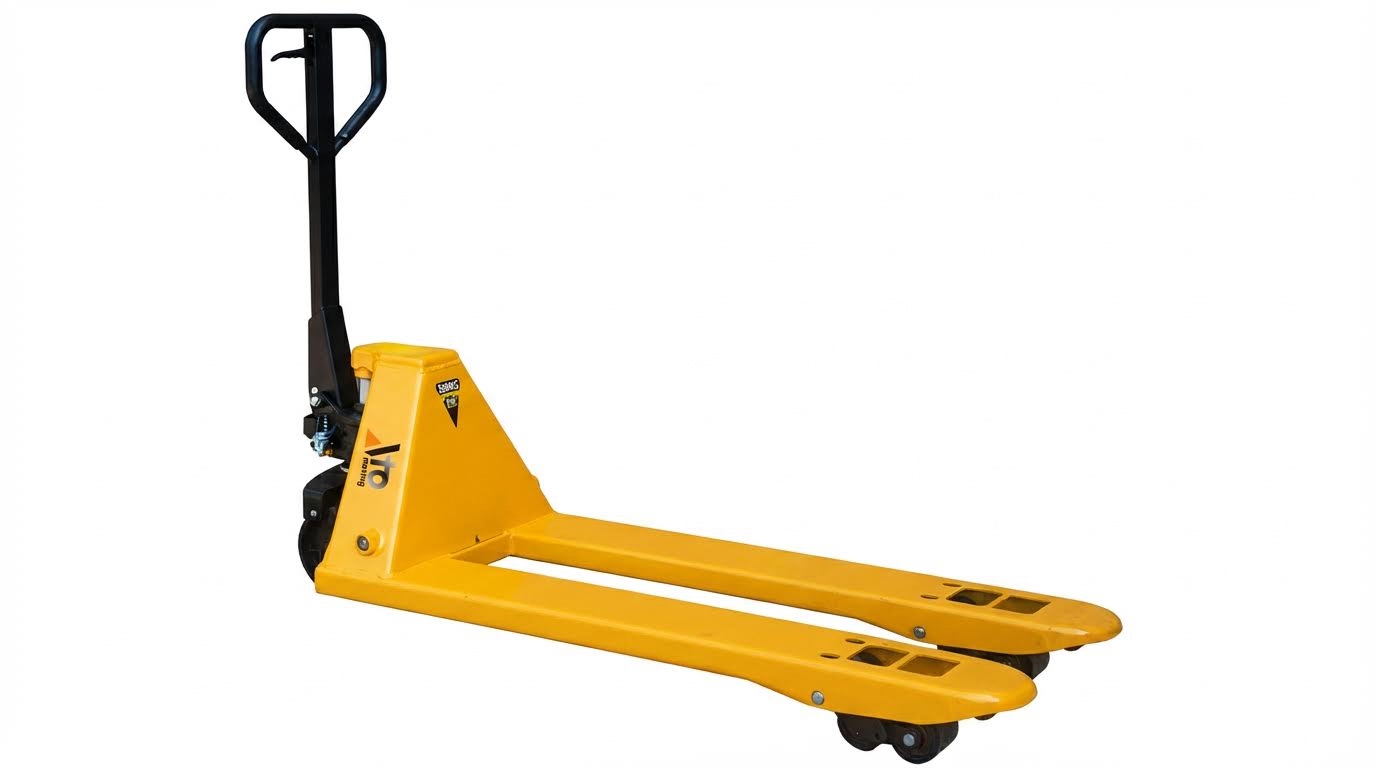
Engineering, safety, and technology choices strongly influence whether you need a licence for a walkie stacker under local law. Design features, operating limits, and digital tools affect both risk level and the depth of training regulators expect. Understanding these factors helps employers decide what internal “licence” or competency system to apply even where no formal high-risk work licence exists.
Key Design Features And Operating Limitations
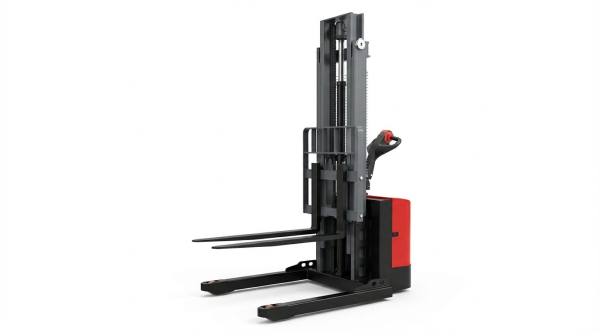
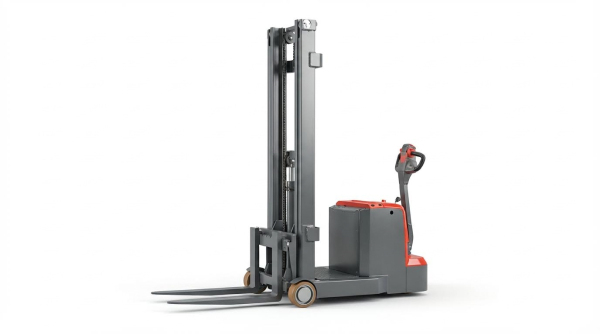
Walkie stackers are Class III pedestrian-operated electric lift trucks. The operator walks beside or stands on a small platform rather than sitting in a cab. This configuration reduced historical risk compared with rider forklifts and often meant external regulators did not classify them as high-risk work requiring a national licence. Typical load capacities range from roughly 1 000 kg to 2 000 kg, with lift heights suited to standard warehouse racking. Compact chassis dimensions and short wheelbases allowed operation in narrow aisles where counterbalance forklifts could not turn safely. Modern units introduced power steering, proportional controls, mast tilt, and side-shift, which improved control but also raised expectations for formal training. Four-directional models enabled handling of long loads through tight doorways, but they imposed strict stability and speed limits to prevent tip-over. These engineering limits underpin training content and internal licensing, even in jurisdictions where the law does not explicitly require an external licence for walkie stacker use.
Safe Operating Practices And Common Hazards
Safe operation focuses on pedestrian interaction and low-speed maneuvering rather than road-style driving. The recommended position is usually in front and offset to the side of the lift stacker, which maximises forward visibility and gives escape space. Walking directly behind the truck increases crush risk and reduces steering control, so procedures should minimise this posture. Typical hazards include foot and ankle injuries from the drive wheel, trapping between the truck and fixed structures, mast or load strikes, and instability when traveling with elevated loads. Training programs based on standards such as OSHA 29 CFR 1910.178 or CSA B335-15 stressed pre-operation inspections, correct fork positioning, adherence to rated capacity, and travelling with the load low and tilted back when possible. Even where regulators did not ask “do you need a licence for a walkie stacker” in the high-risk sense, they still expected documented training and competency checks to control these predictable hazards. Clear pedestrian exclusion zones and marked walkways reduced collision risk in dense warehouse environments.
Digital Tools, Telematics, And Predictive Maintenance
Digital technology changed how organisations proved that operators were competent to use walkie stackers. Telematics modules recorded key-on time, travel distance, impact events, and overload attempts. Access control systems required a PIN, RFID card, or similar identifier before the truck would operate, effectively linking each shift to a named, trained operator. This data helped answer practical questions behind “do you need a licence for a walkie stacker” by showing auditors that only authorised staff used the equipment. Integrated pre-start checklists forced operators to complete digital inspections before enabling traction, and the system stored responses for compliance records. Predictive maintenance tools analysed battery health, motor current, and hydraulic temperatures to schedule service before failures created safety incidents. Fleet dashboards allowed supervisors to compare utilisation and incident rates across sites, refine training content, and target refresher sessions to high-risk behaviours. These technologies did not replace formal instruction or evaluation, but they supported continuous verification of competency and equipment condition.
Cost, Lifecycle, And Integration With Automation
Walkie stackers usually had lower purchase and lifecycle costs than ride-on forklifts, mainly due to smaller batteries, simpler masts, and reduced structural mass. Because operators often did not need a statutory high-risk licence, onboarding costs per worker could be lower, although robust training remained essential. Over a typical service life, energy consumption, tyres, batteries, and periodic inspections formed the main cost drivers. Organisations assessing whether they “need a licence for a walkie stacker” increasingly evaluated that question within broader automation strategies. Walkie stackers integrated with semi electric order picker, guided picking solutions, and, in some facilities, automated guided vehicles or autonomous mobile robots. This integration required clear human–machine interface rules, speed zoning, and traffic management plans. As automation increased, the role of the walkie stacker operator shifted toward exception handling and high-precision tasks, which demanded higher skill despite the absence of a formal external licence in several jurisdictions. Employers therefore treated training, internal authorisation, and equipment selection as linked engineering and safety decisions rather than isolated compliance steps.
Summary: Compliance, Safety, And Best Practices
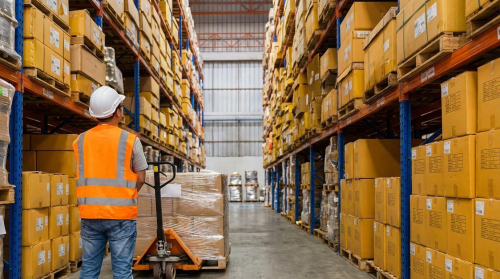
Regulators in most jurisdictions did not require a high-risk work licence specifically for walkie stackers. This answered the common question “do you need a licence for a walkie stacker” with a qualified “no” in legal terms, but a clear “yes” for structured training and documented competency. Standards such as OSHA 29 CFR 1910.178 in the United States and CSA B335 in Canada still treated lift stackers as powered industrial trucks, with mandatory training, evaluation, and written certification. Employers therefore needed robust internal licensing systems, even where no national high-risk licence category existed.
From an engineering and safety perspective, walkie stackers offered compact dimensions, electric drive, and lower capacities than forklifts, but they still presented crush, tip-over, and visibility hazards. Best practice combined equipment selection based on load, aisle width, and floor quality with task-specific procedures, including preferred walking positions, speed control, and pre-use inspections. Digital tools, telematics, and predictive maintenance platforms already improved utilisation, captured near-miss data, and enforced operator access control, which supported both safety and compliance evidence during audits or incident investigations.
In practical implementation, organisations that treated walkie stacker training, VOC, and record-keeping with the same rigour as forklift licensing typically reduced incident rates and unplanned downtime. They aligned internal policies with OSHA, CSA, or local WHS frameworks, defined refresher intervals, and integrated walkie stackers into broader automation and material flow strategies. Looking forward, closer integration with warehouse management systems, geo-fencing, and collision-avoidance sensors would likely tighten expectations around operator competency and electronic record-keeping. The most resilient operations would continue to assume that, while a statutory licence might not be required, a demonstrable, systematised approach to counterbalanced stacker competency remained essential for legal defensibility and long-term safety performance.