Understanding how much a pallet truck weighs is fundamental for safe handling, accurate floor design, and compliant vehicle transport. This article examines typical weights by pallet truck type, from manual pallet jack units to electric stackers and off-road designs, and links these values to real load and stability demands.
It then breaks down the engineering factors that drive truck weight, including frame design, steel thickness, reinforcement, powertrain, and wheel choices. Next, it explains why weight matters for floors, ramps, buildings, and safety, with a focus on load ratings, accident prevention, and lifecycle costs supported by digital monitoring.
Finally, the article summarizes how operators, engineers, and facility planners can balance pallet truck weight with real-world needs, aligning performance, floor protection, and regulatory compliance.
Typical Weights By Pallet Truck Type

Engineers and buyers who ask “how much does a pallet truck weigh” need type-specific data. Tare weight influenced transport planning, floor loading, and stability margins. Typical values clustered in distinct bands for manual, high-lift, electric, and off-road variants. The following sections summarized realistic weight ranges and their engineering implications.
Manual, Scissor, And High-Lift Trucks
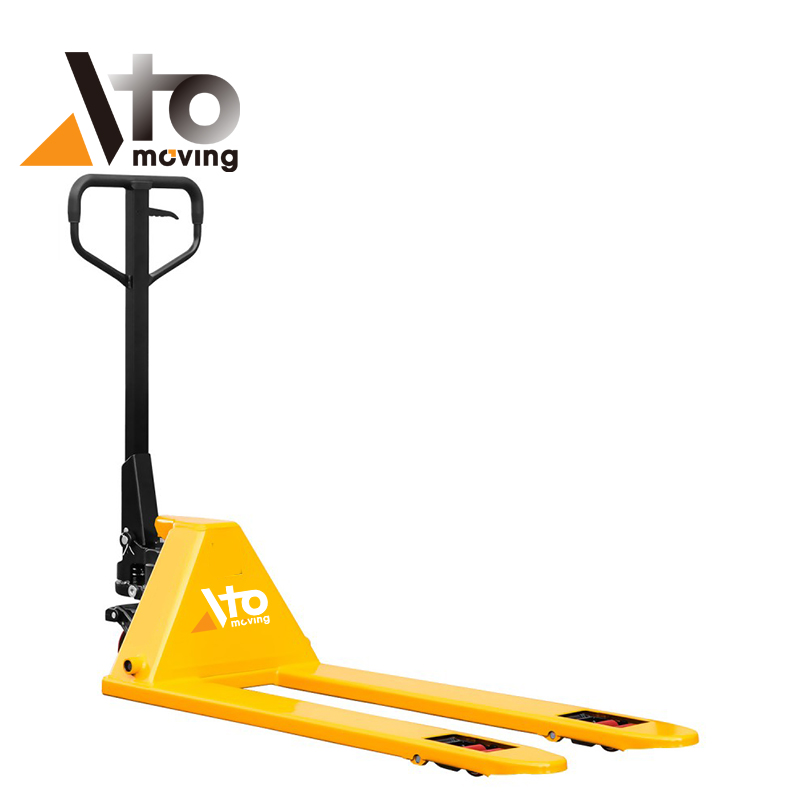
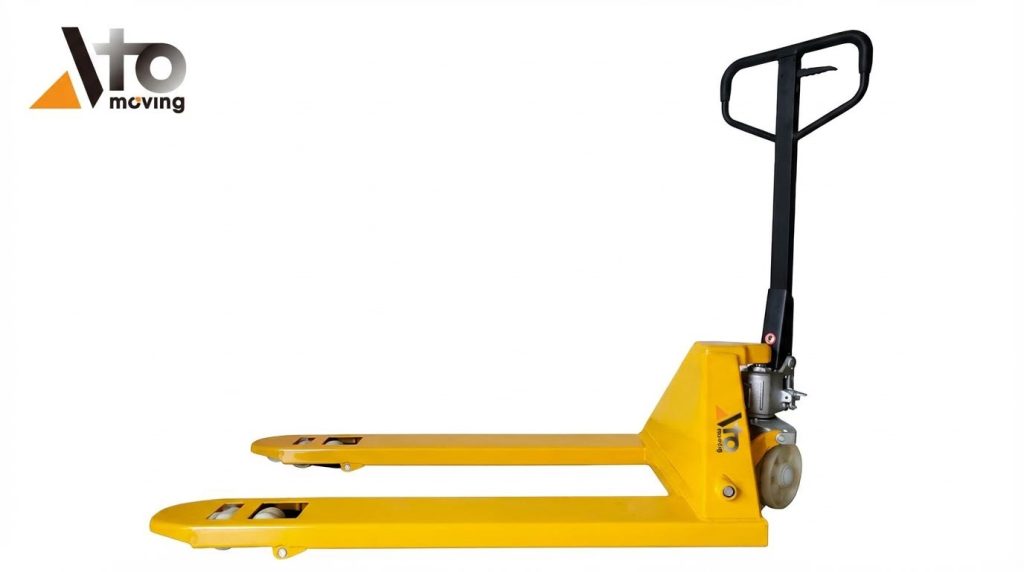
When you ask how much does a pallet truck weigh in its simplest form, a standard manual pallet jack typically weighed 65–90 kg. Short-fork versions with 600–950 mm forks dropped to roughly 55–62 kg, while long-fork versions up to 2,500 mm increased to about 82–123 kg. Scissor lift pallet trucks, which combined lifting and transport, usually weighed around 110–120 kg because of the scissor mechanism and larger cylinders. Manual high-lift trucks capable of lifting to about 800–1,000 mm often reached 100–150 kg, while high-lift stacker-style trucks for heights near 2,500 mm could reach about 260 kg. In all manual and scissor designs, thicker steel sections, reinforced fork heels, and robust drawbars added mass but were essential to support static capacities up to 2,500–3,000 kg without permanent deformation.
Electric Pallet Trucks And Stackers
For powered units, the question “how much does a pallet truck weigh” had a different scale. Walk-behind electric pallet trucks typically weighed 180–320 kg, with simpler semi-electric versions starting around 140 kg and heavy-duty models approaching 400 kg. The main contributors were the traction motor, hydraulic power pack, and especially the battery system. Lead–acid batteries often added 60–70 kg alone, while lithium-ion packs reduced this to roughly 20–30 kg but kept total truck weight above manual designs. Electric stackers with masts for 2.5–3.5 m lift heights usually weighed 250–400 kg because of the mast sections, chains, and counterweight requirements. This extra mass improved longitudinal stability under elevated loads but required careful evaluation of floor load ratings, dock levelers, and tail lifts during transport planning.
Special Fork Lengths And Off-Road Designs
When engineers evaluated how much does a pallet truck weigh for non-standard applications, fork geometry and running gear became critical. Short-fork pallet trucks with lengths from 600–950 mm could weigh as little as 55–62 kg, improving maneuverability in tight production cells and delivery vehicles. Extended-fork units from 1,500–2,500 mm showed weights between approximately 82 kg and 123 kg, with the heavier figures corresponding to 2,000–2,500 mm forks and higher bending moments at the fork root. Off-road pallet trucks, built with large pneumatic or super-elastic wheels and reinforced frames, typically ranged from 200 kg to 220 kg. Their larger wheels, longer steering axles, and gusseted frames added mass but allowed operation on gravel, meadows, and uneven yards. For both long-fork and off-road variants, designers balanced structural reinforcement against total tare weight to maintain acceptable manual push–pull forces and compliance with floor and vehicle load limits.
Engineering Factors That Drive Truck Weight

Engineers who ask “how much does a pallet truck weigh” need to understand the design drivers behind that number. Truck mass results from a series of structural, powertrain, and running‑gear decisions that balance strength, stability, and floor compatibility. This section explains how frame geometry, steel selection, battery technology, and wheel choices interact to determine typical weights from about 55 kg for short manual units up to roughly 400 kg for heavy electric stacker.
Frame Design, Steel Thickness, And Reinforcement
The frame and fork structure usually contributed the largest share of a pallet truck’s dead weight. Standard manual trucks that weighed 65–90 kg used welded steel forks and a torsion‑resistant chassis to support loads of 2,000–3,000 kg without permanent deformation. Engineers specified U‑channel sections, box beams, and pressed ribs to raise section modulus while controlling mass. High‑lift and scissor platform, which often weighed 110–150 kg or more, needed additional vertical masts, scissor linkages, and pivot brackets, so designers increased plate thickness around hinge points and cylinder anchors.
High‑tensile steels allowed designers to reduce plate thickness in low‑stress regions and still meet safety factors required by regional standards. For example, switching from mild steel to high‑strength grades enabled similar load ratings with several kilograms of weight reduction per truck. However, the frame still had to provide enough counterweight to prevent tipping under dynamic loading, especially during cornering or on ramps. This trade‑off explained why a pallet truck that weighed only 60 kg but claimed a 2‑tonne capacity would have raised structural and stability concerns. Finite element analysis and physical fatigue tests validated that welds, fork heels, and drawbar brackets withstood repeated cycles at rated load and typical impact factors.
Battery Technologies And Powertrain Choices
In electric pallet trucks and stackers, the powertrain largely answered the question “how much does a pallet truck weigh.” Walk‑along electric pallet trucks with lead‑acid batteries typically weighed 180–320 kg, while compact electric units with smaller packs could drop to around 140–200 kg. Heavy‑duty stackers with tall masts and larger traction motors often reached 250–400 kg. Lead‑acid batteries alone added roughly 60–70 kg, acting both as an energy source and as a low‑mounted counterweight that improved stability at higher lift heights.
Lithium‑ion technology reduced battery mass to about 20–30 kg for equivalent usable capacity. This change allowed engineers to trim total truck weight by several tens of kilograms, which improved maneuverability in tight retail aisles and reduced axle loads on mezzanines or tail lifts. However, designers sometimes had to reintroduce ballast or redistribute components to maintain a low center of gravity and adequate rear axle load for traction. Motor and gearbox sizing also influenced weight. Higher‑torque traction motors and larger hydraulic pumps used for 2,000–2,500 kg load ratings required heavier housings and more robust mounting plates. Control electronics, wiring harnesses, and protective covers added smaller but non‑negligible increments, especially when trucks integrated weighing systems or advanced safety sensors.
Wheels, Tires, And Surface Compatibility
Running gear had a smaller effect on how much a pallet truck weighed but a major influence on how that weight interacted with floors. Standard industrial pallet trucks, which weighed around 65–120 kg in manual form and up to 300 kg in electric form, used compact tandem load rollers and steering wheels in polyurethane or nylon. These materials minimized rolling resistance and wear on flat concrete, but their mass contribution remained modest compared with the frame and battery. Engineers prioritized diameter, width, and hardness to manage contact pressure and noise rather than to reduce kilograms.
Off‑road and rough‑terrain pallet trucks, which often weighed 200–220 kg, used larger pneumatic or semi‑pneumatic tires and reinforced axles. The bigger wheels improved flotation on gravel, meadows, and uneven yards but required heavier hubs, stub axles, and brackets. For delicate interior floors, designers sometimes increased wheel diameter and width to spread point loads and reduce joint damage from heavier electric trucks. Material choices such as rubber versus polyurethane balanced vibration damping, traction on ramps, and resistance to embedded debris. Overall, wheel and tire decisions slightly shifted truck mass but primarily tuned how a given weight range affected floor life, operator effort, and allowable operating surfaces.
Why Weight Matters For Floors, Transport, And Safety
Engineers who ask “how much does a pallet truck weigh” also need to ask how that weight behaves in real buildings, vehicles, and workflows. Truck tare mass combines with payload, wheel geometry, and floor details to create concentrated stresses, stability margins, and lifecycle costs. Understanding these interactions lets you specify pallet trucks that stay within floor design limits, move safely over ramps and tail lifts, and avoid hidden maintenance costs.
Floor Load, Joint Design, And Surface Damage
The question “how much does a pallet truck weigh” quickly turns into “how much pressure reaches the floor.” A typical manual pallet truck weighs 65–90 kg, while electric units often reach 200–350 kg before adding load. This dead weight plus payload transfers through a small contact patch at the steering and load wheels, creating high point loads. Hard wheels on small diameters increase contact pressure, which can spall weak concrete, chip joints, or crush tiles.
Industrial floors designed for pallet traffic used thick slabs, proper reinforcement, and controlled-joint layouts. Engineers minimized the number of saw-cut joints and used armored joint profiles to carry wheel loads without edge raveling. Flat, well-finished surfaces with burnished trowel finishes reduced impact and abrasion from loaded trucks. When users underestimated how much a pallet truck weighs, they often misjudged wheel loads at expansion joints, dock plates, and mezzanine decks, accelerating damage.
Surface compatibility also mattered. Softer, less stable surfaces such as asphalt, compacted fill, or outdoor pavers required lower combined truck-plus-load weights or larger, softer tires. Off-road pallet trucks weighing 200–220 kg used larger pneumatic or balloon wheels to spread load over meadows, gravel, and curbs. Correct wheel material selection, typically polyurethane or rubber for interior floors, balanced rolling resistance, noise, and floor protection while handling dynamic loads from braking and turning.
Stability, Load Rating, And Accident Prevention
Truck tare weight played a direct role in stability calculations. Heavier frames and counterweights resisted tipping when operators accelerated, braked, or cornered with elevated loads. A manual pallet truck around 75–90 kg with a 2–3 tonne rating relied on low lift height and a long wheelbase to stay stable. Electric pallet jacks and stackers, often 180–400 kg, used battery mass and robust masts to keep the center of gravity inside the support polygon during stacking.
Undersized equipment created serious hazards. A pallet truck weighing only 60 kg but rated for 2 tonnes risked structural deformation and rollover under dynamic conditions. Standards required that rated capacity assume a defined load center and account for dynamic effects, not just static lift. Engineers checked that “how much does a pallet truck weigh” aligned with its claimed capacity, mast height, and typical maneuvering speeds. They also specified operating rules such as forks 20–50 mm above the floor and speed limits in tight aisles.
Accident prevention extended beyond pure stability. Heavier trucks generated greater kinetic energy, so collisions with racking, doors, or pedestrians were more severe. Proper braking systems, descent speed control valves, and emergency stop functions became critical on electric models. Training stressed smooth acceleration, controlled turning radii, and strict adherence to nameplate load ratings. Regular inspections of welds, wheels, and hydraulic components ensured that cumulative fatigue from repeated loading did not reduce the original stability margin.
Vehicle Transport, Ramps, And Building Constraints
Knowing exactly how much a pallet truck weighs was essential for vehicle and building interfaces. Transport planners had to include truck tare weight plus typical payload when checking van, truck, or trailer axle limits. A 200 kg electric pallet jack carrying a 2,000 kg pallet added 2,200 kg to the deck, which influenced group loading on tail lifts and dock levelers. Manufacturers provided rated capacities for these devices that engineers compared with worst-case combined weights.
Ramps and slopes introduced additional constraints. Heavier trucks improved traction but increased required braking force and risk on steep gradients. Guidelines typically limited pallet truck use to moderate slopes and specified maximum combined weights. Building designers coordinated door thresholds, elevator capacities, and corridor floor ratings with expected equipment. If a distribution center used 250–400 kg electric stackers, structural engineers verified that mezzanines, platforms, and freight lifts could handle truck plus load at the wheel level, not only as uniform area loads.
Clearance and handling also mattered. Longer, heavier trucks with extended forks or high masts required larger turning radii and more robust dock plates. Engineers checked that tail lifts, footbridges, and floor hatches offered adequate width, stiffness, and anti-slip surfaces. Misjudging how much a pallet truck weighs could overload a light-duty ramp or temporary bridge, leading to permanent deflection or sudden failure. Proper labeling, operating procedures, and route planning minimized these risks.
Lifecycle Costs, Maintenance, And Digital Monitoring
Truck weight influenced lifecycle cost through wear, energy use, and maintenance frequency. Heavier electric pallet trucks consumed more energy per cycle, especially on long routes or ramps. However, additional mass often came from thicker steel sections, larger bearings, and stronger masts, which extended fatigue life under heavy logistics duty. Selecting the right balance between low weight for efficiency and sufficient mass for durability was a core engineering trade-off.
Floor and wheel maintenance linked closely to how much a pallet truck weighs in daily service. High combined weights accelerated wheel flat-spotting, bearing wear, and floor joint deterioration. Planned maintenance schedules included wheel replacement, lubrication, hydraulic seal checks, and fastener torque inspections. Ignoring these tasks increased rolling resistance, which raised operator effort and energy consumption, further stressing components.
Digital monitoring started to change how fleets managed weight-related issues. Integrated scales, load sensors, and telematics recorded actual loads, travel distances, and impact events. This data helped verify that operators did not exceed rated capacities and that floor loading stayed within design assumptions. Analytics highlighted routes where heavy trucks repeatedly crossed sensitive joints, prompting layout changes or joint upgrades. By combining precise knowledge of how much a pallet truck weighs with real usage data, operators aligned safety, floor protection, and cost control over the full equipment lifecycle.
Summary: Balancing Truck Weight With Real-World Needs

Engineers and logistics planners who ask “how much does a pallet truck weigh” must link the answer to real operating constraints. Manual pallet trucks typically weighed 65–90 kg, while scissor and high-lift variants reached about 120–260 kg. Electric pallet trucks and compact stackers ranged from roughly 140 kg for walk-along units up to about 400 kg for heavier-duty models. Off-road and long-fork designs often sat in the 200–220 kg band, with short-fork specials dropping toward 55–65 kg. These tare weights interacted directly with floor design, joint detailing, and vehicle payload limits.
From a safety and structural perspective, higher truck weight improved stability and resistance to deformation, but increased point loads on slabs, ramps, and tail lifts. Designers balanced frame geometry, steel thickness, and reinforcement ribs against battery mass and wheel selection to control both durability and ground pressure. Lithium-ion batteries reduced dead weight but changed cost and charging strategies. In multi-level buildings, truck weight also constrained elevator use and mezzanine capacity, while in transport it consumed part of the legal axle load margin.
In practice, the optimal answer to “how much does a pallet truck weigh” depended on duty cycle, route length, floor quality, and required lift height. Operations with high-frequency use, long internal routes, or sensitive floors often favored lighter but stiff designs with compliant wheels. Heavy-duty warehouses with thick industrial slabs could exploit heavier electric trucks and stackers to gain productivity and stability. Over time, the industry moved toward smarter weight optimization, using high-strength steels, lighter batteries, and digital monitoring to align truck mass with real-world needs rather than simple maximum capacity figures.