Understanding what a pallet truck is and how it works helps engineers and plant managers optimize internal logistics. This article explains the core function and design of pallet trucks, their main types, and how they interface with standard pallets in real operations. It then examines selection criteria, performance drivers, lifecycle and maintenance factors that affect total cost and uptime. Finally, it summarizes strategic considerations for plants that want to standardize, upgrade, or expand pallet truck fleets for safer and more efficient material flow.
Core Function And Design Of Pallet Trucks
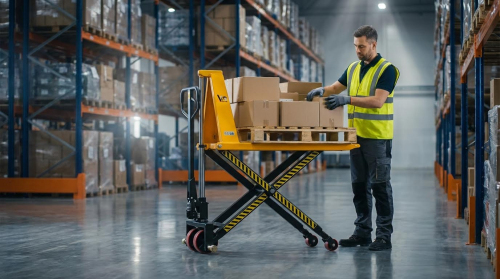
Understanding what a pallet truck is and how it works helps engineers optimize internal logistics. Core design choices around hydraulics, fork geometry, and wheels directly affect stability, throughput, and operator safety. This section explains what a pallet truck is, how it operates, and how capacity classes and fork dimensions relate to standard pallets and duty profiles. The goal is to give plant engineers a clear technical basis for specifying and comparing pallet trucks for different applications.
What A Pallet Truck Is And How It Operates
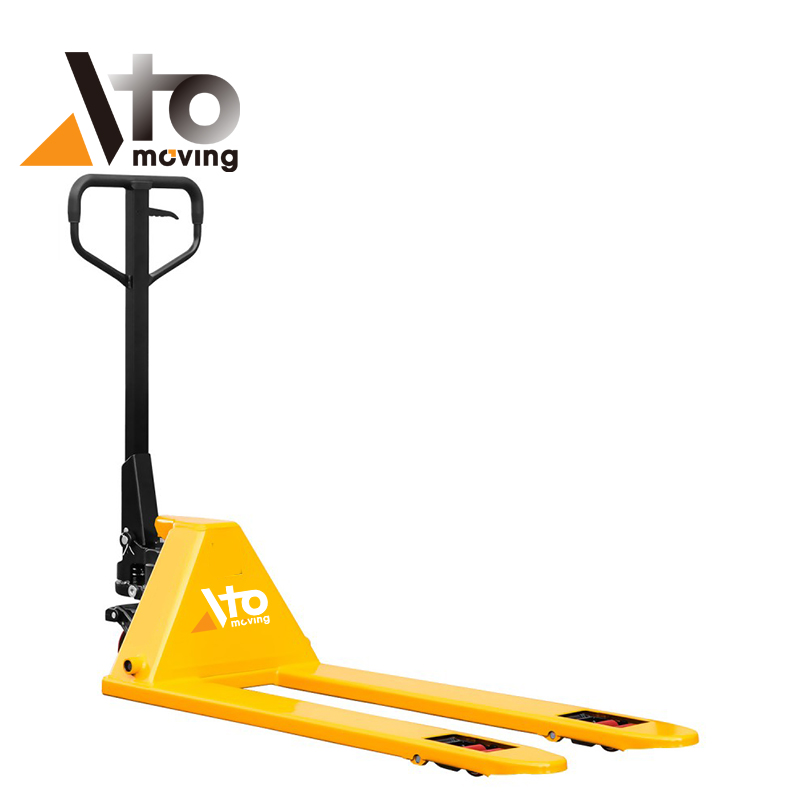
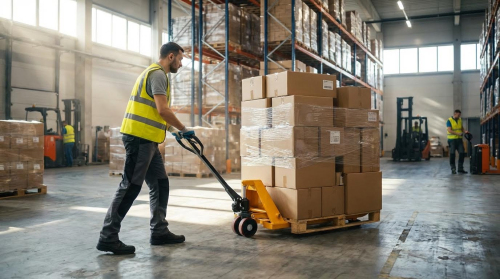
From an engineering standpoint, a pallet truck is a low-lift industrial truck for horizontal transport of palletized loads. It supports and lifts the load only a few centimetres, just enough to clear the floor and roll. Manual versions use a hydraulic jack actuated by a drawbar handle, while powered units use electric lift and often electric traction. The operator inserts the forks into the pallet openings, then raises the forks so the pallet and load transfer from the floor to the truck wheels. During travel, the operator steers using the tiller or drawbar, keeping the forks low to maximize stability and reduce the risk of tip-over.
Key Components: Forks, Hydraulics, And Wheels
The forks form the primary load-support structure and interface with the pallet deck boards. Engineers specify fork length and width based on pallet standards and load geometry. The hydraulic system in manual trucks converts operator input at the handle into pressure in a compact cylinder, which drives a lift linkage under the fork frame. In powered pallet trucks, an electrohydraulic power pack replaces manual pumping, improving productivity for repetitive cycles. Load wheels under the fork tips carry most of the vertical load, while a larger steer wheel set under the tiller provides directional control and traction. Wheel material and diameter strongly influence rolling resistance, noise, and performance on imperfect floors.
Typical Load Capacities And Duty Classes
Typical pallet truck rated capacities range between 1,300 kg and 3,000 kg for standard warehouse use. Heavy-duty models can reach up to about 8,000 kg where floor strength and ramp gradients allow it. Engineers match capacity not only to the heaviest pallet but also to dynamic effects such as braking, turning, and uneven floors. Duty classification depends on cycle frequency, travel distance, and environment, similar to industrial truck standards. Light-duty pallet trucks handle occasional moves in retail or back-of-house areas, while medium and heavy-duty units operate continuously in distribution centers and manufacturing plants. Higher duty classes require more robust frames, reinforced forks, larger bearings, and often powered traction to control thermal and mechanical loads.
Fork Dimensions And Pallet Interface Basics
Fork dimensions must align with the dominant pallet standard, such as 1,200 mm by 800 mm or 1,200 mm by 1,000 mm. Common fork lengths lie around 1,150 mm to 1,200 mm to fully support a standard pallet without excessive overhang. Fork outside width usually sits near 520 mm to 685 mm, positioning the forks under the main stringers or deck boards for optimal load transfer. Engineers also consider minimum fork height, typically about 75 mm or lower, to enter low-profile pallets or slip-sheets. During operation, the forks should lift the pallet only 20 mm to 50 mm above the floor to reduce bending moments in the pallet and keep the combined center of gravity low. Correct fork sizing and insertion depth are critical to avoid deck board failure, skewed loads, and instability during acceleration, braking, or cornering.
Types Of Pallet Trucks And Use Cases
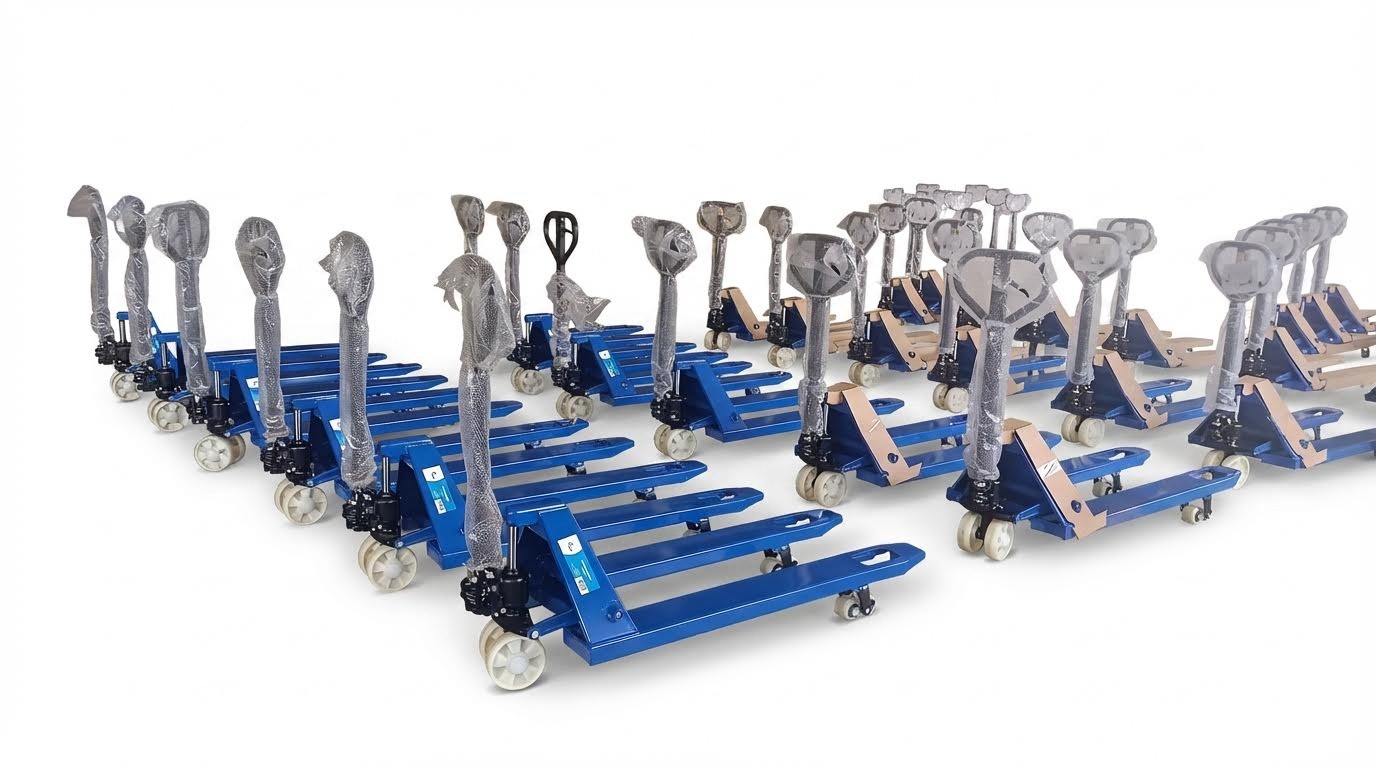
Understanding types of pallet trucks is essential when answering what is a pallet truck in an industrial context. Each variant targets specific load ranges, travel distances, and environments. Correct selection improves throughput, reduces injury risk, and lowers lifecycle cost. The following configurations illustrate how design choices align with real plant use cases.
Manual, Semi-Electric, And Electric Variants
Manual pallet trucks use a hand-pumped hydraulic unit for lift and human force for travel. They typically handle light to medium-duty work, with capacities from about 1,300 kg to 2,500 kg. Plants used them for short shuttle moves, trailer unloading, and tight retail aisles where low purchase cost and simple maintenance matter. Manual units suit operations with limited daily pallet movements or short shifts.
Semi-electric pallet trucks usually combine electric drive with manual or low-power hydraulic lift. This configuration reduces push–pull forces on the operator while keeping purchase cost below full electric units. Sites with moderate travel distances and frequent but not continuous use applied semi-electric trucks to cut fatigue and musculoskeletal risk. They fit well where power outlets are nearby and duty cycles remain intermittent.
Fully electric pallet trucks provide powered lift and traction through an electric motor and onboard battery. Capacities typically range from 1,500 kg up to 3,000 kg, with heavy-duty models reaching approximately 8,000 kg. Operations with long travel distances, high daily pallet counts, or dock-to-rack flows favored these trucks. Electric units reduce cycle times, support higher speeds, and keep performance consistent during multi-shift work when paired with suitable battery technology.
Walkie, Rider, And Multi-Directional Configurations
Walkie pallet trucks place the operator on foot, controlling the unit via a tiller arm with fingertip controls. They excel in short horizontal transport, order picking, and loading docks where turning space is limited. Typical capacities fall between 1.3 tonnes and 2.5 tonnes, and compact chassis options navigate narrow aisles. Walkies answer what is a pallet truck for dense storage: a maneuverable, low-height mover for ground-level loads.
Rider or platform pallet trucks allow the operator to stand or sit on the machine. Plants used them for longer internal runs, such as from receiving docks to bulk storage zones. These units often reach travel speeds around 10 km/h to 12.5 km/h, which significantly cuts transfer times in large warehouses. Rider configurations reduce walking distance, lower operator fatigue, and support higher pallet throughput per shift.
Multi-directional pallet trucks add sideways or diagonal travel, often through specialized wheel arrangements and electronic steering. They support long or awkward loads that do not align with standard aisle directions, such as long pallets or stillages. Facilities storing bulky components or operating very narrow aisles applied multi-directional units to reduce the need for wide cross-aisles. This configuration improves cube utilization and minimizes load repositioning.
Special Environments: Cold Store And Corrosive Areas
Cold store pallet trucks operate in chilled and frozen environments where standard hydraulics and materials degrade quickly. Engineers specified low-temperature hydraulic oil, sealed electrics, and materials tolerant of condensation and ice. These adaptations maintained consistent lift performance and reduced failure risk at sub-zero temperatures. Food distribution centers and pharmaceutical freezers relied on such trucks to maintain cold-chain integrity.
Corrosive or washdown environments required pallet trucks with corrosion-resistant frames, axles, and fasteners. Stainless steel or galvanized structures, along with sealed bearings, extended service life under aggressive cleaning or chemical exposure. Typical applications included meat processing, beverage bottling, and chemical handling areas. In these contexts, answering what is a pallet truck includes its ability to withstand frequent high-pressure washdowns without structural compromise.
Explosion-risk zones or dust-laden areas sometimes used pallet trucks with reduced ignition sources and protected wiring. Design choices limited static build-up and contained electrical components. Compliance with relevant safety standards helped prevent ignition of flammable atmospheres. Such configurations demonstrated how environment-driven engineering strongly influences pallet truck specification.
Indoor, Outdoor, And Rough-Terrain Applications
Indoor pallet trucks usually run on hard, flat floors such as polished concrete or epoxy-coated surfaces. They often use polyurethane or rubber wheels that minimize rolling resistance and protect floors. Compact dimensions improve maneuverability between racks, in production cells, and inside delivery vehicles. These characteristics define what is a pallet truck for most warehouses: a low-clearance, smooth-floor mover.
Outdoor applications introduce uneven surfaces, expansion joints, and occasional debris. Trucks specified for outdoor work use larger-diameter wheels and more robust frames. Plants deployed them on loading yards, cross-docks, and between nearby buildings where weather exposure and surface irregularities occur. Proper wheel selection reduced shock loads on loads and components.
Rough-terrain pallet trucks feature wide, often pneumatic or foam-filled tires and reinforced chassis. They handle gravel, compacted soil, and unfinished construction floors better than standard units. Construction sites, agricultural facilities, and lumber yards used these trucks to move palletized products where forklifts were unavailable or impractical. Matching tire type, wheelbase, and ground clearance to terrain ensured stability and reduced tip-over risk.
Some operations combined indoor and outdoor routes, such as dock-to-yard-to-storage flows. In these cases, engineers balanced wheel hardness, bearing sealing, and corrosion protection. This hybrid requirement reinforced that specifying the correct pallet truck type depends on understanding route conditions, not only load mass.
Selection, Performance, And Lifecycle Factors
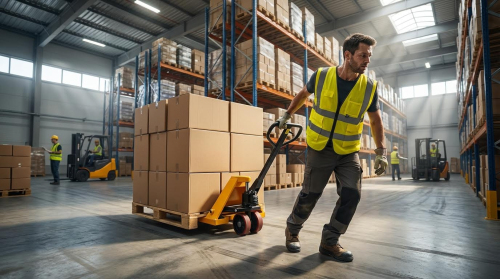
Engineers who ask “what is a pallet truck” usually move quickly to a deeper question: which pallet truck configuration delivers the best technical and economic performance over its lifecycle. Selection, performance, and lifecycle factors determine whether a pallet truck supports safe, efficient material flow or becomes a bottleneck. This section explains how to match capacity and duty cycle, choose battery technologies, specify ergonomic and safety features, and manage maintenance and total cost of ownership.
Matching Capacity, Duty Cycle, And Travel Distance
When defining what is a pallet truck for a given plant, the starting point is always load and duty. Rated capacity must exceed the maximum pallet mass, including packaging and any dynamic effects during braking or turning. Typical industrial pallet trucks handle between 1,300 kg and 3,000 kg, while heavy-duty units reach about 8,000 kg. Oversizing capacity reduces maneuverability and increases purchase cost, so engineers should target a 10–20% margin above the true worst-case load.
Duty cycle describes how intensively the pallet truck operates during a shift. Light duty involves intermittent moves, short travel distances, and long idle periods, which suit manual or basic pedestrian electric units. Medium duty covers continuous loading, unloading, and order picking across a single shift. Heavy duty means multi-shift operation with frequent starts, stops, and long horizontal runs. For heavy duty, powered walkie pallet truck or ride-on pallet trucks reduce operator fatigue and cycle time.
Travel distance and route topology also shape the specification. Manual pallet trucks fit short transfers below roughly 20–30 m per move on flat floors. For longer internal routes or repeated dock-to-storage runs, powered traction becomes essential to maintain throughput and protect operators from overexertion. If the route includes slopes or dock plates, engineers should verify traction performance, braking capability, and compliance with local safety guidance on gradients. Narrow aisles or dense storage drive the choice toward compact chassis and optimized steering geometry.
Battery Technologies And Energy Efficiency
For powered units, understanding battery technology is central to defining what is a pallet truck in terms of energy system architecture. Traditional lead-acid batteries offered a proven, low upfront-cost solution. They required dedicated charging areas, regular watering, and strict charge cycles to avoid sulfation. These batteries suited single-shift applications where overnight charging was practical. However, they delivered lower round-trip efficiency and shorter cycle life compared with modern chemistries.
Lithium-ion batteries changed energy management for pallet trucks. They provided higher energy density, faster opportunity charging, and better partial-charge tolerance. Plants could schedule short charging windows during breaks instead of full overnight cycles. This improved availability for high-throughput operations and reduced the need for spare batteries and change-out equipment. Lithium-ion systems generally achieved higher charge–discharge efficiency, which reduced electricity consumption per tonne-kilometre moved.
Energy efficiency also depended on drive system design, control algorithms, and rolling resistance. Low-resistance wheels, optimized acceleration profiles, and regenerative braking on suitable models reduced total energy demand. Engineers should compare energy consumption data in kilowatt-hours per shift or per 1,000 pallet movements when evaluating options. For multi-shift operations, lifecycle cost calculations must include battery replacement intervals, charger infrastructure, and ventilation or safety provisions, especially for legacy lead-acid installations.
Ergonomics, Safety Features, And Compliance
From a safety and ergonomics viewpoint, the answer to “what is a pallet truck” extends beyond load charts to operator interaction. Poor ergonomics increased musculoskeletal risk and reduced sustained productivity. Modern designs used shaped tiller heads, low steering forces, and cushioned grips to keep wrist and shoulder loads within recommended limits. Adjustable control positions and low-effort steering improved usability across a wide operator population. For ride-on units, vibration-damped platforms reduced whole-body vibration exposure during long runs.
Safety features directly influenced compliance with standards and local regulations. Common elements included emergency stop buttons, automatic braking when the tiller moved to an upright position, and controlled lowering systems. Load backrests and stable fork geometry reduced the risk of load shift. Speed control functions, such as creep speed in tight spaces, helped maintain control in congested areas. Where operators worked near pedestrians, audible warning devices and high-visibility markings were important.
Regulatory compliance depended on region, but engineers typically aligned specifications with applicable machinery safety directives and occupational safety guidelines. This included verification of rated capacity labeling, stability testing, and braking performance. Training remained a core requirement: operators needed instruction on safe use, pre-use inspection, and emergency procedures. A technically correct understanding of what is a pallet truck always includes these human and regulatory dimensions, not just mechanical design.
Maintenance, Troubleshooting, And Total Cost
Lifecycle performance defines what is a pallet truck from a financial perspective. Preventive maintenance programs preserved safety and reliability while minimizing unplanned downtime. Routine tasks included lubrication of pivot points, inspection of wheels and axles, and checks for hydraulic leaks or damaged forks. For powered trucks, technicians also inspected electrical connectors, control wiring, and battery condition. Clear maintenance intervals, often based on operating hours, helped standardize practices across fleets.
Common troubleshooting topics involved lifting issues, steering problems, and electrical faults. Loss of lift often indicated hydraulic seal wear, air ingress, or contaminated fluid. Uneven tracking or heavy steering suggested wheel damage or bearing failure. In electric units, reduced runtime or slow performance frequently traced to battery degradation or charger faults. Documented diagnostic procedures, supported by clear fault codes where available, shortened repair times.
Total cost of ownership combined acquisition price, energy consumption, maintenance, battery replacements, and downtime-related productivity losses. Manual trucks had low purchase and maintenance costs but higher operator effort, which could limit throughput in intensive operations. Electric units cost more initially but reduced labor strain and improved cycle times, especially over long distances. When engineers evaluate what is a pallet truck for a given plant, they should model costs over five to ten years, including expected utilization, and compare scenarios. This lifecycle view supports technically and economically robust fleet decisions.
Summary And Strategic Considerations For Plants

For plant leaders asking “what is a pallet truck” in a strategic sense, it represented a core horizontal-transport asset rather than a simple tool. It bridged the gap between manual handling and full forklift deployment, especially in dense warehouse and production layouts. Understanding types, duty classes, and environments allowed plants to engineer flow with lower capital intensity. The right specification also reduced injury risk and unplanned downtime.
Technically, pallet trucks covered load ranges from about 1,300 kg to 8,000 kg, with most industrial plants standardizing between 1,500 kg and 2,500 kg. Manual units suited light to medium duty, short travel, and low utilization. Electric walkie and rider formats supported higher throughput, longer travel distances, and multi-shift work when paired with appropriate battery technology. Fork dimensions, wheel materials, and hydraulic robustness had to match pallet standards, floor quality, and temperature or corrosion constraints.
Strategically, plants needed to integrate pallet truck choices into layout design, buffer sizing, and labor planning. High-volume lines benefited from electric units, possibly with lithium-ion batteries, to minimize charging downtime and operator fatigue. Low-volume or highly variable operations often retained manual pallet jack for flexibility and low total cost of ownership. Cold stores, washdown zones, and outdoor yards required specific materials and sealing strategies to maintain reliability and compliance.
Future trends pointed toward greater electrification, smarter controls, and closer integration with digital warehouse management. Remote operation features, access control, and event logging improved safety and traceability. However, plants still had to balance sophistication against maintainability and skill levels on site. A robust strategy combined standardization on a limited pallet truck family, clear inspection and maintenance routines, and operator training aligned with regulatory expectations. In that framework, the question “what is a pallet truck” became a question of how it supported flow, safety, and long-term cost in the plant’s material handling ecosystem.