Safe pallet truck operation depends on understanding equipment principles, thorough inspections, correct driving techniques, and disciplined maintenance. This article explains how to use a pallet truck safely, from core stability concepts and ergonomic factors to structured pre-use checks. It then details correct operating methods, highlights frequent errors that damage trucks or cause injuries, and links these practices to reduced risk and lifecycle cost. Use this guide as a technical reference to standardize pallet truck use, training, and inspection routines in industrial environments.
Core Principles Of Safe Pallet Truck Use

Understanding core safety principles is the foundation of learning how to use a pallet truck correctly. These principles link the truck’s mechanical design, load physics, operating surface, and human operator capabilities. When engineers and supervisors align these factors, they reduce incident rates and extend equipment life. The following subsections describe the technical basis for safe pallet truck operation in typical warehouse and industrial environments.
Key Components And Operating Modes
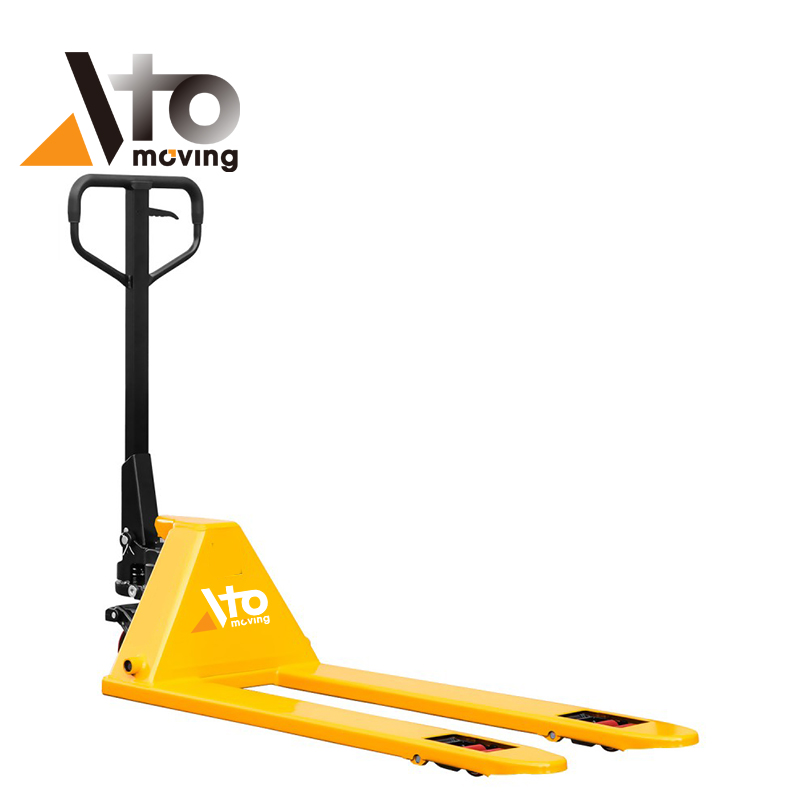
A pallet truck used correctly relies on a few critical subsystems. The chassis, forks, wheels, and hydraulic unit form the primary load path from pallet to floor. Handle and control linkages convert operator input into steering, braking, and lifting actions. In manual trucks, the hydraulic pump operates through a lever or tiller stroke, while electric trucks use powered lift and traction motors. Operators must understand whether the truck is walk-behind, ride-on, or pedestrian-operated with powered drive, because stopping distances and turning radii differ. Correct selection of operating mode for the task is a core step in how to use a pallet truck safely.
Wheel type and arrangement strongly influence stability and rolling resistance. Steer wheels at the handle end provide directional control, while smaller load rollers under the fork tips carry the pallet weight. Polyurethane wheels suit smooth indoor floors, whereas elastomer or pneumatic wheels tolerate minor surface defects. Engineers should match wheel material and bearing type to expected load, travel distance, and floor condition. Clear understanding of these components helps operators predict truck behaviour under braking, turning, and on gradients.
Rated Capacity, Stability, And Center Of Gravity
Every pallet truck includes a rated capacity, typically up to about 2500 kg for standard manual units. This rating assumes a load with a defined center of gravity located centrally between the forks and near the fork heel. If the center of gravity shifts forward or laterally, the effective moment on the wheels increases and stability margin decreases. Overloading or off-centre loading can therefore cause tipping, fork bending, or wheel failure. Teaching operators how to use a manual pallet jack always starts with reading the capacity plate and comparing it with actual load mass.
Stability depends on the combined center of gravity of truck plus load staying within the support polygon formed by the wheels. When the operator raises the load, the center of gravity rises and the system becomes more sensitive to shocks and uneven surfaces. Sharp turns, sudden stops, or impacts with floor defects can then trigger loss of balance. Engineering controls, such as limiting fork lift height during travel to about 20–50 mm, increase robustness against disturbances. Clear rules about maximum allowable gradients and turning speeds further reduce the risk of overturning, especially with high or tall loads.
Surface Conditions And Route Planning
Safe pallet truck use requires compatible interaction between wheels and floor. Pallet trucks perform best on flat, rigid, and dry surfaces with limited surface roughness. Uneven floors, potholes, expansion joints, and loose debris introduce dynamic loads and vibration into the structure. These factors increase steering effort, extend stopping distance, and can destabilize marginally stable loads. Before moving, operators should visually inspect the route and remove obstacles, liquids, or packaging waste.
Route planning is a core procedural control in how to use a walkie pallet truck in busy facilities. Engineers should define preferred traffic lanes, turning zones, and no-go areas such as steep ramps or heavily damaged floors. Travel paths must minimize crossing points with pedestrian flows and avoid tight corners when handling wide or tall loads. Where gradients are unavoidable, risk assessments should specify maximum slope angles and required travel direction, for example descending backward with manual trucks. Clear floor markings, speed limits, and one-way systems support consistent operator behaviour and reduce collision risk.
Human Factors And Ergonomic Considerations
Human factors strongly influence real-world pallet truck safety. Operators apply push or pull forces through the handle, so handle height, grip design, and steering resistance affect musculoskeletal load. Good practice keeps the operator close to the truck, uses body weight to initiate movement, and avoids twisting the torso under load. Training should emphasize neutral spine posture, bent knees when starting or stopping heavy loads, and controlled walking speeds. These ergonomic principles reduce fatigue and cumulative injury risk during repeated handling cycles.
Visual awareness is another key factor in how to use a pallet truck safely. Operators must maintain a clear line of sight in the travel direction or use a spotter when the load blocks visibility. Personal protective equipment such as safety footwear and high-visibility clothing reduces injury severity and improves detectability in congested aisles. Cognitive load also matters; distractions, rushing, or time pressure correlate with handling errors like misaligned forks or excessive speed. Standardized procedures, concise toolbox talks, and periodic refresher training create consistent habits and embed safe behaviour into daily operations.
Pre-Use Inspection And Technical Checks

Pre-use inspection is the first control step in how to use a pallet truck safely and efficiently. A structured check before every shift reduces mechanical failures, unplanned downtime, and manual handling injuries. Operators should complete these checks in a fixed sequence so no critical component is missed. Any defect that affects lifting, steering, or braking must remove the truck from service until repaired.
Daily Mechanical And Hydraulic Inspection
Start by checking the chassis and handle mounting points for cracks, loose fasteners, or deformation. Verify that the drawbar or tiller pivots freely without excessive play, which could reduce steering control. Pump the handle through the full stroke and confirm the forks rise smoothly without jerks or unusual noise. Inspect the hydraulic unit and lines for oil leaks, damaged seals, or corroded fittings, because leaks can cause sudden loss of lift under load. Cycle the release lever and ensure the forks lower at a controlled speed, not dropping abruptly. For operators learning how to use a manual pallet jack correctly, this daily functional test confirms that the lift system can safely support the rated capacity.
Wheels, Forks, And Structural Integrity
Examine all wheels and rollers for flat spots, cracks, embedded debris, or uneven wear. Damaged wheels increase rolling resistance and can cause sudden stops that destabilize the load. Check the fork tips for bending, cracks near the heel, or distortion along the length. Measure fork height symmetry at the tips; a noticeable difference indicates structural damage or twisted arms. Inspect welds at the fork-to-chassis junction and around load-bearing cross-members for fatigue cracks. Confirm that entry and exit rollers rotate freely so the forks can engage pallets without impact. These checks directly affect stability and are essential when planning how to use a low profile pallet jack on tight warehouse routes or over dock plates.
Brakes, Controls, And Battery Health
On trucks with parking brakes, verify that the brake engages fully and holds the truck on a slight gradient without movement. Test the release function to ensure the truck rolls freely when the brake is off. Check all control levers or buttons for clear detents and correct labeling, including lift, lower, and travel direction on powered units. For electric pallet trucks, inspect the battery casing for damage, corrosion at terminals, and secure cable connections. Confirm the state of charge is adequate for the planned duty cycle and that the charger and connector are undamaged. Functional tests of travel, acceleration, and emergency stop functions must precede loading operations. Reliable controls and power supply are critical for safe maneuvering, especially in congested areas.
Checklists, Defect Reporting, And Lockout
Use a standardized checklist to document each pre-use inspection step and record pass or fail status. Keep the checklist near the storage area so operators associate it with daily routines on how to use a pallet truck. If the operator finds a safety-critical defect, they must tag the truck as out of service immediately and report it according to site procedures. Apply a physical lockout or isolation device where required so no one can use the defective equipment. Maintenance personnel should log faults, corrective actions, and replaced parts to build a service history. This documentation supports regulatory compliance and helps identify recurring failure modes. A disciplined checklist and lockout process transforms inspection from a formality into an effective risk-control measure.
Correct Operating Techniques And Common Mistakes
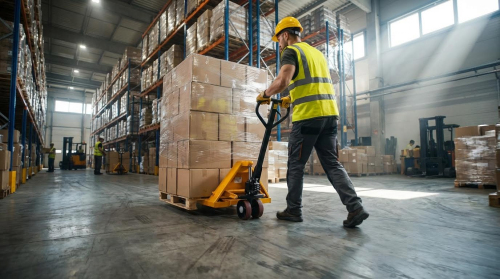
Knowing how to use a pallet truck correctly requires disciplined technique and consistent hazard awareness. This section explains safe operating methods, links them to typical errors, and shows how these practices reduce strain, product damage, and collision risk.
Safe Loading, Fork Position, And Load Securing
Safe loading starts with matching the rated capacity of the pallet truck to the actual mass of the palletised load. Operators should read the capacity plate and verify that the combined weight of goods, pallet, and any attachments stays below this limit. To load, they should align the pallet square to the forks, then drive the forks fully into the pallet openings until the heel of the forks almost touches the opposite stringer. Partial insertion concentrates stress near the fork tips and increases the risk of pallet breakage or tipping during travel.
When learning how to use a pallet truck efficiently, fork height control is critical. The operator should raise the pallet only 20–50 mm above the floor, just enough to clear surface irregularities while keeping the center of gravity low. Excessive fork height amplifies sway, reduces stability, and increases damage if the load falls. The heaviest items should sit low and near the fork heels, with weight distributed evenly across both forks to prevent side tilt. For unstable or stacked loads, operators should apply straps, stretch wrap, or banding to bind units and prevent shifting during acceleration, braking, or cornering.
Common mistakes include lifting damaged pallets, carrying loads with one fork only, and allowing product to overhang excessively. These practices reduce the effective support area and can overload pallet deck boards or fork sections. Another frequent error is lifting the load before confirming that no personnel have hands, feet, or tools near the pallet base. A structured loading routine, combined with visual checks and simple rules such as “forks fully in, load centered, load low,” significantly lowers incident rates and product damage.
Pushing, Turning, And Operating On Slopes
For manual units on level ground, best practice is usually to push the manual pallet jack from behind the handle, not to pull it. Pushing allows operators to use body weight, maintain a neutral spine, and keep better forward visibility. Pulling, especially with a twisted torso, increases musculoskeletal strain and reduces reaction time if the truck encounters an obstacle. Operators should apply smooth, progressive force and avoid sudden jerks that can destabilize loosely stacked loads.
Turning technique strongly affects both stability and component wear. Operators should start turns only after the pallet has cleared obstructions and maintain a low travel speed. Tight, high-speed turns with raised loads shift the lateral center of gravity and can cause the truck to pivot abruptly around one wheel set. Incorrect technique often shows as scuffed wheels, damaged rack uprights, and crushed pallet corners. A correct approach uses wider turning radii, reduced speed before the turn, and no steering corrections while crossing joints, rails, or thresholds.
Slopes, ramps, and dock plates require special procedures when deciding how to use a pallet truck safely. On inclines, the operator must keep the load on the uphill side to prevent runaway conditions. With manual pallet trucks, standard practice is to pull the load uphill and walk downhill behind the handle when descending, always keeping control of the handle and never standing downhill of an uncontrolled truck. Sideways travel across slopes is unsafe, because the combined center of gravity moves toward the downhill side and can exceed the support polygon of the wheels.
Common errors on slopes include turning on a ramp, stopping with the load facing downhill, or attempting to ride on the pallet truck for convenience. These behaviors drastically increase tip-over risk and are incompatible with most safety codes and site rules. Operators should treat any gradient as a controlled zone, apply reduced speed, and, where gradients exceed the pallet truck’s rated capability, select alternative equipment or mechanical assistance.
Visibility, Pedestrian Safety, And PPE
Safe pallet truck operation depends on continuous visual control of the travel path. Operators should keep the load height low enough to see over or around the pallet whenever possible. If the load blocks forward vision, they should travel in reverse while still maintaining ergonomic posture and clear line-of-sight. Before moving, operators should scan for pedestrians, other vehicles, floor contamination, and structural obstacles such as low beams or rack bracing. In narrow aisles, they should use reduced speed and intermittent stopping to reassess conditions.
Pedestrian safety requires predictable movement patterns and clear communication. Operators should avoid cutting across blind corners, emerging suddenly from doorways, or blocking emergency exits with stationary loads. Where traffic routes intersect, they should slow, sound an audible warning if available, and make eye contact with pedestrians before proceeding. Marked walkways, mirrors at intersections, and floor signage support this behavior but do not replace operator vigilance. A frequent mistake is assuming pedestrians will always yield or notice the truck, which contradicts basic risk-control principles.
Personal protective equipment complements, but does not replace, correct technique when deciding how to use a pallet truck in busy areas. Safety footwear with toe protection and slip-resistant soles reduces injury risk from dropped pallets and wheel roll-over. Close-fitting work gloves improve grip on the tow handle and protect against splinters from damaged pallets. High-visibility clothing improves detection in cross-aisle traffic, particularly near loading docks or in low-light storage zones. Operators should avoid loose garments, scarves, or jewelry that could catch on pallets or moving parts.
Typical PPE-related errors include operating in wet or oily areas without appropriate footwear, or using damaged gloves that compromise grip. Another issue is wearing headphones that mask acoustic warnings from other vehicles. Site procedures should define minimum PPE for pallet truck routes and enforce consistent application through supervision and refresher training.
Misuse, Overloading, And Terrain Misapplication
Misuse often originates from treating the pallet truck as a general-purpose cart rather than a load-specific lifting device. Examples include using it to transport people, as a lever to pry equipment, or as an improvised jack. These actions subject the frame, forks, and hydraulics to non-design load paths and can cause sudden failure. Operators must restrict use to handling compatible pallets and still loads that fit within the fork length and width envelope. Training should highlight that the pallet truck is not a ride-on platform, step ladder, or towing hitch.
Overloading remains one of the most critical errors for anyone learning how to use a pallet truck responsibly. Exceeding the rated capacity, even by a small margin, increases hydraulic pressures and wheel contact stresses beyond design limits. Symptoms include excessive handle effort, deformation of fork tips, and permanent set in pallet deck boards. Overloading also reduces braking effectiveness on slopes and lengthens stopping distances. Safe practice requires pre-calculating typical load masses, labeling storage zones with weight data, and dividing heavy consignments into multiple pallets where necessary.
Terrain misapplication occurs when operators use pallet trucks on surfaces outside their design scope. Standard warehouse models are intended for smooth, hard, level floors, not gravel yards, broken concrete, or steep ramps. On rough terrain, small-diameter wheels can jam in potholes or expansion joints, generating high impact loads in the handle and risking sudden stops that throw the load forward. Wet, oily, or icy surfaces further reduce friction and can cause lateral skidding, especially during turns or emergency stops.
Common terrain-related mistakes include driving across dock gaps without dock plates, attempting to cross thresholds with insufficient fork lift, and using indoor-specification wheels outdoors. These practices accelerate wheel wear, damage bearings, and increase incident frequency. Correct application pairs the pallet truck design with the environment: smooth floors for standard units, appropriate wheel materials for corrosive or wet areas, and alternative equipment where gradients or surface damage exceed safe limits.
Summary: Reducing Risk And Lifecycle Costs

Knowing how to use a pallet truck safely directly reduces incident rates, unplanned downtime, and whole‑life ownership costs. The core principles covered in this guide linked equipment capability, surface conditions, and human factors to real operating limits. Pre‑use inspections, structured defect reporting, and lockout practices minimized the probability of catastrophic failures and extended component life. Correct techniques for loading, route control, and speed management helped protect both operators and high‑value inventory.
From an engineering perspective, consistent adherence to rated capacity, center of gravity limits, and stability envelopes reduced peak stresses in forks, axles, and hydraulic assemblies. This practice lowered fatigue damage and deferred major overhauls. Routine checks on wheels, hydraulics, brakes, and batteries allowed maintenance teams to shift from reactive repair to predictive servicing. That approach cut lifecycle costs by reducing emergency callouts, spares consumption, and scrap caused by dropped or damaged loads.
Across the industry, regulators increasingly expected documented training, standard operating procedures, and inspection records for all pallet trucks, both manual and powered. Future trends pointed toward integrated sensors, digital checklists, and telematics that monitored loading patterns, impact events, and utilization. Sites that implemented these controls gained better visibility of misuse, overloading, and terrain misapplication, and could target retraining where it delivered the highest risk reduction.
For practical implementation, facilities should embed pallet truck safety into layout design, traffic management plans, and procurement specifications. Clear rules on route selection, slopes, and storage positions reduced collision and trip hazards. Balanced technology adoption remained essential: even as advanced trucks and monitoring systems became available, safe outcomes still depended on disciplined operator behavior, robust supervision, and continuous improvement of how to use a walkie pallet truck in real operating environments.