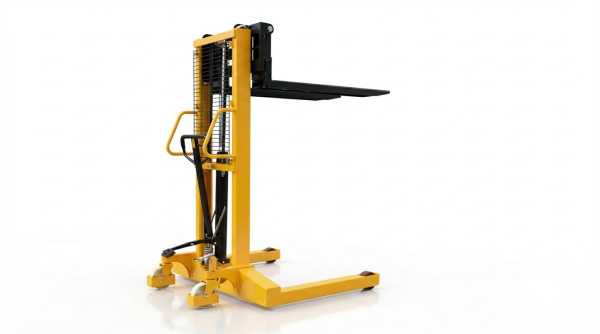
Safe straddle stacker operation depends on understanding machine fundamentals, stability principles, and typical warehouse risk scenarios. This article explains how to operate a counterbalanced stacker through pre‑shift inspections, start‑up checks, and structured handling procedures. It covers control layouts, travel and stacking techniques, and end‑of‑shift battery management, all aligned with common regulatory and training standards. The final section consolidates best practices and compliance considerations so supervisors and operators can build robust, auditable safety programs.
Straddle Stacker Basics And Safety Principles
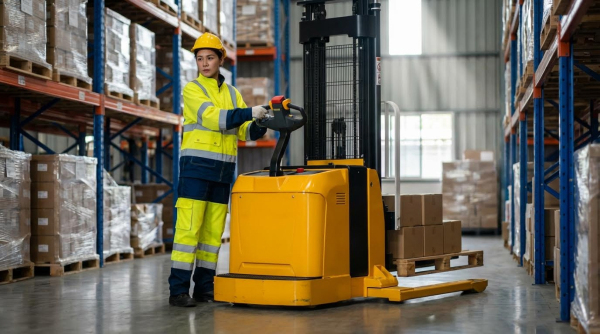
Understanding how to operate a straddle stacker safely starts with its fundamentals and core safety principles. These walk-behind trucks straddle the pallet with outrigger legs, which changes stability behavior compared with pallet jacks and forklifts. Operators who grasp these differences, along with the stability triangle and load moment concepts, can prevent tip-overs and falling loads. This section explains the engineering basis of safe operation so later procedures and checklists make sense in practice.
Key Differences From Pallet Jacks And Forklifts
A straddle stacker used a powered mast and outriggers to lift pallets to racking heights, unlike pallet jacks that only move loads at floor level. The outriggers straddle the pallet, so the load sits between the legs rather than fully ahead of the wheels. This geometry allowed higher lift heights in narrow aisles but reduced tolerance to poor load placement or uneven floors. Compared with ride-on forklifts, straddle stackers typically had lower travel speeds, shorter wheelbases, and walk-behind controls, which shifted the operator alongside or behind the truck instead of on a seated position. These design differences required tighter speed control, better awareness of turning clearances, and strict adherence to rated capacity at the specified load center.
Stability Triangle, Load Center, And Load Moment
The stability triangle concept described how the combined center of gravity of truck and load must stay within a support polygon formed by the wheels and outriggers. On a straddle stacker, this polygon was narrow in the travel direction, so forward tipping became a key risk when lifting high or braking hard. The load center, usually specified as 500 mm from the fork heel for standard pallets, defined the assumed distance used to calculate rated capacity on the data plate. When operators extended the load center by using longer pallets or letting product overhang the forks, the load moment (load × horizontal distance to the fulcrum) increased rapidly. If that moment exceeded the design value, the combined center of gravity could move outside the stability triangle, causing tip-over even if the mass stayed below the nominal capacity. Safe operation therefore required reading the capacity plate, keeping loads tight to the mast, and avoiding tilting or lifting with off-center or unevenly stacked pallets.
Common Accident Modes And Risk Controls
Accidents with straddle stackers typically fell into four categories: tip-overs, loss of steering control, falling loads, and collisions with people or structures. Tip-overs often occurred when operators lifted or traveled with elevated loads on sloped, wet, or uneven floors, or when they turned too quickly with the load raised. Loss of control could follow from excessive speed, poor maintenance of wheels or brakes, or operating with a damaged tiller or control head. Falling loads usually traced back to overloaded pallets, unwrapped or unstable unit loads, fork misalignment, or lifting under damaged pallets. Collisions tended to happen in blind intersections, congested aisles, or when pedestrians walked within the truck’s operating envelope. Effective risk controls included engineering measures such as functional brakes, alarms, and interlocks; administrative controls such as site traffic plans, marked pedestrian zones, and speed limits; and operator training that emphasized low travel height, gradual acceleration and braking, pre-use checks, and stopping work when hydraulic, structural, or control defects appeared.
Pre-Shift Inspections And Start-Up Checks
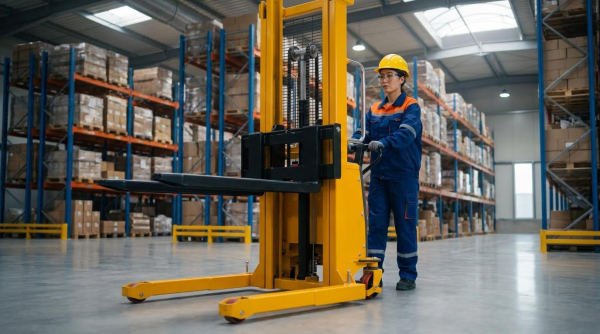
Pre-shift inspections form the foundation of safe, efficient straddle stacker operation. A structured checklist reduces unplanned downtime, prevents hydraulic and structural failures, and directly lowers accident rates. Every inspection step should occur before energizing the truck and before handling any load. Document findings, report defects immediately, and remove unsafe units from service.
Structural, Mast, Fork, And Chain Inspections
Start with a 360° walk-around on level, well-lit ground. Inspect the chassis, straddle legs, and welds for cracks, deformation, corrosion, or impact damage. Check that all guards, covers, and fasteners remain present and secure. Any structural distortion can shift the center of gravity and reduce stability.
Inspect the mast rails for straightness, corrosion, and scoring. Verify that rollers travel freely without binding or flat spots. Look for oil traces on mast channels that may indicate leaking lift cylinders or contaminated chains. Ensure the carriage moves smoothly through the full lift range without abnormal noise.
Examine forks for cracks at the heel, bends in the blade, or twisted tips. Confirm both forks are at the same height and lock positively in their positions. Measure fork thickness at critical sections and compare to the manufacturer’s wear limit. Remove the counterbalanced stacker from service if forks show visible cracks, severe wear, or permanent deformation.
Inspect lift chains and anchor points carefully. Look for rust, tight links, stretched sections, or damaged pins. Check equal chain tension on both sides of the mast. Verify that chain anchors, sheaves, and guards are intact and lubricated according to the maintenance schedule. If you see more than the allowed elongation or any cracked links, apply lockout/tagout immediately.
Hydraulic, Electrical, And Drive System Checks
Before switching on, visually inspect hydraulic hoses, fittings, and cylinders. Look for wet spots, drips, blistered hose covers, or chafing against the mast or frame. Check reservoir level via the sight glass or dipstick, using the specified hydraulic fluid grade. Milky or dark fluid indicates contamination and requires maintenance intervention.
After energizing the truck, cycle the lift and lower functions without load. Listen for cavitation, whining, or jerky motion that suggests air ingress or internal wear. Verify that the mast lifts and lowers at a consistent speed and holds position without creeping. Any sudden drop or inability to maintain height is a critical defect.
Inspect the battery compartment for secure mounting, intact cables, and clean terminals. Check for damaged insulation, loose connectors, or exposed conductors. Confirm that the battery state-of-charge is adequate for the shift and that the charger lead is fully disconnected and stowed before travel. For electric models, ensure emergency disconnects and fuses appear intact.
Examine drive wheels and load wheels for flat spots, chunking, or embedded debris. Check that axles and caster mounts are tight and free from excessive play. Perform a short, slow test drive to verify smooth acceleration, deceleration, and steering response. Abnormal vibration, pulling to one side, or grinding noises require further inspection before use.
Controls, Brakes, Alarms, And Safety Devices
Understanding how to operate a straddle stacker safely starts with confirming that all controls function correctly. With the drive wheels clear of obstacles, test the travel control in both forward and reverse. Verify proportional response at low and high speeds. Ensure directional indicators or mode selectors match actual travel direction.
Test the service brake, parking brake, and any regenerative braking behavior. The truck should stop predictably within the specified distance at low speed. Confirm the parking brake holds the battery-powered stacker and a rated test load on level ground without creep. If braking feels spongy, delayed, or asymmetric, remove the unit from service.
Check the horn, warning buzzer, and any travel or lift alarms. Verify that key-on indicators, battery status lights, and fault lamps illuminate and then behave as specified during self-check. Ensure any blue or amber pedestrian warning lights, if fitted, project clearly on the floor. Functional warning systems are essential in narrow-aisle warehouse environments.
Inspect safety devices such as emergency stop buttons, belly or “belly bump” switches on walk-behind tillers, and operator-presence controls. Activate each device deliberately and confirm that travel and lift functions disable immediately. Check that nameplates, capacity decals, and safety labels are legible so operators can verify rated capacity, load center, and height restrictions before lifting.
Lockout/Tagout Criteria Before Operation
Lockout/tagout protects operators and maintenance staff when a straddle stacker becomes unsafe. Apply lockout when you find structural cracks, bent masts, or damaged forks that compromise capacity or alignment. Do the same for severely worn or elongated chains, missing chain anchors, or failed chain guards. These conditions directly threaten load stability and must not be ignored.
Hydraulic issues also trigger lockout. Tag the truck out if you see active oil leaks, rapid mast creep under load, or erratic lift motion. Electrical defects such as smoking components, damaged cables, exposed conductors, or repeated fault codes require immediate isolation. Remove the key, apply a personal lock where procedures require it, and attach a clear tag describing the defect.
Lock out the lift stacker if brakes fail any stopping or holding test, or if the emergency stop or belly switch does not function correctly. Inoperative horns, alarms, or capacity plates justify removal from service in high-traffic or regulated environments. Never bypass safety devices to keep a unit in operation.
Only qualified personnel should remove lockout/tagout devices after repairs and verification tests. Record the defect, corrective action, and return-to-service checks in maintenance logs. Consistent application of lockout/tagout criteria is a core element of how to operate a straddle stacker within modern safety and compliance frameworks.
Operating Controls And Safe Handling Procedures
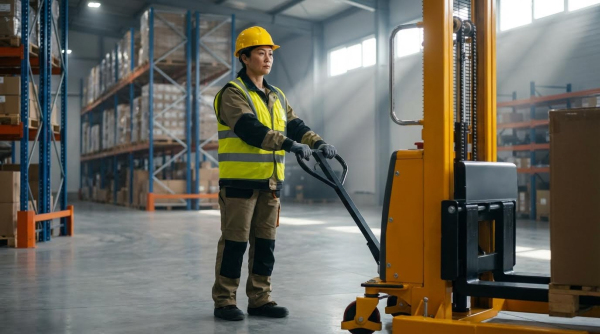
Knowing how to operate a straddle stacker starts with a clear understanding of its control logic and safe handling sequence. Correct use of travel, lift, and braking controls reduces accident risk and improves throughput. This section explains control layout and modes, then walks through picking, transporting, stacking, and finally parking and battery care.
Control Layout, Modes, And Speed Management
Straddle stackers typically used a tiller or handle-mounted control head that combined travel, lift, and safety functions. The head usually included a directional rocker or butterfly switch for forward and reverse, proportional lift and lower buttons, and an emergency reverse “belly button” that pushed the truck away from the operator. Many units offered selectable operating modes, such as normal, creep, and sometimes an ECO mode, that limited acceleration and top speed for tight spaces or precise positioning.
Operators needed to stand to one side of the tiller arm, not directly in front of the truck, to maintain a clear escape path. In normal mode, travel speed commonly reached about 4.0 km/h without load and around 3.5 km/h at rated load, but facilities often imposed lower internal limits. Creep or turtle mode allowed very low speed with the tiller arm in a near-vertical position, which helped when entering narrow aisles or aligning forks with pallets. Good practice required smooth throttle inputs and early deceleration before corners to avoid sudden weight transfer and loss of stability.
Braking usually combined electromagnetic service braking with regenerative braking when the operator released the travel control. The parking brake engaged automatically when the key switched off or the tiller arm moved to the upright position. Operators had to verify the function of the horn, warning lights, and any installed travel alarms before use, because these devices formed a key part of pedestrian safety in shared warehouse aisles.
Picking Up, Transporting, And Lowering Loads
Safe load handling started with reading the capacity plate and confirming that the planned load mass and load center fell within the rated envelope. Operators approached the pallet squarely, with forks lowered and spread to match the pallet openings while keeping the outriggers clear of obstacles. They advanced slowly until the forks fully entered the pallet, ensuring the load did not extend beyond the fork tips and that weight distribution remained even across both blades. Only then did they raise the load just high enough to clear the floor, typically 50–100 mm, to keep the center of gravity as low as practicable.
During transport, the operator traveled with the load in the lowered, stable position and maintained a clear line of sight. In confined aisles, operating in reverse often improved visibility, provided pedestrians stayed outside the travel path. Sudden steering inputs, abrupt braking, and sharp turns with an elevated load increased the risk of tip-over or load shift, so facilities usually required reduced speed in congested zones and at intersections. Operators avoided ramps and slopes wherever possible; if a short gradient was unavoidable and permitted by site rules, the load stayed upgrade, and speed remained very low.
Lowering the load required controlled, incremental valve operation to prevent impact forces on the pallet and racking. Operators checked that no feet, hands, or other obstructions were under the forks before lowering. They aligned the pallet with the floor markings or staging lines, then lowered until the pallet fully supported the load and the forks were slack. Finally, they reversed slowly, confirming that the pallet did not drag or shift and that no product overhung the edges unsafely.
Safe Stacking, De-Stacking, And Aisle Navigation
Stacking operations demanded careful control of mast height, load center, and truck positioning. The operator approached the rack or stack in a straight line, stopped at a safe distance, and raised the load to just above the target beam level while the truck still stood clear of the structure. With the load elevated, they advanced slowly until the pallet reached the correct position over the beams or stack, keeping mast tilt neutral if fitted and ensuring the load did not contact uprights or bracing members. They then lowered the pallet gently onto the support points before withdrawing the forks horizontally to avoid dragging.
De-stacking followed the reverse sequence. The operator centered the forks at the pallet openings, raised slightly to take the weight, and checked that the pallet cleared the beams fully before backing out. They avoided high-speed travel with elevated loads, especially in narrow aisles, because the combined center of gravity moved outside the stability triangle more easily at height. Facilities often defined designated travel aisles and stacking aisles, with one-way systems and marked pedestrian crossings, to minimize conflicts and blind corners.
Effective aisle navigation combined low speed, constant scanning, and the use of horns at intersections or doorways. Operators maintained clearance from uprights, end-of-aisle guards, and stored product to prevent side impacts. They respected the specified minimum turning radius of the counterbalanced stacker and avoided pivot turns in tight spaces that could overload drive components or cause the outriggers to strike rack legs. Good practice also included never allowing bystanders to walk or stand under raised loads or between the stacker and fixed structures.
Parking, Shut-Down, And Battery Management
Correct parking procedures protected both personnel and equipment. At the end of a task, the operator chose a designated parking area on firm, level ground, away from fire exits, emergency equipment, and traffic routes. They brought the truck to a controlled stop, lowered the forks fully to the floor to remove stored energy from the hydraulic system, centered the tiller, and engaged the parking brake. The key or access card was removed to prevent unauthorized use, and any visible defects or unusual behaviors were reported according to site procedures.
For electric straddle stackers, battery management formed a critical part of safe operation. Operators checked the state of charge before each shift and avoided deep discharges below the manufacturer’s recommended threshold, which often sat around 20–30% remaining capacity. At the end of the shift, they connected the truck to the appropriate charger in a ventilated charging zone, ensuring the charger rating matched the battery type and voltage. They followed site rules for personal protective equipment during electrolyte checks on lead–acid batteries, including eye and hand protection and correct handling of vent caps.
Good practice included keeping battery tops clean and dry to prevent stray currents and corrosion, and inspecting cables and connectors for heat damage or loose contacts. Operators never smoked or created ignition sources in charging areas and ensured adequate separation from combustible materials. By consistently applying structured shut-down and charging routines, facilities reduced unplanned downtime, extended battery and component life, and maintained safe readiness for the next operator who needed to know how to operate a lift stacker efficiently and safely.
Summary Of Best Practices And Compliance Considerations

Safe, efficient operation of a straddle stacker depends on disciplined pre-use checks, correct control use, and conservative load handling. Operators who understand stability principles, load moment, and rated capacity manage risk better and reduce accident frequency. Facilities that combine structured training, clear procedures, and preventive maintenance achieve higher uptime and lower lifecycle cost. These elements form the practical backbone of any program built around how to operate a straddle stacker.
From a technical standpoint, best practice starts with standardized pre-shift inspections that cover structure, mast, forks, chains, hydraulics, electrics, and braking systems. Any cracks, bent components, hydraulic leaks, or faulty alarms should trigger immediate lockout/tagout under site procedures and relevant occupational safety regulations. During operation, loads must remain within the rated capacity at the specified load center, kept low while traveling, and centered fully on the forks to keep the combined center of gravity inside the stability triangle. Speed management, smooth steering inputs, and strict separation from pedestrians directly address the four main accident modes: tip-over, loss of steering, falling loads, and collisions.
Compliance considerations focus on aligning training, procedures, and documentation with local workplace safety law and applicable standards for powered industrial trucks. Employers should maintain written operating procedures, inspection checklists, and maintenance records, and verify that only trained, assessed operators use the equipment. Looking ahead, increased use of electronic access control, event logging, and advanced safety functions such as speed limiting and enhanced braking will shape how to operate a counterbalanced stacker in modern warehouses. However, these technologies complement rather than replace fundamentals: correct load assessment, conservative driving technique, and rigorous maintenance remain the core of safe lift stacker operation. Additionally, ensuring proper use of tools like a hydraulic pallet truck can further enhance operational safety and efficiency.