Moving a 1‑ton pallet off a truck is a high‑risk task that demands engineered solutions, not manual strength. This article explains how to lift a 1‑ton pallet off a truck safely by assessing the load, the task, and the work environment before any movement starts.
You will see how to choose between forklifts, pallet jacks, cranes, hoists, and other powered options, and how capacity ratings, stability, and ground conditions control that choice. Later sections detail step‑by‑step operating procedures, operator training needs, and how OSHA, ANSI, and site rules shape compliant workflows. The final section brings these points together into clear, practical takeaways for planning, equipping, and supervising safe 1‑ton pallet handling.
Assessing The Load, Task, And Work Environment
Any plan for how to lift a 1 ton pallet off a truck must start with a structured assessment. The load, the task steps, and the work environment all affect equipment choice and risk level. A clear assessment prevents overloading, tip‑overs, and crush injuries. It also supports compliance with OSHA material handling rules and site procedures.
Why A 1‑Ton Pallet Is Never A Manual Lift
A 1 ton pallet exceeds any safe manual handling limit by a wide margin. Typical guidance capped single‑person manual lifts near 20–25 kg under ideal conditions. Even team lifting policies usually set thresholds around 20–25 kg per person. A 1 000 kg pallet would require dozens of people to stay within those limits, which is not realistic or safe.
For this reason, engineers always classify a 1 ton pallet as a mechanical lift. Powered or manual pallet jack, forklifts, cranes, or hoists must provide the lifting force. Workers still face risk from pushing, pulling, and guiding, so good technique remains important. The core rule is simple: no one attempts to raise or support the pallet weight with the body.
Evaluating Truck, Dock, And Ground Conditions
Before choosing how to lift a 1 ton pallet off a truck, check the interface surfaces. The truck bed height, dock level, and yard ground all influence safe equipment use. Engineers look at three main factors: level, strength, and traction.
| Aspect | What To Verify |
|---|---|
| Truck bed | Height, integrity of floor, no rot or broken boards, no excessive deflection |
| Dock edge | Use of dock leveler or plate, rated capacity ≥ pallet + equipment |
| Ground | Flat, compact, no potholes, suitable for wheel loads and outriggers |
| Surface friction | Dry, clean, not oily or icy, wheel chocks in place |
Uneven or weak surfaces increase the chance of forklift instability or pallet jack hang‑ups. If the trailer is not restrained, movement during entry or exit can eject equipment. Dock locks, wheel chocks, and dock plates with known ratings are therefore part of the engineering check. Where ground conditions are poor, overhead lifting or re‑positioning the truck may be safer.
Hazard Identification And Traffic Segregation
Handling a 1 ton pallet adds significant kinetic energy to any incident. A structured hazard scan should precede each unloading task. Typical hazards include blind spots, mixed traffic, poor lighting, damaged pallets, and cluttered aisles.
Segregating people from equipment is one of the most effective controls. Common measures include:
- Mark dedicated forklift and pallet jack lanes with floor paint or barriers.
- Define pedestrian walkways with guardrails where possible.
- Use stop lines and mirrors at blind corners near dock doors.
- Limit access to the dock to trained staff during unloading.
Supervisors should also review pallet condition before lifting. Cracked stringers, missing deck boards, or loose wrapping can cause load shifts. A damaged pallet under a 1 ton load justifies re‑palletizing before any move. Good housekeeping keeps trip hazards away from the truck‑to‑dock path.
PPE, Ergonomics, And Task Rotation Basics
PPE does not replace engineering controls, but it reduces injury severity when incidents occur. For a 1 ton pallet, basic PPE usually includes safety footwear with toe protection, gloves matched to the material, and high‑visibility clothing. Hard hats and eye protection are common near overhead loads or active docks.
Even with mechanical aids, operators face ergonomic loads from steering, braking, and securing pallets. Good practice includes:
- Adjusting handle height or seat position to keep neutral joint angles.
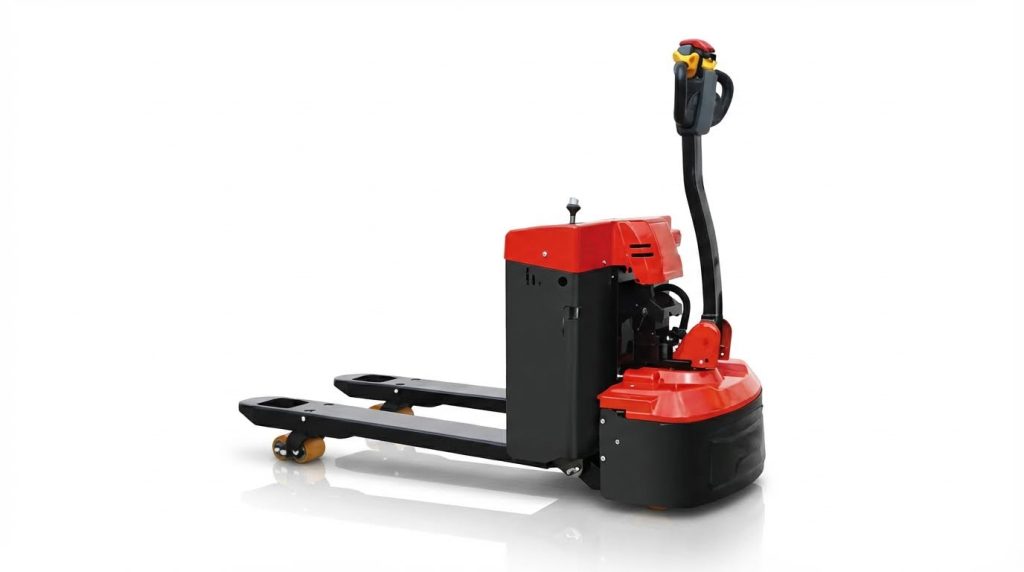
- Avoiding high push or pull forces on walkie pallet truck over long distances.
- Planning routes that reduce sharp turns and slope transitions.
Task rotation helps manage fatigue, especially in busy loading seasons. Rotating staff between equipment operation, staging, and inspection tasks spreads physical and mental load. Regular ergonomic training reinforces safe body positions when attaching slings, scanning labels, or adjusting forks. Combined, these measures support a repeatable, low‑risk process for lifting 1 ton pallets off trucks.
Selecting The Right Lifting And Moving Equipment

Choosing the right equipment is the core of any plan for how to lift a 1 ton pallet off a truck. The wrong choice can overload gear, damage the pallet, or injure the operator. The right choice considers load weight, lift height, travel distance, and the truck and dock layout. This section explains how forklifts, pallet jacks, cranes, hoists, and slings fit into safe workflows for 1‑ton pallets.
Forklift Vs. Pallet Jack For 1‑Ton Pallets
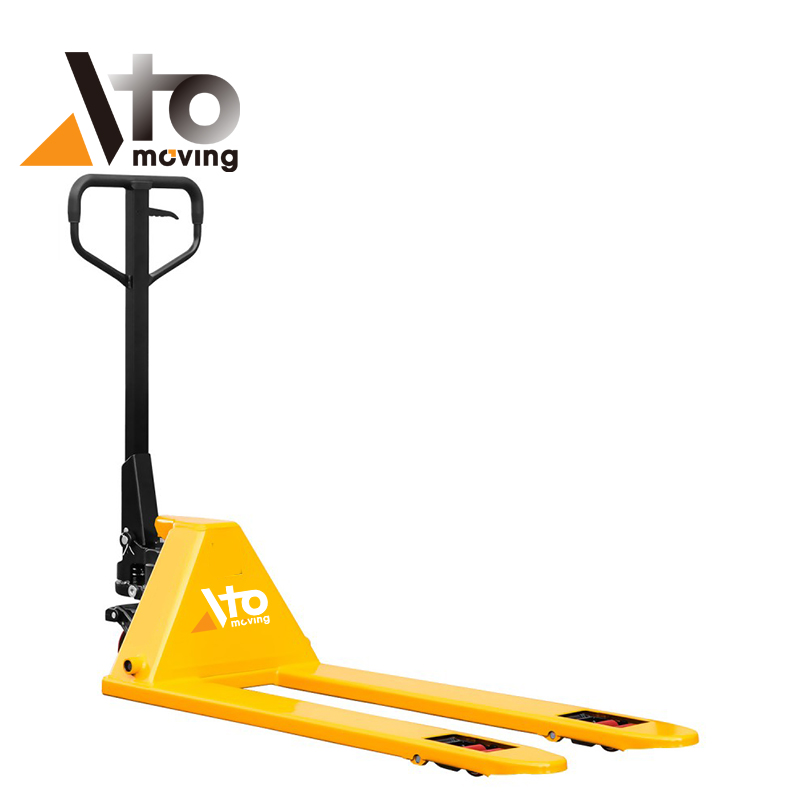
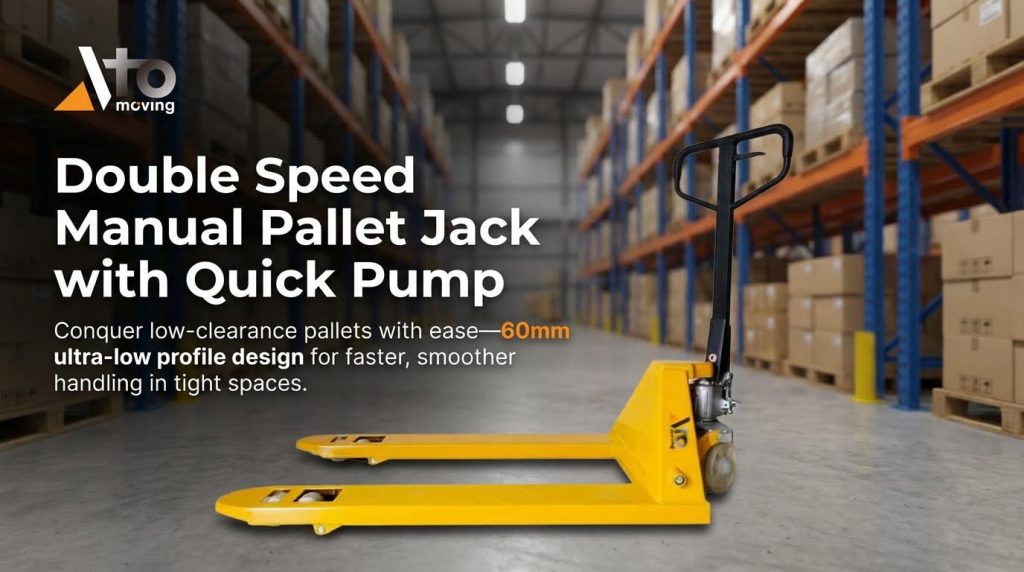
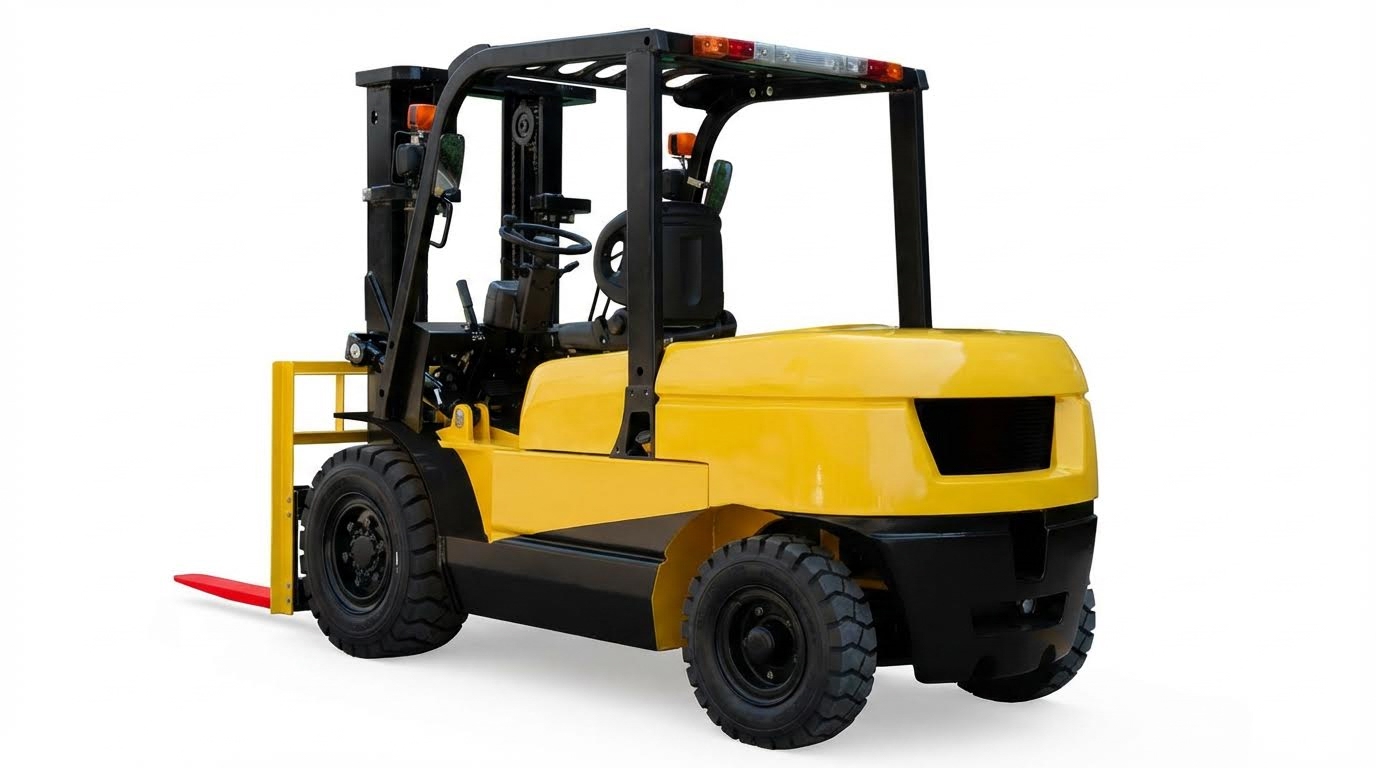
A 1‑ton pallet is within the rated capacity of most forklifts and quality pallet jacks, but the use case is different. Forklifts lift higher, handle uneven ground better, and move faster over distance. Pallet jacks keep the load low and suit tight spaces inside a trailer or on a smooth dock.
| Aspect | Forklift | Pallet Jack |
|---|---|---|
| Typical lift height | Up to several metres | About 75–200 mm |
| Load capacity range | ≈1.5–20 tonnes | ≈1.5–2.5 tonnes |
| Best use | Truck unloading, stacking, yard moves | Short moves on flat floors |
| Space need | Larger turning radius | Very tight aisles |
| Training level | Formal license and evaluation | Basic task training |
For lifting a 1‑ton pallet off a truck bed, a forklift usually offers more control at the truck edge. A pallet jack can work if the truck has a level dock or liftgate and the route stays flat and clear. Manual pallet jacks can fatigue operators at 1‑ton loads, so powered options or forklifts reduce strain and improve throughput.
When To Use Cranes, Hoists, And Slings
Cranes and hoists become relevant when forklifts or pallet jacks cannot reach the load safely. Typical cases include narrow yards, uneven ground near the truck, or when the pallet must land on an elevated platform without a dock. Overhead beams or gantries can support electric chain hoists for repeat truck positions.
When using slings with a crane or hoist, the pallet and load must accept sling forces without crushing or slipping. Use rated lifting points, spreader beams, or pallet lifting frames where possible. Select sling type and angle to keep sling tension within rated capacity and to control load tilt. Follow the applicable crane and sling standards for inspection, tagging, and rejection criteria before every lift.
Capacity Ratings, Stability, And Load Geometry
Every plan for how to lift a 1 ton pallet off a truck must start with capacity checks. Use the equipment nameplate, not assumptions, to confirm the rated load at the required lift height and load centre. On forklifts, longer loads shift the load centre forward and reduce safe capacity.
Key engineering points include:
- Keep the pallet centred on the forks or lifting device.
- Insert forks fully, with enough spread to support both stringers.
- Keep the mast tilted back slightly when travelling to improve stability.
- Avoid off‑centre picks that twist the pallet or rack.
Load geometry matters as much as mass. Tall or unevenly stacked pallets raise the centre of gravity and increase tip‑over risk. Wrapping, banding, or using corner posts can stiffen unstable loads before lifting them off a truck.
Space, Surface, And Power Constraints
Space around the truck strongly influences equipment choice. Forklifts need turning room at the trailer doors and on the dock. Very narrow aisles or tightly parked trailers favour pallet jacks or walk‑behind powered trucks. Measure aisle width and turning space before you commit to an equipment type.
Surface quality also matters. Pallet jacks need smooth, hard floors because small wheels bog down on rough or sloped ground. Forklifts with larger tyres handle minor defects better but still need rated floor bearing capacity. For outdoor yards with gravel or steep ramps, choose models built for rough terrain and check gradient limits.
Power supply and duty cycle shape long‑term choices. Electric forklifts and powered pallet jacks suit indoor use and frequent cycling if charging points or spare batteries exist. Internal combustion forklifts work well outdoors or for intermittent dock work where exhaust is less of an issue. Where power is not available, a truck‑mounted crane or a self‑contained hoist system can still lift a 1‑ton pallet safely off a truck.
Safe Operating Procedures And Compliance
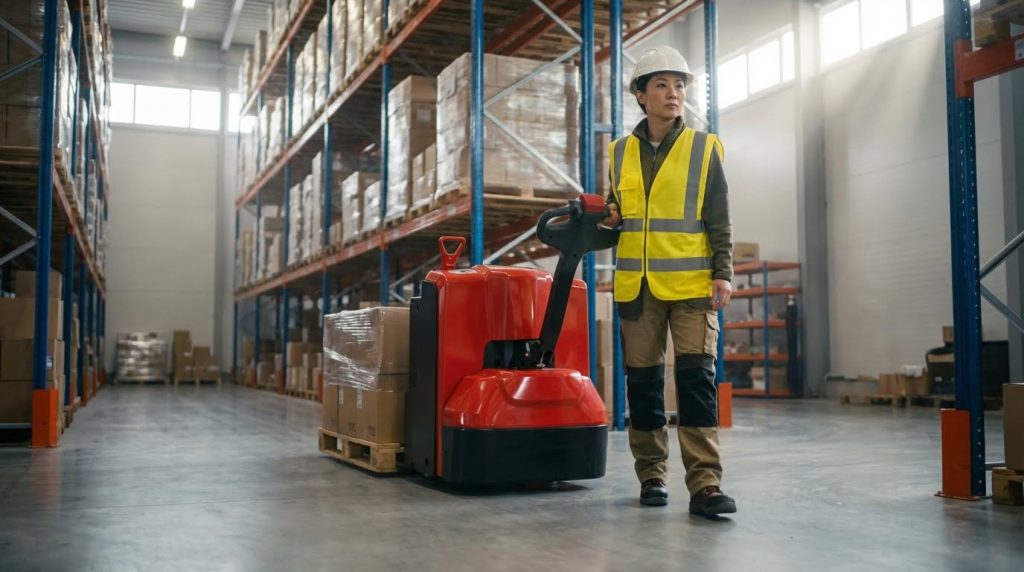
Safe methods for how to lift a 1 ton pallet off a truck depend on disciplined operating steps and strict compliance. This section links the practical sequence of lifting with training, regulations, and modern monitoring tools. The aim is simple. Keep people safe, protect equipment, and stay compliant while maintaining flow.
Step‑By‑Step: Lifting A Pallet Off A Truck
Every lift of a 1‑ton pallet should follow a repeatable, written procedure. The sequence starts before any equipment moves. Operators must confirm pallet weight, load stability, and equipment capacity with a clear margin. They should also inspect the pallet for broken boards, loose wrap, or shifted cargo.
- Secure the truck with wheel chocks and apply parking brakes.
- Open doors fully and check for load shift or leaning stacks.
- Verify floor condition inside the trailer and at the dock edge.
- Position the forklift or walkie pallet truck square to the pallet.
- Set fork spacing to support the outer stringers and insert fully.
- Lift only enough to clear the deck, then back straight out.
- Lower the pallet to travel height, usually just above floor level.
- Travel at walking speed to the drop zone and keep the mast tilted slightly back if using a forklift.
- Stop, straighten, level the forks, and lower the pallet onto a flat, rated surface.
- Withdraw forks slowly and recheck pallet stability before leaving.
Operators must avoid sudden steering, rapid mast movements, or diagonal extraction from the trailer. These actions can overload a single fork, reduce stability, and increase tip‑over risk. Clear communication with spotters and strict no‑go zones for pedestrians around the trailer are essential.
Operator Training, Licensing, And Supervision
Any person who lifts a 1‑ton pallet with powered equipment must hold current authorization. Forklift operators require formal instruction, practical evaluation, and site‑specific familiarization. Training should cover load charts, center of gravity concepts, and how attachments change rated capacity.
- Written theory on equipment controls, stability, and inspection.
- Hands‑on driving tests with loaded and empty pallets.
- Assessment on trailer entry, dock edges, and confined spaces.
- Refresher training after incidents, near misses, or equipment changes.
Supervisors must verify licenses, monitor behaviors, and correct unsafe shortcuts. They should track who is authorized for which truck class and which load limits. Structured observation rounds and checklists help keep daily practice aligned with procedures. For high‑risk tasks, such as lifting near dock edges or in busy yards, direct supervision or a spotter is good practice.
OSHA, ANSI, And Site-Specific Rules
Regulations give the baseline for how to lift a 1 ton pallet off a truck safely. In the United States, OSHA 29 CFR 1910 Subpart N sets core rules for material handling. Section 1910.176 covers general material handling requirements such as secure storage, clear aisles, and safe stacking. Section 1910.178 governs powered industrial trucks and is often cited during warehouse inspections.
Overhead and gantry crane rules sit in 1910.179, and sling rules in 1910.184. These apply when a crane or hoist lifts the pallet rather than a forklift. ANSI and ITSDF B56 standards add detailed guidance for industrial trucks. They address stability tests, labeling, and safe operation practices.
Sites must convert these external rules into clear local procedures. Examples include defined maximum pallet weights by equipment type, trailer restraint policies, and pedestrian exclusion zones. Written rules should state when a pallet may be lifted only by forklift, when a hoist is allowed, and when a task is prohibited. Regular audits against OSHA and ANSI guidance help find gaps in signage, training, or equipment condition.
Digital Tools, Telematics, And Predictive Maintenance
Digital systems now support daily decisions on heavy pallet lifts. Telematics units on forklifts can record impacts, overload events, and travel speeds. Supervisors can then focus coaching on high‑risk behaviors and high‑risk zones such as dock doors. Access control modules can also lock out trucks for untrained operators or for overdue inspections.
Predictive maintenance tools track hours, hydraulic pressures, and fault codes. They help plan service before a critical failure during a 1‑ton lift. This reduces the chance of mast or brake issues at a dock edge. Some systems link load sensors with alarms when operators approach or exceed rated capacity.
Digital checklists on tablets can guide pre‑shift inspections. They ensure forks, chains, tires, and brakes are checked before the first pallet moves. Data from these tools feeds safety meetings and continuous improvement work. The goal is not surveillance alone but fewer breakdowns, fewer impacts, and safer, smoother lifts off every truck.
Summary And Key Takeaways For Safe 1‑Ton Lifts
Safe practice for how to lift a 1 ton pallet off a truck always starts with planning. A 1‑ton pallet is never a manual lift, so you must select a suitable mechanical aid and verify the work area, surface, and approach path before any movement. The full process links load assessment, equipment choice, operator training, and regulatory compliance into one system.
From an engineering view, forklifts, powered pallet jacks, or cranes with rated slings are the primary options. The chosen system must exceed the pallet mass, keep the combined centre of gravity inside the stability triangle, and work within the truck, dock, or yard geometry. Operators need formal training, licensing where required, and task rotation to control fatigue. PPE, clear traffic routes, and pallet inspection close the main risk gaps.
Industry trends moved toward powered aids, digital checklists, and telematics that track overloads and impacts. Future systems will likely add more automation, collision avoidance, and predictive maintenance to reduce human error. However, these tools still depend on correct capacity selection and conservative operating rules.
For practical implementation, standardise a written procedure for lifting a 1‑ton pallet off a truck. Define which equipment is allowed, minimum capacity margins, inspection steps, and spotter use. Review OSHA and ANSI guidance, then embed those rules into training, supervision, and daily pre‑use checks. This balanced approach keeps operations efficient while holding a strong safety margin for every heavy pallet move.