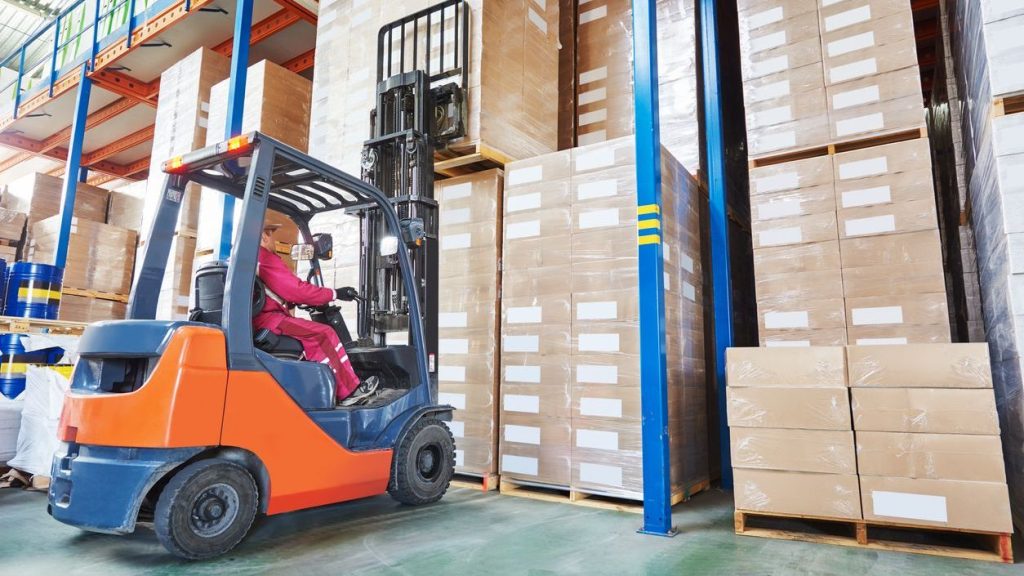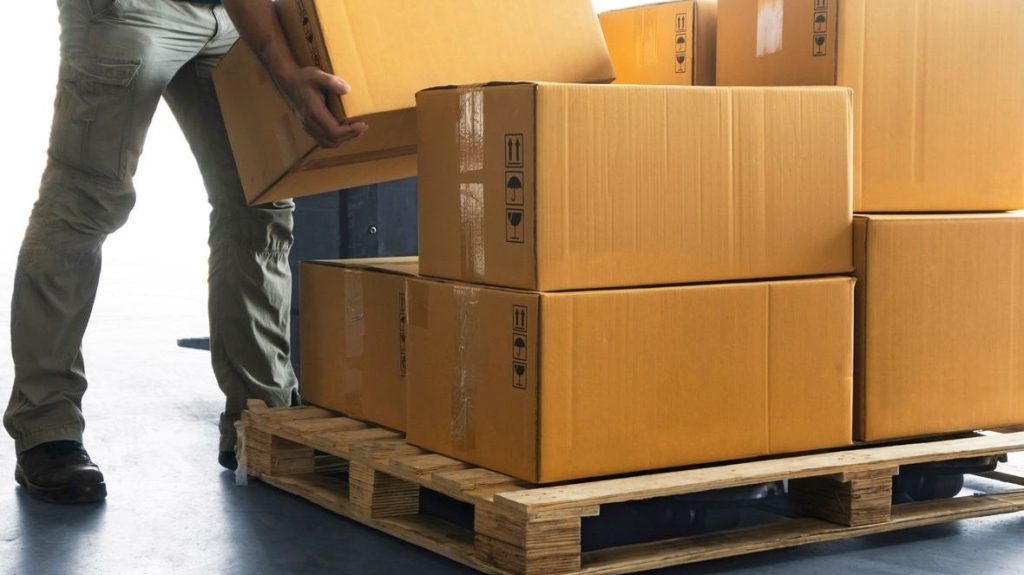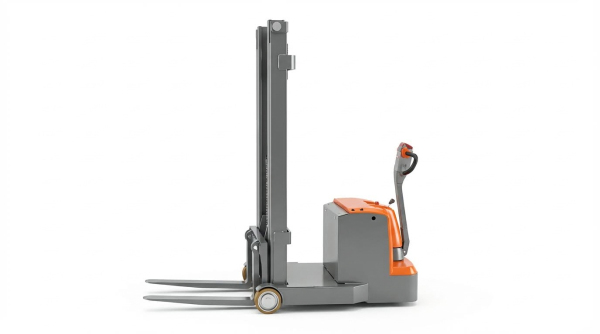
Operations teams asking how high can a walkie stacker lift must balance lift height, capacity, and stability. This article explains typical lift ranges, how capacity falls with height, and where different walkie stacker classes work best in rack, bulk, and narrow-aisle layouts.
You will see how simplex, duplex, and triplex masts change collapsed height, reach, and energy demand, and how these trade-offs tie back to rack design and aisle geometry. Stability limits, load centers, and standards such as ISO 3691-5 frame the safe operating window, especially on imperfect floors and at maximum mast extension.
The final section connects these engineering limits to day-to-day selection decisions. It shows how to choose a walkie stacker lift system that meets required lift height while staying within safe design margins for your specific warehouse or cold storage environment.
Typical Lift Heights, Capacities, And Use Cases
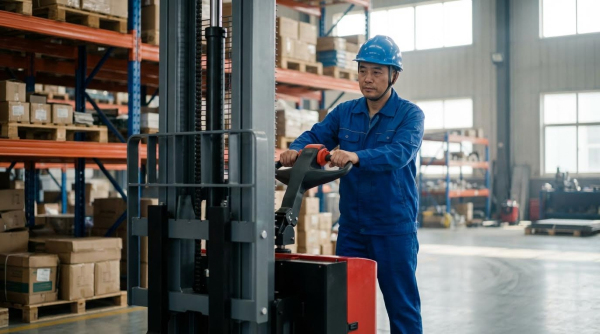
This section answers a core question for planners and engineers who ask how high can a walkie stacker lift. It links typical lift ranges, capacity bands, and real use cases so you can match stacker design to storage strategy. The focus stays on practical engineering limits, not catalog extremes. You can use these ranges to screen options before detailed specification work.
Common Lift Ranges: Low, Medium, And High Reach
Walkie stackers covered low, medium, and high reach needs in warehouses and plants. Low-lift units typically raised loads up to about 1,000 mm. These units suited dock work, pallet transfer, and feeding production lines. Medium-reach walkie stackers usually worked between 2,000 mm and 4,000 mm. They matched standard pallet racking in small warehouses or back-of-store areas.
High-reach designs answered the question “how high can a walkie stacker lift” in dense storage sites. Typical high-reach electric stackers worked from 4,000 mm up to around 5,400 mm. Some specialized models reached about 7,000–8,000 mm, but these needed careful stability checks. As lift range increased, mast design shifted from simple single-stage to duplex or triplex to control collapsed height and visibility.
| Range | Typical max height | Typical use |
|---|---|---|
| Low lift | ≤1,000 mm | Dock work, line feeding |
| Medium reach | 2,000–4,000 mm | Standard pallet racking |
| High reach | 4,000–5,400 mm | Higher rack storage |
Capacity Versus Height: 900–2,000 Kg And Beyond
Capacity always dropped as lift height increased. Typical walkie stackers carried 900–2,000 kg at their rated load center near floor level. Full-electric stackers sometimes handled up to 3,000 kg or more, but usually at moderate height. At higher levels, manufacturers de-rated capacity to keep the overturning moment within the truck stability triangle.
Engineers needed to read the capacity plate and the detailed rating chart, not only the headline figure. A truck rated 2,000 kg at 600 mm load center and 3,000 mm height might only handle a lower mass at 5,000 mm. Higher masts also raised hydraulic demand and battery draw. This reduced run time per charge, especially in intensive shift work.
- Check capacity at the actual rack height, not just at ground level.
- Confirm the load center for your pallets and attachments.
- Allow margin for uneven loading and packaging variation.
These checks answered “how high can a walkie stacker lift safely with my real loads,” not only in theory.
Application Mapping: Rack Storage, Bulk, And Narrow Aisles
Different lift ranges mapped cleanly to typical warehouse applications. Low-lift walkie stackers supported floor stacking, staging lanes, and cross-dock transfer. They favored short moves and frequent loading cycles. Medium-reach units matched two- to three-level rack systems. These systems often stood between 2 m and 4 m high.
High-reach walkie stackers worked in denser pallet racking. Heights around 4,000–5,400 mm suited mid-bay storage without needing ride-on reach trucks. In narrow aisles, compact chassis and precise control handles mattered more than absolute height. Here, engineers balanced three factors:
- Required rack beam level in millimetres.
- Minimum aisle width for safe steering and clearance.
- Allowed mast overhang above the top beam.
Bulk storage often used lower lift heights but higher capacities. Pallets sat on the floor or in drive-in lanes with limited levels. In these layouts, the answer to “how high can a walkie stacker lift” mattered less than turning radius and robustness.
Special Environments: Cold Storage And Tight-Clearance Areas
Cold storage and low-overhead spaces changed mast and lift choices. In cold rooms, engineers limited lift height to what the insulation envelope and sprinkler layout allowed. Electric stackers for chilled or frozen areas used hydraulic seals and electronics that tolerated low temperatures. Travel and lift speeds often reduced slightly in these conditions.
Tight-clearance areas, such as mezzanines or older buildings, pushed designers toward low-collapsed-height masts. Duplex or triplex masts provided higher lift while clearing doorways and beams when lowered. However, higher-stage masts increased weight and complexity. That affected stability, maintenance, and battery life.
In these sites, the practical answer to “how high can a walkie stacker lift” came from three constraints:
- Clear ceiling and obstruction height.
- Required working height at the highest pallet position.
- Safe residual capacity at that height and load center.
Engineers often accepted slightly lower rack beams or reduced pallet height to keep within safe and efficient lift limits.
Mast Types And Their Engineering Trade-Offs
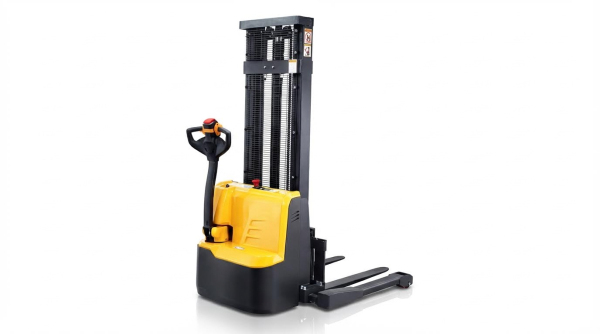
Mast design answered a core question in warehouses: how high can a walkie stacker lift without losing stability. Simplex, duplex, and triplex masts supported different lift windows, from low dock work to high-bay racking near 6 metres and above. Each step up in mast stages added reach but also complexity, cost, and tighter safety margins. Engineers and buyers had to balance lift height, collapsed height, aisle space, and energy use when selecting a walkie stacker mast.
Simplex, Duplex, Triplex: Height Ranges And Use Windows
Simplex masts used a single stage and offered the lowest reach but the best rigidity. They typically worked around dock heights, back-of-store areas, and low mezzanine feeds. Duplex masts used two telescopic sections and covered medium lift ranges, often up to about 6 metres in warehouse racking. They stayed compact when lowered yet answered most standard pallet rack needs.
Triplex masts added a third stage to push lift heights into high-bay territory. They allowed operators to reach rack beams above 6 metres and, in some designs, far higher. These masts answered search intent around how high can a walkie stacker lift in dense storage. However, triplex systems needed more precise setup, higher operator skill, and tighter maintenance control.
How Mast Geometry Affects Stability And Load Center
Mast geometry directly set the safe lift envelope. As stages extended, the load center moved further from the truck’s support polygon. This increased overturning moment and reduced the rated capacity at height. Duplex masts kept a shorter lever arm than triplex designs at the same load center, so they offered better stability for mid-level racks.
Triplex masts raised the combined center of gravity of the truck, mast, and load. At maximum height, small floor defects or side loads had larger effects. Engineers used wider straddle legs, reinforced C-channel sections, and tighter mast clearances to control deflection. Correct load placement on forks and strict respect of the rated load center stayed essential for all mast types.
Speed, Energy Demand, And Maintenance By Mast Type
Higher-stage masts usually lifted slower to limit dynamic loads and sway. Typical walkie stackers lifted at roughly 0.1 metres per second under load, but duplex systems often ran faster than triplex designs. Triplex masts needed more hydraulic work because they moved more cylinders and chains over longer strokes. This extra demand increased battery draw and reduced run time per charge.
Maintenance needs also rose with mast complexity. Simplex masts had fewer rollers, chains, and pivot points, so inspections were quicker and wear paths were shorter. Duplex masts added extra chain runs and rollers that required regular lubrication and tension checks. Triplex masts introduced the most wear parts and needed close monitoring of chain stretch, roller wear, and cylinder seals. Neglect here directly reduced safe lift height and increased the risk of binding or uneven extension.
Matching Mast Height To Rack Design And Aisle Layout
Correct mast choice started from the rack drawing, not from the truck brochure. Engineers first fixed maximum beam height, pallet overhang, and any sprinkler or roof steel clearance. They then selected a mast that lifted slightly above the top beam, often by 150–300 millimetres, to allow clean entry and exit. Overspecifying mast height just to “future proof” a site often slowed lifting and increased sway for no benefit.
Aisle width also limited how high a walkie stacker could work safely. Narrow aisles magnified the effect of small steering errors and mast tilt at height. Taller masts needed tighter guidance on turning points, staging zones, and travel with elevated loads. In retrofit projects, teams sometimes chose duplex masts and limited top beam height instead of triplex systems. This trade-off improved stability and energy use while still answering everyday storage needs.
Stability Limits, Safety Standards, And Design Margins
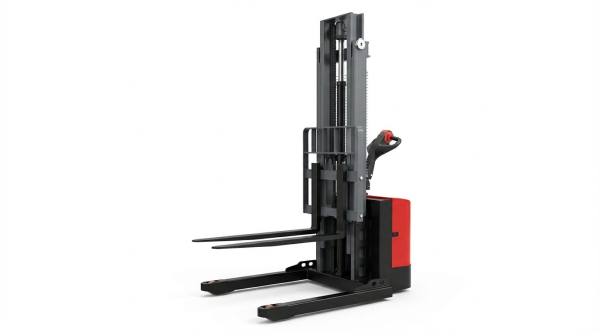
Engineers who ask how high can a walkie stacker lift must always link height to stability. Rated lift height, load center, and floor conditions set the real safe limit, not the spec sheet alone. This section explains how load moments, ISO rules, and design margins define safe operating envelopes for pedestrian stackers. It also shows how controls and braking technology support stable handling at the top of the mast.
Load Center, Moment, And De-Rating At Height
Lift height and load center create a bending moment around the drive axle. This moment drives stability limits. Typical walkie stackers use a load center near 600 mm. At maximum height, that same load center creates a much larger overturning moment than at low lift.
Manufacturers therefore de-rate capacity as mast height increases. A truck rated for 2,000 kg at low lift may allow only a fraction of that near 5,000 mm. Capacity tables or load charts define the safe zone. Operators must read these charts before they ask how high can a walkie stacker lift for a given pallet weight.
Key engineering checks usually include:
- Confirm rated capacity at the actual load center, not just at 600 mm.
- Compare required lift height with the de-rating curve for that mast.
- Keep heavy, dense loads below the top racking levels when possible.
These steps keep the resultant center of gravity inside the stability triangle under static and dynamic conditions.
ISO 3691-5 And Key Safety Requirements For Walkie Stackers
ISO 3691-5:2014 defined safety rules for pedestrian-propelled industrial trucks. It covered stackers up to 1,000 mm lift and specified tests on smooth, hard floors. Modern electric walkie stackers that lift 2 m to 6 m still follow the same safety logic, even when they fall outside that exact scope.
Core requirements include:
- Verified stability with rated load at maximum lift height.
- Guarding of moving parts and safe operator positions behind the tiller.
- Reliable braking with fail-safe behavior on slopes and during power loss.
Manufacturers extend these principles to higher lift designs. They validate how high can a walkie stacker lift while still passing tilt and stability tests. Documentation must state rated capacity, lift height, and any limits for floor slope or surface quality.
Site managers should align local rules with ISO concepts. That means written procedures, signage for maximum pallet weights, and training on the meaning of capacity plates and warning labels.
Floor Conditions, Mast Deflection, And Tipping Risks
Uneven floors reduce the effective stability margin at height. Small level changes under the drive wheel or support legs tilt the whole mast. At 4,000 mm to 5,400 mm lift, a few millimetres of base tilt can move the load center line far from the ideal axis.
Mast deflection also matters. Every mast bends forward under load. Duplex masts usually deflect less than triplex masts at the same height. Designers therefore choose stronger sections or C-channel profiles to keep deflections within limits.
Common risk factors include:
| Factor | Effect on stability |
|---|---|
| Floor slope | Shifts combined center of gravity toward downhill side |
| Surface damage | Creates sudden tilt and dynamic sway at height |
| Mast deflection | Moves load away from truck, increases overturning moment |
| Off-center pallets | Adds side moment and twist to the mast |
Good practice keeps walkie stackers on flat, well-maintained floors when lifting near maximum height. Operators should stop travel, center the pallet, and avoid steering corrections once the load is high.
Controls, Braking, And Emerging Safety Technologies
Control and braking systems set how safely a stacker can approach its top lift height. Modern walkie stackers used proportional lift controls to give fine mast positioning. Travel speed control often reduced speed automatically when the mast passed a set height threshold.
Braking systems typically combined:
- Service braking through the drive motor or mechanical drum brakes.
- Parking brakes that engaged automatically when the handle moved to neutral.
- Emergency reverse or belly buttons to protect the operator near obstacles.
Newer safety technologies added more layers. Height-dependent speed limiting reduced travel speed when the load rose above eye level. Some systems adjusted acceleration ramps based on mast height and load feedback. Others integrated overload detection that blocked lift when the estimated moment exceeded a safe threshold.
When facilities decide how high can a walkie stacker lift in daily use, they should match these features to risk. High-bay zones benefit from speed reduction at height, better braking, and clear visual cues such as mast height markers and rack labels.
Summary: Selecting The Right Walkie Stacker Lift System
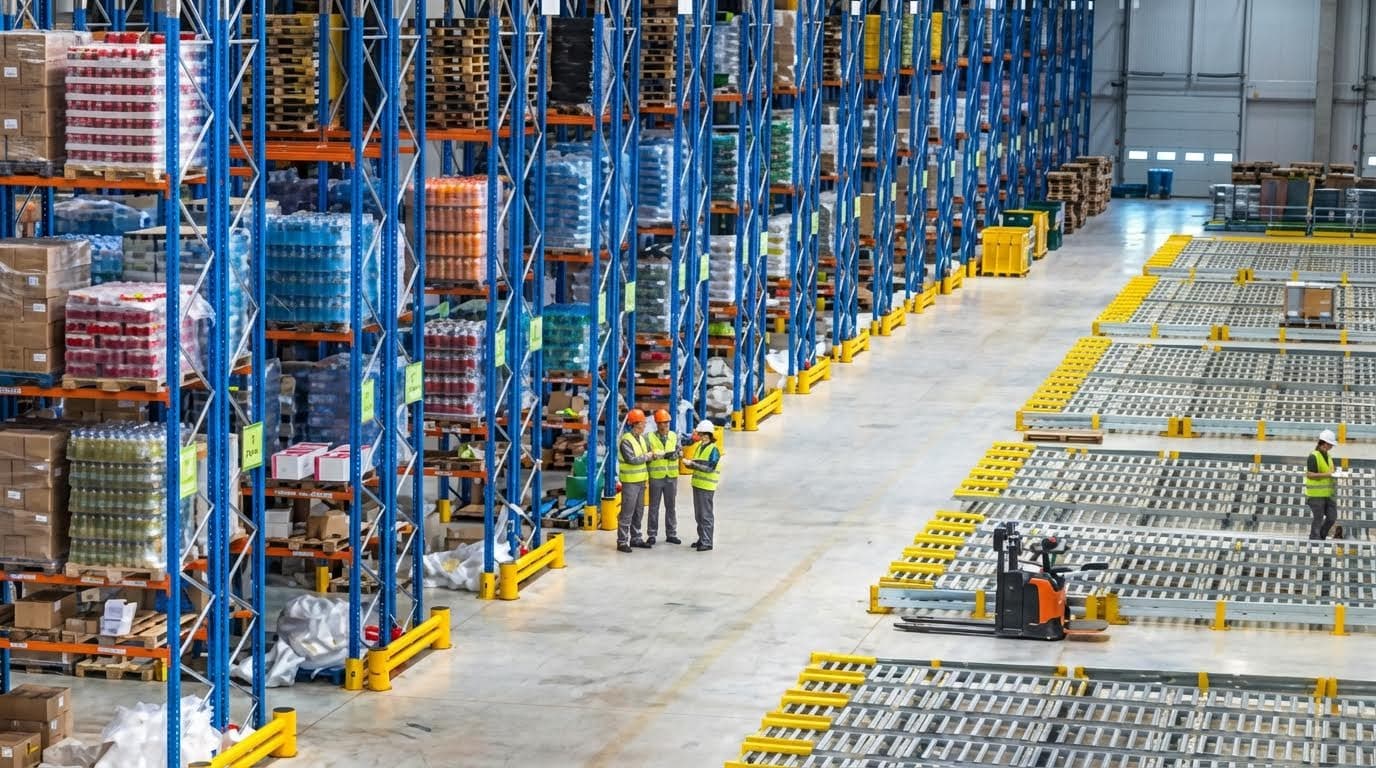
Engineers who ask how high can a walkie stacker lift need a structured answer. Typical electric walkie stackers lifted between about 2,000 mm and 5,400 mm, with specialized masts reaching higher in high-bay systems. Capacities usually ranged from 900 kg to 2,000 kg, but safe capacity always dropped as height and load center increased. Simplex, duplex, and triplex masts offered different trade-offs between collapsed height, reach, speed, and stability.
From a design view, the right system matched three elements. First, rack height and clearance, including 150–300 mm of free space above the top beam. Second, real load envelopes, including pallet overhang and typical load center. Third, aisle width, turning radius, and floor quality, which controlled how close the truck could safely operate to its stability limits.
Future trends pointed toward taller triplex masts, better electronic stability control, and closer integration with lithium-ion batteries. These changes improved energy efficiency and cycle life but increased the need for disciplined maintenance and operator training. Practical projects worked best when teams mapped actual storage heights, then chose the lowest mast class that met those heights with a margin, instead of simply chasing maximum lift height.