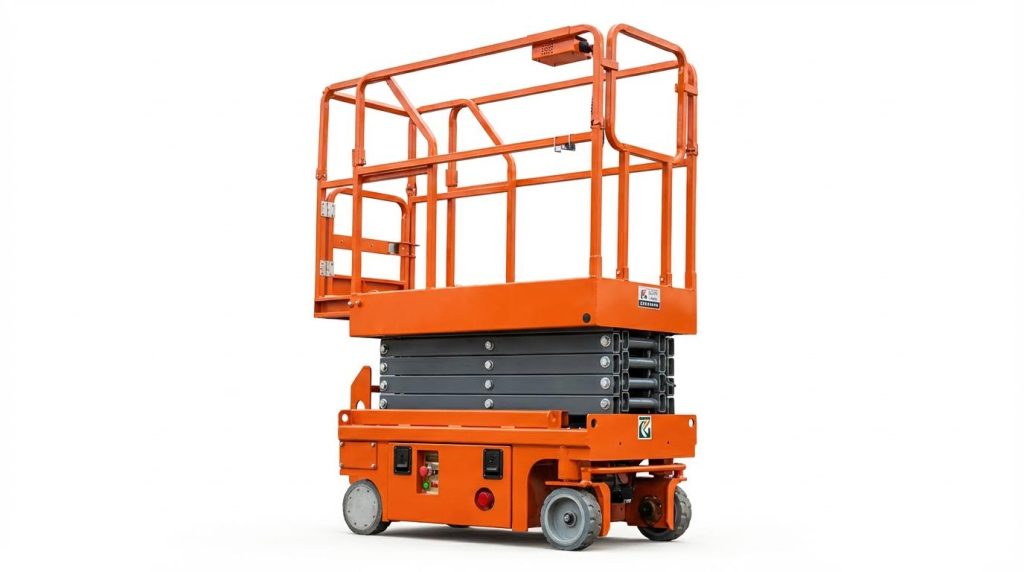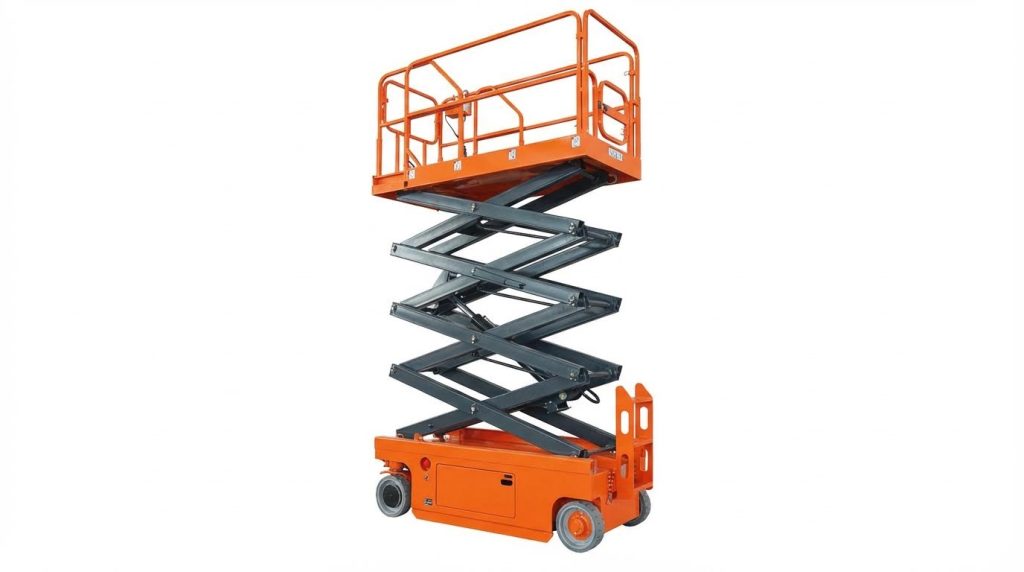
Towable aerial work platforms allowed safe work at height on diverse sites, from tight urban streets to remote compounds. This article explains how to plan and control every move of a towable MEWP, from manual positioning to highway towing and final setup. You will see when you can move a towable aerial work platform by hand, how to manage slopes, soft ground, traffic, and weather, and how to match trailer weight with tow vehicle limits. The final section condenses key rules so supervisors, operators, and planners can apply one consistent safety standard for towable MEWPs on any jobsite.
Planning Safe Moves For Towable Platforms
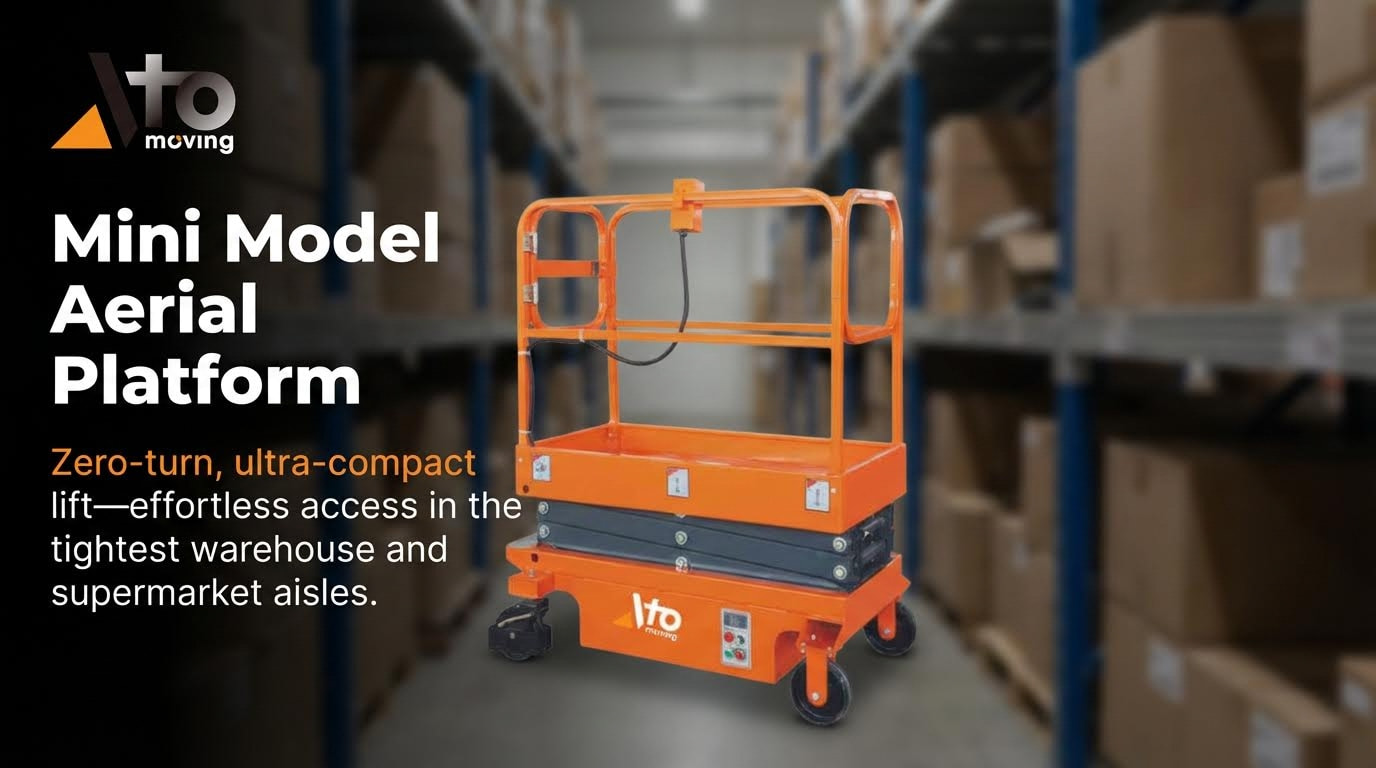
Planning answers a key question early in the job: can you move a towable aerial work platform by hand or must you tow it. This section explains how risk assessment, traffic control, ground checks, and weather planning guide that decision. It links site rules with manufacturer limits so engineers and supervisors can define safe travel routes and methods. The goal is a repeatable process that works on busy construction sites, industrial plants, and maintenance yards.
Risk Assessment, Permits, And Site Rules
Start with a formal task risk assessment for every move. Include manual pushing, short repositioning, and vehicle towing in the same review. Identify crush, rollaway, overturn, and electrical contact hazards along the whole route. Decide where hand movement is banned and towing is mandatory.
Site rules should define:
- Who may move the MEWP and what training they need.
- When a permit to move is required, for example in live traffic areas.
- Maximum slopes, wind limits, and no-go zones.
Written rules help answer can you move a towable aerial work platform by hand in each work area. They should reference the operator manual, national road rules, and internal traffic management plans.
Separating Pedestrian And Equipment Traffic
Safe movement depends on clean separation between people and machines. Plan dedicated MEWP routes and keep them away from main walkways wherever possible. Use barriers, cones, or temporary fencing around the travel path when space is tight.
Key controls often include:
- Marked pedestrian walkways with clear crossings.
- One-way systems for plant where possible.
- Spotters at blind corners or building exits.
Limit the number of vehicles in the work zone so the towable platform has turning space. Good visibility, clean mirrors, and lighting reduce struck-by risks during both hand moves and towing.
Ground Conditions, Slopes, And Stability Limits
Ground conditions decide if you can move a towable aerial work platform by hand safely. Check the full route for potholes, soft spots, drains, and ramps before any move. Compare measured slopes with the manufacturer’s stated grade limits for both travel and set-up.
Use a simple planning sequence:
- Confirm surface type and bearing capacity along the route.
- Measure gradients and crossfall with a digital level.
- Identify locations where outriggers or stabilizers will sit.
Avoid muddy, sandy, icy, or fragile floors for hand movement. On marginal ground, specify outrigger pads, wheel chocks, and, if needed, alternative access like tracked platforms.
Weather, Visibility, And Environmental Hazards
Weather planning must start before the MEWP moves. High winds, heavy rain, ice, or poor light increase the risk of skidding, jackknifing, or loss of control when pushing by hand. Check the manufacturer wind rating and apply stricter limits for exposed routes and elevated positions.
Plan moves for daylight where possible. If night work is unavoidable, provide fixed or mobile lighting that avoids glare for the operator and spotters. Consider environmental hazards along the route, such as overhead power lines, low structures, and nearby public roads. Maintain minimum approach distances to electrical lines and stop work if visibility drops below agreed thresholds.
Moving A Towable Lift By Hand On Site
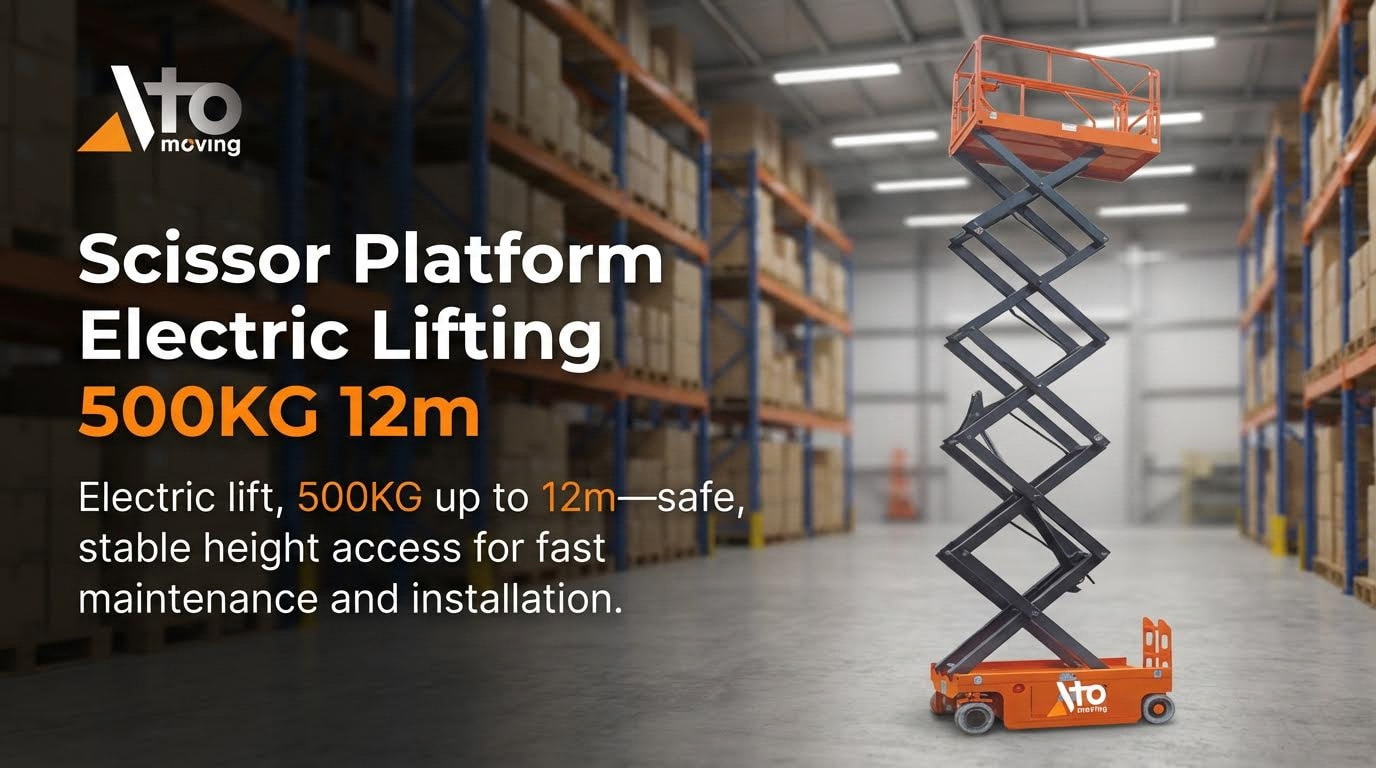
Supervisors often ask can you move a towable aerial work platform by hand in tight job sites. The answer depends on machine weight, surface conditions, gradients, and operator numbers. This section explains when manual moves are acceptable and how to control brakes, chocks, pads, and terrain risks. The goal is safe, predictable moves without stressing the chassis, tow eye, or stabilizers.
When Manual Positioning Is Acceptable
You can move a towable aerial work platform by hand only under strict limits. The unit must sit on level, firm ground with no hidden voids or fragile slabs. The boom must be fully stowed and locked, with outriggers fully raised. Brakes must work correctly and the parking brake must hold on the current surface.
Manual moves work best for small corrections near the work zone. Examples include aligning with a doorway, shifting to avoid an obstacle, or adjusting outreach position. Typical rules include:
- Push or pull only on approved points on the chassis or drawbar.
- Never move with a person on the platform.
- Use enough people so each operator handles only modest force.
- Stop if the drawbar feels heavy or the lift starts to roll by itself.
Always follow the manufacturer manual for maximum manual push gradients and allowed methods. If the surface, weight, or slope feels unsafe, switch to a tow vehicle or powered mover.
Using Brakes, Chocks, And Outrigger Pads
Before any hand move, check that service brakes and parking brakes engage and release cleanly. Test the parking brake by trying to move the lift gently on level ground. If the unit rolls with the brake set, do not move it by hand. Inspect tyres for damage, low pressure, or flat spots, because poor tyres reduce brake grip.
Wheel chocks control unwanted movement during short stops and setup. Place chocks tight against the downhill tyre face when you stop on any gradient. Use chocks in pairs for heavier lifts or when wind or vibration is possible. Choose chocks sized for the tyre diameter and rated for the unit weight.
Outrigger pads spread the load when you finish positioning. They protect soft or fragile surfaces and reduce settlement. Good practice is:
- Position the lift by hand first with outriggers fully stowed.
- Set chocks and parking brake before lowering outriggers.
- Place pads under each outrigger foot on firm, flat ground.
- Check the bubble level or inclinometer as you load the outriggers.
Never drag the lift with outriggers partly deployed. This can bend cylinders, damage welds, and reduce long-term stability.
Controlling Slopes, Soft Ground, And Obstacles
Slopes create the highest risk when you move a towable aerial work platform by hand. Even a mild gradient can cause the unit to accelerate beyond operator control. As a rule, avoid manual moves on any noticeable slope. If the manufacturer lists a maximum manual push gradient, stay well below that value.
On slight slopes where manual moves are still allowed, plan the path first. Keep the boom on the uphill side if possible to reduce overturning risk. Position trained spotters at the front and rear to watch for uncontrolled rolling. Use chocks at each pause and never let operators stand directly downhill of the lift.
Soft ground such as mud, sand, or loose gravel increases rolling resistance and sinkage. The tyres can dig in, twist the frame, or trap the unit. Before moving, check soil bearing capacity and look for water, trenches, or ducts. If the surface deforms under body weight, use ground mats, steel plates, or choose a different route.
Obstacles such as kerbs, cable protectors, and small steps can overload the tow eye or axle when you push by hand. Use simple controls:
- Walk the route and remove loose debris, tools, and waste.
- Bridge small steps with strong ramps or plates.
- Maintain clear overhead space from pipes, beams, and power lines.
- Stop and reassess if any wheel lifts or the chassis twists.
If you cannot provide a continuous, firm, and mostly level path, do not rely on manual movement. Use a suitable tow vehicle, follow towing rules, and treat the move as a transport task, not a minor adjustment.
Towing A Trailer-Mounted Aerial Lift By Vehicle
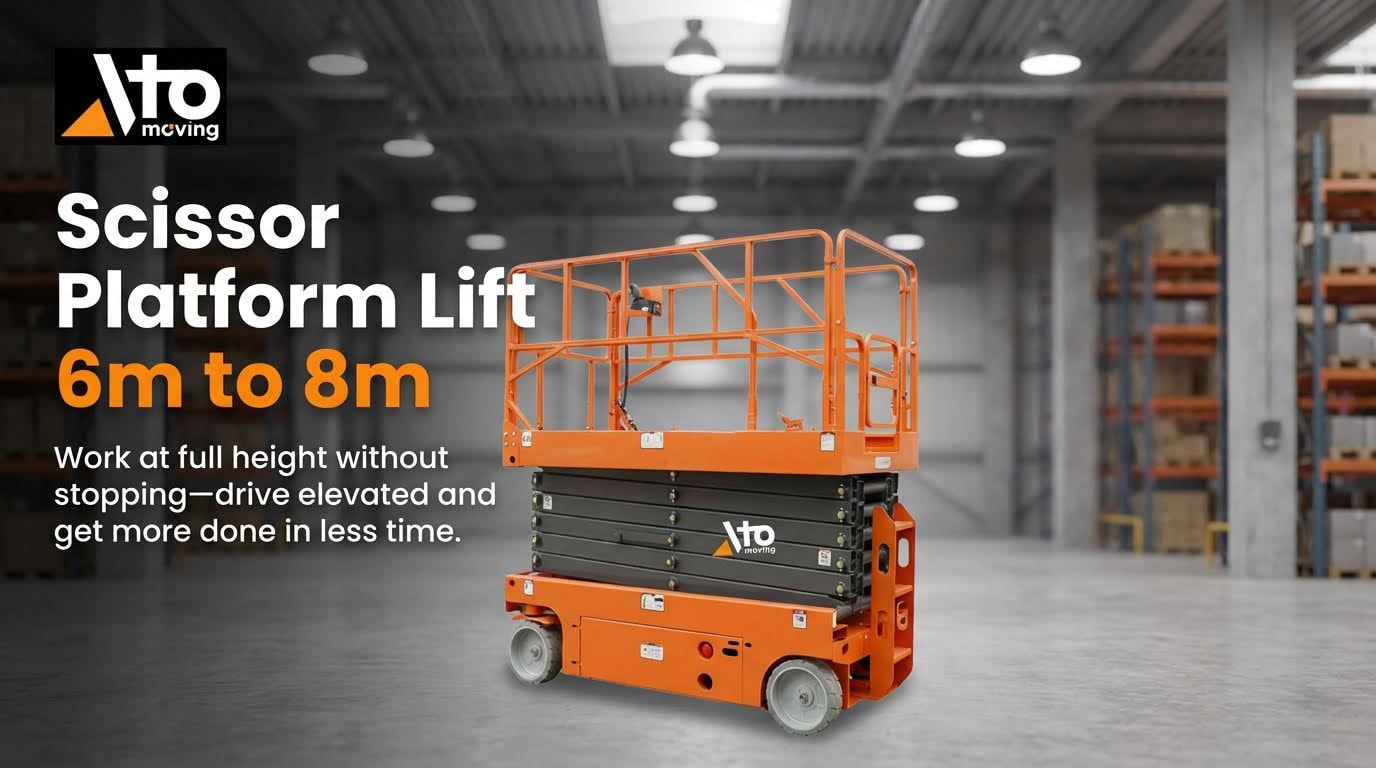
Towing a trailer-mounted aerial work platform is a higher risk task than moving it by hand. The tow vehicle, hitch, and trailer system must work as one engineered unit. Operators should treat every tow as a critical lifting operation that only trained and authorised staff perform. Planning must link road-legal limits, site rules, and manufacturer data into one clear towing plan.
Matching Tow Vehicle Capacity And Hitch Rating
Before asking can you move a towable aerial work platform by hand, confirm whether towing by vehicle is mandatory. The starting point is always the platform’s gross trailer weight from the manual or data plate. The tow vehicle must have a rated towing capacity that exceeds this weight with margin.
Key checks include:
- Vehicle towing capacity versus trailer gross weight
- Hitch maximum vertical and trailer weight rating
- Presence and rating of trailer brakes
Industry practice required that a braked trailer should not exceed about 80–85% of the tow vehicle weight. If the trailer had no independent brakes, the vehicle should weigh at least twice the trailer and load. Operators should also confirm that towbar, ball, and coupling classes match or exceed the required ratings.
Legal Limits, Speed, And Braking Requirements
Legal towing rules controlled who could tow, how fast, and with what braking system. Drivers needed the correct licence category for the tow vehicle and trailer combination. They also had to obey national limits on maximum trailer mass, axle loads, and overall length.
Typical control points included:
- Licence entitlement for vehicle and trailer size
- Mandatory trailer brakes above set mass thresholds
- Maximum road speed while towing
Many guidance documents recommended a maximum towing speed near 100 kilometres per hour. Lower speeds were advised on slopes, curves, and poor surfaces to prevent jack-knifing. Drivers had to increase following distance, avoid sudden steering, and brake early to keep the tow set stable.
Hookup Checks: Chains, Cables, And Lighting
Safe towing began with a disciplined hookup routine. The hitch had to seat fully on the tow ball or pin and lock positively. Safety chains and breakaway brake cables provided a second line of defence if the coupling failed.
A robust pre-move sequence typically covered:
| Item | Check |
|---|---|
| Hitch and coupling | Fully engaged, locked, and pinned |
| Safety chains | Crossed under hitch, correct length, sound links |
| Breakaway cable | Attached to vehicle, free from kinks |
| Electrical plug | Connected, strain-relieved, no damage |
| Lights | Brake, tail, indicators, and markers working |
Wheel chocks should be removed only after the trailer brake system was confirmed. Operators should walk around the rig to verify tyre condition, wheel nuts, number plate, and that booms and outriggers were fully stowed.
Arrival, Setup, And Pre-Use Safety Inspection
On arrival at site, the driver should park on firm, level ground before uncoupling. The tow vehicle parking brake must be set, and the trailer wheels chocked before the hitch is released. This reduced roll-away risk during setup.
Before raising the platform, operators should complete a structured pre-use inspection. Typical focus points were:
- Outriggers and pads present, undamaged, and on solid support
- Hydraulic, electrical, and structural components with no visible damage or leaks
- Controls tested from ground and platform positions
Operators needed current training on that class of MEWP and had to follow the load, slope, and wind limits in the manual. Work zones required cones, signs, and exclusion areas to separate pedestrians from the tow vehicle and lift during positioning and setup.
Summary: Key Safety Rules For Towable MEWPs
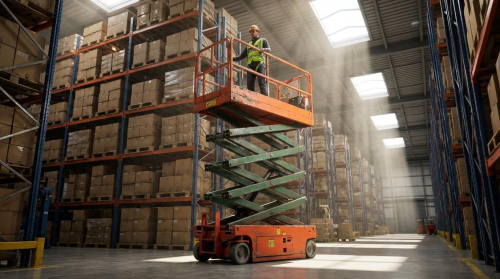
Towable MEWP moves needed a structured plan before any operator touched the hitch or hand grips. Teams had to decide early whether to tow or move by hand, and always ask a core question: can you move a towable aerial work platform by hand without losing control or stability. The answer depended on ground conditions, gradient, machine weight, and the number and training level of helpers.
Key rules covered both manual moves and towing by vehicle. For hand moves, operators had to keep the boom fully stowed, brakes applied when stopped, and chocks ready for any slope. Manual positioning stayed limited to short, level distances on firm ground, with clear exclusion zones for pedestrians. Any doubt about control meant switching to a tow vehicle instead of extra force.
For towing, the tow vehicle needed enough rated capacity, a suitable hitch, and correctly crossed safety chains. Drivers had to respect legal speed limits for trailers, allow longer braking distances, and avoid sharp steering inputs that could cause jackknifing. On arrival, operators set up on level ground, deployed outriggers on pads, and carried out full pre-use checks before lifting.
Future practice would link these rules with better site planning, telematics alerts, and digital checklists. Still, safe towable MEWP moves would always rely on trained people, conservative decisions on slopes and loads, and strict separation between moving equipment and foot traffic.