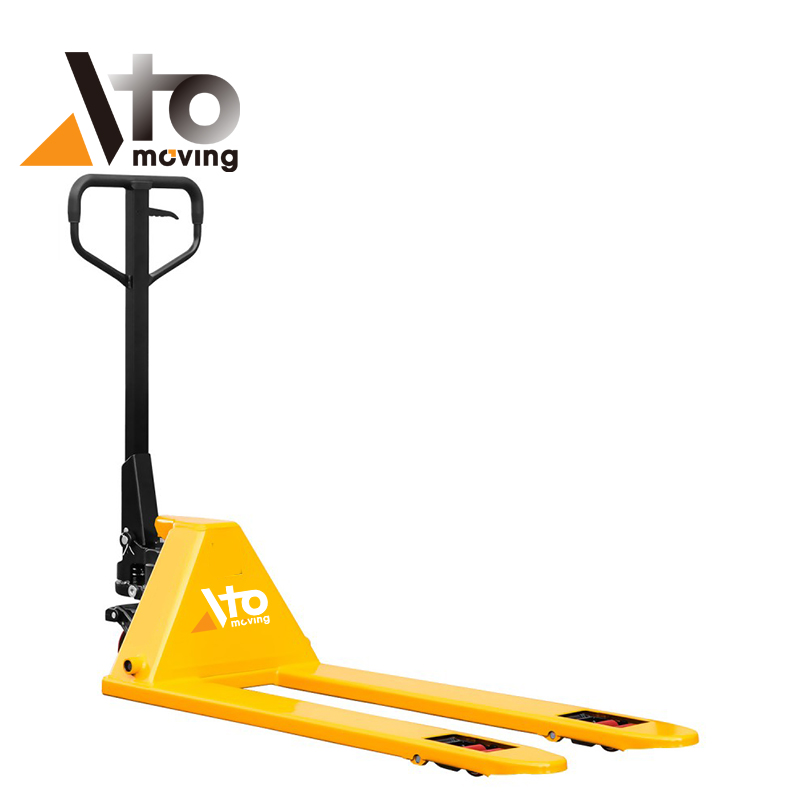
Operations teams that ask how much can a pallet jack lift need clear, data-backed limits, not guesses. This guide explains how different pallet jack types, from manual to ride-on electric, define their typical working load ranges and where specialty or hygienic designs fit.
You will see how structural design, wheel and bearing ratings, hydraulic systems, and load geometry set the safe rated capacity on the nameplate. The article then links these engineering limits to real warehouse choices, including pallet weights, floor conditions, ramps, duty cycles, ergonomics, and lifecycle cost.
The final section consolidates best practices for sizing and using pallet jacks within their rated capacity, so engineering, safety, and logistics teams can align on a single, defensible standard for safe pallet jack loading.
Key Pallet Jack Types And Typical Load Ranges
Engineers who ask how much can a pallet jack lift must link jack type to rated capacity. Each design family covers a different load band and duty profile. Understanding these ranges helps set safe limits, avoid overload, and size equipment correctly for warehouse, dock, and production work.
Manual Pallet Jacks: Standard And Heavy Duty
Manual pallet jacks answered most basic queries about how much can a pallet jack lift in small sites. Standard units typically lifted around 2,000 to 2,500 kilograms. This matched common palletized loads such as packaged food, consumer goods, and light industrial parts.
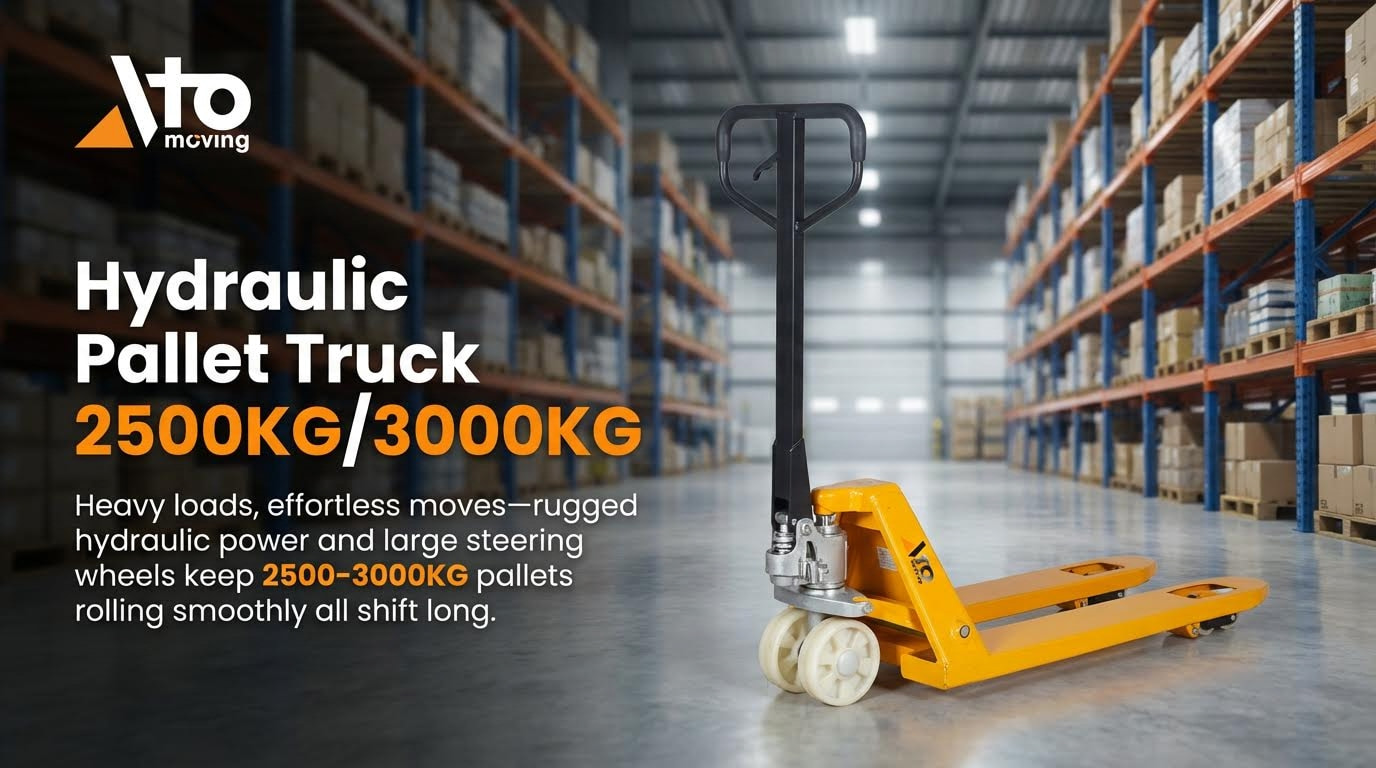
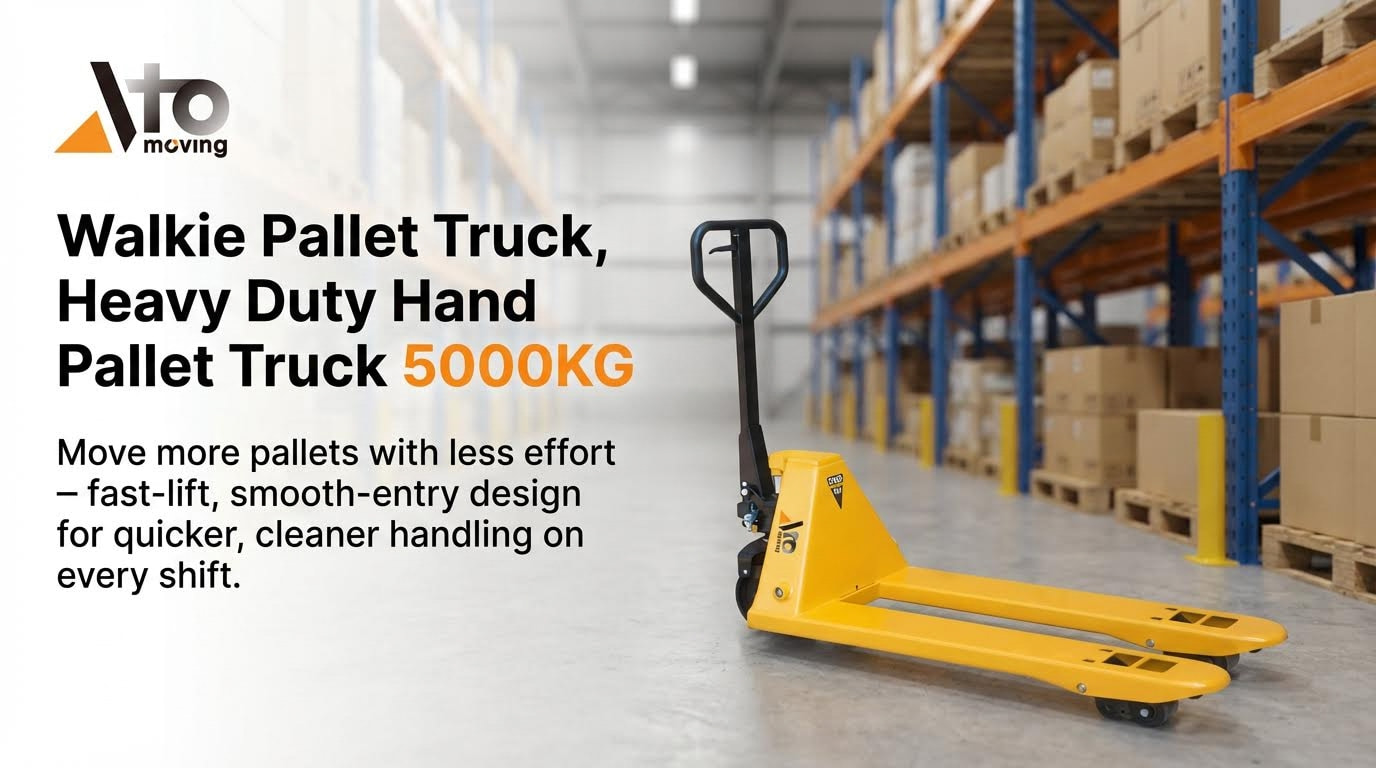
Heavy duty manual models pushed capacity much higher. Typical ranges went from about 3,000 kilograms up to roughly 5,000 kilograms for reinforced frames. These versions used thicker steel sections, higher grade axles, and stronger hydraulic pumps.
When engineers selected manual jacks, they usually kept at least a 20% margin between rated capacity and typical pallet weight. This margin covered dynamic forces from starting, stopping, and minor impacts. It also allowed for uneven load distribution across the forks.
Electric Pallet Jacks And Ride-On Trucks
Electric pallet jacks shifted the answer to how much can a pallet jack lift toward higher throughput operations. Walk-behind electric units commonly handled up to about 2,000 to 3,000 kilograms. Some high capacity models exceeded this, but designers still treated 3,000 kilograms as a practical planning figure.
Ride-on pallet trucks supported similar or slightly higher capacities. Their main advantage was travel speed and reduced operator effort over long distances. Typical use cases included dock loading, cross-docking, and heavy internal transfers.
Electric designs added weight from batteries and motors, so stability analysis became more critical. Engineers checked floor flatness, ramp gradients, and braking distances. They also considered battery discharge, because lift and traction performance dropped as voltage fell near the end of a shift.
Specialty Designs: Low-Profile, Rough-Terrain, Scissor
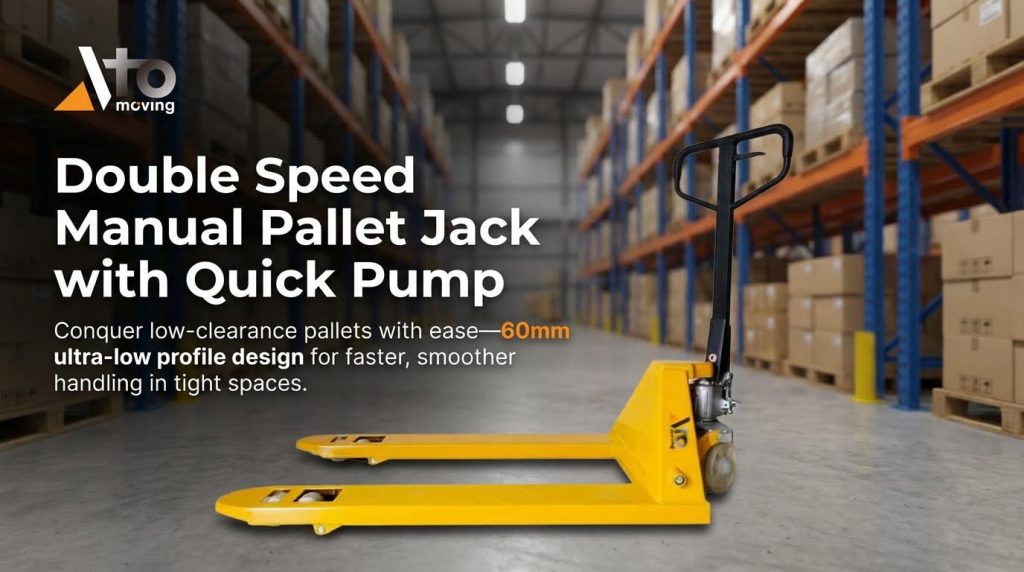
Specialty pallet jacks answered how much can a pallet jack lift under non-standard conditions. Low-profile jacks targeted thin or damaged pallets, with fork entry heights down to about 50 millimetres. Many still carried between 1,500 and 2,500 kilograms, but ultra-low versions sometimes traded capacity for clearance.
Rough-terrain pallet jacks used large pneumatic or semi-pneumatic wheels. They moved loads over gravel, yards, and construction sites. Typical capacities sat near 1,000 to 2,500 kilograms, limited by wheel load and frame deflection on uneven ground.
Scissor pallet jacks combined lifting and transport. They raised pallets to ergonomic heights, often up to 800 millimetres. To maintain stability at height, rated capacity usually dropped to around 1,000 kilograms or less. Engineers checked both static capacity and side-load resistance at maximum lift.
Stainless And Hygienic Pallet Jacks
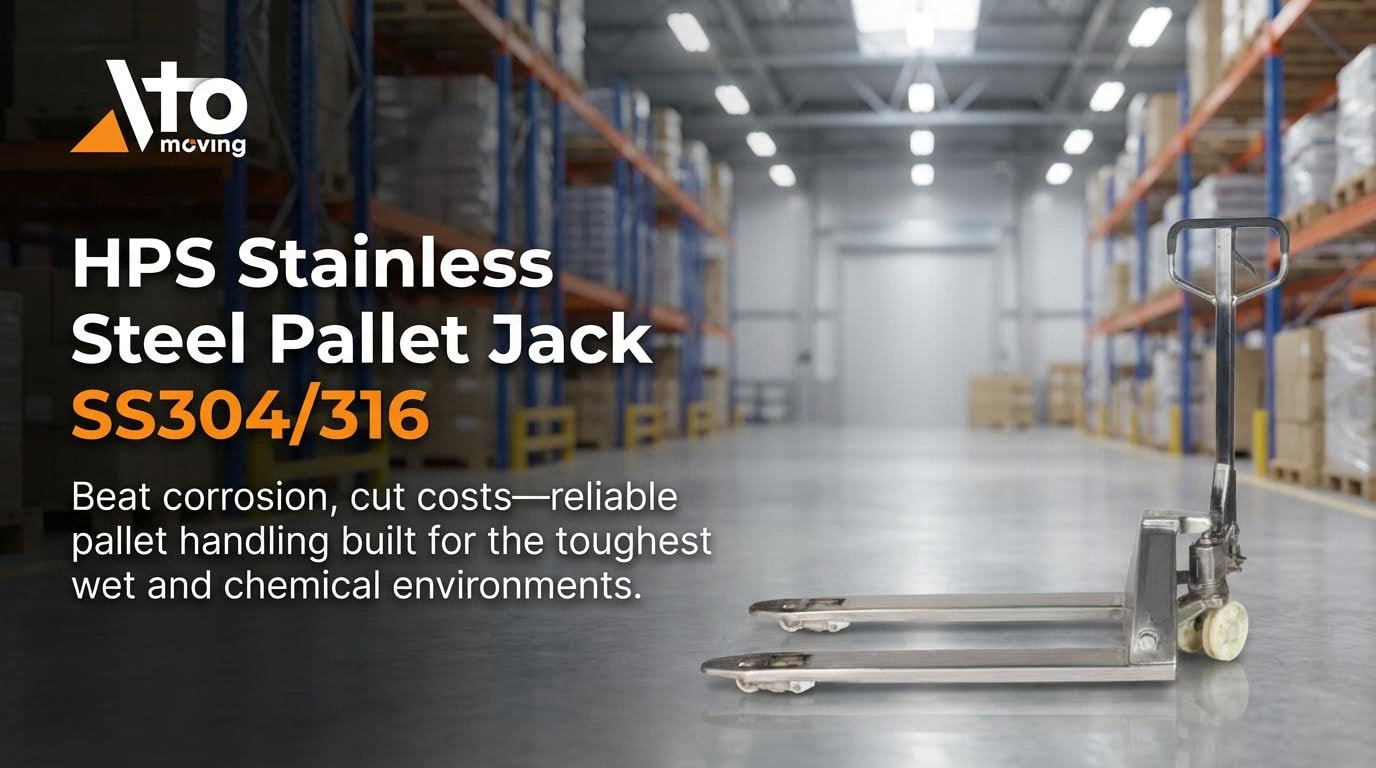
Stainless pallet jacks answered how much can a pallet jack lift in washdown or corrosive areas. These units used stainless frames, axles, and hardware to resist chemicals and moisture. Typical capacities aligned with standard manual jacks, around 2,000 to 2,500 kilograms.
Hygienic and clean-design models introduced more open structures and smoother welds. These features improved cleanability but sometimes reduced stiffness. As a result, some designs carried slightly lower capacities than comparable carbon steel jacks.
Engineers in food, pharmaceutical, and cold storage plants balanced three factors: capacity, corrosion resistance, and cleanability. They verified that rated load covered the heaviest production pallets, including worst-case ice buildup or liquid accumulation. Where loads approached limits, they specified higher capacity stainless models or split loads across two jacks.
Engineering Factors That Define Safe Capacity
Engineering factors decide the real answer to the question how much can a pallet jack lift. A data plate might show 2,500 kilograms, but structure, hydraulics, and load position decide if that rating stays safe. This section explains how frame strength, wheel sets, hydraulics, and pallet fit interact. It links each factor to common capacity ranges from 1 to 5 tons seen in warehouses and docks.
Frame Structure, Fork Section, And Weld Design
The frame carries every kilogram the pallet jack lifts. Engineers size side plates, cross members, and fork sections to keep stress below yield limits with a safety factor, often 1.5 or higher. Thicker fork plates and deeper fork sections resist bending when users push loads near the top of the rating.
When people ask how much can a pallet jack lift, they usually quote catalog numbers between 2,000 and 5,000 kilograms. Those values assume the frame does not twist and the forks do not deflect too much. Weld design is critical at high stress zones such as fork-to-pump brackets and tow bars. Poor weld penetration or short fillets can turn a 2,500 kilogram jack into a failure risk well below its label rating.
For engineering checks, teams often review:
- Fork section modulus versus rated load and span
- Material grade and yield strength of fork and frame steel
- Weld size, length, and throat at key joints
These checks confirm the steel structure will survive shock loads from rough floors and dock plates.
Wheel, Axle, And Bearing Load Ratings
Wheel sets and axles limit how much a pallet jack can lift just as much as the frame. Each load wheel carries a share of the pallet mass, often 25% or more when the center of gravity shifts. Engineers size axles and bearings so contact stress stays within limits for nylon, polyurethane, or rubber treads.
Typical manual pallet jacks with 2,000 to 2,500 kilogram ratings use tandem load wheels to spread force. Heavy duty designs for 4,000 kilograms and above often use larger diameters and wider treads. This reduces floor pressure and rolling resistance. Bearing selection also matters. Deep groove ball bearings or high capacity bushings handle radial loads and side thrust from cornering.
Key design checks include:
| Component | Engineering focus |
|---|---|
| Load wheels | Static and rolling load rating versus jack capacity |
| Steer wheels | Impact resistance on joints and dock plates |
| Axles | Bending and shear under offset loads |
| Bearings | Fatigue life at expected duty cycle |
If any wheel or bearing is undersized, real safe capacity can fall far below the nameplate value.
Hydraulics, Lift Height, And Stability Envelope
The hydraulic unit converts handle strokes into lifting force. Pump pistons, seals, and valve blocks must withstand pressures that match the rated load with margin. For a 2,500 kilogram pallet jack, engineers select bore sizes and wall thickness so internal pressure stays within the safe range for the steel or cast body.
Lift height is small, often 120 to 200 millimetres, yet it still affects stability. As forks rise, the load center moves higher and slightly shifts relative to the wheelbase. The stability envelope defines the area inside which the combined center of gravity must stay. If users overload the jack, the hydraulic system may still raise the pallet, but stability can degrade sharply.
When assessing how much can a pallet jack lift safely, engineers check:
- Maximum hydraulic pressure at rated load
- Valve design for controlled lowering
- Stability triangle between steer wheels and load wheels
Slow-release valves and well matched cylinder sizes reduce shock when lowering heavy pallets, which protects both structure and operator.
Load Distribution, Center Of Gravity, And Pallet Fit
Rated capacity assumes a centered, even load on forks that fit the pallet correctly. If the center of gravity shifts forward or sideways, one wheel pair can see loads far above its share. This is a common cause of fork bending even when users believe they stayed within the label limit.
Fork length and width must match the pallet footprint. For a standard 1,200 by 1,000 millimetre pallet, forks around 1,150 millimetres long give good support. If forks are too short, the load overhangs and moves the center of gravity outside the ideal zone. If fork spread does not match pallet stringers, point loads increase on deck boards.
To keep real capacity close to the rated value, engineers and supervisors focus on:
- Using pallets that fully cover fork length
- Keeping heavy items low and near the fork heels
- Avoiding single-point loads on one fork
With correct load distribution and pallet fit, a pallet jack rated for 2,500 kilograms can operate near that limit with stable handling. With poor distribution, the safe limit can drop by a large margin even if the structure and hydraulics look strong.
Selecting The Right Capacity For Your Operation
Capacity selection starts with one core question: how much can a pallet jack lift in your real workflow. Engineers must align rated capacity with actual pallet weights, floor conditions, and duty cycle. Undersizing increases failure risk and strain. Oversizing raises cost and can reduce maneuverability.
Matching Jack Capacity To Typical Pallet Weights
Start with your heaviest realistic pallet, not the average one. Include product, pallet, slip sheets, and any dunnage. Standard manual pallet jacks typically lift about 2,000 to 2,500 kilograms. Heavy duty models reach around 5,000 kilograms and above.
When asking how much can a pallet jack lift safely, apply a safety margin. A common rule is to choose a jack rated at least 20% above the heaviest regular load. This margin covers weight variation, moisture in packaging, and occasional overloads. Also match fork length and width to pallet size to keep load fully supported.
A simple selection sequence helps:
- List min, typical, and max pallet weights.
- Exclude rare overloads that need forklifts.
- Choose the smallest capacity that still covers max plus margin.
- Confirm that pallet geometry matches fork spacing and length.
Surface Conditions, Ramps, And Grade Limitations
Rated capacity assumes flat, smooth floors. Rough concrete, joints, or tiles increase rolling resistance. On poor surfaces, a jack that can technically lift the weight may be impossible to move by hand. Wheel material affects this strongly.
Grades and ramps change the answer to how much can a pallet jack lift in practice. On slopes, the same load needs higher push or pull force and increases runaway risk. Many safety programs limited manual pallet jacks to very low gradients, often under 5%. Electric units handled slightly higher grades but still within the maker’s rating.
Key checks for each route include:
- Maximum ramp gradient and length.
- Floor flatness and damage level.
- Need to cross dock plates or truck lips.
- Wet, oily, or cold surfaces that reduce grip.
Duty Cycle, Throughput, And Operator Ergonomics
Capacity choice also depends on how often and how far you move loads. Manual pallet jacks suit low to medium throughput and short distances. Repeated trips with high loads raise push forces and fatigue. This can create musculoskeletal injury risk even when loads stay within the rated kilograms.
Electric pallet jacks handle higher daily pallet counts and longer runs. They keep operator effort low at higher capacities. To size correctly, map a typical shift:
- Number of pallets moved per hour.
- Average and peak load weight.
- Typical travel distance per move.
- Number of starts, stops, and turns.
Where throughput or distances are high, a lower capacity electric jack may be safer than a high capacity manual jack. It keeps human push forces within ergonomic guidelines while still answering how much can a pallet jack lift in your process.
Lifecycle Cost, Maintenance, And Digital Monitoring
Higher capacity usually means heavier frames, larger hydraulics, and higher purchase price. Manual jacks had low maintenance cost but more operator strain at high loads. Electric jacks cost more to buy and maintain yet improved productivity and injury rates.
When comparing how much can a pallet jack lift against cost, include lifecycle factors:
- Expected service life in years and shifts per day.
- Planned maintenance hours and spare parts cost.
- Battery replacement cycles for electric models.
- Downtime risk if a single high capacity unit fails.
Digital monitoring and onboard scales helped control real loads. They flagged overload attempts and recorded duty cycles. This data allowed engineers to fine tune capacity choices, move extreme loads to forklifts, and right-size future pallet jack fleets.
Summary: Safe Pallet Jack Sizing And Capacity Compliance

Operations teams often ask one core question: how much can a pallet jack lift without risk. The only correct answer is always tied to the rated capacity on the nameplate and the actual load case. Manual pallet jacks usually lifted between 1 tonne and 5 tonnes. Electric pallet jacks typically handled up to about 3 tonnes in standard warehouse use.
Safe sizing started with real pallet weights, not catalog values. Engineers compared typical gross pallet mass, including packaging and dunnage, to jack rating with a safety margin. They checked fork length and width against pallet design to keep the load fully supported on both blades. They also verified floor quality, gradients, and transfer points, because capacity on a smooth slab differed from capacity on a ramp or dock plate.
Compliance depended on three habits: never exceed the rating, keep the load centered, and maintain the equipment. Overloading increased fork deflection, bearing stress, and hydraulic pressure, which raised failure risk. Poor maintenance reduced real capacity even if the nameplate stayed the same.
Future practice moved toward digital monitoring, integrated load scales, and telematics alerts for overload events. These tools helped supervisors enforce limits, but they did not replace training and clear site rules. A balanced approach combined conservative capacity selection, operator coaching, periodic engineering review, and suitable pallet jacks, including Atomoving models, for each task profile.