Facilities that ask what’s the best type of dolly for moving oil drums need clear engineering criteria, not guesswork. This article walks through drum dolly types, selection methods, and safety rules for handling oil and chemical drums in real industrial plants.
You will see how load ratings, frame and wheel materials, and static control affect safe drum moves on different floors. Later sections link OSHA, EPA, and DOT rules to design features like anti-tip geometry, spill containment, and braking. The article closes with a practical selection roadmap so engineers, EHS teams, and operations can agree on safe, compliant drum dollies and when to step up to manual drum stackers or integrated Atomoving systems.
Key Drum Dolly Types And Use Cases
Engineers who ask what’s the best type of dolly for moving oil drums must match dolly design to task risk. Oil and chemical drums create combined hazards from mass, leaks, and sometimes flammable vapors. The best drum dolly type depends on drum size, floor quality, transfer distance, and any decanting or tilting steps. This section explains how flat, ring-style, tilting, low-profile, and spill-containment dollies fit different industrial workflows.
Flat Platform vs. Ring-Style Dollies
Flat platform dollies use a solid deck that supports the full drum base. They suit mixed container types, including steel, plastic, and fiber drums, and even square containers. This design spreads load over a larger area, which reduces local floor stress and frame bending.
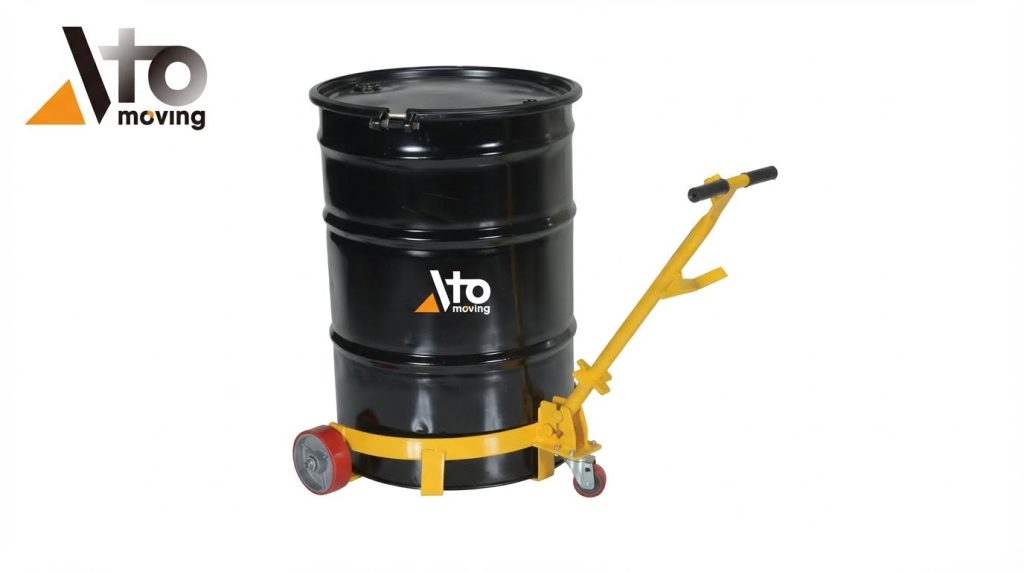
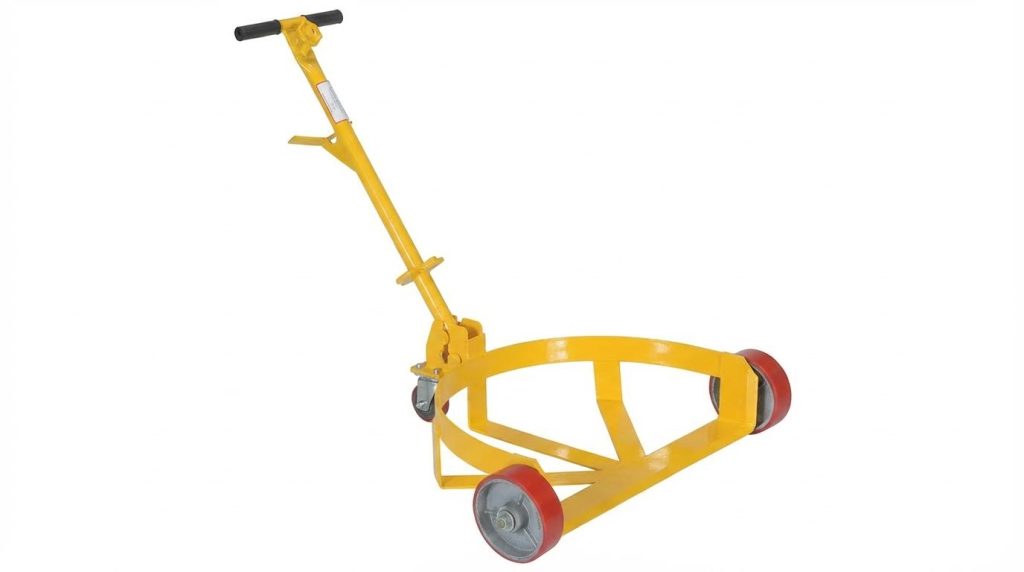
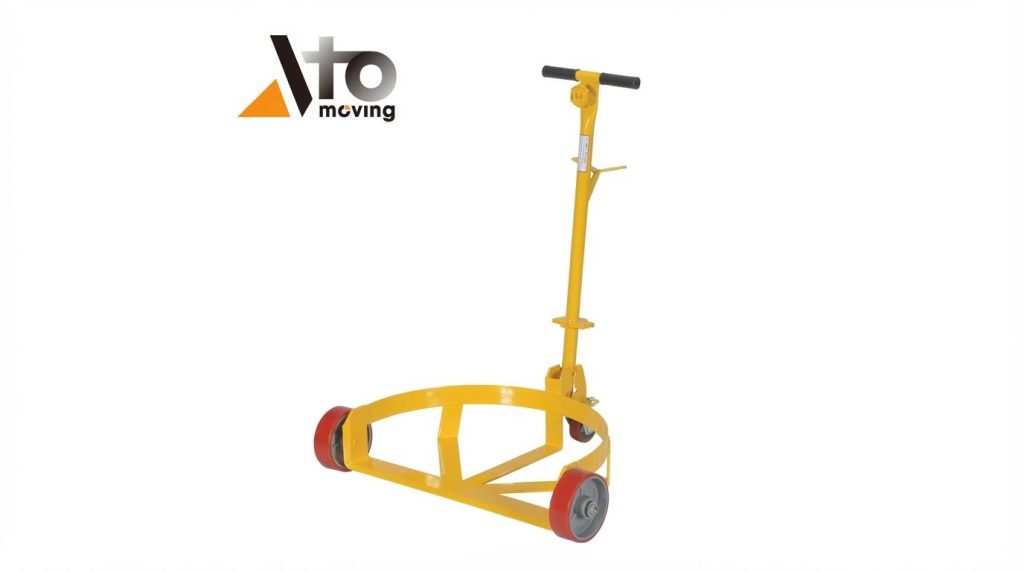
Ring-style dollies use a circular frame sized to the drum diameter. They reduce tare weight and improve access to the lower drum sidewall for cleaning and inspection. However, they need precise drum centering to avoid tipping, especially with partially filled drums and sloshing liquids.
When deciding what’s the best type of dolly for moving oil drums in small plants, engineers often pick ring-style units for dedicated 200 litre drums and flat platforms where container variety is high. For rough floors or frequent impacts, flat platforms with cross-bracing usually give better fatigue life.
Multi-Position And Tilting Drum Dollies
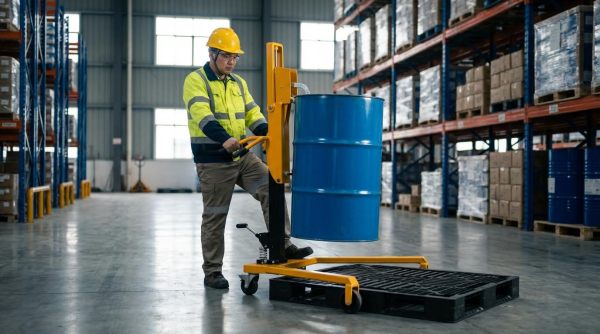
Multi-position and tilting dollies support both transport and controlled pouring. They include cradles or yokes that hold the drum as operators tilt it to set angles. This reduces manual handling and keeps the drum mass inside the wheelbase during rotation.
Tilting designs work well for transfer to process vessels, smaller containers, or pumps. Adjustable stops or indexed positions help repeat pour angles and limit sudden motion. Quick-release cradle adjustments cut changeover time between drum sizes.
For facilities focused on what’s the best type of dolly for moving oil drums during frequent decanting, tilting dollies usually outperform fixed cradles. They reduce hose lengths, minimize splash risk, and keep operators outside the immediate spill zone. However, they need strict training because off-center loads can increase tip risk if misused.
Low-Profile And Spill-Containment Designs
Low-profile dollies reduce the step height between floor and platform. Operators can often roll drums onto the dolly rather than lift or ramp them. This improves ergonomics and lowers back injury risk, especially in high-throughput filling or unloading areas.
Spill-containment dollies integrate a tray or sump under the drum. Typical designs capture several litres of leaked product and keep it away from wheels. This helps maintain traction on oily floors and supports compliance with spill-control rules around hazardous liquids.
In sites that ask what’s the best type of dolly for moving oil drums through areas with sensitive floors or drains, low-profile containment dollies are often preferred. They combine mobility with first-level secondary containment. Engineers must still check that tray volume aligns with local environmental requirements and overall bunding strategy.
When To Use Dollies vs. Manual Drum Stackers
Drum dollies move drums horizontally over short distances at floor level. They are ideal between storage, decanting, and processing points when no vertical stacking is needed. Typical duties include unloading pallet zones, feeding single-drum workstations, or repositioning drums inside bunded areas.
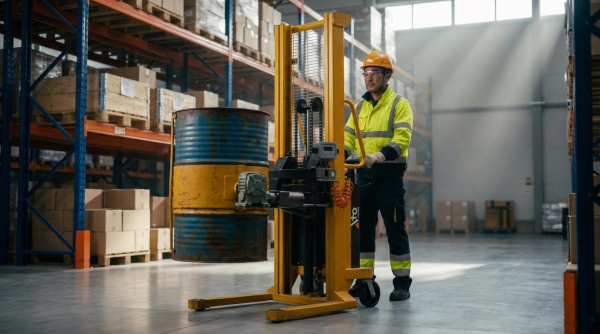
Manual drum stackers add lifting, stacking, and often rotating capability. They handle pallet loading, racking, and drum inversion for emptying. Stackers usually have higher capital cost and a larger footprint but reduce manual lifting far more than dollies.
When deciding what’s the best type of dolly for moving oil drums versus using a manual drum stacker, engineers should map the full material flow. Use drum dollies where travel is frequent, distances are modest, and all work stays at floor level. Use manual drum stackers where drums must be lifted onto pallets, into racks, or rotated for full discharge. Many facilities use both: dollies for local moves and stackers for vertical handling and loading tasks.
Engineering Criteria For Drum Dolly Selection
Engineers who ask what’s the best type of dolly for moving oil drums must match design details to risk, load, and floor conditions. Correct selection depends on four linked criteria. These are load and drum geometry, frame and corrosion resistance, caster and floor pairing, and static control in hazardous zones. A structured checklist helps standardize choices across plants and projects.
Load Ratings, Drum Sizes, And Stability Margins
Start with the heaviest drum you will move, including liquid, residues, and attachments. Typical drum dollies supported about 360 kilograms to 540 kilograms, which covered standard 200 litre drums. Engineers should apply a safety factor, often 1.25 to 1.5, above the maximum expected load. This margin reduced risk from impact loads, uneven floors, and partial dynamic braking.
Drum diameter also mattered. Ring-style dollies used inside diameters sized for 30, 55, or 85 gallon drums. A loose fit allowed drum shift and higher tip risk. A tight fit made loading slow and unsafe. Stability improved when the wheelbase radius exceeded the drum radius and when the platform kept the drum centre of gravity as low as practical.
For mixed fleets, adjustable or self-centering cradles helped maintain balance. Engineers should also review how operators load drums. If drums were rolled on rather than lowered by stacker, the dolly needed enough impact strength and a low entry height.
Frame Materials, Corrosion And Chemical Resistance
Frame material defines both life and safety for oil and chemical drum dollies. Welded carbon steel frames carried high loads with limited deflection and suited general hydrocarbon service. Powder coating added basic corrosion resistance but could chip in harsh use. Stainless steel frames cost more but resisted aggressive chemicals and washdowns in food, pharma, and caustic service.
Aluminium frames reduced tare weight and helped with manual pushing in tight plants. However, aluminium had lower stiffness and needed careful design at welds and joints. Engineers should map expected chemicals against material compatibility charts. They should consider not only drum contents but also cleaning agents and outdoor exposure.
Key checks often include: resistance to oils, solvents, acids, and alkalis; protection of welds and heat affected zones; and drainage paths so spills do not pool in hidden cavities. For long life, designs with smooth surfaces and few dirt traps made inspection and cleaning easier, which mattered when regulatory audits covered secondary containment and housekeeping.
Caster Design, Wheel Materials, And Floor Conditions
For what’s the best type of dolly for moving oil drums, caster choice often decides daily usability. Engineers should match wheel material to floor type, contamination, and push force limits. Polyurethane wheels worked well on sealed concrete. They resisted oils and chemicals and rolled quietly. Harder polyolefin or steel wheels carried higher loads but transmitted more vibration and could damage softer floors.
Wheel diameter affected obstacle clearance and effort. Larger diameters, often 150 millimetres or more, crossed joints and small debris with lower push force. Swivel casters at all corners gave tight turning in congested aisles. Mixed layouts, with two fixed and two swivel casters, tracked better on longer runs.
Brake design also mattered. At least two casters should lock during filling, pumping, or temporary storage. On sloped floors, total system design might require wheel chocks or floor stops. Engineers should review floor conditions: dry, wet, oily, indoor, or outdoor. Rough or damaged floors might justify larger wheels, softer treads, or even different equipment such as manual drum stackers for longer moves.
Static Control For Flammable Or Explosive Atmospheres
In flammable zones, static control becomes a primary design filter. Standard polymer wheels and painted frames could hold charge and create ignition risk. Conductive or dissipative dollies used special wheel compounds and bonding paths that bled charge at a controlled rate. Some designs relied on inherent conductivity and did not need separate grounding leads during normal moves.
Engineers should align dolly selection with hazardous area classification and plant grounding rules. They should confirm that resistance values for wheels and frames meet site static control standards. Continuity between drum, frame, and floor path should be verifiable with simple resistance tests.
Other ignition sources must also be controlled. Bearings, brakes, and any accessories in the zone should be non-sparking by design and material. Where vapour release was likely during pumping, it was often safer to keep drums on grounded fixed stations and use dollies only for short, planned transfers with clear procedures.
Safety, Compliance, And Lifecycle Performance
Safety and compliance drive every decision when users ask what’s the best type of dolly for moving oil drums. The right drum dolly must support safe handling, meet regulatory rules, and deliver long service life. This section links regulatory needs, engineered safety features, maintenance, and system integration into one view. It helps engineers and EHS teams select drum dollies that stay safe and reliable over years of oil and chemical handling.
OSHA, EPA, And DOT Considerations For Drum Handling
Regulations shaped how facilities handled oil and chemical drums. When choosing what’s the best type of dolly for moving oil drums, users had to align with OSHA, EPA, and DOT rules. OSHA focused on safe handling, worker protection, and control of fire and explosion hazards. EPA rules covered containment, spill control, and waste storage, while DOT rules applied once drums entered transport chains.
Key compliance points for drum dolly selection included:
- Keeping drum movement to the minimum needed to reduce incident risk.
- Ensuring stable, upright transport to avoid leaks and vapor release.
- Supporting secondary containment where flammable or toxic liquids were present.
- Keeping clear access for emergency routes and fire extinguishers.
Dollies used with flammable or toxic liquids needed designs that helped maintain drum integrity. Stable frames, secure support rings, and non-sparking, non-pressurizing handling methods supported OSHA guidance. For waste drums, users had to ensure the dolly system did not block labels or damage containers required under EPA and DOT rules.
Anti-Tip, Restraint, And Braking Safety Features
Anti-tip and restraint features often decided what’s the best type of dolly for moving oil drums in a given plant. Oil and chemical drums carried high mass and sometimes shifting liquid loads. A safe dolly kept the drum low, centered, and controlled during every move.
Important design features included:
| Feature group | Typical design focus |
|---|---|
| Stability | Wide wheelbase, low deck height, reinforced frame, even load paths |
| Restraint | Retaining rings, cradles, straps, or chains to stop drum shift |
| Braking | Wheel or caster brakes on at least two casters for loading and pouring |
| Control | Handles or push bars that keep operators clear of the drum |
Low-profile and ring-style dollies reduced tip risk by lowering the drum’s center of gravity. Parking brakes held loaded dollies still during pump-out or transfer. For tilting or multi-position dollies, positive locking at set angles was vital so partially filled drums did not roll or surge unexpectedly.
Maintenance Practices And Service Life Expectations
Lifecycle performance affected the real cost of any drum dolly. Well-built industrial dollies often lasted 10–15 years when users followed basic maintenance. Poor maintenance reduced that life sharply and increased safety risk.
Core maintenance tasks included:
- Inspecting frames and welds for cracks, corrosion, or deformation.
- Checking caster forks, axles, and fasteners for looseness or damage.
- Cleaning and inspecting wheels for cuts, flat spots, or chemical attack.
- Lubricating swivel joints and wheel bearings at planned intervals.
Facilities handling oils, solvents, or corrosive chemicals needed extra focus on coatings and wheel materials. Damaged powder coating or exposed steel around sumps and filling points increased rust risk. Replacing worn casters early kept push forces low and reduced operator strain. A simple inspection checklist tied to preventive maintenance plans helped keep dollies safe and extended service life.
Integrating Dollies Into Material Handling Systems
Drum dollies worked best as part of a wider material handling system, not as isolated tools. When engineers considered what’s the best type of dolly for moving oil drums, they had to match dollies with stackers, pallet jacks, and storage layouts. Proper integration reduced manual handling, improved flow, and limited the number of drum transfers.
Effective system integration looked at:
| Aspect | Integration focus |
|---|---|
| Routes | Clear, level paths sized for dollies, with minimal slopes and joints |
| Interfaces | Compatibility with manual drum stackers, pumps, and filling stations |
| Storage | Racks and containment pallets that accept loaded dollies or easy transfer |
| Ergonomics | Push forces, handle heights, and turning space around tight areas |
In hazardous zones, facilities often combined conductive or dissipative dollies with bonding and grounding procedures. Standardizing on a small set of dolly types simplified training and spare parts. Clear operating procedures for loading, routing, and parking dollies closed the loop between equipment design and daily safe practice.
Summary: Choosing Safe, Compliant Drum Dollies
Operations that ask what’s the best type of dolly for moving oil drums must balance safety, floor conditions, and drum chemistry. The best choice depends on drum size, fill state, travel distance, and whether operators need tilt, pour, or simple horizontal transfer. Flat or ring-style dollies with reinforced steel frames and rated capacities around typical 200 litre drums work well for short, level moves. Tilting or multi-position designs suit controlled decanting but need wider wheelbases and reliable brakes to manage shifting liquid loads.
For oil and chemical drums, selection always starts with verified load rating and stability margin, then moves to frame material and corrosion resistance. Polyurethane or similar wheels usually offer low rolling resistance, chemical resistance, and quiet operation on smooth industrial floors. In hazardous zones, static‑dissipative constructions and proper bonding help limit ignition risk from electrostatic discharge. Low-profile or spill-containment dollies support leak control strategies and help align with EPA-style secondary containment expectations.
From a lifecycle view, durable welded frames, quality casters, and simple access for cleaning and lubrication extend service life and cut downtime. Facilities should standardize on a small set of drum dolly types that match their most common drum sizes and routes. Manual drum stackers still play a role for vertical handling and stacking, while dollies remain the first choice for horizontal movement. Future designs will likely add better ergonomics, modular spill modules, and improved static control, but the core engineering checks will stay the same.
,
Frequently Asked Questions
What is the best type of dolly for moving oil drums?
A drum dolly is the best choice for moving oil drums. It is specifically designed to handle heavy cylindrical loads like drums, making it easier and safer to move them compared to standard utility dollies or hand trucks. Drum dollies allow you to roll drums smoothly across flat surfaces without risking slippage or damage.
- Choose a drum dolly with sturdy construction and durable wheels for stability.
- Ensure the dolly has a secure gripping mechanism to prevent the drum from shifting during transport.
For added safety, always use equipment specifically designed for handling drums, such as drum trucks or below-hook lifters when necessary. Drum Handling Safety Tips.
Are there alternatives to using a drum dolly for moving oil drums?
Yes, if a drum dolly is unavailable, other specialized equipment can be used to move oil drums safely. Options include:
- Drum Trucks: These are similar to hand trucks but designed specifically for drums.
- Forklift Attachments: Use attachments designed for lifting and moving drums securely.
- Below-Hook Lifters: Ideal for overhead lifting in industrial settings.
Avoid using bare forks on forklifts or generic utility dollies, as they may cause slippage or damage to the drum. Drum Dolly Guide.