
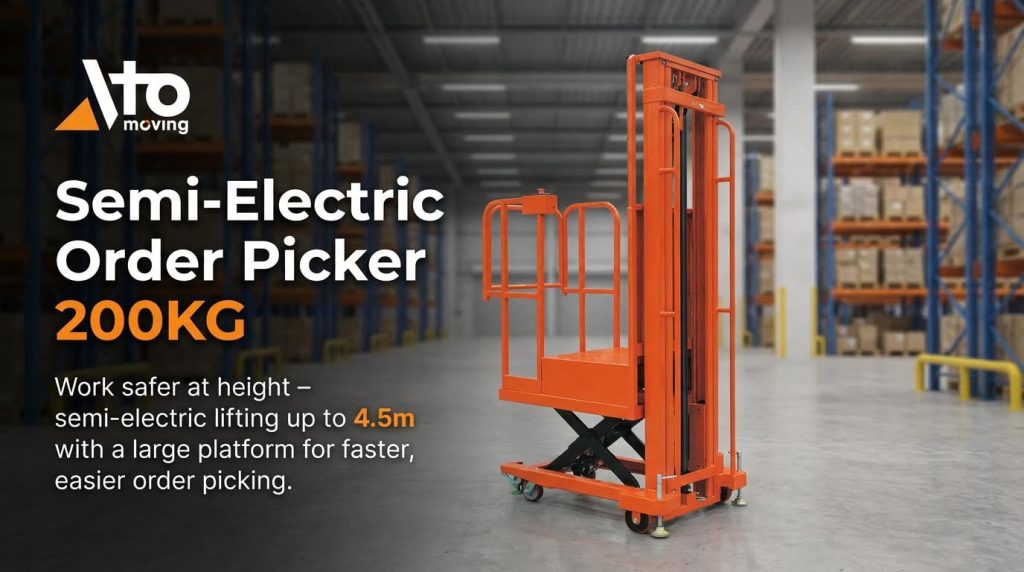
Modern warehouses that ask what do warehouse workers pick orders with now use a mix of manual tools, powered machines, and automation. This article walks through the full spectrum, from basic carts and barcode scanners to high-level order pickers, robots, and digital twins.
You will see how core manual tools support flexible picking, how powered equipment extends reach and speed, and how smart systems like pick-to-light and AGVs raise accuracy and throughput. The final section explains how to match these picking tools to layout, SKU profile, labor skills, and growth plans so engineering, operations, and safety teams can select a coherent, future-ready equipment set.
Core Manual Tools For Efficient Order Picking
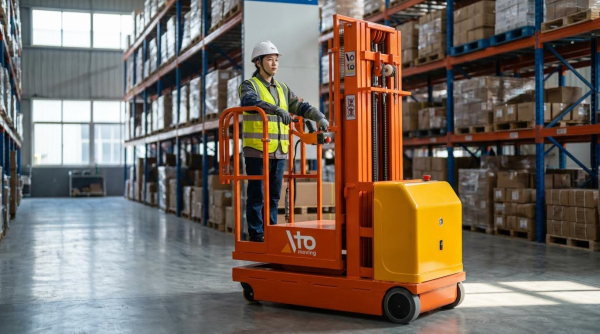
Operations teams asking what do warehouse workers pick orders with often start with manual tools. These tools shape travel time, accuracy, and fatigue in every shift. This section explains how carts, containers, scanners, and ergonomic practices support fast, low-error picking in modern facilities. It focuses on practical choices that match layout, SKU mix, and labor skills.
Carts, Trolleys, And Manual Order Pickers
Warehouse workers pick orders with simple platforms first. These include picking carts, trolleys, and pallet dollies. Engineers size these tools around carton weights, aisle widths, and batch size. Poor cart selection increases push forces and slows pick rates.
| Aspect | Typical practice |
|---|---|
| Load range | 150–500 kg for multi-order carts |
| Wheel type | Low rolling resistance, suitable for floor quality |
| Shelf layout | 2–4 levels, sized to shipping cartons or totes |
| Braking | Parking brakes on slopes and docks |
| Integration | Mounts for scanners, tablets, or pick-to-light |
Manual order pickers rely on clear slot labeling and stable loads. Good designs keep heavy items low and close to the operator. This reduces push forces and risk of strain. In narrow aisles, shorter carts with swivel casters cut turning time and damage.
Bins, Totes, Dividers, And Labeling Systems
Reusable bins and totes answer the question what do warehouse workers pick orders with at item level. They hold SKUs, protect packaging, and group lines for each order. Dividers increase slot density for small parts and reduce mixing risk.
Engineers link container choice to SKU size, weight, and velocity. Smooth internal walls protect packaging. Stackable designs improve backroom and vehicle space use. Proper labeling is just as important as the plastic itself.
- Large, high-contrast labels cut search time.
- Barcodes or QR codes support scan verification.
- Color coding separates zones, routes, or order types.
Clear visual identity on bins and rack faces reduces mis-picks. It also helps new workers reach stable performance faster. That lowers training time and improves ramp-up for seasonal labor.
Scan Verification And Mobile Terminals
Most modern sites answer what do warehouse workers pick orders with by pointing to scanners and mobile terminals. Handheld RF scanners or wearable devices confirm each pick. They read barcodes on items, inner packs, or outer cartons.
Scan verification supports several controls:
- Right item: device checks SKU code.
- Right quantity: device tracks picked units versus target.
- Right location: worker confirms bin ID or location label.
Mobile terminals guide workers with step-by-step tasks. They show next location, SKU image, and unit of measure. This reduces paper use and re-keying errors. Typical systems also capture timestamps, which support KPI tracking for pick rate and dwell time at each slot.
Ergonomic Aids And Golden Zone Practices
Ergonomic design answers what do warehouse workers pick orders with in a safer way. The golden zone principle places fast movers between mid-thigh and shoulder height. This range reduces bending and overhead reach. It also speeds grab-and-go motions during high-volume waves.
Teams combine layout rules with simple aids. Cushioned floor mats support pickers who stand in one area. Handles on bins and cartons improve grip and reduce finger strain. Adjustable workstations let staff set a comfortable height for packing or value-added tasks.
Engineers review reach distances, lift frequencies, and typical load weights. They then move heavy or high-rotation SKUs closer to main travel paths. This cuts cumulative strain and injury risk. Better ergonomics usually increases sustained pick rate, not just short-term speed.
When management asks what do warehouse workers pick orders with, a complete answer includes these ergonomic choices. Tools, layout, and practices together decide how long staff can work at target performance without fatigue spikes or quality drops.
Powered Order Pickers And Lift Equipment
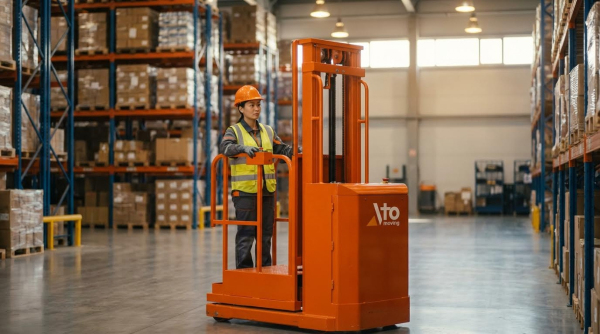
Warehouse managers asking what do warehouse workers pick orders with often look first at powered order pickers and lift tools. These machines decide how fast staff can move, how high they can pick, and how safely they can work. The right mix of low-level and high-level equipment shapes storage density, travel distance, and labor cost. This section explains how to match powered pickers to height, energy, safety, and layout needs.
Low-Level Vs High-Level Order Pickers
Low-level order pickers work from floor level up to about 2.5 metres. Operators stand or walk at ground level and step on and off quickly between picks. These trucks suit fast moving SKUs on the first levels of racking and support high pick rates along wider aisles. They also lower fall risk and usually need less training.
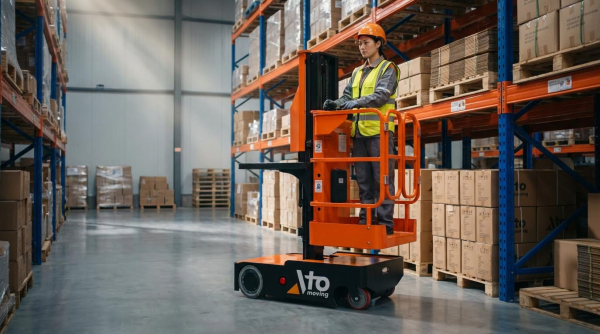
High-level order pickers lift the operator platform to upper rack levels, often up to about 10–12 metres. They run best in narrow aisle layouts where vertical space replaces floor space. These machines let workers pick from several levels in one trip and raise storage density. They cost more, move slower at low levels, and require strict fall protection and advanced training.
| Aspect | Low-level picker | High-level picker |
|---|---|---|
| Typical reach | Up to ~2.5 m | Up to ~10–12 m |
| Best use | Fast ground and first-level picks | Tall racking, dense storage |
| Aisle width | Standard or wide aisles | Narrow aisles |
| Capex and upkeep | Lower | Higher |
| Training need | Basic | Advanced, with fall control |
Choice depends on SKU height profile, building clear height, and allowed aisle width. Many sites use low-level units for fast movers and high-level units for reserve or slow movers.
Electric Vs Manual Order Picking Equipment
When people ask what do warehouse workers pick orders with, they often compare electric machines with manual tools. Electric order pickers use powered lift and drive, so operators travel and raise platforms with little effort. This cuts fatigue and removes most ladder climbing and heavy lifting. Electric units also integrate add-ons such as scales and barcode scanners to support scan verification and real time stock updates.
Manual pickers include hand pallet trucks, platform trolleys, and non-powered lift tables. They cost less to buy and maintain and fit well in tight or complex paths. They also suit seasonal staff because training is short. The trade-off is slower travel, limited lift height, and higher strain over long shifts.
A simple selection view helps:
- Use electric pickers for high volume, long travel, or multi-level picking.
- Use manual pickers for short routes, small sites, and low capital budgets.
- Combine both where main aisles need powered units and side areas stay manual.
Energy choice also matters. Modern electric fleets often use lithium-ion batteries. These charge faster and support more cycles per shift than lead–acid types, which reduces downtime and supports multi-shift use.
Safety, Training, And Regulatory Compliance
Powered order pickers change how and where people work at height, so safety is central. Supervisors must define clear rules for speed, turning, and platform height. They must also enforce pedestrian and truck separation on shared routes. Typical controls include speed limits in congested zones, horn use at crossings, and marked walkways.
Training programmes should cover at least four blocks:
- Pre-use checks on forks, platforms, guards, and brakes.
- Stable load handling, including centre of gravity and pallet condition.
- Safe travel with raised platforms, especially in narrow aisles.
- Emergency procedures, including lowering and evacuation.
Regulations in most regions required that operators hold valid licences for powered industrial trucks. They also required periodic refreshers and documented inspections. For high-level pickers, fall restraint systems and guardrails were standard. Management must track incident data, near misses, and damage rates to adjust routes and speeds.
Well planned maintenance also supports safety. Scheduled checks on hydraulic systems, batteries, and control electronics reduce breakdowns in aisles. Clear lockout and tagout steps protect technicians and prevent unintended start up.
Selecting Equipment For Layout And SKU Profile
The question what do warehouse workers pick orders with has a different answer in each building. The right order picker depends on layout, SKU mix, and order pattern. Engineers start with three inputs: SKU velocity, pick face height, and order structure. They then match these to machine reach, travel speed, and turning radius.
For low-bay sites with wide aisles and heavy carton flow at ground level, low-level electric pickers or ride-on pallet trucks usually give the best result. Workers can batch pick several orders per trip and stay within the ergonomic “golden zone”. For tall racks and limited floor space, high-level pickers or very narrow aisle trucks unlock more pallet positions per square metre.
SKU profile matters as well. High cube palletized goods on upper levels justify taller machines. Small piece picks in cartons near the floor favour low-level equipment with good acceleration and braking. Mixed operations often use a tiered strategy:
- Reserve storage at high levels served by high-level pickers or reach trucks.
- Fast movers at low levels served by low-level pickers and tuggers with carts.
- Very small items in dense shelving near packing, sometimes served by light automation.
Engineers should also check floor bearing capacity, charging space, and traffic flow before final selection. This ensures that powered order pickers integrate smoothly with conveyors, packing stations, and any automated systems on site.
Automation, Robotics, And Smart Picking Systems
Engineers planning smart warehouses ask a core question: what do warehouse workers pick orders with when automation enters the process. In modern sites, people no longer walk every aisle with only carts and paper lists. Instead, automated systems move cartons, guide pickers, and even grab items directly from bins. This section explains how conveyors, digital guidance, robots, and goods-to-person systems share the picking work with human operators.
Conveyors, Sortation, And Gravity Flow Racks
Conveyors and sortation lines answer part of the query what do warehouse workers pick orders with by changing the role of the picker. Workers pick beside moving belts instead of walking long routes. Powered roller conveyors control speed and direction, so cartons arrive at the right station in sequence. This cuts travel time and supports higher lines per hour.
Gravity flow racks use sloped roller or wheel tracks. Cases load from the rear and roll to the pick face under gravity. Pickers work at fixed positions and always face the oldest stock first, which supports FIFO rotation. These racks reduce reaching and searching, especially for fast movers.
| Aspect | Conveyors and Sortation | Gravity Flow Racks |
|---|---|---|
| Main function | Move and sort cartons between zones | Present cases at an ergonomic pick face |
| Impact on walking | Strong reduction | Strong reduction inside pick zone |
| Best for | High order volumes and batch waves | High-velocity SKUs |
| Energy use | Requires power for rollers and controls | Uses gravity after initial load |
When engineers combine conveyors, sorters, and flow racks, they create dense pick modules. Workers stand in short zones and handle more order lines per hour with less fatigue.
Pick-To-Light, Voice Picking, And KPIs
Pick-to-light and voice systems change how workers know what to pick and where to go. Pick-to-light uses LEDs and numeric displays on rack faces or carts. Lights show the location and quantity, so the picker confirms with a button press. This supports very fast line picking and lowers reading errors.
Voice picking uses headsets and small wearable terminals. The system sends spoken tasks and receives verbal confirmations. Workers keep both hands free for handling cartons and scanners. This is useful in chill rooms or noisy areas where screens fog or glare.
Engineers track both methods using KPIs. Key metrics include picks per hour per worker, error rate, and lines per order. Operations often see higher speed and accuracy compared with paper lists or basic RF only. A simple comparison helps frame design choices:
- Pick-to-light: best for dense, repeatable SKUs and short zones.
- Voice: best for larger zones and variable item locations.
- Hybrid: lights for fast movers, voice or RF for the long tail.
By tying these KPIs into warehouse management and control systems, managers can tune slotting, staffing, and shift plans around real performance data.
AGVs, Unmanned Forklifts, And Digital Twins
Automated guided vehicles and unmanned forklifts handle horizontal and vertical moves between storage and pick areas. They move pallets, racks, or carts, so workers can focus on actual picking and exception handling. Typical AGV fleets work in fixed paths or mapped routes and keep load placement accuracy within tight tolerances. This reduces damage and improves dock and buffer discipline.
Unmanned forklifts can operate across multiple shifts without fatigue. They suit repetitive transfer runs between receiving, high-bay storage, and induction points for conveyors or goods-to-person stations. Safety scanners, laser radar, and emergency stops reduce collision risk compared with tired or distracted drivers.
Digital twins extend the answer to what do warehouse workers pick orders with into the virtual space. Engineers build a live model of the warehouse, including AGVs, pick lines, and worker flows. They test new routes, speeds, and fleet sizes before changing real hardware. This supports better investment planning and smoother commissioning of new layouts.
In daily use, AGVs and digital twins help keep material flowing to pick faces at a steady rate. Workers see fewer stockouts at locations and fewer urgent forklift calls, which stabilizes pick performance.
Robotic Bin Picking And Goods-To-Person Systems
Robotic bin picking systems use cameras and AI to see and grasp items in totes or bins. Arms select products and place them into order containers with high repeatability. Typical systems reach several hundred picks per hour, depending on item mix and gripper design. Error rates stay low when vision and barcode checks confirm each grab.
Goods-to-person systems move the storage media instead of the worker. Shuttles, mini-load cranes, or mobile racks bring totes to ergonomic pick stations. There, human operators or robots handle the final pick. This removes most walking and ladder work, and it uses vertical space more fully than wide aisle shelving.
From an engineering view, these systems shift the process from “person-to-goods” to “goods-to-person.” They suit high SKU counts and fast service level targets. However, they require careful analysis of order profiles, peak demand, and redundancy. Designers must size buffer lanes, lift counts, and station numbers to avoid bottlenecks.
In modern operations, the direct answer to what do warehouse workers pick orders with often becomes a mix. Workers use scan guns, light modules, and ergonomic stations, while robots and shuttles handle travel and heavy moves. This human–machine split delivers higher throughput, better accuracy, and more stable shift workloads.</p,
Frequently Asked Questions
What do warehouse workers use to pick orders?
Warehouse workers typically use tools like handheld scanners, picking carts, and forklifts to efficiently retrieve items from shelves. These tools help ensure accuracy and speed during the order-picking process.
What is the order picking process in a warehouse?
The order picking process involves locating and retrieving products from warehouse shelves to fulfill customer orders. Workers often follow a pick list or use technology like barcode scanners to guide them. This process requires attention to detail and physical stamina. For more insights on optimizing this process, you can refer to Warehouse Picking Tips.
What skills are needed to be an effective order picker?
Effective order pickers need strong attention to detail, physical fitness, and time management skills. They must also work well in teams and communicate clearly with other warehouse staff. These skills help ensure accurate and efficient order fulfillment.