Operators who search for how to operate mighty lift pallet jack usually need clear guidance on controls, safe maneuvering, and compliance. This article follows the full lifecycle of manual pallet jack use, from understanding hardware and control functions to daily inspections, travel techniques, and ramp operation.
You will see how core components, hydraulic limits, and wheel geometry affect capacity and turning space. The inspection section links practical checklists to OSHA expectations and injury prevention. Maneuvering guidance then covers fork entry, push versus pull, tight-aisle tactics, and work on slopes or docks. The final summary distills best practices that safety managers and supervisors can turn into site rules, training content, and visual floor standards.
Core Components And Control Functions
This section explains the core hardware that controls a manual pallet jack and how each part affects safe use. Technicians who search how to operate mighty lift pallet jack often really need to understand structure, handle positions, hydraulics, and wheel geometry. These fundamentals decide how much force the operator needs, how the jack steers, and how stable a loaded pallet stays. Clear knowledge of these components supports better training, safer layouts, and fewer handling injuries.
Key Structural Elements Of A Manual Pallet Jack
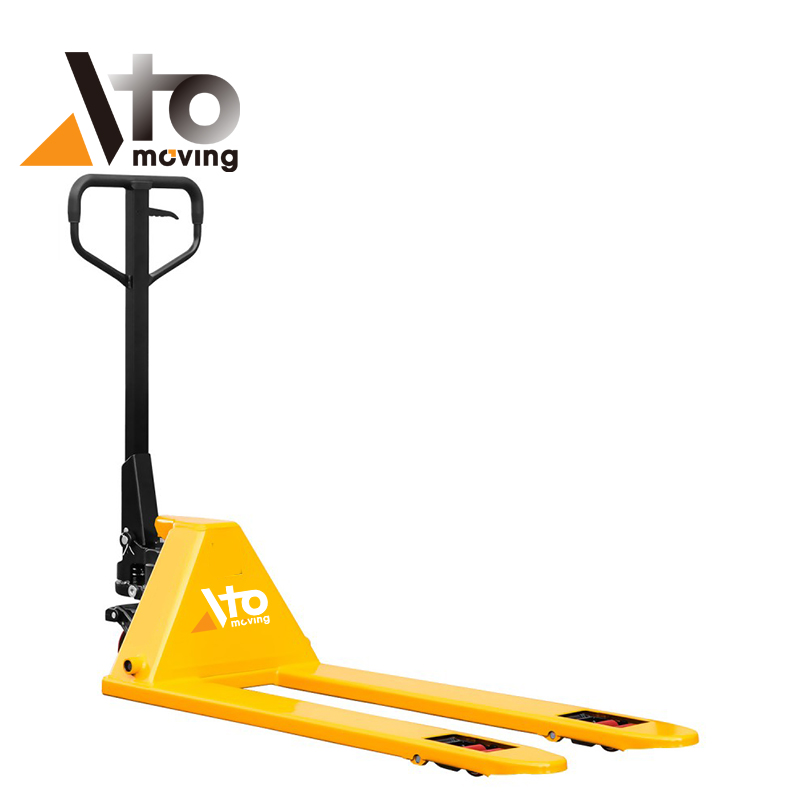
A manual pallet jack has four main structural groups. These are the tow handle and tiller arm, the fork frame, the hydraulic unit, and the wheel assemblies. The forks carry the pallet and transfer load into the wheels and pump body. The tow handle links the operator to both the steering wheels and the hydraulic control.
When planning how to operate mighty lift pallet jack in tight warehouse lanes, operators should know where load paths flow. The load moves from pallet deck boards into fork blades, then into the fork heels, pump block, and finally into the steering and load wheels. Any bent heel, cracked weld, or twisted fork tips can change these load paths and increase failure risk. Regular checks of fork straightness and heel thickness help keep the frame within design stress limits.
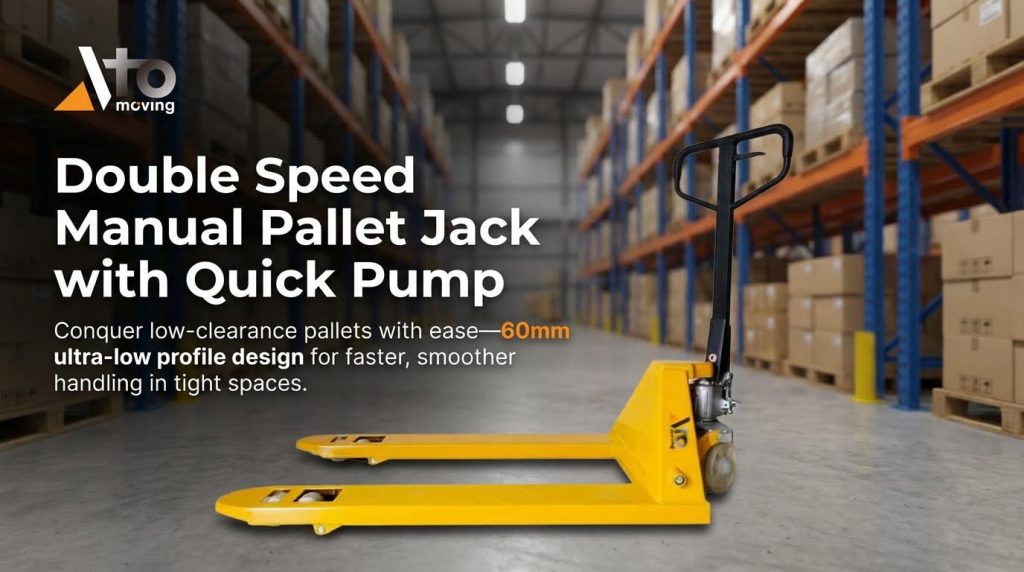
Common structural dimensions include fork length near 1 150 mm and overall lowered height near 75–85 mm. These values allow entry into standard EUR and ISO pallets while keeping clearance low for stability. The frame must also resist torsion during cornering with off‑center loads. Reinforced fork webs and solid pump brackets reduce deflection and keep the jack tracking straight under heavy loads.
Three-Position Handle: Raise, Neutral, Lower
The three‑position control handle is the operator’s main interface. It sets the hydraulic valve to raise, neutral, or lower. In the raise position, pumping strokes pressurize the hydraulic circuit and lift the forks. In neutral, the valve blocks flow so the forks stay at a fixed height during travel.
In the lower position, the valve opens a controlled return path to the reservoir. This lets the forks descend under load weight at a limited speed. Correct use of these three positions is central to any step‑by‑step method for how to operate mighty lift pallet jack safely. A common best practice is to travel with the handle in neutral and forks just clear of the floor.
Operators should avoid holding the handle in lower while moving. That habit can cause unplanned descent when the route crosses joints or slopes. For ergonomic control, most designs place the release lever within thumb reach on the inside of the handle. Smooth, predictable lever travel reduces sudden drops and helps prevent product shift or crushed feet.
Hydraulic Lift Mechanism And Load Ratings
The hydraulic unit converts small handle strokes into high lifting force. It normally includes a pump piston, reservoir, check valves, and a lift cylinder linked to the fork frame. Each pump stroke moves a small oil volume into the cylinder. Pressure rises until it balances the pallet weight and friction in the linkage.
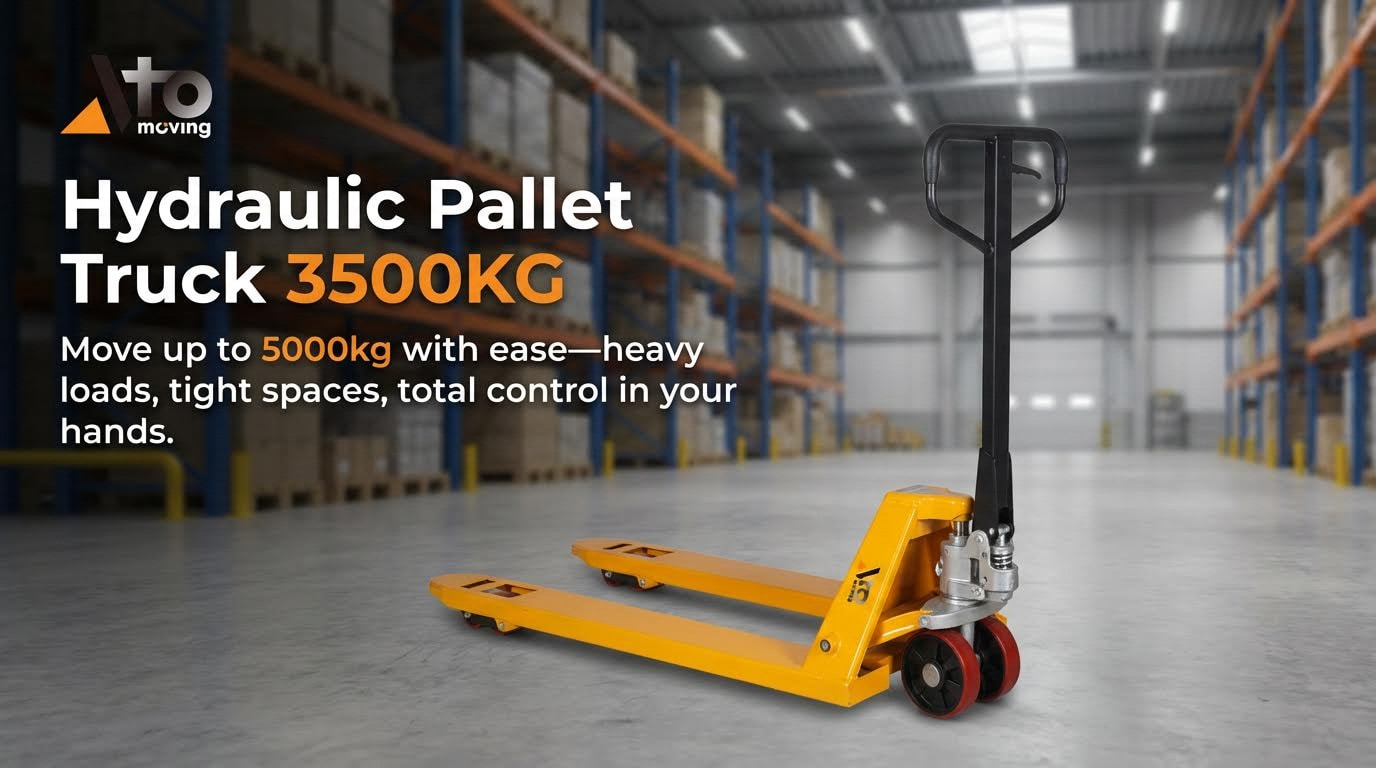
Typical manual pallet jacks use simple single‑acting hydraulics. They reach efficiencies near 85–90% when seals and oil are in good condition. The rated capacity, often between 2 000 kg and 3 000 kg for warehouse models, depends on cylinder bore size, pump geometry, and safety factor in the frame. The rating always assumes the load is centered across both forks and located near the load wheel centers.
When learning how to operate mighty lift pallet jack within its limits, operators must read the nameplate capacity and compare it with actual pallet mass. Overloading raises hydraulic pressure beyond design and can trigger seal leaks or sudden loss of lift. Good practice keeps working loads below 80–90% of the marked capacity, especially with dynamic effects from ramps or rough floors.
Hydraulic health strongly affects control feel. Air in the circuit causes “spongy” lift and longer pump strokes. External oil around the pump block or cylinder rod points to worn seals. Both issues need maintenance before the jack returns to service.
Wheel Types, Steering Geometry, And Turning Radius
Manual pallet jacks use two steering wheels under the pump body and two pairs of small load wheels at the fork tips. Wheel material and size change how much force the operator needs and how the jack behaves on different floors. Polyurethane wheels roll easily on smooth concrete and protect coatings. Nylon wheels carry high loads but transmit more noise and shock.
Steering geometry sets the link between handle angle and wheel pivot angle. A longer tiller arm gives more leverage and reduces steering effort. However, it also increases the swept path in narrow aisles. A compact design with a small turning radius is better for dense racking but needs higher input force. Engineers balance these factors by adjusting kingpin offsets, wheel spacing, and stop angles.
For good control when workers search how to operate mighty lift pallet jack in confined areas, the jack should rotate around a point close to the load center. Articulated steering mounts and low center of gravity reduce tip risk during tight turns with raised forks. Larger steering wheels help cross floor joints and dock plates but raise the chassis slightly.
Surface quality also matters. Smooth, level floors cut rolling resistance and reduce strain injuries. Rough or damaged floors increase push force and can cause sudden stops that shift loads. Regular wheel inspection for flat spots, embedded debris, and free rotation ensures the design turning radius and handling remain as intended over the jack’s life.
Pre-Use Inspection And Safety Compliance
Pre-use checks are the first step in learning how to operate mighty lift pallet jack safely and efficiently. A structured inspection routine reduces breakdowns, product damage, and injury risk. This section explains what to inspect at shift start, how to manage defects, and how to link checks with OSHA-driven training and PPE policies. The goal is a repeatable process that any trained operator can apply on every job.
Shift-Start Inspection Checklist And Tag-Out
Operators should inspect the pallet jack at the start of each shift or before first use. The inspection focuses on visible damage, smooth movement, and reliable control response. A short, consistent checklist works better than a long, irregular one.
- Check forks for bends, cracks, or twisted tips.
- Inspect the hydraulic unit for leaks and jerky lifting.
- Spin and roll wheels to confirm free movement and no flat spots.
- Test the three-position handle for clear raise, neutral, and lower action.
- Verify all labels, capacity markings, and safety decals are legible.
If any defect affects safe use, operators must tag the jack out of service. The jack should be removed from the work area and reported to a supervisor or maintenance. No one should use a unit with leaks, structural damage, or jammed controls. This tag-out discipline is central to any program that teaches how to operate mighty lift pallet jack in a controlled, low-risk way.
Verifying Capacity, Load Stability, And Stacking
Capacity checks start with the nameplate or stamped rating on the pallet jack frame. Typical manual units handle around 2 000–2 500 kilograms, but operators must confirm the exact value. The load weight estimate should always stay at or below this rating.
Stable loading depends on how the pallet sits on the forks, not just the weight. Operators should center the pallet, extend forks fully under the load, and keep the heaviest items low. Uneven or top-heavy loads increase tipping risk, especially during sharp turns or sudden stops.
Stacking rules depend on site policy and pallet strength. As a baseline, only stable, shrink-wrapped, or banded stacks should move on a pallet jack. Pallets with broken boards, hanging cartons, or leaning layers should be reworked before transport. Keeping forks 20–50 millimetres off the floor during travel helps maintain stability while still clearing minor floor defects.
PPE, Ergonomics, And Injury Risk Reduction
Effective PPE policies support safe manual handling. Core items include hard-toe safety footwear, grip gloves, and high-visibility vests in shared aisles. Eye protection and hearing protection may be required in high-traffic or noisy areas.
Ergonomics shape how to operate mighty lift pallet jack without overloading the body. Operators should push rather than pull whenever layout allows. Pushing aligns force with the torso and reduces back and shoulder strain. Pulling places joints in weaker positions and raises the risk of slips and sudden twists.
Stand close to the handle with feet staggered for balance. Keep elbows near the body and use both hands on the tiller for better steering control. Avoid extended reaches; walk the load instead of over-rotating the torso.
Use a slow, steady pace and plan stops early. Never try to stop a moving jack with feet or hands against the load. Let the wheels roll down naturally while you reduce push force.
When space forces a short pull, keep the load light, walk backward with clear vision, and stop if the path is not visible. If a heavy pallet requires strong force even on level ground, check wheels, floor condition, and load weight before continuing.
OSHA-Driven Policies And Operator Training
OSHA treated pallet jacks as industrial trucks under Standard 1910.178. That standard required employers to design, maintain, and use this equipment so it did not create unsafe conditions. It also required training and evaluation of each operator.
A solid training program for how to operate mighty lift pallet jack should cover three areas. First, equipment knowledge, including controls, capacity, and inspection steps. Second, workplace rules, such as speed limits, right-of-way, and ramp procedures. Third, load handling skills, including centering, securing, and moving unstable loads.
Written procedures should ban riding on the forks, horseplay, and use of damaged jacks. Refresher training is useful after an incident, a near miss, or a change in layout or process. When operators understand both the mechanical limits of the jack and the OSHA expectations, daily pre-use inspection and safe travel habits become normal practice, not extra work.
Maneuvering, Travel Techniques, And Ramps
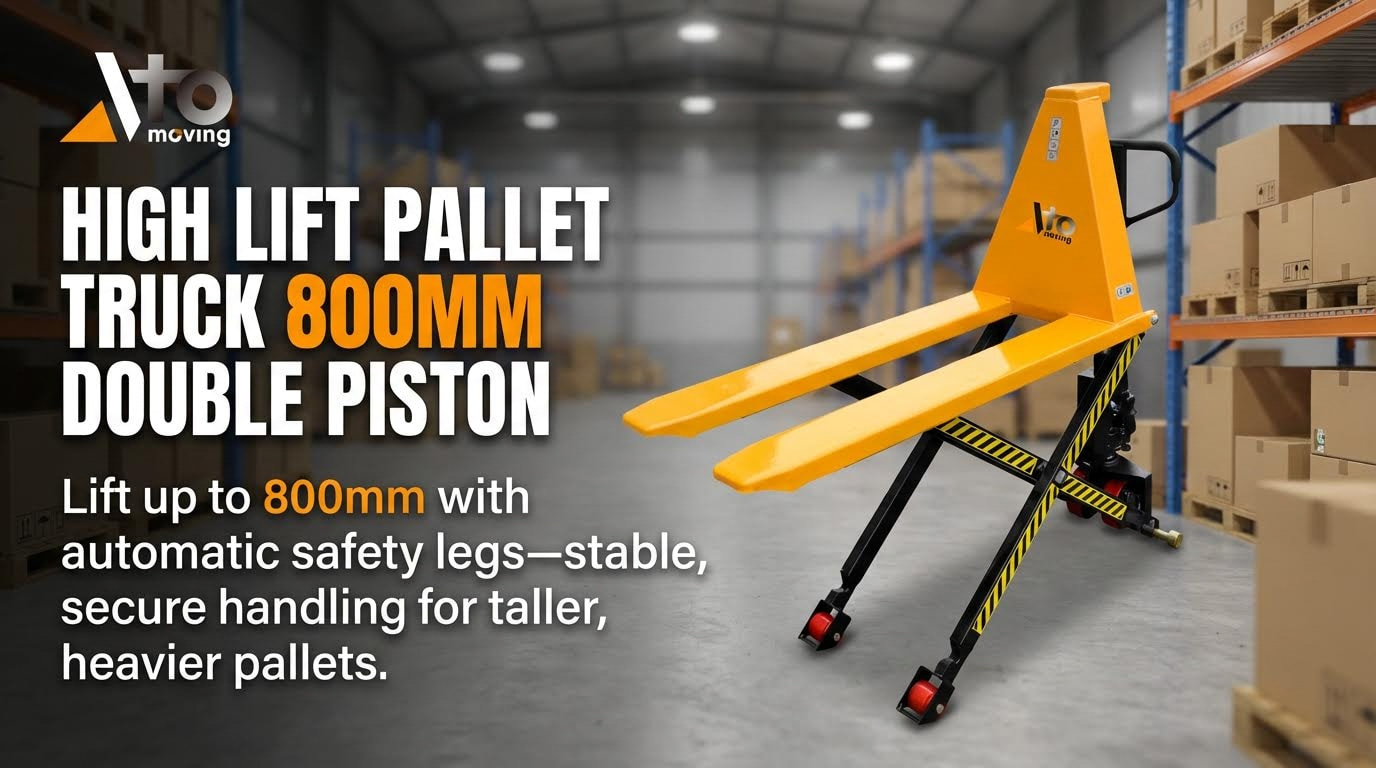
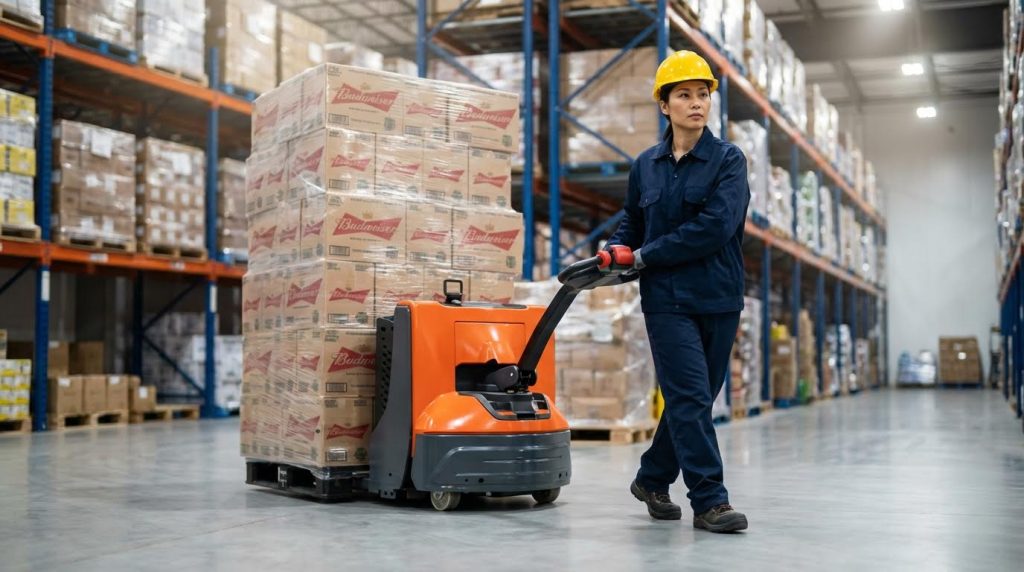
This section explains how to operate a manual pallet jack safely once the load is on the forks. It focuses on fork use, travel posture, tight-space control, and work on slopes and docks. These techniques apply directly when people search how to operate mighty lift pallet jack or similar hand trucks. Correct maneuvering reduces strain, prevents product damage, and avoids typical warehouse injuries.
Proper Fork Insertion, Lifting, And Load Height
Approach the pallet straight and at low speed. Align both forks with the pallet openings before entry. Keep the handle in neutral and steer smoothly to avoid side impact on stringers.
Roll the forks fully under the pallet until the tips project slightly beyond the far deck board. Partial entry reduces support and can break boards. Center the load across both forks so the center of gravity sits between the wheels.
Move the handle to the raise position and pump until the pallet clears the floor by about 20–50 millimetres. Extra height does not add safety and increases instability. During travel, keep forks as low as possible while still clearing joints, thresholds, and minor floor defects.
Before lowering, confirm the floor is level and clear of feet and debris. Shift the handle to the lower position and release slowly so the pallet settles without shock. Return the handle to neutral before pulling the forks free.
Push Versus Pull: Body Mechanics And Control
Operators should push a manual pallet jack for most travel. Pushing lets the body weight work behind the load and reduces back and shoulder strain. Pulling places joints in weaker positions and raises the risk of slips and sudden twists.
Stand close to the handle with feet staggered for balance. Keep elbows near the body and use both hands on the tiller for better steering control. Avoid extended reaches; walk the load instead of over-rotating the torso.
Use a slow, steady pace and plan stops early. Never try to stop a moving jack with feet or hands against the load. Let the wheels roll down naturally while you reduce push force.
When space forces a short pull, keep the load light, walk backward with clear vision, and stop if the path is not visible. If a heavy pallet requires strong force even on level ground, check wheels, floor condition, and load weight before continuing.
Navigating Tight Aisles, Corners, And Congestion
Good steering technique is critical in narrow aisles and busy zones. A small turning radius and full tiller sweep allow precise control, but sudden movements can unbalance tall or unstable loads. Keep forks low and speed minimal when space is tight.
Use short, progressive handle movements rather than full, fast swings. In tight corners, pull the jack slightly to realign, then push through the turn while watching both fork tips and the load. Avoid sharp turns while the pallet is raised, which increases side loading on wheels and can shift the stack.
In congested areas, treat the pallet jack like a pedestrian vehicle. Yield to people, slow at intersections, and use verbal calls or horns at blind spots. Keep at least one pallet length of clearance from other trucks or racks when turning.
Plan routes that reduce reversing and complex turns. A simple path often cuts handling time and impact risk more than aggressive steering. If the aisle is too narrow for safe rotation, stop and request help or a different handling method.
Operating On Slopes, Docks, And Rough Surfaces
Most manual pallet jacks were designed for level, smooth floors. When operators search how to operate mighty lift pallet jack on ramps or docks, they usually need clear rules to avoid runaways. The key controls are travel direction, speed, and alignment with the slope.
On ramps with manual jacks, standard practice is to keep the jack downhill from the load. Descend backward so the load stays above you and the jack remains under control. Never turn on a ramp; align straight before moving and maintain constant, low speed.
On loading docks and thresholds, check for edge protection, gaps, and height changes. Approach dock plates squarely so both forks and wheels cross together. Avoid sudden stops or starts on steel plates, which can be slippery when wet.
Rough or outdoor surfaces increase rolling resistance and shock loads into the frame and pallet. Use lower speeds and keep forks just high enough to clear defects. If the jack stalls or the operator must use excessive force, stop and switch to equipment rated for that terrain, such as units with larger or pneumatic wheels.
Summary Of Best Practices For Safe Jack Use
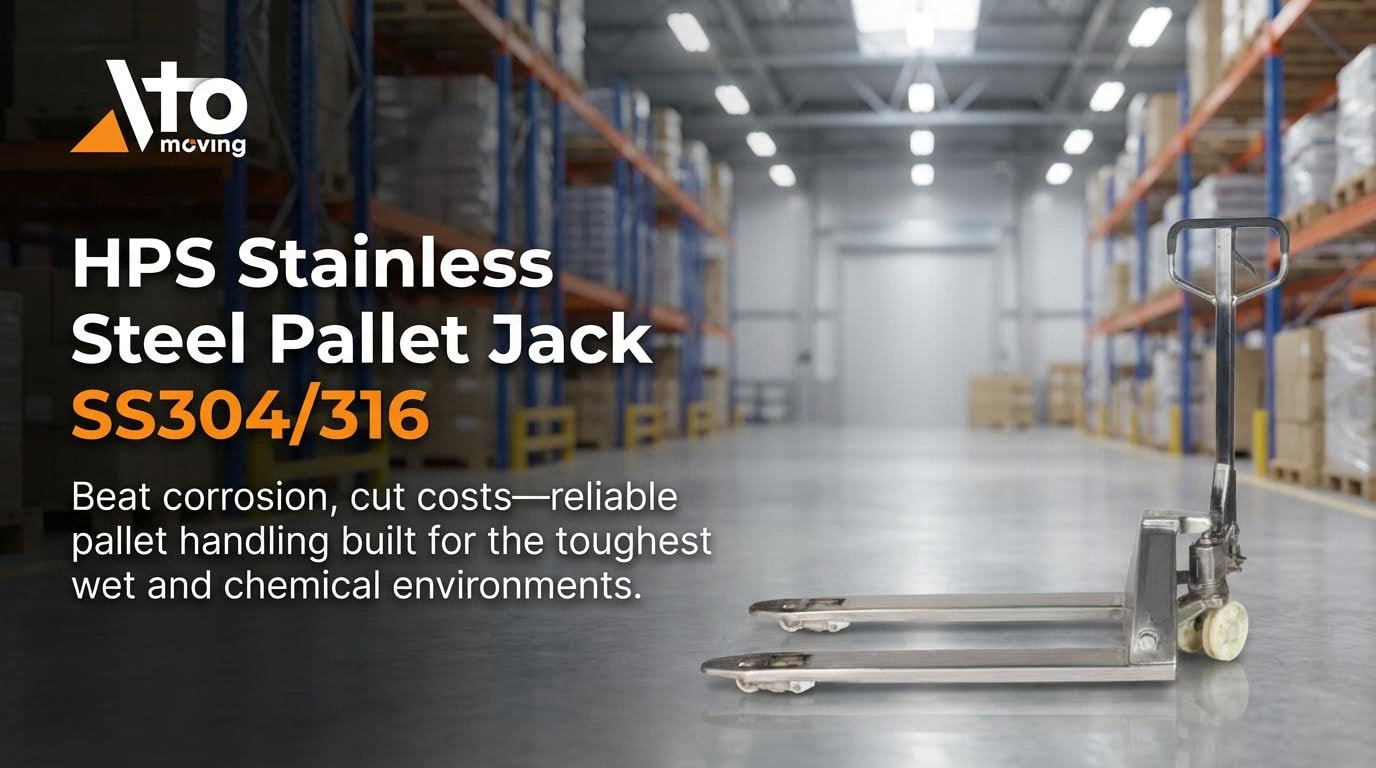
Safe use of a manual pallet jack follows the same core steps as any search for how to operate mighty lift pallet jack. Operators should link pre-use checks, correct loading, controlled travel, and proper parking into one repeatable routine. This routine reduces strain injuries, product loss, and unplanned downtime. It also supports compliance with OSHA expectations on industrial truck use.
Before every shift, inspect the jack and the floor. Check forks, wheels, and the hydraulic system for cracks, leaks, or binding. Tag the unit out of service if any defect affects safe operation. Confirm the rated capacity on the nameplate covers the planned load.
During loading, align the forks square to the pallet and insert fully. Center the mass over both forks and keep the load compact and stable. Raise only enough to clear the floor, then travel with forks close to ground level. Keep feet away from the fork tips and load path at all times.
While traveling, push instead of pull whenever space allows. Maintain a walking pace and use two hands on the handle for control. Slow down at blind corners and ramps, and never turn on a slope. On ramps with manual jacks, keep the jack downhill of the load.
At the destination, verify the floor is level and clear. Lower the load fully before withdrawing the forks. Park unused pallet jacks with forks down, out of traffic and away from emergency equipment. Combine these habits with regular training and maintenance to keep manual pallet jack operation safe and predictable.
,
Frequently Asked Questions
How to Operate a Pallet Jack Step by Step?
Operating a pallet jack involves a few key steps. First, ensure the pallet jack is in good working condition and fully charged if it’s electric. Locate the release valve (lowering valve) and make sure it’s closed to prevent the forks from lowering unintentionally. Pallet Jack Maintenance Tips.
- Position the pallet jack in front of the pallet and lower the forks using the release valve.
- Insert the forks into the pallet slots carefully.
- Lift the pallet by pumping the handle or using the electric lift function.
- Move the pallet jack by pushing or pulling gently, ensuring you maintain control.
Do You Have to Be Trained to Use a Pallet Jack?
Yes, according to OSHA standard 1910.178, workers must receive proper training and certification to operate an electric pallet jack safely. This ensures they understand safety protocols and operational procedures. OSHA Certification Guide.
Should You Push or Pull an Electric Pallet Jack?
For manual pallet jacks, it’s generally safer and requires less energy to push rather than pull. Pulling can strain your lower back due to twisting motions. However, electric pallet jacks are typically operated in the pulling position with a controller for better maneuverability. Pallet Jack Operation Guide.