Facilities that ask how high will an electric lift pallet jack lift need clear limits for lift height, working range, and clearance. This article explains how standard and high-lift electric pallet jacks interact with pallets, racks, and floors, and how lift height affects stability and safety.
You will see how typical lift ranges of about 75–200 millimetres shape load handling, how aisle width and turning radius drive layout design, and how ground clearance and fork geometry affect floor tolerances. The final sections connect equipment selection, digital tools, and emerging energy technologies so engineering, operations, and safety teams can align on one consistent specification strategy.
Defining Lift Height And Working Range Parameters
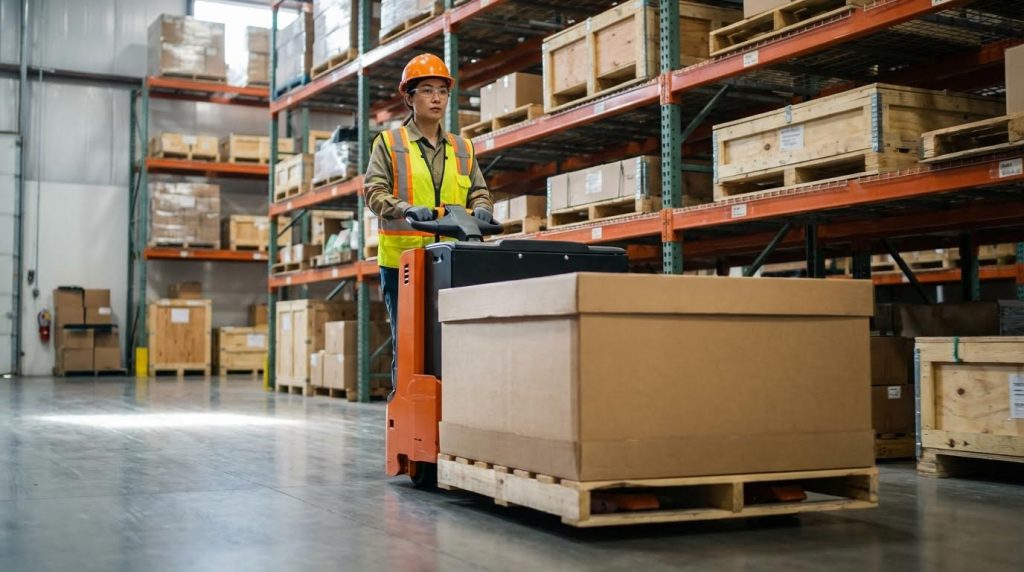
Engineers who ask how high will an electric lift pallet jack lift need clear limits for safe design. This section defines lift height, lowered height, and working range so layouts, racks, and pallets match real machine capability. It links lift range to load capacity, stability, speed, and battery sizing so fleets stay productive without overloading structures or operators.
Typical Lift Heights: Standard Vs. High-Lift Models
Standard electric pallet jacks lift just enough to clear pallet bottom boards. Typical raised height is about 190–205 mm, while lowered height sits around 75–100 mm. In practice, this means the vertical travel is roughly 100–130 mm, which is enough for floor transport and dock work.
Special high-lift pallet trucks and scissor types use a different range. These units can raise loads up to roughly 300–800 mm for ergonomic picking or feeding lines, and some specialized models reach about 3000–4000 mm with mast structures. These mast-style units work more like compact stackers than simple pallet jacks. When choosing between standard and high-lift, engineers should check rack beam levels and required transfer heights, not just catalog “maximum lift” numbers.
| Type | Lowered height (mm) | Max lift height (mm) | Primary use |
|---|---|---|---|
| Standard electric pallet jack | 75–100 | 190–205 | Floor transport, docks |
| High-lift pallet truck | 85–90 | 300–800 | Ergonomic work height |
| Mast-type electric pallet jack | ~90 | 1600–4000 | Light stacking, low racks |
Lowered Height, Free Lift, And Rack Interface
Lowered fork height decides if the truck can enter low pallets. Typical lowered height for electric pallet jacks is about 75–100 mm and low-profile versions go lower to suit special pallets. Engineers should compare this value with pallet entry height and floor flatness; rough floors demand extra margin.
Free lift is small on basic pallet jacks because they do not use tall masts. On mast-type pallet jacks and compact stackers, free lift defines how far forks can rise before the mast extends. This matters under low beams, mezzanines, or doors. For rack work, designers should keep support rails at least 150–200 mm below the truck’s maximum lift height so operators can raise, position, and withdraw safely without hitting beams or sprinklers.
When planning rack interfaces, check three vertical points: fork tip at lowered height, fork tip at pallet clear height, and maximum fork height. This simple check avoids heel impacts on lower beams and crown impacts on upper structures.
Load Capacity, Center Of Gravity, And Stability
Most electric pallet jacks carry rated loads between 1500 kg and 2500 kg, with heavy units reaching about 5000 kg. The rating assumes the load center sits near the pallet midpoint, often at 600 mm from the fork heel for standard 1200 mm pallets. If the load center shifts outward, the effective capacity drops even if the catalog value stays the same.
Vertical lift height interacts with stability. With standard lift of about 200 mm, the center of gravity stays low, so tip risk stays limited on level floors. High-lift and mast-type units raise the center of gravity much higher, which increases overturn risk on slopes, dock plates, and rough joints. Engineers should control three factors:
- Keep heaviest loads on lower rack levels when using mast-type pallet jacks.
- Limit travel speed when forks are above transport height.
- Restrict slopes and dock angles for tall, top-heavy loads.
These controls protect both the truck’s structure and floor slabs from overload and impact.
Speed, Duty Cycle, And Battery Sizing
Electric pallet jacks usually travel around 5–6 km/h with load and slightly faster without load. Lift speeds often fall in the 40–50 mm/s range for lifting and lowering. These values define how long each handling cycle takes from pick to place.
Duty cycle depends on starts, stops, lifts, and travel distance per hour. High-throughput docks or cross-dock sites can run near continuous duty, while light warehouses stay closer to intermittent duty. Battery systems typically use 24 V packs with capacities from about 65 Ah up to around 270 Ah. Larger packs support longer shifts but add weight and cost.
For sizing, engineers should estimate:
- Average lifts per hour and average lift height.
- Average travel distance and speed with and without load.
- Required operating hours between charges.
These values guide battery capacity, charger count, and charging windows. They also help decide whether to use fast charging, battery exchange, or conventional overnight charging to keep fleets ready without oversizing equipment.
Clearance, Aisle Width, And Turning Radius Criteria
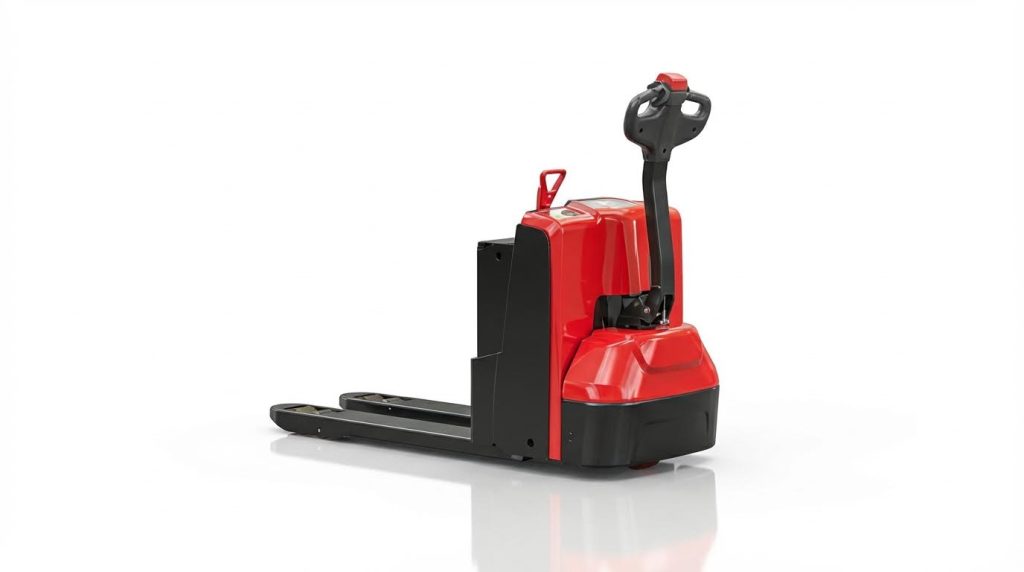
Clearance and aisle criteria decide where an electric pallet jack can work and how high it can lift safely. Engineers must link the question how high will an electric lift pallet jack lift to floor flatness, pallet design, and turning space. Poor clearance planning often limits usable lift height long before the mechanical limit. This section focuses on geometry, not just catalog ratings.
Ground Clearance, Fork Height, And Floor Tolerances
Typical electric pallet jacks have fork lowered heights around 75–100 mm and raised heights around 190–200 mm. That means the effective vertical lift is about 100–125 mm. High‑lift variants can reach roughly 300 mm, but they are less common. Even when the truck can lift higher, safe practice keeps loads just high enough to clear the floor.
Ground clearance under the chassis is often about 30 mm. This small value reduces ramp angles the jack can handle. It also makes floor tolerances critical. Jacks can strike high spots, dock plates, or expansion joints if the floor is uneven.
| Parameter | Typical range |
|---|---|
| Fork lowered height | 75–100 mm |
| Fork raised height | 180–200 mm |
| Usable lift (load rise) | 100–125 mm |
| Chassis ground clearance | ≈30 mm |
Floor flatness standards for warehouses often limit local deviations to a few millimetres over 3 m. This control avoids pallet heel drag at low fork heights. It also prevents shock loads into the mast or tiller arm.
Aisle Width, Turning Radius, And Layout Planning
Aisle width decides if the jack can position a pallet square to the rack. The turning radius for electric pallet jacks usually falls between 1 250 mm and 1 900 mm. Longer forks and rider platforms push this value higher. Narrow‑aisle models reduce width but still need space for the operator body envelope.
Layout engineers should compare three dimensions against the aisle width:
- Overall truck length including forks
- Turning radius at maximum steer angle
- Load overhang beyond fork tips
A simple planning rule uses the formula: required aisle ≈ pallet length + truck length + safety margin. The margin often ranges from 200 mm to 400 mm per side. This extra space lets operators square the pallet without shunting.
When designers ask how high will an electric lift pallet jack lift in a given aisle, they must also check overhead obstructions. Beam bracing, sprinklers, and lights can restrict the usable lift even if the mast has extra stroke.
Operator Envelope, Guarding, And Safety Clearances
The operator envelope includes the body, hands, and feet during steering, walking, or riding. Electric pallet jacks need extra space behind the tiller and around side guards. Guidelines often add 200–250 mm behind the truck for the operator zone. Platform rider units may need 300–400 mm more.
Guarding, such as side rails and drive‑end bumpers, extends the effective footprint. Designers must add this to the base truck width and length. Safety clearances help prevent crush injuries at rack ends and walls. Typical controls include:
- Stop buffers at dead‑end aisles
- Marked keep‑out zones at columns
- Speed limits in narrow cross‑aisles
When jacks lift near their maximum fork height, operators should stand clear of pinch points around the mast and load. Low travel height, usually 100–150 mm, reduces tip risk and leaves more headroom margin under beams.
Pallet, Fork Geometry, And Wheel Selection
Pallet design sets the minimum fork height needed to enter and lift. Standard pallets often need 75–90 mm fork lowered height. Low‑profile pallets or damaged boards may need less. If the question is how high will an electric lift pallet jack lift a given pallet, the answer depends on fork stroke minus pallet deck thickness.
Key fork geometry factors include:
| Aspect | Typical values |
|---|---|
| Fork length | 1 150–1 220 mm |
| Overall fork width | 560–680 mm |
| Fork thickness | ≈160 mm section |
Wheel choice affects both clearance and turning. Polyurethane load wheels protect floors and roll easier on smooth concrete. Larger diameter wheels climb dock plates better but raise the lowered fork height. Tandem load wheels spread the load and reduce point pressure under heavy pallets.
Engineers should match wheel type to floor quality, slope, and expected debris. Correct pairing of pallet opening, fork size, and wheel set ensures the truck reaches its rated lift height without heel drag or pallet impact.
Selection, Integration, And Emerging Technologies
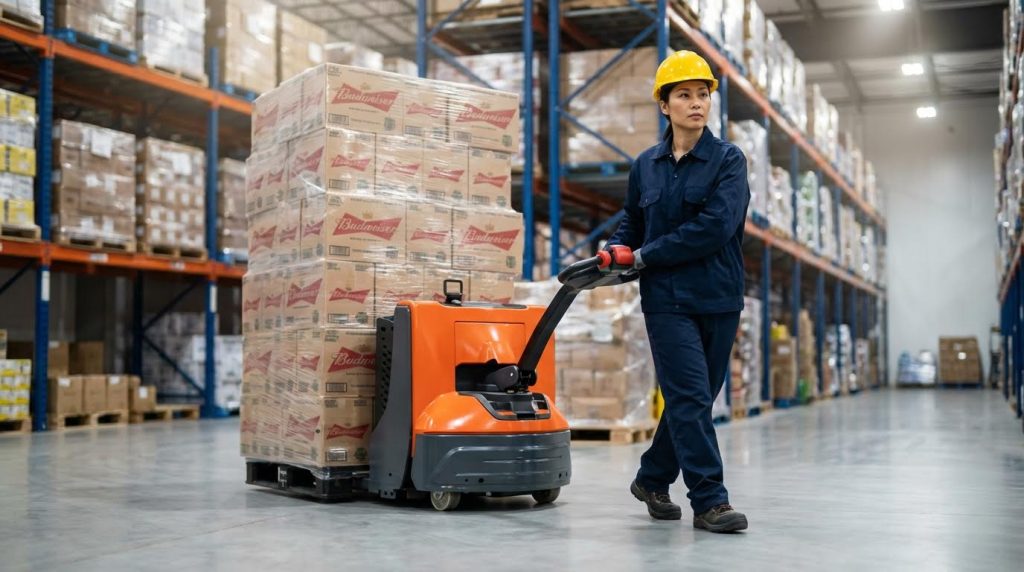
This section explains how high an electric lift pallet jack will lift in real layouts and how that affects selection, integration, and future technology. Engineers must match lift height, ground clearance, and aisle width with pallets, racks, and energy strategy. The goal is a fleet that fits the building, supports throughput, and keeps total cost under control.
Matching Jack Specs To Pallets, Racks, And Slopes
Most electric pallet jacks lift pallets only 190–200 mm above the floor. That is enough to clear floor unevenness and dock plates but not to place pallets into high racks. When engineers ask how high will an electric lift pallet jack lift, they usually compare standard 7.5–8 inch lift with specialty high-lift units that reach about 300 mm.
Key matching checks include:
- Fork length vs pallet length, for example 1 150 mm forks for 1 200 mm pallets.
- Fork width vs pallet entry openings, usually 560–680 mm overall.
- Lowered fork height vs pallet tunnel height, often 75–100 mm.
- Lift height vs dock leveler range and floor slopes.
On slopes, the jack must maintain traction and braking with the load. Operators should travel with the load downhill and keep the load close to the floor to preserve stability.
Lifecycle Cost, Maintenance, And Predictive Analytics
Selection should look beyond purchase price. Electric pallet jacks run high daily cycles, so energy use, tire wear, and brake wear drive lifecycle cost. Standard 24 V systems with capacities around 65–270 Ah define runtime and charging windows.
Planned maintenance usually includes daily safety checks, weekly lubrication, and scheduled battery inspections. Wear items include:
- Polyurethane or rubber load wheels and drive wheels.
- Hydraulic seals and hoses.
- Brake components and contactors where used.
Predictive analytics uses hour-meter data, fault codes, and battery voltage trends to plan service before failure. This approach reduces unplanned downtime and lets engineers right-size spare units instead of oversizing the fleet.
Digital Twins, Simulation, And Fleet Optimization
Digital twins model how pallet jacks move through aisles, docks, and staging zones. Engineers can test different lift heights, turning radii, and aisle widths without buying hardware. For example, they can confirm if a jack with 8 inch lift height clears dock plates yet still fits under low mezzanines.
Simulation tools evaluate:
- Queue times at docks and pick zones.
- Travel distance per pallet move.
- Impact of speed limits and one-way aisles.
Fleet optimization then assigns the right mix of walk-behind, rider, and high-lift units. The objective is to cover peak demand with minimal idle time and minimal battery swaps.
Energy Efficiency, Charging, And Sustainable Operation
Energy planning starts with duty cycle and battery size. A unit with a 24 V, 270 Ah battery supports longer shifts than one with 65 Ah, but it adds weight and cost. Lift height affects energy use only slightly; travel distance and acceleration patterns dominate consumption.
For sustainable operation, engineers focus on:
- High-efficiency AC drive motors with regenerative braking.
- Right-sized chargers and off-peak charging schedules.
- Wheel selection that reduces rolling resistance but protects floors.
Lithium-based batteries support fast charging and partial opportunity charges, which suits multi-shift fleets. However, facilities must confirm charger placement, ventilation needs, and fire protection rules before adoption.
Summary And Engineering Implications
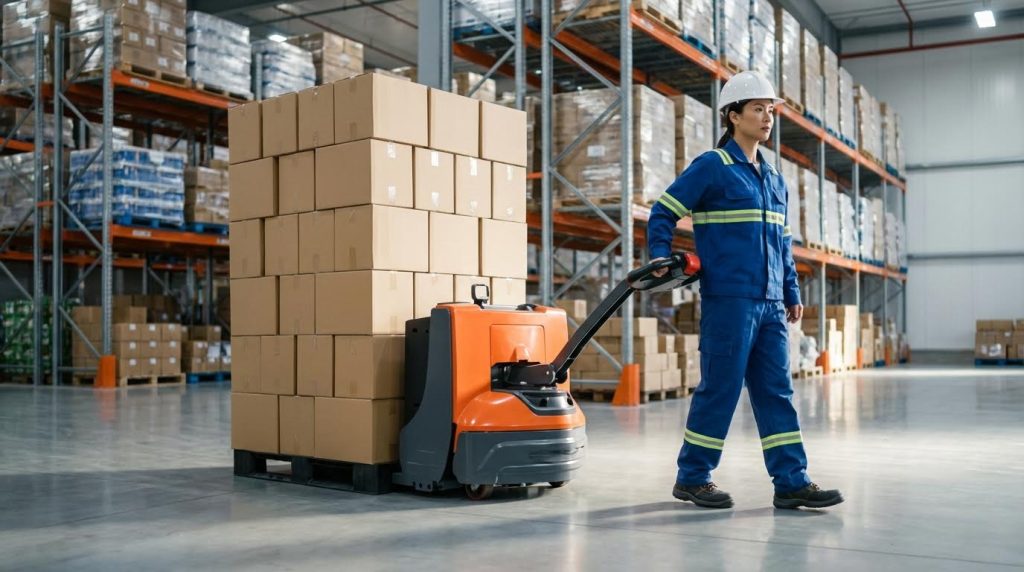
Engineers asking how high will an electric lift pallet jack lift must separate standard units from high-lift variants. Most electric pallet jacks raised loads only enough for transport. Typical lift height ranged from about 190 mm to 300 mm above the floor. Lowered height stayed near 75 mm to 100 mm to clear standard pallets while keeping ramps and dock transitions manageable.
High-lift and stacker-style designs extended this envelope. Mast-equipped electric pallet trucks reached between roughly 1 600 mm and 4 000 mm, with some product data listing closed mast heights around 2 230 mm to 2 700 mm. Engineers had to reserve at least 200 mm between maximum fork height and rack beam to allow safe pallet entry and exit. Ground clearance near 30 mm and fork tip clearance near 90 mm continued to govern dock plates and floor flatness.
These limits shaped warehouse layouts, racking elevations, and aisle widths. Typical turning radii between 1 250 mm and 1 970 mm drove minimum aisle widths above 2 100 mm for pallet transfer. Energy systems, usually 24 V with capacities up to about 270 Ah, constrained duty cycles and charging strategies. Future fleets would link lift height, travel speed, and battery use through analytics, digital twins, and optimized charging to balance throughput, floor loading, and safety clearances.
,
Frequently Asked Questions
How high can an electric pallet jack lift?
An electric pallet jack can typically lift loads to heights ranging from 15 cm to over 50 cm, depending on the model. These machines are commonly used in warehouses and distribution centers where frequent lifting and lowering are necessary. Pallet Jack Lift Guide.
What is the typical range of lift heights for electric pallet jacks?
Electric pallet jacks generally offer a lift height range of 15 cm to 50 cm. This range can vary slightly based on the specific model and manufacturer. They are designed to handle various tasks efficiently within warehouses. For more detailed information, you can refer to industry guides like Lift Height Specifications.