Manual and electric pallet jacks shared the same basic task: move palletized loads safely and fast. This article compared their engineering design, ergonomic risks, and total cost of ownership across typical warehouse and cold storage operations.
You will see how load geometry, slotting, and picking postures affect musculoskeletal strain, and which engineering controls reduce bending and overexertion. The middle sections contrasted manual and electric pallet jacks in terms of capacity, wheels, floor quality, battery technology, safety functions, and productivity impacts.
The final section pulled these factors together into a practical selection framework. It helped engineers, safety teams, and operations leaders specify pallet jacks that support lean flow while controlling injury risk and lifecycle cost.
Core Design And Ergonomic Risks In Pallet Jack Use
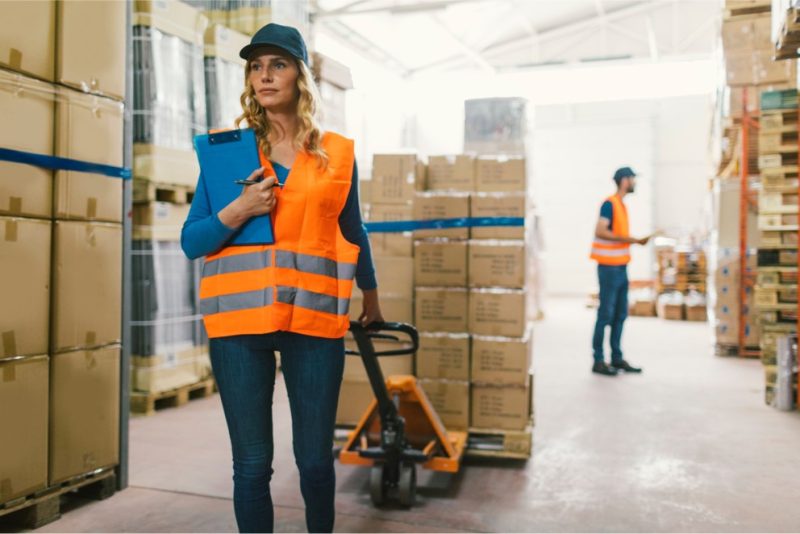
Core pallet jack design directly shapes operator posture, push–pull forces, and injury risk. Wheel layout, fork height, and handle geometry all influence how workers move loads in tight warehouse slots and on mixed-quality floors. Ergonomic risk rises fast when heavy units sit on low tiers, when operators twist while pulling, or when wheels and floors increase rolling resistance. This section explains how load geometry, slotting, and handling technique combine to create or control musculoskeletal stress in manual and electric pallet jack operations.
Load Geometry, Slotting, And Picking Postures
Load geometry sets joint angles and muscle demand. Tall, unstable stacks force cautious, slower travel and more hand corrections. Low, dense loads place heavy cartons at ankle or knee level and increase trunk flexion. In grocery and cold warehouses, single cases often weigh 35–45 kilograms, so poor geometry quickly overloads the back and shoulders.
Slotting strategy controls how often workers reach or bend. Placing heaviest items at mid-thigh to waist height reduces spinal compression and disc shear. Locating fast movers in these “power zones” also cuts travel and cycle time. Poor slotting places heavy, high-volume cases low or deep in pick bins. That pattern drives repeated forward bending, long reaches, and awkward twisting while steering a jack.
Engineers should link slot design with pallet pattern rules. Clear rules include: heaviest units on the bottom, but raised on pallets or platforms where possible; fragile or crushable goods higher; and no overhang beyond fork tips. When planners ignore these basics, operators create improvised patterns that shift the center of gravity and increase steering effort and tip risk.
Ergonomic Hazards In Low-Level Pallet Building
Low-level pallet building is one of the highest-risk tasks in case picking. Workers bend repeatedly to place heavy cartons on the first pallet layer. In cold rooms, loads often weigh 36–45 kilograms, and thermal gear reduces mobility. This combination increases back and knee loading and slows reaction time.
Common hazard patterns include:
- Frequent trunk flexion beyond 45 degrees to reach the bottom layer.
- Twisting while holding a case due to limited space beside the pallet.
- Kneeling or squatting on hard floors, which raises knee stress.
- Reaching across wide pallets to place cases at the far side.
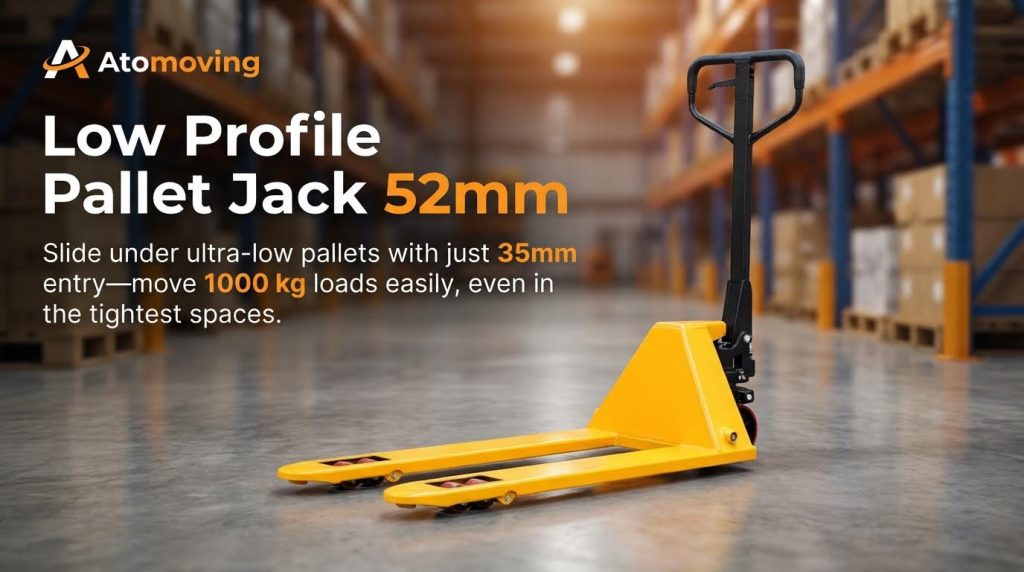
These motions raise cumulative injury risk even when each lift is within rated manual handling limits. Risk grows with pick rate, shift length, and cold exposure. Manual pallet jacks that lift only about 200 millimetres keep the working surface low. Without extra pallets, lift tables, or pallet positioners, operators must bend deeply for every box on the first tier.
Engineering Controls To Reduce Bending And Overexertion
Engineering controls should attack root causes instead of relying only on “bend your knees” training. The goal is to keep most lifts between mid-thigh and elbow height and to cut required push–pull forces.
Effective controls include:
- Height adjustment: use pallet jacks or lift devices that raise loads higher than standard 200 millimetres, or stack empty pallets under the working pallet.
- Pallet positioners: spring or hydraulic tops that rise as cases are removed keep the pick surface near waist height.
- Fork-mounted palletizers: platforms on jack forks that hold the pallet at ergonomic height for case building.
- Slot redesign: move heavy, high-velocity items to pick faces that allow neutral spine postures.
Rolling resistance is another key factor. Flat-spotted wheels, damaged bearings, or rutted floors can multiply starting forces at the handle. High starting forces increase shoulder, wrist, and low-back strain and raise runaway risk on slopes. Planned maintenance and floor repair programs reduce required hand and arm force and improve stability. Electric pallet jacks further reduce exertion by powering lift and travel, though they still require good layout and clear sightlines.
Push–Pull Techniques And Operator Safety Basics
Push–pull strategy has a direct effect on joint loading and control. Pushing a manual pallet jack usually keeps the spine more neutral and allows better force transfer through the legs. Pulling can improve visibility in tight aisles but often causes trunk rotation and shoulder elevation. Both modes can be safe if operators control speed and avoid sudden jerks.
Key technique points include:
- Start smoothly to avoid peak forces on the back and shoulders.
- Keep the handle within a comfortable range, not fully vertical or flat.
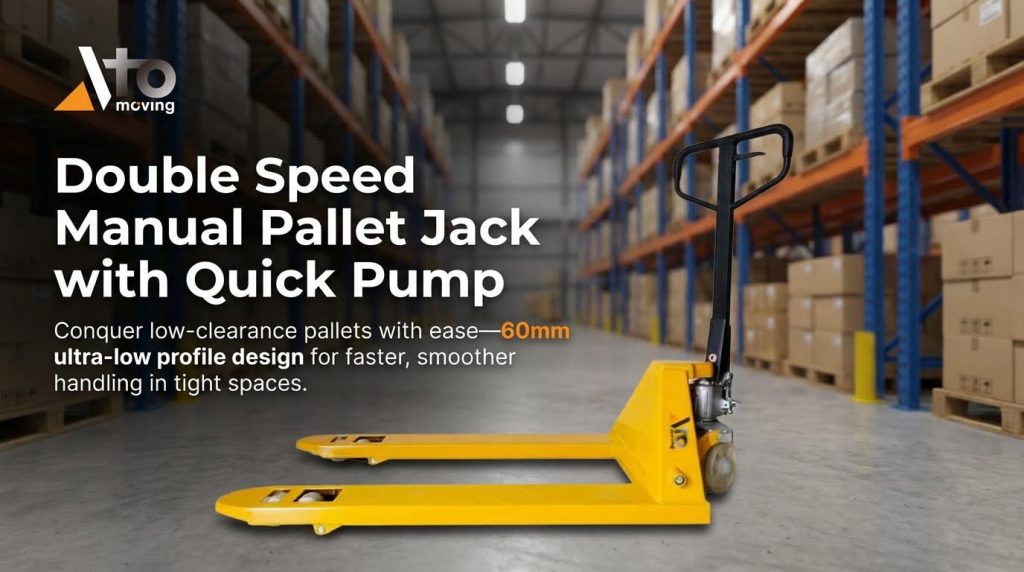
- Maintain forks 40–60 millimetres above the floor to clear minor defects without raising the center of gravity too high.
- On slopes, keep the load uphill and avoid turning; descend with controlled speed.
Operators should never ride on the pallet jack or use it to move people. Loads must stay within rated capacity, and weight must center between the forks. Before entering lifts or trucks, workers must confirm floor capacity for the combined mass of truck, load, and operator. Clear rules, visual reminders, and short, focused training sessions help turn these basics into habits. When facilities combine sound technique with good equipment and layout, they cut musculoskeletal injuries and improve pallet jack productivity at the same time.
Manual Pallet Jacks: Applications, Limits, And Optimization
Manual pallet jacks still played a key role in lean warehouse operations. They offered low capital cost, simple mechanics, and flexible deployment in tight spaces. This section explained how to engineer their use for safe, efficient handling while controlling ergonomic risk and total cost of ownership.
Capacity, Materials, And Wheel Design Considerations
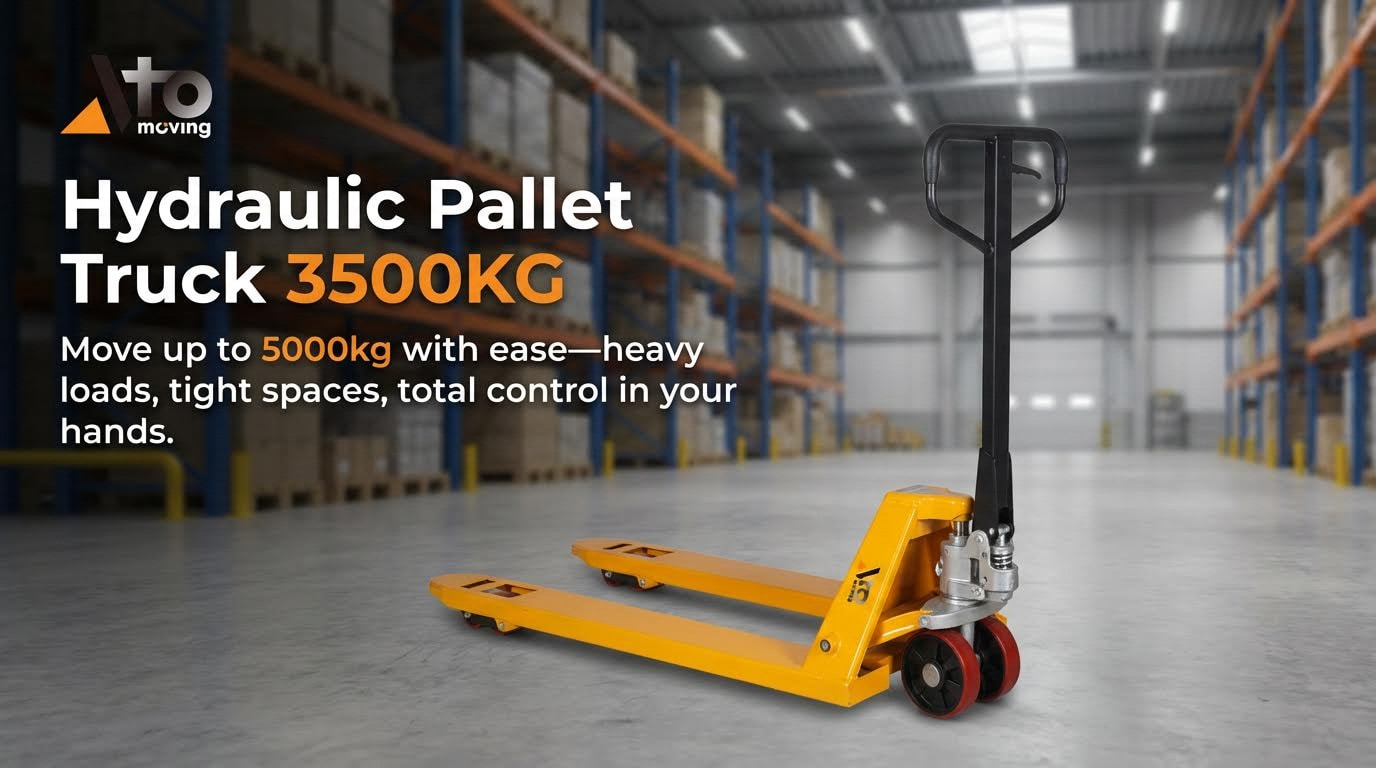
Most manual pallet jacks carried rated capacities between 2,000 kg and 2,500 kg, with heavy-duty models reaching about 5,000 kg. Engineers had to treat these ratings as absolute limits and include safety factors in process design. Overloading increased steering force, stopping distance, and fork deflection, and it could damage hydraulics or fork tips.
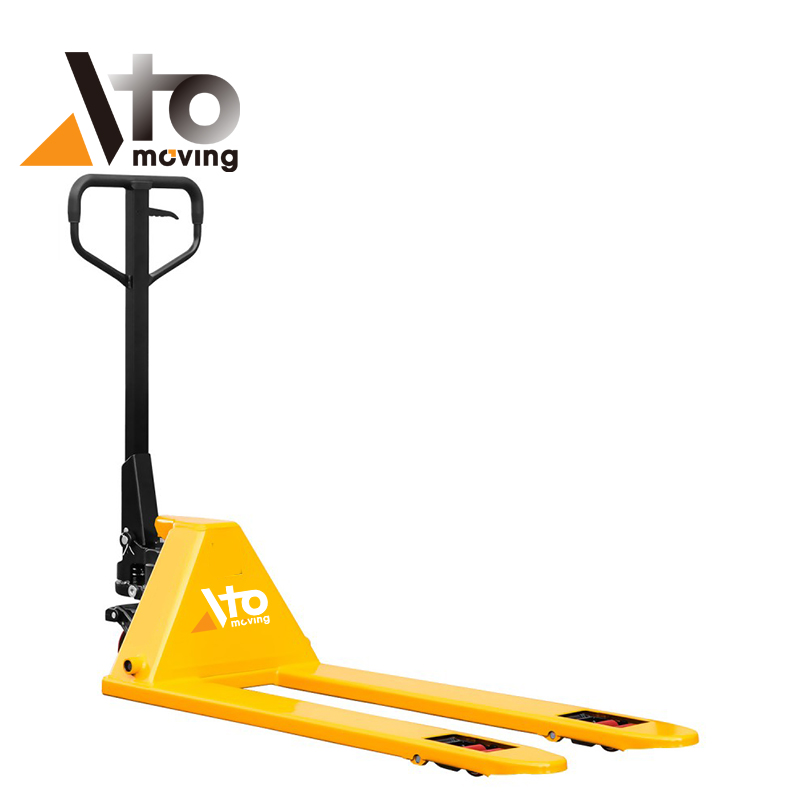
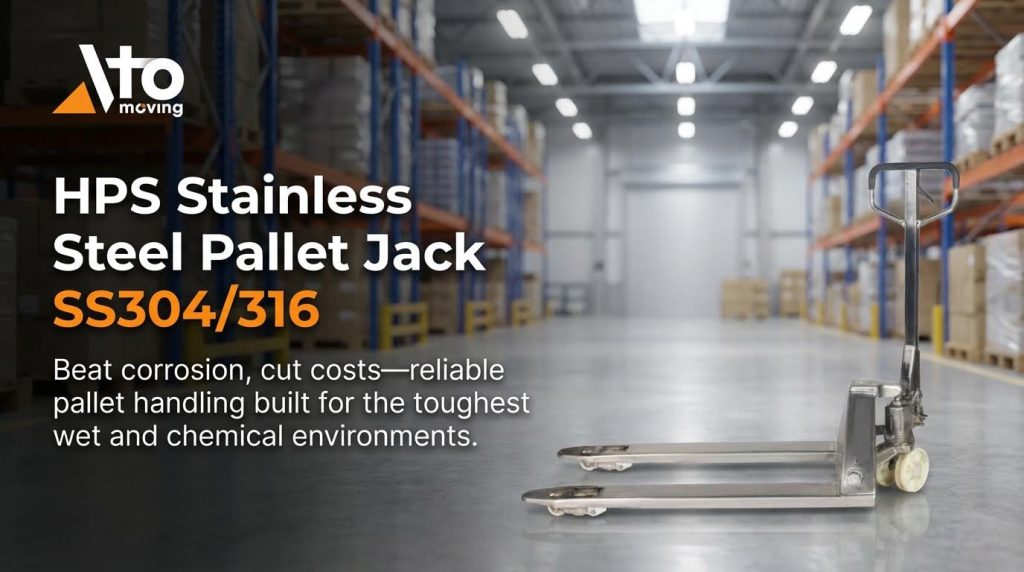
Frames typically used welded steel with powder coating for dry, non-corrosive areas. Stainless or galvanized builds suited washdown or corrosive zones but raised purchase cost. Fork dimensions followed common pallet standards, yet custom fork widths helped when handling non-standard skids or narrow euro pallets.
Wheel selection strongly affected force requirements and floor wear. A simple comparison helped during specification:
| Feature | Polyurethane wheels | Nylon / hard plastic wheels |
|---|---|---|
| Rolling resistance | Low on smooth floors | Very low but harsher ride |
| Noise | Low | Higher |
| Floor protection | Good | Higher risk of marking or damage |
| Shock to operator | Lower | Higher |
Flat spots on solid wheels increased push–pull forces and could destabilize loads. Periodic inspection and replacement of worn or flat-spotted wheels kept forces within ergonomic limits and reduced hand and arm strain.
Best-Fit Use Cases And Environmental Constraints
Manual pallet jacks fit best where pallet volumes and travel distances stayed moderate. Typical examples included back-of-store areas, small warehouses, and single-shift operations with light to mid-weight loads. In these settings, lower purchase cost and minimal maintenance outweighed labor efficiency losses versus electric units.
They worked well on smooth indoor concrete with short, level runs. On slight ramps, operators needed more effort and careful speed control, so engineering teams often restricted manual jack use on slopes. In power-restricted or hazardous zones, such as fuel stations or chemical areas, manual equipment avoided ignition sources from electric drives.
Cold environments required attention to hydraulic oil and wheel materials. Freeze-resistant hydraulics helped operation down to sub-zero temperatures, but push forces still increased as viscosity rose. Outdoors or on rough terrain, manual pallet jacks performed poorly because small load wheels dropped into ruts and bumps, raising both ergonomic risk and load instability.
For operations handling fewer daily pallets, manual equipment offered the lowest five-year TCO. Above defined throughput thresholds, engineers usually planned a staged migration to electric pallet jacks while keeping a manual fleet for tight or power-limited zones.
Maintenance Practices For Low-TCO Manual Equipment
Manual pallet jacks had simple designs, so structured light maintenance delivered long service life at low cost. Typical annual service time stayed under a few hours per unit when teams followed a checklist approach. The goal was to keep hydraulic, rolling, and steering resistance low to protect operators and reduce unplanned downtime.
Core tasks included:
- Inspecting hydraulics for leaks and purging air after long idle periods.
- Checking forks for cracks, deformation, or worn tips.
- Lubricating pivot points, steering joints, and wheel bearings.
- Measuring wheel wear and replacing flat-spotted or damaged rollers.
Supervisors could train selectors to flag early issues such as increased effort, uneven lifting, or tracking problems. Early reporting allowed maintenance teams to remove units before failures caused incidents. Keeping a small stock of seal kits, wheels, and bearings reduced repair lead time.
Documentation of inspections supported safety programs and helped justify replacement versus overhaul. When frame corrosion, repeated hydraulic leaks, or bent forks appeared, replacement often provided lower lifecycle cost than continued repair. A disciplined maintenance plan kept manual jacks safe, predictable, and economical over multi-year duty cycles.
Floor Quality, Vibration, And Handling Performance
Floor condition directly controlled handling performance and ergonomic load for manual pallet jacks. Smooth, level concrete reduced rolling resistance and allowed operators to move rated loads with reasonable push–pull forces. Worn floors with ruts, cracks, or spalled joints increased impact loads on wheels and transferred shock to the operator’s hands, arms, and spine.
Facilities teams could treat floor quality as an engineering control. Repairs to damaged joints, filling of ruts, and removal of bumps reduced whole-body vibration and peak forces. Cleanliness mattered as well. Debris, shrink wrap tails, and loose boards caught under wheels and forced sudden stops or steering corrections.
From a design view, narrow aisles and tight turns increased steering effort, especially with heavy loads. Layout planners could improve performance by aligning main travel paths with typical flow, minimizing sharp turns under load, and avoiding slopes where possible. When slopes were unavoidable, procedures usually required keeping the load uphill and avoiding turning; descend with controlled speed.
Monitoring operator feedback on “hard to push” zones helped target floor repairs and route changes. Over time, this reduced fatigue, lowered injury risk, and kept manual pallet jack productivity stable without large capital spend.
Electric Pallet Jacks: Performance, Safety, And ROI
Electric pallet jacks changed how warehouses move pallets, especially over longer distances and higher volumes. Their powered drive and lift systems reduce peak push–pull forces, which lowers fatigue and injury risk compared with manual units. In high-throughput grocery and e‑commerce facilities, they helped close the gap between manual picking ergonomics and conveyor-level productivity. The following sections explain how performance, energy systems, and safety functions combine into the total cost of ownership for electric pallet equipment.
Productivity, Throughput, And Labor Cost Impacts
Electric pallet jacks increase pallet moves per hour because travel and lift cycles no longer depend on operator strength. Typical benchmarks showed manual walkies moving about 30 pallets per hour, while electric walkies reached 60–70 pallets per hour in similar layouts. This doubling of throughput directly reduced labor hours for the same workload.
Labor cost models illustrated the effect. At a wage of 15 USD per hour and 200 pallet moves per day, annual labor with manual jacks was about 27,300 USD per operator. Electric units cut this to roughly 18,330 USD, saving close to 8,970 USD per year per operator. In higher duty cycles with two shifts and more than 60 pallets per day, savings increased further and payback often dropped below one year.
Engineers should consider aisle geometry and duty profile when sizing fleets. Manual jacks fit very narrow aisles down to about 1.8 m, but electric units work best in around 2.2 m aisles where turning radii and side-clearances are safe. A simple selection rule is:
- Below 60 pallets per day: throughput gains rarely justify extra capital.
- Between 60 and 180 pallets per day: electric units usually minimize cost per pallet.
- Above 180 pallets per day: electric fleets plus some manual backup deliver best resilience.
Battery Technologies, Charging, And Cold Storage Use
Electric pallet jacks mainly used two battery types. Lead–acid packs had lower purchase cost but needed daily watering, equalization charging, and long charge windows of roughly 6–8 hours. Lithium-ion packs cost more upfront but offered higher round-trip efficiency, longer cycle life, fast charging in about 2–3 hours, and true opportunity charging during breaks.
Battery management systems monitored cell voltage, temperature, and current to avoid deep discharge and overcharge. This extended pack life and reduced unexpected downtime. For multi-shift operations, modular packs and side-extraction trays allowed quick swaps, keeping uptime close to 24 hours with one spare pack per truck.
Cold storage introduced extra constraints. At temperatures down to about −15 °C, insulated lead–acid batteries still worked but lost capacity and required careful charge scheduling in warmer zones. Heated lithium-ion packs performed better in deep-freeze environments around −25 °C, where manual hydraulic oils thickened and increased push forces. Engineers had to integrate charging rooms outside the freezer, seal doors to control condensation, and specify corrosion-resistant components.
When designing charging infrastructure, planners balanced three factors: maximum simultaneous chargers, ventilation or exhaust for lead–acid gassing, and electrical service capacity. Opportunity charging strategies reduced required battery count but demanded disciplined parking and plug-in behavior from operators.
Safety Functions, Standards, And Injury Reduction
Electric pallet jacks added electronic and hydraulic safety layers that manual units lacked. Typical features included:
- Emergency belly or reverse buttons that reversed direction briefly to prevent crush injuries.
- Regenerative or dynamic braking that slowed the truck when the operator released the throttle.
- Automatic speed reduction in curves or with raised forks.
- Keyed access or PIN login to prevent unauthorized use.
These controls worked with basic safe use rules from pallet truck guidance, such as keeping forks low in travel, centering the load, and avoiding turns on ramps. Data from industrial reports indicated that electric units reduced wrist, shoulder, and back injuries compared with manual push–pull handling, because powered traction handled the initial breakaway force.
Compliance requirements depended on region. Electric pallet trucks needed to meet standards such as EN ISO 3691‑1 in Europe and ANSI B56.1 in the United States. Certification marks like CE, UL, or ETL confirmed that braking, steering, and control circuits met minimum safety integrity levels. However, training remained critical. Operators still had to understand ramp procedures, elevator loading checks, and pedestrian separation rules to avoid collisions and tip-overs.
Maintenance also played a safety role. Flat-spotted drive wheels, worn load rollers, or damaged forks increased stopping distance and instability, especially on rough or rutted floors. Planned inspections, including brake tests and emergency stop checks, helped keep incident rates low over the truck’s life.
When To Transition From Manual To Electric Systems
The decision to switch from manual to electric pallet jacks depended on a mix of volume, distance, slope, and ergonomic risk. A practical trigger point appeared around 60–70 pallets per day per operator. Above this range, fatigue from constant pushing and pulling increased, and electric units usually paid back within a few to several months through labor savings alone.
Other transition indicators included:
- Regular moves over long travel paths between docks and storage zones.
- Frequent handling of heavy pallets near the manual capacity limit.
- Use on ramps or truck tailgates where controlled braking improved safety.
- Rising recordable musculoskeletal injuries linked to manual jacks.</,
Frequently Asked Questions
It appears the query and reference data are undefined or missing. Please provide a valid query and reference array to generate an FAQ section.