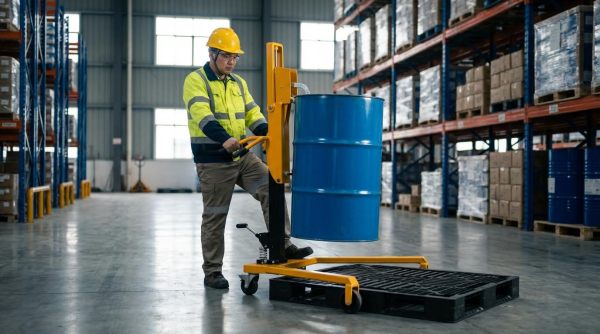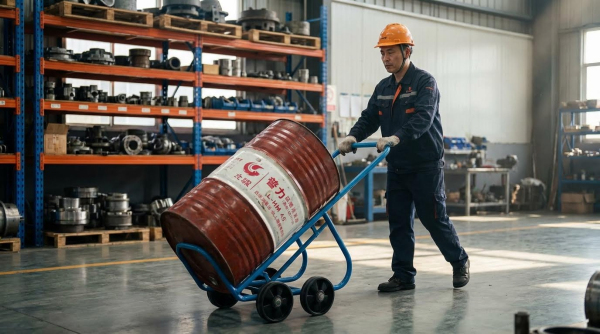
Handling 55-gallon drums safely is critical because each drum can weigh several hundred pounds and may contain hazardous chemicals. This guide explains how to safely handle a 55 gallon drum in real-world industrial facilities, from understanding risks and regulations to choosing the right equipment and layout. You will find practical engineering controls, storage and traffic design tips, and operating practices that reduce strain injuries, spills, and fire or explosion risks. Use these principles to upgrade your drum programs, train operators, and align with safety and regulatory expectations.
Core Risks And Safety Fundamentals

Drum hazards, weights, and injury mechanisms
Understanding how to safely handle a 55 gallon drum starts with recognizing that a full drum often weighs between 400 and 800 lb, far above safe manual lifting limits for a single person 400-800 pounds. Industrial drums in some applications can reach about 350 kg (772 lb), while manual handling guidance for individual lifts typically stayed near 25 kg for men and 16 kg for women, which shows why mechanical aids are essential rather than optional up to 350 kg (772 lb). Key injury mechanisms include acute trauma from a drum tipping or falling, crush injuries to feet and lower legs, and finger entrapment at chimes and pallet edges. Repeated pushing, pulling, and tilting of drums without the right equipment drives musculoskeletal disorders in the back, neck, shoulders, and knees over time.
Chemical and physical hazards compound the weight risk. If bungs or lids are missing, loose, or damaged, corrosive, toxic, or flammable contents can leak during movement and cause burns, respiratory exposure, or fire missing bungs or lids are replaced and secured before movement. Damaged drums may have sharp burrs and warped rims that cut hands and arms, especially if operators are not wearing suitable gloves. Slips, trips, and falls are common when drums are moved over uneven or contaminated floors, or when leaking product makes the surface slippery uneven or slippery surfaces raises the risk of slips, trips, and falls. In explosive atmospheres, static build-up on drums or handling equipment can ignite flammable vapors, so earthing and bonding are critical engineering controls.
To reduce these risks, operators should never guess at how to safely handle a 55 gallon drum. They should inspect each drum for leaks, warping, sharp edges, and liquid on the surface before movement, and confirm that bungs are tight and labels are readable or, if missing, treat the contents as hazardous until verified inspect the drum for warping, burrs, liquids. Mechanical aids such as drum trucks, dollies, and forklifts with drum attachments should be the default for movement, not the exception. Appropriate PPE—at a minimum safety shoes, plus chemical-resistant gloves, eye and face protection, and respiratory protection when indicated by the drum label—provides a final barrier if engineering and procedural controls fail safety shoes are required.
Regulatory framework and OSHA expectations
Regulatory expectations around how to safely handle a 55 gallon drum focus on controlling both mechanical and chemical risks. OSHA required that drums containing flammable or toxic liquids be protected from physical damage, either by placing them in out-of-the-way locations or shielding them with barriers or guards protected by barriers or guards. Drums and containers of 30 gallons or more could not be stored near open flames, hot metal, or other heat sources that might raise internal pressure or ignite vapors. Pressurizing shipping drums to remove contents was prohibited; instead, systems conveying hazardous liquids or gases had to incorporate relief valves and bypasses to prevent rupture and uncontrolled release must not be pressurized to remove their contents.
Containment and fire protection were also central elements. For containers of 55 gallons or more holding flammable or toxic liquids, OSHA required dikes or pans with a capacity of at least 35% of the total container volume to contain leaks and prevent environmental contamination enclosing a volume equal to at least 35% of the total container volume. Fire extinguishers suitable for the specific class of flammable liquid or gas had to be available in the immediate area where drums were stored or used and kept in ready condition at all times fire extinguishers suitable for the hazard must be provided. Storage practices needed to support inspection and stability: guidance recommended stacking 55-gallon drums in rows no more than two high and two wide to limit strain on lower drums and allow clear visibility for leak checks no more than two drums high and two drums wide.
From a compliance standpoint, OSHA expected employers to have procedures requiring label checks before handling, to treat unlabeled drums as hazardous until tested, and to ensure that missing bungs or lids were replaced and secured before movement contents should be treated as hazardous until verified otherwise. Employers were also responsible for providing appropriate drum handling equipment, maintaining it in good condition, and training workers in safe moving, lifting, and decanting methods consistent with OSHA’s general duty and materials handling standards. When facilities followed these regulatory requirements and integrated them into site-specific procedures, they created a strong baseline for safe, compliant drum operations.
Engineering Controls, Equipment, And Handling Methods

Selecting drum trucks, dollies, and forklifts
When planning how to safely handle a 55 gallon drum, start by assuming mechanical assistance is required, because a full drum typically weighs 400–800 lb (depending on contents). Match each drum type (steel, plastic, fiber; open-head or tight-head) to equipment that supports the shell securely and keeps the drum upright during travel. Drum trucks and dollies are best for short, level moves, while forklifts with dedicated drum clamps or pallets are suited to longer distances and higher lift points. Always check Safe Working Load (SWL) markings and ensure the combined drum and attachment weight stays within equipment ratings to avoid overload.
- Use drum dollies or trolleys sized to the drum diameter and fitted with brakes for sloped or uneven areas to maintain control.
- Specify wheels suitable for the floor (hard wheels for smooth concrete, soft or large-diameter wheels for rough or expansion joints).
- For forklifts, use drum clamps, grabbers, or pallets that prevent rolling and allow drums to remain vertical and low to the ground while moving to reduce tipping risk.
- In congested areas, choose compact, swivel-caster dollies to minimize manual pushing forces and awkward body positions.
Key selection checks before purchase
Verify chemical compatibility of wheels and frames with likely spills. Check that handles allow two-handed, upright posture. Confirm that equipment can be parked securely so it cannot roll when unattended during drum handling.
Lifting, tipping, and rotating systems design
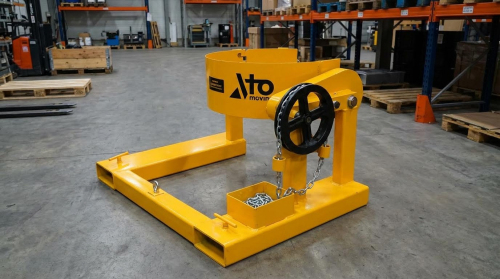
Engineered lifting and rotating systems are central to how to safely handle a 55 gallon drum when decanting, mixing, or loading process equipment. All slings, clamps, and hoist attachments must be rated, tested, and clearly marked for at least the maximum drum weight, with a safety factor in line with local standards (check SWL before each use). Drums should be kept as low as practical during travel to limit potential energy and improve stability, and operators must never leave a suspended drum unattended to avoid uncontrolled drops. For tipping and rotating, use purpose-built tippers, pourers, or rotators with secure cinching and positive locking mechanisms around the drum body.
- Ensure drums are clamped firmly in tippers or rotators and follow manufacturer limits on drum weight and maximum tipping angle to prevent release.
- Operate lifts and rotators slowly and smoothly; avoid sudden starts or stops that can shift liquid contents and destabilize the system due to sloshing.
- Size receiving vessels to at least the full drum volume and use funnels, taps, or controlled pour mechanisms to minimize splashes and overflows during decanting.
- Provide emergency stop controls and fixed guards on powered mixers and rotators to meet machinery safety expectations and prevent entanglement.
Inspection and maintenance focus
Regularly inspect lifting eyes, chains, gears, and cinch bands for wear, corrosion, or deformation and remove defective gear from service immediately to avoid failure under load. Check that rotating mechanisms run smoothly without binding, and verify that brakes and locking pins hold the drum securely at all positions.
ATEX, static control, and hazardous-area handling
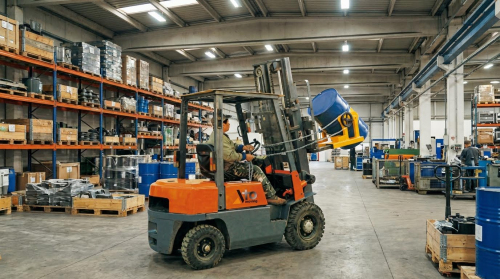
In flammable or explosive atmospheres, how to safely handle a 55 gallon drum becomes a question of ignition control as much as ergonomics. Drum handling equipment in ATEX-classified zones should be certified for the zone and gas/dust group, and fitted with earthing chains or grounding clamps to dissipate static electricity to reduce spark risk. Use conductive or anti-static wheels and contact surfaces so charge does not build on moving drums or carts. Where possible, specify stainless steel or properly coated drums and fittings instead of rusted mild steel, which can create friction and impact sparks in explosive atmospheres.
- Complete a documented risk assessment to define ATEX zones and select suitable mechanical and electrical equipment before drum operations.
- Fit anti-static wheels, bonding cables, and verified earth points on drum trucks, trolleys, and rotators used in hazardous areas to control static.
- Implement strict housekeeping and cleaning schedules to prevent flammable dust or residue buildup on and around drum handling equipment which could ignite.
- Ensure procedures prohibit the use of non-approved tools or modifications that could compromise the ATEX integrity of the system.
Additional controls for hazardous chemicals
Combine ATEX measures with chemical controls: read drum labels, treat unlabelled drums as hazardous until proven otherwise, and ensure bungs and lids are tight before movement to prevent leaks and vapor release. Provide appropriate PPE such as chemical-resistant gloves, eye protection, and respirators where vapors or dust may be present during drum transfer.
Facility Layout, Storage Design, And Operational Best Practices
Storage configuration, racking, and containment
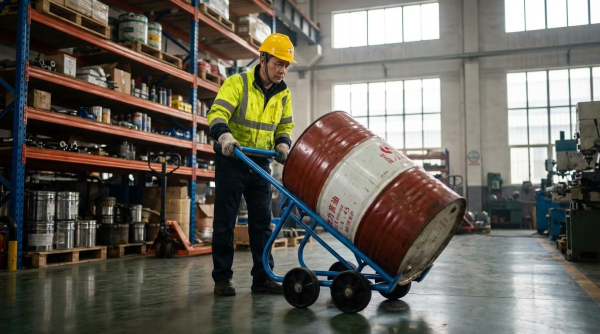
Good facility design is one of the most effective controls when planning how to safely handle a 55 gallon drum. Storage layouts should support short, direct travel paths, clear visibility, and fast emergency access. For standard liquids, drums are best stored in organized rows, with limits of no more than two drums high and two drums wide to keep stacks stable and allow easy inspection for leaks or deterioration two drums high and two drums wide. Where contents are flammable or toxic, storage areas should be separated from heat sources and ignition points, and drums should be positioned out of traffic lines or protected by physical barriers to prevent impact damage protected by barriers or guards.
- Use dedicated drum racking or pallet positions that keep drums upright and prevent rolling.
- Keep adequate aisle spacing for drum trucks, dollies, and forklifts to turn without striking drums.
- Locate emergency equipment (eyewash, showers, spill kits, fire extinguishers) near, but not inside, drum stacks.
Containment is critical wherever a drum holds flammable or toxic liquids. For groups of large containers, dikes, sumps, or pans should enclose at least 35% of the total stored volume to limit environmental contamination in a leak or rupture event enclosing a volume equal to at least 35% of the total container volume. In practice, this often means using spill pallets under 55‑gallon drums or bunded racking with integrated sumps. Layouts should allow operators to see the floor and containment surfaces so they can spot small leaks early. Fire-rated storage zones and suitable extinguishers must be provided where flammable drum contents are stored or used fire extinguishers suitable for the hazard.
Design checklist for drum storage areas
- Limit stack height and width; avoid unstable mixed pallets.
- Provide secondary containment sized for worst credible spill.
- Separate incompatible chemicals and keep away from heat sources.
- Ensure clear access for inspection and emergency response.
Traffic routes, floors, and housekeeping controls
Traffic routes strongly influence how to safely handle a 55 gallon drum in daily operations. Before any drum move, operators should have a pre‑planned route, with enough space and no trip hazards, to prevent loss of control of drums that can weigh 400–800 lb depending on contents 400-800 pounds depending on its contents. Pathways should be wide enough for the selected handling equipment and kept clear of cables, hoses, and stored materials that could catch wheels or feet clear the pathway of obstacles and ensure stable ground conditions. Where pedestrian and vehicle flows intersect, physical separation, marked crossings, and speed limits reduce impact risks.
- Design one‑way systems for forklifts and drum trucks where possible.
- Mark drum routes and pedestrian walkways with durable floor striping.
- Keep turning zones and doorways free of parked pallets and waste containers.
Floor quality and housekeeping are major controls for slip, trip, and spill incidents. Handling drums on uneven or slippery surfaces greatly increases the chance of falls, dropped drums, and ruptures uneven or slippery surfaces raises the risk of slips, trips, and falls. Floors in drum areas should be level, non‑slip, and resistant to the chemicals stored. Drainage should direct spills away from walkways and occupied areas, not toward them. A formal housekeeping program should ensure that leaks, residues, and clutter are removed quickly so operators can maintain stable footing and full control over drum handling equipment.
Housekeeping and inspection practices
- Schedule routine floor inspections in all drum traffic routes.
- Clean up small leaks immediately and investigate their source.
- Remove damaged pallets, broken boards, and loose debris from aisles.
- Verify that lighting levels allow operators to see labels, floor conditions, and obstacles.
“”
Key Takeaways For Safer 55-Gallon Drum Programs
Safe 55-gallon drum handling depends on one integrated system: correct equipment, sound layout, and disciplined procedures. Drum weights far exceed human lifting limits, so mechanical aids are not a convenience; they are the primary control against crush and strain injuries. When you match trucks, dollies, forklifts, and lifting gear to drum type, weight, and route, you cut the risk of drops, impacts, and leaks at the source.
Storage geometry and traffic design then protect that investment. Stable stacks, clear aisles, and correctly sized containment keep drums upright, accessible, and easy to inspect. Good floors and housekeeping stop small leaks and debris from turning into slips, ruptures, and fires. In hazardous or ATEX zones, grounding, anti-static components, and certified equipment add a critical ignition barrier.
The most effective drum programs treat OSHA and similar rules as a baseline, not a ceiling. Engineering and EHS teams should jointly standardize equipment, define approved routes and layouts, and train operators to follow inspection and PPE rules every time. When you apply these principles consistently, your facility reduces injuries and spills, protects people and the environment, and builds a robust, auditable drum-handling system that can scale with Atomoving solutions or other future upgrades.
Frequently Asked Questions
How to Safely Move a 55-Gallon Drum?
To safely move a 55-gallon drum, use proper techniques to avoid injury. Start by placing your hands near the chime at shoulder width and push forward with your legs until the drum reaches its balance point. Alternatively, roll the drum by placing one hand high and the other low on the chime, switching positions as you go. For more detailed instructions, refer to this USDA Guide on Moving Drums.
- Use your legs, not your back, to push or pull the drum.
- Keep your body low and close to the drum for better leverage.
- Roll the drum if space allows, switching hand positions as needed.
What Equipment is Needed to Lift a 55-Gallon Drum Safely?
Lifting a 55-gallon drum requires specialized equipment designed for the drum’s weight, typically around 200 kg when full. Use a drum lifter positioned at the drum’s center of gravity, usually the upper third. Fully engage the lifting mechanism before moving the drum slowly and maintaining good posture. For professional-grade tools, check out options like those discussed in this Drum Lifting Equipment Guide.
- Ensure the drum lifter is rated for the drum’s full weight.
- Position the lifter at the drum’s center of gravity.
- Maintain slow, controlled movements during lifting.