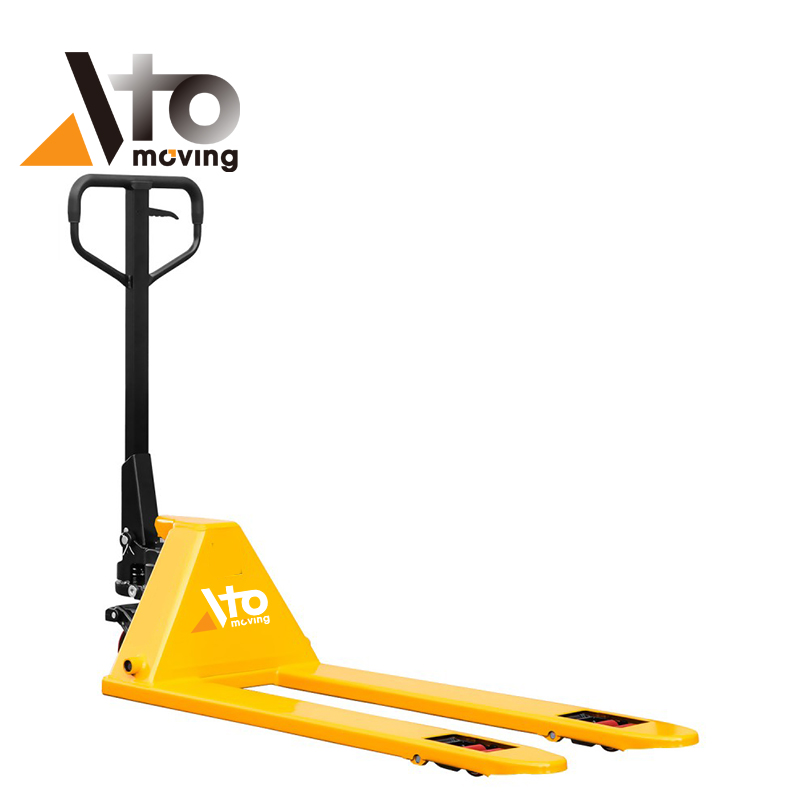
This user manual explains how to use electric pallet truck equipment safely, efficiently, and with minimal downtime. You will learn the key components and operating principles, step-by-step operating procedures, and the core technical parameters that affect performance and truck selection. The guide also covers battery care, maintenance, and total cost of ownership so you can plan for uptime, compliance, and long service life. Use it as a practical reference for training operators and standardizing handling practices across your facility.
Key Components And Operating Principles
Main assemblies and drive system
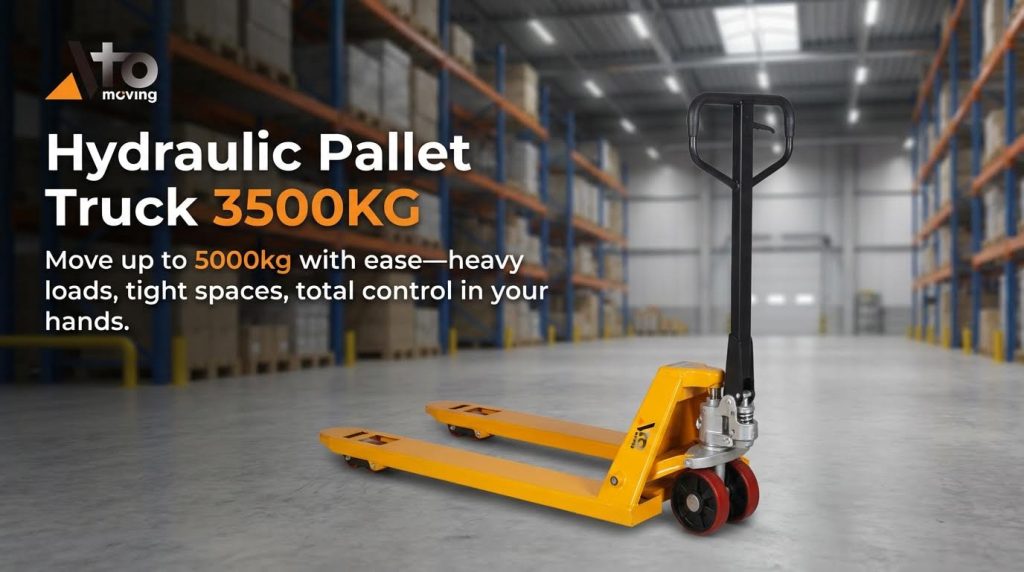
Understanding the main assemblies is the first step in learning how to use electric pallet truck equipment safely and efficiently. A typical unit combines a welded chassis, drive axle, forks, mast or battery compartment cover, and protective guards into one compact frame designed to carry loads up to 5,000 kg load capacity of 5000 kg. The drive system usually consists of an electric drive motor, reduction gearbox, and a large drive wheel that provides traction and steering. In a common configuration, the truck uses one drive wheel plus multiple support and load wheels (for example, 1 drive wheel, 4 balance wheels, and 2 bearing wheels) to spread the weight and reduce floor point loads wheel quantity configuration is 1x-4/2. The drive motor, typically in the 2–3 kW range, converts electrical energy from the battery into tractive effort and allows travel speeds around 5–6 km/h under load and up to about 10 km/h without load travel speed is 5.5 km/h when laden and 10 km/h when unladen. A separate hydraulic lift motor and pump raise the forks roughly 200 mm to clear pallets, while the lowered fork height of about 85 mm allows easy entry into standard pallets lift height is 200 mm and lowered fork height is 85 mm.
Key structural and drive components
- Chassis and battery compartment as the main load-bearing structure.
- Forks sized to typical pallets, for example 1150 mm long with adjustable overall fork width around 560–680 mm overall fork width is adjustable between 560 mm and 680 mm.
- Electric drive motor and gearbox to provide forward and reverse motion.
- Hydraulic lift unit powered by a dedicated lift motor.
- Drive, balance, and load wheels sized to suit floor conditions and turning radius requirements.
Control handle, brakes, and safety devices
The control handle is the operator’s primary interface and is central to how to use electric pallet truck equipment correctly. It typically integrates directional travel switches, a speed control, lift and lower buttons, and a horn, allowing one-handed operation while walking beside the truck. An electromagnetic brake mounted on the drive motor provides automatic braking when the handle is released or the emergency stop is activated, which is more reliable and repeatable than mechanical braking systems braking system is electromagnetic. Modern electric pallet trucks often add electronic features such as automatic speed reduction in curves, emergency reverse buttons, and regenerative braking that slows the truck while recovering energy into the battery safety features such as emergency reverse buttons, auto speed reduction on curves, regenerative braking. These devices work together with operator training and pre-use checks of the controls, horn, and emergency stop to reduce the risk of collisions, roll-aways, and musculoskeletal injuries confirm all control buttons and handles move smoothly, and test emergency stop and horn functionality.
Main control and safety features
- Multi-function tiller head with travel, lift, and lower controls.
- Dead-man function: truck stops when the handle is released.
- Electromagnetic service and parking brake on the drive motor.
- Emergency stop and emergency reverse (belly) button.
- Speed limitation in tight areas and automatic speed reduction on curves.
Battery options and power management
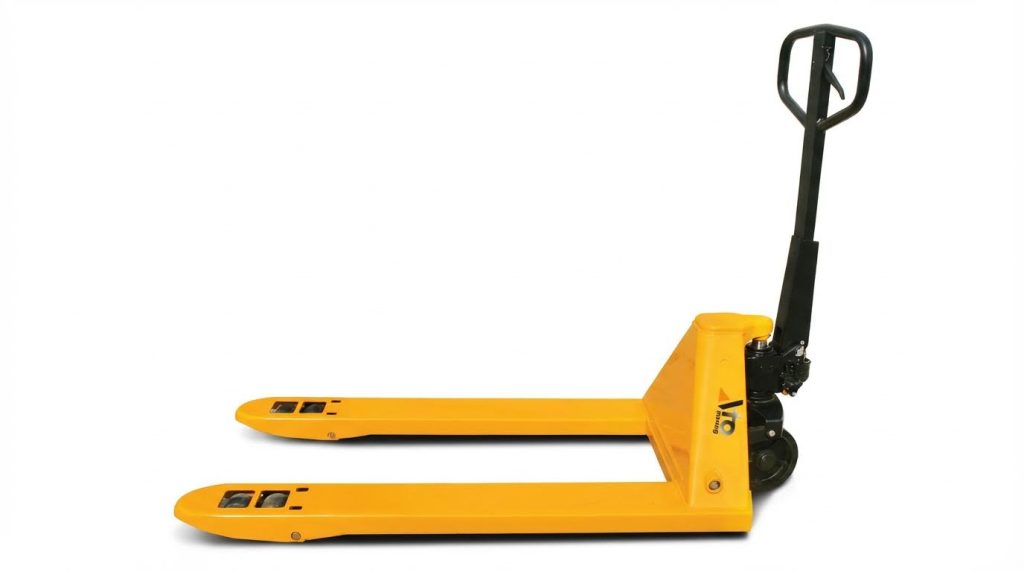
The battery system is the energy source that makes electric pallet trucks suitable for high-throughput operations. Typical configurations use a 24 V traction battery with capacities around 200–250 Ah and a battery mass of about 200 kg to provide stability and several hours of continuous work battery voltage is 24 V with a capacity of 240 Ah, and the battery weight is 200 kg. Two main battery technologies are common: lead-acid, which has lower upfront cost but needs full daily charges and regular maintenance, and lithium-ion, which offers 3–4 times longer life, faster 2–3 hour charging, and opportunity charging with no routine maintenance lead-acid batteries… 6–8 hours of charging, or lithium-ion… 2–3 hour charging times, and no maintenance. Good power management practices—such as using a consistent charging schedule, keeping the charging area ventilated, and cleaning terminals to prevent corrosion—extend battery life and keep performance stable over each shift establish a consistent charging schedule… regularly inspect and clean battery terminals. When operators understand how the battery, drive motor, and lift system interact, they can plan charging and usage patterns that support safe, continuous operation and lower total energy cost.
Battery and power management essentials
- 24 V traction battery sized for required runtime and counterweight effect.
- Choice between low-cost lead-acid and higher-performance lithium-ion packs.
- Defined charging procedures and designated, ventilated charging zones.
- Regular inspection of cables, connectors, and terminals for damage or corrosion.
- Monitoring of discharge levels to avoid deep discharges that shorten battery life.
Step-By-Step Operating Procedures
Pre-use inspection and safety checks
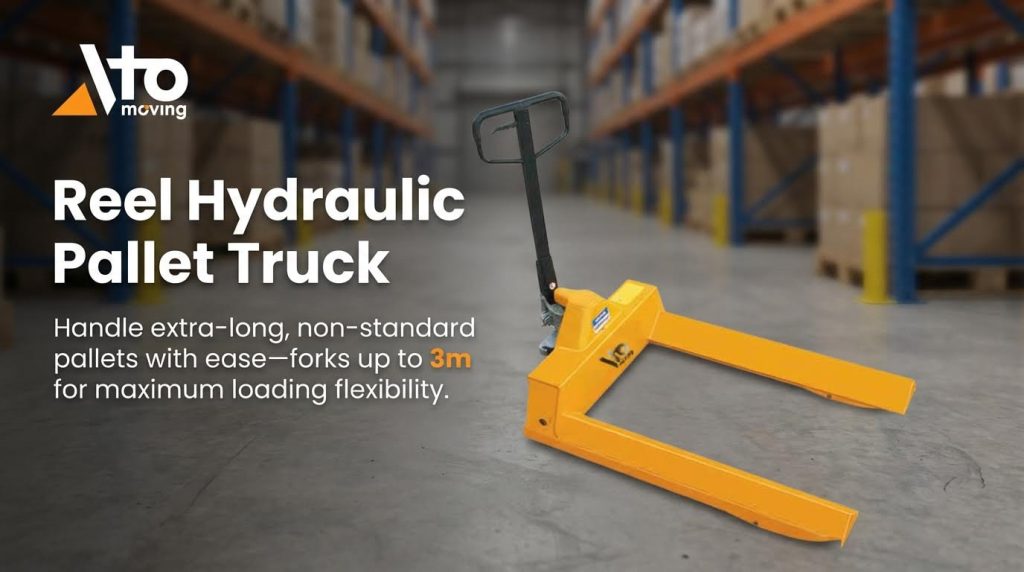
To understand how to use electric pallet truck equipment safely, always start with a structured pre-use check. Inspect forks and frame for cracks, bends, or excessive wear, and confirm the forks sit straight and undamaged before loading to prevent structural failure under load. Check drive, balance, and load wheels for flat spots, cuts, or embedded debris that could affect stability or steering and lubricate as specified in the maintenance plan. Verify the battery is secure, charged, and free from leaks or damaged cables, then test the horn, emergency stop, and brake functions before entering live traffic areas to ensure you can stop and signal effectively.
- Confirm the rated capacity on the nameplate is equal to or higher than the planned load weight.
- Check for hydraulic oil leaks and abnormal noises during a short lift test.
- Remove the truck from service and report it if any critical defect is found.
Picking up, transporting, and placing loads
Correct load handling is central to how to use electric pallet truck systems without damage or incidents. Approach the pallet squarely, with forks at the lowest position and aligned with the pallet openings, then insert fully so the heel of the fork is under the load. Center the load evenly across both forks and avoid side overhang that can shift the center of gravity and cause tipping especially with tall or unstable pallets. Never exceed the truck’s rated capacity, which for some electric models can be up to 5000 kg as stated on the data plate.
- Lift the pallet just enough for clearance, typically a few centimeters above the floor, to maintain a low center of gravity.
- Secure loose or unstable loads with wrap or straps before traveling to prevent shifting during braking.
- When placing the load, stop fully, lower the forks until they are clear of the pallet, then reverse straight out before turning.
- Never use the pallet truck to carry people or as an improvised work platform as this introduces uncontrolled fall risks.
Ramps, tight aisles, and speed control
Safe travel on ramps and in confined spaces is a critical part of how to use electric pallet truck equipment in real facilities. Keep travel speed at or below normal walking pace and allow extra distance for stopping, as many electric models reach around 5.5 km/h under load and can brake quickly if misused. On slopes within the truck’s gradeability rating, such as up to 8% when laden for some models you must keep the truck and load aligned straight up or down the ramp. Do not turn on a ramp, and follow the manufacturer’s guidance on whether to travel load-uphill or downhill for your specific control layout to avoid loss of control.
- Respect minimum aisle width and turning radius data; for example, some models require about 2332 mm aisle width and a 1890 mm turning radius with standard pallets to maneuver safely.
- Slow down further in tight aisles, at intersections, and on uneven floors, using built-in curve-speed reduction if fitted to reduce lateral forces on the load.
- Keep forks low when traveling and maintain clear sight lines; if the load blocks your view, travel in reverse where safe and use a spotter in congested areas.
- At the end of the task, park in a designated area, lower forks fully, switch off, and apply the brake to prevent unintended movement and reduce tripping hazards.
For facility leaders, the priority is to standardize how to use hydraulic pallet truck equipment so every operator works the same safe, efficient way. Use the points below as a checklist when updating SOPs, training, and purchasing policies.
- Standardize safe operating procedures. Document a simple, visual SOP that covers pre-use inspection, correct load positioning, speed limits, and parking. Include checks for leaks, fork damage, and capacity verification in every pre-shift routine as recommended in safety best practices.
- Make training and authorization non‑negotiable. Only trained and authorized staff should operate electric pallet trucks. Training must cover controls, braking, ramps, unstable loads, and emergency procedures, with refreshers scheduled annually or after any incident in line with operator training guidance.
- Control speed and traffic patterns. Set site-wide rules that limit travel to walking speed in mixed pedestrian areas and define one-way routes in narrow aisles. Reinforce rules to keep forks 2–5 cm off the floor when travelling to reduce trip and impact risks as commonly recommended.
- Engineer load discipline. Make the rated capacity and load center visible at each truck and at key loading points. Require operators to center loads, secure unstable pallets, and refuse any move that exceeds the truck rating, typically around 2000–2500 kg for many models as noted in capacity guidelines.
- Plan battery and charging strategy. Define who is responsible for connecting trucks to chargers and when. For lead‑acid batteries, use full charge cycles; for lithium‑ion, allow opportunity charging during breaks to support multi‑shift use as maintenance guidance explains. Keep charging areas ventilated and clearly marked.
- Implement a preventive maintenance calendar. Schedule inspections every 3–6 months based on hours of use, covering wheels, hydraulics, brakes, and safety devices as recommended for reliable operation. Use a simple log to track defects, near misses, and repairs, and lock out unsafe trucks.
- Align truck selection with your environment. For low-volume, short shifts, a small fleet of electric pallet trucks may share chargers; for high-volume docks or cold storage, specify higher-capacity batteries, suitable IP ratings, and good gradeability for ramps as application guidance outlines. Match fork dimensions and aisle widths to your pallet sizes and racking layout.
- Use TCO data in budgeting and justification. When deciding how many units to buy, include energy, maintenance, and labor savings in your business case. Facilities that move many pallets per shift often recover the higher purchase price of electric units within months through higher throughput and reduced strain injuries according to TCO comparisons.
- Design storage and parking to reduce risk. Mark parking zones where trucks are stored with forks fully lowered and clear of walkways as operating guides recommend. Keep handles upright and ensure no forks protrude into pedestrian paths to avoid trip hazards.
When facility teams treat how to use manual pallet jack equipment as a controlled process, not an informal habit, they gain higher throughput, lower injury rates, and longer equipment life with the same fleet size.
Final Recommendations For Facility Teams
Safe, efficient electric pallet truck use depends on how well facility teams connect design limits, operating rules, and maintenance. The truck’s structure, wheelbase, and fork geometry define its true stability envelope, so supervisors must enforce capacity, load center, and aisle width limits in every shift plan. Pre-use checks, correct fork positioning, and low travel height keep the center of gravity inside that envelope and prevent tip-over or pallet collapse.
Control systems and brakes only protect people when operators use them as designed. Standardize walking-speed limits, ramp procedures, and parking rules, and verify that emergency stop, horn, and dead-man functions work before trucks enter traffic. Battery choice and charging strategy affect uptime and lifetime cost, so match lead-acid or lithium-ion packs to shift patterns and lock in clear charging routines and zones.
As a best practice, treat electric pallet trucks as engineered lifting equipment, not simple carts. Combine clear SOPs, formal authorization, and a strict preventive maintenance plan with data-driven truck selection for each area. Facilities that follow this approach with Atomoving equipment gain higher throughput, fewer injuries, and longer service life, while staying compliant with safety expectations and budget targets.
Frequently Asked Questions
How Does an Electric Pallet Truck Work?
An electric pallet truck uses a hydraulic pump to lift and lower the forks. The handle, attached to the hydraulic pump, controls these movements. It is relatively easy to operate and often includes features like a controller for maneuvering. Electric Pallet Truck Guide.
Do You Need Training to Operate an Electric Pallet Truck?
No formal license is required to operate an electric pallet truck, but proper training is essential under workplace safety laws. This ensures operators can use the equipment safely and effectively. Pallet Truck Training Guide.
Should You Push or Pull an Electric Pallet Truck?
Pushing is generally more stable and recommended for moving pallets through main warehouse areas. However, pulling may be better for tight spaces or when you need a clearer view of the load. Forklift Operation Tips.