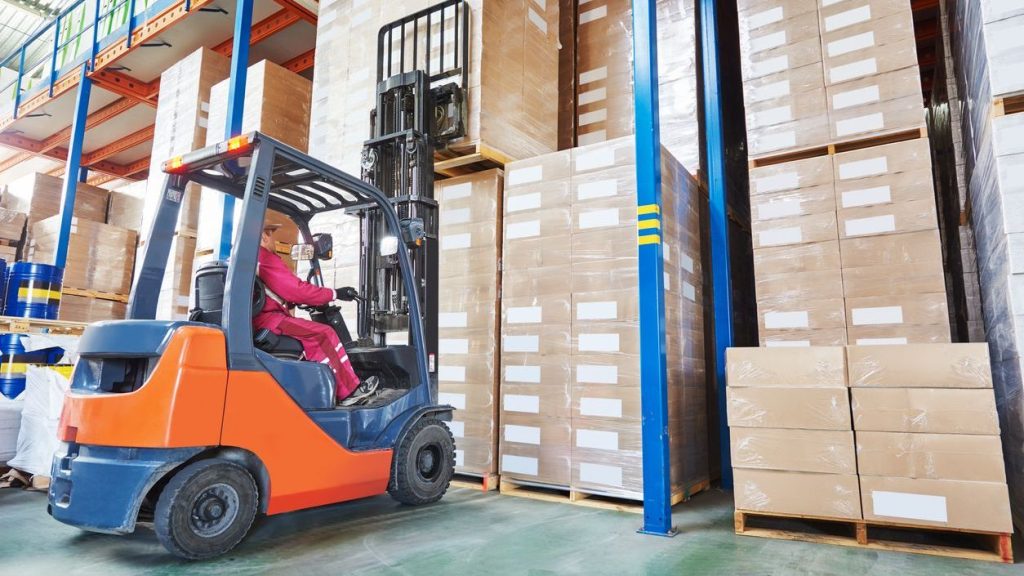
Understanding walkie stacker weight is essential if you want safe floors, stable trucks, and the right capacity for your warehouse. This guide explains how much does a walkie stacker weight in typical applications, what drives that weight, and how it affects floor loading and slab design. You will also see how battery choice, lift height, and capacity interact with truck mass, and how to match all of this to your building’s floor limits. Use it as a practical engineering checklist before adding or relocating walkie stackers in your facility.
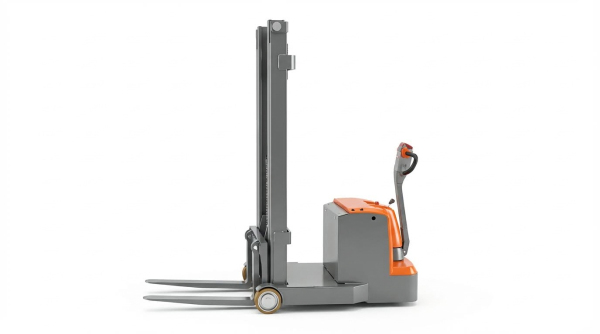
What Determines A Walkie Stacker’s Weight?
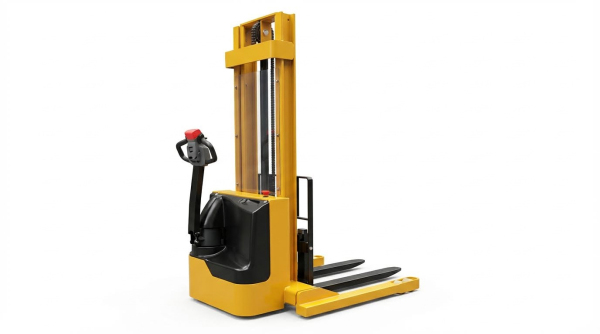
Typical weight ranges by class and design
When people ask how much does a counterbalanced stacker weight, they usually want to understand the relationship between capacity, lift height, and overall truck mass. In practice, walkie stackers that handle around 900–2000 kg of load capacity typically fall into light-, medium-, and heavy-duty classes, with each step up in capacity requiring a heavier chassis and counterweight structure to stay stable under load 900 kg to 2000 kg. Higher masts and lift heights in the 3.6–5.4 m range demand more steel in the mast rails and wider base frames, which also adds weight even if the rated capacity stays the same 3655 mm to 5400 mm. Design variants such as straddle stackers, counterbalance stackers, and very-narrow-aisle configurations each distribute mass differently, but all use truck weight as a primary tool to control stability, braking distance, and floor loading. As a rule of thumb, heavier-duty designs will weigh significantly more than their light-duty counterparts, even if they share similar footprint dimensions like overall width or mast lowered height overall width 40–59 in and mast lowered height 71–91 in.
How design class influences typical truck mass
- Light-duty, short-lift warehouse units are optimized for low weight and maneuverability in tight rack and bulk storage areas rack storage, bulk storage, narrow aisle operations.
- Medium-duty units with higher lift and more frequent duty cycles use heavier frames and masts to manage repeated stress and impact.
- Heavy-duty or high-lift designs add mass in the base and mast to control deflection and maintain residual capacity at top lift height.
Key components that drive truck weight
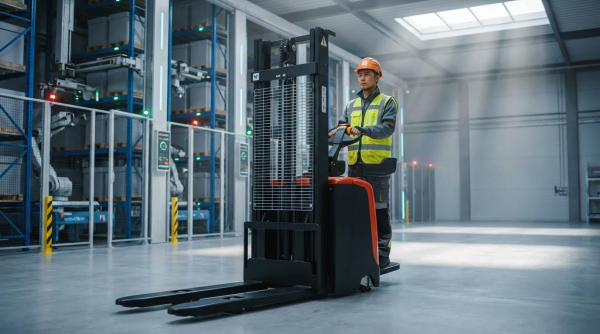
The main contributors to how much does a battery-powered stacker weight are the structural frame, mast assembly, battery system, and drive/hydraulic components. The base frame, fork carriage, and mast columns use thick steel sections to resist bending from vertical loads and dynamic forces during travel and braking, which adds a large share of the total mass. The battery is another major weight driver: most walkie stackers use a 24 V electrical system, and higher amp-hour batteries increase both runtime and truck mass, affecting floor loading and gradeability 24-volt electrical system. Drive motors, gearboxes, hydraulic pumps, and reinforced bumpers also contribute measurable weight, but they are typically optimized to balance durability, travel speed, and lift speed under load rather than simply minimizing mass travel speed 3.4–3.5 MPH and lift speed 19–54 FPM.
| Component | Role | Impact on Weight |
|---|---|---|
| Frame & base | Carry static and dynamic loads | High – thick steel plate and weldments |
| Mast & carriage | Provide lift height and load guidance | High – taller and stiffer masts add mass |
| Battery pack | Energy storage for 24 V system | Medium to high – larger capacity adds runtime and weight |
| Drive & hydraulic units | Provide traction and lifting force | Medium – sized for speed, gradeability, and duty cycle |
| Safety and protection features | Bumpers, guards, thicker hinge points | Low to medium – incremental but important for durability |
Safety-related structures, including robust steel construction, thicker hinge points, and enhanced bumper clearance, intentionally add material to withstand mechanical stress and floor-to-dock transitions without damage robust steel structure and thicker hinge points. Programmable features such as controlled acceleration, automatic shutoff, and speed management do not add much physical weight, but they allow engineers to tune performance so the existing mass is used efficiently for stability and braking rather than oversizing the structure programmable automatic shutoff.
Engineering Impacts Of Walkie Stacker Weight
Floor loading, slab design, and point loads
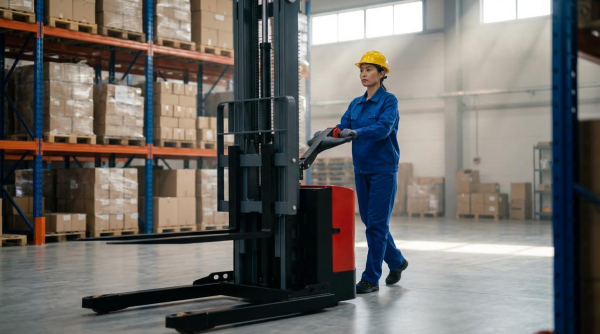
When people ask how much does a walkie stacker weight, the answer matters directly to floor design. A walkie stacker concentrates load at a few small contact points: drive wheel, load wheels, and sometimes outriggers. The combined mass of the truck plus a typical 900–2000 kg rated load carried on the forks creates high local stresses in the slab. Floors that are not checked for these point loads can crack, settle, or develop ruts.
- Warehouse floors must support both static pallet loads and moving equipment loads without cracking or differential settlement. Static and dynamic loads must both be considered.
- Typical heavy-use warehouse slabs are 150–250 mm thick concrete over a prepared base, designed to spread concentrated wheel loads safely. Typical slab thickness must match expected equipment.
- Subgrade and sub-base quality under the slab control how well the floor resists repeated stacker traffic and turning loads. Stable granular sub-base and non-expansive subgrade reduce cracking and settlement risks. Subgrade and sub-base details are critical inputs.
If the existing slab is marginal for the equipment weight, reinforcement options include overlaying extra concrete, partial excavation with added rebar, or ground improvement under critical traffic lanes. These upgrades can be costly per square meter, so confirming floor load capacity from original drawings or through an engineering assessment before adding heavier walkie stackers is usually cheaper than repairing a failed slab.
Battery technology, runtime, and truck mass
Battery choice is one of the biggest levers that changes how much does a walkie stacker weight in practice. Most walkie stackers use a 24‑volt electrical system to power traction, lift, and control circuits 24 V system example, and the battery mass scales with amp‑hour capacity and chemistry. Higher‑capacity lead‑acid batteries extend runtime but add significant weight, increasing wheel loads and floor stresses.
- Lead‑acid batteries typically act as both energy source and counterweight, improving stability but raising overall truck mass.
- Lighter chemistries (for example, lithium‑based) can reduce truck weight for the same runtime, which lowers floor loading but may require additional built‑in counterweight to maintain rated capacity.
- Runtime requirements (single‑shift vs multi‑shift, opportunity charging, duty cycle) drive battery size, which in turn affects the truck’s unladen weight and dynamic behavior.
Heavier battery configurations can improve traction on marginal floors and ramps, but they also increase stopping distances and impact forces if the truck hits floor defects. Since walkie stackers can travel around 3.4–3.5 mph under load typical travel speed, the combination of speed and mass must be considered in safety risk assessments and floor impact evaluations.
Stability, safety standards, and narrow aisles
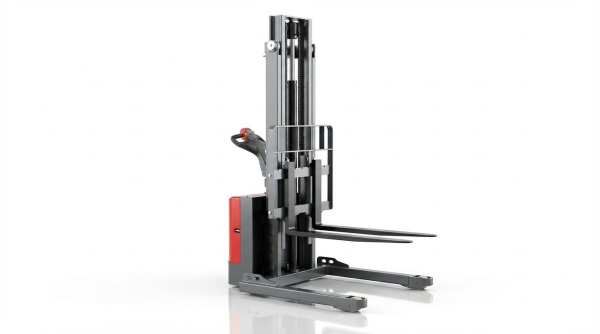
Stacker weight ties directly to stability, especially at higher lift heights and in narrow aisles. Rated capacities in the 900–2000 kg range common for walkie stackers require enough base mass and a low center of gravity to resist tip‑over when the mast is extended. The truck’s own weight, plus battery, acts as the counterbalance to the elevated load, so a very light machine cannot safely lift heavy pallets to full height.
- Higher masts, often reaching 3.6–5.4 m typical lift height range, shift the load center upward and increase overturning moment, which must be balanced by truck mass and wheelbase.
- In narrow aisles, where overall widths may be 40–59 inches and right‑angle stack distances about 84–88 inches typical maneuvering dimensions, a heavier truck with a low center of gravity can feel more planted but is less forgiving if it strikes racking or floor joints.
- Safety programs should pair the inherent stability of the truck with strong operator training, clear floor markings, and good maintenance of brakes, tires, and hydraulics to manage the kinetic energy of a loaded, moving machine. Training and layout practices help control risk.
Understanding how much does a walkie stacker weight for a given capacity and mast height helps engineers balance stability, maneuverability, and floor loading. The goal is a truck that is heavy enough to be stable and safe, but not so heavy that it overstresses slabs or becomes difficult to control in tight warehouse layouts.
Matching Stacker Weight To Your Application
Aligning weight with capacity and lift height
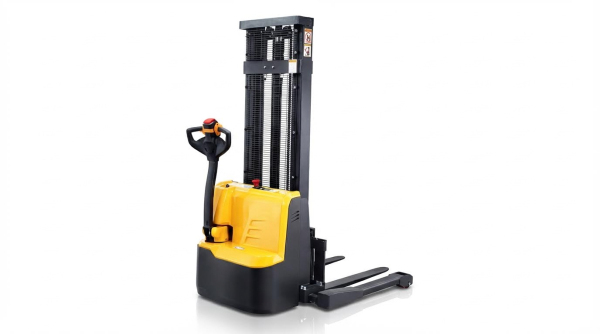
When you ask how much does a walkie stacker weight, you need to think in terms of the job it must safely perform. As capacity and lift height go up, the truck weight must increase to provide a stable counterbalance and keep the center of gravity inside the stability triangle. Typical walkie stackers handle roughly 900–2000 kg of rated load depending on the model, and higher-capacity units usually carry more chassis and battery mass to resist tipping.
- For low lift (around first or second beam level), a lighter walkie stacker can be acceptable because the load center stays relatively low.
- As lift height approaches about 3.6–5.4 m typical maximum lift range, extra truck weight and wider outriggers are needed to control mast deflection and side sway.
- Undersized truck weight for the required capacity/height combination leads to reduced residual capacity at height and can trigger stability cut‑outs or, in the worst case, tip‑over risk.
To match stacker weight correctly, start from the heaviest pallet plus handling attachments, then check the manufacturer’s capacity chart at your required lift height. Heavier-duty frames, larger batteries (often 24 V systems commonly used on walkie stackers), and more robust masts all add to truck mass, but they also deliver better stability and runtime. The goal is to choose the lightest truck that still meets capacity at height with an adequate safety margin, instead of oversizing and creating unnecessary floor loading.
Checking floor load limits before deployment
Before bringing any new walkie stacker into service, you need to confirm that the floor can safely support both the truck weight and the loaded axle or wheel loads. Warehouse slabs must carry static loads from stored pallets and dynamic loads from moving equipment such as forklifts and stackers; exceeding these limits can cause cracking, settlement, and long‑term damage.
- Locate the original building or floor design documents to find the rated floor load capacity in kN/m² or t/m² if available. If they are missing or unclear, have a structural or geotechnical engineer evaluate the slab, sub‑base, and subgrade.
- Use typical guidance ranges, such as about 1.0–1.5 t/m² for light storage up to around 3.0–5.0 t/m² for heavy machinery warehouses as a starting point, then compare these to the worst‑case wheel loads from your stacker plus load.
- Remember that walkie stackers concentrate load at the drive wheel and load wheels, especially when turning in place or braking, so point loads can be much higher than the average floor load.
What if the floor rating is too low?
If calculations show that the combination of truck mass and pallet load is close to or above the floor rating, you may need to either select a lighter walkie stacker with lower capacity, restrict travel paths, or reinforce the floor. Reinforcement options include adding a new concrete layer, partial excavation with added rebar, or ground improvement depending on cost and downtime constraints. Checking this early avoids expensive slab repairs and unplanned operational limits later.
“”
Final Considerations On Walkie Stacker Weight
Walkie stacker weight is not just a catalog number. It is a core engineering variable that links capacity, lift height, battery choice, and floor performance. Extra truck mass improves stability, increases residual capacity at height, and can help traction. The same mass also raises wheel loads, floor stresses, stopping distance, and impact energy at joints and docks.
Engineering and operations teams should treat stacker selection as a coupled problem. Start from the heaviest pallet, target lift height, aisle geometry, and duty cycle. Then choose the lightest truck and battery package that still meets capacity at height with a clear safety margin and respects the stability triangle. In parallel, verify slab thickness, sub-base quality, and floor load ratings, and compare these to calculated wheel loads for the chosen configuration.
Use walkie stacker weight deliberately as a design tool, not an afterthought. Combine sound structural checks, correct battery sizing, and strict operator training to control risk. When in doubt, consult the manufacturer’s data and a structural engineer before deployment. This approach lets you integrate Atomoving walkie stackers into your warehouse with stable trucks, safe floors, and predictable long-term performance.
Frequently Asked Questions
How heavy is a walkie stacker?
A walkie stacker’s weight can vary depending on the model and specifications. For instance, the self-weight of a Counterbalanced Walkie Stacker CC12Le118 with a battery is approximately 1542 kg (3400 lbs). Walkie Stacker Details.
- The weight includes the battery, which is essential for its operation.
- Different models may have varying weights based on their load capacity and design.
Does a walkie stacker count as a forklift?
Yes, a walkie stacker is considered a type of forklift. It is specifically designed for material handling tasks in warehouses and distribution centers. Forklifts come in various types, including walkie stackers, each serving specific functions. Forklift Types Overview.
- Walkie stackers are ideal for lifting loads to moderate heights and are more compact than traditional forklifts.
- They are typically used in environments where space is limited and maneuverability is crucial.