Knowing what can cause a load to fall off a pallet jack is critical if you want to avoid product damage, injuries, and costly downtime. This guide explains the mechanics of pallet jack stability, the main real-world causes of falling loads, and practical engineering and procedural fixes. You will see how capacity, weight distribution, floor conditions, and operator technique all interact, and what controls you can put in place to keep loads stable and predictable. Use it as a reference when reviewing your equipment specs, warehouse layout, and pallet jack training program.
Key Mechanics Behind Pallet Jack Load Stability
How Pallet Jacks Carry And Stabilize Loads
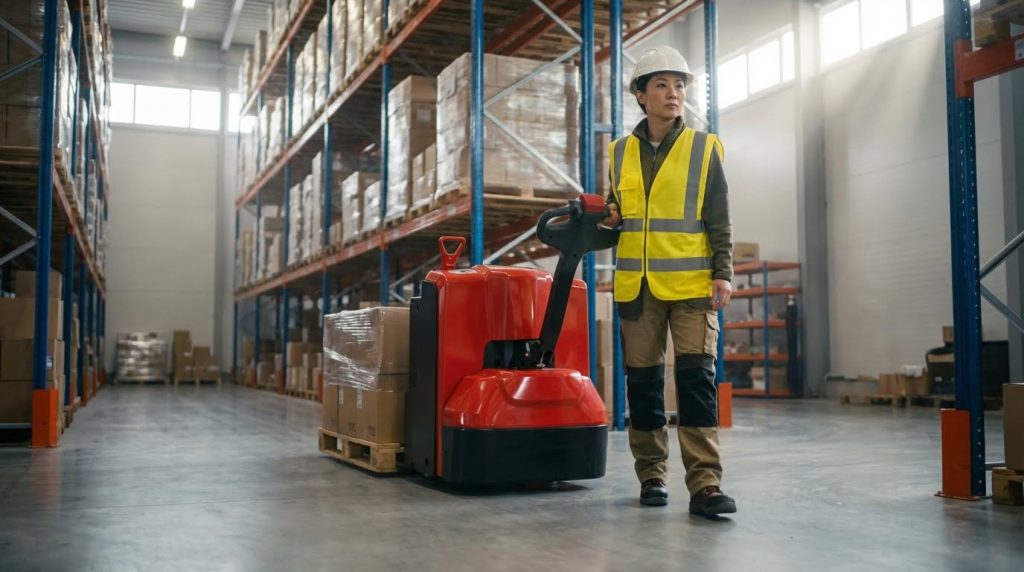
To understand what can cause a load to fall off a pallet jack, start with how the truck actually carries the pallet. The forks pick the pallet up only a small distance off the floor, typically around 1–2 inches, to keep the center of gravity low and reduce tipping risk. Stability depends on three basics: the load staying fully supported on both forks, the weight sitting over the front load wheels, and the pallet deck remaining flat and intact. If any of these conditions is lost, the load can shift, slide, or topple.
Correct load positioning is the first line of defense. Best practice is to insert the forks completely under the pallet and keep the pallet centered on the forks, with a small but consistent floor clearance during travel so the jack can roll without lifting the center of gravity too high load positioning guidance. Even, low stacking with the heaviest items at the bottom and lighter items on top helps prevent toppling if the truck stops or turns suddenly load stability practices. Irregular or loosely stacked loads should be banded or wrapped so individual boxes cannot slide off under vibration or when crossing floor joints.
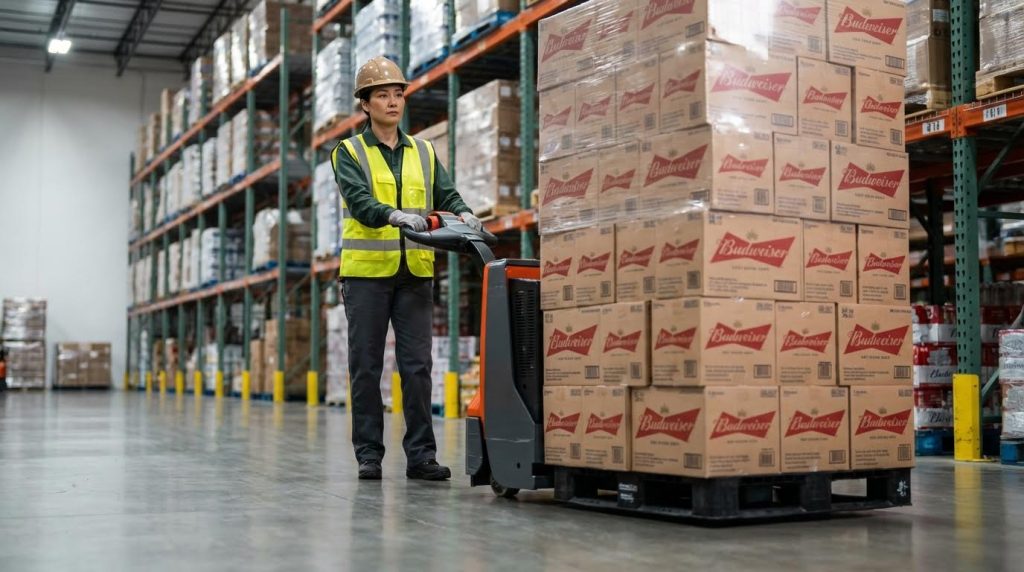
Load capacity and weight distribution are the other key mechanics. Standard manual pallet jacks are typically rated around 5,500 lb (about 2,500 kg), with some heavy‑duty units up to about 6,600 lb (3,000 kg) typical load capacities. Overloading beyond the rating or placing most of the mass at one fork tip overloads wheels and bearings and makes the truck hard to steer, which is a common mechanical path to instability and dropped loads overloading hazards. Correct practice is to place the heaviest part of the load over the load wheels, distribute weight evenly across both forks, and secure the stack with wrap or straps so the “load plus pallet” behaves as one rigid unit during movement weight distribution best practices.
Center Of Gravity, Wheelbase, And Tipping Risks
From a mechanical engineering point of view, pallet jack stability is a center‑of‑gravity (CG) and wheelbase problem. The jack and load are stable as long as the combined CG stays inside the support polygon formed by the wheels and load rollers. Raising the forks, stacking the load too high, or placing heavy items high in the stack moves the CG upward and often rearward, which makes it much easier for the load to tip sideways or fall forward if the truck hits an obstacle or stops suddenly. Keeping forks just 1–2 inches off the floor during travel and avoiding loads higher than the operator’s eye line are simple ways to keep the CG low and inside the wheelbase envelope recommended fork height and stacking.
Floor conditions directly affect how the CG moves relative to the wheelbase. When wheels run through cracks, potholes, loose debris, or dock transitions, the truck can pitch or roll suddenly, which “throws” the CG toward the edge of the support polygon and can be what can cause a load to fall off a pallet jack even when it was stacked correctly uneven surface hazards. Good practice is to keep routes clean and flat, reduce speed over joints and dock plates, and avoid using standard hard‑wheel jacks on rough or outdoor surfaces where the CG will be excited by continuous shocks ground and obstacle checks.
Operator manoeuvres also change the effective wheelbase and CG position. Tight, fast turns with a high or top‑heavy load swing the CG outward, which increases lateral tipping risk and can cause cartons to slide off the pallet, especially if the load is not wrapped or banded handling techniques. On ramps and slopes, gravity shifts the CG downhill; if the operator turns, stops abruptly, or travels with forks raised, the CG can move outside the wheelbase and the load can either tip off the pallet or drag the jack uncontrollably ramp and slope guidance. Engineering‑wise, the fixes are to keep the load low, move slowly, avoid turning on ramps, and choose pallet jacks and wheel types that match the floor conditions so the CG stays predictably inside the support area.
Main Causes Of Load Instability And How To Fix Them
Overloading And Poor Weight Distribution
When people ask what can cause a load to fall off a pallet jack, overloading is usually the first factor. Exceeding the rated capacity rapidly wears wheels and bearings and makes the truck hard to steer, increasing tipping and drop risks. Standard manual pallet jacks typically carry around 2,000–2,500 kg, with heavy‑duty units up to about 3,000 kg so operators must keep loads within the nameplate rating. Overloading also increases the chance of component failures in forks, hydraulics, or wheels, which can let the load drop suddenly and injure nearby staff.
- Place the heaviest part of the load over the front wheels and distribute weight evenly along both forks to maintain stability and steering control.
- Keep forks low during travel to lower the center of gravity and reduce the chance of the load toppling sideways or forward especially with tall or irregular loads.
- Use wrap, straps, or bands to tie unstable loads together so individual boxes cannot slide off under braking or cornering and always stack heavier items at the bottom.
- Clearly display capacity on the handle or frame and train operators to weigh or check paperwork if they are unsure to prevent routine overloading.
Incorrect Fork Use, Pallet Fit, And Load Placement
Incorrect fork engagement and poor pallet fit are another major answer to what can cause a load to fall off a pallet jack. If the forks are not fully inserted, the pallet can pivot or break, and the load can slide off when lifting or turning especially if the operator turns before the truck is completely under the pallet. Using forks that are too short reduces support under the load, while forks that are too long can strike products or structures in front of the pallet creating impact and drop hazards.
- Always insert forks completely under the pallet before pumping the handle to lift and before steering to maximize bearing area and stability.
- Match fork length to pallet depth so the load is fully supported but the tips do not protrude dangerously into adjacent lanes or racking avoiding product damage and secondary impacts.
- Center the pallet on the forks and keep it flat and straight; pallets parked skewed or on edges are more likely to shift or collapse during movement and can reduce shelf load capacity when stored.
- Follow safe loading procedures: keep loads below eye level, stack heavier items low, and avoid overhanging cartons that can be knocked off in aisles to maintain a compact, stable unit load.
Floor Conditions, Obstacles, And Route Planning
Poor floor conditions and unplanned routes are common, practical reasons a load falls off a pallet jack. Cracks, potholes, dock plates, and loose debris can stop or deflect the small front wheels, causing sudden jolts that shake cartons loose or tip unstable stacks and may even throw the operator off balance. Small obstacles like shrink wrap tails, broken boards, or tight corners can also snag the load if the route is not checked in advance leading to sudden stops and drops.
- Inspect and maintain floors; repair defects and clearly mark uneven areas where immediate repair is not possible to warn operators to slow down.
- Keep travel paths clear of wrap, loose boards, and other debris, and use housekeeping routines to prevent recurring obstacles that can catch on wheels or forks.
- Plan routes that avoid steep ramps and tight, blind corners when carrying tall or heavy loads, and enforce low speed limits in busy zones to reduce collision and tip‑over risks.
- Use suitable wheels or trucks for rough or outdoor surfaces and lower forks before crossing thresholds, ramps, or dock plates to keep the load as stable as possible.
Unsafe Manoeuvres, Ramps, And Operator Technique
Operator behaviour strongly influences what can cause a load to fall off a pallet jack. Sharp turns, sudden stops, and high speed in narrow aisles create lateral forces that can topple stacked goods, even when the pallet itself stays on the forks and put extra stress on the frame and wheels. Incorrect steering, such as pulling instead of pushing or making tight turns with a full load, reduces control and raises collision risk which can knock loads off pallets.
- Avoid sharp turns and sudden braking with raised loads; navigate corners slowly and deliberately to limit side forces on the stack and keep the load compact.
- Push rather than pull manual pallet jacks in most situations to maintain better visibility and control and reduce strain injuries.
- On slopes, follow the manufacturer’s guidance; typically keep the load upgrade, descend slowly, and avoid turning on the ramp as weight can shift unpredictably.
- Never allow riders on the forks or frame; extra moving mass and sudden shifts in center of gravity make tip‑overs and dropped loads far more likely and are prohibited in most safety policies.
Maintenance, Inspections, And Component Failure
Mechanical condition is a quieter but critical factor in what can cause a load to fall off a pallet jack. Worn wheels, bent forks, or leaking hydraulics reduce stability and can fail under load, dropping the pallet or causing a sudden tilt that throws stacked product. Lack of routine inspections means these issues are often found only when a near‑miss or incident already happens instead of during planned maintenance.
- Carry out pre‑use checks on forks, wheels, hydraulics, and controls and remove damaged units from service immediately to prevent in‑service failures.
- Lubricate moving parts and replace worn components on a fixed schedule, not only when complaints arise to keep handling forces predictable.
- Check that brakes and controls on powered pallet jacks operate correctly so the truck can stop smoothly without throwing the load forward especially on inclines and docks.
- Park pallet jacks with forks fully lowered, in designated areas off walkways, to prevent accidental movement or trip‑and‑strike events that can knock loads off nearby pallets and
Engineering Controls, Training, And Equipment Selection

Specifying The Right Pallet Jack For The Job
Engineering controls start with choosing equipment that matches the load, pallet type, and route so you eliminate many of the conditions of what can cause a load to fall off a pallet jack. Define a safe working load based on your heaviest typical pallet, then select pallet jacks whose rated capacity comfortably exceeds that value; many standard units were rated around 2,500 kg, with heavy‑duty versions up to about 3,000 kg load capacity ranges. This reduces overloading, which otherwise accelerates wheel and bearing wear and increases tipping and component‑failure risk overloading consequences. Match fork length and width to your pallet sizes so the load is fully supported without protruding forks that can strike adjacent goods incorrect fork length risks. For rough or uneven floors, specify trucks with wheel materials and diameters suited to cracks and transitions to limit sudden jolts that can destabilize stacked loads uneven surface hazards.
Key specification checks
- Rated capacity vs. actual maximum pallet weight, including packaging.
- Fork length and width vs. pallet dimensions and overhang.
- Wheel type vs. floor quality (smooth concrete vs. damaged or outdoor surfaces).
- Need for brake, parking, or powered assist on ramps and docks.
Warehouse Layout, Racking, And Process Design
Layout and racking design strongly influence what can cause a load to fall off a pallet jack because they control turning space, gradients, and how pallets are presented to the forks. Provide straight, sufficiently wide travel lanes so operators can push in line with the load and take wide turns instead of sharp pivots that shift the center of gravity turning technique guidance. Designate fixed pallet staging areas that keep pallets flat and square on the floor; poor positioning or pallets left skewed increases the chance of partial fork engagement and unstable lifting improper storage and movement handling. Racking should allow pallets to sit straight with adequate beam support and even load distribution to avoid product shifts when the pallet is picked pallet placement on shelves. Finally, route planning and housekeeping procedures must keep travel paths free from loose film, debris, and floor defects that can catch wheels and jolt the load ground and obstacle checks.
Design Element Risk Controlled Typical Control Measure Aisle width and turning space Sharp turns, collisions, sideways tipping Set minimum clear width based on pallet length and jack type Floor quality Jolts, loss of control, falling loads Repair cracks, mark hazards, specify suitable wheels Staging and racking geometry Partial fork entry, pallet roll‑off Square pallets to beams, flat staging pads, stop bars where needed Operator Training, SOPs, And Safety Technology
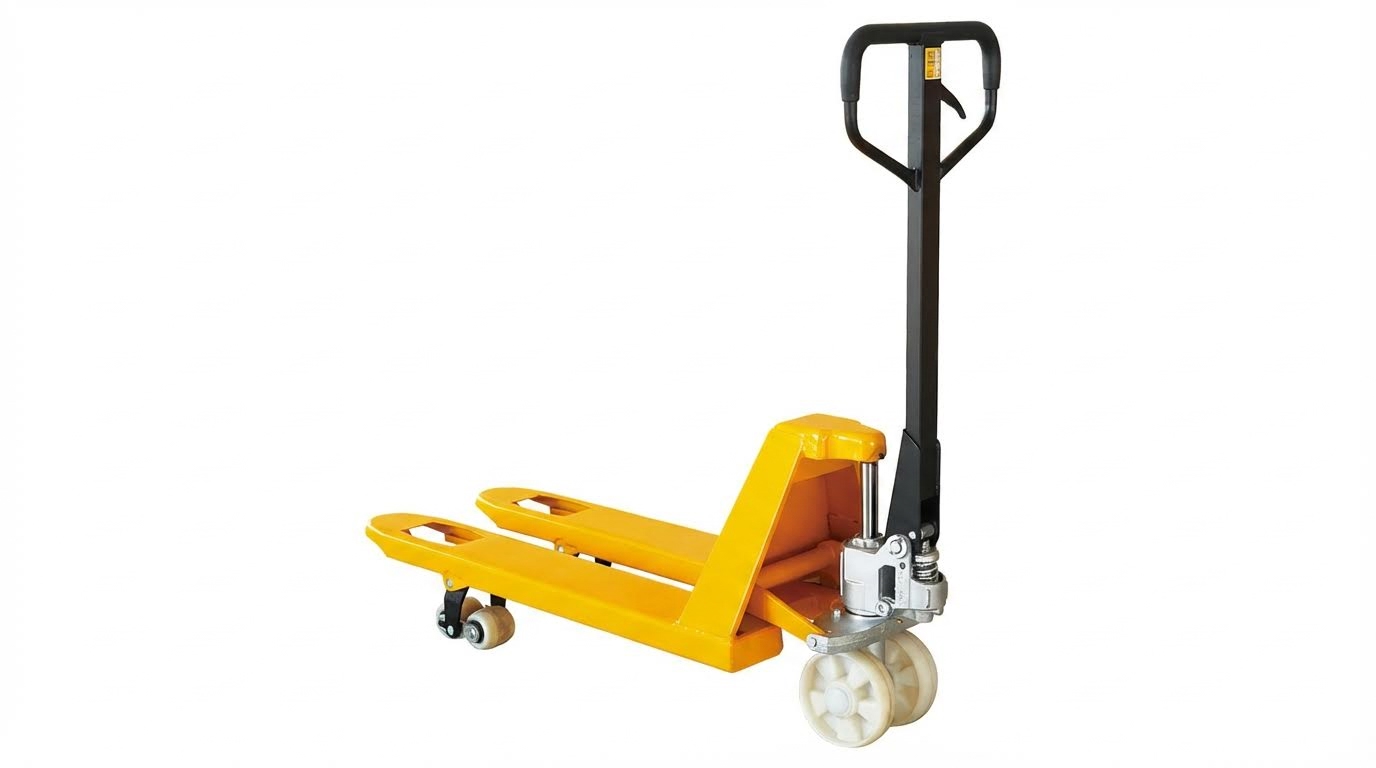
Even with good engineering controls, untrained operators remain a major factor in what can cause a load to fall off a pallet jack. Training should cover pre‑use inspections of forks, wheels, and hydraulics so damaged equipment is removed from service before a failure under load pre‑operational inspections. Standard operating procedures need to enforce correct load positioning, with forks fully inserted, the heaviest items low and centered, and unstable stacks secured with wrap or straps to prevent toppling weight distribution practices load stability methods. Operators also need clear rules for speed, pushing rather than pulling where appropriate, and avoiding ramps or uneven surfaces unless trained in specific techniques operating practices. To reinforce behavior, organizations can add visual load‑limit labels, floor markings, checklists at parking areas, and where applicable, speed‑limiting or warning devices in high‑traffic zones collision and traffic controls training and maintenance reminders.
“”
Summary: Designing For Stable, Predictable Load Handling
Stable pallet jack operation depends on one simple idea: keep the combined center of gravity low, centered, and inside the wheelbase at all times. Geometry, floor quality, and operator inputs all push that center of gravity around. When you overload, stack too high, steer sharply, or run over defects, you drive it toward the edge of the support area and invite a tip, shift, or drop.
Engineering teams must treat capacity, fork geometry, wheel selection, and warehouse layout as one integrated system. Correct fork length, matched pallets, sound floors, and suitable wheels remove many shock and impact triggers before operators even touch a handle. At the same time, maintenance keeps the “support triangle” predictable by preventing sudden loss of height or steering control.
Operations leaders must lock in safe behavior through training, clear SOPs, and simple visual controls. Teach operators to keep forks low, loads compact and wrapped, speeds modest, and routes planned. Then back that up with inspections, marked travel paths, and load‑limit labels.
The best practice is clear: design the equipment, layout, and procedures so a stable, predictable load is the default outcome. Use Atomoving pallet jacks that match your loads and environment, and enforce disciplined handling to keep products and people safe.
Frequently Asked Questions
What can cause a load to fall off a pallet jack?
If the center of gravity moves outside the stability triangle, the load may fall off. Common causes include:
- An unbalanced load on the forks, such as too much weight on one side.
- Improper positioning of the forks under the pallet.
- Moving too quickly or turning sharply, especially on ramps or inclines.
For more details, refer to this guide on pallet jack safety.
How to avoid collisions when moving a load with a pallet jack?
To help avoid collisions and ensure safe operation:
- Center the forks evenly under the load for stability.
- Ensure the forks are fully positioned under the pallet.
- Maintain a clearance of about 25 mm (1 inch) between the floor and the pallet.
Wearing proper foot and hand protection is also essential. Learn more about safe pallet jack practices.