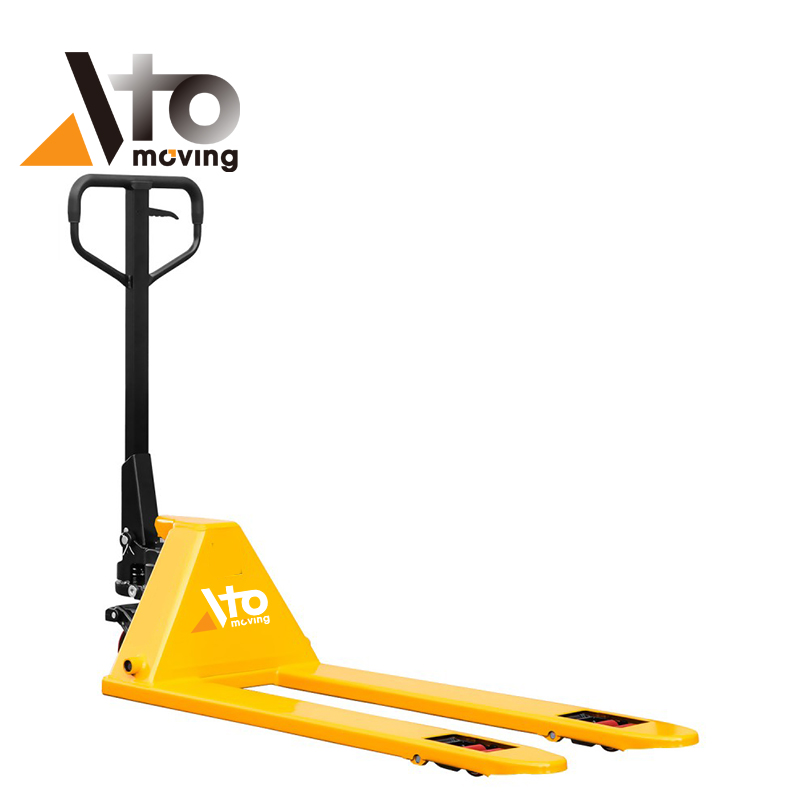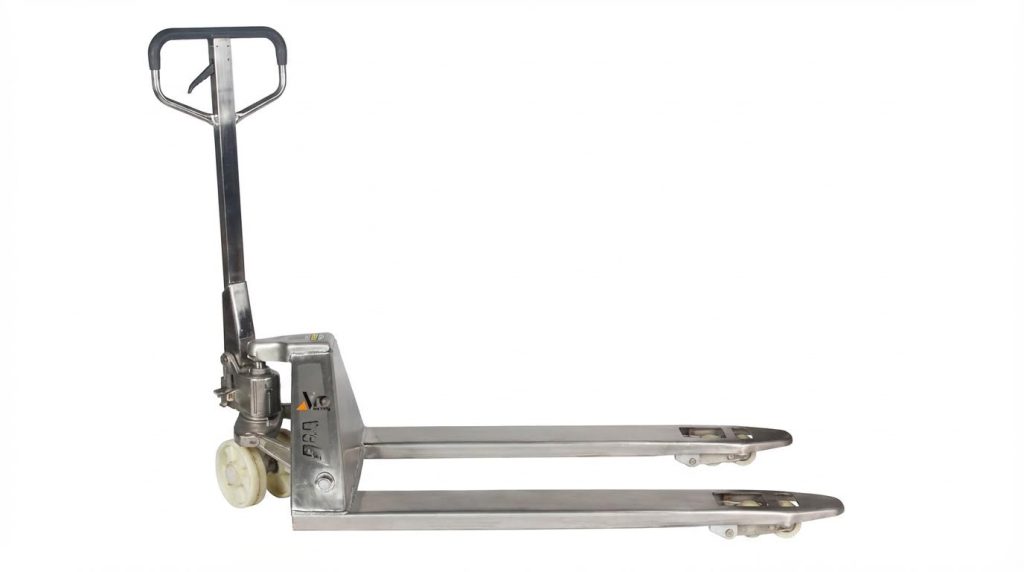
If you work with pallets every day, understanding how a pallet jack works is critical for safe, efficient material flow. This guide explains the core mechanics, hydraulic systems, and power options behind both manual and electric pallet trucks so you can match the right design to your loads, floors, and duty cycle. Along the way, you will see how engineering details like fork geometry, wheel materials, and batteries affect throughput, ergonomics, and total cost of ownership. Use it as a technical reference when you need to explain how does a low profile pallet jack work to operators, supervisors, or procurement teams.
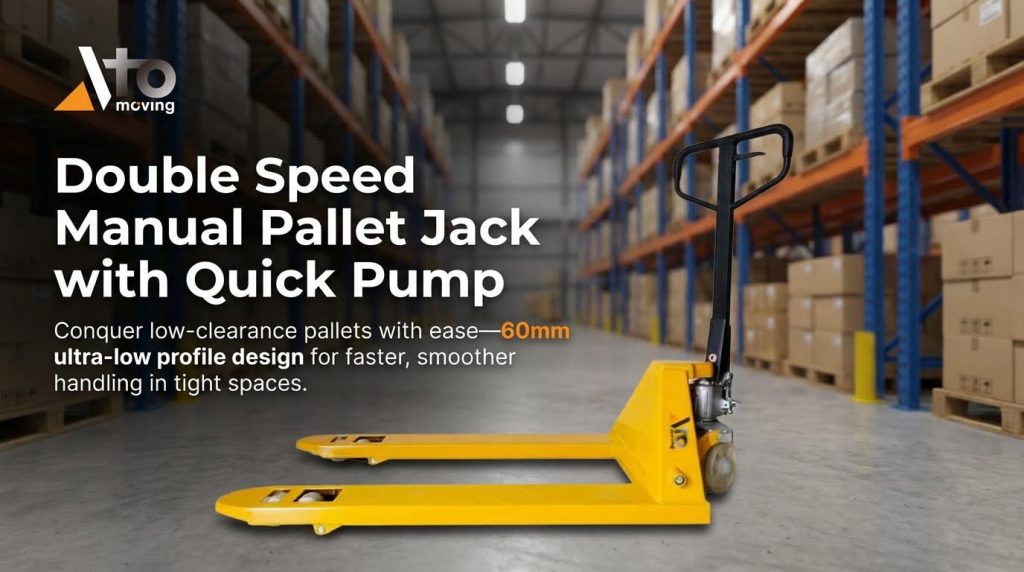
Core Mechanics Of How A Pallet Jack Works
Main components and force paths
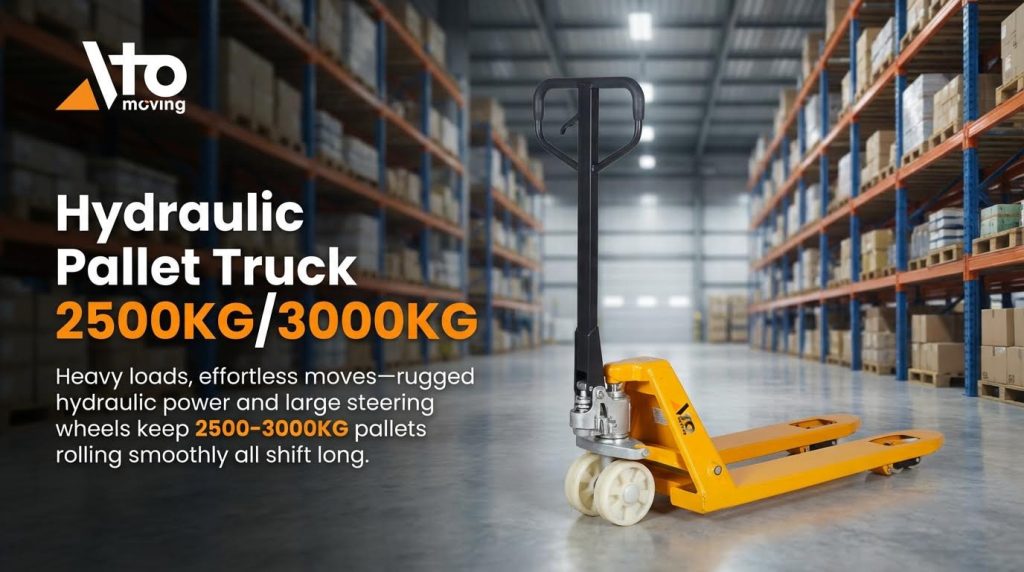
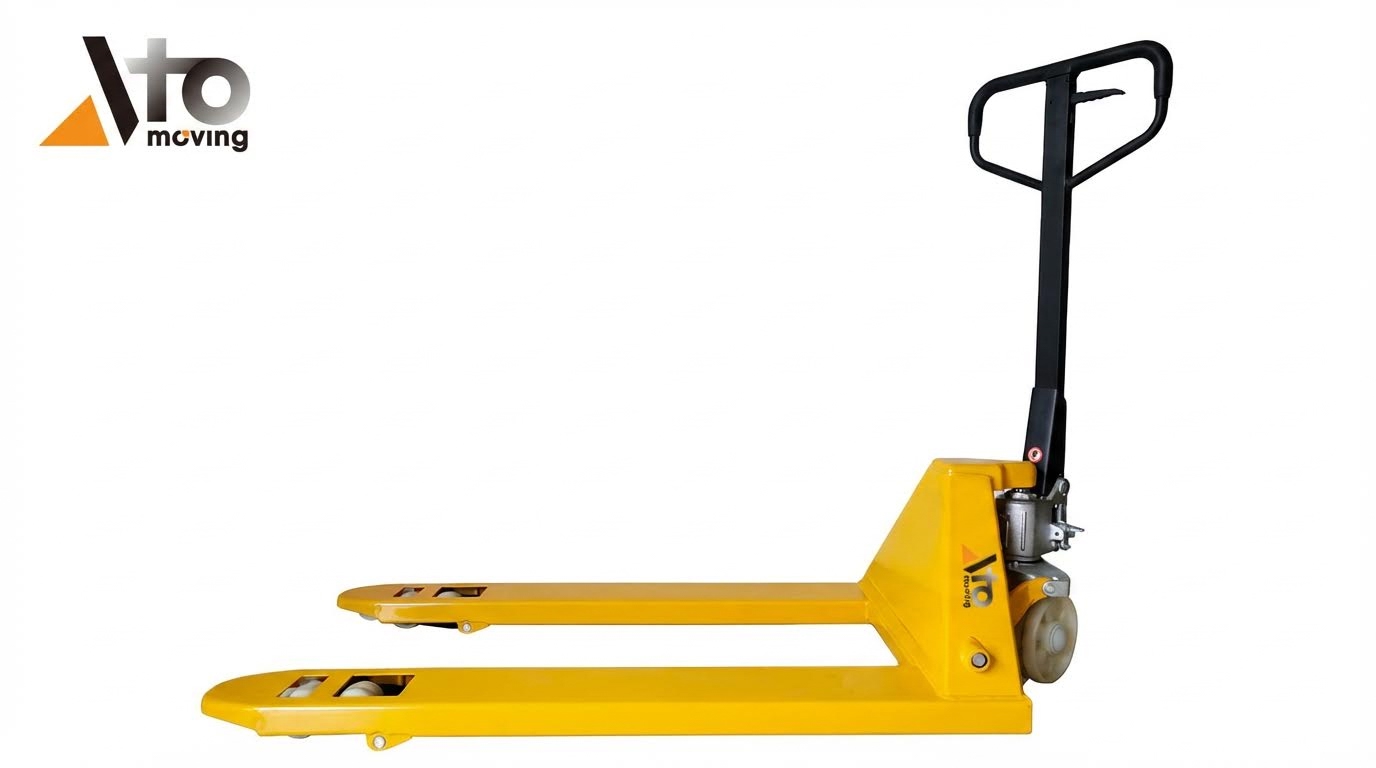
To understand how does a pallet jack work in engineering terms, start with the load path. The pallet load sits on the fork arms, which transfer weight through the front load wheels into the floor, while the rear steering wheels support the handle end. A typical manual unit includes a steering handle, a control lever for lift/lower, a tow bar that actuates the hydraulic pump, steering wheels, front load wheels, and fork arms that slide into the pallet openings key components. When the operator pumps the handle, the tow bar drives a small hydraulic pump that pressurizes oil and sends it into a lift cylinder hydraulic lifting mechanism. The pressurized oil pushes the piston, which in turn raises a linkage that lifts the fork frame a few inches off the ground. A back-pressure or check valve prevents oil flowing back to the tank, so the forks stay at height until the operator opens the lowering valve back pressure valve. Typical fork lift height is in the 3–8 inch range, just enough to clear pallet boards without raising the center of gravity excessively fork lift height. The wheel material also affects how the forces transfer into the floor; polyurethane wheels protect smooth indoor floors, while harder nylon wheels tolerate rougher or outdoor surfaces better wheel material. In operation, the operator’s push or pull force at the handle converts into horizontal tractive force at the steering wheels, while the hydraulic system deals only with the vertical lifting force needed to raise loads that can range from roughly 1–5 tons on manual units load capacity.
Quick component list and force roles
- Fork arms – support the pallet and transmit vertical load into the front load wheels.
- Load wheels – carry most of the pallet weight; see high contact stress on poor floors.
- Steering wheels – carry residual weight and provide directional control.
- Hydraulic cylinder + pump – generate vertical lifting force from small handle inputs.
- Handle and tow bar – convert operator force into pump motion and steering torque.
Step‑by‑step lifting and lowering cycle
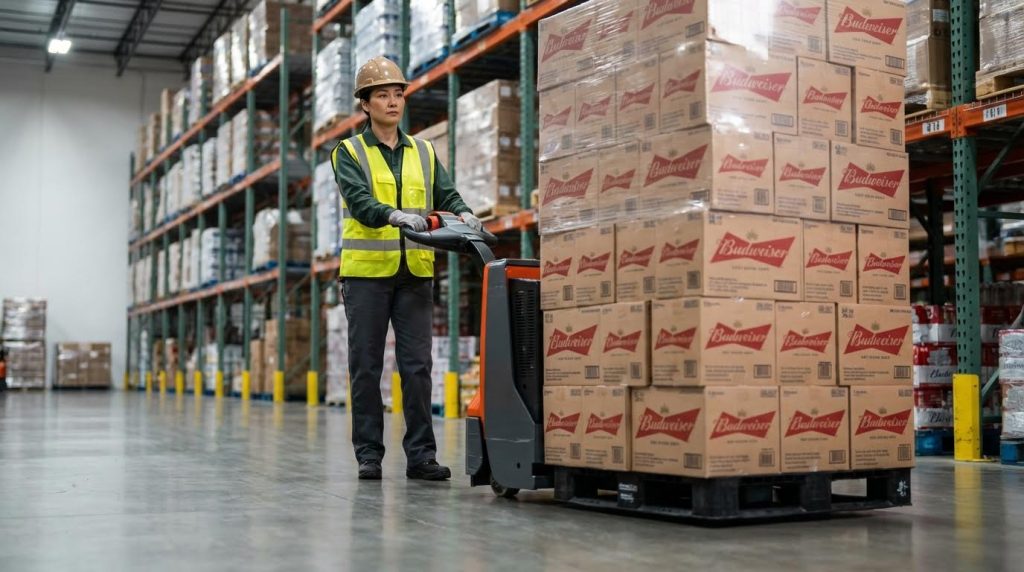
From an operator’s perspective, explaining how does a pallet jack work is easiest as a simple sequence. First, the forks start fully lowered so the front load wheels and fork tips can slide into the pallet openings without interference. The operator then positions the forks through the pallet, sets the control lever to “lift,” and pumps the handle; each stroke pressurizes hydraulic oil and drives it into the lift cylinder, incrementally raising the forks and pallet hydraulic lifting mechanism. Once the forks reach the target height (typically a few inches of clearance), the check valve holds pressure so the load remains stable during travel back pressure valve. To lower, the operator moves the control lever to the “lower” position, which opens a small lowering valve and allows hydraulic oil to flow back from the cylinder into the reservoir lowering process. Flow is restricted so the forks descend at a controlled rate, preventing shock loading into the floor or pallet. When the forks are fully down, the load transfers back onto the pallet and floor, and the jack can be withdrawn.
- Lift cycle: Insert forks → set lever to lift → pump handle until required height.
- Travel: Neutral lever position → push rather than pull where possible to reduce strain safety practices.
- Lower cycle: Position pallet → move lever to lower → allow forks to settle fully.
Engineering checks during the cycle
- Before lifting, operators should visually inspect wheels, forks, and hydraulics for damage or leaks inspection and safety.
- During lift, sluggish response over several handle strokes can indicate low hydraulic oil level hydraulic test.
- After lowering and removal, cleaning debris from wheels and forks reduces rolling resistance and wear post-operational cleaning.
Manual Vs Electric Pallet Jacks: Technical Operation
Hydraulic circuits and drive systems compared
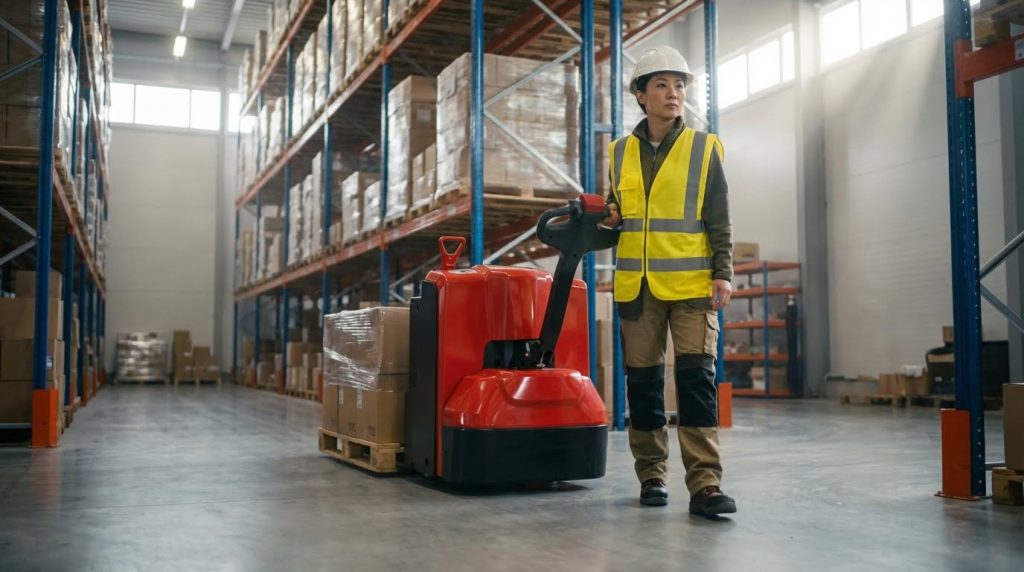
In both manual and electric pallet jacks, the lifting function relies on a compact hydraulic circuit. In manual units, pumping the handle drives a small piston that pressurizes hydraulic oil and forces it into a lift cylinder, which raises the forks by several inches for pallet clearance via a simple pump-and-cylinder arrangement. A check or back-pressure valve prevents oil from flowing back to the tank so the load stays elevated until the operator opens the lowering valve using the control lever to return oil to the reservoir and lower the forks in a controlled way. Electric pallet jacks use the same hydraulic principle but replace the manual pump stroke with an electric motor-driven pump, and they add an electric traction motor to power the drive wheels for horizontal movement instead of relying on push–pull force from the operator which significantly changes how does a pallet jack work in high-throughput operations.
- Manual jacks: hydraulic lift is manual; travel is fully human-powered, with a tight turning radius for confined spaces but limited speed and higher operator effort.
- Electric walkies: electric traction plus either manual or powered lift, controlled by a tiller head with throttle and lift/lower buttons so the operator mainly steers and supervises.
- Ride-on / platform units: same basic hydraulic and drive layout, but geared for longer runs and higher pallet flows per hour with reduced walking time using the same fork and wheel geometry as manual types.
From an engineering perspective, the hydraulic circuit is similar across both types; the main difference is whether human muscle or an electric drive supplies the input energy. That difference drives key performance gaps: a manual jack typically moves around 30 pallets per hour, while an electric walkie can handle roughly 60–70 pallets per hour in comparable conditions doubling functional throughput with the same operator.
Power sources, batteries, and duty cycles
Manual pallet jacks have no onboard power source; the operator provides all input energy for lifting and travel, which naturally limits duty cycle and practical distance. Electric pallet jacks rely on rechargeable battery packs that feed both the traction motor and the hydraulic pump motor, so understanding battery chemistry is central to specifying how does a pallet jack work over a full shift. Traditional lead-acid batteries offer a lower purchase cost but require daily maintenance, watering, and long charging windows of roughly 6–8 hours, which constrains multi-shift use without spare batteries or change-out equipment and similar 6–8 hour charge times are noted in independent engineering guides for warehouse fleets. Lithium-ion batteries, by contrast, deliver higher efficiency, 3–4 times more charge cycles, and much faster charging in the 2–3 hour range, and they support opportunity charging during breaks without damage which makes them well suited to dual-shift or 24/7 logistics sites and cold-storage applications.
- Lead-acid: lower initial cost, needs weekly checks of voltage and electrolyte and careful charging to avoid over-discharge or overcharge plus controlled storage in a dry, ventilated area.
- Lithium-ion: higher upfront price but longer life, minimal routine maintenance, and stable performance in low-temperature environments supporting intensive duty cycles without battery swaps.
Because electric pallet jacks can move roughly twice as many pallets per hour as manual units, they often repay their higher capital cost within about 5–8 months in labor savings at typical wage and volume assumptions making battery and charger selection a core engineering decision rather than a peripheral accessory.
Safety, standards, and maintenance engineering
Manual and electric pallet jacks share basic safety needs—sound forks, intact wheels, and leak-free hydraulics—but electric units add control electronics, higher speeds, and braking systems that change risk profiles. Manual jacks depend mainly on operator behavior and pre-use checks; operators should inspect wheels, forks, and hydraulic components, avoid overloading, and prefer pushing rather than pulling to reduce strain and maintain control on smooth floors while operating within rated capacity ranges. Electric pallet jacks typically incorporate engineered safety features such as emergency reverse buttons, automatic speed reduction in turns, and regenerative braking, which are not present on basic manual units and which substantially cut the risk of impact and overrun incidents while also reducing wrist and back injuries by up to 40% for frequent users.
Inspection and maintenance engineering
From a maintenance-engineering standpoint, manual pallet jacks mainly require lubrication, fastener checks, and hydraulic health monitoring. Simple daily routines—short visual scans, quick cleaning, and a three-pump hydraulic test—can be completed in under 10 minutes and help detect sluggish lifting caused by low oil or seal wear with weekly lubrication and bolt checks extending service life. Electric units add battery maintenance, electrical inspections, and periodic verification of braking and control functions, including checks for leaks in cylinders and hoses roughly every six months and functional tests of steering and braking performance during operation to catch wear before it becomes a safety hazard. Because electric pallet jacks fall under powered industrial truck regulations, they must meet standards such as EN ISO 3691-1 and ANSI B56.1 and require formal operator training, documented inspections, and clear maintenance records to remain compliant over their service life which should be factored into total cost of ownership models.
Matching Pallet Jack Design To Your Application
Load, fork geometry, and floor condition criteria
When you ask “how does a pallet jack work” in a real facility, the more important question is how it will work with your loads, pallets, and floors. Start by defining the heaviest pallet plus packaging, then add a safety margin of at least 20–25% to select the rated capacity. Manual pallet jacks commonly span roughly 2.0–3.0 tons, while electric and rider units can reach 3.5–4.5 tons or more across different configurations. Overspecifying capacity increases weight and rolling resistance, so match rating closely to real loads rather than theoretical extremes.
Fork geometry must match the pallet footprint and entry style. For standard 48″ × 40″ pallets, fork length and width should be compatible so the forks fully support the stringers without protruding excessively with typical designs tailored to common pallet sizes. Where there is a mix of pallet lengths or long product (e.g., doors, lumber), consider longer forks in the 1150–2400 mm range on suitable models to reduce overhang and deflection. Check fork tip shape and entry rollers if you regularly handle tight or damaged pallets, because blunt tips and small lead‑in wheels can snag on boards.
Floor condition and wheel material determine how easily the jack actually moves the rated load. Polyurethane wheels suit smooth indoor concrete and offer better floor protection, while nylon wheels tolerate rougher surfaces and higher point loads on dock plates and ramps with different wear and noise characteristics. For frequent travel over rough floors, dock transitions, or small ramps, electric high lift pallet trucks with industrial drive wheels and power‑assisted traction perform better and reduce stalling or wheel damage than purely manual units. Always walk the route—aisles, thresholds, coolers, and docks—to confirm that clearances, turning radii, and floor flatness align with the selected fork length and wheel set.
Quick selection checklist for load & geometry
- Max pallet weight + 20–25% margin within rated capacity.
- Fork length matches pallet length; avoid excessive overhang.
- Fork width and tip shape compatible with pallet openings.
- Wheel material matched to floor: polyurethane for smooth indoor, nylon for harsher or mixed conditions.
- Route checked for ramps, dock plates, tight turns, and door thresholds.
Throughput, ergonomics, and total cost of ownership
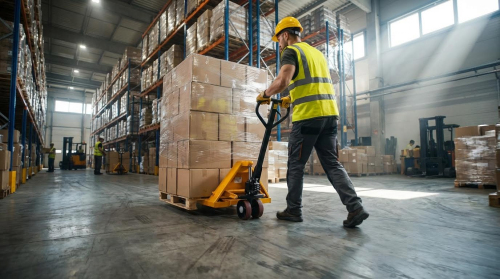
Throughput and ergonomics often decide whether a manual or electric pallet jack is the right engineering choice. A typical manual unit can move around 30 pallets per hour, while an electric walkie can reach 60–70 pallets per hour on similar routes effectively doubling handling capacity per operator. At 200 pallet moves per day and a wage of $15/hour, this difference can translate into annual labor savings of roughly $8,970 per operator when moving from manual to electric in typical use cases. This is why many operations that understand how does a pallet jack work at a systems level now treat it as a throughput asset, not just a simple tool.
Ergonomically, manual jacks demand significant push/pull force and repetitive pumping, which increases wrist, shoulder, and back strain. Battery-powered stackers reduce manual effort and can cut musculoskeletal injuries by substantial margins, especially for frequent users where powered travel and lift are used. For runs longer than 50–75 feet, frequent stops, or cold storage aisles, powered units maintain speed while limiting fatigue compared with purely manual handling. This directly ties the mechanical design—hydraulics, drive motor, and control head—to long‑term operator health.
Total cost of ownership (TCO) combines purchase price, maintenance, energy, and labor. Manual pallet jacks have low initial cost and simple maintenance, mainly lubrication and periodic inspection of wheels and hydraulics with few components to service. Electric units require higher upfront investment and ongoing battery and electrical maintenance, but the labor savings and higher throughput often yield a payback in about 5–8 months in busy operations when utilization is high. Battery choice further shapes TCO: lead‑acid offers lower initial cost but needs daily maintenance and 6–8 hour charging, while lithium‑ion provides faster 2–3 hour opportunity charging and longer life cycles, especially valuable in multi‑shift or cold‑store environments where charging windows are short.
| Criteria | Manual Pallet Jack | Electric Pallet Jack |
|---|---|---|
| Typical pallets/hour | ~30 | ~60–70 in comparable conditions |
| Operator effort | High push/pull and pumping | Low; powered travel and/or lift |
| Initial cost | Low | High |
| Maintenance | Low; mostly mechanical | Moderate–high; battery + electrical |
| Best use case | Low volume, short runs, light–moderate loads | High volume, longer runs, heavier or frequent moves |
How to evaluate TCO in your facility
- Quantify daily pallet moves and average travel distance per move.
- Estimate labor hours with manual vs electric throughput rates.
- Include injury risk and fatigue in your cost assumptions.
- Add purchase, maintenance, and energy costs over 5–7 years.
- Compare payback periods and select the design with the lowest TCO at required service levels.
“”
Key Takeaways For Procurement And Engineering Teams
Engineering choices in pallet jacks directly shape safety, throughput, and lifetime cost. Fork geometry, wheel material, and hydraulic design control how loads move into the floor and how stable the pallet stays during travel. When you size capacity close to real loads and match fork length to pallet footprint, you limit bending, reduce tip‑over risk, and avoid wasted push force.
The choice between manual and electric units is mainly a question of duty cycle and ergonomics. Manual pallet jacks suit short runs and lower pallet counts, where simple hydraulics and low purchase cost matter most. Electric units use the same basic hydraulic principles but add powered traction and lift, which cut operator strain and can double pallets per hour. Over a full year, that gain often outweighs higher capital and maintenance cost.
Battery selection then sets how well an electric fleet supports multi‑shift work. Lead‑acid fits single‑shift or light use if charging windows are long. Lithium‑ion supports fast, opportunity charging and intensive 24/7 operations. Across all designs, treat inspections, lubrication, and hydraulic checks as non‑negotiable. Teams that apply these engineering principles, and partner with technical suppliers such as Atomoving, get safer handling, predictable uptime, and the lowest total cost per pallet moved.
Frequently Asked Questions
How does a pallet jack work?
A pallet jack works by using a hydraulic pump system to lift and lower the forks. The operator slides the forks underneath a pallet, then pumps the handle to raise the pallet off the ground. Once elevated, the user can push or pull the load to its desired location. Hand Pallet Guide.
What are the main types of pallet jacks?
Pallet jacks can be either hydraulic or manual (screw-action). Hydraulic pallet jacks use a hydraulic ram that emerges vertically from the body by pressure provided by a pump. Manual pallet jacks rely on physical effort to operate the lifting mechanism. Pallet Jack Types.
How do electric pallet jacks differ from manual ones?
Electric pallet jacks use an electric motor and hydraulic pump to lift and lower the forks, making them easier to operate compared to manual pallet jacks. They are controlled via a handle attached to the hydraulic system. Electric models reduce physical strain on operators. Power Pallet Truck Guide.