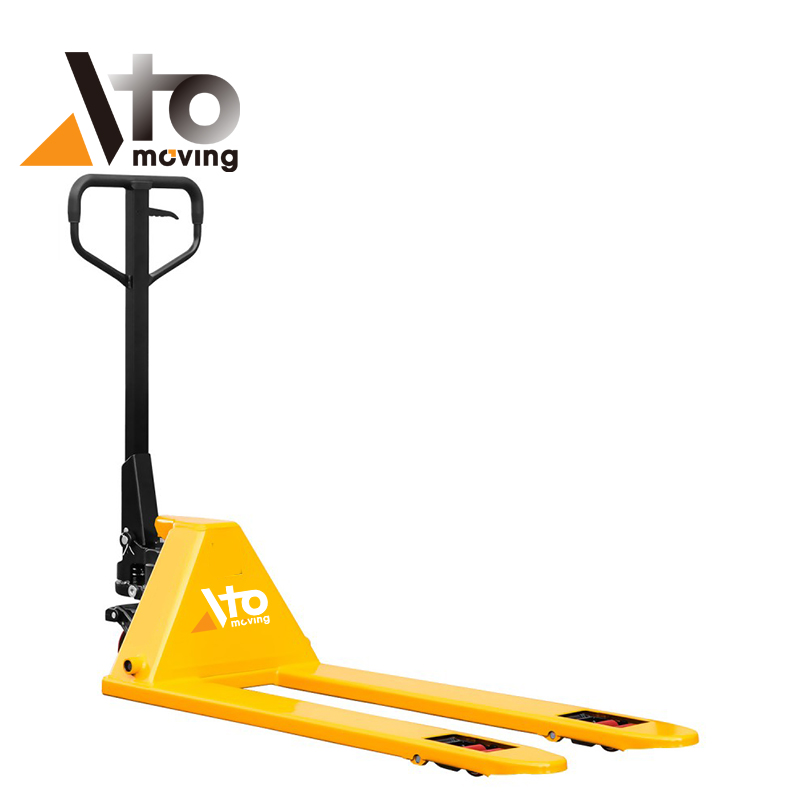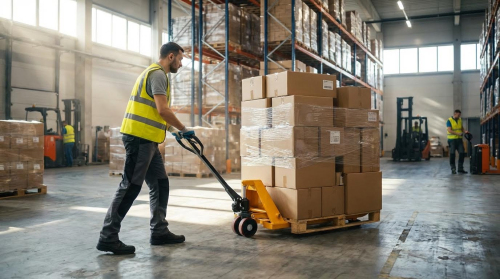
This article explains, in practical engineering terms, how a pallet jack converts handle motion into lifting force through its hydraulic pump and cylinder. If you have ever asked “how does a pallet jack pump work,” you will see the answer broken down into components, pressure build‑up, valve logic, and safety functions. You will also find key design metrics, typical capacities, and reliability considerations that matter when selecting or specifying pallet trucks. The goal is to connect real‑world handling performance with what is happening inside the hydraulic system on every stroke of the handle.
Core Components Of A Pallet Jack Pump System
Mechanical linkage from handle to pump
The mechanical linkage is the first step in understanding how does a manual pallet jack pump work. The operator applies force at the pump handle, which acts as a long lever to multiply input force and stroke length. The handle connects to the pump unit through pins, links, and a rocker or cam that converts the handle’s arc motion into a short, linear stroke on the pump plunger. In manual pallet jacks, this same handle assembly also integrates steering and a small control lever that selects lift, neutral, or lower, so the linkage must transmit both motion and control signals efficiently. Because the system is purely mechanical, correct geometry and low-friction pivots are critical to reduce operator effort and wear over thousands of cycles.
- The handle lever multiplies operator force and limits peak effort.
- Link arms or cams translate rotary handle motion into linear plunger motion.
- Control rods from the handle operate the valve spool inside the pump block.
- All joints use pins/bushings that require periodic lubrication for smooth operation. Regular maintenance of moving parts helps ensure smooth operation
Why linkage design matters
The linkage defines how many handle strokes are needed to reach full fork height and how tiring the truck is to use. Poorly designed linkages increase operator fatigue and can overload the pump plunger or valve actuators, shortening component life.
Hydraulic circuit: pump, valves, cylinder
The hydraulic circuit converts the mechanical handle stroke into lifting force at the forks. A small hydraulic pump draws oil from the integrated oil tank and pressurizes it, turning mechanical energy from the handle into hydraulic energy for lifting loads in hydraulic pallet trucks. The pump draws oil from the tank and pressurizes it for lifting The pressurized oil flows through internal hydraulic valves that control direction, lifting, lowering, and pressure limitation. A check valve holds pressure when the handle is released, while a relief valve protects the system from excessive pressure by bypassing oil back to the tank. Hydraulic valves control flow, pressure, and movement direction
The hydraulic cylinder acts as the actuator that converts fluid pressure into linear motion. High‑pressure oil enters the cylinder and pushes the piston upward, which in turn lifts the fork frame and the load. The hydraulic cylinder receives high‑pressure oil to push the piston and lift the truck When the operator selects lower, the directional valve opens a controlled path for oil to flow back to the tank, allowing the piston to retract under load and gravity for a smooth descent. Lowering occurs when hydraulic fluid returns from the cylinder to the reservoir
| Component | Primary function in the pump system |
|---|---|
| Hydraulic pump | Draws oil from tank and pressurizes it to lift the load |
| Oil tank (reservoir) | Stores working fluid for the hydraulic circuit |
| Directional / check valves | Route flow for lift or lower and hold pressure when stationary |
| Relief valve | Limits maximum system pressure for overload protection |
| Hydraulic cylinder | Converts oil pressure into vertical motion of the forks |
| Filter | Removes impurities from hydraulic oil to protect components |
A filter in the circuit removes contaminants from the hydraulic oil to reduce wear and sticking of pump and valve components. Filters remove impurities to ensure smooth hydraulic operation Keeping oil clean and at the correct level is essential for reliable operation and directly affects how does a manual pallet jack pump work over its service life.
Flow path overview
During lifting, the pump sends pressurized oil through a directional path into the cylinder. During lowering, the directional valve routes oil from the cylinder back to the tank. This simple closed loop allows a compact, low‑volume pump to generate high lifting forces with minimal operator effort.
Step‑By‑Step Mechanics Of Lifting And Lowering
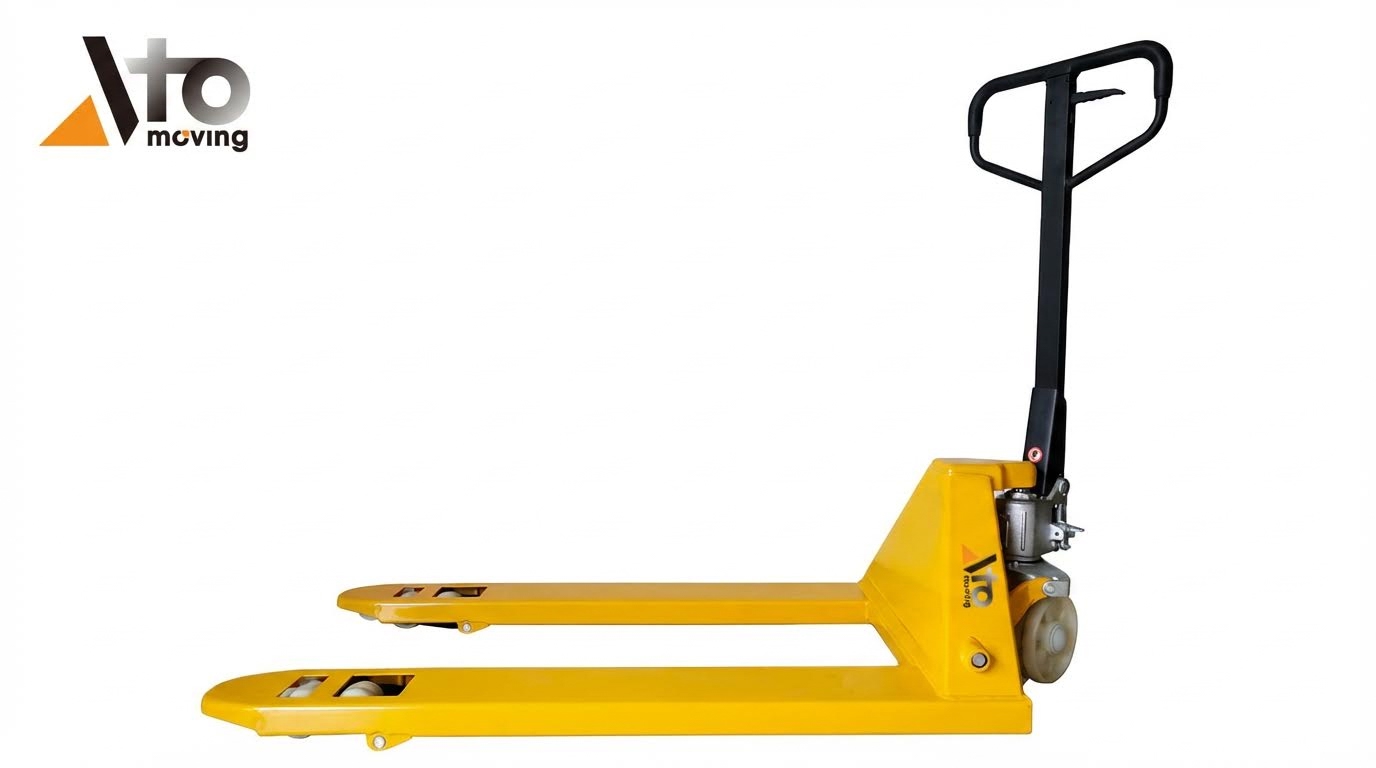
How pumping the handle builds hydraulic pressure
In a manual pallet jack, the operator’s handle strokes convert human force into hydraulic pressure. Each down‑stroke of the handle drives a small piston in the pump body, which draws oil from the tank and then forces it into the high‑pressure side of the circuit. The pump effectively converts this mechanical input into hydraulic energy by pressurizing the oil as it moves from the oil tank through the hydraulic pump. Pressurized fluid flows into the lift cylinder, where it acts on the piston area and raises the forks and load with each pump stroke as the hydraulic fluid is drawn into the cylinder and moves the piston upward. Understanding this stroke‑by‑stroke energy transfer is central to explaining how does a pallet jack pump work in real warehouse conditions.
Valve positions for lift, neutral, and lower
The control handle typically selects between three valve positions: lift, neutral, and lower. In the lift position, a check or directional valve opens the path from the pump outlet to the cylinder while blocking the return path to the tank, so all pump flow increases pressure and raises the load through the directional valve feeding the hydraulic cylinder. In neutral, the pump is isolated and the main valves hold the existing pressure in the cylinder, allowing the operator to move the truck without changing fork height. In the lower position, a metered passage opens from the cylinder back to the tank so oil can return to the reservoir and the forks descend under gravity as hydraulic fluid flows back into the reservoir and the forks lower gently. The feel and travel of the handle are therefore directly linked to which internal valve path is open at any moment.
Load holding, overload relief, and safety
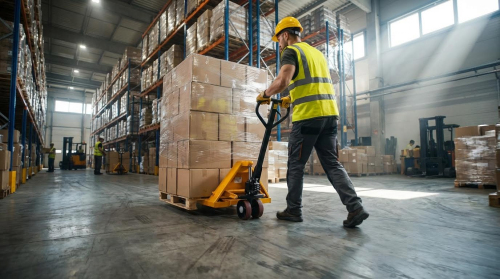
Once a load is lifted, the cylinder and check valves must hold pressure reliably so the forks do not creep down. Directional and check valves control both flow direction and pressure level in the oil with integrated relief and directional functions. A relief valve limits maximum system pressure to prevent structural overload of the pump, cylinder, and chassis if an operator attempts to lift beyond the rated capacity by opening when pressure becomes excessive. Many pallet jacks also incorporate overload protection at the system level so that weight above the nameplate rating cannot be raised as part of the built‑in safety features. Together, these holding and relief functions explain a key part of how does a pallet jack pump work safely, ensuring controlled lifting, stable load holding, and predictable lowering under all normal operating conditions.
Engineering Considerations For Design And Selection
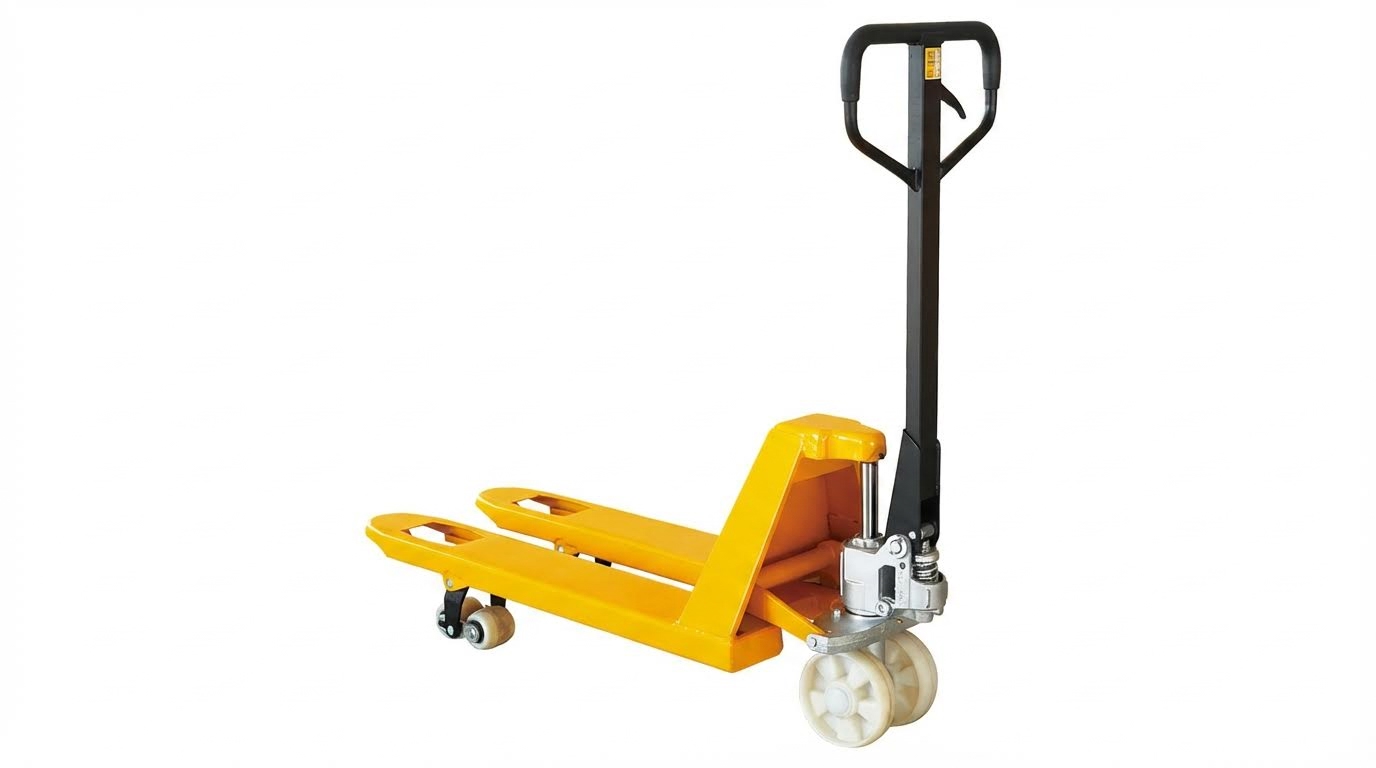
Key performance metrics: stroke, pressure, capacity
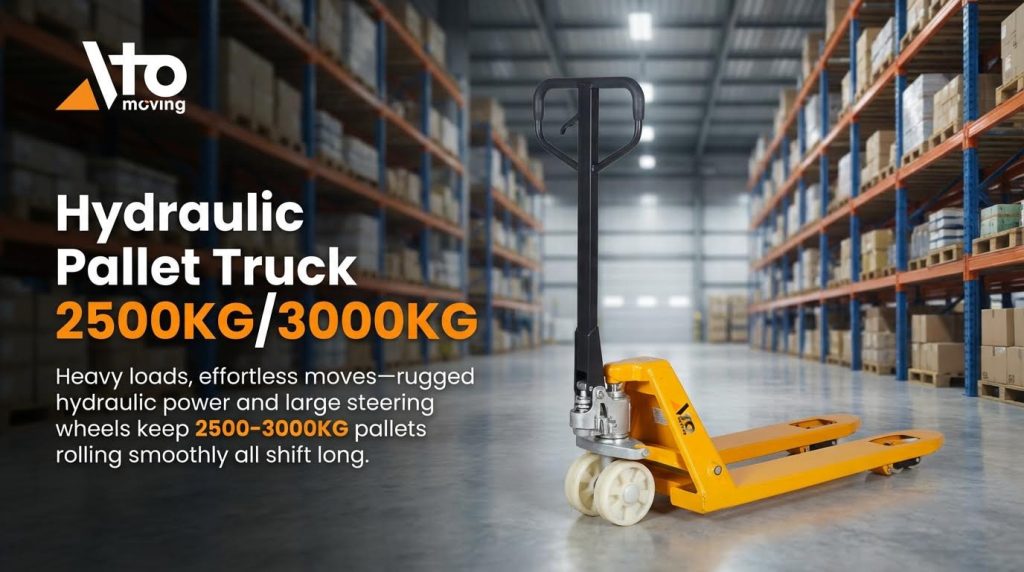
When engineers ask how does a manual pallet jack pump work in real applications, they usually start with three metrics: stroke, pressure, and capacity. Stroke length sets how many handle pumps are needed to reach full fork height; a longer effective stroke reduces pump cycles but increases handle effort per stroke. Working pressure must be high enough to lift the rated load yet stay below the relief‑valve setting, which protects the hydraulic circuit from overload by diverting oil back to tank when pressure exceeds a safe limit. Typical manual pallet trucks lift 2.0–3.5 tons, with fork heights roughly 75–85 mm lowered and 190–200 mm raised, so pump displacement, cylinder bore, and lever ratio must be sized together to achieve this envelope while keeping handle forces ergonomically acceptable. Manual pallet trucks commonly offer 2500–3500 kg capacity with about 75–85 mm minimum and 190–200 mm maximum fork height. For electric units, the hydraulic power pack specification (motor power, displacement, and relief setting) defines how fast the forks rise at a given load and duty cycle. A typical compact power unit uses a 12–24 VDC, ~0.8 kW motor with pump displacement around 0.5–0.63 ml/rev and an overflow (relief) valve set near 16 MPa. In both manual and electric designs, engineers balance these parameters so the operator sees smooth, predictable lift speed, minimal handle effort, and enough margin between working and relief pressures for safe overload behavior.
Practical selection tips
- Match rated capacity to worst‑case pallet weight with at least 20–25% safety margin.
- Check fork height range against pallet design and floor tolerances.
- For electric units, verify motor voltage and duty cycle fit the site power and shift pattern.
Reliability, maintenance, and common failure modes
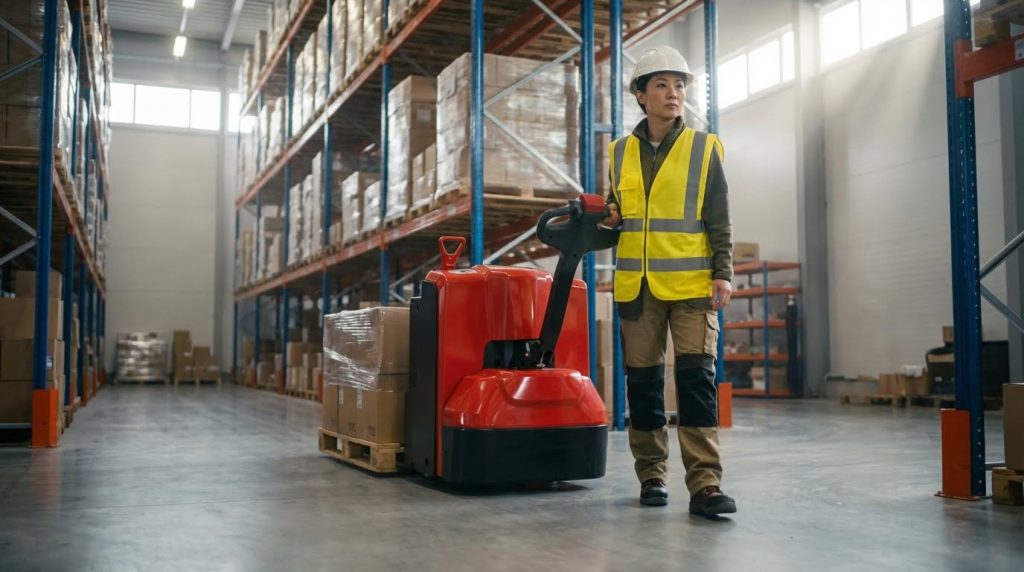
Long‑term reliability depends on how the hydraulic pump, valves, and cylinder handle contamination, seal wear, and over‑pressure events. In any explanation of how does a manual pallet jack pump work over years of service, oil cleanliness is central: the pump draws fluid from the tank, the directional valve routes it to the cylinder, and any dirt in that loop accelerates wear and internal leakage. Filters, tanks, pumps, cylinders, and valves in pallet‑truck hydraulic systems all rely on clean oil, with guidance to check levels regularly and change oil and filters about every 6–12 months. Common field issues include external oil leaks from damaged seals, sticking cylinders from contamination, and malfunctioning control valves that no longer hold or lower smoothly. These problems are typically resolved by inspecting and replacing seals and oil pipes, cleaning or replacing clogged filters, and repairing or changing faulty valves. For electric pallet jacks, the hydraulic power unit is usually designed for low maintenance, but still needs periodic fluid checks and replacement. Manufacturers recommend regular inspection and timely fluid changes, and note that robust construction helps the unit withstand harsh conditions with minimal upkeep. From a lifecycle‑cost standpoint, manual hydraulic pallet trucks generally have low annual maintenance costs, while electric units carry higher service and energy costs but improve throughput. Industry data showed manual trucks needing roughly $120–300 per year in maintenance versus about $300–400 for electric models, with additional energy costs but a lower total cost of ownership in high‑throughput, longer‑distance operations. For engineers and buyers, that means specifying good filtration, accessible seals, and robust valve design, then pairing that with a maintenance plan that includes regular leak checks, wheel inspections, and functional tests of lift, hold, and lower modes.
Typical hydraulic failure signals
- Handle pumps but forks do not rise: low oil level, suction leak, or failed check valve.
- Forks creep down under load: internal leakage in cylinder or lowering valve.
- Jerky lifting: air in oil or sticking valve spool from contamination.
“”
Summary: What Engineers And Buyers Should Take Away
A pallet jack pump works well only when mechanics, hydraulics, and controls support each other. The handle and linkage must give enough leverage while keeping operator effort within ergonomic limits. Poor geometry or dry pivots quickly turn into fatigue, damage, and downtime.
Inside the pump block, valve design decides how safe the truck feels. Clear separation between lift, neutral, and lower states prevents surprise movement. Strong check valves and correctly set relief valves hold loads without creep and stop the structure from seeing unsafe pressure.
Key sizing choices link stroke, pressure, and capacity to real pallets and floor conditions. Engineers must match cylinder area, pump displacement, and lever ratio to the exact weight range and lift height target. If they leave little margin to the relief setting, the truck will feel weak and wear faster.
Oil quality and sealing then decide service life. Clean fluid, intact seals, and regular checks avoid most failures. For operations teams, the best practice is simple: choose pallet trucks whose hydraulic design, filtration, and access for service are clearly documented, as Atomoving does, and back that up with routine inspection of lift, hold, and lower functions before every shift.
Frequently Asked Questions
How does a pallet jack pump work?
A pallet jack pump works using hydraulic pressure to lift loads. When the handle is pumped, it activates a hydraulic mechanism that forces oil into a cylinder, pushing a ram upward. This raises the forks to lift the pallet off the ground. The process relies on a simple yet effective hydraulic system. Hydraulic Jack Basics.
Do pallet jacks use hydraulics?
Yes, most pallet jacks use hydraulics to lift loads. A manual pallet jack has a hydraulic pump connected to a handle. When the handle is operated, hydraulic pressure lifts the forks. Some specialized pallet jacks may use alternative mechanisms, but hydraulics are the most common. Pallet Jack Types.