Knowing how to operate an electric forklift safely is about more than just driving; it combines control familiarity, systematic checks, and disciplined procedures. This guide walks through key controls, pre‑shift inspections, and real‑world driving techniques so operators can work efficiently without compromising safety. You will see exactly what to inspect, how to test critical systems, and how to handle loads, ramps, and parking in busy warehouse conditions. Use it as a practical framework to tighten compliance, reduce incidents, and extend equipment life.
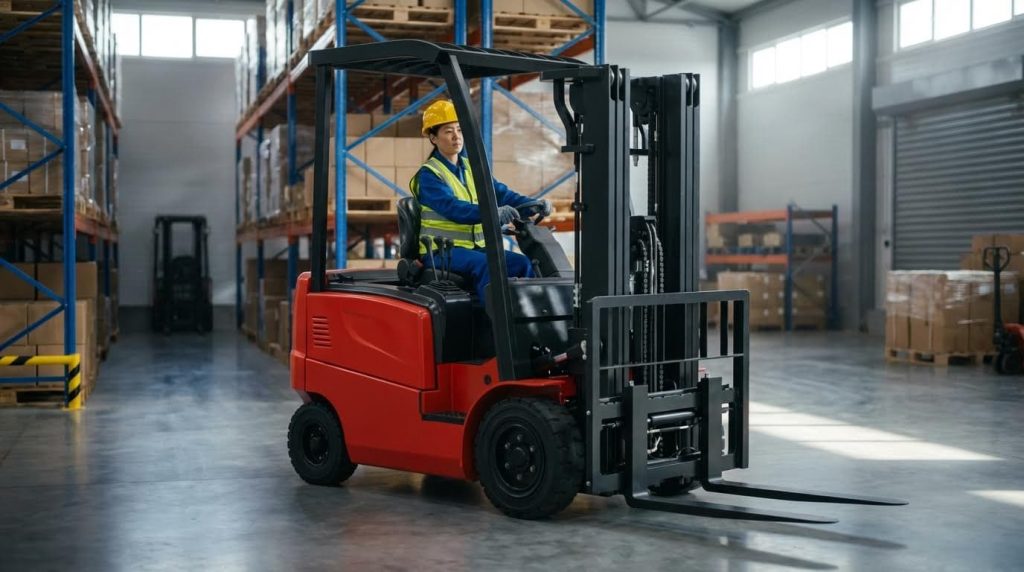
Understanding Electric Forklift Controls And Systems
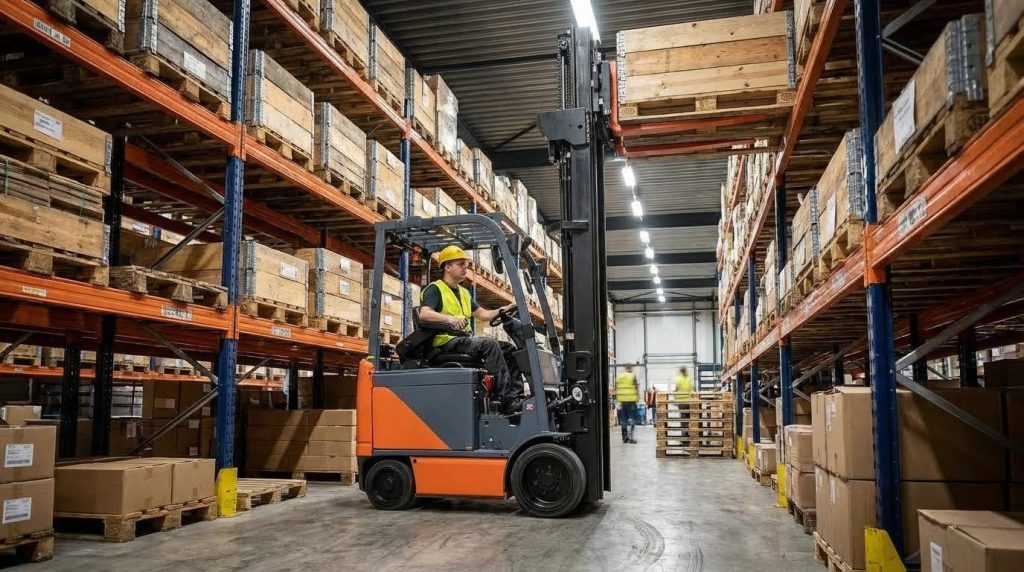
To master how to operate an electric forklift safely, operators must first understand what each control does and how the main systems interact. This section breaks down driving, steering, hydraulic, and electric systems so new and experienced drivers can read the truck’s “language” and avoid unsafe inputs. A clear mental map of the controls is the base for correct checks, smooth operation, and fast fault recognition.
Primary driving and steering controls
Driving and steering controls convert the operator’s hands and feet into truck movement. Knowing the function and feel of each control is essential before moving the truck in a live warehouse.
- Direction and travel control
- Directional lever or switch selects forward, neutral, and reverse.
- Travel pedal (or separate accelerator and brake) controls speed.
- Truck should not move until the operator is correctly seated and the seat switch is made.
- Service and parking brakes
- Service brake pedal slows and stops the truck; feel should be firm and consistent.
- Parking brake lever or pedal holds the truck when parked or on slight grades; it must be tested regularly by applying it on an incline where possible.
- Steering wheel and rear‑wheel steering
- Steering acts on the rear axle, so the rear of the truck swings wide in turns.
- Free play at the wheel should be small (around 1–2 in) and steering effort should be smooth during pre‑shift checks.
- Operators must anticipate tail swing to avoid striking racking or pedestrians when learning how to operate an electric forklift in tight aisles.
- Operator presence and safety switches
- Seat switch or deadman pedal disables travel and hydraulics when the operator leaves the seat.
- Emergency power disconnect cuts traction and hydraulic power in a critical event.
Key driving and steering control functions (quick reference)
| Control | Primary function | Safety role |
|---|---|---|
| Directional lever/switch | Selects forward/neutral/reverse | Prevents unintended direction changes when used with full stop rules |
| Travel/accelerator pedal | Sets truck speed | Allows controlled, low‑speed maneuvering in congested areas |
| Service brake pedal | Slows and stops truck | Must stop in a straight line in a clear test area |
| Parking brake | Holds truck when parked | Prevents roll‑away on slight grades |
| Steering wheel | Controls rear‑wheel steering angle | Tail‑swing control around racking and pedestrians |
| Seat / deadman switch | Detects operator presence | Disables movement when operator is unseated |
Hydraulic functions and mast control layout
The hydraulic controls manage lifting, tilting, and positioning of the load. Their layout is usually grouped at the operator’s right hand, either as levers or a joystick. Smooth, deliberate use of these controls is central to safe load handling and stability.
- Typical hydraulic control set
- Lift / lower – raises and lowers the forks or attachment.
- Tilt forward / back – tips the mast to stabilise the load and improve clearance.
- Sideshift (if fitted) – moves the carriage left/right for fine positioning.
- Auxiliary functions – clamp, rotate, or other attachment movements where fitted.
- Functional expectations
- Movement should be smooth, with no jerks or sudden speed changes.
- At full lift height, the carriage should hold without noticeable drift for at least 30 seconds when tested correctly.
- Tilt and sideshift must operate fully in both directions with no unusual noises.
| Hydraulic function | Control motion | Effect on load | Safety notes |
|---|---|---|---|
| Lift | Pull lever back / push joystick up | Raises forks and load | Never travel with mast fully raised; keep load as low as practical |
| Lower | Push lever forward / pull joystick down | Lowers forks and load | Lower slowly; ensure area under forks is clear |
| Tilt back | Pull tilt lever back | Leans mast toward truck | Use slight back tilt to secure pallet during travel |
| Tilt forward | Push tilt lever forward | Leans mast away from truck | Do not tilt forward at height, especially with load |
| Sideshift L/R | Move lever or joystick left/right | Moves carriage sideways | Use for final alignment; avoid travelling long distances while sideshifted |
Hydraulic system behaviour operators should watch for
When learning how to operate an electric forklift, operators must learn to spot early signs of hydraulic problems. Warning signs include fork drift at height, jerky mast motion, slow or uneven lifting, and abnormal pump noise. Any of these symptoms should trigger an immediate report and removal of the truck from service until inspected by maintenance. Pre‑shift hydraulic tests are designed to catch these issues before the truck enters traffic.
Electric drive, braking, and battery systems
Electric forklifts replace the engine, transmission, and fuel tank of internal‑combustion trucks with electric traction motors, electronic controllers, and a traction battery. Understanding these systems helps operators use the truck within its limits and protect expensive components.
- Electric drive and braking
- One or more traction motors drive the wheels, controlled by an electronic speed controller.
- Acceleration is smooth and torque is high at low speed, which helps precise maneuvering but can cause wheelspin if the pedal is used aggressively.
- Many trucks use regenerative braking, where releasing the accelerator converts motion back into electrical energy and slows the truck.
- Service brakes provide final stopping; they must be tested in a clear area to verify straight‑line stopping and reasonable distance as part of pre‑shift checks.
- Traction battery system
- Large traction battery supplies power for drive, hydraulics, and truck electronics.
- Battery restraints must be secure and cables undamaged before operation.
- Charge level must be suitable for the planned shift; low voltage affects lift speed, travel speed, and can trigger fault codes.
- Basic battery care expectations for operators
- Check electrolyte or water levels where applicable and ensure correct charge status before use according to training.
- Keep sparks, flames, and metal tools away from the battery compartment.
- Do not attempt to jump‑start an electric forklift or perform untrained battery repairs.
- Report leaks, damage, or abnormal smells immediately and follow site spill procedures.
| Electric system element | Operator focus | Impact on safe operation |
|---|---|---|
| Traction motors | Use smooth pedal inputs; avoid harsh acceleration | Reduces wheelspin, floor damage, and instability when loaded |
| Regenerative braking | Release pedal early to slow before using service brake | Improves control and reduces brake wear |
| Service brake system | Test forward stop at moderate speed in a clear area | Confirms the truck can stop within expected distance |
| Traction battery | Verify charge level, restraints, and visible condition | Prevents power loss, uncontrolled shutdown, or battery movement |
| Battery charging area | Follow site rules, PPE, and ventilation requirements | Controls exposure to gases and potential acid spills |
How control knowledge links to real‑world operation
Knowing the layout and function of electric, hydraulic, and steering controls is the foundation of how to operate an electric forklift safely in real warehouses. It allows the operator to focus on load, pedestrians, and traffic, instead of searching for the right lever or reacting late to truck feedback. When combined with formal training and daily inspections, this control knowledge significantly reduces incidents related to misuse of brakes, steering, or hydraulic functions. Training standards require operators to demonstrate this understanding as part of their evaluation.
Pre‑Shift Inspections And Functional Safety Checks
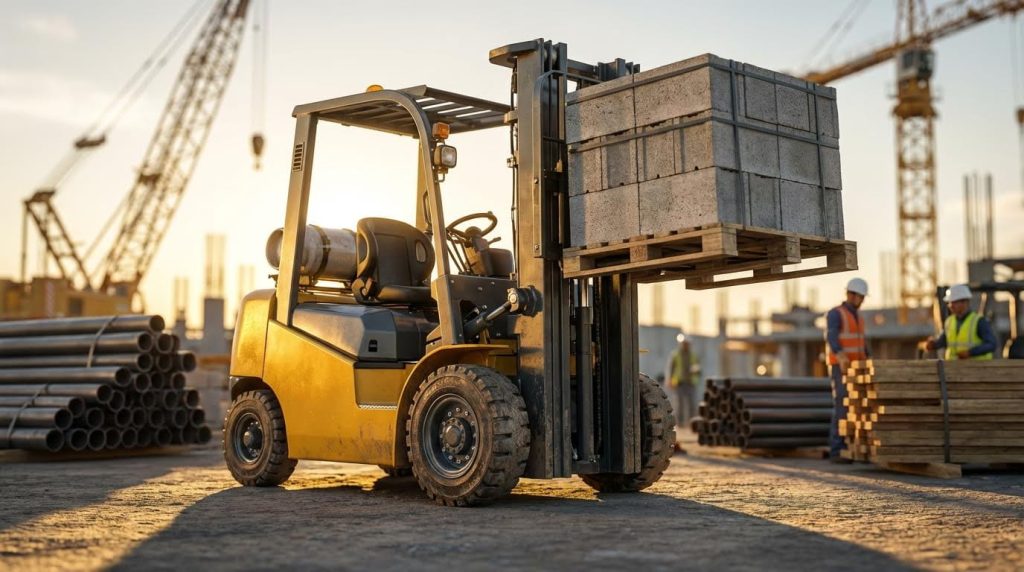
Pre‑shift inspections are the first step in how to operate an electric forklift safely and legally. They catch defects before they become accidents, protect components from premature failure, and prove compliance with site rules. Every check should be systematic, documented, and repeated at the start of each shift. If a defect affects safety, the truck does not move until it is fixed.
Daily walk‑around and structural inspection
Do this walk‑around before you touch the key. Follow the same pattern every time so you do not miss items.
- Confirm the truck is parked safely: forks down, parking brake set, key removed, mast vertical.
- Check for visible damage, leaks, or loose parts under and around the truck (oil, hydraulic fluid, battery electrolyte). Pre-use inspections must identify leaks and obvious defects
- Inspect overhead guard, chassis, counterweight, and mast structure for cracks, bends, or missing fasteners.
- Examine forks for cracks, bends, mismatched fork lengths, or damaged tips and heels. Fork damage is a critical inspection item
- Check mast channels, chains, and rollers for wear, kinks, missing pins, or dry spots.
- Inspect tires for cuts, chunking, flat spots, embedded debris, or low inflation on pneumatics. Daily inspections must cover tires and visible components
- Verify nameplate and safety labels are present and readable.
- Confirm seat, seat belt, and handholds are secure and undamaged.
Typical daily structural checklist (quick view)
| Area | What to check | Typical defect action |
|---|---|---|
| Forks | Cracks, bends, uneven height | Tag OUT OF SERVICE for cracks or severe bend |
| Mast & chains | Cracks, loose pins, chain wear/kinks | Report to maintenance; stop use if structural damage |
| Tires | Wear, cuts, low pressure, missing lugs | Repair/replace before use if structural cord visible |
| Overhead guard | Distortion, cracked welds | Out of service until repaired |
| Hydraulic lines | Leaks, abrasion, loose fittings | Out of service if any active leak |
If you find any defect that could affect lifting, steering, or braking, tag the truck “OUT OF SERVICE,” remove the key, and report it. Critical defects require immediate lockout and documentation
Brake, steering, and hydraulic performance tests
Once the walk‑around is complete and the area is clear, carry out controlled functional tests. This is a core part of learning how to operate an electric forklift without surprises during the shift.
| System | Test method | What “OK” looks like | When to stop and report |
|---|---|---|---|
| Service brake | Drive slowly forward in a clear area and apply brake firmly | Straight, predictable stop in reasonable distance, no pull or noise Brake testing must verify stopping distance and straight-line braking | Pedal sinks, spongy feel, long stopping distance, veering |
| Parking brake | On slight incline, apply parking brake only | Truck holds without rolling Parking brake should hold on a grade | Any movement or weak lever feel |
| Steering (static) | Turn wheel lock‑to‑lock while stationary | Limited free play, smooth movement, no knocks Steering play should be small and consistent | Excessive play, stiffness, grinding noises |
| Steering (dynamic) | Drive slowly, steer left/right in open space | Truck responds promptly, tracks as expected | Delayed response, wandering, abnormal effort |
| Lift hydraulics | Raise mast to near full height with empty forks, hold ~30 s | Minimal or no fork drift, smooth travel up/down Hydraulic tests should check for drift and jerky motion | Noticeable drop, jerks, unusual pump noise, leaks |
| Tilt & attachments | Cycle tilt forward/back, side-shift both ways if fitted | Smooth, quiet, full travel both directions | Sticking, partial travel, visible hose movement or leaks |
- Keep speed very low during tests and ensure the route is clear of people and obstacles.
- Never test hydraulic capacity with an overload; use an empty or rated load only.
- If any primary control (drive, steer, brake, lift) does not feel normal, stop and report immediately.
Safety devices, alarms, and battery condition checks
Electric forklifts depend on electronic safety devices and the traction battery. A failure in either can turn a normal lift into a high‑risk event.
- Test horn, lights, and warning beacons; they must be loud/bright enough for the environment. Pre-shift checks must include horns, lights, and alarms
- Verify backup alarm and any directional indicators when selecting reverse.
- Confirm operator‑presence systems, seat switch, and deadman brake stop motion when you leave the seat. Modern trucks use operator presence systems to disable motion when unseated
- Check that emergency power disconnect operates and is accessible.
- Inspect the battery compartment for secure mounting, intact cables, and closed covers.
- Verify battery charge level is adequate for the shift and that any charger leads are disconnected and stowed.
- On flooded batteries, check electrolyte/water level if this is part of your role and you are trained. Battery checks should cover electrolyte level, charge, and restraint systems
- Keep flames and sparks away from the battery area and follow spill procedures if you see leaks. Battery leaks require spill response and specialist attention
Documentation and handover essentials
Record every pre‑shift inspection on the approved form. Note any defects clearly and mark whether the truck is safe or “OUT OF SERVICE.” Critical faults require tagging, key removal, and supervisor notification. Defects must be documented and trigger follow-up maintenance At shift handover, communicate any open issues to the next operator and confirm that battery charge and defect status are understood. This closes the loop between inspection, operation, and maintenance and is part of professional, safe practice in how to operate an electric forklift.
Final Thoughts On Compliance, Training, And TCO Control
Safe electric forklift operation depends on three linked pillars: control knowledge, disciplined inspections, and repeatable driving habits. When operators understand steering, hydraulics, and electric drive behaviour, they keep loads low, movements smooth, and tail‑swing predictable. That control discipline reduces tip‑over risk, rack strikes, and battery abuse.
Pre‑shift walk‑arounds and functional tests then act as the safety net. They catch structural cracks, brake fade, steering play, leaks, and weak batteries before the truck enters traffic. Tagging unsafe trucks out of service protects people first and also prevents small defects from becoming high‑cost failures.
In real warehouses, these engineering principles translate into slow, planned manoeuvres, correct mast tilt, and strict respect for capacity plates and aisle limits. Managers should hard‑wire this into training, supervision, and checklists, not rely on “common sense.”
The best practice is clear. Treat every electric forklift as a system that ties geometry, stability, hydraulics, and electrics together. Train operators to read that system, enforce documented pre‑shift checks, and back this with prompt maintenance. Sites that follow this model cut incidents, extend component life, and lower total cost of ownership. Atomoving equipment then delivers its full value over a longer, safer service life.
Frequently Asked Questions
How to Operate an Electric Forklift Safely?
Operating an electric forklift involves specific steps to ensure safety and efficiency. Always travel in reverse, whether the forklift is loaded or empty. Lower the forks and position them under the load, then lift the forks to raise the load from the ground. Move slowly and maintain a steady speed suitable for the load size and surrounding personnel. Safety Guidelines.
- Always travel in reverse direction.
- Lower forks before positioning under the load.
- Lift forks slowly and steadily.
- Maintain a safe speed based on load and environment.
Do You Need Training to Operate an Electric Forklift?
Yes, proper training is essential to operate an electric forklift safely. Training typically includes formal instruction, practical hands-on practice, and a performance evaluation. Certification courses are available online, allowing you to complete the formal instruction portion at your own pace. Certification Details.
- Complete formal instruction.
- Engage in practical training.
- Pass a performance evaluation.