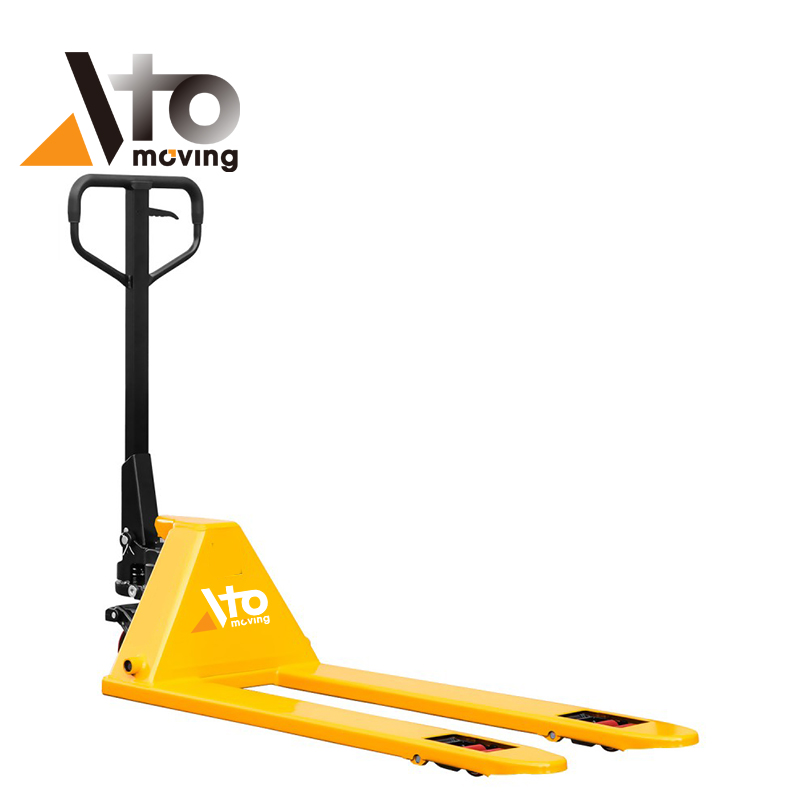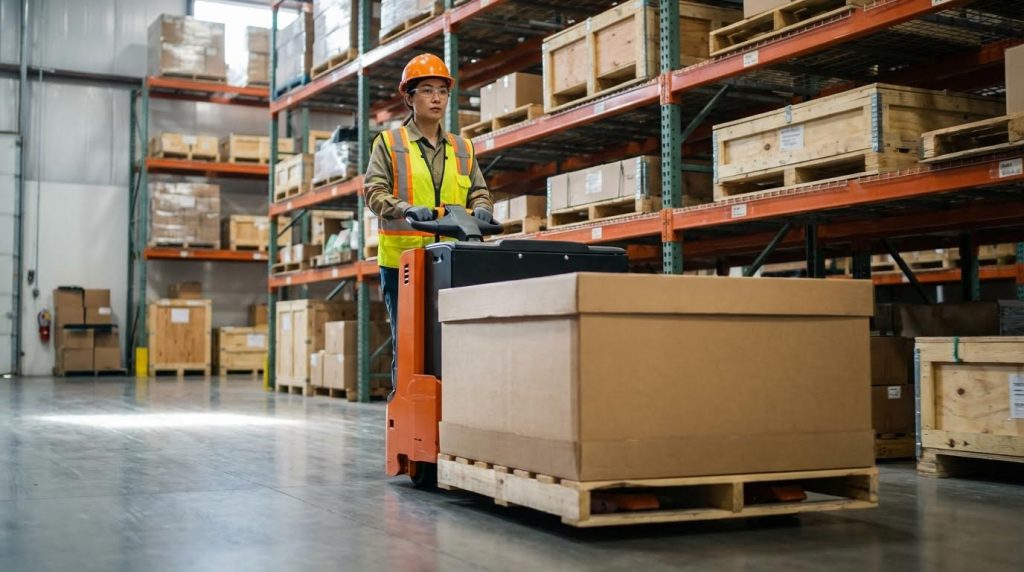
This pallet jack repair guide shows you exactly how to fix pallet jack problems by system: hydraulics, linkages, forks, and wheels. You will learn how to diagnose no‑lift, sinking, and steering issues, then apply step‑by‑step fixes using basic workshop tools. Clear inspection and maintenance routines help you cut downtime, extend service life, and decide when replacement is safer than repair.
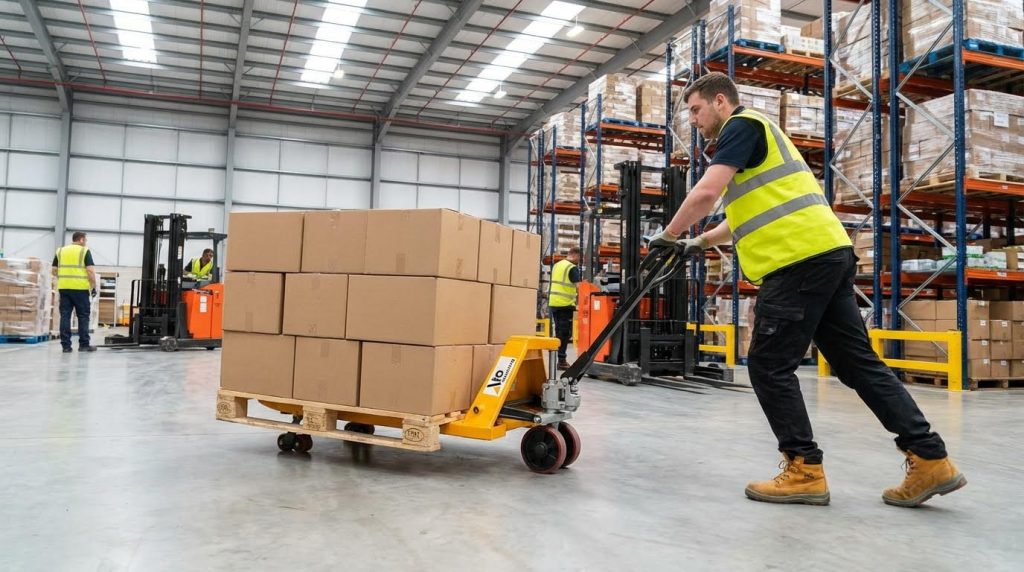
Core Pallet Jack Systems And Typical Failure Modes
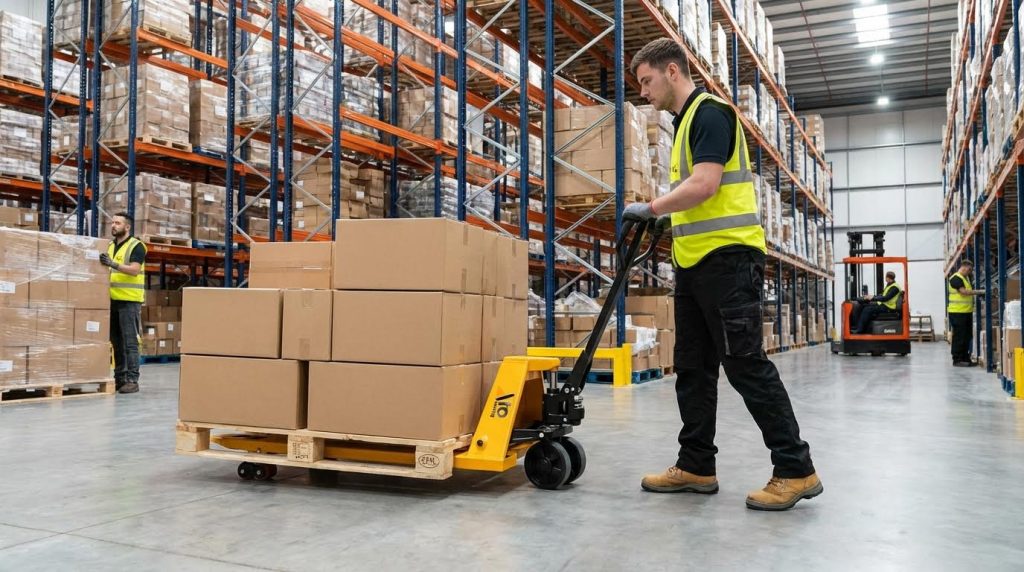
Core pallet jack failures almost always trace back to the hydraulic circuit or the mechanical linkage, so understanding these two systems is the foundation of how to fix pallet jack problems safely and quickly. This section maps each symptom to its most likely root cause so you can decide whether bleeding, adjustment, or parts replacement is needed before calling in outside service.
| System | Typical Failure Mode | Main Symptom | Usual Root Cause | Operational Impact |
|---|---|---|---|---|
| Hydraulic circuit | No lift / weak lift | Forks will not rise or rise slowly | Air in oil, low/contaminated oil, worn seals | Jack unusable at dock; forces manual handling |
| Hydraulic circuit | Sinking under load | Forks slowly drop while loaded | Internal leakage past O-rings, check valves | Load instability; unsafe for staging or transport |
| Mechanical linkage | No pump action | Handle moves but jack does not lift | Misadjusted or worn pins, links, slots | Loss of productivity; operators overexert |
| Mechanical linkage | Poor lowering control | Jerky or delayed lowering | Wear in lower lever, bushings, cable/brake issues | Risk of dropped loads and pallet damage |
💡 Field Engineer’s Note: When a jack “dies” on the floor, 70–80% of the time the fix is in the hydraulic circuit or handle linkage, not the forks or wheels—diagnose those two first before assuming the unit is scrap.
Hydraulic circuit components and no‑lift issues
The hydraulic circuit is the heart of every manual pallet jack, and most no-lift complaints come from air, low oil, or worn seals rather than “bad hydraulics” in general. Knowing these parts and failure modes lets you decide when a quick bleed is enough and when a full strip-down is justified.
- Pump piston and cylinder: Converts handle strokes into oil pressure – Generates the force that actually lifts 2,000–3,000 kg loads.
- Reservoir: Stores hydraulic oil – Low level introduces air pockets that kill lifting stroke.
- Check valves: One-way valves directing oil to the lift cylinder – Contamination here causes weak lift or sinking.
- Seals and O-rings: Elastomer barriers around pistons and valve cartridges – Wear creates internal bypass and external leaks.
- Lift cylinder (ram): Single-acting cylinder that raises the frame – Scoring or seal failure leads to jerky or no lift.
In real workshops, “no-lift” or “weak lift” almost always falls into three buckets: trapped air, low or dirty oil, or seal failure. Trapped air in the hydraulic circuit frequently causes a no-lift condition; you can often restore function by bleeding the system with 15–20 unloaded handle strokes under no load, as described in field repair guides for pallet jack repair and hydraulic maintenance. If that does not restore full lift, you are usually looking at worn O-rings or rod seals that allow internal bypass and external leaks, which is why a good how to fix pallet jack procedure always includes a close inspection for oil around the pump body and ram.
| Symptom | Likely Hydraulic Cause | Quick Check | Typical Corrective Action | Operational Impact |
|---|---|---|---|---|
| Handle pumps freely, forks do not rise | Air in circuit or very low oil level | Check reservoir level and foam/milkiness | Bleed 15–20 strokes; top up oil 25–40 mm below filler | Often back in service within minutes |
| Forks rise but cannot reach full height | Low oil volume or internal leakage | Inspect for external leaks and oil stains | Top up oil; if no change, plan seal/O-ring replacement | Limits usable lift; unsafe for high pallets |
| Forks lift then slowly sink under load | Worn O-rings, rod seal, or check valve leak | Lift a moderate load and hold for 60–120 s | Strip valve cartridge, replace O-rings and seals | Serious safety risk; jack should be tagged out |
| Jerky or noisy lift, cavitation sounds | Contaminated or aerated oil | Inspect oil colour: dark, milky, or with particles | Drain, clean reservoir, refill with clean ISO-grade oil | Accelerates wear if ignored |
Correct seal repair is more involved but still workshop-level work. Field procedures describe safely supporting the jack, draining hydraulic fluid, removing the valve cartridge, and replacing the O-ring with a size matched to the equipment before refilling with compatible hydraulic oil for typical pallet jacks. Both major guides stress using ISO-grade hydraulic oils and avoiding contamination, because incorrect fluids or dirt significantly accelerate seal degradation and shorten service life in hydraulic systems.
How hydraulic oil condition affects no-lift faults
Low hydraulic oil levels reduce available stroke volume and introduce air pockets into the pump inlet, which feels like “dead” handle travel. Dark, milky, or particle-laden oil indicates contamination and often coincides with sticking check valves and erratic lifting, so a complete oil change and reservoir cleaning is usually more effective than just topping off.
💡 Field Engineer’s Note: If a jack has chronic no-lift complaints after multiple bleeds, stop cycling it—each stroke with aerated or dirty oil sandblasts the pump and valves. Strip it once, clean everything, and standardize the site on a single ISO hydraulic grade.
Mechanical linkage wear and misadjustment
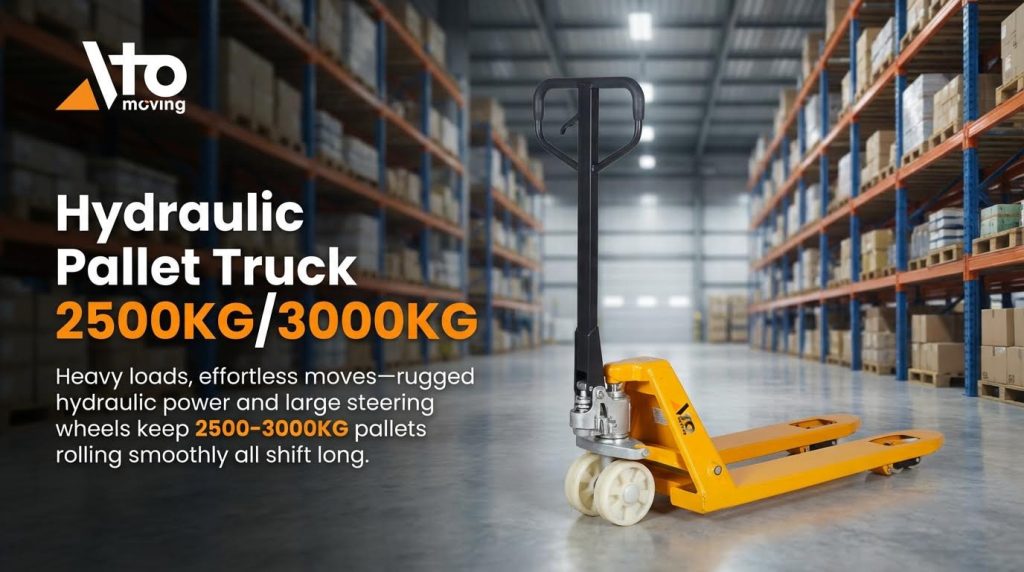
The mechanical linkage between the handle and the pump/lower valve is the second major system that makes a “good” hydraulic unit behave like it has failed. Excess play, bent levers, or misadjusted linkages waste stroke, so the pump never gets a full shot of oil even though the hydraulics are healthy.
- Control handle and pivot pins: Transfer operator force to the pump – Wear here creates free play and delayed response.
- Lower lever and release linkage: Controls the lowering valve – Misadjustment can hold the valve slightly open and block lifting.
- Brake and cable assemblies (if fitted): Hold the jack on slopes – Corrosion or stretch reduces holding force on inclines.
- Load rollers and steer wheels: Support and guide the jack – Excess wear or flat spots increase rolling resistance and instability.
Wear at pivot pins, bushings, and the lower lever produces excessive free play, imprecise lowering control, or failure to engage the pump stroke. Both logistics repair references highlight checking for looseness, missing retaining pins, and worn slots, then restoring function by replacing pins, tightening fasteners, and lubricating joints with suitable oils or greases in pallet jack handles and linkage systems. If you are working through how to fix pallet jack problems where the handle feels “sloppy,” this linkage zone is your first inspection point.
| Observed Symptom | Probable Mechanical Cause | Inspection Focus | Corrective Action | Best For… |
|---|---|---|---|---|
| Handle moves 50–100 mm before jack reacts | Worn pivot pins/bushings, elongated holes | Check pin fit, oval holes, missing clips | Replace pins/bushes, re-tension fasteners, lubricate | Restoring precise lift/lower control |
| Jack will not lift, but hydraulics test OK | Lowering linkage holding valve slightly open | Observe valve lever when handle is in “lift” | Adjust linkage length; free seized joints | Solving “mystery” no-lift with good hydraulics |
| Jack drifts on inclines | Brake cable stretch, worn pads, corrosion | Brake engagement test under load | Adjust cable, clean linkage, replace pads if glazed | Ramps, truck tail-lifts, sloped docks |
| Heavy to push / steer, vibration at handle | Flat-spotted or undersized wheels and rollers | Measure wheel diameter loss; check bearings | Replace wheels if >6 mm diameter loss; renew bearings | Improving ergonomics and floor protection |
Guidance on mechanical linkage maintenance also points out that wheels and axles experience abrasion, flat-spotting, and bearing wear, particularly on rough floors or under shock loading. Upgrading to polyurethane wheels reduces rolling resistance and extends life, but you must verify axle fit and bearing compatibility when you swap components for wheel and axle care and fork and wheel upgrades. Good linkage and wheel condition is not just a comfort issue: excessive free play and poor braking directly affect stopping distance and load stability in tight warehouse aisles.
When to replace wheels and rollers
Mechanical wear guidelines recommend replacing load rollers and steer wheels once diameter loss exceeds about 6 mm, or when flat spots and chunking appear. At that point rolling resistance and vibration climb sharply, operators exert more force per move, and the jack becomes harder to control around 2,000–3,000 kg loads, even if the hydraulics are perfect.
💡 Field Engineer’s Note: If a jack “won’t lift” but the handle feels vague or notchy, I always disconnect the linkage at the pump and test the pump directly. If the pump lifts cleanly, you have a cheap linkage fix instead of an expensive hydraulic rebuild.
Step‑By‑Step Repairs For The Most Common Problems
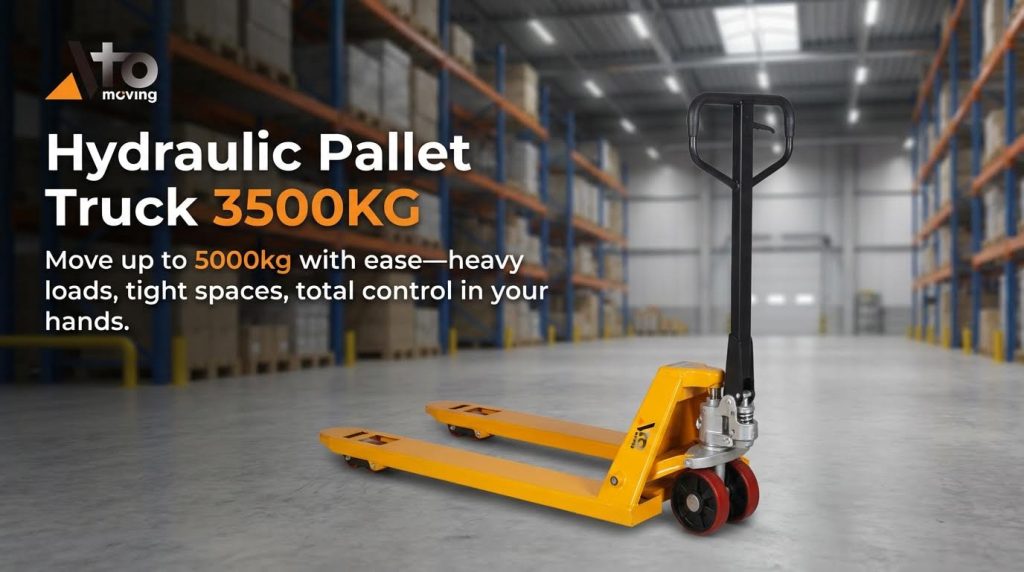
This section explains how to fix pallet jack failures by working through hydraulic, seal, fork, and wheel issues in a safe, methodical order. Follow these steps before deciding the unit is beyond economic repair.
- Goal: Restore safe lifting, rolling, and steering – Minimizes downtime and avoids unnecessary replacement.
- Scope: Manual pallet jacks up to about 2,500–3,000 kg – Covers the vast majority of warehouse units.
- Method: Start with simple bleed and oil checks, then move to seal, fork, and wheel work – Saves time and labor cost.
💡 Field Engineer’s Note: Before tearing into hydraulics, always check that the control lever is fully in the “lift” position and that the load is under 70–80% of rated capacity. Mis-set levers and overloaded pallets waste more diagnostic time than failed pumps.
Bleeding air and restoring hydraulic lift
Bleeding trapped air is usually the first and fastest answer when you are working out how to fix pallet jack no‑lift problems. Air compresses instead of transmitting pressure, so the handle moves but the forks do not rise.
- Step 1: Remove all load – Prevents damage and lets air move freely back to the reservoir.
- Step 2: Set the control to “lower” or “drive” as specified – Opens the correct valve path for air to purge.
- Step 3: Pump the handle 15–20 full strokes with no load – Standard bleeding method to push air into the reservoir and restore lift documented in field repair guides.
- Step 4: Test lift with a moderate load (about 500–800 kg) – Confirms that the jack can raise and hold a realistic pallet.
- Step 5: If lift is still weak, check hydraulic oil level and look for external leaks – Low oil or seal failure often sits behind repeated air ingress as maintenance references explain.
How to check hydraulic oil level safely
Lower forks fully, park on level ground, clean around the reservoir plug, then remove the plug. The oil should typically sit about 25–40 mm below the top, not foamy or milky, before you attempt more bleeding or topping up.
- Symptom: Pump handle moves, forks stay down. – Most likely trapped air, low oil, or a mis-set control lever.
- Symptom: Forks lift but then slowly sink. – Often points to internal leakage past seals or contaminated oil.
💡 Field Engineer’s Note: If you need more than two full bleed cycles (2 × 20 strokes) to restore lift, stop. Persistent aeration usually means a suction-side leak or badly worn seals; continued pumping just accelerates wear on the pump piston.
Replacing O‑rings, seals, and hydraulic oil
Replacing O‑rings, seals, and hydraulic oil is the standard next step when bleeding does not restore lifting capacity or when you see visible oil leaks. Seals control internal bypass; once they wear, the jack will never reach full height or hold a load.
- Step 1: Secure and support the pallet jack on blocks with forks lowered – Prevents movement and releases stored hydraulic energy.
- Step 2: Drain hydraulic oil from the reservoir into a clean container – Removes contaminated fluid and lets you work without spills as described in service procedures.
- Step 3: Remove the valve cartridge or pump assembly following the manufacturer’s sequence – Avoids bending rods or scratching bores.
- Step 4: Identify and remove worn O‑rings and rod seals – Look for flattened sections, cracks, or hard, shiny surfaces that indicate aging and bypass.
- Step 5: Match new O‑rings and seals to the original sizes and profiles – Incorrect cross‑section or hardness causes new leaks and poor valve seating according to maintenance guidance.
- Step 6: Lightly lubricate new seals with clean hydraulic oil and reassemble – Prevents cutting the seals during installation and improves first‑stroke sealing.
- Step 7: Refill with the correct ISO‑grade hydraulic oil to the specified level – Wrong or dirty oil rapidly degrades new seals and reduces service life as field experience shows.
- Step 8: Bleed the system again with 15–20 no‑load strokes – Clears assembly air and confirms a solid hydraulic column.
| Condition | Likely Cause | Recommended Repair | Operational Impact |
|---|---|---|---|
| No‑lift after bleeding | Bad O‑rings / rod seals | Replace seals and oil | Restores full lift height and rated capacity. |
| Oil on floor under pump | External seal leak | Seal kit plus oil change | Eliminates slip hazard and environmental mess. |
| Milky or dark oil | Water / particle contamination | Drain, clean, refill with ISO oil | Protects pump and cylinder from scoring. |
Choosing the right hydraulic oil
Most manual pallet jacks run well on ISO-grade hydraulic oils selected for ambient temperatures around 0–40 °C. Standardizing one compatible oil across your fleet simplifies inventory and reduces seal failures caused by fluid mismatch.
💡 Field Engineer’s Note: When you are learning how to fix pallet jack hydraulics, never mix “mystery” shop oil into the reservoir. Mixed fluids can swell seals unevenly, causing a temporary improvement followed by a sudden leak a few weeks later.
Fork, wheel, and axle inspection and renewal

Fork, wheel, and axle work focuses on restoring safe load support and low rolling resistance once the hydraulic side is healthy. These parts take the direct abuse from 2,500–3,000 kg pallets and rough floors.
- Forks: Carry the load and must stay straight – Bent or cracked forks increase tipping risk and can justify removing the jack from service as inspection guides warn.
- Wheels and rollers: Provide rolling contact – Flat‑spotted or worn wheels make the jack feel “heavy” and unstable.
- Axles and bearings: Keep alignment and allow free spin – Worn bearings increase push force and can cause steering drift.
- Step 1: Visually inspect forks along their full length and at weld toes – Look for cracks, bends, or twisted blades that change load distribution as weekly inspection routines recommend.
- Step 2: Use a straightedge along the fork top and sides – Detects camber, sag, or twist that may not be obvious by eye.
- Step 3: If forks show significant bending or cracking, tag the jack out of service – Structural damage is rarely economical to repair and compromises safety.
- Step 4: Chock the jack, then remove load rollers and steer wheels by pulling their axles – Prevents movement and allows safe wheel removal as service procedures describe.
- Step 5: Inspect wheel tread for flat spots, chunking, or severe wear – More than a few millimetres of diameter loss or deep damage warrants replacement.
- Step 6: Check bearings and fork tips for damage, corrosion, or misalignment – Bearings must spin freely with no grinding or side play as maintenance guidance notes.
- Step 7: Fit new wheels (polyurethane or nylon as appropriate) and verify axle and bearing compatibility – Upgrading to polyurethane can reduce rolling resistance and extend wheel life on many floors according to field reports.
- Step 8: Tighten all axle fasteners and perform a wheel spin and steering test under load – Confirms alignment and that the jack tracks straight at typical aisle speeds.
| Component | Check | Action | Best For… |
|---|---|---|---|
| Forks | Bends, cracks, twisted blades | Remove from service if significant defects | High‑capacity lifts up to 3,000 kg where failure is critical. |
| Load rollers | Flat spots, chunking | Replace; consider polyurethane | Concrete warehouse floors and frequent long pushes. |
| Steer wheels | Uneven wear, bearing noise | Replace wheel and bearings | Busy docks needing light steering effort. |
When to choose polyurethane wheels
Polyurethane wheels usually roll easier and last longer than hard plastic on smooth concrete. They are a strong choice for loads up to typical pallet jack ratings and for operators pushing long distances, but always confirm axle and bearing fit first.
💡 Field Engineer’s Note: Many “hard‑to‑push” complaints are solved by wheel and bearing renewal, not by replacing the whole jack. If the forks are straight and hydraulics hold a load, a full wheel set is often the most cost‑effective fix in the shop.
Preventive Maintenance, Safety, And Cost Control
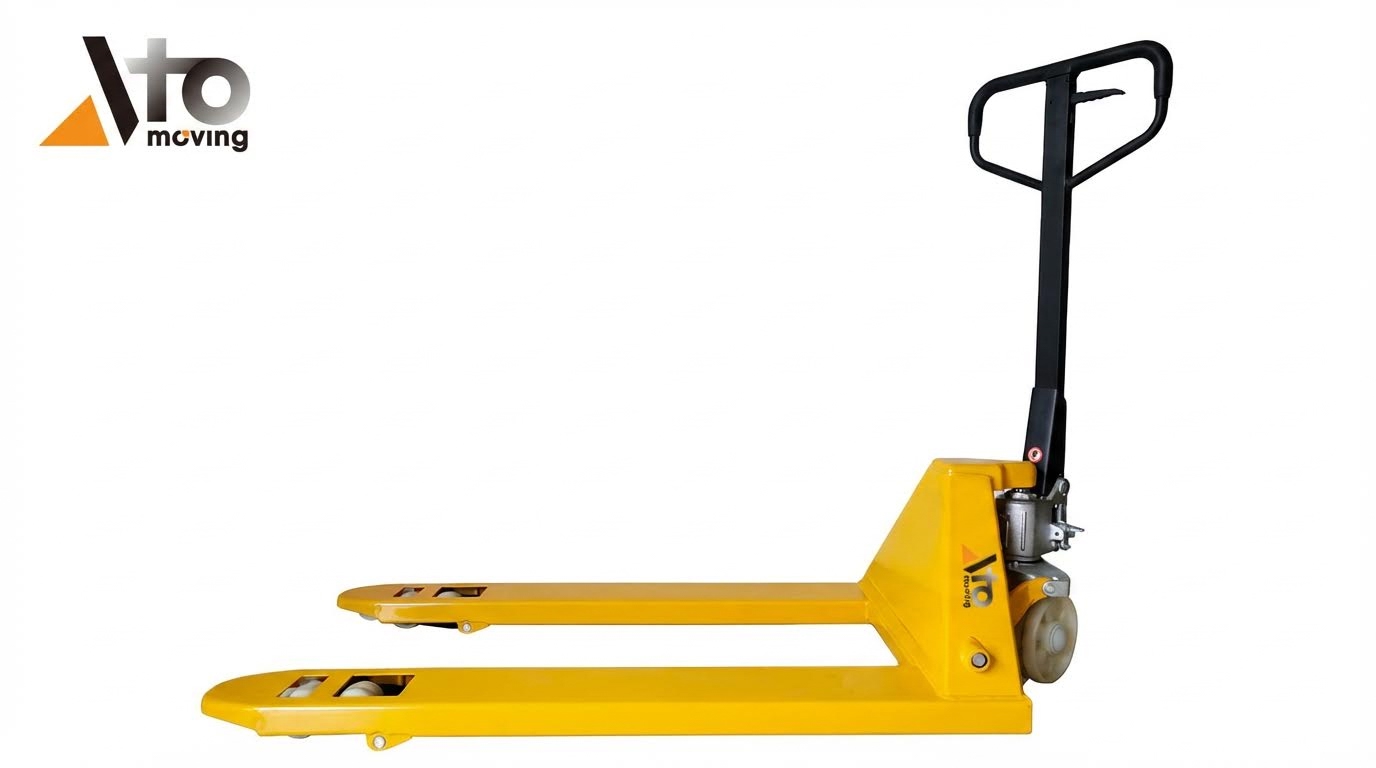
Preventive maintenance is the most reliable way to reduce manual pallet jack failures, improve safety, and cut total repair costs when planning how to fix pallet jack issues in busy warehouses. Simple daily checks, correct lubrication, and corrosion control stop most breakdowns before they start.
- Goal: Keep the jack structurally sound and leak-free – Maximizes safe lifting capacity and uptime.
- Focus: Short daily checks, deeper weekly checks, and monthly cleaning/corrosion protection – Finds problems early, when they are cheap to fix.
- Cost Control: Standard fluids and scheduled inspections – Prevents seal damage and unplanned service calls.
💡 Field Engineer’s Note: In multi-shift warehouses, a disciplined daily/weekly inspection program usually catches over 90% of developing issues like wheel wear and early hydraulic leaks before they become expensive failures.
Daily and weekly inspection checklists
Daily and weekly inspection checklists give operators a fast, repeatable way to spot developing faults long before the low profile pallet jack becomes unsafe or unusable. This is the practical front line of how to fix pallet jack problems proactively.
| Interval | Task | What To Check/Do | Typical Time | Operational Impact |
|---|---|---|---|---|
| Daily | Walk-around check | Fork straightness, visible cracks, wheel damage, handle integrity | < 1 minute | Catches bent forks and broken wheels before loading |
| Daily | Debris removal | Clear string, film, and dirt from wheels and axles | 1–2 minutes | Prevents wheel jamming and flat-spotting |
| Daily | Hydraulic function test | Lift and hold a moderate load; watch for sinking or jerky lowering | 2–3 minutes | Early warning of air ingress or seal failure during routine use |
| Weekly | Wheel spin test | Raise jack, spin steer and load wheels; listen/feel for roughness | 2–3 minutes | Identifies bearing wear before wheels seize |
| Weekly | Fastener check | Tighten loose bolts, nuts, and axle hardware | 3–4 minutes | Prevents misalignment and sudden component loss |
| Weekly | Basic load test | Lift rated load briefly; check for frame twist, fork deflection, leaks | 3–4 minutes | Confirms structural and hydraulic integrity under real conditions |
- Daily 30‑second walk-around: Look for bent forks, cracked welds, leaking oil, damaged wheels, and loose or broken handles – Stops unsafe trucks from entering service.
- Daily hydraulic check: Lift a moderate pallet and hold for 10–20 seconds – If the load sinks, plan hydraulic bleeding or seal inspection.
- Weekly wheel and axle check: Jack up slightly and spin wheels – Rough rotation or wobble signals bearing or axle wear.
- Weekly structural check: Sight along fork tops with a straightedge – Detects fork twist and camber that increase tipping risk.
- Weekly documentation: Record defects and actions in a logbook or app – Builds history for repair vs replacement decisions.
How these checks help you decide repair vs replacement
Repeated notes of oil leaks, bent forks, or frame distortion in the weekly log usually indicate the jack is nearing end of life and should be replaced, while isolated issues like a noisy wheel or a loose handle are ideal candidates for quick, low-cost repair.
Lubrication, corrosion control, and fluid standards
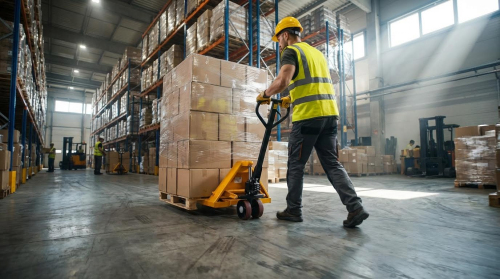
Correct lubrication, corrosion control, and hydraulic fluid standards directly affect how long a drum dolly runs before it needs major repair. Getting these three right is one of the most cost-effective ways to reduce how often you must fix pallet jacks.
| Area | Recommended Product | Typical Interval | Main Risk If Ignored | Operational Impact |
|---|---|---|---|---|
| Wheel axles | Silicone spray | Weekly | High rolling resistance, bearing wear | Harder pushing and shorter wheel life in daily use |
| Pivot joints | Multi‑purpose mineral oil | Weekly | Stiff steering, linkage wear | Smoother steering and more precise lowering control |
| Center pivots / high‑load joints | White lithium grease | Monthly | Accelerated pin and bush wear | Longer life of key load-bearing joints |
| Hydraulic fluid | ISO‑grade hydraulic oil | Level check quarterly; change as required | No‑lift, sinking loads, seal damage | Maintains rated lift and reduces seal failures over the life of the unit |
| Exposed steel surfaces | Corrosion inhibitor | Monthly, after deep cleaning | Rust, pitting, loss of section thickness | Preserves structural capacity in humid/chemical areas |
- Lubrication standards: Use silicone spray on axles, mineral oil on pivots, and white lithium grease on center pivots – Minimizes friction and wear without contaminating the pump.
- Hydraulic fluid checks: Lower forks, clean reservoir area, then verify fluid level against the mark every quarter – Low oil introduces air and reduces lift stroke.
- Air bleeding routine: For no‑lift complaints, cycle the handle 15–20 times under no load with the valve open – Often restores lift by purging trapped air without parts replacement.
- Corrosion control: Once a month, wash under forks, around wheels, and the pump with hot water and mild detergent, dry fully, then apply inhibitor – Slows rust, especially at welds, fork heels, and axle mounts in harsh environments.
- Approved products only: Avoid non‑industrial oils and random greases – Wrong products can swell seals, clog valves, and increase how often you need to fix pallet jacks.
Simple fluid and rust check you can do in 5 minutes
Wipe around the hydraulic ram and pump: if you see fresh oil, plan seal inspection. Check the oil in the reservoir: dark, milky, or gritty fluid means contamination and justifies a full drain, clean, and refill with the correct ISO‑grade hydraulic oil. Look along fork heels and welds for orange rust or flaking; wire-brush, dry, and recoat with inhibitor before more metal is lost.
💡 Field Engineer’s Note: In cold areas near 0 °C, using hydraulic oil with the right viscosity index is critical; oil that is too thick makes the jack feel “dead” on the first strokes and encourages operators to overload or slam the handle, which accelerates linkage and seal failures.
Final Thoughts On Repair Versus Replacement
Effective pallet jack decisions link technical condition to safety, ergonomics, and lifetime cost. The hydraulic circuit, mechanical linkage, forks, and wheels form one system. If any part is weak, the whole jack becomes unsafe or uneconomic to run. Structured diagnostics protect you from guesswork. Start with fast checks such as bleeding air, topping up clean ISO-grade oil, and tightening linkages. These tasks often return a jack to service within an hour and support tight maintenance budgets.
Use inspection data to decide when to stop repairing. Repeated seal failures, chronic oil contamination, bent or cracked forks, and persistent frame distortion signal end of life. At that stage, replacement is usually cheaper and safer than another rebuild. In contrast, wheel sets, bearings, pins, and bushings remain ideal low-cost repairs throughout the jack’s life.
For operations and engineering teams, the best practice is clear. Standardize fluids and parts, enforce daily and weekly checks, and log every defect and repair. Combine that with clear “tag-out” rules for structural damage and sinking loads. This approach keeps your Atomoving pallet jacks lifting at rated capacity, protects operators, and gives you a defensible repair-versus-replacement line for every unit in the fleet.
Frequently Asked Questions
Why is my pallet jack not lifting?
If your pallet jack isn’t lifting properly, it could be due to low hydraulic fluid levels, air trapped in the system, or worn seals and valves. Check these components first to identify the issue. For more details, see Hydraulic Jack Troubleshooting.
How do I reset an electric pallet jack?
To reset your electric pallet jack, turn it off and unplug it from the power source. Press the emergency stop button to release hydraulic pressure, wait 30 seconds, then press the button again to reset. Plug it back in and turn it on. Learn more about this process at Electric Pallet Jack Reset Guide.
What should I do if one side of my pallet jack won’t lift?
If one side of the pallet jack isn’t lifting, it may indicate uneven hydraulic pressure or a mechanical blockage. Inspect both sides for obstructions or leaks. Resetting the system using the emergency stop button might also help resolve the issue.