Walkie stackers look simple, but in law they are treated as powered industrial trucks in many workplaces, which means structured training, evaluation, and documented certification are mandatory in most jurisdictions. If you are asking “do you need a licence for a walkie stacker”, the real answer lies in how regulators classify the equipment, what your employer records, and how often your skills are reassessed. This guide breaks down how rules like OSHA and CSA apply, what a compliant training program must include, and how employers can manage liability while improving safety and efficiency. Use it as a practical reference to align your site procedures, operator training, and documentation with current walkie stacker licensing requirements.

How Regulations Classify Walkie Stackers
Powered industrial truck vs. “simple” pallet jack
Understanding how regulators classify your equipment is the first step to answering “do you need a licence for a walkie stacker.” The key dividing line is whether the machine is a powered industrial truck or a non‑powered hand tool.
- Powered industrial truck (PIT): A mobile, power‑propelled truck used to carry, push, pull, lift, stack, or tier materials, including units controlled by a walking operator. Earth‑moving and over‑the‑road vehicles are excluded. Regulators use this definition for training and licensing rules.
- “Simple” pallet jack: A purely manual pallet jack with no power‑propelled lift or travel. These tools usually fall under general manual handling and safety training, not PIT rules.
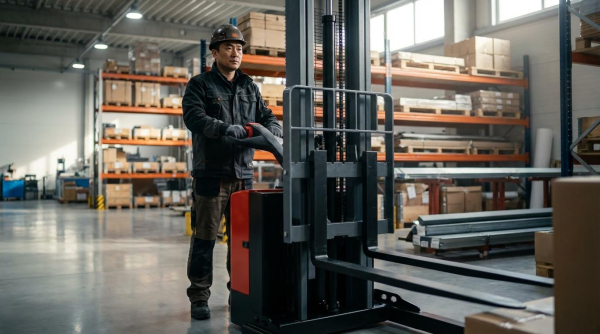
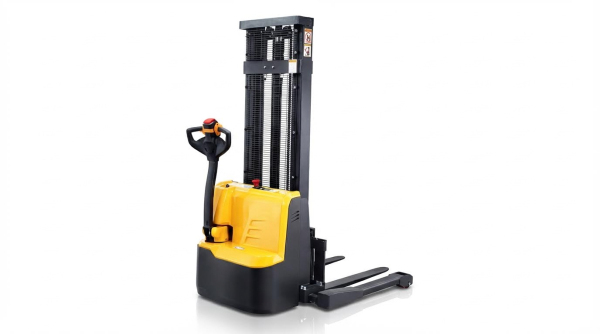
- Walkie stacker: A power‑propelled pedestrian‑controlled truck designed to lift and stack loads. In most regulatory frameworks it fits squarely inside the PIT category, not as a simple pallet jack.
Why the distinction matters in practice
Once a unit meets the powered industrial truck definition, employers must apply PIT operator training, evaluation, and certification requirements. Manual pallet jacks typically do not trigger those specific powered‑truck rules, but still require basic safety instruction.
When a walkie stacker legally requires certification
The practical compliance question is not just “do you need a licence for a walkie stacker,” but under what conditions the law treats the operator as a powered industrial truck driver who must be trained and certified.
| Situation | Typical Regulatory View | Implication for Certification |
|---|---|---|
| Manual pallet jack, no power assist | Not a powered industrial truck | Formal PIT certification usually not required; basic safety training still expected |
| Electric walkie pallet truck (no mast) | Powered industrial truck | Operator training, evaluation, and documented certification required |
| Walkie stacker (powered lift + mast, pedestrian‑controlled) | Powered industrial truck | Full PIT‑style training and certification required before unsupervised use |
| Double pallet walkie or high‑capacity pedestrian stacker | Powered industrial truck, higher risk | Specific training on multi‑pallet handling, stability, and confined‑space maneuvering is required by common training standards |
For powered walkie equipment, most frameworks place the legal duty on the employer to ensure only trained and evaluated operators use the truck. Employers must implement a training program so that only operators who have successfully completed it may operate powered industrial trucks. This includes walk‑behind powered units.
- Training must combine formal theory and practical, hands‑on exercises, with an evaluation of performance in the workplace. Regulators specify both components.
- Certification typically documents the operator’s name, training date, evaluation date, and the identity of the person who conducted the training or evaluation. This record is the legal proof of authorization.
- Some jurisdictions require operators to present their certificate on request to an inspector, with legal consequences if they cannot. Pallet walkie and walkie stacker courses follow this model.
What if only “online training” is completed?
Online modules cover only the classroom portion. Full walkie stacker certification still requires supervised hands‑on operation and a performance evaluation before the operator is considered qualified. Typical walkie stacker programs follow a three‑phase structure.
Regional standards: OSHA, CSA, and other frameworks
While the core safety logic is similar worldwide, the exact answer to “do you need a licence for a walkie stacker” depends on which regulatory framework applies at your site. The main systems align on three ideas: powered industrial truck classification, employer responsibility, and documented competence.
| Region / Framework | Key Standard or Rule | How Walkie Stackers Are Treated | Certification / Evidence |
|---|---|---|---|
| United States | OSHA Powered Industrial Truck rules for general industry | Walk‑behind powered trucks, including walkie stackers, fall under the PIT definition. They are treated the same as other powered trucks for training purposes. | Employer must train, evaluate, and certify operators, and keep records of training and evaluation. |
| Canada (example: industrial facilities) | CSA B335 lift truck standard and provincial regulations (e.g., industrial establishment regulations) | Pallet walkies and walkie stackers are treated as powered lift trucks. Training content includes legislation, pre‑use inspection, capacity, and environment‑related hazards. Training providers align with CSA B335-15. | Operators must complete theory and practical tests. They may be required to show an operator’s certificate to inspectors on request. |
| Australia / similar frameworks | Local WHS regulations and guidance on powered industrial trucks | Walkie stackers are treated as powered industrial trucks, but they typically do not require a national High Risk Work (HRW) licence. Competency is proven through site or provider certification. | Employers must verify competency via written and practical assessments and keep training records, even where no national licence class exists. |
Across these systems, the pattern is consistent: once your equipment is a powered walkie stacker, regulators expect structured training, on‑truck evaluation, and written proof of competence. Whether the document is called a “licence,” “certificate,” or “authorization,” the legal expectation is the same: no uncertified operator should run a powered walkie stacker unsupervised.
How to interpret mixed fleets and grey areas
Sites that use both manual pallet jacks and powered walkie stackers should classify each unit clearly in their safety management system. A simple rule of thumb is that any power‑propelled pedestrian truck that can lift, stack, or transport loads like a forklift should be treated as a powered industrial truck for training and certification purposes.
Mandatory Training, Evaluation, And Certification
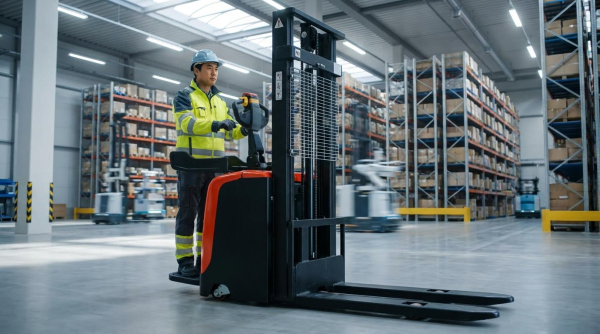
Employer responsibilities and legal liability
Whether you ask “do you need a licence for a walkie stacker” or not, regulators focus on one thing: employers must control who operates powered industrial trucks and how they are trained. Walkie stackers fall under powered industrial truck rules because they are power‑propelled trucks used to carry, push, pull, lift, stack, or tier materials and can be controlled by a walking operator as defined in regulatory guidance. This makes the employer, not the individual operator, the primary legal “duty holder” for safe operation.
- Only trained and successfully evaluated operators may use walkie stackers in the workplace. Regulatory guidance places this obligation on the employer.
- Training can be delivered in‑house or by external providers, but the employer still owns the responsibility for the outcome and for authorizing each operator.
- Employers must ensure operators understand truck controls, brakes, forks, and capacity limits, and can use appropriate PPE such as safety shoes and high‑visibility vests for self‑protection and pedestrian safety as outlined in safety guidance.
- Daily pre‑use inspections of walkie stackers must be carried out and defects reported and corrected before the truck is used, including checks on forks, wheels, controls, brakes, horns, lights, and warning labels per standard safety practices.
- Employers must maintain training records and verify operator competency through written and practical assessments. These records form the “authorization to operate” file for each operator and demonstrate due diligence in case of inspection or incident investigation as described in typical operator training programs.
In some jurisdictions, operators must be able to present their operator’s certificate on demand to a labour inspector, and failure to certify operators can lead to enforcement action, fines, or stop‑work orders for the employer. That is why, in practice, the answer to “do you need a licence for a walkie stacker” is that you need formal employer‑backed certification even where no national high‑risk licence card is issued.
Key legal‑risk scenarios for employers
Legal exposure increases sharply if: an untrained operator is involved in an accident; training records are missing or incomplete; refresher training was not provided after a change in equipment or workplace; pre‑use inspection defects were ignored; or supervisors allowed unsafe practices to continue. Structuring your walkie stacker training and certification system around these risk points significantly reduces liability.
Training structure: theory, practical, and evaluation
Regulatory frameworks expect a blended training model for powered industrial trucks, and walkie stackers are no exception. Required training combines formal instruction, practical exercises, and a documented performance evaluation in the actual or simulated workplace as outlined in powered industrial truck training requirements. This structure answers the practical side of “do you need a licence for a walkie stacker” by defining what an acceptable training pathway looks like.
| Phase | Typical Content | Delivery Method | Assessment Type | Typical Duration* |
|---|---|---|---|---|
| Theory / Classroom | Legislation, safety rules, truck components, capacity and stability, hazard awareness, pedestrian safety, pre‑use checks | Instructor‑led lecture, presentation, or online module with videos and discussions per training requirements | Written or online test | From 1.5–3 hours for focused walkie/pallet sessions, up to most of a workday for full novice courses per example course durations |
| Practical / Hands‑on | Controls, start‑up/shut‑down, forward/reverse travel, confined‑space maneuvering, stacking/unstaking, battery charging, parking, emergency response | On‑truck practice in a safe area under direct instructor supervision as described for pallet walkie practical training | Instructor observation checklist | Often a few hours; many walkie stacker courses for experienced staff are completed within a single half‑day session based on typical session structures |
| Performance Evaluation | Realistic work tasks: picking up, transporting, and placing loads; operating in aisles; working near pedestrians; following site rules | Observed operation in the actual or closely simulated workplace | Formal evaluation against safety and efficiency criteria, often with pass/fail scoring required for powered industrial trucks | Typically under 1 hour per operator, depending on site complexity |
*Durations vary with operator experience, group size, and site complexity. Many walkie stacker courses for experienced staff last about 3 hours with small groups of up to five operators per session as seen in typical training offerings.
- Online or e‑learning modules can cover only the classroom component. Full certification still requires supervised hands‑on practice and a workplace performance evaluation, so “online only” does not answer the regulatory expectation for a walkie stacker licence or authorization as noted in training guidance.
- Common theory topics include warehouse fundamentals, safe stacking and palletizing, stability and capacity, maintenance basics, pre‑operation inspections, safe driving procedures, and battery charging as outlined in walkie stacker course content.
- Typical assessment structures require passing both a written test and a practical driving test before the operator is certified or issued an operator card for walkie stackers or pallet walkies in line with common industry practice.
What must be documented for certification?
Certification records normally include: operator’s full name; date of training; date of evaluation; type or class of truck (e.g., pedestrian walkie stacker); the name or identity of the person who conducted the training and evaluation; and the outcome (pass/fail). This documentation confirms that the operator has been trained and evaluated according to powered industrial truck regulations and internal company rules as required for certification.
Refresher training and change-of-equipment rules
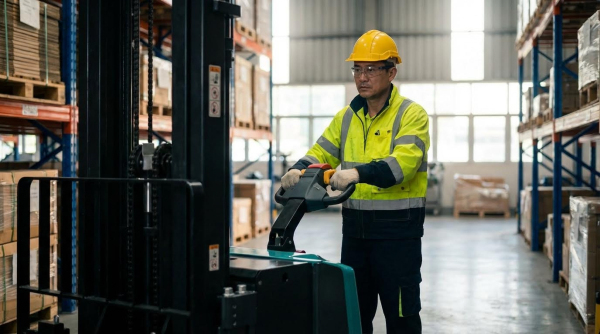
Licensing and certification for walkie stackers are not “train once and forget.” Regulations and best‑practice standards require periodic evaluations and targeted refresher training to keep operators competent over time. Evaluations must occur at least every three years, and more often whenever specific risk triggers occur for powered industrial truck operators as detailed in training guidance.
- Refresher training is required if an operator: operates unsafely; is involved in an accident or near‑miss; receives a poor evaluation; is assigned to a different type of truck; or if workplace conditions affecting safe operation change (for example, new racking layouts, tighter aisles, or different floor conditions) per refresher training rules.
- After any refresher training, the employer must re‑evaluate the operator’s performance in the workplace and update certification records to show the new evaluation date and outcome as required for powered industrial trucks.
- Regular refresher courses also reinforce safe operating techniques, inspection habits, and awareness of new models or technologies, such as updated battery systems and control features as recommended in safety guidance.
| Trigger Event | Required Employer Action | Impact on Walkie Stacker “Licence” / Authorization |
|---|---|---|
| Scheduled 3‑year interval reached | Conduct formal performance evaluation; provide refresher theory/practical if gaps are found | Re‑authorization based on evaluation; records updated with new evaluation date per evaluation frequency requirements |
| Accident or near‑miss involving a walkie stacker | Investigate; provide targeted refresher focusing on root causes (e.g., speed, visibility, stability) | Operator may be temporarily de‑authorized until refresher and successful re‑evaluation are completed |
| Unsafe operating behavior observed | Stop unsafe work; coach immediately; schedule formal refresher training and evaluation | Authorization conditional on satisfactory post‑refresher performance |
| Change of truck type or major attachment | Provide training specific to the new walkie stacker model, controls, capacity, and stability characteristics | Authorization updated to include the new equipment; old authorization may not cover different truck types as required when equipment changes |
| Significant change in workplace conditions | Brief and train operators on new hazards (e.g., new traffic routes, slopes, congestion, or racking) | Existing authorization remains valid only if operators are trained and competent in the changed environment |
For employers and operators asking “do you need a licence for a walkie stacker,” the practical compliance answer is that you need an ongoing training, evaluation, and refresher system that meets powered industrial truck rules. The physical licence card or certificate is only evidence; the real requirement is documented, current competence on the specific walkie stackers and conditions in your workplace.
Designing An Effective Walkie Stacker Training Program
An effective walkie stacker program answers the real-world question “do you need a licence for a walkie stacker” by proving that operators are trained, evaluated, and documented. The goal is simple: zero incidents, maximum throughput, and clear evidence of compliance if a regulator or insurer asks to see your records.
Core technical topics: stability, capacity, and load handling
These are the “physics” modules of your program. They turn checklists and load charts into instinctive, safe habits on the floor.
- Explain why walkie stackers are powered industrial trucks and how that triggers formal training and evaluation requirements under OSHA rules.
- Use real loads, pallets, and racking from your site to make the theory credible.
- Drill operators on reading and respecting the nameplate and load chart, not “gut feel.”
Key concepts to cover in the classroom
In the classroom or e‑learning portion, link each topic to specific incidents you want to avoid. Keep modules short and reinforce them during practical sessions.
Focus your technical section around three pillars.
- Stability
- Center of gravity movement with mast raised, forks tilted, or load offset.
- Truck “stability triangle” and why side pulls, ramps, and tight turns are high risk.
- Effect of floor conditions (wet, uneven, dock plates) on traction and braking.
- Capacity and load charts
- How to read the capacity plate and understand rated capacity vs. actual load.
- Why attachments, long pallets, or high lift heights reduce safe capacity per manufacturer specs.
- Using scales or documentation to confirm load weight before lifting.
- Load handling
- Correct fork spacing and full fork insertion into pallets.
- Low‑height travel position and visibility rules.
- Safe stacking, de‑stacking, and working in tight aisles.
| Technical Topic | Minimum Learning Outcome | How To Train |
|---|---|---|
| Stability basics | Operator can explain how load height and position affect tipping risk. | Short classroom module + demo with marked “stability triangle” on floor. |
| Load capacity limits | Operator can state the truck’s rated capacity and locate the capacity plate. | Walkaround exercise using actual unit and load chart as reference. |
| Safe load handling | Operator can pick up, transport, and place pallets without instability or damage. | Hands‑on practice with instructor, increasing difficulty (heavier, higher, tighter). |
| Stacking practices | Operator stacks to specified height with stable, square loads. | Practical stacking drills using your racking and pallet types as commonly taught. |
Optional advanced modules
For higher‑risk operations (very narrow aisles, double‑pallet handling, cold storage), add advanced stability scenarios, emergency stopping drills, and practice with constrained visibility.
Site‑specific risks, SOPs, and daily inspections
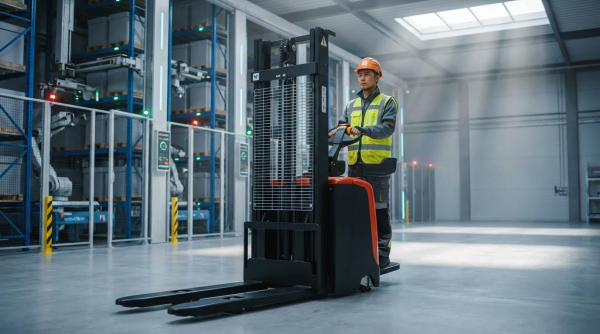
Regulators expect training to cover both truck‑related and workplace‑related topics, not just generic videos under powered industrial truck standards. This is where you translate the question “do you need a licence for a walkie stacker” into “do you understand this facility and this procedure.”
Build this section around three deliverables: a hazard map, written SOPs, and a robust pre‑use inspection routine.
- Site‑specific risks
- Map pedestrian crossings, blind corners, dock edges, ramps, and congestion points.
- Address environmental factors: temperature, lighting, floor condition, noise, and traffic mix.
- Define speed limits, horn‑use rules, and right‑of‑way priorities for shared areas.
- Standard operating procedures (SOPs)
- Start‑up and shutdown sequences, including parking and brake application.
- Travel rules for level floors, slopes, and docks (load uphill on ramps, no turning on slopes) as recommended.
- Pedestrian interaction: eye contact, stopping distances, and exclusion zones.
- Daily inspections
- Walk‑around check of forks, mast, wheels, controls, and structure.
- Function test of brakes, horn, lights, and safety devices before use as part of daily inspection.
- Clear rule: “Tag out and report” if any safety‑critical defect is found.
| Checklist Area | Typical Items | Training Method |
|---|---|---|
| Environment & hazards | Blind spots, dock edges, ramps, pedestrian routes. | Guided walk‑through of the facility with hazard identification exercise. |
| SOPs | Start/stop, parking, speed limits, horn use, ramp rules. | Short toolbox talk + scenario‑based questions. |
| Daily inspection | Forks, mast, controls, wheels, brakes, horn, lights, warning labels. | Hands‑on pre‑shift inspection drill with checklist as recommended. |
| PPE & behaviour | Safety footwear, high‑visibility clothing, no phones while operating. | Induction briefing + supervisor reinforcement on the floor as part of safe operation. |
Recording site‑specific competence
Link each operator’s evaluation sheet to the area they were assessed in (e.g., “Aisles A–D and dock 1–3 only”). This helps prove that their “licence” covers the actual environments they work in, not just a generic training yard.
Integrating batteries, maintenance, and emerging technologies
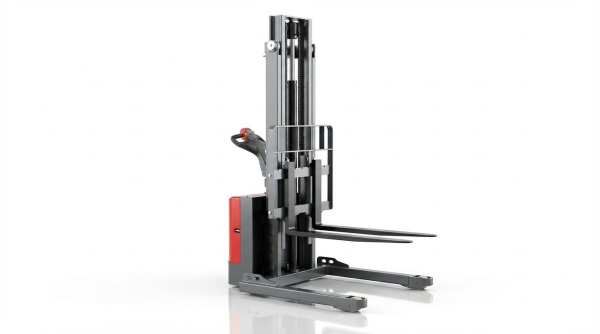
Modern walkie stackers rely on electric power and tight maintenance control. A credible program must show operators can handle batteries safely, spot defects early, and adapt as technology changes.
- Battery handling and charging
- Safe charging procedures, including ventilation, no‑smoking rules, and spill response.
- Correct connection/disconnection sequence to avoid arcing as part of practical training.
- Housekeeping around charging stations (trip hazards, cable routing).
- Operator‑level maintenance
- What operators may adjust (cleaning, visual checks) vs. what only technicians may do.
- Recognizing early signs of problems: unusual noises, leaks, error codes.
- Reporting pathway and lock‑out/tag‑out expectations in standard procedures.
- Emerging technologies and add‑ons
- On‑board cameras, speed‑limiters, proximity sensors, and telematics dashboards.
- How these tools support, but never replace, core safe‑driving habits.
- Need for refresher training when new models or control layouts are introduced as required after equipment changes.
| Topic | Operator Must Be Able To… | Evidence Collected |
|---|---|---|
| Battery charging | Set up, connect, and complete a charge cycle safely. | Practical checklist signed by instructor after hands‑on drill. |
| Basic maintenance awareness | Identify defects and apply tag‑out without attempting unauthorized repairs. | Scenario‑based written test + supervisor confirmation. |
| New technology features | Operate units with additional safety or productivity systems. | Updated evaluation when new truck type or feature is introduced triggering refresher. |
Link to licensing and documentation
When people ask “do you need a licence for a walkie stacker,” regulators usually look for documented training, evaluation, and scope of authorization, not a plastic card alone. Ensure your records show that each operator has been trained and assessed on stability, site risks, battery handling, and any special technologies used on your fleet.
Final Thoughts On Walkie Stacker Licensing Compliance
Walkie stackers sit in a clear legal space. Regulators treat them as powered industrial trucks, not simple pallet jacks. That single classification drives everything else: mandatory training, on‑truck evaluation, written certification, and ongoing refresher cycles. When those elements work together, they turn a potential crush hazard into a controlled, predictable tool.
The engineering topics in this guide are not abstract theory. Stability, capacity, and load handling decide whether a truck stays upright. Site‑specific rules, inspections, and battery control decide whether that stability holds in real aisles, on real floors, with real people walking past. If any link fails, the employer carries the legal and moral cost.
Operations and engineering teams should build one integrated system. Classify each unit correctly. Define a structured, blended training program. Tie evaluations to actual work areas. Enforce pre‑use checks and defect tag‑out. Refresh skills after incidents, equipment changes, or layout changes. Document every step in a way that any inspector can follow.
Handled this way, a “walkie stacker licence” stops being a card and becomes proof of real competence. That is how you protect people, protect the business, and get full value from equipment such as the walkie units in the Atomoving range.
Frequently Asked Questions
Do You Need a License to Operate a Walkie Stacker?
Yes, you need certification to operate a walkie stacker. According to OSHA guidelines, all powered industrial truck operators, including those using walkie stackers, must undergo formal instruction and hands-on evaluation. OSHA Safety Requirements.
What Is a Walkie Stacker?
A walkie stacker, also known as a walk-behind forklift, is a compact and versatile piece of equipment used in warehouses. It allows operators to lift and stack loads at ground level while walking behind the machine. Forklift Types Explained.
Does a Walkie Stacker Count as a Forklift?
Yes, a walkie stacker is considered a type of forklift. It falls under the category of powered industrial trucks and is designed to move and lift palletized goods without requiring the operator to ride on the machine. Forklift Classifications.