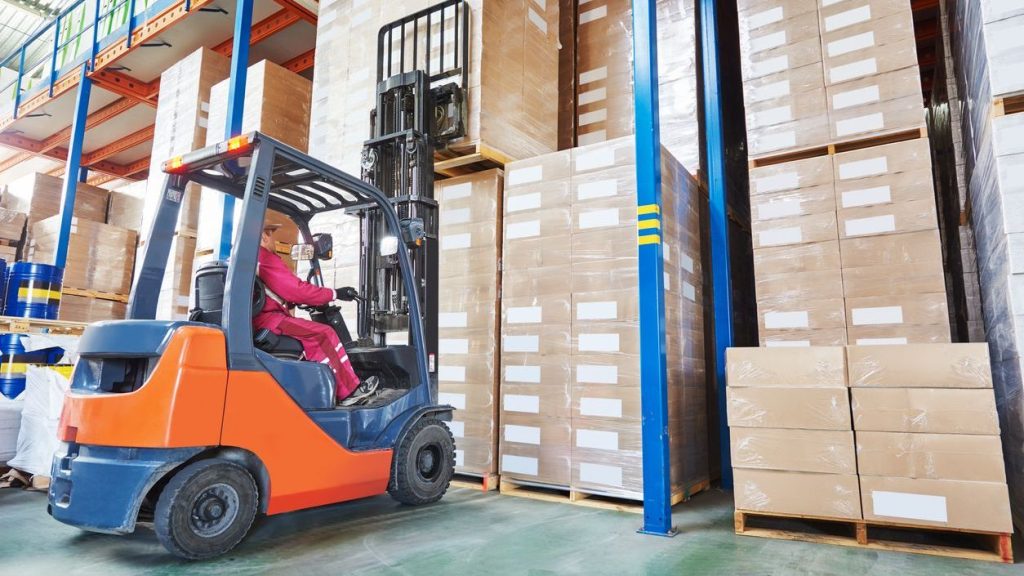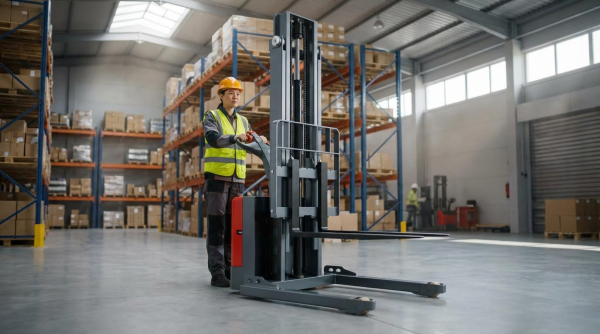
If you are trying to answer “what class is a walkie stacker” for training, audits, or equipment selection, you are in the right place. This guide explains how walkie stackers fit into OSHA powered industrial truck rules and ISO truck categories, and what that means for safety, capacity, and surfaces. You will see how lift height, load rating, and power source drive the correct class, and how to match that class to your facility conditions and training program. Use it as a quick, practical roadmap to stay compliant while choosing the safest, most efficient walkie stacker for your operation.
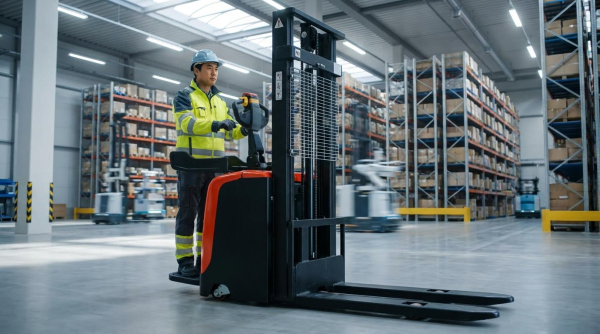
How Walkie Stackers Are Classified Under OSHA And ISO
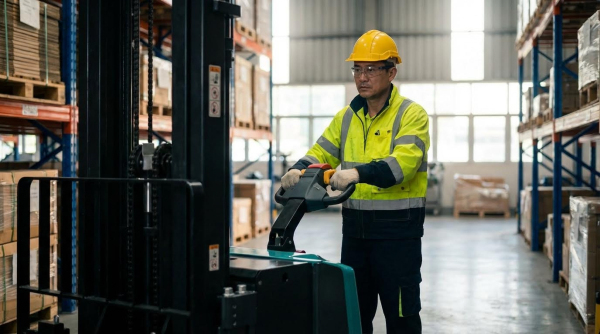
OSHA PIT designations for walkie stackers
To answer “what class is a walkie stacker,” you first need to place it inside OSHA’s powered industrial truck (PIT) framework. Under 29 CFR 1910.178, walkie stackers are powered industrial trucks, the same regulatory family as forklifts and electric pallet jacks. They are usually electric, pedestrian‑controlled units, so they fall into the electric PIT designations (E‑series) rather than internal‑combustion types. OSHA defines eleven designations based on power source and fire/explosion safeguards.
| Question | Typical OSHA answer for walkie stackers |
|---|---|
| Are walkie stackers “powered industrial trucks”? | Yes – they are covered by 29 CFR 1910.178 as motorized hand or rider trucks. They are treated like other PITs for training and safe use. |
| What basic type designation applies? | Electric truck types (E‑series), because walkie stackers use electric motors and batteries, not gasoline or diesel. |
| How are hazardous‑location units classified? | By enhanced electrical protection levels: ES, EE, or EX, depending on enclosure and spark/temperature control. Only EX trucks are allowed where flammable vapors or dust are continuously present. |
| Does classification change training duties? | No – all walkie stacker operators must complete PIT operator training, evaluation, and certification under OSHA. |
From a compliance point of view, “what class is a walkie stacker” usually means: which OSHA designation can you specify and operate in a given area. The key distinction is between standard electric units (E, ES, EE) and explosion‑proof EX units for classified hazardous locations. OSHA only permits EX‑designated trucks where combustible dust or flammable vapors are continuously present.
Typical OSHA electric truck designations relevant to walkie stackers
- Type E – Basic electric truck with minimum fire‑safety safeguards.
- Type ES – Electric truck with extra safeguards to limit sparks and surface temperatures. Used where moderate fire risk exists.
- Type EE – Electric truck with all electrical equipment enclosed for higher protection.
- Type EX – Explosion‑proof electric truck, engineered for atmospheres with flammable gases, vapors, or dusts.
Regardless of designation, OSHA treats walkie stackers like any other PIT for operator training, inspections, and load handling. Employers must provide formal instruction, practical training, and evaluation, and must keep certification records for each operator. Refresher training is required at least every three years or when unsafe operation is observed.
ISO 3691 classification of pedestrian stackers
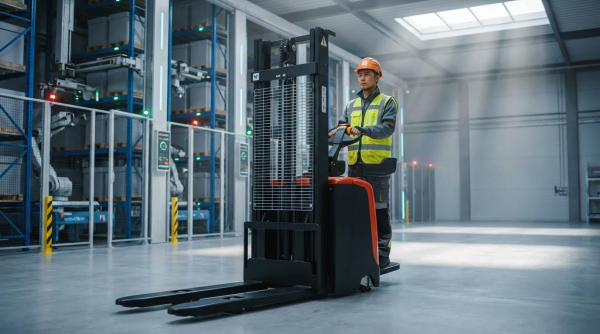
Where OSHA answers “what class is a walkie stacker” from a regulatory standpoint, ISO 3691 answers it from a design and safety‑engineering standpoint. ISO splits industrial trucks into several parts; pedestrian‑controlled units, including walkie pallet and walkie stacker trucks, sit mainly under ISO 3691‑5 and, for some elevated‑operator designs, ISO 3691‑3.
| ISO standard | Truck type covered | Relevance to walkie stackers |
|---|---|---|
| ISO 3691‑5:2014 | Pedestrian‑propelled and pedestrian‑controlled industrial trucks, including pallet and straddle stackers. | Defines core safety requirements for walk‑behind stackers with load‑handling devices such as forks or platforms. Includes pedestrian trucks with battery‑powered lifting mechanisms up to 1,000 kg. |
| ISO 3691‑3:2016 | Industrial trucks with elevating operator positions and certain stacking trucks travelling with elevated loads. | Applies to specialized order‑picking and stacking trucks where the operator platform or load device rises more than 1,200 mm. Relevant if your design lifts the operator as well as the load. |
ISO 3691‑5:2014 focuses on pedestrian‑propelled or pedestrian‑controlled trucks that operate on smooth, level, hard surfaces. That matches the intended use of most walkie stackers in warehouses and production areas. The standard specifies that these trucks are designed for stable operation on such surfaces.
- Pedestrian trucks with battery‑powered lift mechanisms are typically limited to about 1,000 kg rated capacity in ISO 3691‑5.
- Low‑lift pallet trucks under the same part have maximum lift height around 300 mm and capacity up to 2,300 kg. Scissor‑lift pallet trucks can reach 1,000 mm with up to 1,000 kg capacity.
- The 2014 edition of ISO 3691‑5 was confirmed as still valid in November 2021, so it remained current for compliance programs. This confirmation kept it as the reference for pedestrian truck safety.
In practice, this means a typical walkie stacker is:
- An OSHA‑regulated powered industrial truck (electric type, possibly EX for hazardous areas).
- A pedestrian‑controlled industrial truck under ISO 3691‑5, designed for smooth, level floors.
- Subject to ISO 3691‑3 only if it features an elevating operator position or travels with elevated loads in the way that part defines.
When you document “what class is a walkie stacker” in your safety files, you should reference both systems: the OSHA PIT designation that governs where it can be used, and the ISO 3691 part that governs how it is designed, tested, and labeled for safe pedestrian operation.
Technical Criteria That Define Walkie Stacker Classes
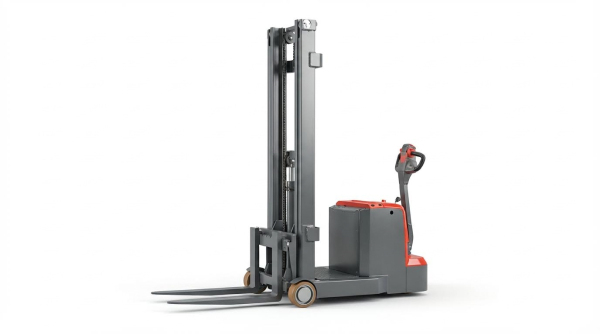
Technical criteria answer the practical question “what class is a walkie stacker” by linking design features to OSHA and ISO categories. The three biggest drivers are how the truck is propelled, its lift/capacity envelope, and its power source and explosion‑protection level.
Pedestrian‑propelled vs. rider and walkie‑rider
From a standards point of view, the first split is whether the operator walks or rides. This drives which ISO part applies and which OSHA PIT designations you can use in your facility.
| Configuration | Typical Standards Lens | Key Design Features | Impact on “what class is a walkie stacker” decision |
|---|---|---|---|
| Pedestrian‑propelled (manual or powered lift) | ISO 3691‑5 for pedestrian‑propelled industrial trucks, including pallet and straddle stackers (battery‑powered lift ≤1,000 kg) |
|
|
| Walkie‑rider (stand‑on platform) | Powered industrial truck with elevating load; some designs may fall under ISO 3691‑3 when operator platform elevates >1,200 mm |
|
|
| Full rider stacker / order picker | ISO 3691‑3 for trucks with elevating operator positions above 1,200 mm |
|
|
For compliance planning, treat any powered pedestrian stacker as a powered industrial truck under OSHA 29 CFR 1910.178, with operator training, inspections, and safe‑use rules aligned to that standard. The pedestrian versus rider distinction then fine‑tunes your internal truck “class” definitions, travel speed limits, and where each unit is allowed to operate.
Why the pedestrian vs. rider split matters in practice
- Different stopping distances and impact energy in collisions
- Different visibility and blind‑spot patterns
- Different operator training content and evaluation methods
- Different minimum aisle widths for safe turning
Lift height, capacity, and stability requirements
Lift envelope and capacity are the second big classifier. They determine which ISO clauses apply and how you set internal rules for safe stacking heights and load selection.
| Truck / function type | Typical max lift height | Typical rated capacity | Relevant standard data point | Stability / use‑case notes |
|---|---|---|---|---|
| Low‑lift pallet truck (walkie) | Up to 300 mm lift height | Up to about 2,300 kg for low‑lift trucks | ISO 3691‑5 covers low‑lift pallet trucks with these limits |
|
| Scissor‑lift pallet truck | Up to about 1,000 mm lift height | Typically up to 1,000 kg | Still under ISO 3691‑5, but with stricter stability tests |
|
| Pedestrian stacker / walkie stacker | Typically 1,500–5,500 mm+ (manufacturer‑specific) | Commonly 1,000–2,000 kg at ground level (do not exceed rating plate) | Must follow general PIT rules on not exceeding rated capacity and handling only stable loads |
|
| Order picker / elevating operator truck | Often >6,000 mm | Rated for both load and operator platform | ISO 3691‑3 applies when operator platform or load device lifts >1,200 mm |
|
OSHA requires operators to keep loads within the truck’s rated capacity and to handle only stable, safely arranged loads. Off‑center or long loads need special care, and the load‑engaging means must be placed as far under the load as possible, with only enough backward tilt to stabilize it. Elevated loads should not be tilted forward except when depositing them on a stack or rack. These rules apply equally to walkie stackers and rider trucks.
- As lift height increases, your internal “class” for the truck should include stricter floor flatness requirements.
- Higher masts may justify speed limits, geo‑fenced slow‑down zones, or restricted access to certain aisles.
- Capacity derating with attachments (e.g., clamps, platforms) must be reflected on the data plate and in your operator training.
Power source, battery tech, and EX‑rated designs
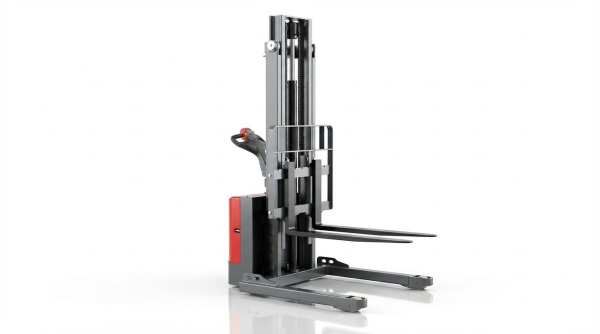
The third technical pillar is how the truck is powered and whether it is suitable for hazardous locations. This directly controls which OSHA designations (E, EE, EX, etc.) you can legitimately assign to a walkie stacker.
| Design aspect | Typical options on walkie stackers | Compliance / classification impact |
|---|---|---|
| Power source |
|
|
| Standard electric design | Basic electric safeguards (Type E) or additional spark and temperature protections (Type ES / EE) with enclosed electrical components |
|
| EX‑rated electric design | Electrical and mechanical parts designed to avoid ignition of flammable vapors, gases, or dusts (Type EX) |
|
| Battery management and charging | Managed charge strategies for lead‑acid or lithium‑ion batteries, often monitored by battery management systems |
|
OSHA’s hazardous‑location rules specify that only EX‑approved industrial trucks can operate where combustible dust is continuously present, and that in areas with volatile flammable liquids or gases in closed containers, trucks designated DY, EE, or EX may be allowed depending on the exact classification. These same rules apply when you decide what class is a walkie stacker for a given zone in your plant.
- In non‑hazardous storage and staging areas, standard electric walkie stackers with appropriate guarding are usually acceptable.
- In rooms handling flammable liquids, powders, or gases, you must check the area classification and match it to the truck’s OSHA design type (E/ES/EE/EX) and EX rating.
- Battery charging rooms may need additional ventilation, spark control, and signage, even for standard electric walkie stackers.
Linking technical criteria back to your internal “class” labels
- Use propulsion type (pedestrian vs. rider) as your first internal class filter.
- Overlay lift height and capacity to define which aisles, racks, and mezzanines each unit can legally serve.
- Finally, constrain each walkie stacker to zones where its OSHA design type (E/ES/EE/EX) is permitted by your hazardous‑location classification.
Matching Walkie Stacker Class To Your Facility
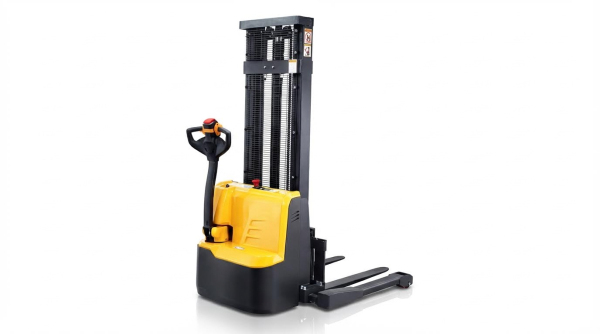
Surface conditions, aisle width, and load profile
Before you ask what class is a walkie stacker, you need to check whether your building and loads actually fit the capabilities of that class. Most pedestrian stackers and walkie pallet truck were intended for smooth, level, hard floors such as concrete to maintain stability and braking control. The ISO 3691‑5 standard explicitly assumes these surfaces for pedestrian-propelled trucks. If you have ramps, dock plates, or rough areas, you must verify gradeability, wheel type, and braking performance for the specific truck class.
| Facility factor | What to check | Typical requirement for walkie stackers |
|---|---|---|
| Floor / surface | Material, flatness, joints, moisture, contamination | Smooth, hard, and level surfaces; limited use on steep ramps or rough yards |
| Aisle width | Clear width between racks/obstructions | Enough for truck length + load length + safety margin (often 300–600 mm each side) |
| Turning space | End-of-aisle pockets, intersections, doors | At least the truck’s turning radius plus room for operator escape path |
| Load type | Pallet style, overhang, center of gravity | Stable pallets with low to moderate height; avoid high, top‑heavy stacks |
| Load weight | Maximum and typical load per move | Must not exceed rated capacity at the required lift height |
| Lift height | Top beam height, mezzanines, racks | Confirm truck’s rated capacity curve at that height and load center |
When you select a walkie stacker class, match its stability envelope to your load profile. Operators must handle only stable or safely arranged loads, keep the load within the rated capacity, and take extra care with off‑center or long loads that shift the center of gravity. OSHA requires that loads never exceed the truck’s rating and that forks be placed fully under the load with controlled mast tilt. This means a narrow‑aisle warehouse with tall racking may require a different walkie stacker class than a low‑bay staging area, even if the pallets look similar.
Practical checklist before choosing a walkie stacker
- Measure the narrowest aisle and tightest doorway the truck must pass.
- Confirm floor type and the steepest ramp or dock plate grade.
- List your heaviest pallet plus typical pallet weights.
- Record the highest lift point you actually use, not just rack height.
- Note any unusual loads: long, offset, liquid, or fragile goods.
Safety features, training, and inspection regimes
Your answer to what class is a walkie stacker is only useful if your safety systems match that class. Under OSHA’s powered industrial truck rules, all motorized walkie stackers fall under 29 CFR 1910.178, so operators need full PIT training and evaluation, not just “on‑the‑job” coaching. Employers must ensure operators are competent, with formal instruction, practical training, and evaluation. Refresher training is required when unsafe operation is observed, an incident occurs, or workplace conditions change.
- Core safety features to look for on walkie stackers
- Deadman (presence) switch on the tiller so travel stops if the handle is released.
- Reverse “belly” button to command reverse and prevent crushing against structures. Modern walkie equipment commonly integrates these controls.
- Regenerative or service braking that holds the truck on slight grades and prevents rollback when the tiller is in neutral. Anti‑rollback features are now standard on many electric pedestrian trucks.
- Geo‑fenced or programmable speed control in congested zones such as doors and cross aisles.
- Guarded or recessed wheels and optional foot‑protection devices at the truck tail.
Inspection and maintenance routines must also align with the truck class and duty cycle. OSHA requires that powered industrial trucks be inspected before being placed into service each day, or at the start of each shift if used around the clock, and that defects be reported and corrected before the truck returns to service. The regulation calls for removal from service of any truck that emits hazardous sparks or has unsafe conditions. In practice, this means your facility should standardize pre‑shift checklists for brakes, steering, horn, forks, mast, and battery state of charge for every walkie stacker in the fleet.
| Safety / compliance element | What is required | Why it matters for walkie stacker class |
|---|---|---|
| Operator training | Formal PIT training, evaluation, and 3‑year (or incident‑based) refreshers | Ensures operators understand limits of the specific walkie class and environment |
| Daily inspections | Pre‑shift checks; defects reported and truck removed from service if unsafe | Prevents brake, steering, or mast failures in tight pedestrian areas |
| Speed management | Policies and, where possible, geo‑fenced or programmable limits | Reduces collision risk in short aisles and shared walkways |
| EX / EE rating (if needed) | Only trucks with appropriate OSHA designations in hazardous atmospheres | Wrong truck class in a flammable area can violate code and create ignition risk |
| Battery management | Standardized charging, inspection of cables and connectors | Supports reliable performance and avoids mid‑aisle failures or fire risk |
When you align surface conditions, aisle geometry, and load profile with the right walkie stacker class, then overlay the correct safety features, training, and inspections, you create a compliant and efficient system. That is the level of matching OSHA and ISO expectations that regulators and insurers increasingly look for when they evaluate how you chose and operate your walkie stacker fleet.
Key Takeaways For Compliance And Equipment Selection
Walkie stacker class is not just a label. It is the link between design limits, regulatory rules, and your real floor conditions. OSHA treats powered walkie stackers as powered industrial trucks, so they carry full PIT training, inspection, and hazardous‑location obligations. ISO 3691 defines how these trucks must behave as pedestrian equipment on smooth, level floors, with clear limits on lift height, capacity, and stability.
Engineering choices on propulsion, lift envelope, and power source decide where the truck can run and what it can safely lift. High masts, tight aisles, and uneven floors quickly shrink the safe operating window. Hazardous atmospheres narrow it further, often to EX‑rated designs only. If you ignore these links, you increase tip‑over, collision, and ignition risk, and you weaken your compliance position.
The best practice is simple. Classify each Atomoving walkie stacker by OSHA PIT designation and relevant ISO part. Map that class to specific zones, rack heights, and load types in your facility. Then lock in matching safety features, operator training, and daily inspections. When engineering, safety, and operations follow the same class rules, walkie stackers stay stable, predictable, and compliant across their full life in your plant.
Frequently Asked Questions
What class is a walkie stacker?
A walkie stacker falls under Class III of powered industrial trucks. This class includes electric motor hand trucks or hand/rider trucks, such as low lift walkie pallets and center control models. OSHA Forklift Types.
Is a walkie stacker considered a forklift?
Yes, a walkie stacker is considered a type of forklift. It belongs to Class III, which covers electric motor hand trucks designed for moving and lifting pallets in warehouses. Raymond Truck Classifications.