
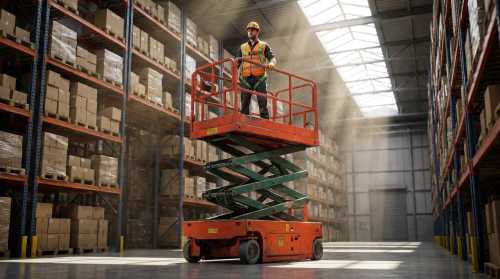
Electric compact scissor lifts have become a core access tool for modern warehouses and industrial plants, replacing ladders and improvised platforms with controlled, engineered elevation. This guide explains design limits, safety factors, and selection criteria so engineers and safety teams can justify and specify the right equipment. You will also see what are the applications of an electric compact scissor platform in real indoor operations, from narrow-aisle picking to MRO and utilities access. Use it as a technical reference when comparing models, writing RFQs, or updating internal safety standards.
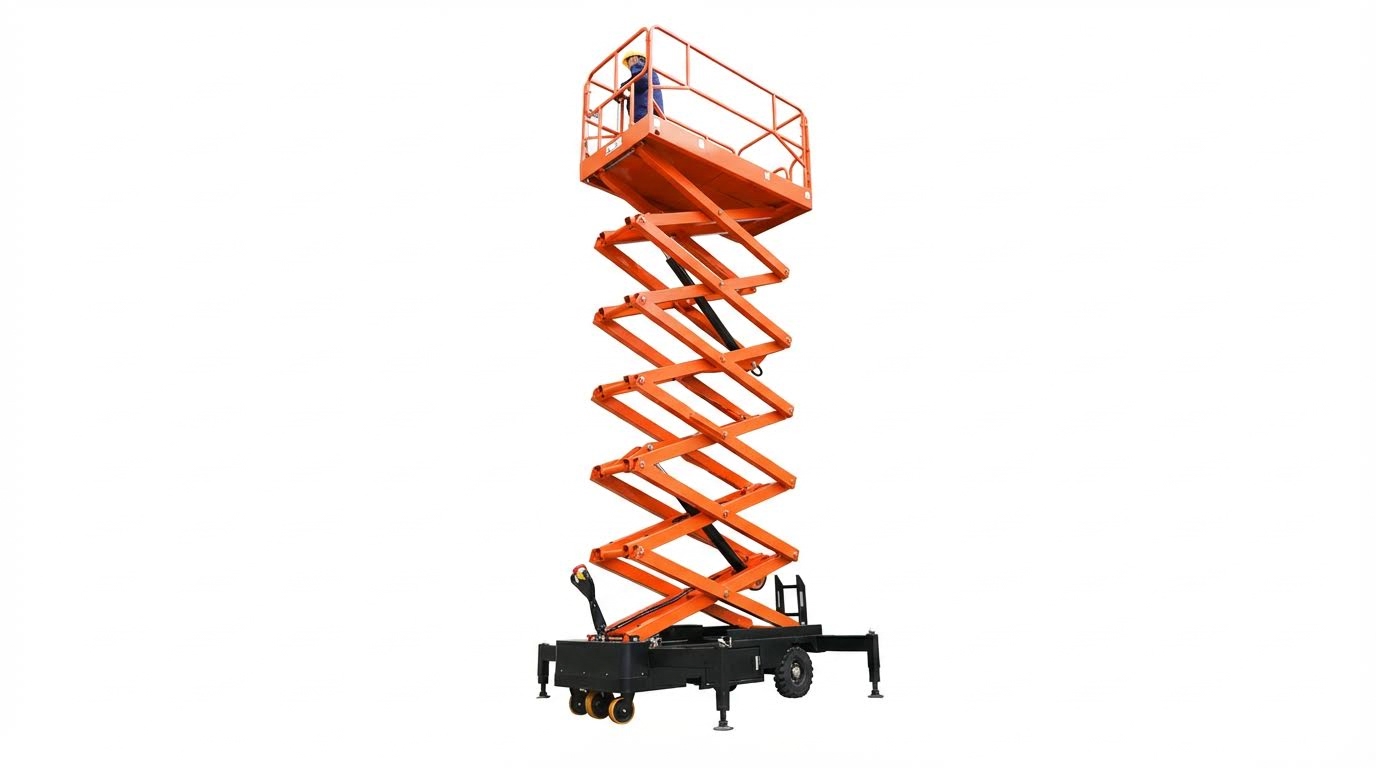
Core Design, Performance And Safety Parameters
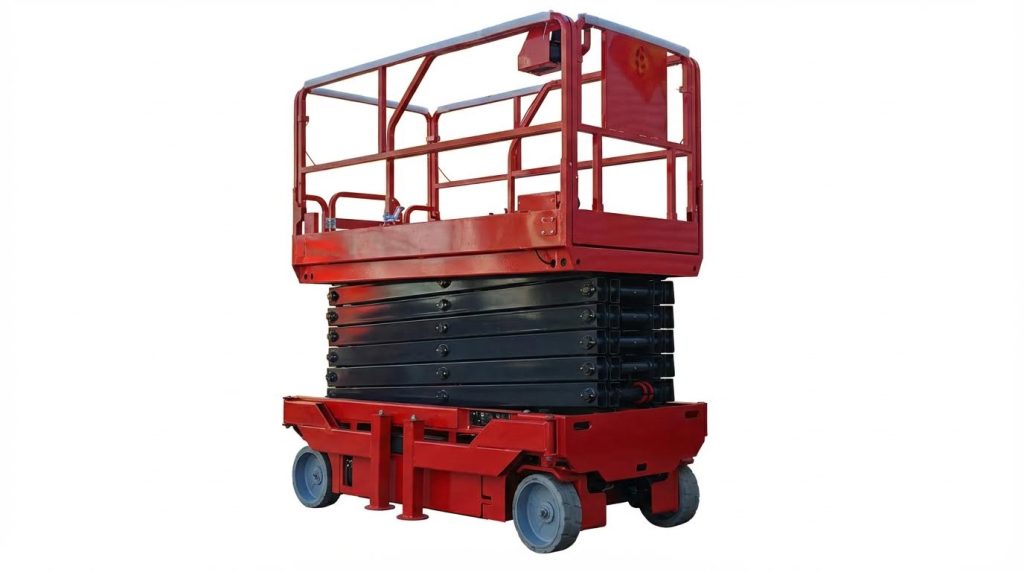
Key dimensions, height and load envelopes
For warehouse and industrial engineers, the starting point is the physical working envelope. This defines where an aerial platform can safely operate and directly shapes what are the applications of an aerial platform inside a facility. Use the data below as a quick design check before you look at options.
| Parameter | Typical value / range | Design implication |
|---|---|---|
| Max platform height (compact indoor models) | 3.0 m, 3.9 m, 4.8 m (300 kg class) | Covers low to mid‑level racking, lighting and ductwork zones |
| Rated platform capacity | Up to 300 kg for compact indoor units (person + tools + parts) | Suitable for 1–2 persons plus light tools and materials |
| Platform size | Approx. 1170 × 600 mm deck area (compact footprint) | Optimised for single-person work in narrow aisles |
| Machine width | Approx. 760 mm ultra‑narrow chassis (fits standard doors) | Passes through standard doorways and pallet rack aisles |
| Turning radius | About 1400 mm (compact steering) | Allows manoeuvring in congested warehouse zones |
| Machine weight | Approx. 650–930 kg depending on model (net weight) | Drives floor loading checks on mezzanines and suspended slabs |
| Stable working tilt | Up to about 2° allowed working angle (stability limit) | Requires flat, well‑levelled industrial floors |
From an engineering standpoint, these parameters answer three core questions: how high can you work, how much can you lift, and where can the unit physically travel. For example, 4.8 m platform height covers work up to roughly 6.5–7.0 m at hand level, once operator reach is included. The 300 kg capacity envelopes a typical technician plus hand tools, small parts bins or light fixtures, but not heavy hydraulic pallet truck.
Typical indoor application envelope
- Low‑bay warehouse racking (first 3–4 beam levels)
- Retail, hotel and office ceilings in the 3–6 m range
- Light MEP, sprinkler and cable tray work at mezzanine level
- Inventory cycle counts and light picking at height
When you ask what are the applications of an aerial platform in a specific building, start by overlaying these height, width and load envelopes on your CAD layout. That quickly shows which aisles, docks and mezzanines are truly accessible without structural changes.
Drive, powertrain and battery configurations
The drive and powertrain determine how the lift behaves over a shift: travel speed, duty cycle, and noise profile. For indoor logistics and production sites, scissor platform lift use integrated traction motors, an electric lift motor and a battery pack sized for multi‑hour operation.
| Subsystem | Typical specification | Engineering and safety impact |
|---|---|---|
| Travel speed (stowed) | Up to about 4 km/h (horizontal transfer) | Fast enough for inter‑aisle moves without disrupting traffic |
| Travel speed (elevated) | Typically limited to around 0.8 km/h (safety limit) | Reduces dynamic loading and tip‑over risk when raised |
| Drive motors | Dual 24 V traction motors, about 0.4 kW each (electric wheel drive) | Provides controlled acceleration and tight manoeuvring |
| Lifting motor | Approx. 24 V / 1.2 kW electric lift motor (vertical motion) | Delivers smooth elevation with moderate power draw |
| Battery pack | Two 12 V / 80 Ah batteries (24 V system) (deep‑cycle) | Supports several hours of typical indoor duty between charges |
| Gradeability | Approx. 10–15% climbing ability (ramp performance) | Enough for short dock ramps; not for steep outdoor slopes |
| Noise level (typical electric) | Around ≤50 dB in operation (low‑noise) | Fits noise‑sensitive production, retail and office spaces |
| Control accuracy | Programmable control with ±1 mm positioning possible (electric drive) | Helps in precise assembly, alignment and MRO tasks |
Compared with hydraulic units, scissor platform lift trade ultimate load capacity for precision, low noise and clean operation. Hydraulic models often handle >1000 kg, but are louder, require fluid maintenance and are better suited to rough outdoor sites. Electric units typically stay below 500 kg capacity and are optimised for flat indoor floors and long battery‑powered shifts. Comparison data
- Zero local emissions and low noise make electric lifts suitable for food, pharma and retail environments. Environmental note
- Simpler maintenance (no hydraulic oil changes) reduces downtime and lifetime cost. Maintenance comparison
- Battery sizing and charging strategy must align with shift length and access to charging bays.
From a safety perspective, automatic brakes, emergency stop circuits and manual lowering systems are standard on modern compact units. These features prevent unintended movement and allow controlled descent during power loss or fault conditions, which is critical when the platform is elevated in congested warehouse aisles. Safety feature examples
Link to practical applications
- Facility maintenance and repairs in hotels, offices and warehouses
- Inventory management and cycle counting in narrow aisles
- Retail lighting, signage and décor changes
- Utilities access for HVAC, sprinklers and cable trays
These use cases illustrate what are the applications of an aerial platform when its design, performance and safety parameters are correctly matched to the building and task profile.
Indoor Use Cases And Operational Advantages
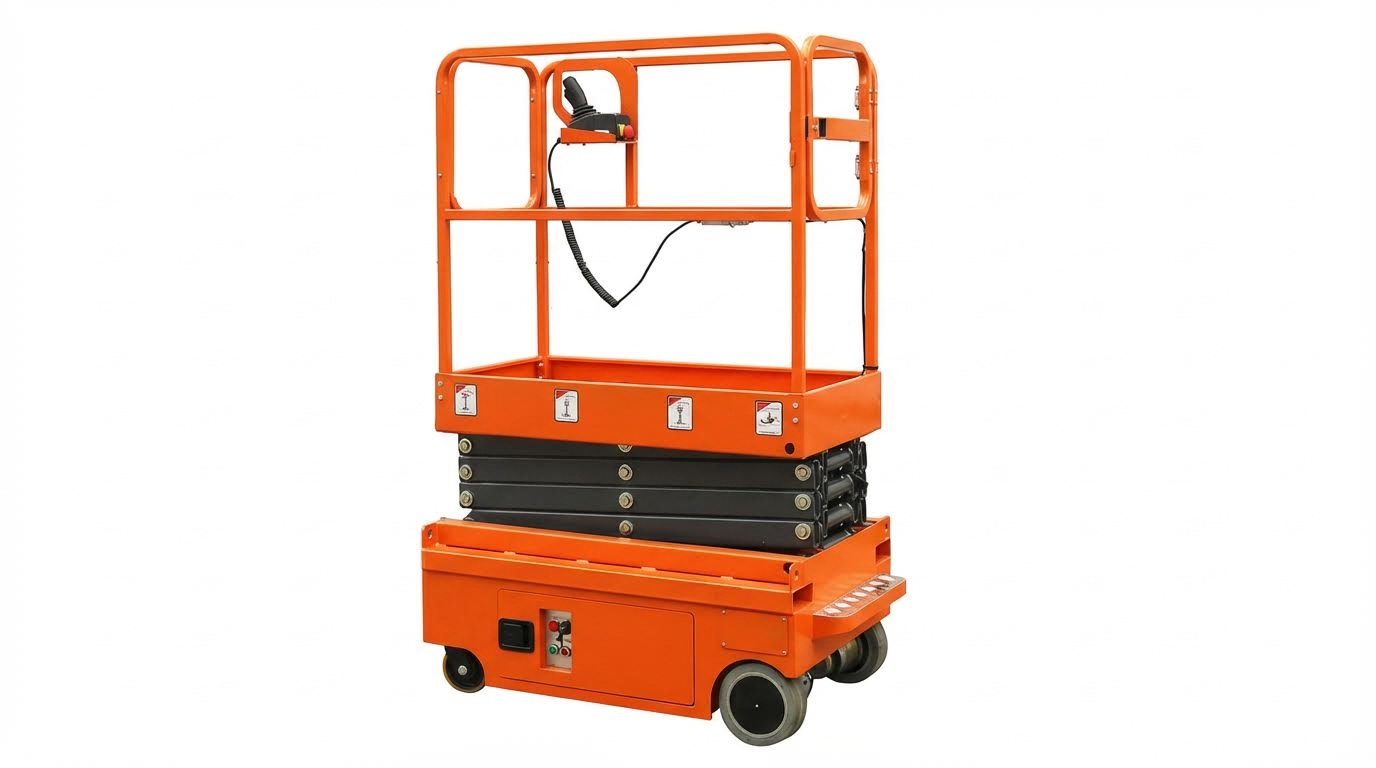
Narrow aisle work, picking and inventory tasks
For engineers asking what are the applications of an electric compact scissor lift in warehouses, narrow-aisle work is usually the first answer. Compact chassis, tight turning radius and low platform heights make these units ideal for dense racking and mezzanine layouts.
| Parameter | Typical value / capability | Operational benefit in aisles |
|---|---|---|
| Maximum platform height | 3.0–4.8 m for compact indoor units (3 / 3.9 / 4.8 m models, 300 kg) | Reaches 2nd–3rd rack levels, mezzanines and low service runs |
| Rated load | Up to ~300 kg on compact models (person + tools + cartons) | Supports one operator plus cartons, totes or small parts bins |
| Machine width | Approx. 760 mm ultra‑narrow chassis (fits tight aisles) | Passes through standard doors and narrow rack aisles |
| Turning radius | ≈1400 mm (small turning circle) | Allows U‑turns in cross‑aisles and picking zones |
| Platform size | ≈1170 × 600 mm deck (typical compact platform) | Enough footprint for operator plus cartons or small pallet |
In narrow aisles, electric compact scissor lifts replace ladders and manual picking platforms with a stable, guarded work area. This reduces fall risk and cuts cycle time per pick or stock check.
- Case picking and put‑away – operator travels at low speed with platform stowed, stops at the slot, then elevates to the exact pick level.
- Cycle counting and audits – safe, repeatable access to higher bin locations for barcode scans and stock verification.
- Light item replenishment – topping up fast‑moving SKUs on higher shelves without bringing in a full order picking machines.
- Document and sample storage – in archive rooms or quality labs where shelving runs close together.
Engineering notes for narrow‑aisle application
When defining what are the applications of an electric compact scissor lift in a given warehouse, engineers should map rack clear widths, minimum gangway, and turning pockets. The 760 mm width and ~1400 mm turning radius let the lift operate in aisles only slightly wider than the truck itself, but clearance is still required for toe‑boards, column guards and any protruding loads. Speed limits with elevated platforms (typically ≤0.8 km/h stowed ≈4 km/h, elevated ≈0.8 km/h) also need to be embedded into traffic management plans.
Facility maintenance, MRO and utilities access
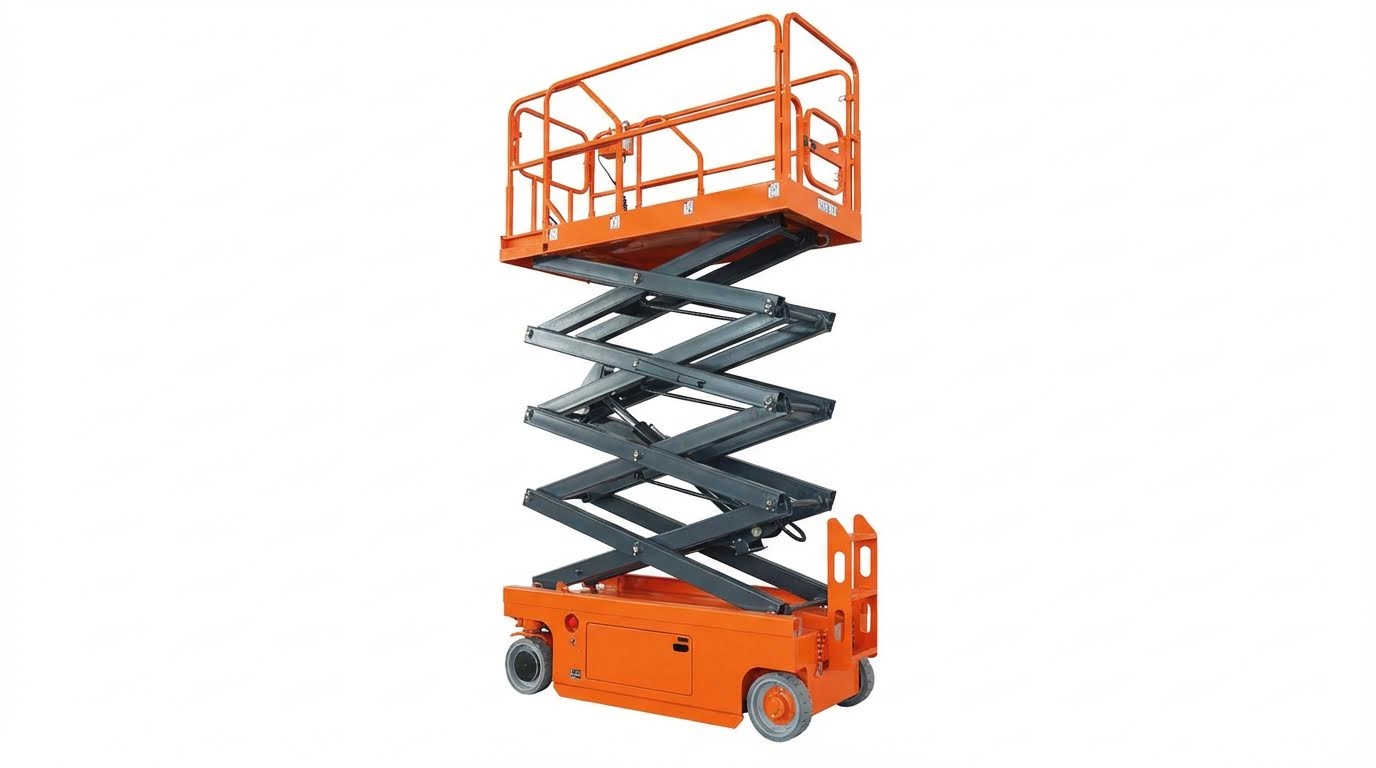
Electric compact scissor lifts are widely used for facility maintenance, MRO and utilities access in production halls, distribution centers and commercial buildings. They provide a guarded, stable platform for short‑duration tasks that move frequently around the site.
- Building fabric maintenance
- Ceiling and wall repairs in warehouses, workshops and corridors.
- Painting, sealing and joint inspection in high bays and atriums.
- Electrical and lighting work
- Installing and relamping high‑bay fixtures and emergency lighting.
- Running or modifying cable trays and conduit at 3–5 m working heights.
- HVAC and utilities
- Filter changes and inspection of air‑handling units mounted above walkways.
- Access to sprinkler mains, compressed‑air lines and process utilities.
- Production line support
- Access to overhead guarding, sensors and conveyors for adjustments.
- Changeover work on elevated tooling, guards and small jigs.
The compact footprint and moderate machine weight (≈650–930 kg typical net weight range) allow use on many mezzanines, suspended slabs and finished floors where heavier equipment is not acceptable.
Why electric compact scissor lifts suit MRO better than ladders
For maintenance teams evaluating what are the applications of an electric compact scissor lift versus ladders, the key gains are control and ergonomics. The platform offers a fixed guardrail height, room for tools and parts, and stable footing when using both hands. Travel at low speed with the platform lowered means technicians can move between work orders without repeated climbing and descending, which reduces fatigue and improves compliance with working‑at‑height rules.
Clean, low‑noise operation and shift productivity
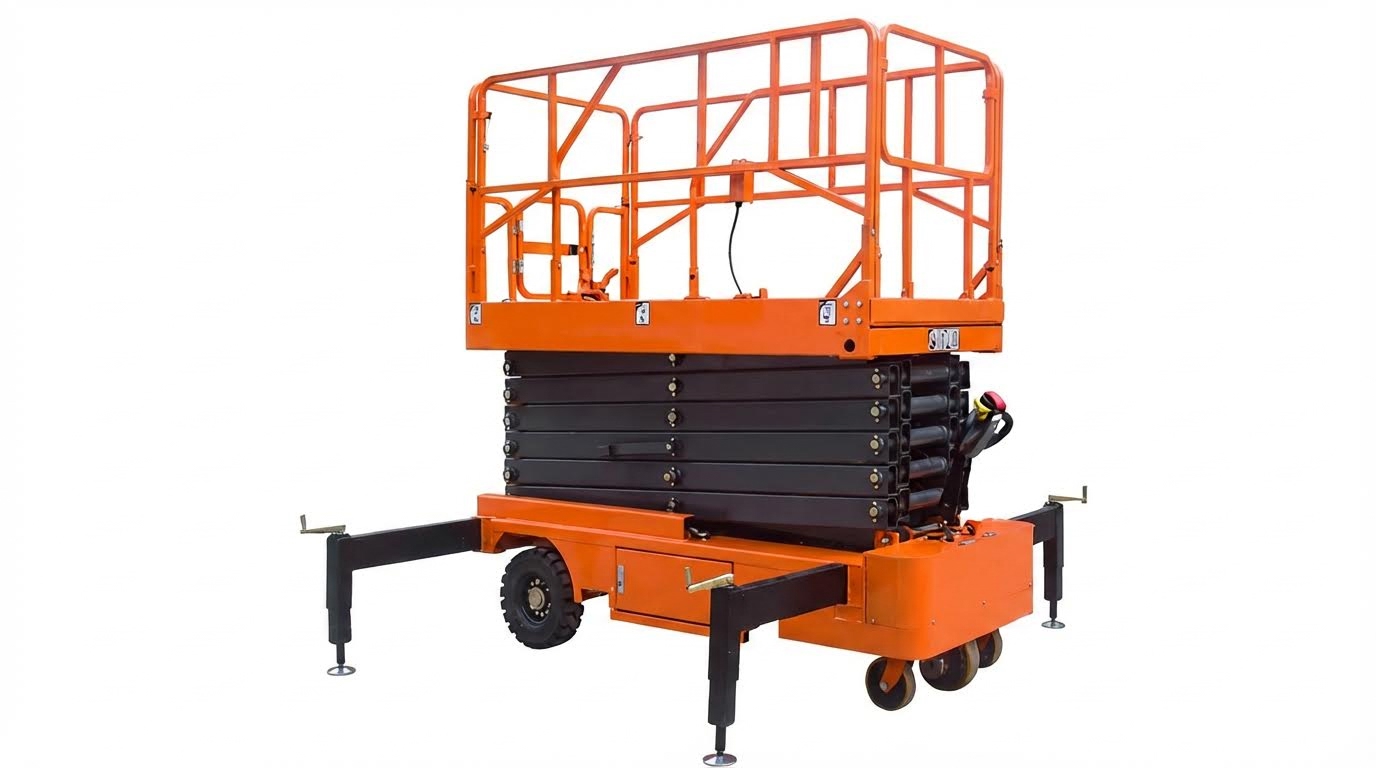
Electric compact scissor lifts are designed specifically for clean, low‑noise indoor duty. This makes them suitable for warehouses, packaging halls, cold stores and sensitive environments like laboratories or occupied offices.
| Attribute | Electric compact scissor lift | Indoor operational advantage |
|---|---|---|
| Power source | Rechargeable batteries + electric drive motors (no combustion engine) | Zero point‑of‑use emissions; suitable for closed buildings |
| Noise level | Low, typically ≤50 dB for electric lifts (significantly quieter than hydraulic) | Allows work during office hours or night shifts without disturbance |
| Lifting control | Adjustable lifting speed ~0.02–0.3 m/s with high positioning accuracy | Smooth approach to target height; reduced risk of impact damage |
| Battery system | Typical configuration: 2 × 12 V / 80 Ah batteries (24 V system) | Supports multiple tasks per shift before recharge |
| Drive performance | Stowed speed around 4 km/h, elevated ≈0.8 km/h (for compact models) | Efficient travel between jobs with safe low speed at height |
- Clean operations
- No exhaust gases in confined spaces, improving air quality for long shifts.
- No risk of oil‑based hydraulic spills from engine‑driven power packs in sensitive areas.
- Low‑noise benefits
- Suitable for 24/7 warehouses adjacent to offices or residential zones.
- Allows maintenance during production without masking alarms or instructions.
- Shift productivity
- Battery capacity sized for multiple duty cycles per charge; charging can be scheduled in off‑peak hours.
- Self‑propelled travel eliminates manual pushing and reduces non‑value‑added walking.
Linking productivity to specific applications
When documenting what are the applications of an electric compact scissor lift in a facility, it helps to tie low‑noise and clean operation directly to use cases: night‑shift inventory checks in temperature‑controlled storage, lighting maintenance above operating packing lines, and quick access to overhead services in occupied office or retail spaces. Because electric units combine quiet drive, zero exhaust and fine control of lifting speed, they can operate closer to people and processes without disrupting them.
Selection Criteria For Warehouse And Plant Engineers
Matching platform height, load and stability needs
Engineers should size electric compact scissor lifts to the real work envelope, not just “maximum reach.” Platform height, load capacity and stability margins must all align with the actual tasks and floor conditions in the facility.
To answer “what are the applications of an electric compact scissor lift” in a practical way, start by mapping tasks such as inventory, maintenance and signage work to the height and load bands below.
| Typical indoor task | Recommended max platform height | Typical load band (incl. tools) | Why this band works |
|---|---|---|---|
| Low‑level picking, light maintenance, office / retail work | Up to 3.0 m platform height data | Up to ~300 kg capacity data | Single person plus small parts, minimal sway, compact footprint |
| General warehouse inventory, racking up to mid‑levels | 3.0–3.9 m height options | Up to ~300 kg | One person plus cartons or totes; supports most inventory tasks |
| Higher bay access, light mechanical work, utilities | 3.9–4.8 m height options | Up to ~300 kg | One person with heavier tools; still within compact class stability |
Beyond height and load, stability is controlled by floor quality, gradient and working angle. Compact indoor units typically allow a safe working angle of about 2° on firm, level floors. stability angle
- Keep gradients below the manufacturer’s limit (often 5%–10% for travel, less when elevated).
- Specify non‑marking tires for smooth indoor slabs; avoid use on soft or damaged floors.
- Check net machine weight (about 650–930 kg for compact units) against slab capacity. weight data
- Use guardrail height and personal fall protection to extend the effective safe working envelope, not platform height alone.
Quick engineering checklist for height/load matching
- List all tasks where staff currently use ladders, podiums or mobile towers.
- Record maximum working height (floor to task) and add a safety margin of 0.5–1.0 m.
- Weigh or estimate typical tools and materials per task; add 25–30% buffer.
- Select platform size (e.g., around 1170 × 600 mm) that fits the load and allows safe stance. platform size
- Verify floor capacity and maximum allowable gradient in each operating zone.
Comparing electric vs hydraulic for indoor duty
For indoor warehouses and plants, the main decision is usually not “can it reach” but “how does the power system affect noise, emissions, control and maintenance.” Electric compact scissor lifts use battery‑electric drives, while traditional units often rely on hydraulic systems with fluid circuits.
Instead of long descriptions, the comparison below shows why electric compact machines dominate indoor applications such as maintenance, inventory and utilities work.
| Parameter | Electric compact scissor lift | Hydraulic scissor lift (typical) | Impact on indoor use |
|---|---|---|---|
| Power source | Rechargeable batteries + electric motors power source | Hydraulic fluid system driven by engine or motor | Electric avoids fumes and fluid leaks in clean areas |
| Typical load band | Up to ~300–500 kg capacity ranges | Often >1000 kg | Electric suits people + tools; hydraulic suits heavy fabrication loads |
| Lifting speed / control | Adjustable ~0.02–0.3 m/s, high positioning accuracy (≈ ±1 mm) speed & accuracy | 0.05–0.15 m/s, valve‑based control | Electric gives smoother stops near sprinklers, lights and conveyors |
| Noise level | Low, around ≤50 dB noise data | Higher, around 70 dB | Electric protects worker comfort and communication in quiet zones |
| Emissions / cleanliness | Zero point‑of‑use emissions, no hydraulic oil circulation in main drive | Risk of oil leaks; engine‑driven units emit exhaust environmental impact | Electric is preferred for food, pharma, packaging and clean assembly |
| Maintenance profile | Mainly mechanical checks and lubrication; no routine oil changes maintenance | Regular fluid, seal and circuit checks; higher lifetime service load | Electric reduces downtime and contamination risk in production areas |
| Durability vs harsh conditions | Optimized for flat, indoor floors durability | Better for rough outdoor terrain and weather | Hydraulic still preferred for construction yards and yards with ramps |
| Typical applications | Facility maintenance, inventory, lighting/signage, hotel/office repairs application list | Outdoor construction, heavy steel work, loading yards | Clarifies what are the applications of an electric compact scissor lift vs hydraulic |
- For high‑cycle indoor duty, prioritize electric compact units with narrow width (~760 mm) and small turn radius (~1400 mm) for tight aisles. maneuverability
- Check running speeds: about 4 km/h stowed and 0.8 km/h elevated support efficient shift work without compromising safety. speed data
- Confirm battery configuration (for example 2 × 12 V / 80 Ah) and onboard chargers can support your longest shifts. battery spec
When might hydraulic still be justified indoors?
- Very heavy tooling or workpieces regularly above 500–800 kg.
- Shared use between indoor bays and rough outdoor yards where durability is critical.
- Low duty cycle where higher maintenance overhead is less significant than lower purchase price. cost comparison
Final Recommendations For Procurement And Safety Teams
Procurement and safety teams should treat electric compact scissor lifts as engineered controls, not just convenient tools. Platform height, capacity and chassis width must match real tasks, aisle clearances and slab capacity. This prevents overload, floor damage and unstable working positions. Battery size, travel speed and noise level must align with shift patterns and shared‑use zones so units can run full shifts without disrupting people or processes.
Safety depends on respecting stability limits. Keep gradients within the manufacturer’s ratings, use only sound, level floors, and lock in speed limits when elevated. Make pre‑use checks, emergency lowering drills and traffic rules part of operator training and written procedures. Replace ladders and improvised platforms wherever repeated work at 3–7 m hand height occurs.
As a rule, specify electric compact lifts for indoor inventory, maintenance, utilities and light assembly work, and keep hydraulic or rough‑terrain units for heavy loads or outdoor yards. When in doubt, map every application on your CAD layout and verify it against load, height and stability data. This structured approach lets you build a standard fleet, such as Atomoving electric platforms, that improves safety performance while raising productivity across the site.
Frequently Asked Questions
What are the applications of an electric compact scissor lift?
Electric compact scissor lifts are versatile tools used in various industries. They are ideal for indoor applications due to their quiet operation and zero emissions. Common uses include:
- Warehousing and inventory management, where they help access high shelves safely.
- Retail environments for maintenance or restocking tasks.
- Manufacturing facilities to assist with equipment installation or repairs at height.
- Construction sites, particularly indoors or in sensitive areas where fumes must be avoided.
- Event setups for stage construction, lighting, and audio-visual installations.
These machines provide a stable platform and precise control, making them suitable for tasks requiring accuracy. Electric Scissor Lift Guide.
Why choose an electric scissor lift over other types?
Electric scissor lifts are preferred in environments where noise and air quality matter. Unlike hydraulic or diesel-powered lifts, electric models operate quietly and produce no fumes, which makes them safe for enclosed spaces. Their benefits include:
- No fuel requirements, reducing operational costs.
- Environmentally friendly operation, aligning with green initiatives.
- Compact design, allowing navigation in tight spaces.
This makes them a top choice for industries like healthcare, logistics, and entertainment. Electric Lift Applications.