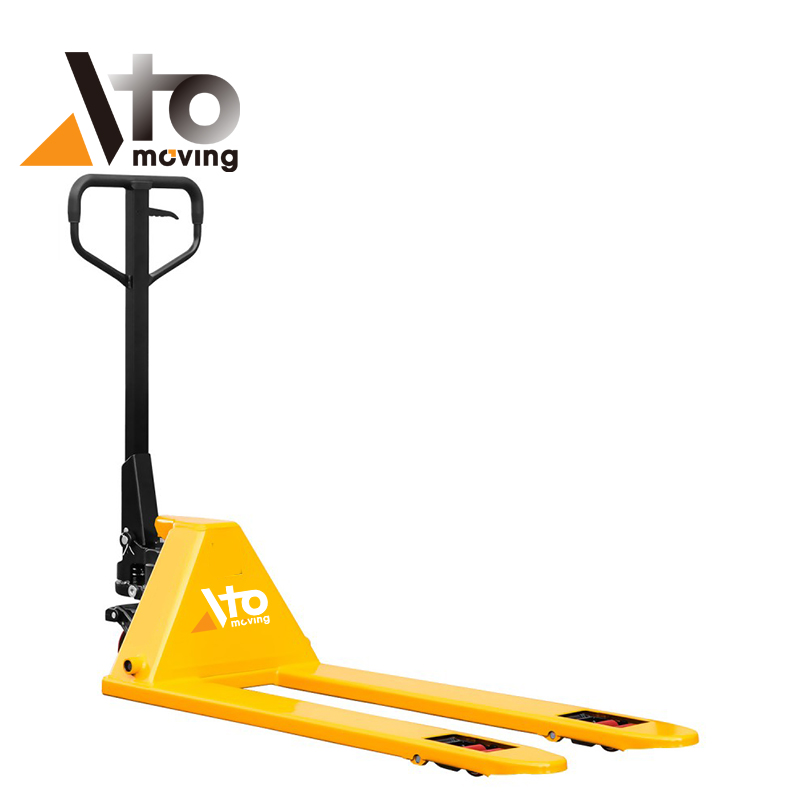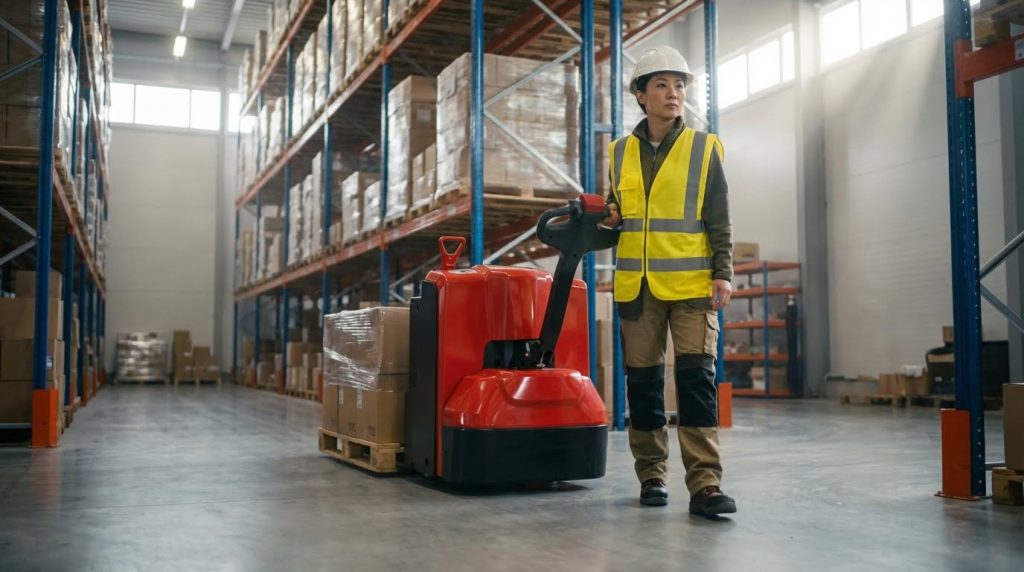
When you ask “how much does a manual pallet jack weigh,” you are really asking a design and safety question, not just a number. This guide walks through typical weight ranges, the engineering factors that drive those numbers, and how truck weight affects floor loading, racking, and maneuverability. You will see how frame design, fork geometry, wheels, and options change both jack weight and usable capacity, so you can specify equipment that is safe, efficient, and matched to your facility. Use these weight data ranges as a practical checklist when comparing models or planning new storage and handling layouts.
Defining Manual Pallet Jack Weight Ranges
Typical weight ranges by design type
Before you ask “how much does a manual pallet jack weigh,” you need to separate the main design types. Different geometries and options move the truck weight by tens of kilograms, which feeds directly into floor loading and handling calculations.
| Manual pallet jack design type | Typical truck weight (kg) | Typical truck weight (lb) | Typical capacity range |
|---|---|---|---|
| Standard low-lift, manual (2–3 t class) | 65–90 kg data | ≈143–198 lb | 2,000–3,000 kg (≈4,400–6,600 lb) |
| Standard low-lift, manual (common warehouse spec) | 68–113 kg data | 150–250 lb | Up to about 2,500–3,000 kg (≈5,500–6,600 lb) |
| Short‑fork manual jack | 55–59 kg data | ≈121–130 lb | Usually same capacity as standard model |
| Extended‑fork manual jack | 82–123 kg data | ≈181–271 lb | Typically 2,000–3,000 kg class |
| High‑lift / scissor manual jack | 100–150 kg data | ≈220–331 lb | Commonly around 1,000 kg (≈2,200 lb) |
| Weigh‑scale manual jack (without options) | ≈110 kg + options data | ≈242 lb + options | Similar to standard low-lift jacks |
| All‑terrain / off‑road manual jack | ≈149–248 kg data | 328–546 lb | Often around 1,000–1,500 kg |
| All‑terrain manual jack (1,000 kg example) | ≈195 kg data | ≈430 lb | 1,000 kg (≈2,200 lb) |
Why these ranges matter for engineering decisions
These weight bands tell you how much dead weight you add to every move. They also define how close you run to floor load limits, dock plate ratings, and lift-gate capacities. When you ask how much does a manual pallet jack weigh, you are really asking how much extra mass you must design around in your material flow.
Difference between truck weight and load capacity
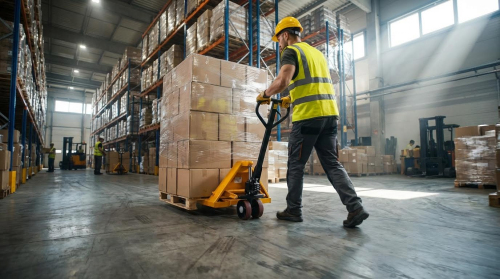
Truck weight and load capacity are often confused, but they drive different engineering checks. The truck weight is the empty mass of the pallet jack, while capacity is the maximum safe load it can carry.
| Parameter | What it means | Typical values for manual jacks | Used for |
|---|---|---|---|
| Truck (dead) weight | Weight of the pallet jack itself, empty | ≈55–150 kg for most manual designs; up to ≈248 kg for all‑terrain units data | Floor loading, mezzanine checks, lift-gate and dock-plate sizing, manual handling |
| Rated load capacity | Maximum load the jack is designed to carry | Commonly 2,000–3,000 kg; many standard units around 2,500 kg (≈5,500 lb) data | Racking beam design, pallet integrity, overload protection, risk assessments |
| Total working load | Truck weight + load on forks | Example: 80 kg jack + 1,000 kg load = 1,080 kg total | Regulatory total load checks and structural safety calculations data |
- Truck weight is fixed for a given model and option set.
- Capacity is a design limit that you must never exceed in operation.
- Total working load is what your floor, dock, lift, or mezzanine actually “feels.”
For buyers and facility engineers, the key is to include the pallet jack’s own mass in every load path. That applies to floor slabs, elevated platforms, vehicle decks, and any component where “how much does a manual pallet jack weigh” could be the difference between a safe margin and a hidden overload.
Engineering Factors That Influence Jack Weight
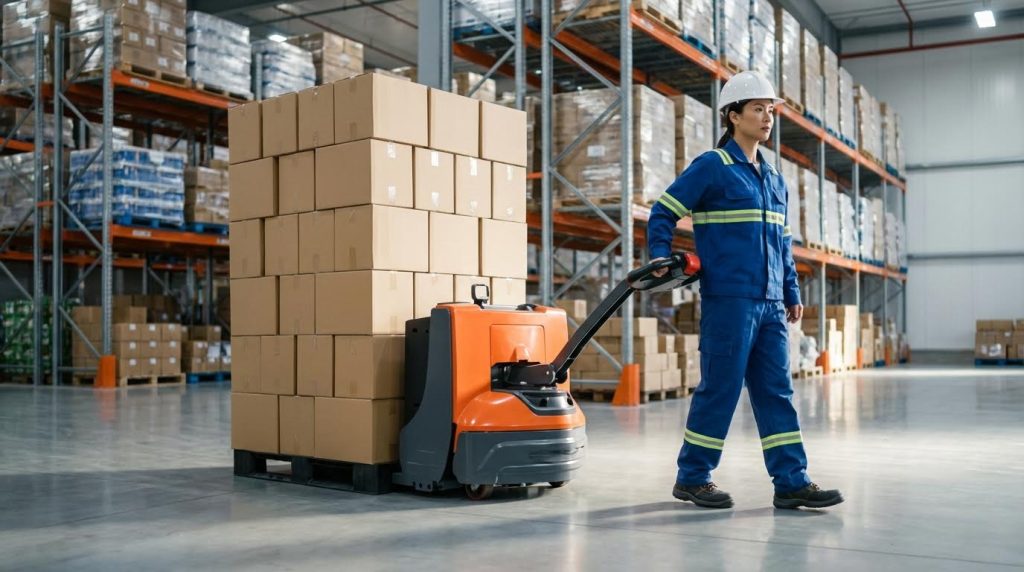
Frame material, thickness, and fork geometry
When buyers ask how much does a manual pallet jack weigh, the frame and fork design usually explain most of the difference between models. Material grade, plate thickness, and fork geometry all shift the jack into a lighter or heavier weight band.
- Frame material and steel grade
- Most manual jacks use carbon steel; higher-strength grades allow thinner sections for the same capacity, reducing weight.
- Lower-strength steel needs thicker sections, increasing truck weight but sometimes lowering cost.
- Reinforced or high‑grade steel forks and frames add mass but improve stiffness and durability by design.
- Plate and channel thickness
- Thicker side plates and fork webs resist bending and impact, but they push a standard manual pallet truck from the lower end of ~65–90 kg toward the upper end and beyond for 2–3 tonne capacities.
- Thinner sections save 5–15 kg on a typical jack but increase deflection under load and reduce impact tolerance.
- Heavier frames are common on rough‑use or high‑duty‑cycle applications where abuse is expected.
- Fork geometry and reinforcement
- Standard manual pallet trucks in the 150–250 lb (68–113 kg) range use low‑profile, C‑ or box‑section forks sized for common pallets in warehouses.
- Adding full‑length bottom stiffeners or thicker fork tips can add several kilograms but reduces fork twist and tip damage.
- High‑lift or scissor designs need deeper fork structures and additional linkages, pushing manual units into the ~100–150 kg band for lifting height.
Typical weight impact of frame and fork choices
For buyers comparing how much does a manual pallet jack weigh across several models, frame and fork decisions usually move a given capacity class by 10–30 kg. Light‑duty frames with minimal reinforcement sit near the low end of the 65–90 kg band, while thick‑plate, reinforced, or high‑lift frames sit near or above the high end for the same rated load.
Wheel, axle, and pump design impacts
Running gear and hydraulic components also change manual pallet jack weight, especially on specialty and all‑terrain designs. These parts trade extra kilograms for durability, lower rolling resistance, or added functionality.
| Design element | Typical engineering change | Effect on manual jack weight | Operational impact |
|---|---|---|---|
| Load wheel material | Smaller, hard wheels vs larger, softer or wider wheels | Larger / softer wheels add several kilograms per pair | Smoother ride, better for rough floors; slightly higher base weight |
| Steer wheel size | Standard vs oversize steer wheels | Oversize wheels add 2–5 kg | Improved obstacle crossing and lower push force |
| Axle and bracket design | Simple pins vs heavy brackets and multi‑wheel bogies | Reinforced brackets and bogies add 3–10 kg | Higher durability on docks and uneven ground |
| All‑terrain / off‑road kits | Large pneumatic or semi‑pneumatic wheels with heavy hubs | Pushes manual trucks toward ~190–220 kg for 1 tonne class | Usable on gravel, yards, and rough concrete |
| Hydraulic pump body | Compact vs heavy‑duty cast bodies | Heavy‑duty pumps add several kilograms | Better seal life and shock resistance |
| High‑lift / scissor hydraulics | Additional cylinders, linkages, and anchors | Moves manual units into ~100–150 kg range for lift height | Vertical positioning plus transport |
Standard manual pallet jacks with basic wheels and a compact pump typically fall between about 150–250 lb (68–113 kg) for indoor use. As soon as you step into all‑terrain or specialty running gear, the same capacity can approach the ~190–220 kg band seen off‑road.
Why pump design matters to “how much does a manual pallet jack weigh?”
Most buyers focus on capacity, but the hydraulic pump casting, rod diameters, and valve hardware can easily add 5–10 kg between a light‑duty and a heavy‑duty manual jack. That extra metal improves shock resistance at full rated loads, which often sit around 2–3 tonnes or roughly 5,500 lb on standard models in typical warehouses.
Effect of fork length, width, and options
Geometry options answer a key buyer question: how much does a manual pallet jack weigh when you change fork size or add features? Fork length, overall width, and bolt‑on options all move the scale reading.
| Fork / option type | Typical manual jack weight effect | Example weight bands | Use case impact |
|---|---|---|---|
| Short forks | Less steel in forks; lighter frame | Short‑fork manual trucks around 55–59 kg for 2–3 tonne class | Better in tight spaces; easier to back‑drag and maneuver |
| Standard forks | Baseline steel volume | Typical manual pallet jack 65–90 kg for common pallet sizes | General warehouse work and dock loading |
| Extended forks | More steel lengthwise; often added stiffeners | Extended‑fork versions around 82–123 kg for 2–3 tonne capacities | Handles long pallets or two pallets at once, but heavier to push |
| Wider overall fork spread | Wider cross‑members and braces | Typically adds several kilograms vs standard width | Improves side stability for odd‑size loads |
| On‑board scale | Scale frame, electronics, and display | Weigh‑scale pallet trucks around 110 kg plus options in manual form | Enables weighing at point of pick; higher base weight |
| High‑lift / scissor fork sets | Deep fork sections and scissor arms | Manual high‑lift trucks about 100–150 kg for 1 tonne class | Combines lifting table with pallet handling |
- Each 100 mm of added fork length increases steel volume and can add 1–3 kg, depending on thickness.
- Specialty and all‑terrain manual trucks with wide stance and options often reach 149–248 kg for rough environments.
- These option‑driven increases matter when you calculate total load on floors, mezzanines, and tail lifts.
Engineering takeaway for buyers
From an engineering standpoint, how much does a manual pallet jack weigh is not a single fixed number. Standard units cluster around 65–90 kg or 150–250 lb, but fork length, width, and add‑on options like scales or high‑lift mechanisms can easily double that figure for specialty models in real facilities.
Using Weight Data In Selection And Facility Design
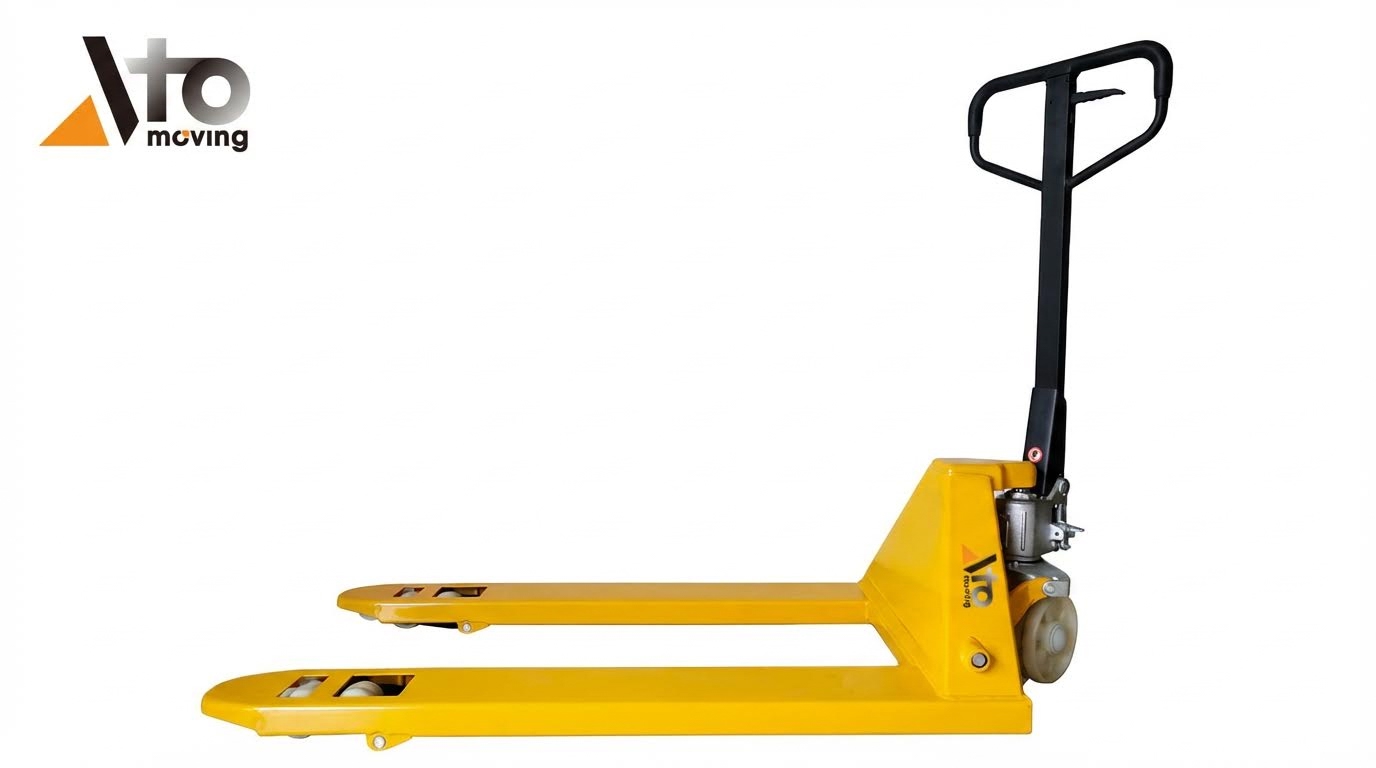
Floor loading, racking, and mezzanine checks
Before asking how much does a manual pallet jack weigh, you need to know how that weight interacts with your floors, racks, and mezzanines. The key is to treat the jack as part of the live load, not just the pallet and product. Use the truck’s own weight plus its rated capacity to check worst‑case conditions.
| Item | Typical value / range | Why it matters for design |
|---|---|---|
| Typical manual pallet jack weight | Approx. 150–250 lb (68–113 kg) typical range | Added to pallet + product to get total floor load |
| Standard manual jack capacity | About 5,500 lb (≈2,500 kg) rated capacity common rating | Defines maximum live load that can be placed on a bay or mezzanine |
| High‑lift manual truck weight | ≈108 kg for 1,000 kg capacity unit example value | Higher self‑weight increases point loading on small platforms |
| All‑terrain manual truck weight | ≈195 kg for 1,000 kg capacity unit example value | Heavier frames and large wheels concentrate load on fewer contact points |
| Specialty / rough‑environment manual truck weight | ≈149–248 kg (328–546 lb) typical range | Critical for checking slab, rack, and mezzanine limits |
Use these weight values directly in your structural checks. The total load on the floor is the sum of truck, pallet, and product. Regulations and best practice also required that the pallet jack’s own weight be included in total load calculations to avoid overloading. Standards and guidance emphasized this point.
- Floor slabs: Check worst‑case: jack at full capacity + jack self‑weight over the smallest wheel contact area.
- Racking beams: Use pallet + product only, but verify that handling methods never exceed bay rating when multiple pallets and jacks occupy the same aisle segment.
- Mezzanines: Treat each loaded jack as a concentrated rolling load. Compare to the mezzanine’s posted live‑load rating and any published point‑load limits.
Practical engineering checklist for floor and structure checks
Use this quick sequence when evaluating a new manual pallet jack for an existing facility.
- Confirm the jack’s actual weight from the data plate or spec sheet (expect roughly 65–90 kg for many standard manual models, more for extended‑fork or specialty units). Typical manual truck weights
- Identify maximum pallet + product weight actually handled, not just nominal SKU weight.
- Add jack weight + pallet weight + product weight to get total live load.
- Compare this total to slab, rack, and mezzanine ratings, including any concentrated load or wheel load limits if available.
- If values are close to limits, reduce allowed pallet weight or restrict jack type in those zones.
Transport, handling, and narrow-aisle maneuverability
Manual pallet jack weight also affects how you move the truck itself and how it behaves in tight aisles. Lighter jacks are easier to relocate and pull, while heavier specialty units offer more stability but demand more operator effort and more aisle clearance.
| Manual jack type | Typical weight | Handling & maneuvering impact |
|---|---|---|
| Standard manual pallet jack | ≈150–250 lb (68–113 kg) typical range | Good compromise between stability and ease of pulling in narrow aisles |
| Short‑fork manual jack | ≈55–59 kg example range | Lower weight and shorter wheelbase improve turning radius in very tight rack aisles |
| Extended‑fork manual jack | ≈82–123 kg example range | Heavier and longer; requires wider aisles and more clearance at rack entries |
| High‑lift / scissor manual jack | ≈100–150 kg typical range | Higher center of gravity; best in open work areas rather than congested aisles |
| Off‑road / all‑terrain manual jack | ≈190–220 kg typical example range | Heavy and bulky; suited to yards and rough surfaces, not narrow warehouse aisles |
When you plan aisle widths and internal transport routes, treat jack weight as a direct input to ergonomic and safety decisions. Heavier units increase push–pull forces and may require wider turning radii, especially when combined with long forks.
- For frequent manual handling, favor lighter standard or short‑fork jacks to reduce operator strain.
- Reserve heavier specialty or all‑terrain units for occasional moves or specific zones.
- In very narrow aisles, combine a lighter jack with strict pallet size control to keep turning envelopes predictable.
Using weight data in transport and ergonomics planning
To convert “how much does a manual pallet jack weigh” into a practical design input, follow these steps.
- List each jack type in the facility with its actual weight and fork length.
- Map the narrowest aisles, tightest doorways, and any ramps or slopes.
- For each route, check that operators do not need to drag the heaviest jacks over long distances or steep grades.
- Where heavy jacks are unavoidable, limit their use to shorter routes, add rest points, or consider powered assistance.
- Update traffic and equipment rules so the heaviest manual jacks are kept out of the tightest aisles and most fragile floor areas.
Final Engineering Considerations And Best Practices
Manual pallet jack weight is not just a catalog value. It is a direct input into structural safety, ergonomics, and throughput. Frame design, fork geometry, wheels, and pump choices all trade extra kilograms for stiffness, durability, and terrain capability. Those kilograms then flow into floor loading, mezzanine checks, and push–pull forces in daily work.
Engineering and operations teams should treat every jack as a mobile load case. Always add truck weight to pallet and product when you check slabs, docks, lifts, and platforms. Match fork length and width to actual pallet sizes and aisle geometry instead of defaulting to the longest or heaviest build. Use short or standard jacks as the primary fleet in tight, high‑traffic areas, and reserve high‑lift or all‑terrain units for defined zones.
As a rule, start with a standard 65–90 kg class jack for indoor work. Move up in weight only when the use case clearly requires extra reach, lift height, or off‑road performance. Verify each change against structural limits and ergonomic guidelines. This disciplined approach lets you use Atomoving manual pallet jacks safely, with clear margins and predictable handling across the entire facility.
Frequently Asked Questions
How much does a manual pallet jack weigh?
A standard manual pallet jack, such as a 5000 lb model, typically weighs between 185 to 200 pounds. This weight can vary slightly depending on the manufacturer and specific model design. For more details, you can refer to this pallet jack guide.
How much does a 6000 lb pallet jack weigh?
A 6000 lb capacity pallet jack, like the Vestil PM6-2748, generally weighs around 212 pounds. Keep in mind that these weights can differ based on the brand and additional features included in the design. More information can be found in this product listing.