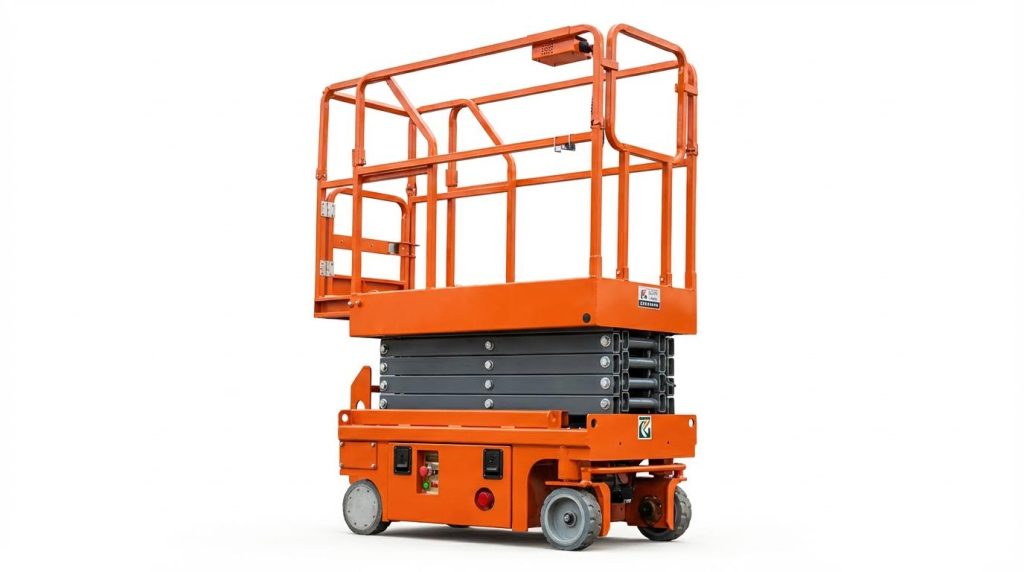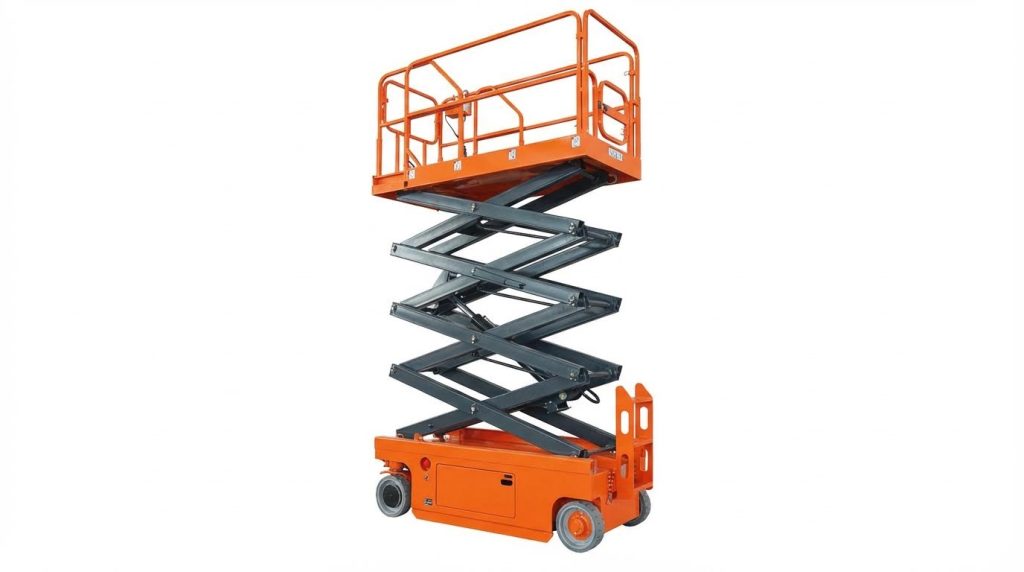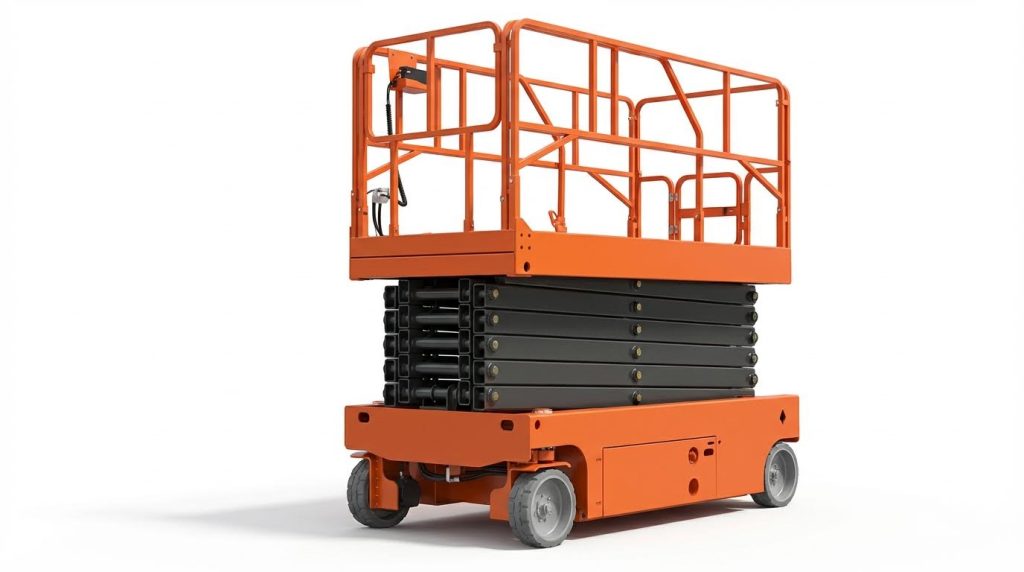
Electric scissor lifts and scissor platform lifts only require onboard fire extinguishers in specific risk and distance conditions, but many sites choose to fit them as standard. This guide explains when they are mandatory, what size and class to use, and how to mount and maintain them safely.
If you are asking “does electric scissor lifts require fire extinguishers,” the engineering answer is: only when a fire could block escape or when travel distance to a nearby extinguisher exceeds OSHA and NFPA limits. We will translate those regulations into simple, jobsite-ready rules so you can keep operators protected and audits clean.
When MEWPs Must Carry Fire Extinguishers
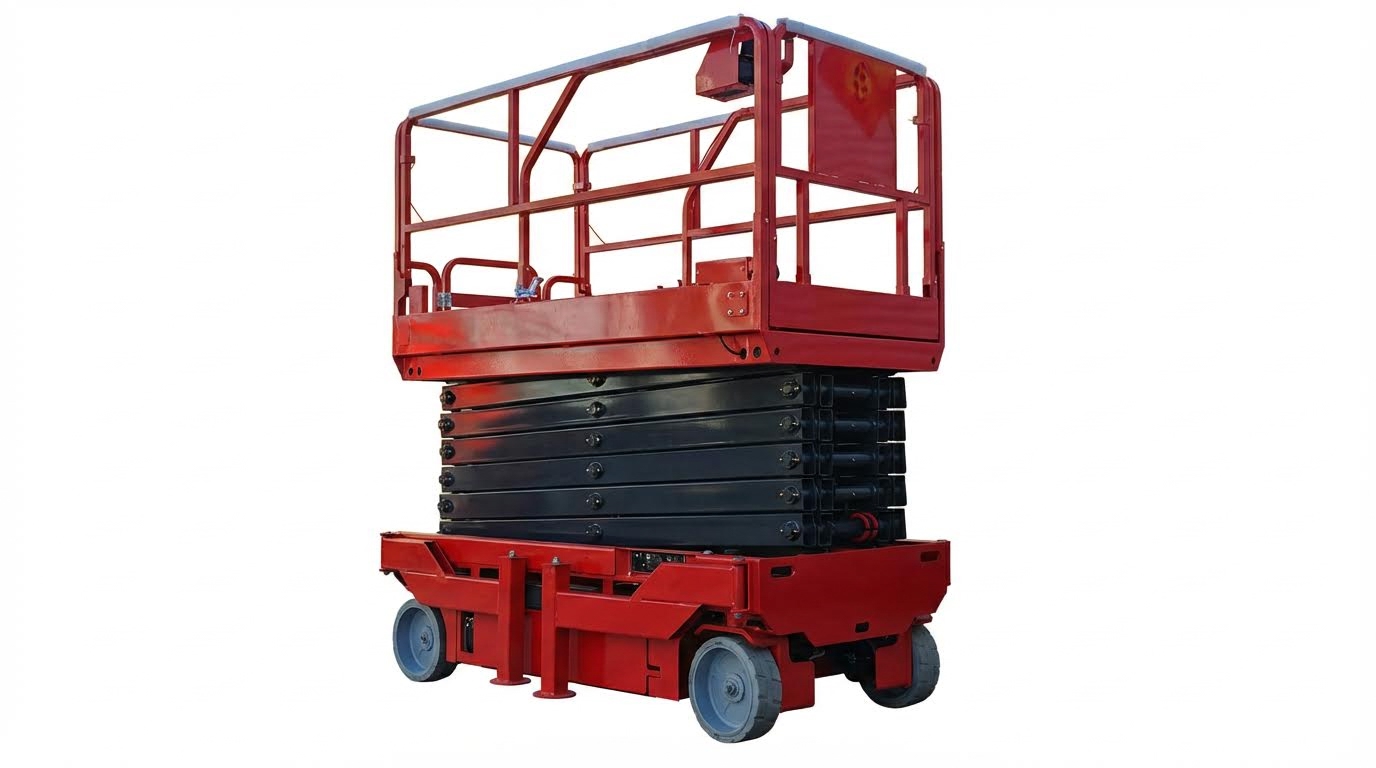
MEWPs, including scissor platform, must carry onboard fire extinguishers whenever a fire could block the operator’s escape route or when travel distance to a nearby extinguisher exceeds OSHA/NFPA limits indoors or outdoors. This is the core answer to “does electric scissor lifts require fire extinguishers.”
In practice, this means you evaluate where the lift can get trapped, how far operators are from the nearest extinguisher at every working height, and what fire loads are around the machine. If any position breaks those rules, you engineer an onboard unit into the MEWP specification.
Regulatory triggers and escape route blockage
Electric scissor lifts require onboard fire extinguishers when a fire could block the operator’s escape route or when fixed extinguishers cannot be reached within regulated travel distances. If escape stays clear, a nearby floor or wall unit may be acceptable instead. This is the main regulatory test behind “does electric scissor lifts require fire extinguishers.”
Regulators treat self‑propelled equipment like MEWPs as potential ignition sources due to batteries, wiring, hydraulic oil, and chargers. Where these sources sit in tight spaces, at height, or above single exits, a small fire can instantly trap the platform, so an onboard extinguisher becomes mandatory. OSHA and related rules require either safe escape or compliant access distance to an extinguisher; once either is compromised, you upgrade the MEWP with its own unit.
| Regulatory / Practical Trigger | What It Means For MEWPs | Typical Examples | Operational Impact |
|---|---|---|---|
| Escape route can be blocked by fire | Onboard extinguisher required on the lift | Platform above a single doorway or stair; tight mezzanine aisles; tunnel or shaft work | Operator can knock down a small fire to keep the only exit usable and descend safely |
| Self‑propelled equipment with ignition sources in confined areas | Treat lift as a vehicle that must carry an extinguisher | Battery chargers, contactors, hydraulic hoses near combustible stock | Prevents small equipment fires from trapping the MEWP in place |
| Fixed extinguishers within allowed distance and escape not impeded | Onboard extinguisher not strictly required | Open warehouse with multiple exits and well‑spaced wall units | Operators can use floor units if a fire starts, provided egress is still clear |
| Work in congested industrial lines or process areas | Onboard extinguisher strongly recommended | Inside production lines, under conveyors, between machinery | Reduces response time when floor units are blocked by equipment or product flow |
| Operation in tunnels, shafts, or enclosed bays | Onboard extinguisher effectively mandatory | Underground headings, service tunnels, deep loading docks | Local unit is often the only realistic way to attack a fire before smoke blocks escape |
From an engineering standpoint, the question “does electric scissor lifts require fire extinguishers” is answered by mapping every planned work position and asking two questions: can fire cut off the way down, and is there a compliant extinguisher still reachable? If either answer is “yes, it can be cut off” or “no, it is not reachable,” you specify an onboard unit.
💡 Field Engineer’s Note: When lifts work over single doors or at the end of long racks, I treat onboard extinguishers as non‑negotiable even if the code is gray. In a real fire, smoke and heat will make that “technically within distance” wall unit useless long before the operator can climb down to it.
Indoor vs outdoor travel distance limits
Indoors, electric scissor lifts need onboard extinguishers if the travel distance from any work position to the nearest extinguisher exceeds about 15 m for Class B or 23 m for Class A hazards. Outdoors, onboard units are needed whenever site layout or access makes those distances unachievable in practice.
OSHA and NFPA 10 limit how far people should have to move to reach an extinguisher. For most industrial interiors, that is roughly 15 m for flammable liquids and 23 m for ordinary combustibles. Where fixed wall units, hose reels, or standpipes cannot maintain these distances at all lift heights, the MEWP itself must carry a compliant extinguisher. Outdoors, natural ventilation helps with smoke, but long walks, uneven ground, and weather‑damaged posts often mean the only reliable option is an onboard unit.
| Environment | Fire Class / Hazard | Typical Max Travel Distance | Trigger For Onboard Extinguisher | Operational Impact |
|---|---|---|---|---|
| Indoor – general industrial / warehouse | Class A (cartons, wood, plastics) | ≈ 23 m (75 ft) | Any lift position (at height or on floor) falls beyond ≈ 23 m from a suitable extinguisher | Requires mapping lift reach vs wall units; add onboard unit where “dead zones” exist |
| Indoor – flammable liquids nearby | Class B (solvents, fuels, paints) | ≈ 15 m (50 ft) | Lifts used near tanks, paint lines, or fuel systems without a Class B unit within ≈ 15 m | Onboard ABC or BC unit closes the distance gap and supports hot work permits |
| Indoor – congested production lines | Mixed A/B/C | 15–23 m, but paths may be blocked | Travel path to wall unit blocked by conveyors, guards, or locked gates | Onboard extinguisher bypasses maze‑like routes and physical barriers |
| Outdoor – yards and laydown areas | Mostly Class A, some B/C on equipment | Same 15–23 m guidance, but harder to enforce | Nearest stand post or cabinet > 23 m away or not visible from the lift | Onboard unit becomes primary first‑attack tool for battery or hydraulic fires |
| Outdoor – large construction sites | Mixed A/B/C, changing daily | Distances often exceeded due to mobility | Lift constantly moves away from fixed posts or extinguishers on other equipment | Specifying onboard units avoids constant re‑layout of temporary extinguishers |
How to check travel distance for a planned lift task
Step 1: Mark the planned lift footprint and maximum outreach on a scaled floor or site plan.
Step 2: Draw circles with 15 m and 23 m radii around each existing extinguisher location.
Step 3: Any lift position outside all circles is a non‑compliant zone for that hazard class.
Step 4: For those zones, either relocate/add fixed extinguishers or specify an onboard unit on the MEWP.
From a safety engineering view, the answer to “does electric scissor lifts require fire extinguishers” indoors is often “yes” once you actually plot travel distances at height. A platform 10 m up and 20 m horizontally from the nearest wall unit may be technically within straight‑line distance, but the real path (down, across, around obstacles) easily exceeds 23 m, making an onboard extinguisher the only robust solution.
💡 Field Engineer’s Note: When I audit sites, I do not accept “we have one on that column” unless operators can reach it in under ~10–15 seconds from the platform controls. Long ladders, locked doors, or detours around machinery are red flags that mean the lift itself needs an extinguisher.
Engineering The Right Extinguisher Setup On MEWPs
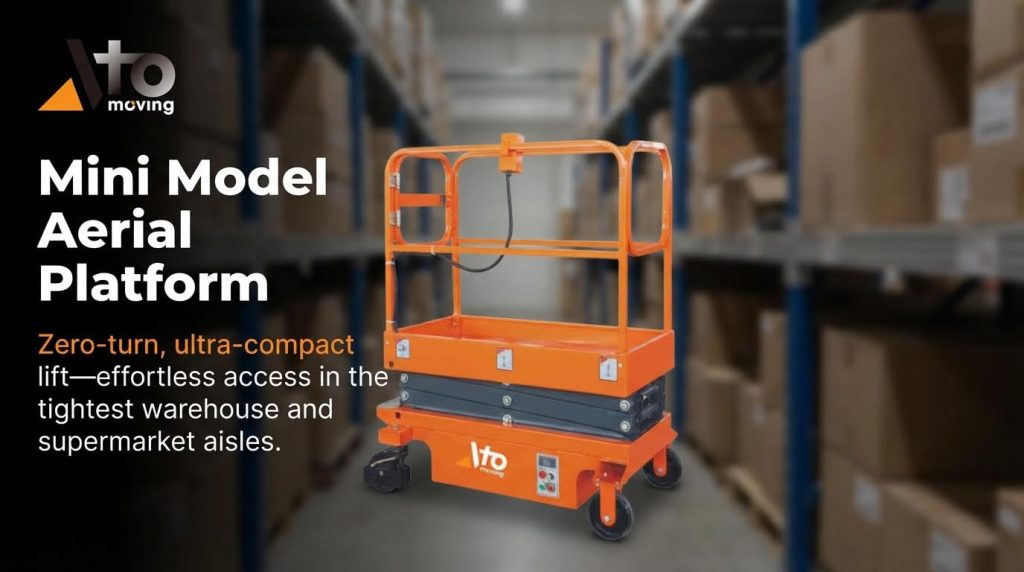
Engineering the right extinguisher setup on MEWPs means matching ABC ratings, size, and mounting to the actual fire loads and escape risks around the lift, not just asking “does electric scissor lifts require fire extinguishers” in general.
For scissor platform and other MEWPs, you design the extinguisher package around three questions: what can burn (hazard classes), how much agent you realistically need (ratings and capacity), and whether the operator can reach and release the unit quickly under vibration and harness restraint.
Hazard classes on electric scissor lifts
Electric scissor lifts typically expose operators to combined Class A, B, and C hazards, so most fleets standardize on multi‑purpose ABC dry chemical units sized to the surrounding fire load and escape risk, not just the lift itself. This is the engineering answer behind “does electric scissor lifts require fire extinguishers” – it depends on these hazards and blocked‑escape scenarios.
On a typical electric scissor lift you see Class A combustibles around the work area, Class B liquids in or near the machine, and Class C energized components in the chassis and platform wiring. That mix drives you toward ABC coverage rather than single‑class units. Electric scissor lifts contain ignition sources such as batteries, chargers, contactors, hydraulic hoses, and wiring looms, which can all initiate fires in tight spaces where escape routes can be compromised. OSHA and related guidance treat these as real ignition sources, especially when the lift works above single exits, congested lines, or in tunnels.
| Zone / Component | Typical Fire Class | Examples on / around electric scissor lifts | Recommended extinguisher coverage | Operational impact |
|---|---|---|---|---|
| Platform work area | Class A | Packaging, racking, cable trays, ceiling insulation | A‑rated (part of ABC unit) | Lets operator knock down small debris or lining fires before they grow vertically through racks. |
| Chassis / hydraulic bay | Class B | Hydraulic oil, lubricants, diesel nearby, solvents in process areas | B‑rated (part of ABC unit) | Targets incipient oil spray or pool fires under the platform where escape may be blocked. |
| Electrical system | Class C | Batteries, chargers, contactors, wiring looms | C‑rated (part of ABC unit) | Allows discharge on energized equipment without conducting back to the operator. |
| Surrounding process area | Class B / C | Paint booths, flammable vapors, hot work, charging areas | ABC with sufficient B and C rating | Provides first response until fixed systems, sprinklers, or fire brigade take over. |
High‑risk environments like hot work from platforms, paint or coating booths, battery charging areas, or warehouses with heavy plastic loads significantly increase the need for onboard extinguishers and for solid C‑class performance for electrical faults. OSHA aerial lift rules and related interpretations treat onboard units as critical safeguards in these scenarios because escape routes can be blocked at height.
How to confirm your hazard classes on a specific MEWP job
Walk the route and work zones of the MEWP. List combustibles (A), flammable liquids or gases (B), and energized equipment (C). Compare each zone to the planned lift positions. If any position exposes the platform to mixed A/B/C hazards with limited escape, treat that position as needing ABC onboard coverage.
💡 Field Engineer’s Note: In cold storage or freezers, plastics and insulated panels burn fast but look “clean.” Combine that with battery chargers near dock doors and you now have A, B, and C hazards in one aisle; I standardize on ABC units for any lift going into those rooms.
Selecting ABC ratings and capacities
For most scissor platform lift, a compact ABC dry chemical extinguisher in the 4A:40B:C range (around 6–9 kg) balances rating, weight, and reach; higher‑risk sites may specify larger 4A:60B:C or similar units where escape routes are marginal. The key is to size the extinguisher to the fire load and access distance, not just the machine size.
Because electric scissor lifts present combined A, B, and C hazards from hydraulic oil, batteries, wiring, and nearby combustibles, guidance favors multi‑purpose ABC dry chemical units as the default choice. Regulatory references note that mining and heavy industrial operations often call for higher ratings such as 4A:40B:C or greater on self‑propelled units where a fire could block escape. Indoors, OSHA limits travel distance to about 15 m for Class B and 23 m for typical Class A hazards; if the lift can move beyond those radii from any fixed unit, onboard capacity must close the gap.
| Typical ABC rating | Approx. agent mass (dry chemical) | Use case on MEWPs | Why this rating | Operational impact |
|---|---|---|---|---|
| 2A:20B:C | ≈ 4 kg | Light‑duty indoor maintenance with strong wall‑mounted coverage | Covers small A/B fires when fixed units are still within 10–15 m | Low weight for operators but limited knock‑down in high‑fuel areas. |
| 4A:40B:C | ≈ 6 kg | Standard choice for most warehouses and factories | Good balance of capacity and size for mixed hazards around lifts | Comfortably handles early‑stage oil or rack fires while operator plans evacuation. |
| 4A:60B:C and above | ≈ 9 kg | Heavy industrial, mining, tunnels, or confined mezzanines | More B‑rating for hydraulic pools, fuel, and plastic‑rich contents | Heavier to handle at height but offers more time to clear escape routes. |
Outdoors, natural ventilation reduces smoke buildup, but extinguishers on posts can be more than 15 m away or blocked by terrain. In those cases an onboard ABC unit becomes the primary tool to tackle small engine, battery, or hydraulic fires in the incipient stage before they grow beyond control distances specified for Class B and Class A hazards. OSHA travel distance limits drive these decisions.
Reading ABC ratings in practice
ABC ratings such as 4A:40B:C indicate relative capacity. For example, a 4A:60B:C unit can handle roughly twice the Class A fire of a 2A extinguisher and six times the Class B fire of a 10B unit, while still being safe on energized equipment. Use these ratios when comparing candidate sizes for your MEWP fleet.
💡 Field Engineer’s Note: If you are unsure which size to choose, map the worst‑case lift position against the nearest fixed extinguisher. If the lift can get outside 15–23 m coverage with a major hydraulic bay or battery tray below the deck, I move up one rating size from whatever the wall units carry.
Mounting, ergonomics, and vibration resistance
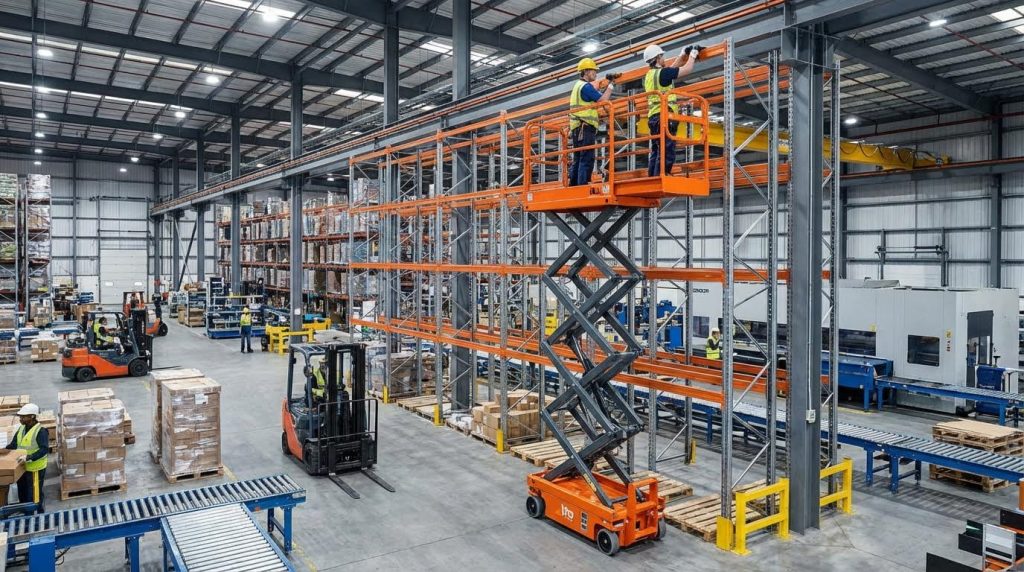
On MEWPs, the extinguisher must be mounted so a harnessed operator can reach and release it in seconds, with the handle typically below about 1.5 m above the standing surface and the bracket robust against constant vibration. Poor mounting turns a compliant extinguisher into dead weight.
Standards for portable extinguishers recommend that handles sit no higher than roughly 1.5 m above the floor for units up to about 18 kg, with at least 100 mm clearance from the floor to avoid damage. Guidance based on NFPA 10 translates well to MEWPs: mount the extinguisher where a tethered operator can grab it without over‑reaching or twisting around guardrails. Common practice is to place the bracket at the platform entrance or mid‑rail so that the extinguisher is visible from the ground for pre‑use checks and accessible from inside the platform.
| Design aspect | Typical engineering guideline | MEWP‑specific consideration | Operational impact |
|---|---|---|---|
| Mounting height | Top of extinguisher ≲ 1,500 mm above standing surface | Operator must reach it while harnessed and facing the work | Reduces shoulder strain and fumbling during emergencies. |
| Location on platform | Near access gate or mid‑rail, not in traffic path | Avoid snagging harness lanyards or control cables | Maintains clear entry while keeping unit in the operator’s “muscle memory.” |
| Bracket robustness | Rated for vibration and shock | Survives repeated raising/lowering and travel over joints | Prevents slow loosening that can drop the extinguisher from height. |
| Release mechanism | Single‑action latch operable with gloved hands | No fine clips or small pins that are hard with cold or oily gloves | Speeds deployment when every second matters. |
| Label visibility | Pressure gauge and label visible from ground | Pre‑shift inspections without climbing | Supports monthly and daily checks required by site procedures. |
Vibration from travel and platform movement can loosen light‑duty brackets or pins, so choose brackets designed for mobile equipment and verify that the locking strap or pin cannot work free under repeated cycles. Labels and gauges should face outward so ground staff can confirm charge status during daily checks and monthly inspections mandated under OSHA and NFPA 10‑style programs. Construction‑oriented aerial lift rules stress documented inspections and hydrostatic testing intervals, which you can only meet if each unit is clearly visible and traceable to a specific lift.
Quick mounting checklist for your scissor lift
1) Stand on the platform in full PPE and harness. 2) Reach for the extinguisher without stepping or twisting; adjust height until this feels natural. 3) Shake the platform and drive a short distance to verify the bracket does not rattle loose. 4) From the ground, confirm you can see the gauge and tag. 5) Record the extinguisher ID against the lift serial number for maintenance tracking.
💡 Field Engineer’s Note: The most common field failure I see is a nice, big ABC extinguisher hung too high on the guardrail; operators in harnesses have to stand on tip‑toe to release it. Mount it where a 1,600 mm‑tall person in winter gloves can grab and pull it cleanly in one motion.
Applying Requirements To Common MEWP Use Cases
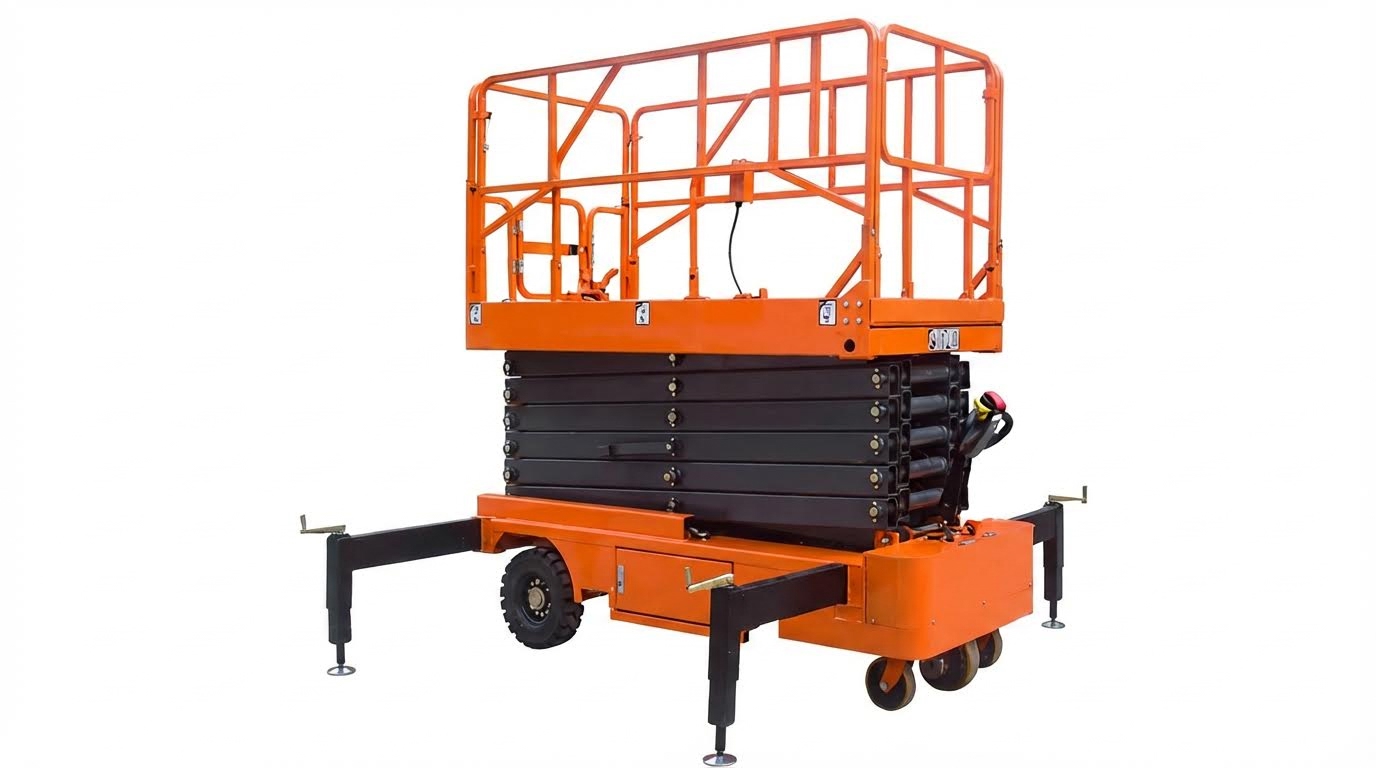
This section explains how to apply fire‑extinguisher rules to real MEWP work so supervisors can answer “does scissor platform lift require fire extinguishers” for each job, based on risk, distance, and escape routes.
In practice you decide onboard vs nearby extinguishers by checking three things: fire load around the lift, whether a fire could block escape, and if a compliant extinguisher is always within 15–23 m at every platform position. When any of those fail, you move to onboard units.
High‑risk tasks and environments
High‑risk MEWP tasks almost always push you toward onboard extinguishers because ignition sources and poor escape options combine to make travel‑distance rules and wall units alone inadequate.
For each high‑risk scenario below, assume a multi‑purpose ABC extinguisher is already selected; your decision is mainly “onboard vs wall‑mounted nearby.”
| High‑Risk Scenario | Typical Fire Hazards | Onboard Extinguisher Need? | Recommended ABC Rating / Size | Operational Impact |
|---|---|---|---|---|
| Hot work from platform (welding, cutting, grinding) | Sparks, slag, igniting packaging, dust, coatings | Yes – almost always required | At least 2A:10B:C dry chemical | Allows the basket operator to hit a small fire at height before exit routes are blocked. |
| Work in paint / coating booths | Flammable vapors, overspray, filters | Yes – treat as confined, high‑fuel area | 3A:20B:C where plastics/solvents are present | Controls flash fires in overspray zones where fixed units may be out of reach. |
| Battery charging areas near lifts | Hydrogen gas, electrical faults, cable damage | Usually yes if charging or parking near chargers | 2A:10B:C with clear Class C rating | Provides immediate response to arcing or cable fires before they involve the whole lift. |
| Warehouses with high plastic / rack storage | Fast‑growing Class A/B fire, high smoke | Often yes when working in aisles or at single exits | 3A:20B:C or higher where fuel load is heavy | Buys escape time when a rack fire can block the only aisle below the platform. |
| Tunnels, shafts, tight mezzanines | Confined smoke, limited egress, hydraulic/battery fire | Yes – escape can be blocked easily | 2A:10B:C minimum; higher if oil load is high | Lets the operator defend the escape path long enough to lower and exit. |
| Inside congested production lines | Combustibles around conveyors, machinery, cabling | Often yes – escape route may be indirect | 2A:10B:C or 3A:20B:C | Reduces risk of being trapped above equipment if a small fire starts below. |
| Outdoor yards with sparse fixed extinguishers | Battery, wiring, hydraulic oil, fuel, grass | Yes if nearest unit >15 m away | 2A:10B:C with corrosion‑resistant build | Compensates for long walking distances and weather‑damaged stand posts. |
Across these use cases, regulators focus on two triggers: could a fire block the operator’s escape route, and is a compliant extinguisher always within 15–23 m travel distance for the relevant hazard classes for scissor platform and other MEWPs. If either answer is “no,” treat an onboard unit as mandatory, not optional.
- Hot work from platforms: Sparks can fall several meters and ignite hidden combustibles – onboard extinguishers let the operator attack the source without waiting to lower fully.
- Paint/coating booths: Vapor and overspray can ignite fast – onboard units cover gaps where booth wall units are blocked by equipment or airflow patterns.
- Battery‑heavy or plastic‑heavy warehouses: Fires grow and smoke quickly – onboard extinguishers buy seconds needed to lower and clear a single‑aisle escape path.
- Confined spaces (tunnels, mezzanines): Smoke pools and visibility collapses – having the extinguisher on the platform avoids a blind walk to a remote unit.
- Remote outdoor work: Distances often exceed 15–23 m – onboard units remove the guesswork when fixed posts are sparse or vandalized.
How this answers “does electric scissor lifts require fire extinguishers?”
Electric scissor lifts require onboard fire extinguishers when (1) a fire could block the operator’s escape route or (2) compliant extinguishers are not within 15–23 m for the hazard class at every work position. In lower‑risk, well‑protected areas, wall units within those distances can be acceptable.
💡 Field Engineer’s Note: In hot‑work and paint‑booth jobs, I treat “no onboard extinguisher” as a stop‑work condition. Sparks and vapors do not care what your site fire plan says on paper; they care about the 2–3 seconds it takes to grab a nearby handle.
Coordinating with site fire protection layouts
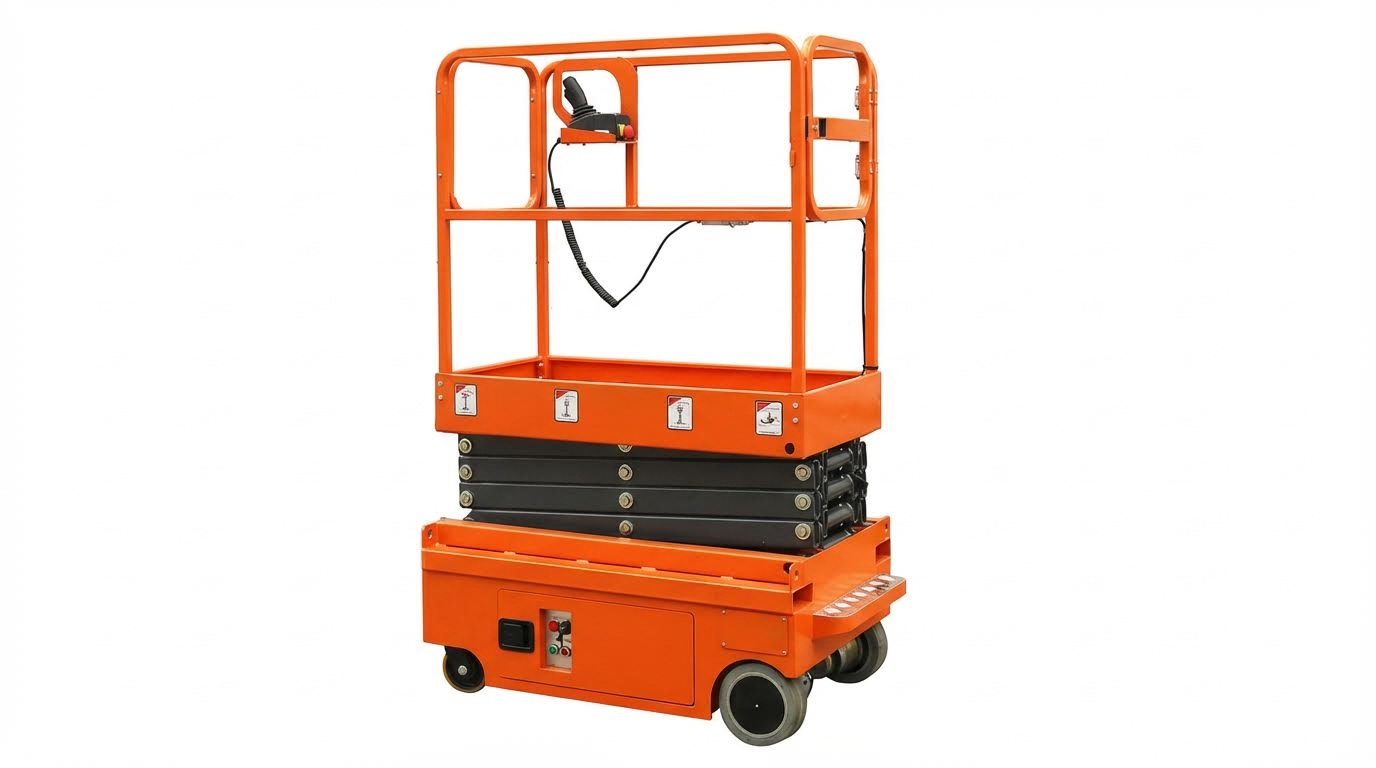
Coordinating MEWP extinguisher decisions with the site fire‑protection layout means overlaying lift working zones on extinguisher coverage distances and escape routes, then filling any gaps with onboard units or added wall stations.
Instead of asking “does aerial platform require fire extinguishers” in general, you map each task: where the lift can drive, where the platform can reach, and how far that point is from the nearest suitable extinguisher. You then compare those distances to OSHA/NFPA limits for Class A and B hazards (about 15 m for many Class B and 23 m for many Class A applications) in the relevant standards.
| Planning Step | What You Do | Key Distance / Criterion | Operational Impact |
|---|---|---|---|
| 1. Map MEWP work envelope | Mark all planned lift routes and platform reach zones on the floor plan. | Include max platform height and outreach (m). | Shows where the operator might be when a fire starts. |
| 2. Plot existing extinguishers | Add all wall units, hose reels, standpipes, and vehicle units. | Note class (A/B/C) and rating (e.g., 2A:10B:C). | Reveals coverage holes for certain fire classes. |
| 3. Draw travel‑distance circles | Draw 15 m and 23 m radii around each extinguisher point. | 15 m for many Class B; 23 m for many Class A layouts. | Visualizes where standards are met vs. exceeded. |
| 4. Check every MEWP work point | Confirm each platform position falls inside at least one compliant circle. | If outside 15–23 m, extinguisher access is non‑compliant. | Provides a yes/no answer for onboard extinguisher need. |
| 5. Evaluate escape routes | Trace the operator’s path down and out if a fire starts below. | Look for single exits, narrow aisles, choke points. | Identifies where a fire could trap the lift operator. |
| 6. Decide mitigation | Choose to add wall units, restrict travel, or mount onboard units. | Onboard units favored when layout is complex or changing. | Maintains compliance without redesigning the whole plant. |
Digital floor plans or simple CAD sketches make this quick. Many safety teams now overlay MEWP paths on “heat maps” of extinguisher coverage and sprinkler/standpipe reach to show management exactly why certain jobs demand onboard units under aerial‑lift regulations.
- Align with sprinkler and standpipe coverage: Sprinklers protect the building, not the operator – you still need portable units within allowed travel distances for incipient fires.
- Account for moving work zones: MEWPs rarely stay in one bay – onboard extinguishers reduce the need to re‑survey every time you move a job 10 m.
- Check vertical as well as horizontal travel: A wall unit 10 m away horizontally is useless if smoke or fire below blocks the ladder or stair – onboard units let the operator fight a small fire to keep the descent route usable.
- Integrate with permit‑to‑work systems: Tie the “onboard extinguisher required?” decision into hot‑work and MEWP permits – this prevents crews from starting high‑risk tasks without suppression ready at height.
Quick rule‑of‑thumb for planners
If any planned MEWP work point is beyond 15–23 m from an appropriate extinguisher, or if a single fire could block the only way down or out, specify an onboard ABC extinguisher on the lift for that task.
💡 Field Engineer’s Note: On large retrofit jobs, I stop arguing over whether new wall extinguishers or more drawings are needed; I standardize on one ABC unit per lift. It is usually cheaper in labor hours than re‑designing the fire layout every time the scope shifts by a few meters.
Final Thoughts On MEWP Fire Extinguisher Compliance
Fire‑extinguisher compliance on MEWPs is not about the machine in isolation. It depends on escape routes, fire loads, and real travel distance at height. Once you map platform positions against hazards and nearby units, the rule becomes clear: if a fire can block the way down or push travel distance beyond about 15–23 m, the lift must carry its own extinguisher.
Engineering the right setup then means three things. Match the extinguisher class to mixed A/B/C hazards around batteries, hydraulics, and combustibles. Size the rating to the worst credible fire and distance gap, not just the lift size. Mount the unit where a harnessed operator can reach and release it quickly under vibration.
Operations teams should bake these checks into job planning, permits, and fleet standards. Treat onboard ABC units as default for hot work, confined spaces, high‑rack storage, and mobile outdoor work, especially on Atomoving platforms. Use site layouts and distance plots to justify any exception. When in doubt, standardize on an onboard ABC extinguisher per lift. That choice usually costs less than redesigning fire layouts and gives operators a direct, reliable way to keep their escape path open when seconds matter.
Frequently Asked Questions
Do electric scissor lifts require fire extinguishers?
OSHA does not specifically mandate fire extinguishers on electric scissor lifts. However, workplaces where scissor lifts are used must comply with general fire safety regulations, such as having fire extinguishers readily accessible throughout the facility. Fire Safety Guidelines.
- Fire extinguishers should be located in hallways, meeting rooms, and near exit doors.
- Monthly visual inspections and annual maintenance checks are required if extinguishers are present. Forklift Safety FAQs.
What OSHA regulation governs fire extinguishers in workplaces?
OSHA regulation 29 CFR 1910.157 requires employers to provide portable fire extinguishers in workplaces and ensure they are accessible during emergencies. This applies to all areas, including where material handling equipment like scissor lifts is operated. OSHA Fire Extinguisher Standards.