
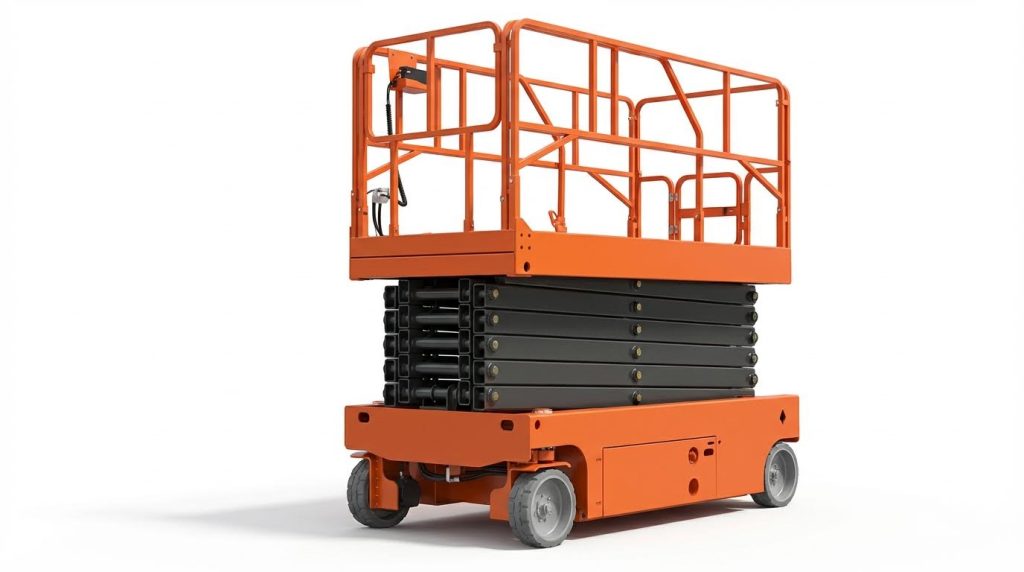
A 19‑foot scissor lift is a compact mobile elevating work platform (MEWP) designed to safely raise people and tools to about 7,5 m working height while staying narrow enough for doorways and warehouse aisles. When people ask “how much does a 19 foot scissor lift weigh,” they’re usually trying to plan floor loading, trailer selection, and site access—because these machines typically weigh around 1,180–1,810 kg depending on configuration. In this guide, we’ll break down typical weights and core specs, explain the engineering factors that drive those numbers, and walk through the basics of transport, permits, and jobsite planning. By the end, you’ll know how to match a scissor platform to your work height, floor capacity, trailer, and regulatory requirements with confidence.
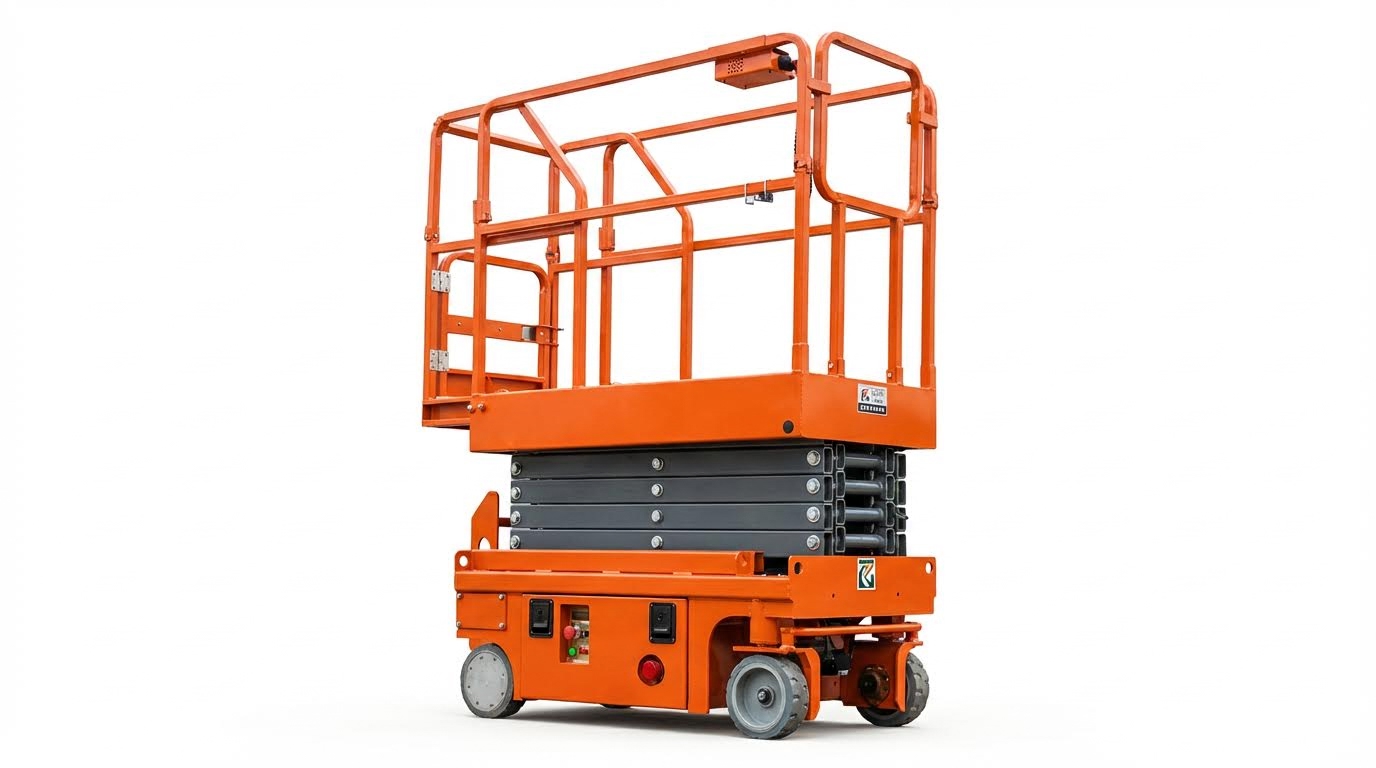
Typical Weight And Core Specs Of 19-Foot Scissor Lifts
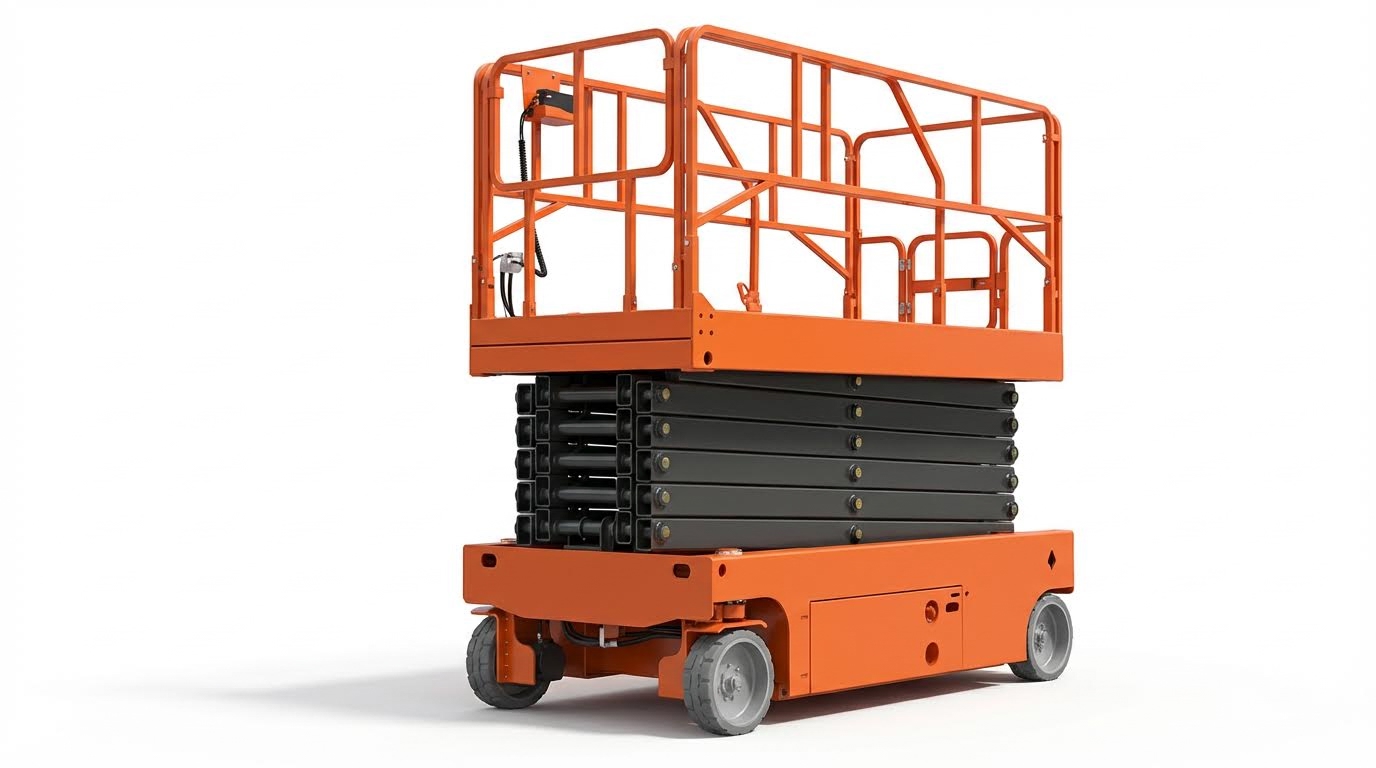
A typical 19-foot electric slab scissor lift weighs around 1,180–1,477 kg, with compact dimensions that fit through standard doors and platform capacities sized for two people plus tools. This section answers “how much does a 19 foot scissor lift weigh” by breaking down real-world weight ranges, dimensions, and platform ratings so you can plan trailers, floor loading, and site access correctly.
Common weight ranges by lift type
Most 19-foot electric slab scissor lift weighs roughly 1,180–1,477 kg, while crawler and heavy-duty variants can exceed 1,800 kg, and very light-duty hydraulic units can be under 1,000 kg depending on capacity and structure. Understanding these ranges is essential when you’re asking how much does a 19 foot scissor lift weigh for transport, slab design, or mezzanine work.
| Lift Type / Configuration | Typical Weight Range | Typical Platform Height | Typical Platform Capacity | Field Impact |
|---|---|---|---|---|
| Standard electric “slab” 19 ft scissor lift | 1,180–1,477 kg (2,600–3,255 lbs) (weight range) | 5,79 m platform height (≈7,79 m working height) (height) | 227–250 kg (500–550 lbs) (capacity) | Most common warehouse/maintenance unit; weight drives trailer rating and floor loading. |
| Compact hydraulic 19 ft scissor lift, 500 kg capacity | ≈880 kg (1,940 lbs) at 6 m lift height (example) | ≈6 m platform height | ≈500 kg (1,100 lbs) (capacity) | Lighter machine for its height; easier on light-duty floors but still needs checked ground support. |
| Higher‑reach scissor lifts (up to 14–20 m) | Up to ≈2,486 kg (5,480 lbs) at 14 m (example) | 14–20 m platform height | ≈500 kg (1,100 lbs) typical | Shows how weight climbs fast with height; useful benchmark if you’re comparing 19 ft vs taller units. |
| Crawler 19 ft class (tracked MEWP around 8 m) | ≈1,810 kg (3,990 lbs) (crawler example) | ≈8 m working height | ≈230 kg (507 lbs) (capacity) | Tracks spread load for rough terrain; total weight is higher so check trailer and ramp ratings. |
| Heavy‑duty high‑capacity 19 ft scissor lifts | Varies widely; weight increases with 300–2,000 kg capacity range (range) | ≈5,8–6 m platform height | 300–2,000 kg (661–4,409 lbs) (capacity range) | High capacities demand thicker steel and larger cylinders, pushing weight up; critical for slab design. |
From an engineering standpoint, the answer to how much does a 19 foot scissor lift weigh depends mainly on platform capacity, structural steel size, and whether the unit is wheeled or tracked.
💡 Field Engineer’s Note: When planning transport, I always add 10–15% margin above the published machine weight to cover fuel, tools, and added options—this protects you against overloading axles and small trailers.
How to quickly estimate lift weight on site
In the field, if you don’t have the manual, use these rules of thumb:
- Standard electric 19 ft slab: Assume ≈1,300–1,500 kg for trailer and floor checks.
- Crawler/tracked 19 ft class: Assume ≈1,800–2,000 kg because of the undercarriage mass.
- Very light hydraulic unit: If it’s visibly smaller and towable by hand, you may be near 900–1,000 kg, but always confirm from the data plate.
Key dimensions and platform capacities
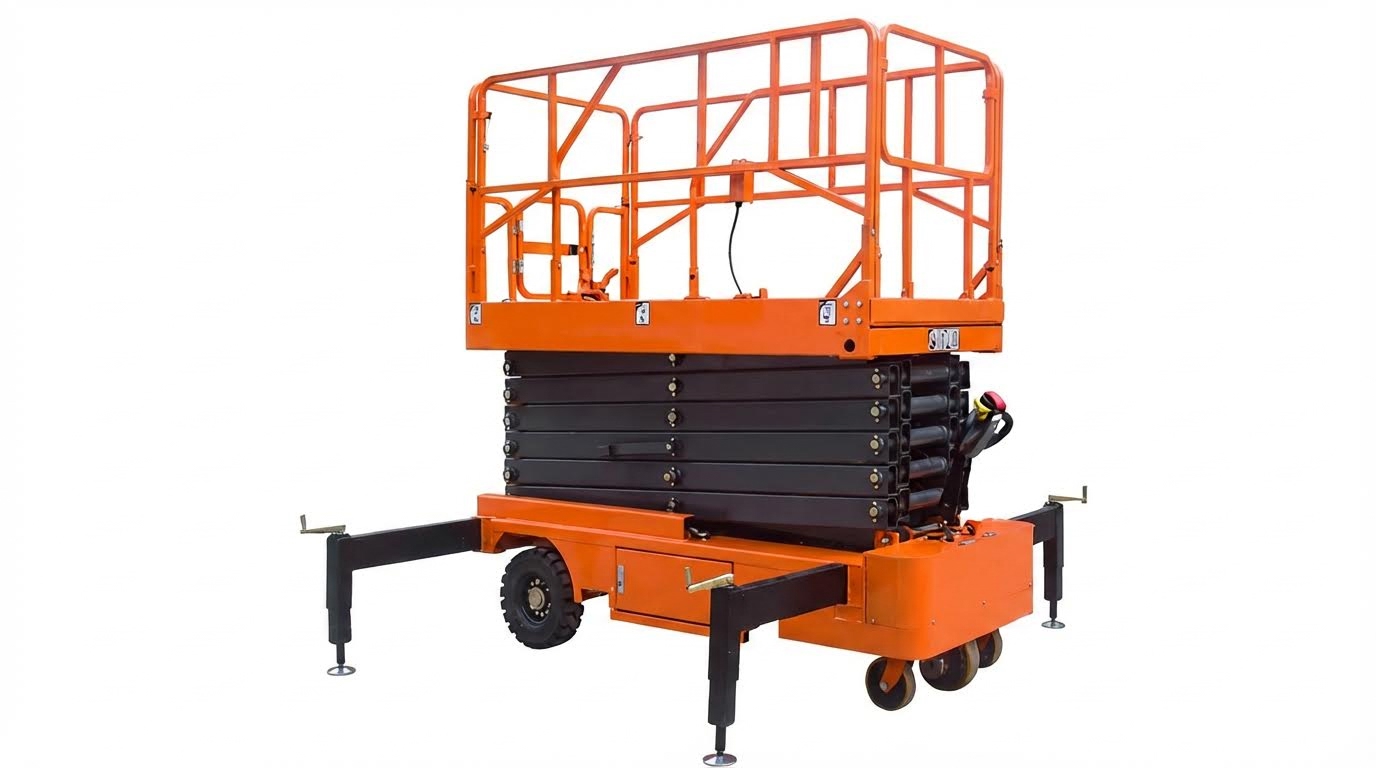
Typical 19-foot scissor lifts are about 1,83–1,88 m long, 0,76–0,81 m wide, and 1,65–2,02 m high stowed, with platform capacities around 227–250 kg and compact platforms sized for two workers plus tools. These dimensions are critical for door clearance, aisle turning, and verifying whether a given floor or mezzanine can safely support both the machine and its live load.
| Specification | Typical Range / Value | Source / Example | Field Impact |
|---|---|---|---|
| Maximum platform height | ≈5,79 m (19 ft) (spec) | Standard 19 ft electric scissor lift | Determines if you can reach ceiling services at ~7,79 m working height including operator reach. |
| Working height | ≈7,79 m (25 ft) (spec) | Platform height + operator reach | Use this for task planning (lights, sprinklers, racking) rather than platform height alone. |
| Overall width (stowed) | 0,76–0,81 m (30–32 in) (range) | Electric indoor 19 ft scissor | Fits through standard 0,9 m doors and narrow warehouse aisles; key for interior access. |
| Overall length (stowed) | 1,83–1,88 m (72–74 in) (range) | Electric indoor 19 ft scissor | Drives turning radius and loading pattern on small trailers and in tight plant corridors. |
| Stowed height (rails folded) | 1,65–2,02 m (65–79,6 in) (range) | Electric indoor 19 ft scissor | Important for low door headers, internal loading docks, and container or mezzanine access. |
| Platform size (main deck) | ≈0,76 m × 1,83 m (30 in × 72 in) (spec) | Standard 19 ft electric scissor | Comfortable for two workers; governs how easily you can handle sheet goods or duct sections. |
| Deck extension (slide‑out) | ≈0,91 m (36 in) extension (spec) | Common on many 19 ft units | Extends reach over conveyors, racks, or obstacles without moving the chassis. |
| Alternate platform sizes | ≈2,100 × 830 mm up to 3,500 × 1,800 mm (range) | Hydraulic and custom scissor lifts | Larger decks increase productivity but also increase machine weight and floor loading footprint. |
| Platform capacity (typical electric 19 ft) | 227–250 kg (500–550 lbs) (range) | 2 workers + tools | Plan for two average technicians plus hand tools; not suitable for very heavy materials. |
| Platform capacity (broader 19 ft range) | 300–2,000 kg (661–4,409 lbs) (range) | Industrial / special‑duty 19 ft lifts | High capacities dramatically increase dead weight; essential for checking slab design and ground bearing. |
| Power source | 24–48 V DC battery, AC, diesel, or manual options (options) | Various 19 ft scissor configurations | Battery packs add mass but enable quiet, zero‑emission indoor work; combustion power suits outdoor sites. |
| Anti‑skid platform surface | Checkered anti‑skid plate (feature) | Common safety feature | Reduces slip risk when the deck is wet or dusty; important for safety audits and compliance. |
When you’re evaluating how much does a 19 foot scissor lift weigh in practice, always pair the weight with these dimensions and capacities—weight alone doesn’t tell you if it will pass through your doors, sit safely on a mezzanine, or reach your highest pick faces.
Hydraulics and overload protection basics
Most 19 ft scissor lifts use an electric‑hydraulic system with cylinders driving the scissor stack. A hydraulic overload valve stops lifting if the platform load exceeds the rated capacity, and manual drop valves allow safe lowering in a power failure Engineering Factors That Influence Lift Weight
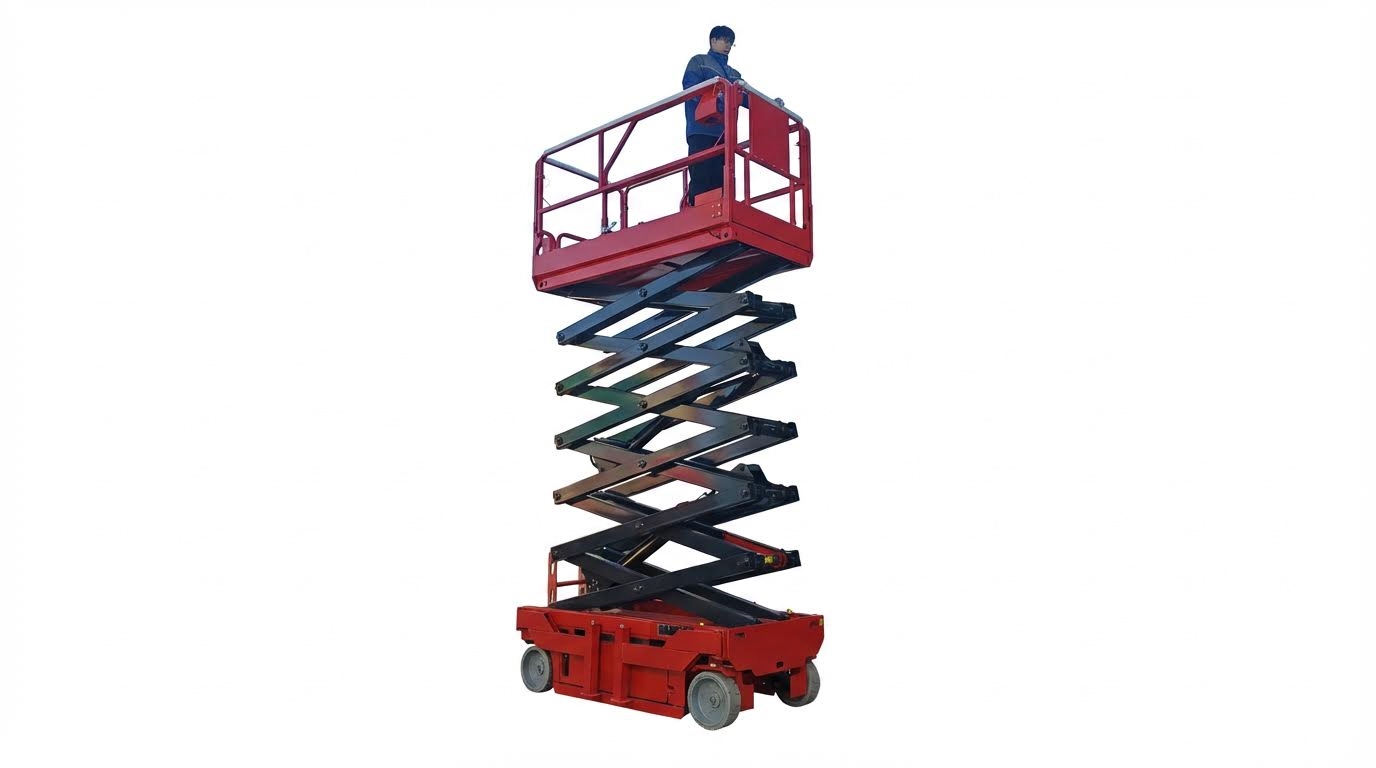
Engineering factors that influence how much does a 19 foot scissor lift weigh are mainly steel structure, safety factors, power system, and whether it is an indoor slab or rough‑terrain/crawler configuration.
When you ask “how much does a 19 foot scissor lift weigh,” the honest answer is that design choices move you from roughly 880 kg up past 1,800 kg. A compact 6 m / 19 ft scissor with 500 kg capacity can be about 880 kg in basic configuration, while crawler or heavy‑duty versions with similar heights reach around 1,810 kg with tracks and reinforced chassis. Understanding what is adding mass helps you plan floor loading, transport, and site access correctly.
💡 Field Engineer’s Note: Most “surprise” damage on mezzanines and suspended slabs comes from underestimating the dead weight of the lift, not the live load of people and tools. Always check slab rating in kg/m² before committing a model.
Structural design, steel sections, and safety factors
Structural design and steel sizing dictate the base weight of a 19‑foot scissor lift because thicker scissor arms, larger platforms, and higher safety factors all add steel mass to carry load and resist sway.
The scissor stack, base frame, and platform are essentially a moving steel truss. As platform height and capacity go up, manufacturers increase the section thickness and width of the scissor arms, reinforce pivot points, and stiffen the chassis. For example, a 6 m lift with 500 kg capacity can be about 880 kg, while a taller 14 m unit with the same capacity jumps to roughly 2,486 kg because the structure must resist higher bending and buckling loads through heavier sections.
| Design Factor | Typical Engineering Choice | Effect on Lift Weight | Field Impact |
|---|---|---|---|
| Platform capacity | ≈ 227–500 kg rated load for 19 ft units on common models | Higher capacity requires thicker arms and stronger base weldments. | More steel means higher dead weight and higher floor loading, but better for heavy tools and materials. |
| Platform size | ≈ 2,100 × 830 mm up to 3,500 × 1,800 mm depending on model | Larger decks need more steel in the platform and scissor arms. | Bigger platforms improve productivity but increase total mass and turning radius. |
| Safety factor & stability | Extra bracing, wider base, heavier counter‑mass to meet MEWP stability rules (e.g., ISO 16368 / EN 280 concepts). | Added gussets, plates, and ballast directly increase kg. | Improves resistance to tipping in wind or with dynamic movement but can approach trailer and slab limits. |
| Overall height class | 6 m vs 14–20 m working height for similar capacities in the same family | Taller lifts need more stages and heavier lower sections. | Even if you only use 19 ft, buying a higher‑reach chassis can double weight and complicate transport. |
| Deck surface | Anti‑skid checkered plate on the platform for slip resistance | Heavier than thin sheet but only a modest share of total mass. | Improves slip resistance, especially with dust or moisture, with minimal impact on transport planning. |
From an operations standpoint, these structural choices answer a big part of “how much does a 19 foot scissor lift weigh” before you even look at batteries or tires. A narrow 0.76–0.95 m wide indoor unit with modest capacity stays closer to the low end of the 1,180–1,477 kg range typical for 19 ft electric scissors in standard warehouse models.
How structural weight affects floor loading and ground pressure
A 1,400 kg lift on four solid tires concentrates load into small contact patches. On thin asphalt, that can cause rutting; on suspended slabs, it can exceed local punching shear capacity. Always check the machine’s published wheel load and compare to slab design values in kN/m² instead of just looking at total kg.
Power source, batteries, and hydraulic components
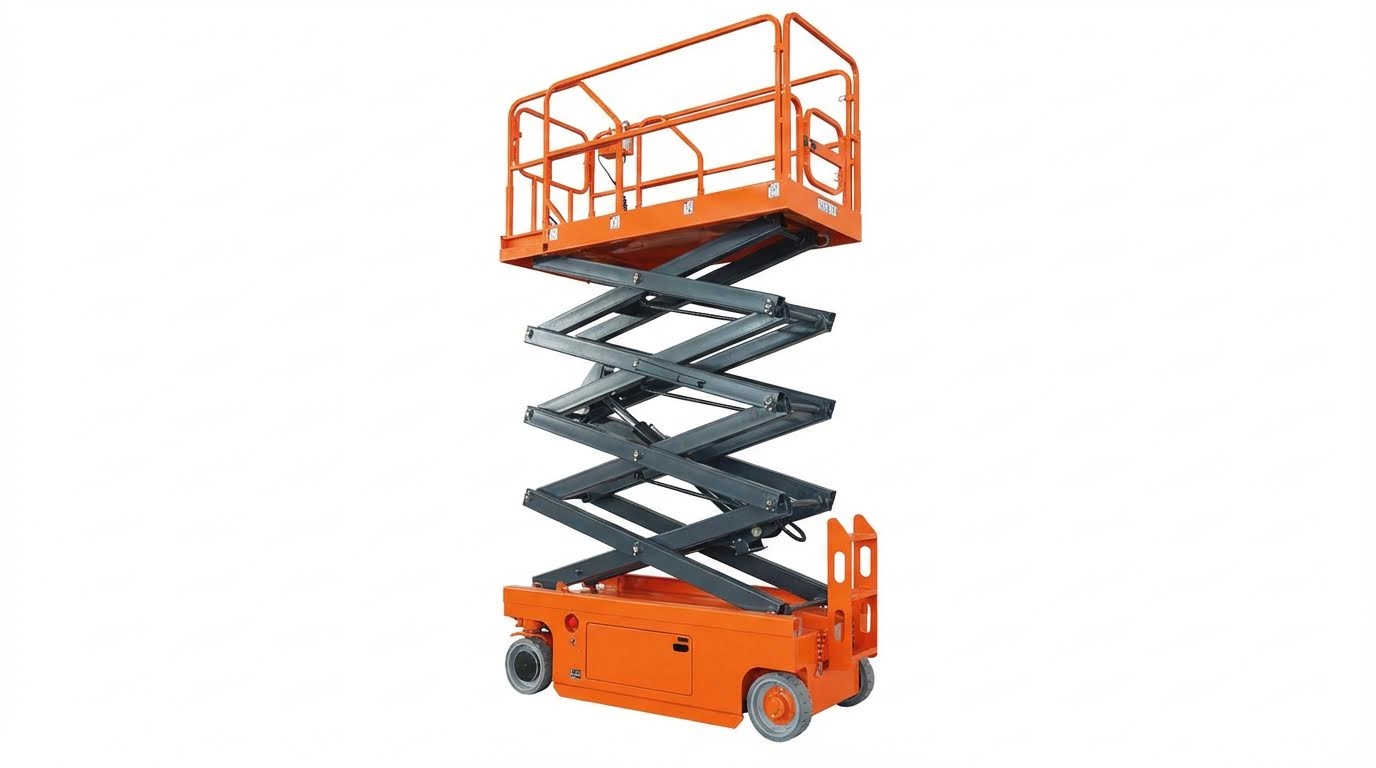
The power system—batteries, electric motors, hydraulic cylinders, and reservoirs—adds several hundred kilograms and can swing how much does a 19 foot scissor lift weigh depending on battery size and duty cycle requirements.
Most 19 ft slab scissors use electric‑hydraulic drives: an electric motor drives a hydraulic pump, which feeds cylinders that raise the scissor stack. Hydraulic overload protection stops lifting if the platform exceeds rated capacity, and safety valves prevent sudden drops through integrated valves and controls. All of this hardware adds mass on the base frame.
| Power / Hydraulic Component | Typical Spec for 19 ft Class | Effect on Weight | Field Impact |
|---|---|---|---|
| Battery pack | 24–48 V DC electric power for indoor models with zero‑emission operation | Larger Ah capacity means more and/or bigger batteries, adding tens of kilograms. | Heavier packs extend run‑time but raise transport weight and increase wheel loads on delicate floors. |
| Hydraulic cylinders | Single or multiple lift cylinders sized for 227–500 kg platform loads in the 19 ft range | Larger bore and thicker barrel walls add steel mass. | Stronger cylinders improve durability under frequent cycling but increase base weight. |
| Hydraulic oil & tank | Reservoir sized for full cylinder volume plus return oil (tens of litres). | Oil plus tank and brackets add modest but permanent dead weight. | More oil improves cooling and cycle life on intensive shifts but marginally increases kg. |
| Drive motors & pump | Electric‑hydraulic drive with integrated pump and motor set for lifting and steering | Heavier duty motors, gearboxes, and pumps add to chassis weight. | Higher‑spec drives improve gradeability (≈20–25% when stowed) on sloped sites but may require stronger ramps and trailers. |
| Safety valves & controls | Overload protection, solenoid valves, and manual emergency‑lower valves to prevent uncontrolled descent | Minor contribution to total mass. | Critical for compliance with MEWP safety standards and for safe emergency lowering procedures. |
Power source also interacts with where the lift can work. Battery‑electric units with weights around 1,180–1,477 kg are optimised for indoor slabs and quiet operation, while diesel power (for rough‑terrain variants) adds engine, fuel tank, and emissions hardware, pushing weight higher and increasing ground pressure.
💡 Field Engineer’s Note: When you size batteries “for all‑day runtime,” remember every extra battery cell is dead weight for the other 90% of the time—especially when towing, winching up ramps, or crossing suspended slabs.
Indoor vs. rough‑terrain and crawler configurations
Configuration type—indoor slab, rough‑terrain wheeled, or crawler—strongly changes how much does a 19 foot scissor lift weigh because tires, axles, frames, and tracks are engineered for very different ground conditions.
Indoor 19 ft scissors are narrow, relatively light, and designed to fit through standard doorways. Typical stowed widths are about 0.76–0.81 m, lengths 1.83–1.88 m, and overall heights 1.65–2.02 m with guardrails folded to pass internal openings. These units sit in the 1,180–1,477 kg bracket for standard electric models depending on options. In contrast, a crawler scissor with similar working height (≈8 m) and 230 kg capacity weighs about 1,810 kg because of the track system and reinforced undercarriage built for harsh ground.
| Configuration | Typical Specs (Height / Capacity) | Approx. Weight Behaviour | Field Impact |
|---|---|---|---|
| Indoor slab 19 ft | Platform height ≈ 5.79 m, capacity 227–250 kg for two people plus tools | ≈ 1,180–1,477 kg, narrow width 0.76–0.81 m. | Best for warehouses and retail; easier to trailer and move on finished floors. |
| Heavy‑duty indoor / higher capacity | Similar height with 300–500 kg capacity for heavier materials | Weight climbs above light slab units due to stronger arms and chassis. | Better for MEP trades with heavy materials, but may exceed some mezzanine limits. |
| Rough‑terrain wheeled | Similar working height but with larger tires and higher gradeability. | Extra axle strength, bigger tires, and often combustion engines increase total kg. | Handles uneven ground and outdoor sites but needs heavier trailers and stronger loading ramps. |
| Crawler scissor | Working height ≈ 8 m, capacity ≈ 230 kg with compact body | ≈ 1,810 kg thanks to rubber tracks and reinforced frame. | Excellent traction and low ground pressure on soft soil, but heavier to transport and winch. |
For planners, this is where the real answer to “how much does a 19 foot scissor lift weigh” becomes job‑specific. A light indoor unit may be towable behind a light truck, while a crawler of similar height pushes you into higher trailer ratings and stricter checks on ramp angles and ground bearing capacity.
💡 Field Engineer’s Note: Tracks spread load, but they also add a lot of dead weight. On soft sub‑base, crawlers outperform slab scissors; on suspended car‑park decks, the extra 300–500 kg can be the difference between “approved” and “not allowed on this level.”
Transport, Permits, And Site Planning For 19-Foot Lifts
Transport planning for 19‑foot scissor lifts ensures the lift’s weight, width, and tie‑downs match trailer and road regulations so you avoid fines, damage, or unsafe loading during moves between sites.
When you ask “how much does a 19 foot scissor lift weigh” in a transport context, the answer drives trailer selection, axle loading, and tie‑down design. A typical 19‑foot electric scissor lift weighs around 1,180–1,477 kg (2,600–3,255 lbs) for standard models, while some compact hydraulic units are as light as about 880 kg for 6 m working height versions. Heavier crawler versions can reach about 1,810 kg with rubber tracks and rough‑terrain frames, which significantly changes axle loading and ramp requirements.
💡 Field Engineer’s Note: Always check the actual data plate weight on the lift before transport; rental substitutions and options (heavier batteries, outriggers, tracks) can add several hundred kilograms over the catalog figure.
Trailer, axle, and tie‑down requirements
Trailer and tie‑down requirements for 19‑foot scissor lifts depend mainly on actual machine weight, overall width, and center of gravity to ensure stable loading, compliant axle loads, and securement during braking.
| Parameter | Typical Value / Range | Practical Requirement | Field Impact |
|---|---|---|---|
| Typical lift weight (electric 19‑ft) | 1,180–1,477 kg (2,600–3,255 lbs) standard units | Trailer payload ≥ machine weight + 10–20% margin | Prevents overloading trailer frame and axles when combined with other tools or materials. |
| Light hydraulic 19‑ft models | ≈880 kg (1,940 lbs) for 6 m working height compact units | Can often use smaller single‑axle trailers if payload rating allows | Lower ground pressure on ramps and decks, easier towing with lighter vehicles. |
| Crawler 19‑ft‑class lift | ≈1,810 kg (3,990 lbs) with tracks rough‑terrain model | Prefer dual‑axle equipment trailer; verify ramp rating for tracked equipment | Higher static and dynamic loads; light utility trailers can bend or crack under point loads. |
| Stowed width | ≈0.76–0.81 m for doorway‑width units | Deck width must exceed wheel track by safe margin | Prevents wheel “fall‑off” risk when loading; narrow decks need wheel guides or curbs. |
| Stowed length | ≈1.83–1.88 m platform retracted | Trailer deck length ≥ lift length + ramp hinge clearance | Ensures the lift sits fully on the deck without overhanging ramps or tailboard. |
| Ramp slope and gradeability | Lift gradeability ≈20–25% when stowed on standard models | Ramps should be kept below rated grade; use winch or tow if steeper | Reduces rollback risk and hydraulic strain; important on high‑deck trailers. |
| Tie‑down points | At least 4 secure points on chassis (not guardrails) | Use chains or rated straps at each corner, angled forward and backward | Controls movement under braking and cornering; prevents “walking” on deck. |
| Surface and track contact | Rubber tyres or rubber tracks | Use timber or mats under tracks on thin steel decks | Spreads load, reduces deck denting, and improves friction in wet conditions. |
- Axle load distribution: Position the lift slightly forward of the trailer axle group to keep tongue weight positive without overloading the hitch.
- Center of gravity: Transport with platform fully lowered and deck extension retracted to keep the center of gravity low and central.
- Hydraulic isolation: Close any transport or emergency lowering valves per the manual to avoid creep while in transit.
- Battery and power isolation: Turn off key switches and engage any battery disconnects to prevent unintended drive inputs.
- Wheel chocks: Use chocks front and rear before tensioning tie‑downs, especially on sloped yards or when loading from streets.
How weight affects “how much trailer do we need?”
The question “how much does a 19 foot scissor lift weigh” directly sets your minimum trailer class. For example, a 1,400 kg unit on a 750 kg trailer already pushes 2,150 kg gross; many light‑duty axles are only rated around 1,500–2,000 kg, so you quickly exceed safe limits once you add fuel, tools, and spare batteries.
Road regulations, overwidth permits, and escorts
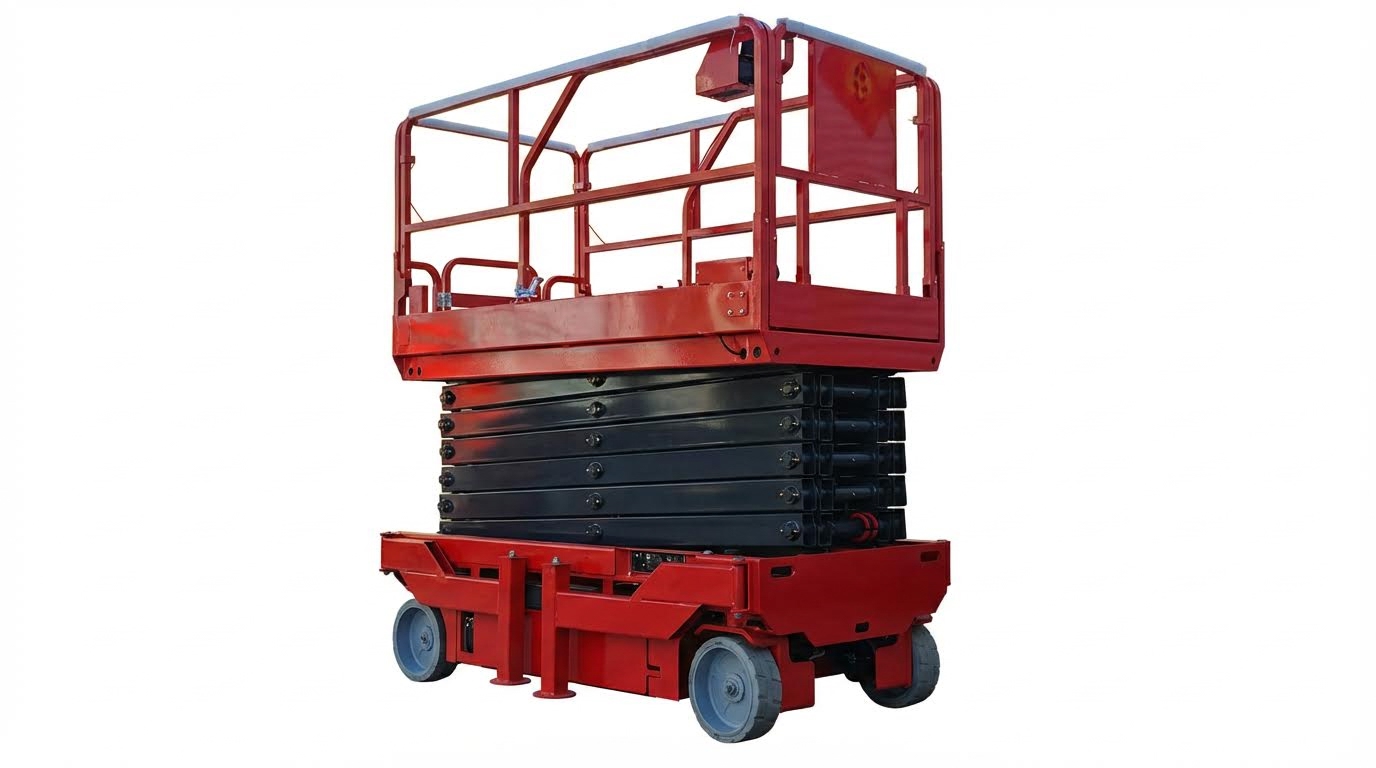
Road regulations and permits for moving 19‑foot scissor lifts focus on overall transport width, route, and operating conditions, with overwidth permits and escort vehicles required once legal width thresholds are exceeded.
| Regulatory Aspect | Typical Threshold / Requirement | Key Condition | Field Impact |
|---|---|---|---|
| Overwidth permit trigger | Permits may be issued for loads wider than standard legal width, often once length and width exceed about 2.74 m (9 ft) in some jurisdictions | Load cannot be reasonably reduced in size for transport | Most 19‑ft lifts on standard trailers stay under these widths, but side‑by‑side loading or large outriggers can trigger permits. |
| Escort vehicle requirement | Escort required for widths >3.66 m (12 ft); may be required from 3.05 m (10 ft) on narrow or winding roads on some routes | Highway authority may impose escorts based on route risk | Planning wider combinations (lift + outriggers + toolboxes) may add escort cost and scheduling constraints. |
| “WIDE LOAD” signage | Loads exceeding 3.66 m (12 ft) width must display a 1.83 m x 0.3 m “WIDE LOAD” sign with 250 mm letters on yellow background in some states | Reflective signs needed for night movements | Even if your 19‑ft lift is narrow, using a wide low‑loader or carrying multiple machines can push you into wide‑load territory. |
| Permit application content | Must describe vehicle, load, requested highways, and whether single‑trip or continuous operation per some transport codes | Authority may prescribe route, speed, and safety conditions | Expect limitations on peak‑hour travel, bridges, and certain urban streets. |
| Permit fees | Example ranges: ≈$5 for single‑trip under 4.27 m (14 ft) width; ≈$25 for widths over 4.27 m (14 ft) in some regions | Fees vary by state, width, and trip type | Budget permit costs into your job pricing when using larger trailers or multiple MEWPs. |
| MEWP on highway conditions | Operations must be planned and controlled under lifting regulations such as LOLER and BS 8460:2005 for some UK highways | Requires planning, competent operators, and defined safety measures | When working from the lift on or above roads, permit and traffic management often matter more than transport width. |
| Minimum clearance above carriageway | Example requirement: 5.7 m above carriageway and 2.7 m above footway for MEWPs used over highways in some local rules | Applies when working above open traffic lanes | Critical for planning façade or sign work with a 19‑ft lift near live traffic. |
- Route selection: Choose routes that avoid weight‑restricted bridges and tight turns where trailer off‑tracking could push your load into oncoming lanes.
- Operating vs. transporting: Different rules often apply when the MEWP is simply being hauled versus when it is deployed and working over a public highway.
- Documentation on board: Keep permit copies, insurance proof, and lift manuals in the tow vehicle for roadside inspections.
- Local variations: Always verify state or national limits for legal width, height, and axle loads—examples above are jurisdiction‑specific and not universal.
- Job pricing impact: If your trailer plus 19‑ft lift ever crosses into overwidth or escort territory, factor extra time, fees, and possible night‑work constraints into your quote.
Planning site access and setup around transport
On site, confirm that the same constraints that governed road transport—width, weight, and turning radius—also work at gates, ramps, and slab edges. A 1,400 kg lift concentrated on small tyres can exceed floor design loads at mezzanine edges or trench covers, even if the trailer move itself was fully legal and permitted.
Final Considerations When Selecting A 19-Foot Scissor Lift
Final selection of a 19-foot scissor lift comes down to matching weight, dimensions, and power source to your site constraints, transport method, and daily duty cycle while staying compliant and safe.
When you’re asking how much does a 19 foot scissor lift weigh, you’re really asking which configuration best fits your building, trailer, and job profile. Standard 19-foot electric units typically weigh about 1,180–1,477 kg (2,600–3,255 lbs) depending on model and batteries, while some compact 6 m / 19 ft designs can be lighter at around 880 kg for lower-capacity platforms. Always confirm the exact “machine weight” on the data plate before planning transport or floor loading.
- Clarify your primary environment: Choose compact battery-electric for indoor warehouses and retail (narrow aisles, doorway access), and heavier crawler or rough-terrain variants only where ground conditions demand it.
- Check platform capacity vs. real loads: Typical 19-foot lifts carry 227–250 kg (500–550 lbs) which suits two people plus tools; if you regularly handle heavier materials, consider higher-capacity models and accept the extra base weight.
- Verify access and stowed dimensions: Widths around 0.76–0.81 m and lengths about 1.83–1.88 m allow standard 19-foot lifts to pass through typical doors and work in 2,400–2,700 mm aisles if turning is planned.
- Align weight with transport equipment: Make sure your trailer, tow vehicle, and tie-down points are rated comfortably above the lift’s machine weight, including any attachments or fuel, to stay within legal axle loads and braking limits.
- Consider ground bearing pressure: Heavier crawler or rough-terrain units (often around 1,800 kg for compact tracked models with non-marking tracks) spread load differently than small-tyre indoor units—critical on mezzanines and suspended slabs.
- Match power source to duty cycle: Battery-electric 24–48 V units suit high-frequency indoor use with low noise and zero emissions but require charging infrastructure and battery maintenance.
- Plan for regulations and training: Treat 19-foot lifts as Mobile Elevating Work Platforms (MEWPs); ensure operator training, rescue plans, and compliance with applicable MEWP / lifting regulations and site traffic rules.
- Balance purchase vs. rental economics: With typical new-unit prices in the USD 10,000–15,000 range and daily rentals around USD 100–200 depending on term, calculate expected utilisation before committing capital.
💡 Field Engineer’s Note: Before you sign a PO, walk the actual route from unloading point to work area with a tape measure and floor plan. Door widths, ramp grades, and slab ratings eliminate more “wrong” lifts than any spec sheet ever will.
In practice, the best way to answer how much does a 19 foot scissor lift weigh for your job is to start from your constraints: doorway size, floor capacity, trailer rating, and platform load requirement. Once those are fixed, the acceptable weight range and lift configuration usually narrow down to one or two sensible choices that are easy to transport, safe to operate, and cost-effective over the life of the project.
For material handling tasks requiring vertical reach, consider using an aerial platform or a scissor platform. These options provide versatility and safety when working at heights. Additionally, for moving heavy drums, a drum cart or drum palletizer can significantly improve efficiency.
Frequently Asked Questions
How much does a 19-foot scissor lift weigh?
A 19-foot scissor lift typically weighs between 1,987 lbs and 3,800 lbs. The exact weight depends on the model and its features. For example, the Pro Series PS-1930 weighs around 1,987 lbs and is suitable for both indoor and outdoor use. Scissor Lift Weight Guide.
What factors influence the weight of a 19-foot scissor lift?
The weight of a scissor lift can vary based on several factors:
- Material: Lifts made with lightweight materials will weigh less.
- Design: Compact or micro models may weigh less than standard designs.
- Capacity: Lifts designed to carry heavier loads often weigh more due to reinforced structures.