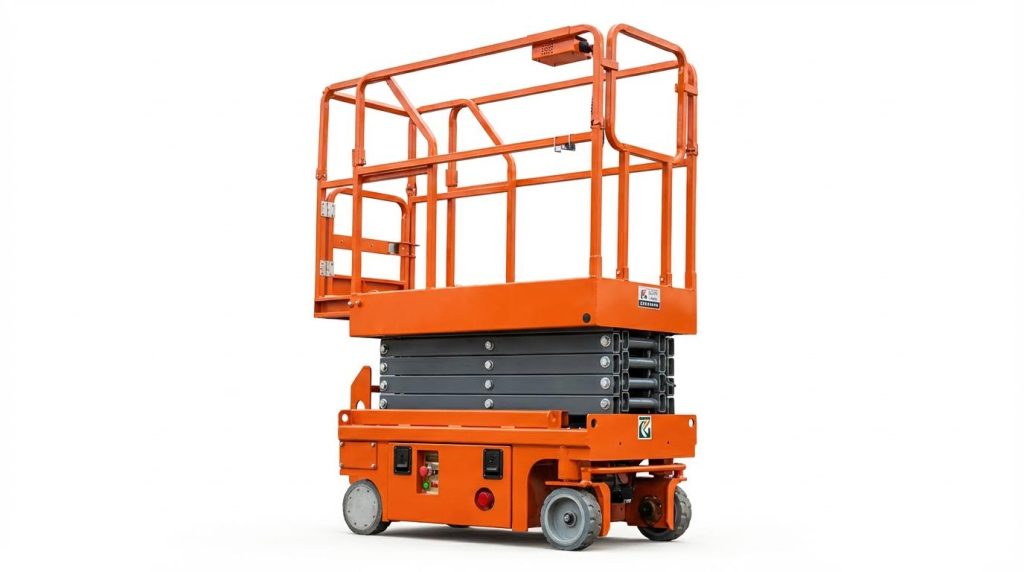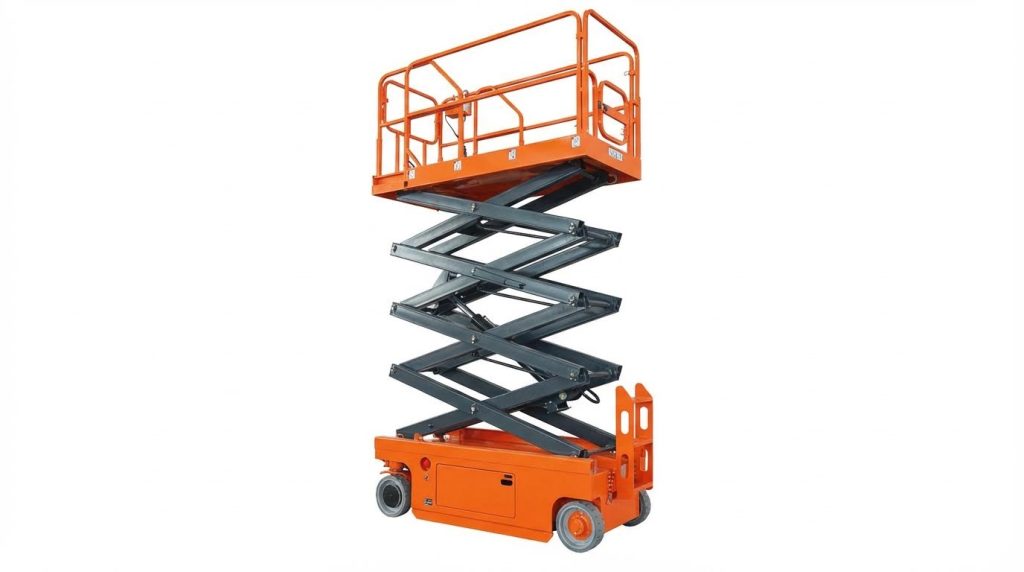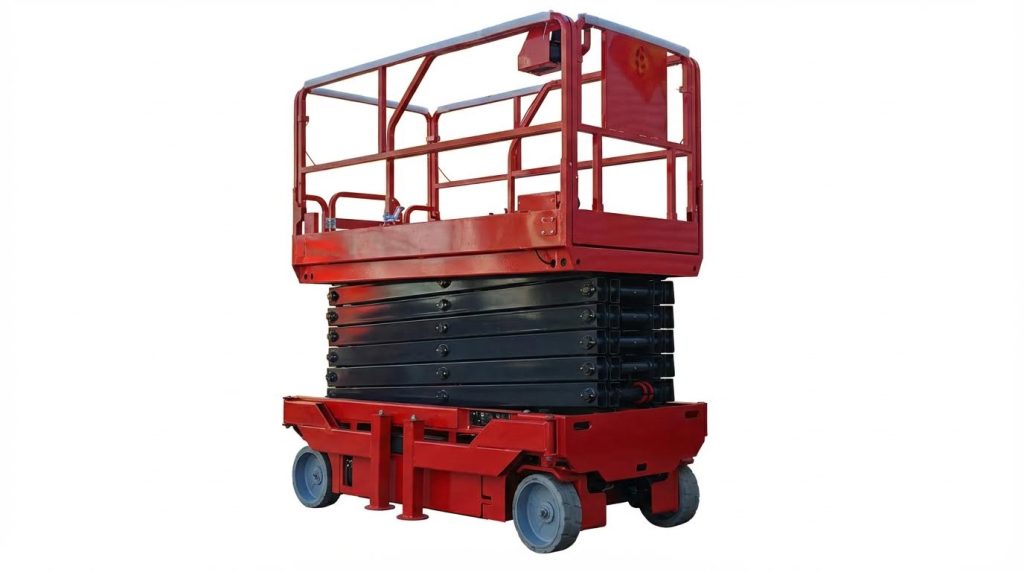
Knowing how much a 19-foot scissor lift weighs is critical for safe lifting, floor loading checks, and transport planning. This guide uses real-world data to answer “how much does a 19 foot scissor platform weigh,” then walks through key specs, design factors, and transport rules. You will see the typical weight and capacity ranges, what drives the variation, and how to secure these lifts on flatbeds or in containers. Use it as a quick engineering reference for selecting, rigging, and moving 19-foot scissor platform lift safely and efficiently.
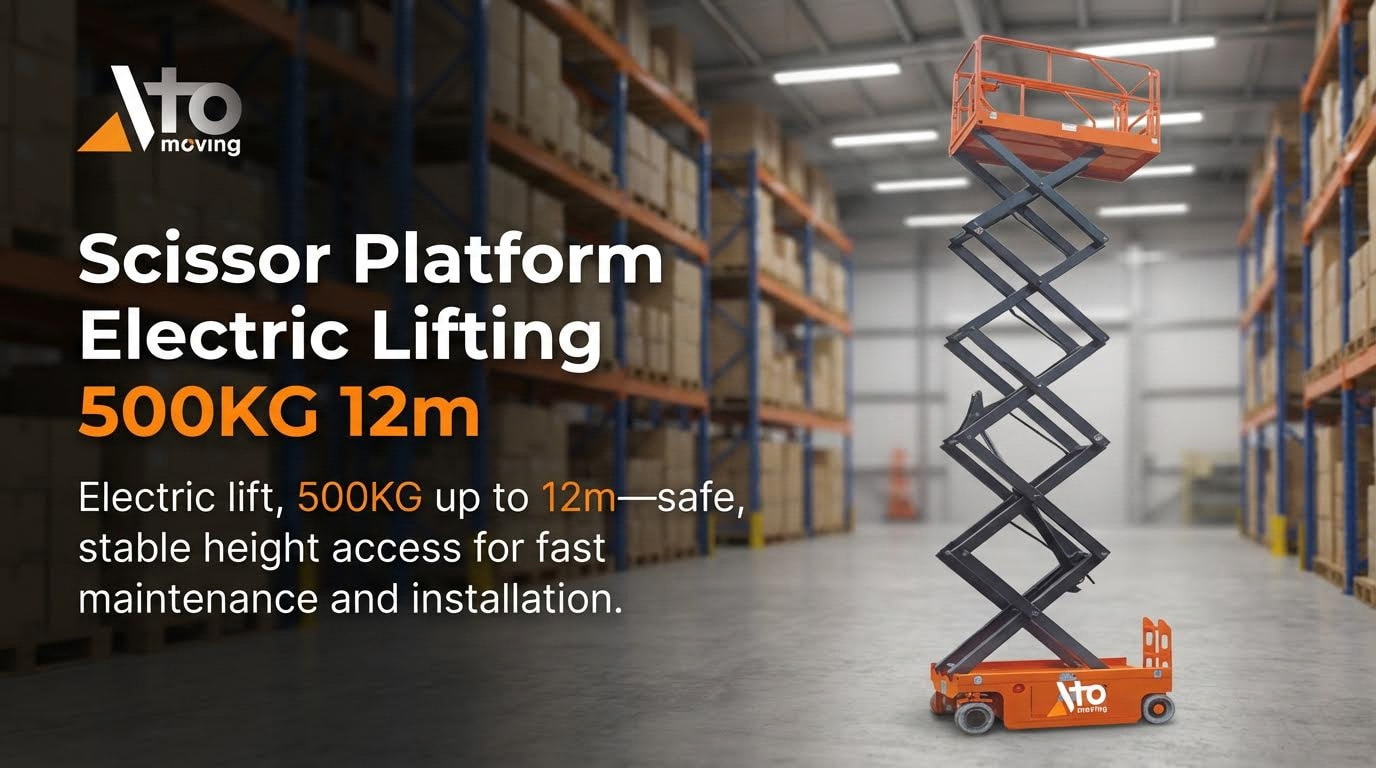
Typical Weight And Core Specs Of 19-Foot Scissor Lifts
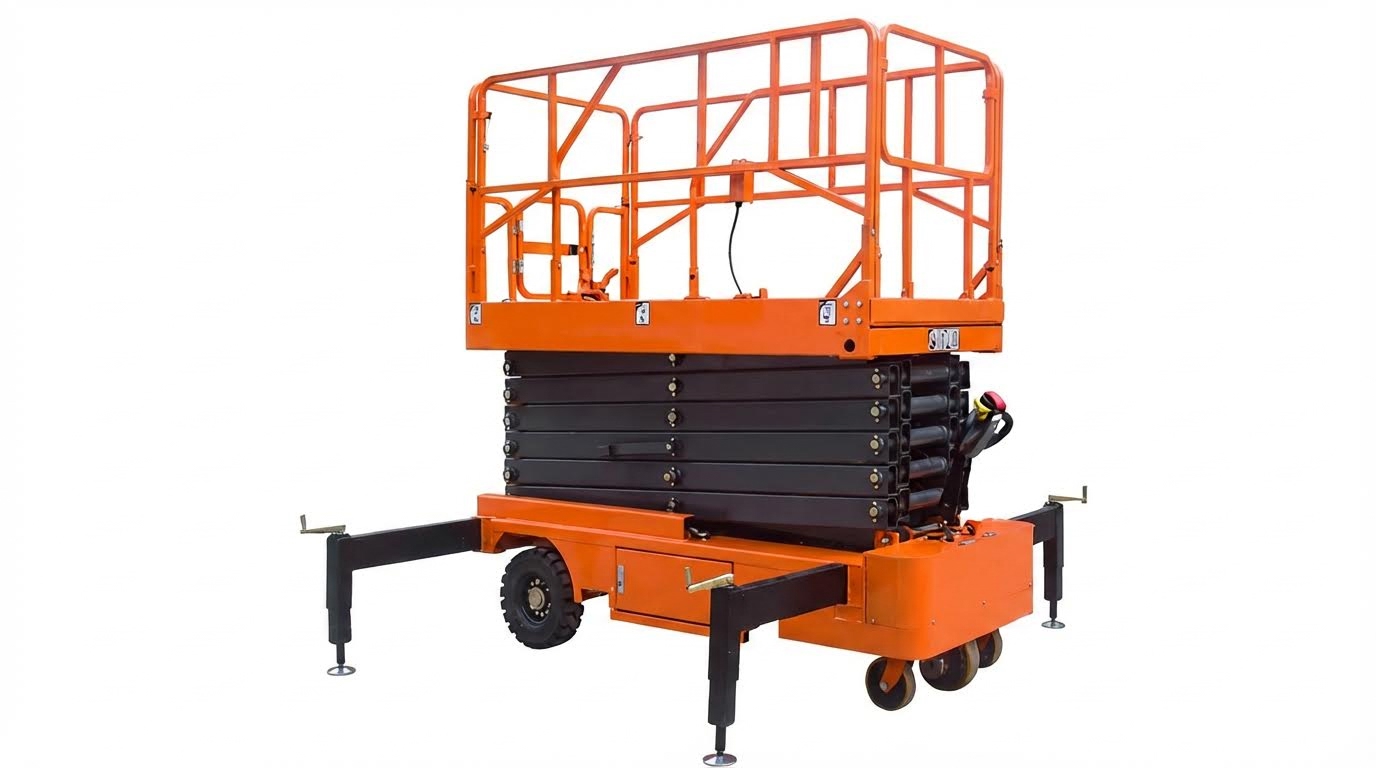
Weight range and what drives the variation
If you are asking “how much does a 19 foot scissor lift weigh,” you are usually looking at a machine in the 1–1.5 ton class. Typical 19-foot units with around 500 kg rated capacity fall in the 880–1,400 kg range, depending on configuration and options. One manufacturer lists 19-foot scissor lifts from about 880 kg up to roughly 1,400 kg. That spread is driven mainly by structure, platform size, and power system.
| Typical 19-ft scissor lift spec | Light-duty indoor unit | Heavy-duty/high-capacity unit |
|---|---|---|
| Approx. empty weight | ≈880–1,000 kg | ≈1,200–1,400 kg |
| Rated load capacity | ≈300–500 kg | Up to 2,000 kg |
| Overall length × width | ≈2,250 mm × 950 mm | Up to 4,000 mm × 2,300 mm |
| Typical application | Indoor maintenance, light trades | Industrial, heavy material handling |
Key factors that make one 19-foot scissor lift heavier than another include:
- Load rating and structure: Frames and scissor arms for 1–2 ton capacities use thicker sections and more weld length, which adds several hundred kilograms. High-capacity 19-foot lifts can reach 2,000 kg rated load, and their dead weight scales accordingly.
- Platform footprint: Compact platforms around 2,100 mm × 830 mm use smaller scissors and base frames, while extended platforms up to 3,500 mm × 1,800 mm need more steel and bracing. Larger platforms significantly increase overall mass.
- Power system and batteries: Battery-electric units carry traction batteries, chargers, and wiring. Engine-driven or AC-powered units may have heavier powerpacks, tanks, and noise enclosures. Multi-power or high-duty-cycle packages usually weigh more than simple plug-in systems. Common power options include AC, battery, diesel, and manual.
- Chassis dimensions and stability: Wider, longer bases improve side-slope stability and allow higher capacities, but they add frame steel, heavier axles, and larger wheels. Overall sizes for 19-foot units range from about 2,250 × 950 × 1,200 mm up to 4,000 × 2,300 × 2,400 mm, and weight scales with that envelope.
- Duty rating and options: Heavy-duty cylinders, thicker platforms with anti-skid plates, and options like extended decks, pipe racks, or extra guarding all add incremental weight.
Rule-of-thumb answer to “how much does a 19 foot scissor lift weigh?”
For planning rigging and transport, a safe engineering estimate for a typical 19-foot electric slab scissor lift is 1,000–1,300 kg unless you have the exact data plate. Heavier industrial 19-foot tables or high-capacity versions can approach 1,400 kg or more, so always confirm actual curb weight before loading.
Platform height, working height, and load capacity
A 19-foot scissor lift is defined by its platform height, not the overall reach of the operator. Platform height is the vertical distance from the ground to the deck, while working height adds the typical operator reach (about 6 ft or 2 m). Load capacity defines how much weight the platform can safely carry, including people, tools, and materials.
| Parameter | Typical 19-ft scissor lift value | Engineering note |
|---|---|---|
| Platform height | ≈19 ft (≈5.8 m) | Nominal lift stroke from ground to deck |
| Working height | ≈25 ft (≈7.8 m) | Platform height + ≈6 ft operator reach |
| Common platform size (compact) | ≈2 ft 6 in × 5 ft 9 in to 6 ft | Suited to indoor aisles and slab work |
| Typical rated capacity (slab-type) | ≈500 lb (≈227 kg) | Standard for many 19-ft indoor units |
| Extended industrial platform sizes | ≈2,100 × 830 mm up to 3,500 × 1,800 mm | Larger decks often paired with higher capacities |
| High-capacity 19-ft units | 300–2,000 kg rated load | Require much heavier structures and bases |
Representative 19-foot electric slab lifts use a platform height of 5.8 m and a working height of about 7.8 m, with compact platforms around 2 ft 6 in wide and roughly 6 ft long, and a rated capacity near 227 kg. Typical catalog data show 19-foot models with 19 ft platform height, 25 ft working height, and 500 lb capacity. Industrial 19-foot tables or custom units, however, can carry up to 2,000 kg on much larger platforms. Load capacities from 300 kg to 2,000 kg are available in this height class.
- Platform vs. working height: When you size a lift for a job, use working height for reach, but platform height for clearance under ceilings, beams, and sprinklers.
- Capacity vs. weight: Higher platform capacities mean more steel and stronger cylinders, which push the machine weight up. This is why answering “how much does a 19 foot scissor lift weigh” always starts by asking what its rated load and platform size are.
- Stability envelope: As platform size and working height increase, the base must grow or outriggers must be added to keep the center of gravity inside the tipping lines under wind and dynamic loading.
Practical selection tips by height and capacity
For indoor maintenance with light tools, a compact 19-ft, ~227 kg capacity electric unit minimizes floor loading and simplifies transport. For fabrication or order picking machines where pallets or heavy components go up with the operator, target 19-ft lifts in the 500–2,000 kg capacity range and plan for higher machine weight, stronger floors, and heavier-duty transport gear.
Key Design Factors Affecting Weight And Performance
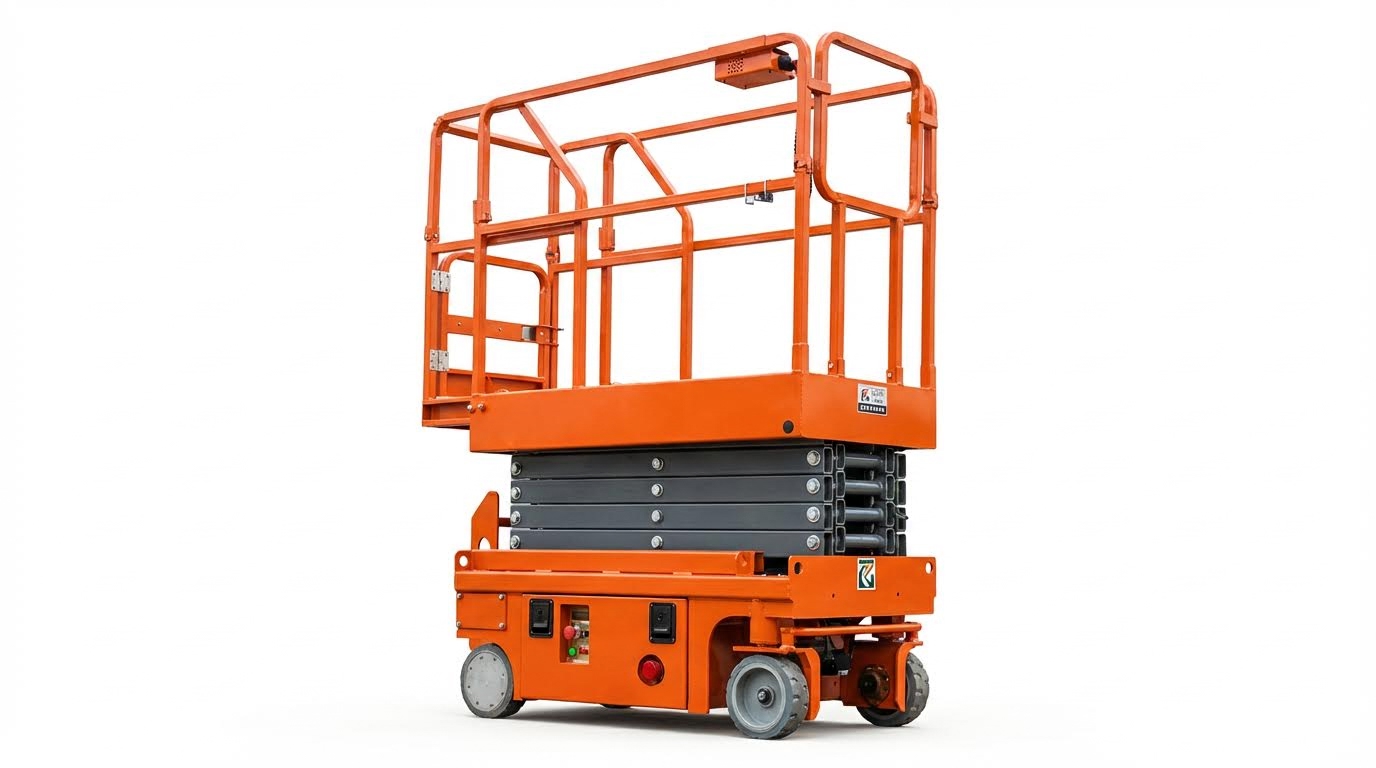
When you ask how much does a 19 foot scissor lift weigh, the answer depends heavily on design choices. Power source, chassis geometry, platform size, and safety systems all drive the final machine weight and how it behaves in real work conditions.
Electric vs. engine power sources and batteries
Powertrain selection is one of the biggest contributors to both total weight and duty-cycle performance. For 19-foot class lifts, electric drive with batteries is the dominant solution, but engine-driven and AC-powered units still exist in some markets. Typical 19-foot lifts in this class weigh roughly 880–1,400 kg depending on configuration and options. Cited Text or Data
| Power source type | Typical use case | Impact on weight | Impact on performance |
|---|---|---|---|
| Battery-electric DC | Indoor, warehouses, finished floors | Moderate weight from battery pack; no fuel tank or exhaust | Quiet, zero local emissions, limited by charge capacity |
| AC powered (corded) | Fixed work zones with grid power | Can be lighter than large battery units | Unlimited runtime near power, reduced mobility |
| Engine-driven (diesel/dual-fuel) | Outdoor, rough-terrain sites | Heavier due to engine, fuel, exhaust, and larger chassis | High duty cycle, better gradeability, more noise and emissions |
Battery-electric 19-foot lifts often use multi-battery packs sized for a full shift. Larger capacity batteries increase weight but reduce the need for frequent charging or battery swaps. Voltage options such as 110 V, 220 V, or 380 V for chargers and AC-powered units allow adaptation to local power standards and jobsite conditions. Cited Text or Data
- If you prioritize low total machine weight for transport, smaller battery packs and AC-drive options help.
- If you prioritize long runtime and fewer charging breaks, expect a heavier unit with larger batteries.
- Engine-driven units typically weigh more than comparable electric 19-foot lifts due to the engine and heavier frames.
How power source ties back to “how much does a 19 foot scissor lift weigh”
For similar platform height and capacity, switching from a compact electric configuration to a heavy-duty outdoor configuration can move a 19-foot lift from the lower end of the ~880 kg range up toward or beyond 1,400 kg, driven mainly by powertrain, frame, and tire upgrades. Cited Text or Data
Chassis, platform size, and stability considerations
Chassis geometry and platform dimensions strongly influence both stability and overall weight. To safely reach a 19-foot platform height, the structure must resist overturning and handle dynamic loads from movement and wind. That means more steel in the base frame, scissor arms, and platform as capacities and widths increase.
| Design element | Typical ranges for 19-foot lifts | Effect on weight | Effect on stability & capacity |
|---|---|---|---|
| Platform size | Approx. 2,100 × 830 mm up to 3,500 × 1,800 mm Cited Text or Data | Larger decks add floor plate, guardrail, and scissor mass | Supports more workers and materials; higher overturning moment to manage |
| Overall footprint | Approx. 2,250 × 950 mm up to 4,000 × 2,300 mm Cited Text or Data | Wider, longer frames require heavier beams and crossmembers | Wider stance increases lateral stability and allowable load |
| Rated load capacity | Approx. 300–2,000 kg for this class of equipment Cited Text or Data | Higher capacity needs thicker arms, pins, and cylinder mounts | Enables heavier tools, materials, and multiple operators |
In practice, compact 19-foot scissor lifts with narrow platforms and moderate capacities sit at the lower end of the 880–1,400 kg band, while wide, high-capacity platforms with heavy-duty chassis and larger cylinders push weight upward. That is why two 19-foot lifts with the same working height can differ by several hundred kilograms.
- Compact chassis: easier to maneuver indoors, lighter for floor loading and transport, but lower capacity.
- Large chassis: better stability outdoors and at full extension, but heavier and less suited to tight aisles.
- Extended platforms or deck extensions: improve reach but add mass and shift the center of gravity outward.
Example: typical 19-foot electric indoor lift geometry
Representative 19-foot electric scissors list platform sizes around 2 ft 6 in × 5 ft 9 in to 2 ft 6 in × 6 ft, with working height near 25 ft and load capacity around 227 kg. Cited Text or Data These dimensions, combined with a compact wheelbase, typically yield a lighter unit than a wide, high-capacity industrial platform at the same 19-foot height.
Safety systems and compliance with ANSI/OSHA
Safety and compliance features add weight, but they are non-negotiable for meeting ANSI and OSHA requirements and for safe field operation. Modern 19-foot scissor lifts integrate multiple mechanical, hydraulic, and control-layer protections that slightly increase mass while greatly improving risk control.
- Platform surface and guarding
- Anti-skid checkered plates on the platform improve traction in wet or dusty conditions and add plate thickness and mass. Cited Text or Data
- Guardrails, mid-rails, and toeboards form a steel cage around the work area, increasing the center-of-gravity height slightly but providing fall protection.
- Hydraulic and mechanical protection
- Hydraulic overload protection valves limit lifting when the load exceeds the rated capacity, preventing structural overstress. Cited Text or Data
- Single-control solenoid valves and check valves prevent unintended platform drop if a line fails, adding valve blocks and manifolds to the system. Cited Text or Data
- Manual descent valves allow controlled lowering during power loss, which is critical for OSHA-compliant emergency procedures.
- Controls, interlocks, and monitoring
- Interlock logic can restrict lift or drive when doors are open, outriggers are not deployed (where fitted), or platform load exceeds limits.
- Emergency stop buttons, tilt sensors, and descent alarms add wiring, sensors, and control modules that marginally increase weight but significantly reduce incident risk.
| Safety feature group | Primary function | Weight impact | Compliance benefit |
|---|---|---|---|
| Structural guarding | Prevent falls and dropped objects | Moderate (guardrails, toeboards, checkered plate) | Supports fall protection and edge protection rules |
| Hydraulic protection | Prevent sudden descent and overload | Low–moderate (valves, manifolds) | Supports safe working load and control-of-hazards requirements |
| Emergency & control systems | Enable safe shutdown and rescue | Low (switches, wiring, sensors) | Aligns with ANSI/OSHA emergency and control standards |
When you evaluate how much does a 19 foot scissor lift weigh, remember that compliant machines carry the extra mass of these safety systems. That added weight is an engineered trade-off that improves stability, controlled motion, and worker protection, and it should be factored into floor loading, transport planning, and site access calculations.
Final Thoughts On Selecting And Moving 19-Foot Scissor Lifts
Weight, geometry, and safety systems work together in every 19-foot scissor lift. You cannot treat them as separate choices. Higher capacity, wider platforms, and outdoor-duty powertrains all push weight up. That extra mass then drives floor loading, transport method, and rigging hardware size. At the same time, guardrails, non-slip decks, hydraulic protection, and interlocks add modest weight but sharply reduce risk.
Engineering and operations teams should always start with the job: required working height, load on the platform, and space limits. From there, select platform size, chassis footprint, and power source that meet the duty cycle and access routes. Then verify that floors, docks, and trucks can safely carry the full curb weight plus load. Never guess. Use the data plate or manufacturer documentation, or apply conservative estimates when planning lifts and tie-downs.
The best practice is simple. Choose the smallest, lightest 19-foot lift that still meets reach, capacity, and stability needs. Insist on ANSI/OSHA-compliant safety features and treat their added weight as a design benefit, not a penalty. When in doubt, consult Atomoving or a qualified engineer to confirm weights, floor limits, and transport rules before the lift arrives on site.
Frequently Asked Questions
How much does a 19-foot scissor lift weigh?
A 19-foot scissor lift typically weighs between 1,987 lbs and 3,800 lbs. The exact weight depends on the model and its features. For example, the Pro Series PS-1930 weighs approximately 1,987 lbs and is suitable for both indoor and outdoor use. Scissor Lift Weight Guide.
What factors influence the weight of a scissor lift?
The weight of a scissor lift is influenced by several factors, including:
- Platform size and capacity
- Material used in construction (steel or aluminum)
- Power source (electric or fuel-powered)
- Additional features like outriggers or extendable platforms
For more details, you can refer to industry resources. Equipment Rental Guide.