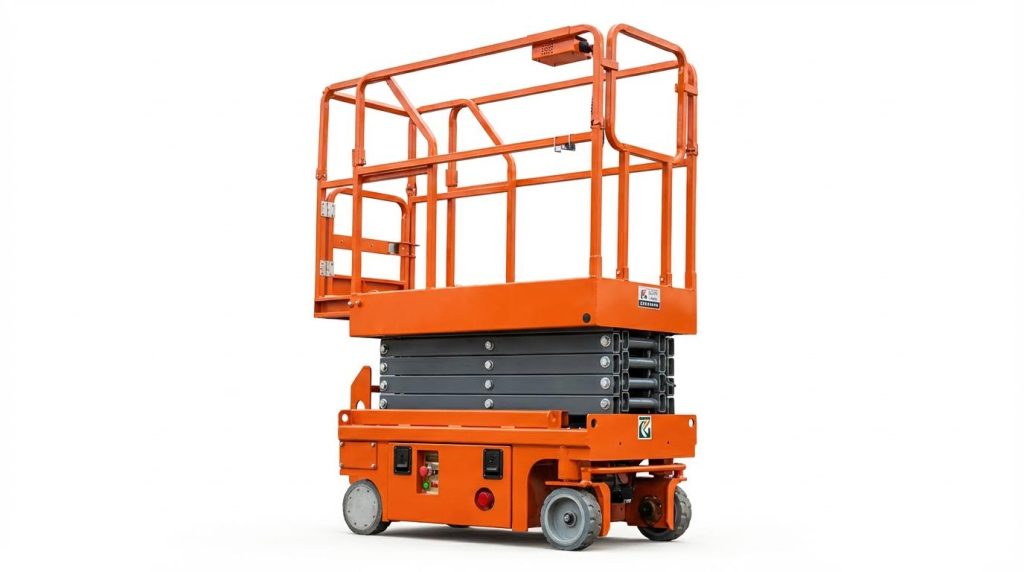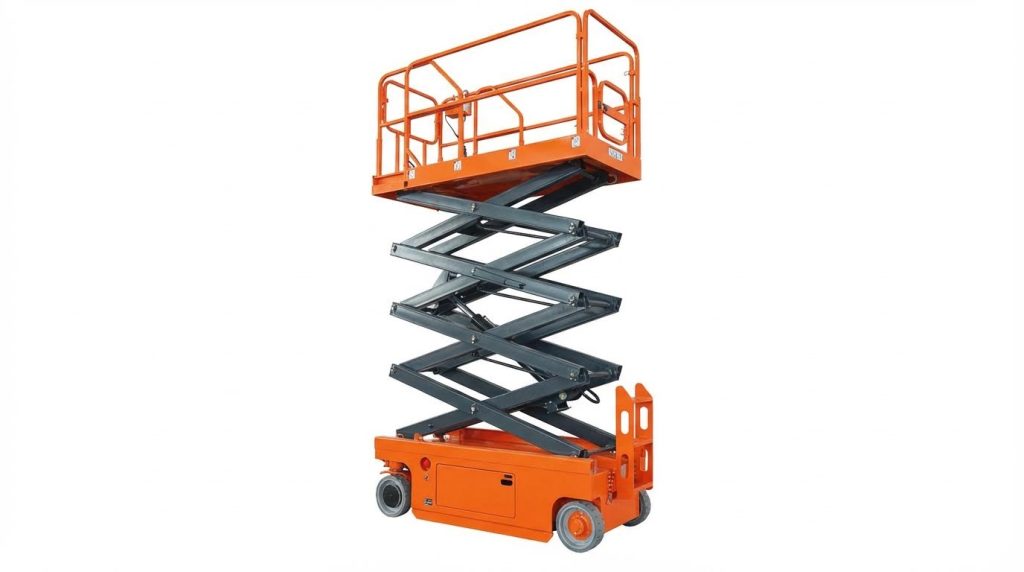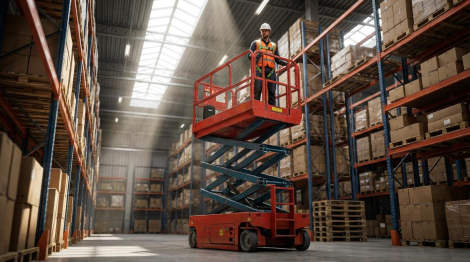
Compact scissor lift users who ask how much can a compact scissor lift hold need clear, engineering-based answers. This article explains how to define and apply load capacity for compact scissor lifts across people, tools, and materials, and how platform load distribution changes the real limit.
You will see how height, power source, and structure set capacity ranges, and how standards such as OSHA, EN 1570-1, ANSI, and ISO shape safe working load ratings. Later sections connect these limits to equipment selection, site conditions, and lifecycle management so engineers, safety teams, and fleet managers can specify compact scissor lifts that stay within structural, stability, and regulatory boundaries.
Defining Load Capacity For Compact Scissor Lifts
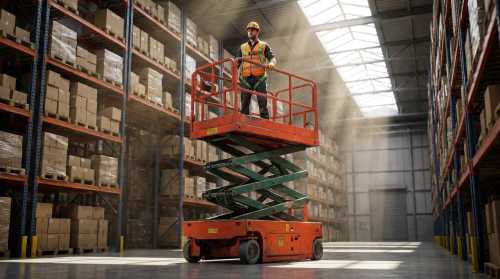
Engineers and safety managers often ask how much can a compact scissor lift hold in real jobs. The answer depends on rated capacity, safe working load, and how people, tools, and materials sit on the platform. This section explains the engineering logic behind those numbers and links them to OSHA, EN 1570-1, ANSI, and ISO rules. It builds the foundation for later sections on height limits, power source choices, and lifecycle management.
Rated Load Vs. Safe Working Load (SWL)
Manufacturers state a rated load for each compact scissor lift. This is the maximum platform load under defined test conditions. OSHA required designs to support at least four times the rated load without failure. Engineers then apply extra factors to define the Safe Working Load. SWL is usually lower than the theoretical maximum capacity.
Standards such as ANSI/ASME B30.17 limited SWL to about 75% of maximum load-carrying capacity. That margin covers dynamic effects, wear, and real site variation. For selection, users should treat the published platform capacity as the absolute ceiling. They should then size typical working loads well below that figure for margin.
People, Tools, And Materials: How To Count The Load
Platform load always means the sum of people, tools, and materials. Body weight, tool kits, sheet goods, and small parts all count. To answer how much can a compact scissor lift hold on a given job, planners should build a simple load budget.
- Count maximum people on the platform and use a standard design weight per person.
- Add typical hand tools, power tools, and batteries.
- Add the heaviest likely batch of materials at one time.
- Compare the total with the rated platform capacity and keep a safety margin.
Many compact units handled up to three people. However, three people plus drywall stacks or heavy pipe could exceed capacity. Crews should never guess. They should calculate and record a standard load plan for each task type.
Load Distribution Across The Platform
Load position on the deck strongly affects how much a compact scissor lift can safely hold. A centered, even load uses the mechanism efficiently. Edge or corner loads drive much higher forces into specific bearings and pins. EN 1570-1 described several standard load cases for lift tables.
Under full-surface loading, the lift must support 100% of rated load with even spread. If the load sits on half the platform length, the machine must safely lift at least 50% of nominal capacity. If the load sits on half the platform width, it must safely carry at least one-third of nominal capacity. For example, a 1 000 kg nominal table should take about 500 kg on half-length and about 330 kg on half-width.
For edge or point loads beyond these cases, users should consult the manufacturer. In practice, crews should keep heavy items near the center line. They should avoid stacking dense loads along one edge or in a single corner.
Standards: OSHA, EN 1570-1, ANSI, ISO
Several standards guided how much a compact scissor lift can hold and still stay stable. OSHA rules required structural design with a factor of at least four on rated capacity. EN 1570-1 defined safety rules for lift tables, including required performance under different load distributions. It described minimum capacities for full-surface, half-length, and half-width loading.
ANSI/ASME B30.17 limited SWL to about 75% of maximum structural capacity. ISO 14396 required that SWL calculations include weight, centre of gravity, and stability margins. Typical formulas used factors such as F = W × C, where C was often 0.75, and stability checks based on moments over platform length. Compliance with OSHA, ANSI, EN, and ISO gave a consistent answer to the search query how much can a compact scissor lift hold under real conditions.
Engineering Limits: Height, Power Source, And Structure
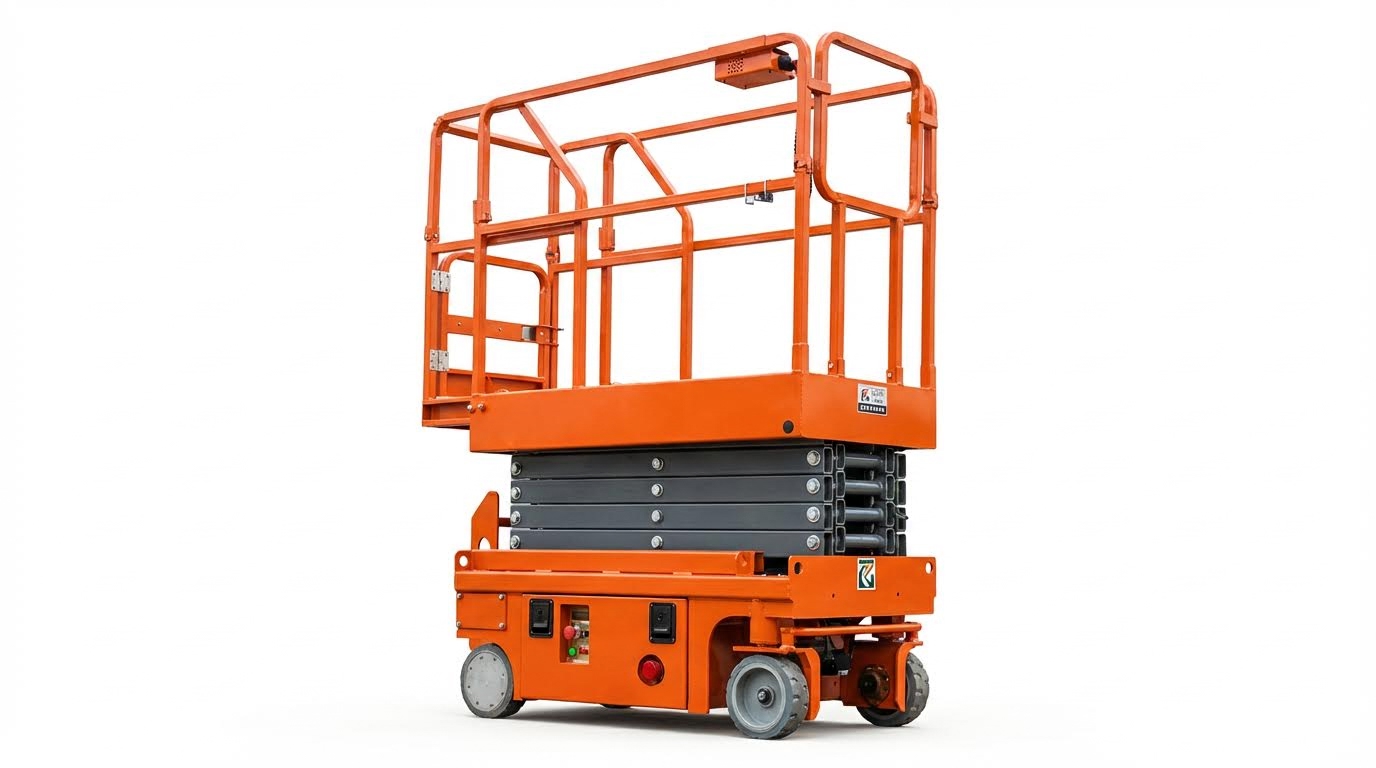
Engineers who ask how much can a compact scissor lift hold must link capacity to height, power source, and structure. Capacity ratings change as working height increases because of stability and structural stress limits. Power choice also affects duty cycle, platform size, and terrain ability. This section explains how height, electric or diesel power, and frame design set real-world load limits and safe use envelopes.
Capacity Ranges By Height And Application
Compact scissor lifts do not hold a single fixed load at all heights. Rated capacity usually falls as working height rises because overturning moments grow with elevation. Typical electric compact units carry about 230 kilograms at 8 metres and 250–450 kilograms around 10 metres. Some models support about 320 kilograms up to roughly 14 metres, while high-capacity versions reach about 750 kilograms between 15 and 18 metres.
In imperial ranges, compact electric lifts often hold about 225–315 kilograms between 7.5 and 13.5 metres. Heavy-duty designs can reach about 450 kilograms at roughly 10 metres. Advanced large-platform units in the broader scissor market reach about 750 kilograms at around 15 metres and up to about 750 kilograms at roughly 14 metres indoor. These values show that the answer to how much can a compact scissor lift hold depends strongly on required height and platform size.
Application also matters. Indoor maintenance lifts trade capacity for small footprints and low weight. Construction-focused models accept higher structural mass to gain higher capacities and larger decks. Engineers should map task profiles to a capacity–height table during selection rather than rely on a single headline load figure.
Electric Vs. Diesel Compact Scissor Lifts
Power source changes how much a compact scissor lift can hold across different sites. Electric compact lifts target indoor or mixed indoor–outdoor work. They use battery power and electric drive, which keeps noise and emissions low. Typical capacities range from about 230 kilograms at 8 metres up to roughly 320 kilograms at 14 metres, with some designs reaching about 750 kilograms between 15 and 18 metres.
Diesel compact scissor lifts focus on rougher outdoor terrain. They usually carry higher base capacities, often about 450–565 kilograms, at working heights around 10–12 metres. Their wider, heavier chassis and rough-terrain tyres help resist overturning on uneven ground. This allows higher platform loads at moderate heights than many slim electric models.
However, diesel units are less compact and heavier, which can limit indoor use and floor loading. Electric machines suit slab floors and tight aisles but may offer lower capacity at a given height. When deciding how much can a compact scissor lift hold for a project, engineers should compare electric and diesel options in a simple matrix:
- Electric: lower noise, zero local emissions, moderate capacities, better for indoor slabs.
- Diesel: higher capacities at mid heights, better rough-terrain stability, more outdoor focused.
Structural Stress, CG, And Stability Factors
Structural design and stability rules finally decide how much a compact scissor lift can hold safely. The scissor arms, pins, and platform beams carry bending and shear loads that grow with both payload and height. Designers size these members so that stresses stay below material limits with safety factors. OSHA guidance required scissor lifts to support at least four times their rated capacity without failure.
Centre of gravity, or CG, is just as important as total weight. The combined CG of the lift and load must stay inside the support polygon formed by the wheels or outriggers. As the platform rises, a small horizontal CG shift creates a larger overturning moment. Side loads from wind or manual handling can then threaten stability even if the total load is within the rating.
Standards and formulas help engineers quantify this. A simple force relation uses F = W × C, where W is weight and C is a capacity factor, often about 0.75 for safe working load. Stability checks use S = (W × CG) / (F × L), where L is platform length. A stable design keeps S within allowed limits across the full height range. This is why real answers to how much can a compact scissor lift hold always include limits on height, outreach, and wind.
Edge Loading, Half-Platform, And Point Loads
Platform load distribution often decides whether a compact scissor lift can safely hold its rated load. A centred, full-surface load uses the mechanism efficiently. When weight sits between fixed and floating bearings, forces share across both sides, and the lift can carry its maximum rated capacity.
Edge loading changes that picture. If the same weight sits near one platform edge, the floating bearing can see about double the force compared with a centred load. This extra stress reduces the safe load margin, even though total mass on the platform has not changed. Standards such as EN 1570-1 set minimum performance levels for these cases.
That standard uses simple fractions to guide design and use:
- Full-surface load: the lift must safely hold 100% of rated capacity when weight spreads evenly.
- Half platform length: the lift should safely raise at least 50% of rated capacity on that half.
- Half platform width: the lift should safely carry about one-third of rated capacity on that half.
This means that if a task needs 1,000 kilograms on only half the length, engineers should choose a lift rated around 2,000 kilograms. For half the width, they may need about 3,000 kilograms nominal rating. Concentrated point loads from heavy tools or pallets need special checks or reinforced decks. When planning how much can a compact scissor lift hold for real work, engineers must consider where and how the load touches the platform, not just the nameplate rating.
Safe Application, Selection, And Lifecycle Management

This section answers a key search question for planners and safety teams: how much can a compact scissor lift hold in real jobs. It explains how to size the platform for people, tools, and materials, how site and foundation choices affect real capacity, and how inspections and training keep the rated load meaningful over time. It also shows how digital twins and AI maintenance help keep actual safe working load close to design values across the full lifecycle.
Sizing Lifts For Crews, Tools, And Materials
When engineers ask how much can a compact scissor lift hold, they must count every kilogram on the platform. That includes people, hand tools, materials, and temporary fixtures. Typical compact models hold about 230 kg to 450 kg at 8 m to 12 m working height, while high-capacity units reach about 750 kg or more at 15 m to 18 m.
A simple sizing process works well for most projects:
- Define maximum crew size, including worst case shift overlap.
- Estimate tools and materials per person with a safety margin.
- Check platform rated load and any reduced capacity at full height.
- Verify limits for side loading, half-platform loading, and point loads.
Designers should also check if the job needs extra capacity for future tasks. If work might add heavier cladding, ducting, or cable drums, select the next higher capacity class. This avoids overloads when scope grows after the lift is already on site.
Site Conditions, Foundations, And Install Details
Rated capacity assumes stable, level support. Real sites often reduce how much a compact scissor lift can safely hold. Soft ground, backfill, or thin concrete slabs increase settlement and tilt risk under load.
For fixed or recessed installations, several foundation rules apply:
- Use at least C25 concrete and keep slab thickness near 160 mm or higher for ultra-thin pits.
- Limit flatness tolerance to about ±3 mm using laser leveling to avoid uneven leg loading.
- For underground pits, use about 150 mm thick walls and base with 2% to 3% drainage slope.
- Control pit depth around 360 mm for ultra-thin units to keep geometry within design limits.
On outdoor sites, engineers must check bearing pressure under wheels or outriggers. Weak subgrade can cut the practical load well below the nameplate value. In high groundwater areas, drainage and waterproofing protect anchors and prevent long-term loss of stability.
Inspection, Training, And Operational Controls
Even when nameplate data answers how much can a compact scissor lift hold, poor controls can still cause overload failures. Pre-use inspections should verify guardrails, emergency stops, tires, hydraulic lines, and batteries or engines. Any leak, crack, or abnormal noise can lower safe capacity until repaired.
Operator training must cover:
- How to calculate total platform load from people, tools, and materials.
- Why loads must stay centered and spread, not stacked at one edge.
- When to stop work due to wind, slope, or ground damage.
- How to use lower controls and emergency procedures.
Supervisors should enforce rules on platform height while driving, use of harnesses where required, and speed limits on slopes. Regular full-load tests after maintenance confirm that the structure still carries rated capacity without excess deflection or instability.
Digital Twins, AI Maintenance, And Sustainability
Digital tools now help keep real capacity close to design values over the full life of compact scissor lifts. A digital twin can track cycles, heights, and typical loads and can flag when structural fatigue may start to reduce safe working load. AI models can analyze sensor data for hydraulic pressure, motor current, and tilt to detect overload patterns before damage occurs.
These tools support smarter answers to how much can a compact scissor lift hold on a specific day, not just at the factory. Fleet managers can schedule targeted inspections for units that see high edge loading or rough terrain use. Electric compact lifts already reduce local emissions and noise; predictive maintenance further extends component life and cuts waste. Over time, data from digital twins feeds back into design, driving stronger structures and clearer load charts for the next generation of platforms from suppliers such as Atomoving.
Summary Of Load Limits And Design Implications
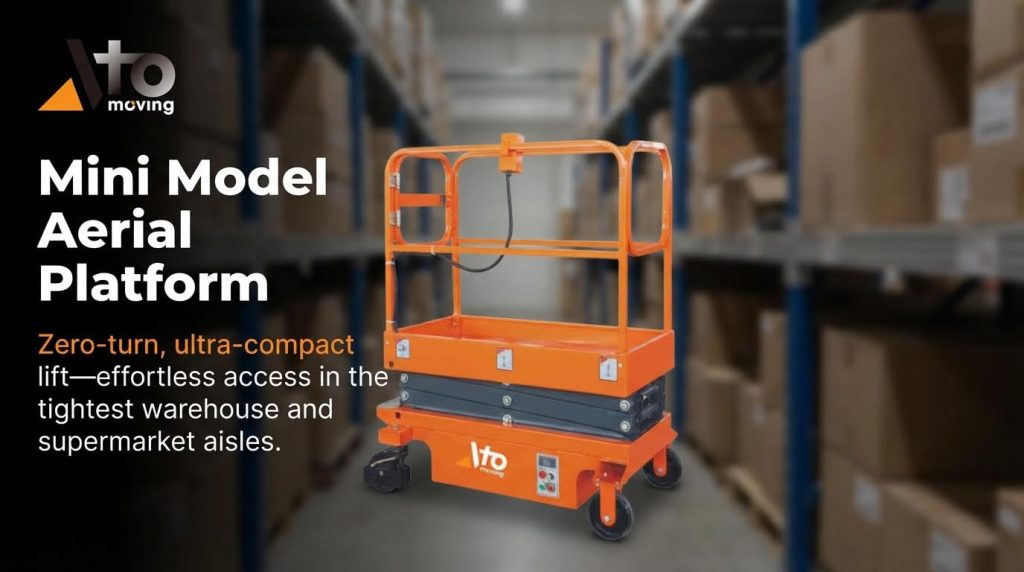
Engineers who ask how much can a compact scissor lift hold must think beyond one number. Capacity depends on platform height, power source, and how people, tools, and materials sit on the deck. Safe use also depends on standards that link rated load, safe working load, and platform stability.
Modern compact units typically hold about 230 kilograms to more than 700 kilograms, depending on model and height. Electric models often carry 230 kilograms to 350 kilograms at 8 metres and up to about 320 kilograms at 14 metres. High‑capacity variants reach around 750 kilograms in the 15 metre to 18 metre range. Heavy diesel units often sit between roughly 450 kilograms and 565 kilograms at 10 metres to 12 metres.
Design rules show that edge, half‑platform, and point loads can cut usable capacity far below the nameplate value. EN 1570‑1 requires defined performance for full‑surface, half‑length, and half‑width loading. OSHA, ANSI, and ISO rules link safe working load to stability factors and structural margins. For critical tasks, engineers should size lifts so expected loads stay well below SWL, then verify floor bearing, foundations, and anchorage.
Going forward, digital twins, condition monitoring, and AI maintenance will tighten control of overload and misuse. Yet basic engineering discipline will still decide how much a compact scissor lift can hold in real work: conservative sizing, correct platform loading, trained operators, and documented inspections across the full lifecycle.
,
Frequently Asked Questions
How much weight can a compact scissor lift hold?
A compact scissor lift typically has a weight capacity ranging from 227 kg for smaller models to around 450 kg for larger ones. This capacity can vary slightly depending on the manufacturer and specific model. For more detailed information, you can refer to Scissor Lift Weight Capacity Guide.
What are the alternatives to using a scissor lift?
If you need to reach heights or navigate rough terrain, alternatives to scissor lifts include articulating and telescoping boom lifts. These options can reach higher and farther but generally have a lower weight capacity, typically between 227 kg to 450 kg. For more details, check out Lift Alternatives Guide.