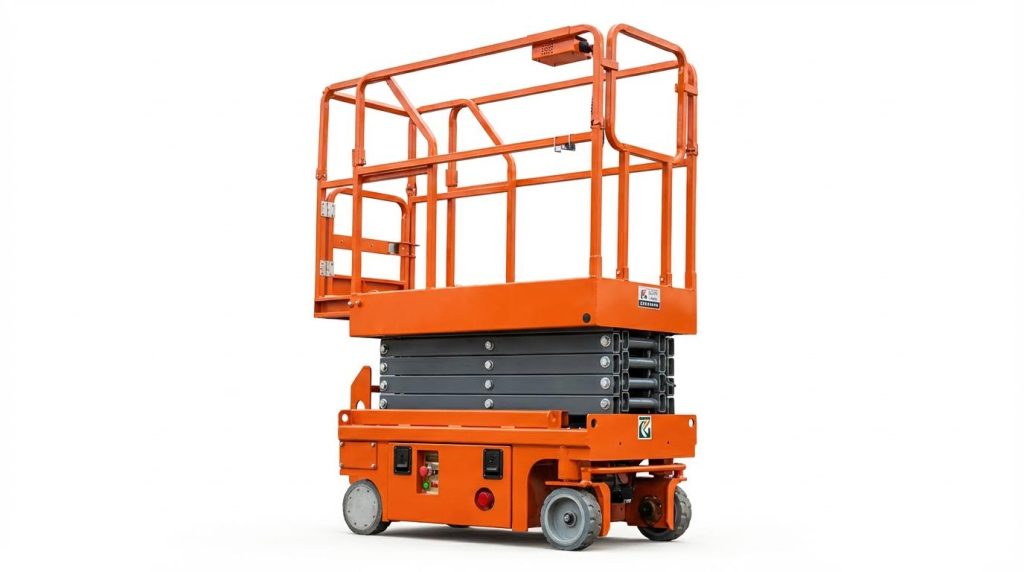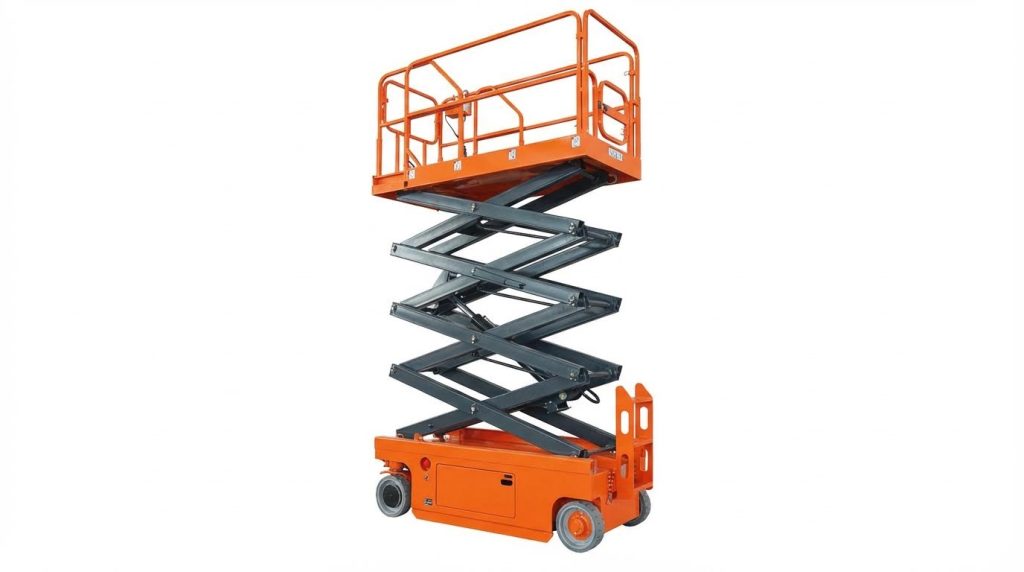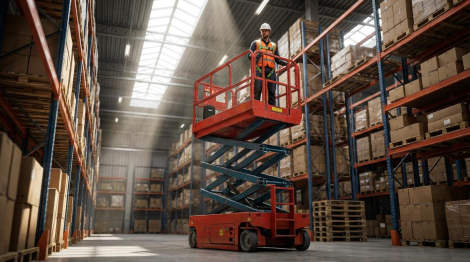
Electric scissor lift maintenance directly affects operator safety, uptime, and total cost of ownership. This guide walks through practical checklists, inspection intervals, and system‑by‑system checks so your lifts stay compliant and predictable in the field. You will see how to structure daily, monthly, and annual tasks, and how to use data and software to plan ahead. Use it as a framework to tighten your current program or build a new one from the ground up.
Core Principles Of Electric Scissor Lift Maintenance
Regulatory framework: OSHA, ANSI, and OEM guidance
Electric scissor lift maintenance starts with compliance. OSHA requires that aerial lifts be maintained in safe condition and inspected on a regular schedule by competent personnel, with unsafe units removed from service until repaired. ANSI standards (such as A92 series) define how often to inspect, what to inspect, and how to document results, while the OEM manual turns those high‑level rules into model‑specific tasks and intervals. A site maintenance plan should align OSHA “safe for use” requirements, applicable ANSI inspection classes, and the OEM preventive maintenance schedule into one integrated program for every unit in the fleet.
- Use OSHA and local regulations to define minimum legal inspection frequency and recordkeeping.
- Use ANSI categories (frequent, periodic, annual) to structure inspection depth and scope.
- Use the OEM manual to specify exact procedures, tools, and wear limits for each component.
- Train technicians and operators so they understand their responsibilities under each standard.
Why OEM guidance matters
OEM preventive maintenance tables typically list systems (structure, hydraulics, electrics, tires, decals) and assign inspection codes for tasks such as checking for visible damage, fluid levels, leakage, operational freedom, lubrication, and decal legibility at defined intervals. These structured checklists help standardize electric scissor lift maintenance across shifts and locations, reducing the risk of missed critical items.
Maintenance intervals: daily, monthly, and annual
Effective electric scissor lift maintenance relies on layered inspection intervals that catch issues early and verify long‑term integrity. Daily pre‑use inspections focus on obvious safety‑critical items such as fluid leaks, structural damage, guardrails, tires, and control function to identify hazards before operation. Monthly inspections go deeper into structural integrity, electrical systems, and battery condition to control wear and corrosion over time. Annual inspections by a qualified technician validate load capacity, safety systems, and overall compliance with applicable regulations.
| Interval | Typical focus | Performed by |
|---|---|---|
| Daily / pre‑shift | Walk‑around, leaks, damage, tires, guardrails, controls, alarms | Operator or on‑site mechanic |
| Monthly | Structure, electrics, detailed battery checks, corrosion, fasteners | Maintenance technician |
| Annual | Full system review, load test, regulatory compliance check | Qualified / certified technician |
Daily checks typically include verifying hydraulic fluid is within the recommended range and free of contamination, and confirming hoses, cylinders, and power units show no leaks or damage (hydraulic system check). Monthly inspections often add structural and electrical evaluations plus battery maintenance, such as checking electrolyte levels and terminals for corrosion, to extend lift life and reliability (daily, monthly, annual inspections). Annual inspections generally include load testing to confirm the lift can safely carry its rated capacity and still meets all safety and performance criteria required by regulations and standards (annual inspection and compliance).
Roles, documentation, and lockout/tagout
Clear roles and documentation make electric scissor lift maintenance repeatable and auditable. Operators are typically responsible for pre‑use and post‑use checks, noting defects and taking unsafe units out of service. Maintenance technicians handle scheduled inspections, diagnostics, and repairs, while supervisors ensure intervals are followed and records are retained for compliance and incident investigations. All findings should be logged against the specific lift (by serial number), including inspection date, person performing the work, observed defects, corrective actions, and parts replaced.
- Use standardized checklists for each inspection level (daily, monthly, annual) so nothing is missed.
- Store records in a central system, preferably digital, to track trends and recurring failures.
- Link work orders to specific inspection findings to close the loop from defect to repair.
Lockout/tagout (LOTO) is critical whenever maintenance could expose personnel to unexpected movement, electrical energy, or hydraulic pressure. Before working on an elevated or powered system, technicians should isolate the energy source (such as disconnecting batteries, de‑energizing chargers, or relieving hydraulic pressure), apply a physical lock and tag with their identification, and verify zero‑energy state by attempting to operate controls. Only the person who applied the lock should remove it after confirming the lift is reassembled, tested, and safe to return to service. This structured approach reduces the risk of injury during servicing and keeps every lift’s maintenance history traceable over its life..
Step‑By‑Step Maintenance Checklist And Procedures
Pre‑start and work area safety inspections
For safe electric scissor lift maintenance, start every shift with a structured pre‑use and work area inspection. Position the lift on a firm, flat, level surface and walk fully around the unit to check for fluid leaks, structural damage, missing parts, and legible safety decals around the entire unit. Confirm the operator’s manual is present, and verify tires for cuts, excessive wear, and correct inflation pressure. Then assess the work area for overhead power lines, inadequate lighting, poor ground conditions, slope outside OEM limits, wind exposure, and blocked emergency exits or evacuation routes before operation.
- Verify both ground and platform controls function and that emergency stops cut all movement.
- Check guardrails and entry points for obvious damage during the walk‑around.
- Do a final 360° look for pedestrians, vehicles, and overhead obstructions before driving or elevating.
Structural, scissor arm, and platform checks
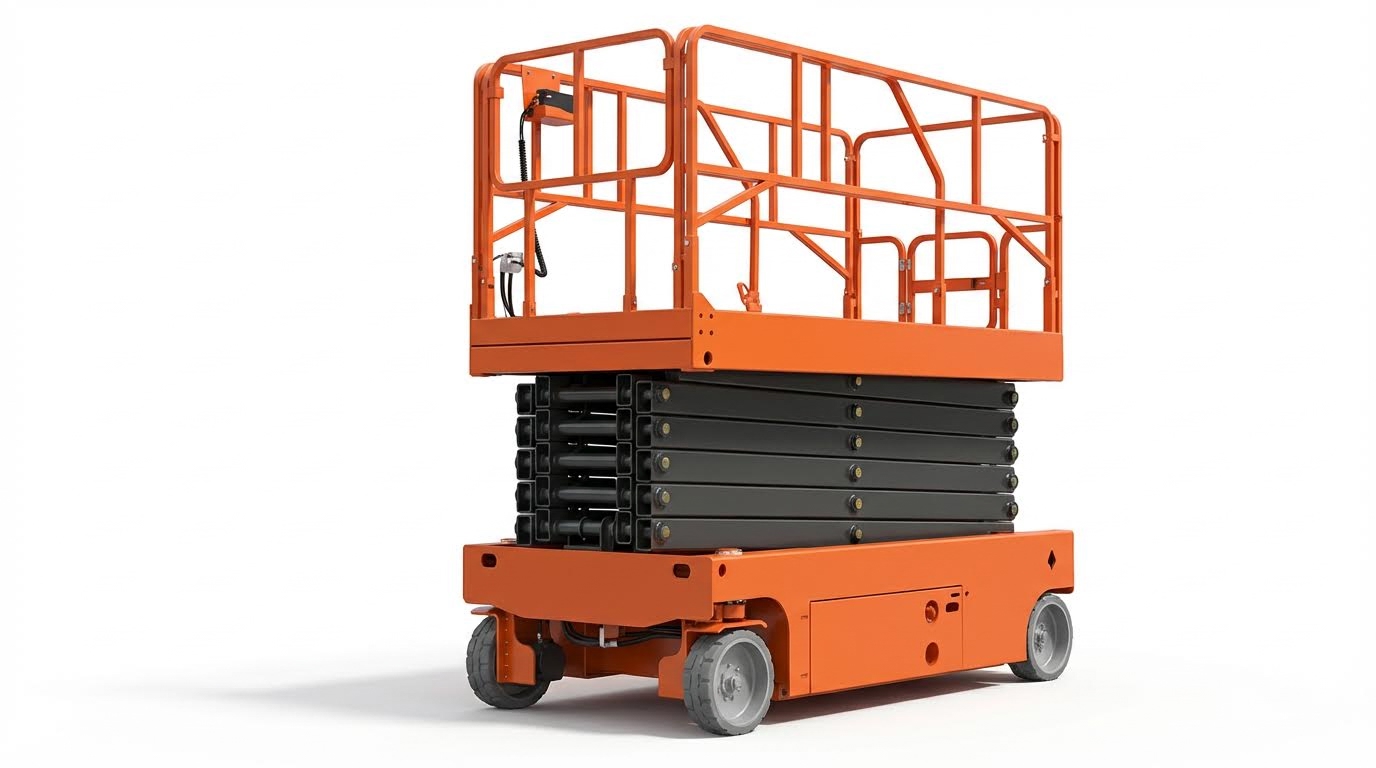
After the basic safety sweep, focus on structural integrity. Inspect chassis welds, base frame, and scissor arms for cracks, deformation, corrosion, or signs of metal fatigue or visible damage. Confirm pivot pins are seated, secured, and show no excessive play; check slide blocks and rollers for wear and adequate lubrication. On the platform, verify guardrails are complete and tight, gates or chains latch fully, the anti‑slip floor surface is intact, and the deck is free from debris and trip hazards including anchorage points.
- Tag out the lift if you find cracked welds, bent arms, or loose structural fasteners.
- Check platform extensions for smooth travel and positive locking in both positions.
- Inspect decals for load rating and occupancy; replace if illegible.
Hydraulic system and drift monitoring
Even on electric units, the hydraulic system is critical for safe elevation. Check hydraulic fluid level against the sight glass or dipstick and confirm the oil is within the recommended range and not milky or contaminated during daily checks. Inspect hoses, fittings, cylinders, and the power unit for leaks, abrasion, bulging, or loose mounts; address hose or seal degradation early to avoid costly failures during routine inspections. To monitor hydraulic drift, periodically raise the platform to a set height under load and hold it for 15–30 minutes; noticeable lowering indicates internal leakage and the need for further diagnosis in quarterly checks.
- Record drift test results to track seal and valve performance over time.
- Clean up any hydraulic oil spills immediately to avoid slip hazards.
- Follow OEM fluid type and change intervals as part of electric scissor lift maintenance.
Batteries, chargers, and advanced monitoring
Battery care is central to electric scissor lift maintenance and uptime. Keep battery tops clean and dry to prevent surface discharge, and inspect cables and terminals for corrosion or loose connections during routine checks. Use a quality tester to perform amp‑draw or load tests and confirm each battery can deliver rated performance; then run a charge test to ensure the charger brings all batteries to full charge, replacing weak units promptly when faults appear. Well‑maintained batteries often last about three years, while neglected banks may fail in roughly one year depending on care.
Consider advanced monitoring systems that log charge cycles and provide real‑time state‑of‑charge and electrolyte level data to extend life and reduce manual checks through remote analysis. Integrating charger and battery diagnostics into your fleet software helps schedule equalization charges, identify chronic under‑charging, and plan replacements before failures cause downtime.
Electrical controls, sensors, and limit switches
Reliable control systems are a core safety layer on any lift. As part of scheduled electric scissor lift maintenance, test all drive, lift, steer, and horn functions from both ground and platform controls, verifying smooth, predictable response and reduced drive speed when elevated during daily function tests. Confirm that ground controls override platform controls and that emergency stop buttons at both stations immediately halt all movement when activated. Every few months, open control boxes to blow out dust, look for heat discoloration, and verify safety interlocks operate correctly as part of electrical inspections.
Sensors and limit switches should be tested and calibrated on a defined interval. Use a multimeter to confirm switch actuation points and continuity, and adjust alignment if the lift over‑travels or stops short of intended limits during semiannual checks. Early correction of misaligned or sticking switches protects pumps, cylinders, and mechanical locks from unnecessary stress.
Tires, wheels, and stability systems
Tires and wheels directly affect stability, traction, and braking. Inspect tires daily for cuts, chunking, embedded debris, and excessive wear, and verify inflation is at the specified pressure for that model as part of pre‑start checks. At least weekly, check wheel nuts for tightness and look for uneven wear that could indicate alignment or bearing issues during tire and wheel inspections. Verify that automatic pothole protection or stabilizer devices deploy and retract correctly and that any tilt indicator or cut‑out responds when the unit is on a slope.
- Remove the lift from service if a tire is damaged to the cord or a wheel is cracked.
- Keep solid and non‑marking tires free of sharp debris that can cause chunking.
- Document tire replacements and track hours to refine replacement intervals.
Emergency systems, alarms, and descent controls
Emergency systems must work flawlessly the first time they are needed. Test the manual emergency descent with the platform raised to a safe mid‑height, confirming the platform lowers in a controlled, predictable manner when actuated from the ground during emergency function tests. Check both emergency stop buttons to ensure they immediately cut power and motion, and verify all audible alarms, including travel and descent alarms, sound clearly and at a usable volume during daily inspections. Simulate a tilt condition within a controlled environment to confirm the tilt alarm and any associated cut‑out function as designed before job use.
Document all emergency‑system tests and immediately tag out any unit with non‑functional alarms, emergency descent, or e‑stops. Integrate these checks into your daily and monthly electric scissor lift maintenance routine so that emergency controls are always verified before personnel work at height.
Optimizing Uptime, TCO, And Maintenance Strategy
Preventive vs. predictive maintenance planning
For scissor platform lift maintenance, preventive tasks form the baseline. Daily, monthly, and annual inspections catch wear, leaks, and control issues before they become failures. A structured preventive maintenance schedule that assigns inspection codes for items such as visible damage, fluid levels, leakage, cleaning, lubrication, and decal legibility helps standardize work and avoid missed steps. Typical OEM schedules list systems vs. time intervals in a coded matrix. Preventive maintenance reduces random breakdowns, but it still relies on fixed time or usage intervals. Predictive maintenance adds condition-based triggers on top of this. By monitoring trends in hydraulic drift, battery performance, and fault codes, planners can schedule repairs just before failure, during low-utilization windows. Analytics that forecast failures from historical and real‑time data let you move major work to off‑peak shifts, which cuts overtime and keeps lifts available for production. Predictive maintenance uses current and historical data to forecast when failures are likely and to optimize repair timing. In practice, most fleets use a hybrid strategy: time‑based inspections for safety‑critical items, and predictive triggers for high‑cost components such as batteries, hydraulic pumps, and major electrical assemblies.
Using software and metrics (MTBF, MTTR, LCCA)
Maintenance software is essential to turn raw inspection notes into decisions. Shop or fleet management systems can log all scissor platform maintenance tasks, store checklists, and generate automatic alerts for monthly inspections and quarterly system checks. Automated reminders for inspections and system checks help identify issues before they cause downtime. Once work orders are in a system, you can calculate key metrics:
- MTBF (Mean Time Between Failures): average operating hours between unplanned stoppages for a lift or component.
- MTTR (Mean Time To Repair): average time from failure detection to return to service.
- LCCA (Life‑Cycle Cost Analysis): total cost of owning and operating a lift over its life.
These indicators help compare models, refine spare‑parts stocking, and justify changes in maintenance strategy. MTBF and MTTR quantify failure frequency and repair effectiveness, while life‑cycle cost analysis includes acquisition, maintenance, upgrades, and disposal costs. Software also supports cost breakdowns for labor, parts, downtime, and lost production, so you see where money actually goes. With this visibility, you can compare the cost of overhauls vs. replacement, evaluate extended‑life components, and track whether process changes (for example, better battery care) are really improving uptime and lowering TCO.
Fleet rotation, duty cycles, and component life
How you deploy lifts day‑to‑day has a direct impact on uptime and total cost. Concentrating work on one or two units drives up hours, accelerates wear on batteries, tires, and hydraulic components, and shortens overhaul intervals. A simple rotation plan balances usage and creates scheduled windows for scissor platform lift maintenance. Designating primary, secondary, and backup lifts and alternating them weekly or biweekly spreads hours and frees units for off‑cycle maintenance. Duty cycle management is just as important. Frequent short lifts and drives, heavy loads near rated capacity, and rough floor conditions all increase stress on structures, hydraulics, and electrical systems. By assigning heavier tasks to higher‑capacity units and matching lift models to job profiles, you slow fatigue and extend component life. Condition‑based checks, such as quarterly hydraulic drift tests and regular battery health monitoring, then validate whether your rotation and duty cycle policies are working, and feed back into your long‑term fleet replacement plan.
“”
Final Thoughts On Electric Scissor Lift Care
Effective electric scissor lift care links regulations, checklists, and real‑world operating patterns into one system. OSHA, ANSI, and OEM rules define what “safe” means, but only disciplined daily, monthly, and annual inspections turn those rules into real protection. When teams check structure, hydraulics, electrics, and emergency systems in a set order, they catch cracks, leaks, and control faults before they reach the job site.
Good documentation and lockout/tagout then close the loop. Each defect ties to a work order, repair, and test before the lift returns to service. This traceable history protects people and supports legal compliance.
On the cost side, preventive tasks keep failure rates low, while predictive tools, software, and metrics like MTBF, MTTR, and life‑cycle cost guide bigger decisions. Fleet rotation and duty‑cycle control spread wear so batteries, tires, and hydraulic parts reach full life instead of failing early.
The best practice for operations and engineering teams is clear: build a single maintenance program that blends standards, structured checklists, data, and fleet strategy. Use that program on every lift, every shift. Done well, electric scissor lift maintenance becomes a quiet advantage for safety, uptime, and total cost of ownership across your Atomoving fleet.
Please provide the `{reference}` data so I can parse, filter, and generate the FAQ section for “electric scissor lift maintenance.” The reference should include an array of objects with `output` fields containing JSON strings. Once you provide this, I will proceed with the task.