Scissor lift deck extensions and sliding platforms let you reach deeper into racking, façades, and machinery without repositioning the base machine. Used incorrectly, they also concentrate load at the platform edge, shift the center of gravity, and raise tip‑over and fall risks. This guide explains how to extend scissor lift platform sections safely, covering fundamentals, engineering limits, and step‑by‑step operating practices. You will also learn how to match extension length to your tasks and manage batteries, inspections, and maintenance so the equipment stays safe and reliable over its full life.
Fundamentals Of Scissor Lift Platform Extensions
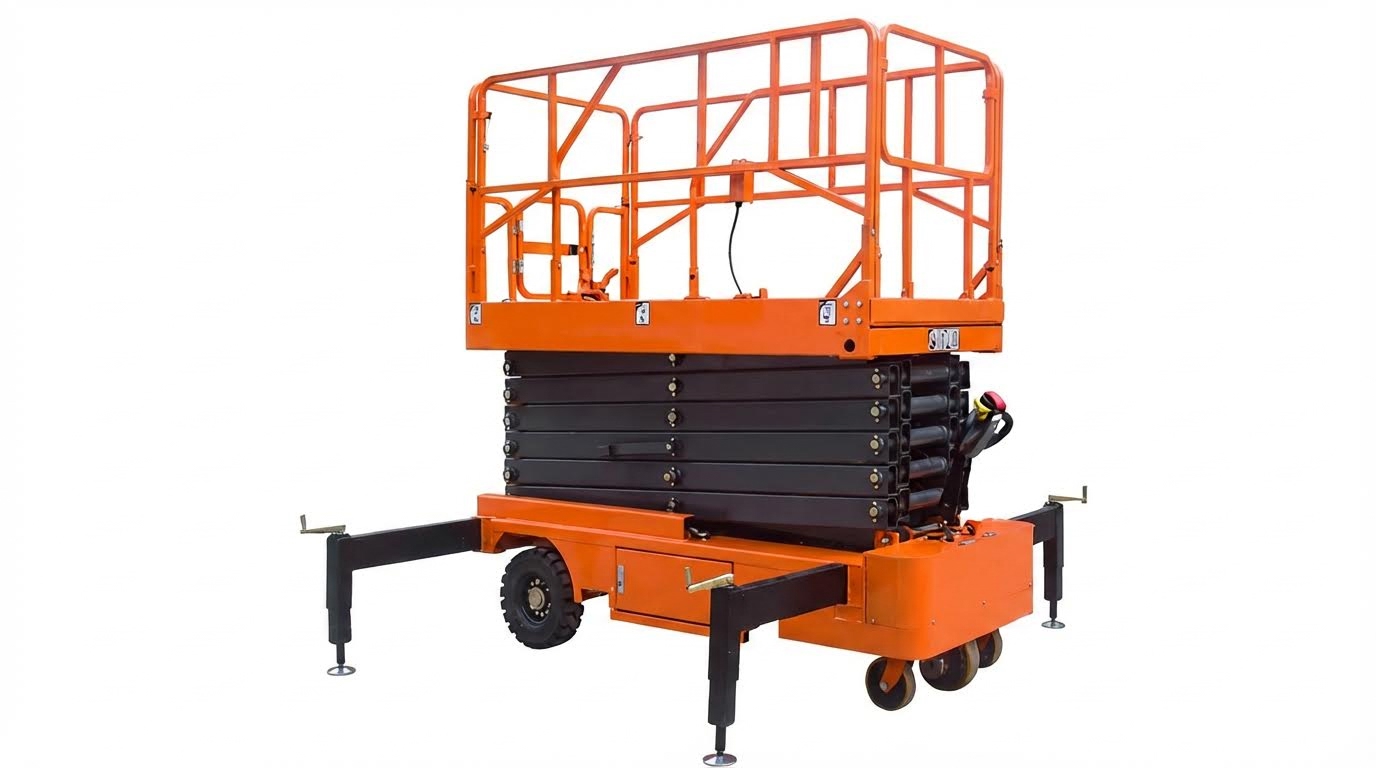
What A Deck Extension Is And How It Works
A deck extension is a sliding section of the work platform that increases horizontal reach without moving the entire scissor platform. It lets operators get closer to the work face while keeping the base of the machine on firm, level ground. Understanding this hardware is the first step in learning how to extend scissor lift platform systems safely and efficiently.
| Item | Typical Values / Description | Why It Matters |
|---|---|---|
| Base platform size | Example: 1.8 m × 0.8 m platform footprint cited data | Defines standing area and starting reach before extension. |
| Extension orientation | Normally slides out along the longer side of the platform cited data | Maximizes working reach while keeping width narrow for aisles. |
| Typical extension length | About 0.8–1.0 m for light-duty units; 1.2–1.5 m for heavy-duty or rough terrain lifts cited data | Longer travel gives more outreach but increases load on the scissor stack and affects stability. |
| Example extension spec | Some platforms add 0.6 m extension to a base length of 1.29 m, reaching several meters overall when combined with machine chassis length cited data | Shows how a modest slide-out can significantly increase total working length. |
| Extension deck capacity | Commonly rated around 113–136 kg (≈250–300 lb) for one worker plus tools cited data | Critical for safe loading; usually lower than full platform rating. |
| Example deck rating | Some models specify about 225 kg on the extension vs. 750 kg on the main platform cited data | Illustrates that extension sections often have stricter limits than the main deck. |
Mechanically, most extension decks run on rollers or sliding pads under the platform floor. A locking pin or latch holds the deck in the stowed position for travel and in the fully extended position for work. When you learn how to extend scissor platform lift decks, you must always unlock, slide, and re-lock the deck exactly as the manufacturer describes, so the structure carries the load through the designed load paths.
How the extension affects stability and center of gravity
Extending the deck moves people and tools outward from the center of the scissor stack. This shifts the combined center of gravity closer to the platform edge and increases the overturning moment. Longer extensions and higher deck loads therefore reduce the margin against tip-over, especially at full height or on sloping or soft ground. To compensate, designs may use higher-capacity scissor arms, wider wheelbases, or control restrictions such as reduced travel speed when raised and extended. Some models also limit drive or elevation when tilt sensors detect unsafe angles or when overload sensors see too much weight on the platform. Cited stability and tilt data
- Never assume the extension can carry the same load as the full platform; check the separate deck rating on the data plate.
- Keep heavy materials closer to the main platform section and use the extension mainly for the worker and light tools.
- Do not drive or reposition the lift at height with the deck extended unless the manual explicitly permits it.
- Retract the extension before lowering into tight areas, transport, or towing.
Standards, Manuals, And Regulatory Requirements
Safe use of any deck extension starts with the operator’s manual for the exact lift model. The manual describes approved extension positions, locking methods, and the correct sequence for extending and retracting. It also defines the platform and extension load ratings and gives limits for wind, slope, and ground conditions that directly affect extension use. Studying this guidance is essential before deciding how to extend aerial platform decks in your facility.
- Operator’s manual: Explains extension hardware, locking pins, safe positions, and step-by-step operating procedures.
- Load and capacity charts: Show separate ratings for the main platform and the extension deck, including maximum number of occupants and tools.
- Warning labels and decals: Reinforce no-go conditions such as using the lift on slopes, near drop-offs, or under power lines. Cited safety guidance
- Inspection and maintenance schedules: Define how often to check the extension rollers, welds, pins, latches, and guardrails for damage or wear.
Regulatory guidance emphasizes that guardrails must be in place and secure whenever workers stand on any part of the platform, including the sliding deck. Operators should stand only on the deck surface, never on rails, and keep work within easy reach to avoid leaning out. Pre-use inspections must confirm that guardrails, gates, toe boards, and the extension structure are intact and that the deck locks positively in both stowed and extended positions. Cited inspection and fall protection guidance
Key inspection points specific to extension decks
During pre-start checks, operators should verify that the extension slides smoothly and without binding, that rollers or sliding pads are not cracked, flat-spotted, or missing, and that locking pins, latches, and their springs engage fully in both stowed and extended positions. They should look for weld cracks or deformation around the extension frame and mounting points, confirm that guardrails on the extension section are straight and firmly attached, and ensure capacity labels for the extension deck are present and legible. Any damage or missing parts must be reported and repaired before the lift returns to service. Cited pre-use inspection guidance
- Train operators to locate and read the platform and extension capacity decals before every job.
- Include extension decks in daily and annual inspection checklists, not just in general platform checks.
- Document all findings and repairs so maintenance teams can track recurring issues with extension components.
- Align site rules on wind limits, slopes, and travel at height with the strictest values from the manual and safety regulations.
Engineering Limits: Capacity, Stability, And Controls
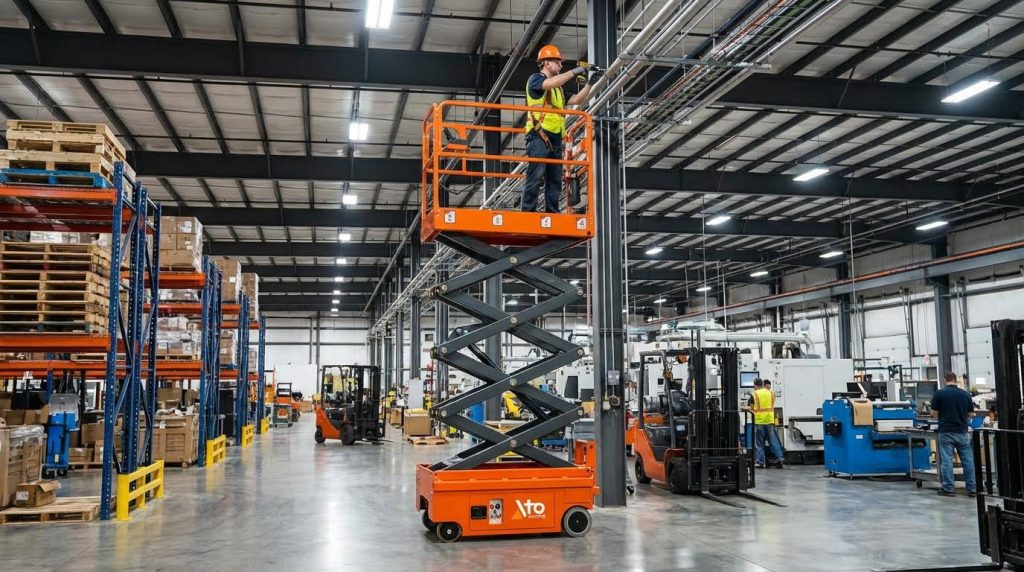
This section explains the engineering limits that control how to extend scissor platform decks safely. Understanding capacity, stability, and control systems lets supervisors set clear rules and prevents overloads, tip‑overs, and control misuse.
Load Ratings For Main Platform Vs. Extension Deck
When you plan how to extend scissor platform lift decks, treat the main platform and the extension as two different load zones. Each has its own rated capacity and both must stay within limits at the same time.
| Parameter | Main Platform (Typical) | Extension Deck (Typical) | Engineering Notes |
|---|---|---|---|
| Typical load rating range | Up to ~750 kg on some models (example model) | ~113–136 kg for light duty; up to ~225 kg on some heavy units (typical range) | Extension is usually 15–30% of main capacity |
| Typical extension length | N/A (fixed deck) | 0.8–1.5 m depending on model and duty class (typical values) | Longer travel increases moment on scissor stack |
| Load type assumption | 1–3 workers + tools + materials | 1 worker + tools | Deck is not intended for multiple people at full reach |
| Structural focus | Overall platform frame and scissor arms | Extension frame, rollers, locks, stops | Local bending and roller track wear are critical |
Key rules for managing capacity on an extension deck:
- Always read both ratings: total platform capacity and the separate extension‑deck rating.
- Count everything: people, tools, materials, and temporary fixtures.
- Keep a safety margin; do not work at the nameplate limit for routine tasks. Safe-use guidance recommends staying below maximum rating.
- Never “trade” capacity: you cannot exceed the deck rating just because the main platform is lightly loaded.
- Limit heavy, dense items (batteries, motors, buckets of fasteners) on the extension; keep them closer to the main deck centerline.
Why extension ratings are lower
The extension acts like a cantilever. Moving weight outward increases the overturning moment on the scissor mechanism and chassis. Designers therefore assign a lower deck rating to keep stresses, deflection, and stability within safe limits, especially at full height.
Center Of Gravity, Tilt Angles, And Gradeability
Extending the deck changes the combined center of gravity (CG) of the lift, platform, and load. That is why instructions on how to extend aerial platform decks always stress level ground and controlled loading.
| Stability Factor | Typical Value / Practice | Impact When Deck Is Extended | Control Measure |
|---|---|---|---|
| Platform extension length | 0.8–1.5 m travel on many units (typical) | Shifts CG outward toward platform edge | Restrict heavy loads on deck; keep workers inside guardrails |
| Permissible tilt angles | Example: 5° longitudinal, 3° lateral on some models (specific model) | Available stability margin reduces when deck is extended | Operate only on firm, level surfaces; obey tilt alarms |
| Gradeability (travel on slopes, stowed) | Up to ~45% on some rough‑terrain units (example) | Gradeability applies with platform stowed, not raised or extended | Do not drive on slopes with platform elevated, per safety guidance (tip‑over prevention) |
| Wind loading | Outdoor use often limited to < 28 mph (≈12.5 m/s) (outdoor limits) | Extended deck increases exposed area and overturning moment | Retract deck or lower platform if wind approaches limit |
Practical stability rules when the extension is out:
- Only use the extension on firm, level, debris‑free ground; avoid slopes and holes. Pre‑use site assessment stresses level, stable surfaces.
- Do not move the lift with the platform elevated and extended unless the manual explicitly allows it, and then only at very low speed. Stability guidance warns against travel while elevated.
- Keep workers’ bodies inside the guardrails; no leaning or climbing that shifts the CG further out.
- Watch wind and weather continuously and retract the deck if gusts increase. Weather limits are critical for elevated work.
How CG shift and tilt interact
When the deck is retracted, the platform load sits closer to the chassis centerline. Extending the deck moves the CG toward one side. If the chassis is also tilted in that same direction, the combined CG can approach the edge of the support polygon. That is why even small lateral tilts (3–5°) become critical at full extension and height.
Sensors, Interlocks, And Predictive Monitoring
Modern scissor lifts use sensors and control logic to enforce safe limits when you decide how to extend scissor platform lift decks in daily work. These systems reduce dependence on operator judgment alone.
- Load sensors / overload detection
- Measure platform load and compare it to rated capacity for both main deck and extension.
- Can inhibit elevation or extension when overload is detected, or trigger alarms. Overload sensors are cited as key engineering controls.
- Tilt sensors / angle switches
- Monitor chassis tilt in longitudinal and lateral directions.
- Disable elevation or extension above defined tilt thresholds (for example 3–5° on some models) to prevent tip‑over.
- Travel speed limiters
- Automatically reduce drive speed when the platform is elevated.
- Some designs further restrict travel when the deck is extended, reducing dynamic loads and sway. Speed limiters support tip‑over prevention.
- Interlocks on guardrails and gates
- Confirm that gates and mid‑rails are closed before allowing elevation.
- Support fall‑protection rules that require intact guardrail systems. Guardrail integrity is a core requirement.
| Monitoring / Maintenance Tool | Function | Relevance To Deck Extensions |
|---|---|---|
| Daily pre‑use inspections | Check structure, hydraulics, tires, guardrails, and controls before operation (inspection guidance) | Detect worn rollers, bent tracks, or damaged locking pins on the extension before failure. |
| Routine maintenance intervals | Daily, weekly/monthly, and annual checks on structure, hydraulics, and controls (multi‑layer inspections) | Lubricate extension slides, inspect welds, and confirm positive locking at full extension. |
| Digital / predictive monitoring | Use sensors, fault codes, and usage hours to anticipate failures (predictive concepts) | Track how often and how long the deck runs extended; flag high‑wear units for proactive service. |
Best practices for using these systems effectively:
- Train operators to respect alarms and lockouts; no bypassing of load or tilt sensors.
- Document all fault codes related to extension movement or limit switches and remove the lift from service until inspected.
- Use fleet data to identify units with frequent extension use and schedule extra checks on their slides, rollers, and locking mechanisms.
- Include extension‑specific points (pins, stops, welds, slide tracks) in all periodic inspection checklists. Maintenance routines already stress structural and safety components.
How predictive data improves extension safety
By logging extension cycles, travel distance, and platform height, digital monitoring can highlight units that operate near their stability envelope more often. Maintenance teams can then increase inspection frequency on those lifts, replace worn components before failure, and adjust training or job planning where misuse patterns appear.
“”
Choosing And Managing Extensions For Your Facility
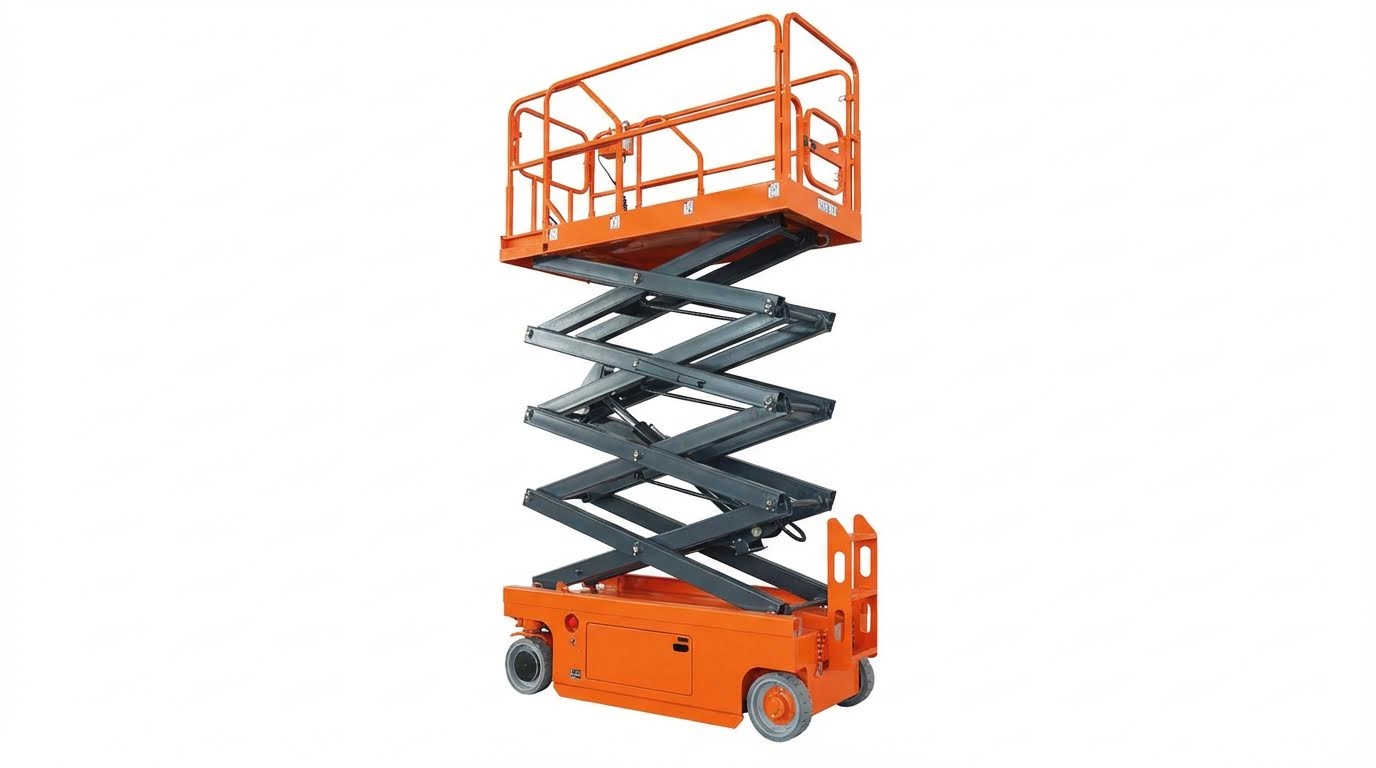
Matching Extension Length To Task And Aisle Width
Selecting the right deck extension is a geometry and stability problem, not guesswork. The goal is to reach the workface with minimum overhang while staying inside capacity and aisle limits. This is central to planning how to extend scissor platform setups safely and efficiently.
| Parameter | Typical Range / Example | Why It Matters |
|---|---|---|
| Base platform size | ~1.8 m × 0.8 m for compact units (example specification) | Defines starting footprint in the aisle |
| Typical extension length – indoor/light duty | 0.8–1.0 m (typical values) | Suited to warehouses and tight aisles |
| Typical extension length – rough terrain/heavy duty | 1.2–1.5 m (typical values) | Greater reach; higher impact on stability |
| Example short extension | 0.6 m extension on a compact model (example model) | Good where aisle clearance is very limited |
| Extension deck capacity – typical | ≈113–136 kg (≈250–300 lb) (typical range) | Usually one person plus tools |
| Extension deck capacity – example | ≈225 kg vs 750 kg on main platform (example model) | Shows extension is always lower-rated than main deck |
Use these data points to “right-size” extensions instead of always choosing the longest option. Longer decks increase reach but also shift the center of gravity outward and can reduce allowable travel or tilt limits. You must combine length, capacity, and aisle width into one simple selection method.
Quick method to match extension to aisle width
Use this approach when deciding how to extend scissor platform lift decks in a specific aisle:
- Measure clear aisle width at floor level and at work height (racks and ductwork may neck down the upper width).
- Note base platform length and width from the data plate or manual.
- Check maximum extension stroke (for example 0.8 m, 1.0 m, 1.5 m) and whether it projects from the long or short side of the platform. Typical designs extend on the long side
- Ensure that platform length + extension + minimum clearance (typically ≥0.3–0.5 m per side) fits inside the aisle at the working height.
- If clearance is insufficient, choose a shorter extension, work from the opposite side, or reposition the lift instead of over‑extending into rack or structure.
From an engineering standpoint, there are three key checks before you decide the extension length for a given task.
- Reach vs. overhang: Use the shortest extension that still allows the operator to work without leaning on guardrails. This reduces bending moment on the scissor stack and improves stability.
- Aisle geometry: In very tight aisles, a 0.6–0.8 m extension may be safer than a 1.2–1.5 m option, even if the longer deck is available.
- Load pattern: Place heavier materials on the fixed platform and only the worker and light tools on the extension deck to stay within its lower rating. Typical extension ratings around 113–136 kg make this critical. See typical extension capacities
Facilities that standardize a few extension lengths by area (short for dense racking, longer for open production bays) make it easier for operators to choose correctly. Clear diagrams at the job planning stage showing maximum safe extension for each aisle help prevent operators from improvising unsafe positions when they decide how to extend aerial platform decks on the fly.
Battery, Duty Cycle, And Maintenance Considerations
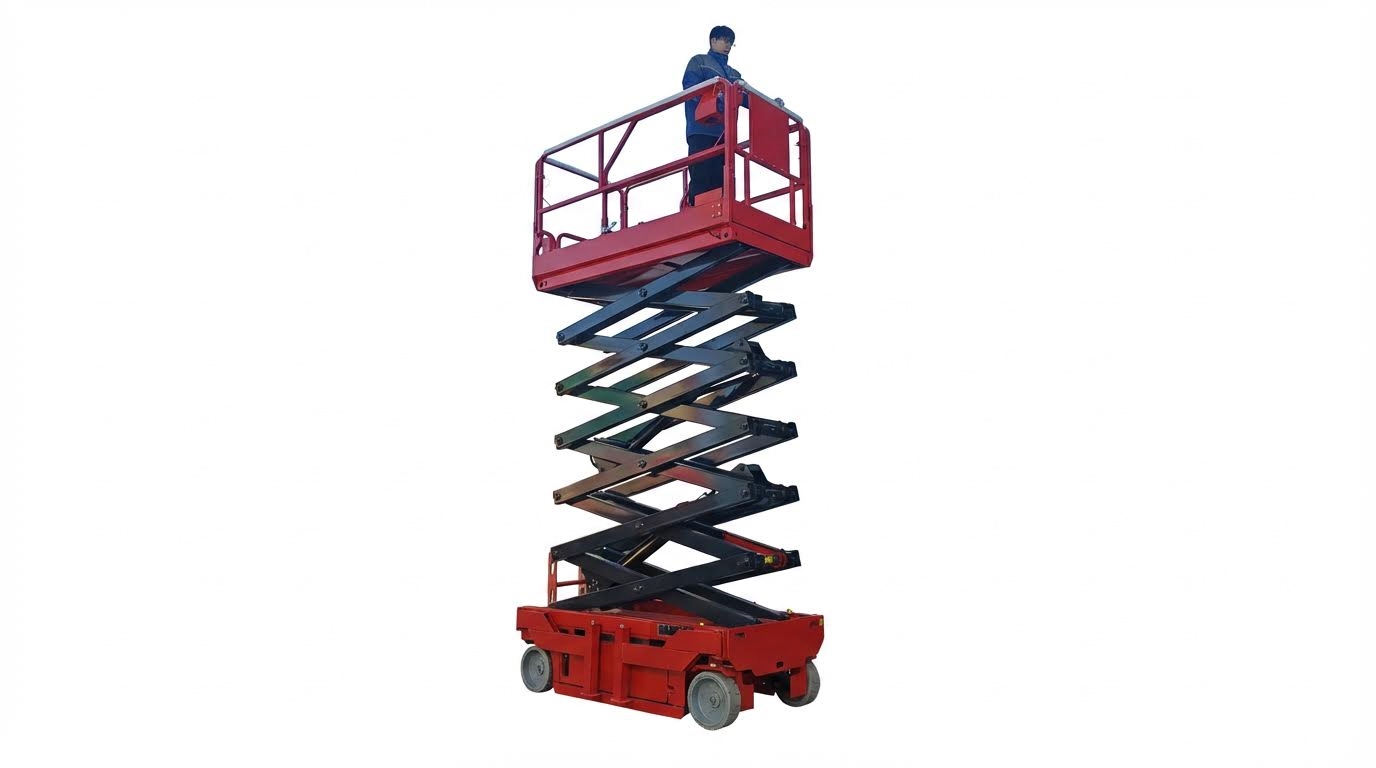
Platform extensions affect how often and how far a scissor lift cycles, which directly ties into battery sizing, duty cycle, and maintenance planning. Repeated driving and elevating with a loaded extension increases energy use and component wear. Managing these factors keeps lifts ready when needed and reduces unplanned downtime.
- Duty cycle impact of extensions
- Frequent extend/retract cycles add to total “work per shift,” drawing more current from the battery pack.
- Operating with the extension loaded near its rating increases hydraulic pressure and motor torque, shortening run time between charges.
- Travel restrictions with extended decks (reduced speed, no travel when fully extended on many units) change how long tasks take, which changes total hours on the machine.
Battery management must reflect this heavier use pattern. Good practice is to treat any task that uses the extension most of the time as a “high duty cycle” job.
- Battery care for extension‑intensive work
- Check state of charge before each shift and avoid deep discharges beyond the manufacturer’s limit to preserve capacity. Routine pre‑use checks include battery charge verification
- Connect chargers after use and follow correct profiles for lead‑acid or lithium systems to avoid under‑ or over‑charging. Proper charging is a core safety and reliability step
- Keep battery tops clean and dry, and inspect cables and terminals for corrosion or looseness to prevent voltage drops under high load. Typical maintenance guidance
- Use periodic amp‑draw and charge tests to confirm that batteries can still support the higher current demands of frequent extension use. These tests are standard best practice
| Operating Pattern | Typical Battery Strategy | Notes For Extension Use |
|---|---|---|
| Light duty (occasional extension use) | Single daily charge; visual checks only | Standard pre‑use checks are usually sufficient. |
| Medium duty (extension in use several hours/day) | Daily charge + weekly deeper inspection | Monitor run time; consider opportunity charging in multi‑shift work. |
| Heavy duty (extension used most of the shift) | Strict charging routine; scheduled testing; possible extra battery capacity | Plan for higher current draw and faster battery aging. |
Maintenance routines must also account for the extra loads and sliding motion introduced by the extension system.
- Key maintenance items for extension decks
- Inspect rollers, slide tubes, and lock pins for wear, deformation, or contamination; clean and lubricate per the maintenance manual.
- Verify that extension locking mechanisms fully engage and release during daily functional tests so they can safely hold rated load. Daily functional checks are part of safe operation
- During pre‑use walkarounds, look for cracks, bent members, or loose fasteners on the extension frame and guardrails, and remove the lift from service if defects are found. OSHA highlights these structural checks
- Include extension components in weekly or monthly lubrication and inspection schedules along with scissor pivots, drive systems, and hydraulic hoses. Typical maintenance intervals
Linking duty cycle, extensions, and predictive maintenance
Modern fleets often use sensors and telematics to track how often operators elevate, drive, and extend platforms. These systems log duty cycles, lift heights, temperatures, and fault codes, and send the data to dashboards so maintenance can be scheduled based on actual run‑hours instead of calendar estimates. Digital monitoring and predictive maintenance are increasingly common This is especially valuable for units that spend much of their life with the extension deployed, because those machines see higher structural and energy loads than “average use” assumptions.
By matching extension length to aisle geometry and load, and by aligning battery and maintenance plans with real duty cycle, facilities can standardize how to extend order picking machines safely while keeping availability high and lifecycle costs under control.
Final Considerations For Safe Deck Extension Use
Safe deck extension use depends on three linked pillars: correct geometry, strict respect for load limits, and reliable controls. When you extend a platform, you change the structure from a compact rectangle into a cantilever. This increases bending loads, shifts the center of gravity, and cuts the margin against tip‑over, especially at height or near wind and tilt limits.
Engineering controls such as load and tilt sensors, interlocks, and speed limiters reduce risk, but they do not replace planning. Supervisors must select extension lengths that fit aisle width, reach the work without leaning, and keep heavy materials on the fixed deck. Maintenance teams must treat the extension as a critical system, not an accessory, and include rollers, locks, welds, and labels in all inspection tiers.
The most effective sites use one simple rule set: follow the manual, use the shortest extension that does the job, keep within both platform and deck ratings, and never override alarms. Combine that with duty‑cycle‑based battery care and documented inspections, and your Atomoving scissor lifts will deliver safe reach, predictable stability, and long, low‑cost service life.
Frequently Asked Questions
How to Extend the Platform on a Scissor Lift?
To extend the platform on a scissor lift, ensure the equipment is on a flat, stable surface. Use the control panel to raise or lower the platform to the desired height. Avoid extending the platform over uneven terrain or near overhead hazards like power lines. For safe operation, always follow the manufacturer’s guidelines Scissor Lift Safety Steps.
Can a Scissor Lift Extend Vertically and Horizontally?
Scissor lifts are designed primarily for vertical extension. They use a crisscross mechanism to elevate the platform straight up. Unlike boom lifts, they do not extend horizontally. Always check the equipment’s load capacity and height limits before use to ensure safe operation.
What Are the Risks of Overextending a Scissor Lift?
Overextending a scissor lift can lead to instability and tipping. Common risks include off-center loads, leaning too far out of the platform, or operating in high winds. To prevent accidents, never exceed the lift’s maximum height or weight limits. Review safety guidelines for more details Scissor Lift Hazards.