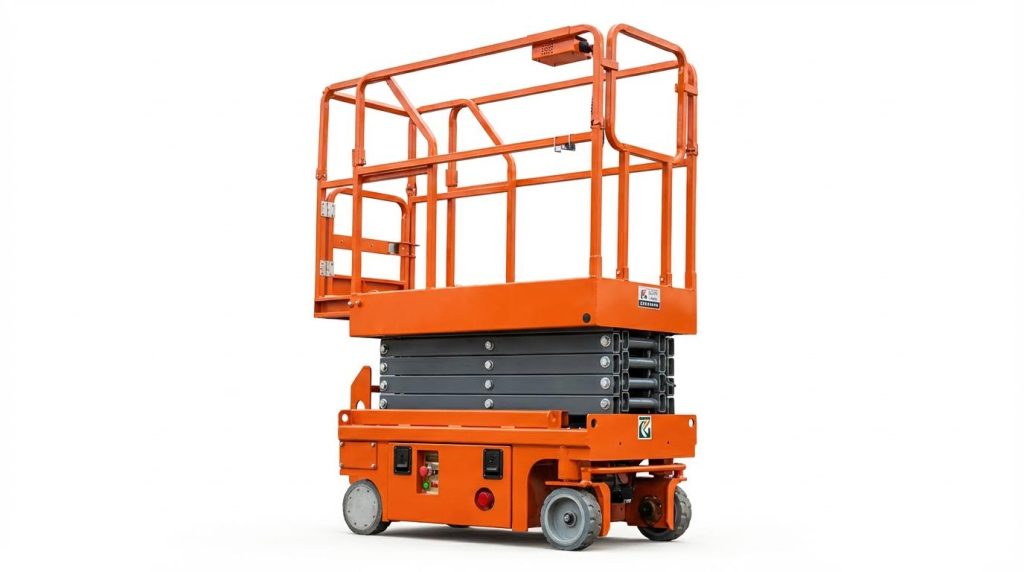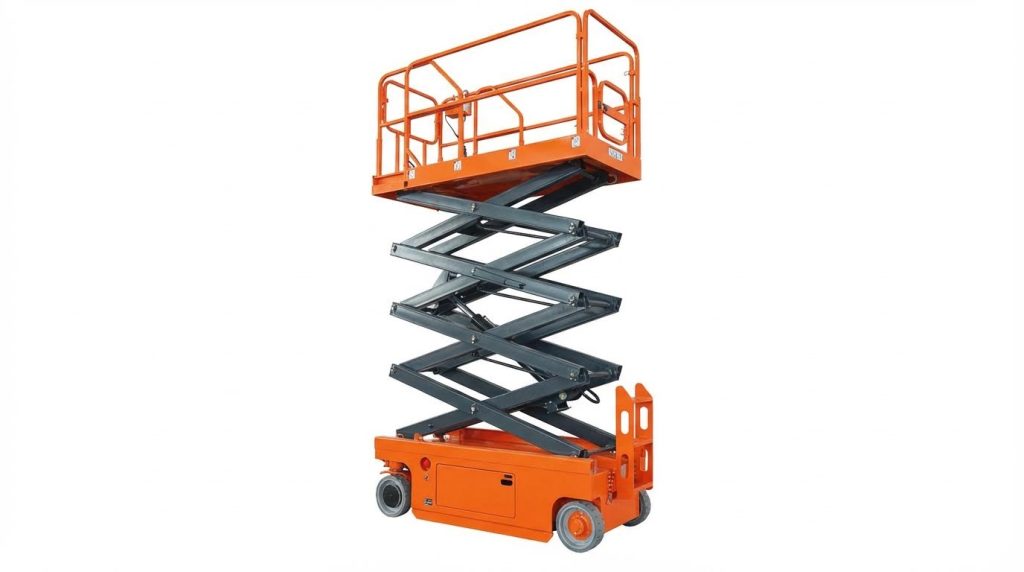
Scissor lift battery performance governed uptime, safety, and total cost of ownership in industrial fleets. This guide examined battery lifespan, runtime, and duty cycle behavior under real-world operating conditions. It compared flooded lead-acid, sealed lead-acid, and lithium-ion chemistries, focusing on maintenance requirements, cycle life, and performance trade-offs. It also detailed charging strategies, maintenance routines, and safety practices that engineering and fleet teams used to maximize battery life and equipment availability.
Battery Lifespan, Runtime, And Duty Cycle
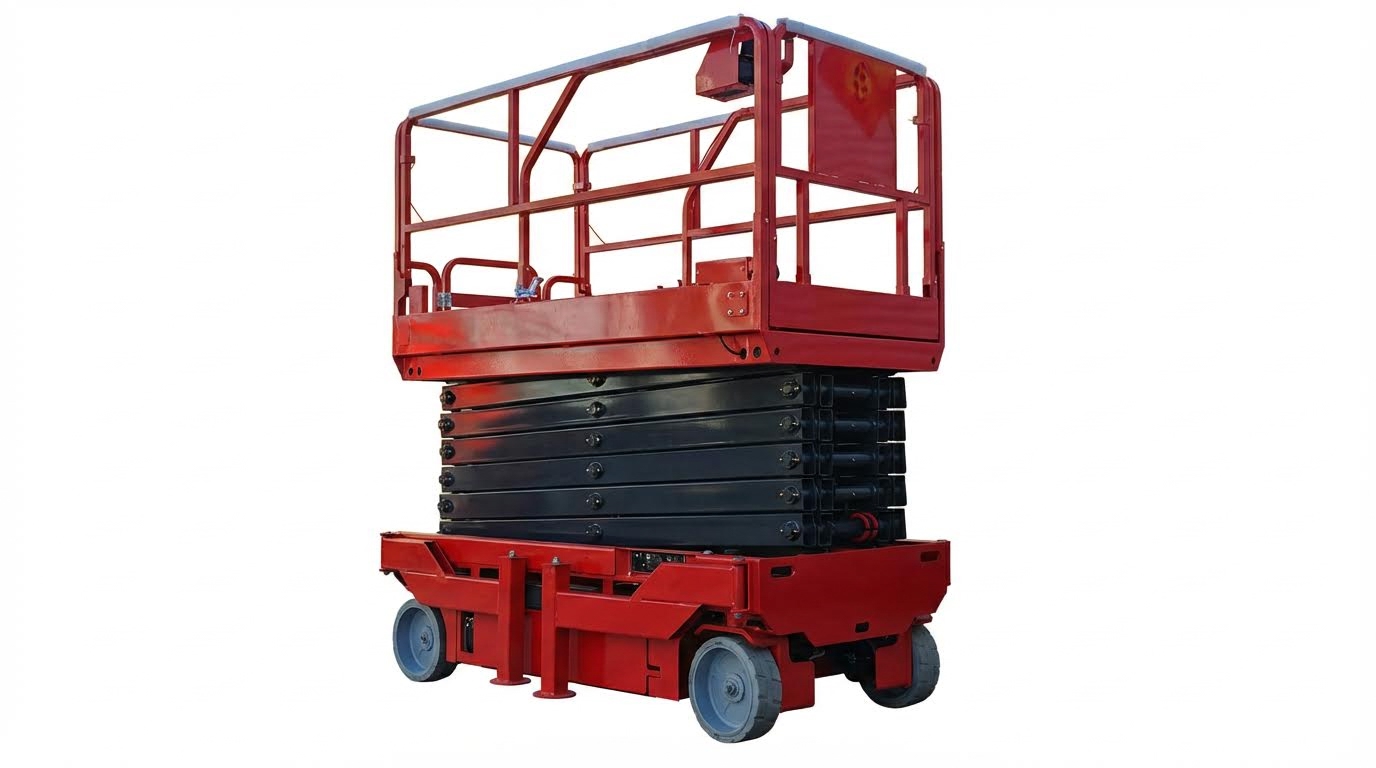
Battery life governed the availability, cost, and safety of scissor lift fleets in industrial environments. Engineers evaluated lifespan in years, runtime in hours per shift, and duty cycle severity to size batteries correctly and specify maintenance regimes.
Typical Service Life In Industrial Fleets
Scissor lift batteries typically operated for 3–5 years in industrial fleets under controlled conditions. Light-duty fleets with proper charging and maintenance often achieved close to 5 years, especially with disciplined operators. Heavy daily use with frequent deep discharges and poor watering or cleaning practices usually reduced life to 2–3 years, and severe neglect drove failures in 1–2 years. Lithium-ion packs historically delivered longer calendar life and higher cycle counts than flooded lead-acid, but required higher upfront capital and compatible chargers.
Engineers characterized service life using cycle count and depth of discharge (DoD). Lead-acid batteries tolerated more cycles at 50% DoD than at 80% DoD, so operating strategy strongly influenced life. Overcharging, chronic undercharging, and extended storage in a partially discharged state accelerated sulfation and capacity loss. Fleet managers therefore tracked age, cycles, and performance indicators such as reduced runtime and voltage sag to schedule proactive replacements.
Expected Runtime Per Charge By Application
On a full charge, typical battery-powered scissor lifts delivered 4–8 hours of effective work, depending on application profile. Continuous drive and lift use under rated load often yielded 4–6 hours, whereas intermittent use with idle periods extended runtime toward 8–10 hours. Indoor maintenance tasks with low drive frequency and light loads usually consumed less energy than construction or warehousing applications with frequent repositioning.
Runtime depended on both battery capacity and system efficiency. Older or sulfated lead-acid batteries showed shorter run windows and larger voltage drop under load, even when the state-of-charge indicator appeared acceptable. Engineers accounted for worst-case duty cycles when sizing batteries, reserving capacity to avoid dropping below roughly 20% state of charge, which accelerated degradation. Application-based runtime testing under representative loads provided more reliable data than nameplate capacity alone.
Impact Of Load, Terrain, And Duty Cycle
Higher platform loads increased current draw, which reduced runtime and accelerated battery wear. Operating near rated capacity for long periods raised internal temperatures and amplified plate corrosion in lead-acid cells. Rough or sloped terrain demanded more traction power, particularly during frequent starts, stops, and steering corrections. Indoor smooth-floor applications therefore imposed a much lighter electrical duty than outdoor construction sites with uneven ground.
Duty cycle combined lift usage, drive patterns, and idle time into a single severity metric. Frequent short moves with repeated elevation changes produced a peaky current profile and more heating than long idle intervals between cycles. Engineers minimized unnecessary lift cycling and travel distance in work planning to flatten demand. Data logging of current, voltage, and usage hours enabled fleet operators to classify lifts as light, medium, or heavy duty and match them to appropriate battery chemistries and capacities.
Environmental Effects: Heat, Cold, And Storage
Ambient temperature strongly influenced scissor lift battery performance and life. At moderate temperatures around 27 °C, lead-acid batteries delivered near-rated capacity and acceptable calendar life. At low temperatures, capacity dropped sharply; for example, a fully charged battery at 27 °C that performed at 100% capacity typically delivered about 65% at 0 °C and about 40% at −18 °C. Cold conditions therefore shortened runtime even when the state-of-charge was nominally high.
High temperatures had the opposite effect: short-term capacity appeared adequate, but elevated heat accelerated grid corrosion, water loss, and separator degradation, reducing overall life. Long-term storage in either extreme heat or freezing conditions damaged cells and increased failure rates. Best practice kept stored batteries fully charged in a cool, dry, ventilated area, with periodic top-up charging. Engineers specified temperature controls, such as heaters in cold climates or ventilation and shading in hot regions, to stabilize performance and protect fleet investment.
Battery Chemistries And Performance Trade-Offs
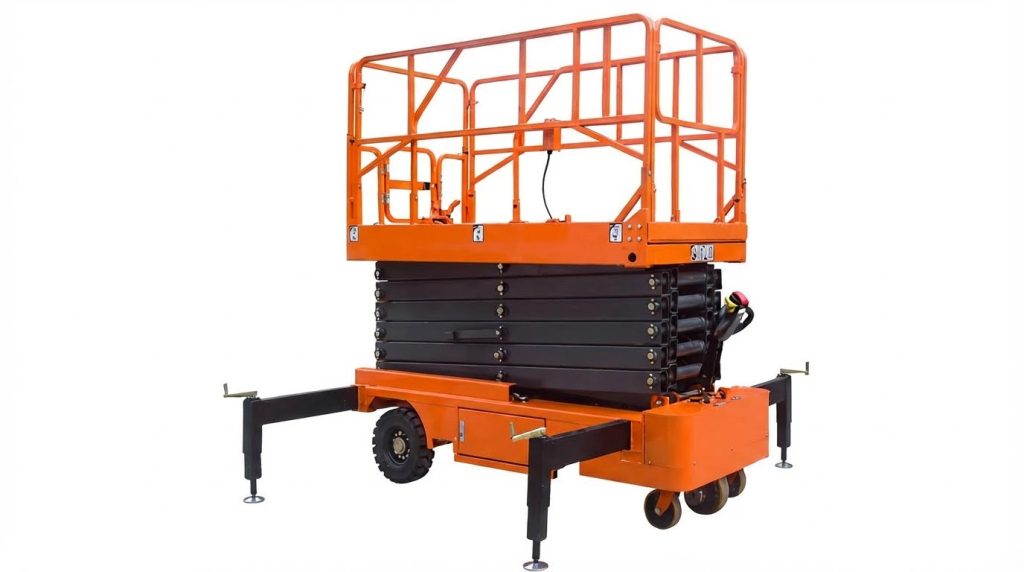
Scissor lifts historically relied on lead-acid batteries, but sealed and lithium chemistries changed lifecycle economics. Each chemistry delivered distinct trade-offs in cost, maintenance burden, safety, and runtime stability. Engineering teams needed to match these characteristics to duty cycle, environment, and charging infrastructure. A structured comparison helped avoid chronic downtime, premature battery failures, and overspending on overspecified packs.
Flooded Lead-Acid: Maintenance And Failure Modes
Flooded lead-acid batteries remained the baseline choice for many rental and construction fleets. They offered low initial cost, robust tolerance to abuse, and straightforward recycling, but required regular maintenance. Operators had to check electrolyte levels, add distilled water, and keep tops and terminals clean to prevent self-discharge and tracking. Neglected watering caused plates to expose, leading to sulfation, loss of capacity, and localized hot spots during charging. Chronic undercharging and frequent deep discharges accelerated sulfation and stratification, shortening life to roughly 1–2 years in harsh duty. Overcharging or incorrect charger voltage caused excessive gassing, water loss, and plate corrosion, sometimes accompanied by case swelling or vent cap leakage. These failure modes directly reduced runtime per shift and increased unplanned service events.
AGM And Gel: Sealed Lead-Acid Options
Absorbent glass mat (AGM) and gel batteries used the same lead-acid chemistry but immobilized the electrolyte. AGM used fiberglass mats, while gel used silica-thickened electrolyte, both creating sealed, spill-proof designs. These batteries eliminated routine watering and reduced exposure to acid, which improved safety in tight battery compartments and indoor applications. They tolerated vibration better than flooded cells and showed lower self-discharge, which benefited lifts stored for extended periods. However, they required strictly controlled charging voltages and currents; overvoltage could cause dry-out, gas accumulation, and irreversible capacity loss. AGM typically delivered higher power density and better cold performance than gel, making it more suitable for frequent cycling and higher current draws. Gel batteries favored applications with slower discharge and where deep cycling at moderate currents dominated. Both options cost more than flooded lead-acid but often extended service life and reduced maintenance labor, which improved total cost of ownership when properly charged.
Lithium-Ion Packs: Cost, Life, And Fast Charging
Lithium-ion packs for scissor lifts, typically based on lithium iron phosphate (LiFePO₄) or similar chemistries, significantly changed performance envelopes. They offered higher energy density, flat discharge voltage, and usable capacity down to deeper depths of discharge without severe degradation. Typical cycle life often exceeded that of lead-acid by a factor of two to four when managed by a battery management system (BMS). Fast charging capability allowed partial recharges during scheduled breaks without the same sulfation penalties seen in flooded lead-acid, provided chargers and BMS were properly matched. These packs operated efficiently over wider temperature ranges, although extreme cold still reduced available capacity and charge acceptance. The main drawbacks were high upfront cost, the need for compatible smart chargers, and stricter integration requirements for safety, including cell balancing, overcurrent protection, and thermal monitoring. For high-utilization fleets, the reduced downtime, lower maintenance, and longer life often offset the initial investment over the equipment’s service period.
Selecting Chemistries For Fleet Duty Profiles
Chemistry selection needed to start from duty cycle, utilization rate, and charging infrastructure, not from unit price alone. Flooded lead-acid suited low to moderate utilization fleets with access to trained maintenance staff and predictable overnight charging windows. AGM or gel worked better in environments where acid spills were unacceptable, ventilation was limited, or operators could not reliably perform watering, such as indoor maintenance or healthcare facilities. Lithium-ion provided the strongest fit for high-duty, multi-shift operations where runtime, fast turnaround, and predictable performance across temperatures justified higher capital cost. Fleet managers also had to consider ambient conditions, as cold-storage facilities or hot outdoor sites stressed batteries differently and might favor chemistries with better temperature resilience. Finally, charger compatibility, regulatory requirements for ventilation and handling, and recycling or end-of-life programs completed the decision framework, ensuring that the chosen chemistry aligned with long-term operational and safety objectives.
Best Practices For Charging And Maintenance

Engineers and fleet managers relied on structured charging and maintenance regimes to stabilize scissor lift availability and lifecycle cost. Proper charging profiles, connector hygiene, and electrolyte management directly influenced usable runtime and failure rates. The following subsections summarized field-proven practices, aligned with manufacturer guidance and safety regulations, to maximize battery life and reduce unplanned downtime.
Correct Charging Profiles And Smart Chargers
Scissor lift batteries achieved maximum life when operators followed manufacturer-defined voltage, current, and time profiles. Typical industrial practice used overnight bulk charging with automatic transition to absorption and float stages. Smart chargers with auto-cutoff and temperature compensation limited overcharge, sulfation, and plate corrosion. Engineers specified chargers matched to system voltage, for example 24 V or 25.2 V, and prohibited improvised external chargers or booster packs. Charging occurred in well-ventilated, dry areas, with the machine powered off and parked clear of flammable materials. Fleet policies required full recharge after each shift, avoiding repeated partial top-ups that shortened cycle life.
Opportunity Charging: When It Helps Or Hurts
Opportunity charging had different implications depending on chemistry and duty profile. For flooded lead-acid batteries in access equipment, repeated short charging intervals during breaks historically reduced cycle life due to incomplete bulk phases and elevated average plate temperature. Manufacturers therefore recommended long, uninterrupted charging periods, typically overnight, and discouraged frequent plug-ins for only 15–30 minutes. However, controlled opportunity charging could prevent deep discharge below about 20% state of charge in high-utilization fleets, which also damaged batteries. Engineers balanced these effects by monitoring depth of discharge, runtime patterns, and charger data logs, then defining clear trigger thresholds for when to remove a unit from service and place it on a full charge.
Watering, Cleaning, And Connection Integrity
Flooded lead-acid batteries required disciplined electrolyte management to maintain performance and safety. Technicians checked electrolyte levels at least weekly in heavy use, ensuring plates remained covered but avoiding overfilling that caused overflow during gassing. Best practice added distilled water after charging, unless plates were exposed, in which case minimum water was added before charging to prevent damage. Regular cleaning removed acid residue and corrosion from cases and terminals, improving heat dissipation and contact resistance. Monthly inspections verified cable insulation integrity, torque on terminals, and absence of cracks, leaks, or swelling. For AGM, gel, and lithium packs, engineers eliminated watering tasks but retained the same inspection cadence for cabling, housings, and mounting hardware.
Safety, Ventilation, And Compliance Practices
Battery maintenance procedures integrated electrical, chemical, and fire safety requirements. Charging areas provided adequate ventilation to disperse hydrogen from flooded batteries and minimized moisture that could cause tracking or shorts. Operators wore appropriate PPE, including eye protection and acid-resistant gloves, when handling vent caps or electrolyte. Many manufacturers required battery compartments to remain open during charging to limit heat and gas accumulation. Fleet standards prohibited smoking, open flames, and unapproved electrical equipment near charging stations. Compliance with regional electrical codes and occupational safety regulations governed wiring, overcurrent protection, and signage. Technicians followed only the battery and lift manufacturer’s approved chargers and components, ensuring that modifications did not invalidate certifications or introduce thermal or electrical hazards.
Summary: Optimizing Lift Battery Life And Uptime
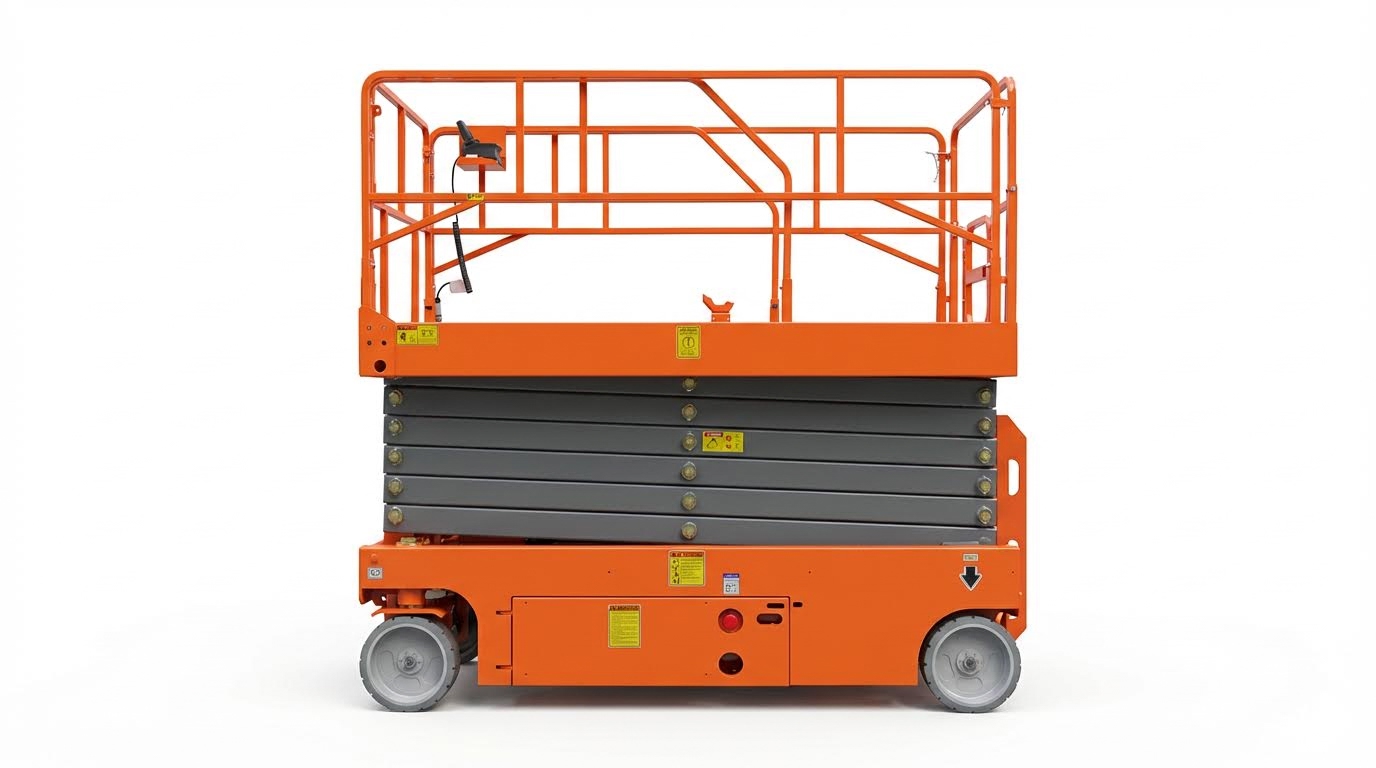
Scissor lift battery life depended on chemistry, charging discipline, duty cycle, and environment. Typical industrial fleets achieved 3–5 years of life from well-maintained lead-acid batteries, with heavy daily use and poor charging reducing this to 1–3 years. A full charge supported roughly 4–8 hours of continuous operation, with intermittent, lighter-duty work extending usable shift time. Heat, cold, deep discharges, and chronic under- or overcharging all accelerated capacity loss and increased downtime risk.
Engineers and fleet managers compared flooded lead-acid, AGM, gel, and lithium-ion packs based on cycle life, maintenance burden, safety, and total cost of ownership. Flooded lead-acid batteries offered low initial cost but required strict watering and cleaning regimes. Sealed AGM and gel variants reduced maintenance and acid exposure but carried higher purchase cost. Lithium-ion systems delivered longer life, faster charging, and higher usable energy per cycle, at the expense of higher upfront investment and the need for compatible chargers and battery management systems.
Practically, optimizing uptime required matching battery chemistry to duty profile, then enforcing correct charging profiles with smart chargers, clear charging windows, and temperature-aware procedures. Daily checks for electrolyte level (where applicable), corrosion, loose connections, and case damage, combined with monthly wiring inspections, helped prevent sudden failures. Operators needed training to avoid deep discharge, recognize early performance loss, and follow OEM-specific instructions on ventilation, PPE, and charger selection.
From a technology evolution perspective, fleets gradually migrated from flooded lead-acid toward sealed lead-acid and lithium-ion solutions, driven by safety requirements, labor constraints, and lifecycle cost analysis. However, well-managed flooded lead-acid systems remained viable where capital budgets were tight and maintenance discipline was strong. Future systems were likely to integrate smarter onboard diagnostics, connected chargers, and chemistry-specific management strategies, making battery condition a continuously monitored asset rather than a periodic maintenance concern.