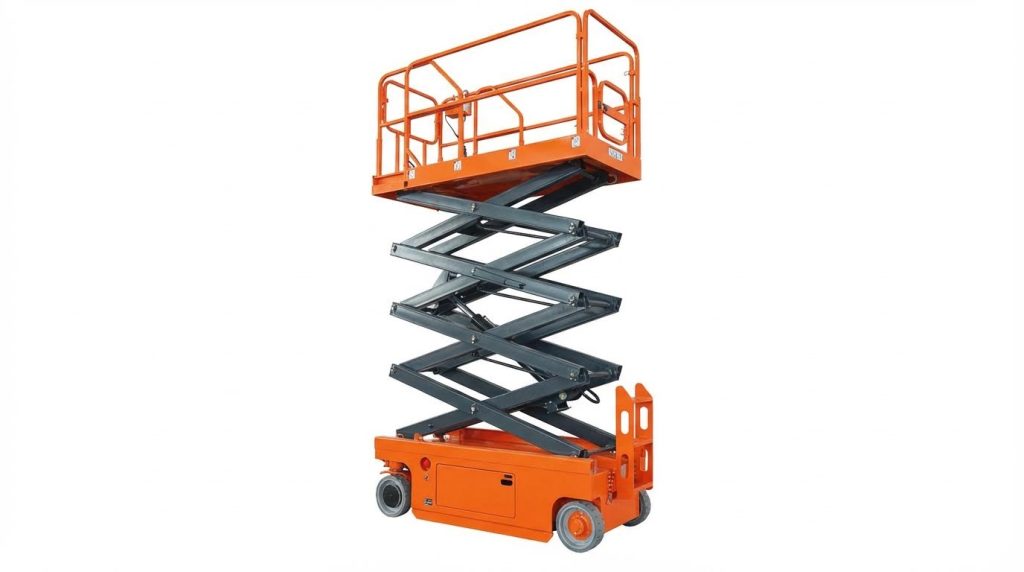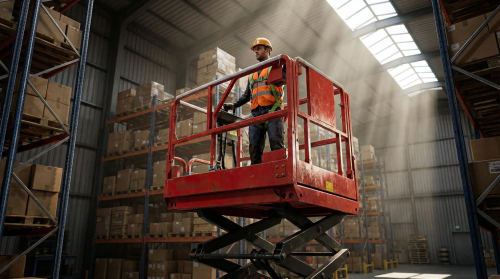
Scissor lift certification governed by OSHA, ANSI, and related standards used a three‑year renewal cycle with defined early retraining triggers. This article explains how those rules interacted with MEWP and aerial lift requirements, international schemes such as NORS and WSQ, and specialist programs like NASP and HAZWOPER. It then examines the technical content of renewal training, including stability, fall protection, inspection regimes, and legally mandated load testing. Finally, it links certification management to cost, liability, and safety performance, and closes with compliance‑oriented recommendations for employers operating scissor lifts worldwide.
OSHA Rules On Scissor Lift Certification Periods
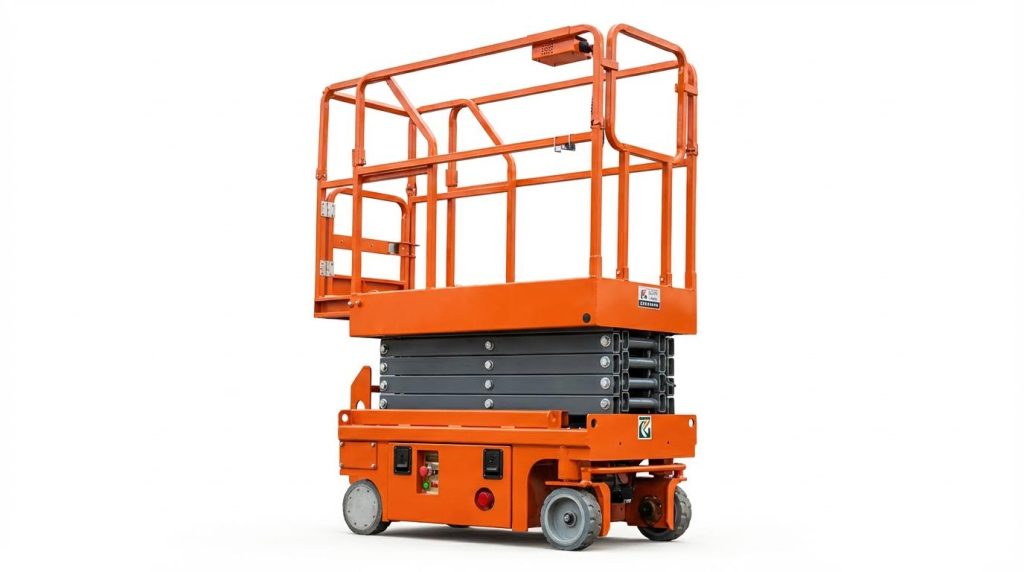
OSHA defined clear expectations for how long scissor lift certifications remained valid and when employers needed to retrain operators. These rules linked operator competence, documented training, and equipment safety performance. Understanding the three-year cycle and its exceptions helped safety managers design compliant training systems and avoid penalties.
Three-Year Validity And Early Retraining Triggers
Under OSHA guidance, scissor lift and other Mobile Elevating Work Platform (MEWP) operator certifications remained valid for three years from the issue date. This three-year interval aligned with ANSI recommendations and aimed to keep operators current with evolving safety practices and regulations. However, the three-year period acted as a maximum, not a guaranteed term. Employers had to trigger earlier retraining after unsafe operation, near misses, accidents, or when incident investigations revealed knowledge gaps. Introduction of new lift types, major equipment modifications, or significant regulatory changes also justified earlier refresher training. If operators could not present valid, in-date training records during an OSHA inspection after an accident, employers faced penalties that sometimes exceeded USD 10 000, along with potential civil or criminal exposure. Effective programs therefore treated three years as the outer limit and used incident data to pull operators back into training sooner when risk indicators appeared.
Differences Between Scissor Lifts, MEWPs, And Aerial Lifts
OSHA rules addressed scissor lifts within the broader category of aerial lifts and MEWPs, but technical distinctions mattered for training. Scissor lifts typically moved only vertically using criss-crossing support arms, while boom-type aerial lifts and other MEWPs provided both vertical and horizontal outreach. ANSI standards classified these machines into detailed MEWP groups and types based on drive configuration, elevation mode, and work platform characteristics. From a certification standpoint, OSHA required that training be specific to the equipment actually used, not just generic aerial lift theory. An operator trained only on a slab electric scissor lift did not automatically qualify to operate an articulating boom or rough-terrain MEWP. Employers therefore needed a matrix mapping each operator to the exact lift categories covered in their training. When companies added new MEWP types, they had to update risk assessments and deliver task- and equipment-specific instruction plus hands-on evaluation. Treating all aerial devices as interchangeable increased the likelihood of tip-overs, entrapment incidents, and regulatory non-compliance findings during audits.
Interaction With ANSI, NORS, NASP, And Other Standards
OSHA regulations formed the legal baseline in the United States, but industry practice also reflected ANSI, NORS, NASP, and related frameworks. ANSI standards for MEWPs recommended renewal of operator training at least every three years, in harmony with OSHA expectations, and called for more frequent retraining after unsafe behavior or equipment changes. In some sectors, employers referenced schemes such as the National Operator Registration Scheme (NORS), which registered successful candidates for three years and issued advance expiry notifications. Professional safety bodies like NASP/IASP required recertification for aerial and scissor lift specialist courses within three years, reinforcing the same renewal cadence. These programs often added structured online modules, proctored exams, and competency documentation that supported due diligence during investigations or audits. While OSHA did not mandate use of any specific provider or scheme, aligning internal policies with ANSI and recognized certification frameworks helped demonstrate that employers followed current best practice rather than minimum compliance only. This alignment also simplified multinational operations, where corporate standards needed to bridge differing local regulations.
International Variations In Validity Periods
Outside the United States, authorities and training providers set different validity periods for scissor lift operator certification, although the three- to five-year range remained typical. In Singapore, the WSQ Operate Scissor Lift course certified operators for five years, with regulators and training centers recommending annual refreshers within that window to maintain competence. Sweden’s Jobsafe Lift Training issued certifications valid for five years as well, requiring a repetition module at expiry and aligning with Swedish standard SS-ISO 18878:2013 and legal requirements such as AFS 2006:6. These schemes still demanded documented theoretical and practical knowledge and often registered qualifications in national databases like ID06 for verification. In contrast, OSHA and ANSI in the United States held firmly to a three-year maximum, with earlier retraining triggered by incidents or equipment changes. Multinational employers therefore needed a global matrix of validity rules, ensuring local compliance while often
Renewal Training Content And Technical Requirements
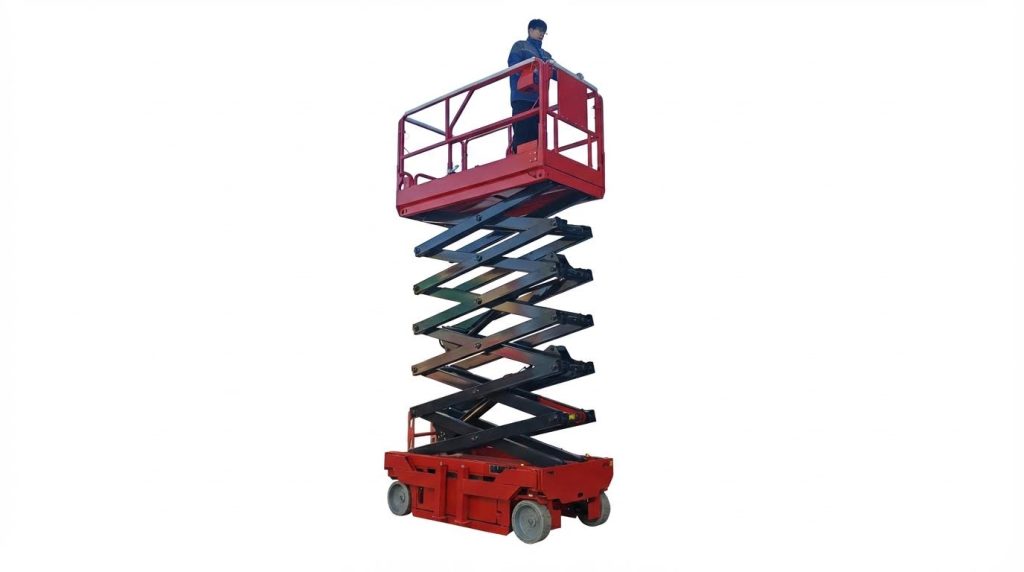
Renewal training for scissor lift operators reinforced foundational safety concepts while updating workers on regulatory and technical changes. Programs aligned with OSHA’s three-year retraining expectation and ANSI MEWP guidance, but often triggered earlier after incidents or unsafe behavior. Effective curricula combined theory, practical exercises, and formal evaluation to verify that operators could apply knowledge in real operating environments.
Core Topics: Load Limits, Stability, And Fall Protection
Renewal courses consistently revisited rated load capacity, including the distinction between platform capacity and combined load with tools and materials. Instructors emphasized centre-of-gravity control, platform extension limits, and the effect of slope or wind on stability margins. Training addressed typical failure modes, such as overloading, side-loading against structures, and driving elevated on uneven surfaces. Fall protection content covered guardrail integrity, entry and exit procedures, and when personal fall protection systems were required under site or national rules. Programs also reviewed hazard recognition for overhead obstructions, power lines, and crushing or entrapment zones around the platform.
Inspection, Maintenance, And Permenaker Load Testing
Refresher training required operators to perform and document pre-use and post-use inspections, including checks of guardrails, controls, emergency lowering systems, and hydraulic or electric systems. Courses clarified the separation of responsibilities between operators, maintenance personnel, and third-party inspectors, but still trained operators to identify defects and remove equipment from service. In jurisdictions governed by Permenaker 8 Tahun 2020, renewal content incorporated the mandated periodic technical inspections, at least every two years after commissioning and annually thereafter. Operators learned the scope of these inspections: document review, visual examination, functional tests, dimensional checks, and formal load or overload testing against the rated capacity. Training highlighted how inspection findings fed into maintenance planning and risk assessments, reducing structural and mechanical failure probability.
Digital Training, Hands-On Evaluation, And Recordkeeping
Modern renewal programs used online modules for theory, allowing operators to complete content in less than one hour in some cases. However, OSHA-compliant processes still required a hands-on performance evaluation where a qualified person observed actual lift operation, inspection practice, and emergency procedures. Providers issued digital certificates, operator cards, and evaluation forms valid for up to three years, contingent on incident-free operation and no major equipment changes. Employers needed to retain these records in HR or safety management systems for audits, incident investigations, and proof of due diligence. Training also explained login credential management for learning platforms, traceability of completion data, and integration with competence databases such as ID06 where applicable.
Integrating New Equipment And Technology Changes
Renewal training addressed technology evolution, including new MEWP control architectures, interlocks, and advanced safety sensors. Operators learned how model-specific features, such as load-sensing systems or tilt alarms, modified safe operating envelopes and response procedures. Programs highlighted that any introduction of new lift types or control layouts could trigger retraining before the three-year cycle elapsed. Content covered digital telematics, remote diagnostics, and how maintenance teams used these data to schedule inspections and predict failures. Instructors stressed that operators must not rely solely on automation; they had to understand underlying principles of stability, load handling, and emergency response regardless of software or hardware updates.
Managing Expiration Risk, Costs, And Safety Performance
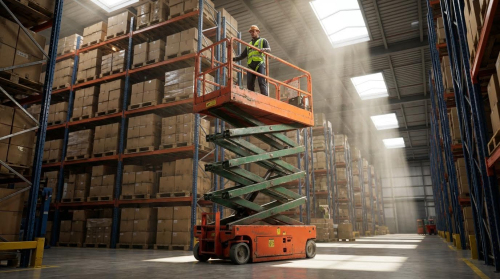
Managing scissor lift certification cycles required a structured approach that balanced compliance, cost, and safety performance. OSHA and ANSI recommended three-year renewal intervals for MEWP and scissor lift operators, with earlier retraining after incidents or unsafe use. Companies that treated certification as a lifecycle process, rather than a one-off event, reduced incident rates and avoided high penalty exposure. Effective programs integrated HR systems, safety management, and maintenance data to create a closed loop between training, field behavior, and equipment condition.
Tracking Certification Cycles And HR Documentation
Tracking certification cycles relied on accurate, centralized operator records. Employers needed to maintain up-to-date logs of issue dates, expiry dates, equipment types, and training providers for each operator. HR or EHS systems often generated automated alerts 60–90 days before expiration to schedule renewal training and hands-on evaluations. During OSHA audits, inspectors expected to see current certificates, operator cards, and evaluation forms, typically stored in HR files and sometimes mirrored in digital safety platforms. Robust documentation reduced the risk of disputed violations and demonstrated due diligence when incidents occurred.
OSHA Penalties, Liability, And Incident-Driven Retraining
OSHA required scissor lift and MEWP operators to renew certification every three years, or sooner under specific triggers. Early retraining became mandatory after accidents, near misses, observed unsafe operation, or introduction of unfamiliar equipment. Failure to maintain valid certifications exposed employers to penalties that could exceed USD 10 000 per violation, along with potential repeat or willful classifications. Individual managers or supervisors could face personal liability if they knowingly allowed untrained operators or ordered hazardous work. Incident-driven retraining served both as a corrective action and as evidence that the employer addressed root causes systematically.
Lifecycle Cost Impact Of Training And Non-Compliance
Lifecycle cost analysis compared structured training investments with the financial impact of non-compliance. Direct training costs included course fees, operator time off the job, and internal administration. However, non-compliance introduced far higher risk through OSHA fines, workers’ compensation claims, equipment damage, and productivity losses after accidents. Refresher programs that emphasized load limits, stability, and maintenance reduced mechanical abuse, extending scissor lift service life and lowering repair frequency. Over a typical three-year cycle, organizations that planned renewals proactively usually achieved lower total cost of ownership than those that treated training as a reactive expense.
Using Data, AI, And Digital Twins To Improve Training
Data-driven approaches allowed employers to tailor renewal training to actual risk patterns rather than generic content only. Incident reports, near-miss logs, telematics from MEWPs, and inspection findings fed into analytics models that identified recurrent misuse, such as overloads or frequent tilt alarms. AI-based systems could recommend targeted micro-modules on topics like weight distribution or fall protection for specific operator groups. Digital twin concepts, where a virtual model of the scissor lift and work environment existed, supported scenario-based simulations of high-risk tasks before field execution. Integrating these tools into three-year recertification cycles improved knowledge retention, aligned training with evolving equipment technology, and provided auditable evidence of competency-focused instruction.
Summary And Compliance-Focused Recommendations
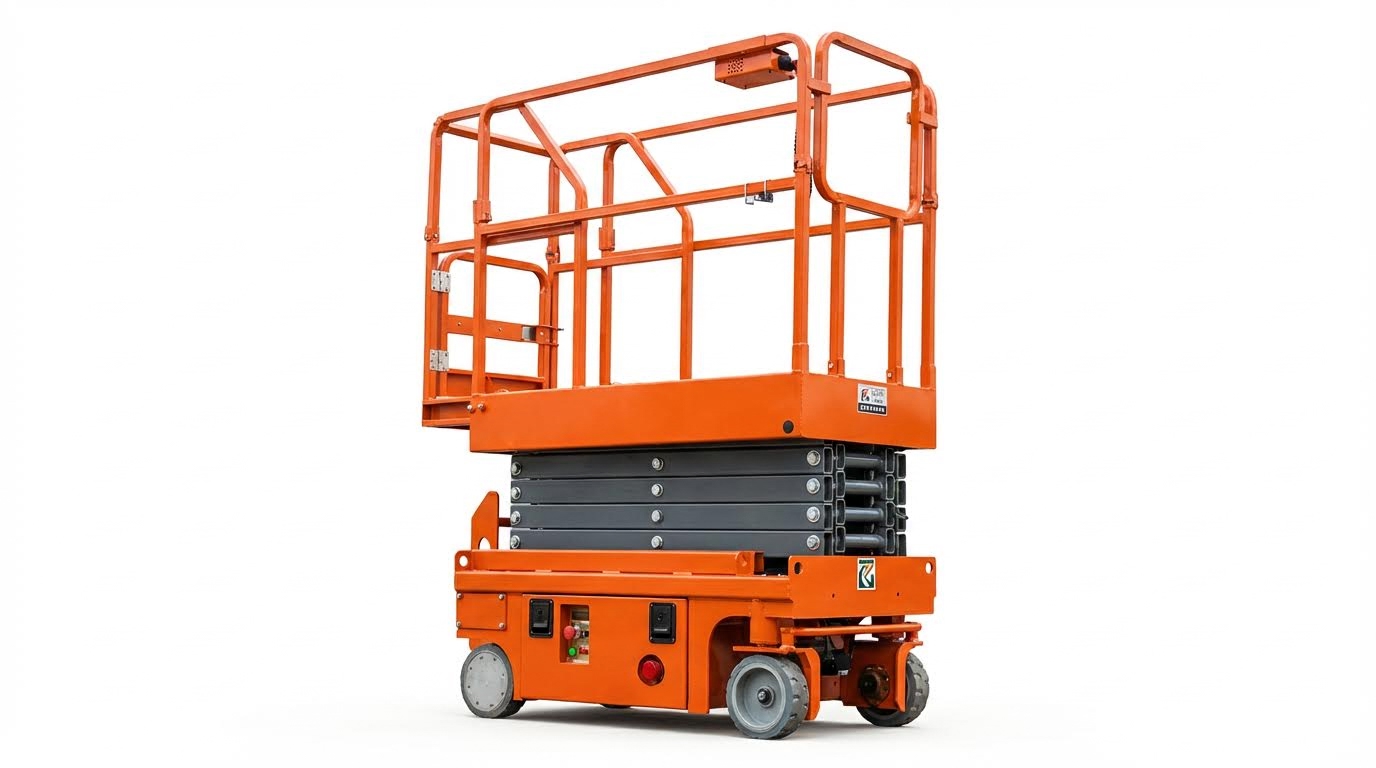
Scissor lift certification operated on a three‑year renewal cycle under OSHA and ANSI guidance, with earlier retraining after incidents, unsafe operation, or significant equipment changes. Parallel schemes such as NORS and NASP also used three‑year periods, while some jurisdictions, including Singapore and Sweden, applied five‑year validity with recommended interim refreshers. Across frameworks, regulators expected documented theory and practical competence, plus periodic technical inspections and, in Indonesia, load testing under Permenaker 8 Tahun 2020. Non‑compliance exposed employers and managers to fines that exceeded USD 10 000, higher incident rates, and potential personal liability.
From an industry perspective, renewal training functioned as a control measure within a broader safety management system rather than an isolated HR requirement. Well‑designed refresher programs addressed core physics of stability, load limits, and fall protection, and embedded inspection and maintenance routines that directly reduced mechanical failures. Digital delivery with mandatory hands‑on evaluation lowered administrative cost while maintaining competence evidence for audits. Over time, operators needed exposure to new MEWP control architectures, sensor packages, and automation features, which made technology‑aware training content increasingly important.
For practical implementation, organizations benefited from centralizing certification data, expiry dates, and inspection schedules in a single system of record, preferably integrated with HR and maintenance software. Automated reminders, standardized evaluation checklists, and archived digital certificates helped demonstrate due diligence during OSHA or labor‑authority inspections. Aligning refresher timing with scheduled equipment inspections and load tests minimized downtime and improved planning accuracy. Procurement and safety teams needed to coordinate so that each new platform model triggered a targeted familiarization and, where required, formal retraining.
A balanced approach treated scissor lift renewal as both a compliance obligation and a lever for operational resilience. Over‑minimalist training that only met the letter of the three‑year rule tended to miss emerging risks from new equipment and evolving work methods. Conversely, excessively burdensome programs without clear risk justification increased cost without proportional safety benefit. Data‑driven refinement, using incident trends and near‑miss reports, allowed firms to tune retraining frequency and content. Organizations that embedded structured renewal, robust recordkeeping, and technology‑aware curricula were best positioned to maintain compliance while improving long‑term safety performance.