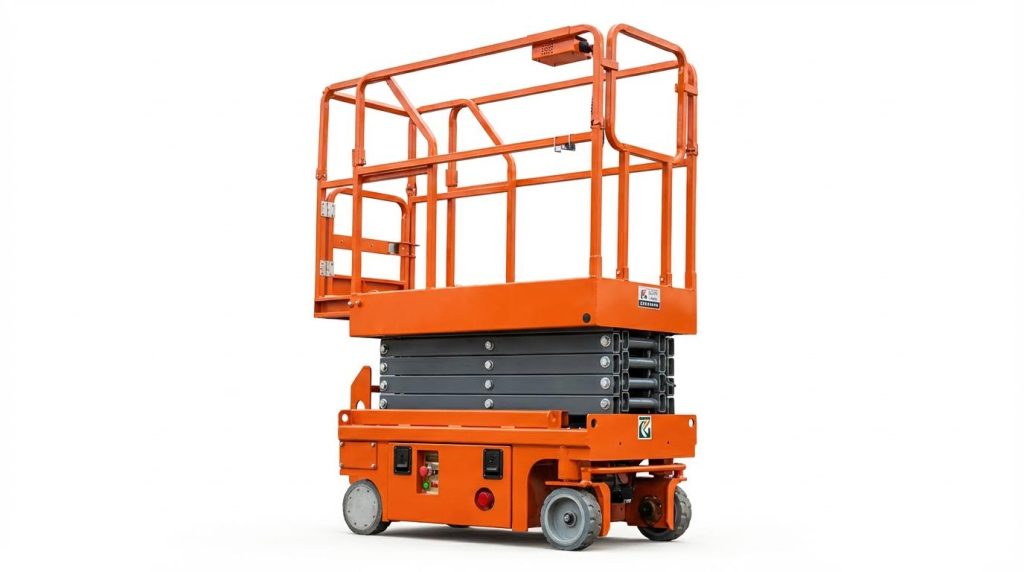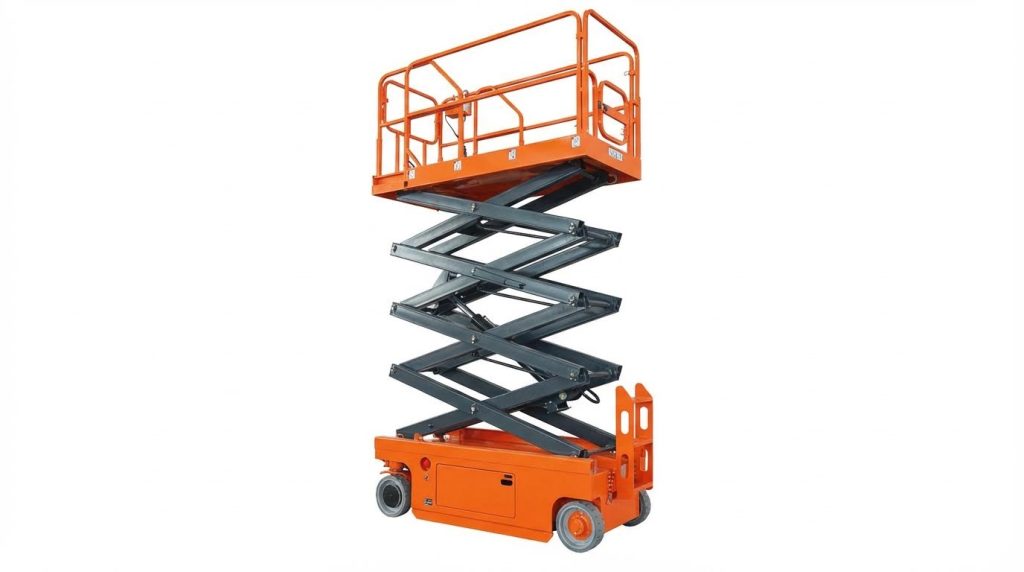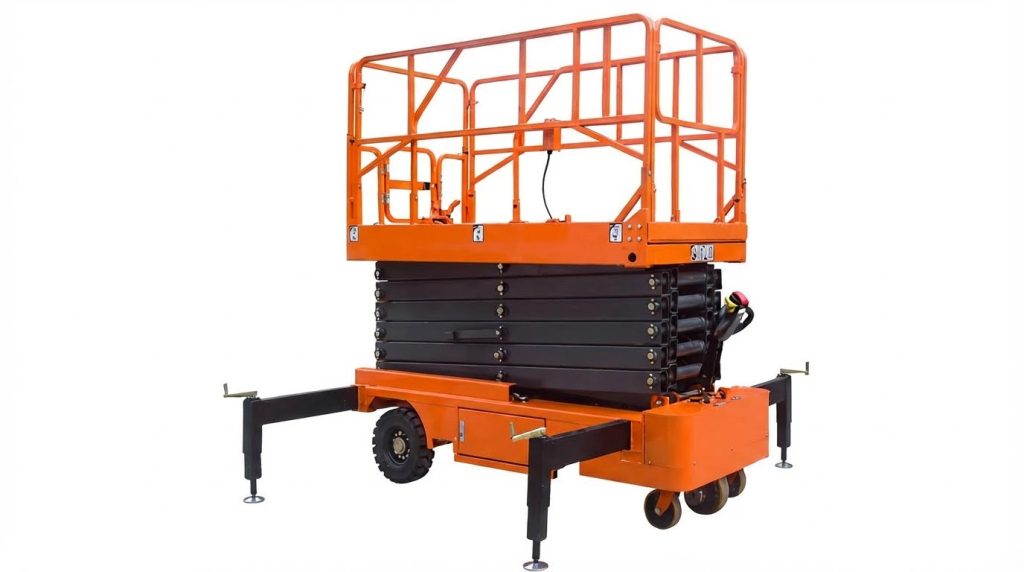
Understanding scissor lift dimensions is critical when you plan work in tight aisles, through doorways, or on crowded outdoor sites. This guide explains how wide scissor lifts typically are, how platform size and load affect performance, and what clearances you need for safe operation. You will see how height, width, turning radius, and ground clearance interact with wind limits and floor capacity indoors and outdoors. Use these engineering basics to choose a lift that fits your facility, your access routes, and your safety standards while naturally answering the question “how wide are scissor platform” for your application.
Key Scissor Lift Dimensions And What They Mean
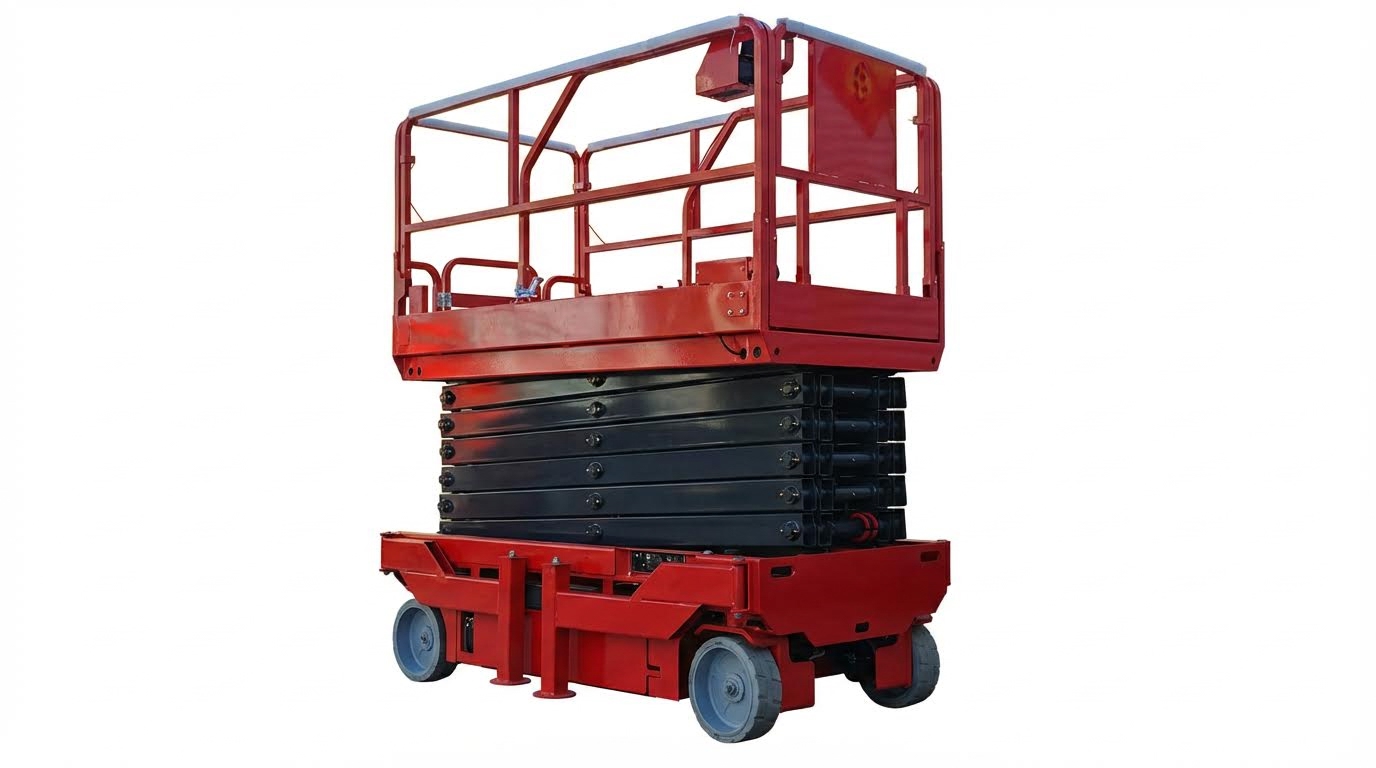
Overall width, length, and height explained
When people ask how wide are scissor lifts, they usually want to know if the machine will fit through doors, aisles, and work zones. Compact electric units for indoor work typically range from about 0.76 m to 1.19 m in overall width, based on common models with working heights from 8 m to nearly 14 m (GS0607, GS0808, and large models) and a 40 ft electric scissor. Length is usually between about 1.85 m and 2.45 m for self‑propelled units in this height class (GS series and large model) and about 2.40 m for a 13.7 m working‑height electric lift (40 ft electric). Stowed height matters for getting under door headers and into low areas; typical values run from about 1.65–2.56 m, depending on whether guardrails are folded (compact to large indoor scissors) or rails are up or down (electric model with 2.53 m rails up and 2.03 m rails down). Ground clearance is low on these machines, typically in the 0.02–0.10 m range (GS series and large model), which is suitable for smooth slabs but not rough terrain. These base dimensions drive key decisions: whether the lift can pass through standard doors, rotate within an aisle given its turning radius, and travel safely over floor transitions without grounding. To answer how wide are scissor lifts for planning purposes, most indoor electric units fall near 0.8–1.2 m, while wider outdoor and high‑capacity units often require more space.
Typical overall dimension ranges
| Parameter | Typical range (compact–medium indoor) | Example sources |
|---|---|---|
| Overall width | 0.76–1.19 m | GS0607 / GS0808 / large model; 40 ft electric HW Lifts data Apex Rentz data |
| Overall length | 1.85–2.45 m | GS series and large model HW Lifts data |
| Stowed height | 1.65–2.56 m | GS series, large model, 40 ft electric HW Lifts data Apex Rentz data |
Platform size, extensions, and load capacity
Platform dimensions control how many people and how much material can work safely at height. Smaller units with 3–6 m lift heights use platforms around 1.3–1.85 m long and 0.7–0.88 m wide, with rated capacities of roughly 300–500 kg (example 3 m and 6 m models). Mid‑height self‑propelled scissors commonly include a sliding deck extension of about 0.9 m, with base safe working loads near 230–320 kg and reduced capacities on the extended section, often around 120 kg (GS models and large model). Larger electric scissors with working heights around 13.7 m use platforms roughly 2.19 m long by 1.07 m wide, plus an extension deck of about 0.91 m, and carry several hundred kilograms depending on configuration (40 ft electric platform dimensions). Load ratings always include people, tools, and materials, so exceeding the stated platform and extension capacities is unsafe and violates typical safety guidance (weight limit rules). When planning and asking how wide are scissor lifts in the working area, you also need to consider platform width plus guardrails and any overhang from extensions, because these affect reach into racks, above machinery, and along façades.
- Shorter platforms with higher capacities suit dense, heavy work such as mechanical installation.
- Longer platforms with extensions suit façade work, racking, and tasks that need horizontal reach.
- Extension decks are ideal for reaching over obstacles but usually carry lower rated loads than the main deck.
Dimensional Requirements For Safe Operation
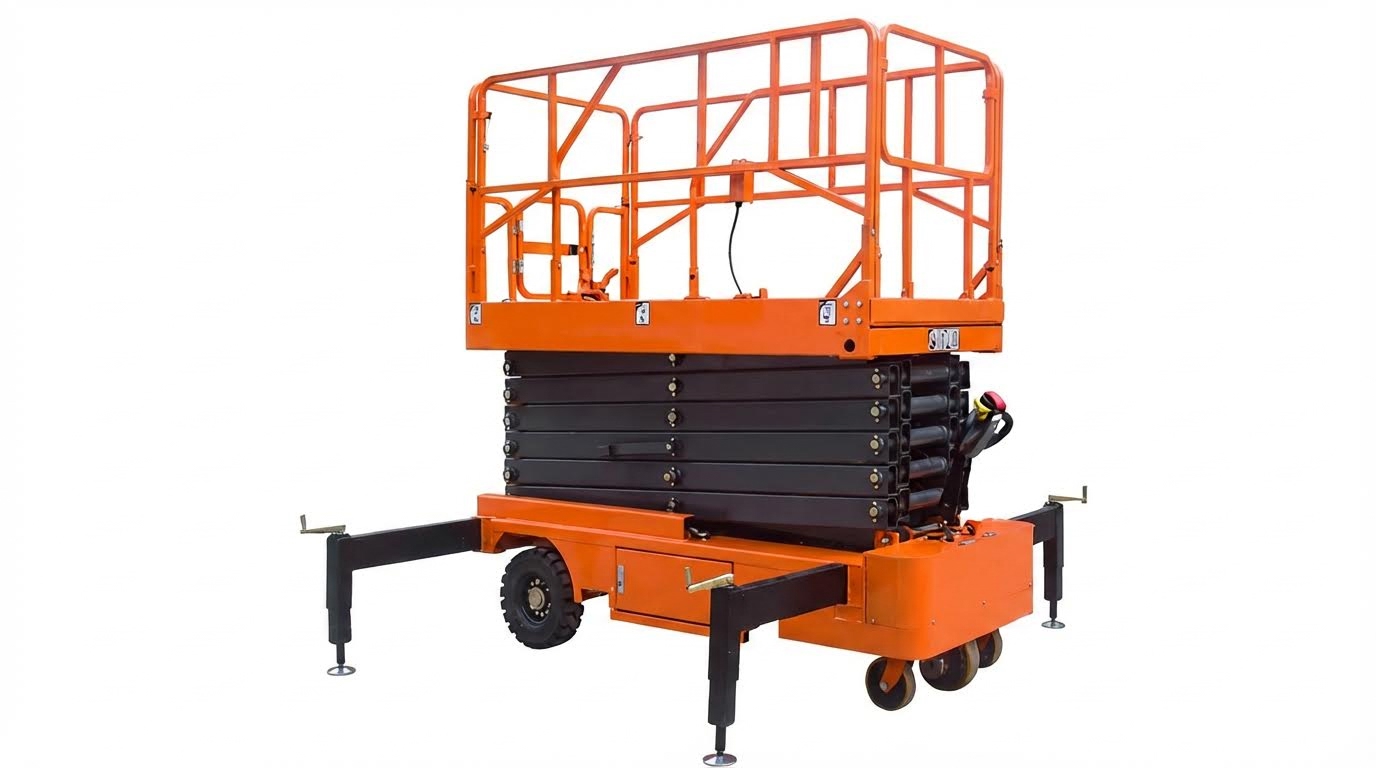
Minimum aisle widths and turning clearances
When planning aisles, you first need to know how wide the machine is and how it turns. Compact electric scissor lifts are often about 0.76–0.81 m wide, with overall lengths around 1.85–2.45 m, and turning radii from 1.7 m to 2.35 m in typical models (example GS0607 and GS0808 data). This means the minimum aisle width should usually be at least the machine width plus a safety margin of 0.3–0.6 m each side, depending on speed and traffic. Aisles that require turning into racking gaps or doorways must also account for the outside turning radius; for a lift with a 2.45 m length and about 2.5 m outside radius, you typically need 2.5–3.0 m clear width to turn comfortably. When people ask “how wide are scissor lifts,” the practical answer is that aisle design must consider machine width, turning radius, and extra clearance for pedestrians and obstacles, not just the nominal chassis width.
- Check the data plate for overall width and outside turning radius.
- Keep extra side clearance where pedestrians or forklifts share the aisle.
- Use one‑way traffic or spotters in aisles close to the minimum width.
Vertical, overhead, and ground clearance needs
Safe operation depends on both overhead clearance and ground clearance. Typical self‑propelled scissors have ground clearance in the 0.02–0.10 m range, for example 0.06 m stowed and 0.02 m when “pothole protection” is deployed on several models (GS0607, GS0808, large model). This low ground clearance means you must avoid ramps with sharp transitions, deep potholes, and cable trays that can hang up the chassis. Overhead, you need to consider the maximum platform height plus guardrail height and some allowance for worker reach; a lift with about 11.8 m platform height has a maximum working height around 13.8 m, so overhead obstructions must be well above that level to prevent crushing hazards (large model example). Operators should never drive under low beams or pipework when elevated; most manufacturers and safety guidance recommend moving the lift only when fully lowered and with a clear view of overhead structures. Always maintain the required distances from live electrical conductors, which general safety guidance set at about 3 m or more for typical distribution voltages, and follow site‑specific rules.
- Survey the route for low doors, beams, sprinklers, and ductwork before raising.
- Use spotters when working close to fixed structures to avoid trapping hazards.
- Avoid operating on surfaces where the low ground clearance could cause bottoming.
Indoor vs. outdoor stability, wind, and foundation limits
Stability limits differ sharply between indoor and outdoor use. Indoors, you assume low wind but must have a flat, strong floor; for pit‑mounted or ultra‑thin scissor lifts, guidance called for at least 16 cm thick concrete in C25 or higher grade, with tight levelness tolerances of about ±3 mm to prevent tilt and uneven loading (foundation requirements). Outdoors, the same lift may be limited by wind speed even on sound concrete; safety guidance typically restricted operation to “good weather” and wind speeds below about 28 mph to prevent tip‑over from side loading on the platform and structure (stabilization guidance). Larger electric models with working heights around 13.7 m and widths about 1.19 m are particularly sensitive to wind and soft ground; they rely on level, high‑capacity slabs and must not be used on uncompacted fill or asphalt that can rut under concentrated wheel loads (electric model example). Where foundations are built specifically for the lift, designers used compacted sub‑base, reinforcement mesh, and checks for settlement and cracking under no‑load and full‑load tests before signing off the installation (construction principles).
Key indoor vs. outdoor checks
- Indoors: verify slab thickness, levelness, and floor load rating against machine weight and rated load.
- Outdoors: confirm wind limits, ground bearing capacity, and slope; avoid soft or sloped ground.
- In both cases: follow manufacturer rules on not driving elevated and staying within rated capacity.
Matching Lift Size To Application And Site Constraints
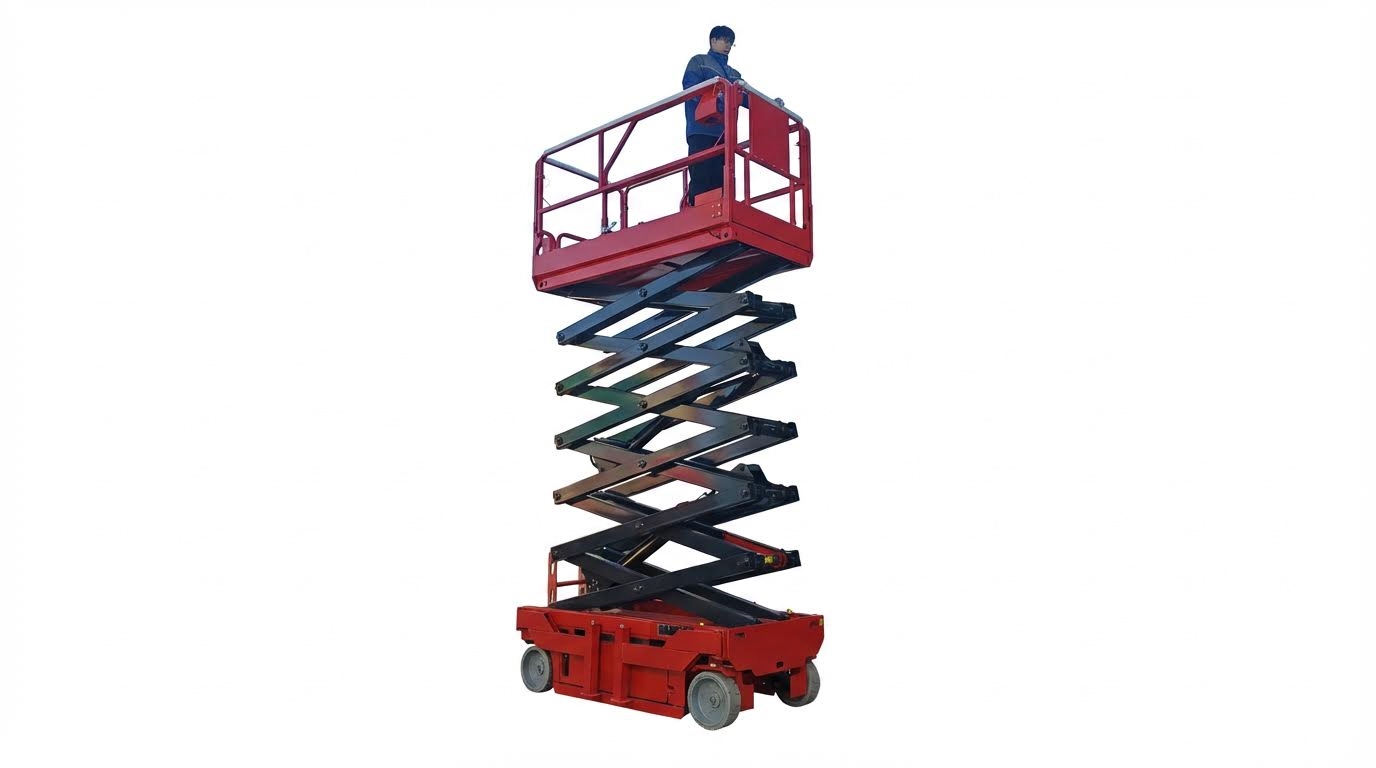
Dimension ranges for common indoor and outdoor lifts
When facility teams ask “how wide are scissor lifts,” the answer depends strongly on lift height and duty. Compact indoor electric units typically sit around 0.75–0.85 m wide, with examples at 0.76 m and 0.81 m wide for lifts providing about 8–10 m working height (GS0607 and GS0808 dimensions). Larger rough‑terrain or high‑reach electrics move into the 1.18–1.20 m width range, supporting working heights around 13–14 m (large 13.8 m model at 1.18 m wide) and a 44 ft 11 in working‑height unit at 1.19 m wide. Length grows with working height and capacity: compact indoor lifts are about 1.8–2.5 m long, while a high‑reach electric example is 2.40–2.45 m long (2.45 m length) (2.40 m length). Height in the stowed condition drives indoor clearance and storage planning; typical self‑propelled units sit around 2.0–2.6 m with guardrails up, and can drop 0.4–0.5 m when rails fold (e.g., 2.12 m vs 1.65 m; 2.56 m vs 2.04 m). As working height increases from about 8 m to nearly 14 m, you also see higher machine weight and similar gradeability around 25%, so outdoor applications must check slab thickness and sub‑base quality, not just plan for “how wide are scissor lifts” in isolation (4–20 m height range with weights from ~480–4900 kg).
Typical indoor vs. outdoor size patterns
- Indoor, light‑duty: width ~0.75–0.85 m; length ~1.8–2.0 m; working height ~6–8 m.
- Indoor/outdoor hybrid: width ~0.8–1.0 m; length ~2.3–2.5 m; working height ~8–12 m.
- Outdoor, higher reach: width ~1.15–1.25 m; length ~2.4–2.6 m; working height ~13–14 m and above.
Selecting width and length for doors, aisles, and floor loads
To answer “how wide are scissor lifts for my facility,” start from the narrowest constraint: door frames, aisles, and turning points. A practical engineering rule is to keep machine width at least 100–150 mm less than the tightest door or aisle, giving clearance for steering error and wall irregularities. For example, a 0.76–0.81 m wide indoor scissors (GS0607/GS0808) is well suited to 1.0–1.1 m warehouse aisles, while a 1.18–1.19 m wide outdoor‑capable unit (large 13.8 m model) (40 ft electric) needs wider access routes. Length and turning radius work together: a 2.40–2.45 m long lift with an outside turning radius around 2.4–2.5 m (2.45 m turning radius) (2.51 m outside radius) demands a larger clear zone at corridor intersections and inside rooms.
Floor loading is the second filter after “how wide are scissor lifts.” High‑reach electrics can weigh around 2,900–3,000 kg (2,934 kg unit), while towable units up to 20 m reach can approach 4,900 kg (approx. 4,900 kg at 20 m). For slab‑mounted or pit‑mounted lifts, concrete thickness of at least 160 mm in C25 or higher, with proper compaction and reinforcement, is recommended to carry these concentrated loads without settlement (16 cm C25 minimum, mesh reinforcement, ±3 mm level tolerance). Coordinating the chosen machine width and length with door sizes, aisle geometry, and slab design gives a scissor lift that not only fits through the building but also operates safely over its full service life.
Summary: Engineering The Right Fit For Your Facility
Scissor lift dimensions are not just catalog numbers. They set the hard limits for where the machine can travel, turn, and work safely. Width, length, and stowed height must match your tightest doors, aisles, and overhead obstructions with clear safety margins. Platform size and rated load then decide how many people and how much material you can lift without overstressing the structure or the floor.
Clearances and stability link geometry to risk. Low ground clearance demands smooth, well‑detailed routes. Limited turning radius drives aisle layout, one‑way traffic, and the use of spotters. Indoors, floor thickness, flatness, and bearing capacity must suit the wheel loads. Outdoors, wind speed, slope, and soil stiffness often control safe working height more than “how wide is the lift.”
The best practice is to design from the site inward, not from the brochure outward. Start with your narrowest door, tightest turn, highest work point, and weakest floor zone. Then select a lift class and specific Atomoving model that fits those constraints while meeting platform size and load needs. This engineering‑led approach reduces near‑misses, protects structures, and delivers reliable, compliant access at height over the full life of the facility.
Frequently Asked Questions
How wide are standard scissor lifts?
Standard scissor lifts typically come in two platform width categories. Narrow platform models measure around 76-81 cm (30-32 inches) wide, making them ideal for tight spaces like narrow aisles or doorways. Wide platform models, on the other hand, offer more workspace with widths of approximately 112-122 cm (44-48 inches). Narrow vs Wide Scissor Lifts.
How wide is a narrow scissor lift?
Narrow scissor lifts are designed for compact spaces and typically measure around 76-81 cm (30-32 inches) wide. For example, some models, like the JLG 2632ES, are only 81 cm wide, allowing them to fit through narrow openings while maintaining functionality. Compact Scissor Lift Example.