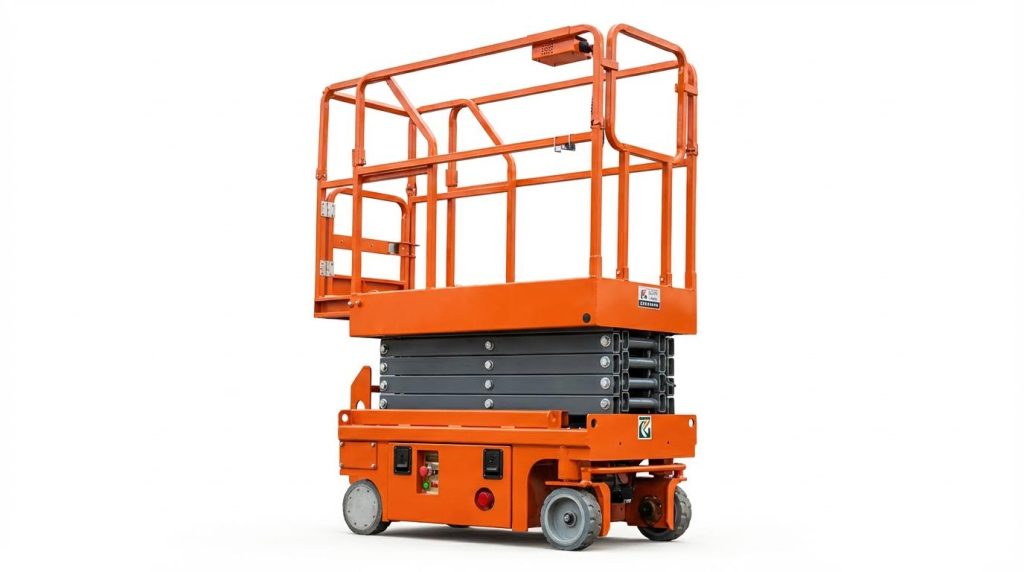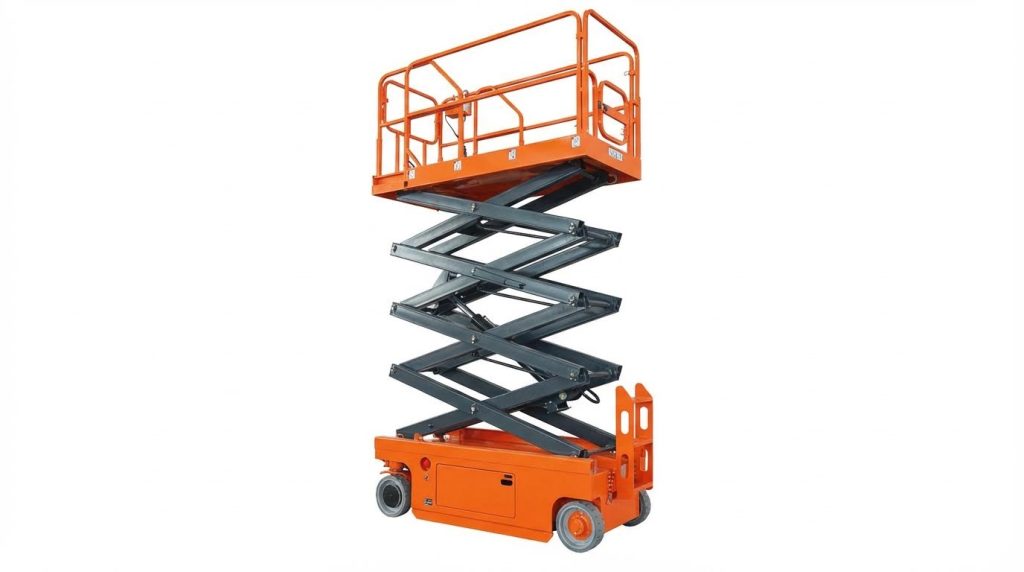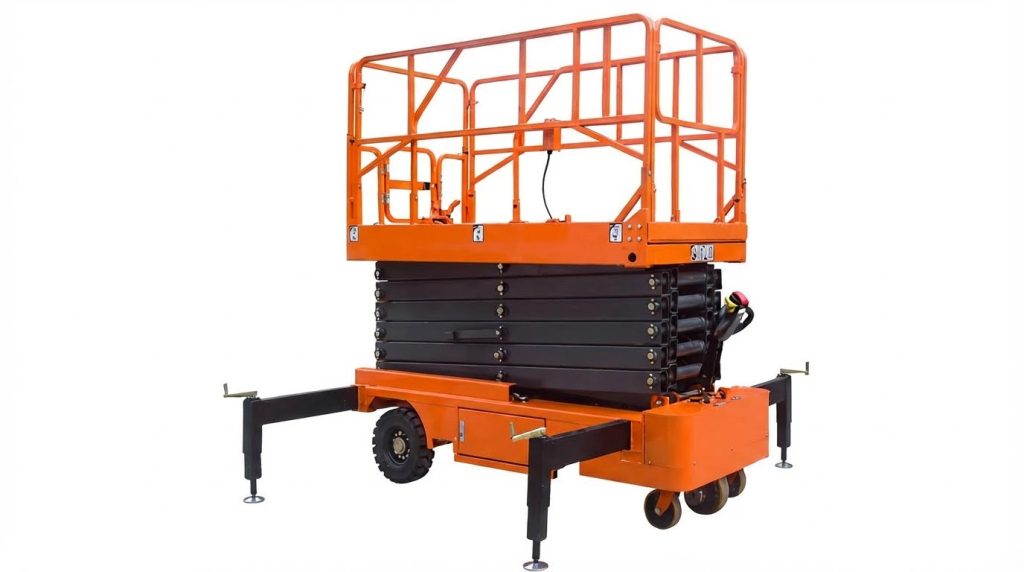
Scissor lifts operated in construction, maintenance, and industrial settings must follow structured fall protection rules to control recognized hazards. This article explains how OSHA and ANSI classified and regulated scissor lift use, and how those interpretations evolved through 2025. It then compares guardrail-based protection with harness and lanyard strategies, clarifying when each approach met or exceeded regulatory requirements. Finally, it links engineering controls, inspection regimes, and operator training to a practical compliance roadmap that safety managers could apply on real job sites.
OSHA And ANSI Rules For Scissor Lift Fall Safety
How Scissor Lifts Are Classified Under OSHA
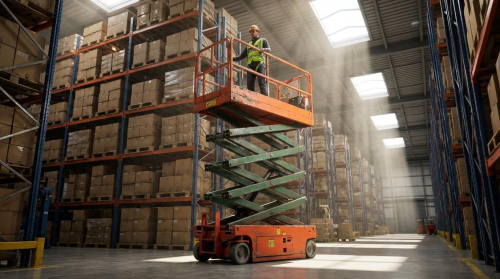
OSHA historically treated scissor lifts as mobile supported scaffolds rather than aerial lifts. The July 15, 1997 interpretation clarified that 29 CFR 1910.67 did not cover scissor lifts. Instead, scissor lifts in general industry fell under the OSH Act Section 5(a)(1) General Duty Clause. Employers had to control recognized hazards using scaffold and fall protection principles. In construction, compliance aligned with scaffold rules in 29 CFR 1926.451 and related provisions. Later guidance referenced scissor lifts as scaffolds with integrated guardrail systems providing fall protection. This classification affected which fall protection measures were mandatory versus recommended.
Key OSHA Standards And Interpretations
OSHA used several standards to manage scissor lift fall risks across sectors. For general industry, employers referenced 29 CFR 1910.27, 1910.28(b)(12), and 1910.29(b) for scaffolds and guardrail systems. For construction, 29 CFR 1926.20(b) and 1926.451 set accident prevention and scaffold requirements, including guardrail criteria. Aerial lift operators in construction also followed 29 CFR 1926.453 and 1926.501(b)(1) for fall protection at or above 1.8 m. Interpretations emphasized that intact guardrails on scissor lifts could satisfy fall protection requirements at six feet or higher. OSHA later required fall protection for all aerial lift operators but allowed compliant guardrails to serve as the primary system on scissor lifts. If guardrails were damaged or removed, employers had to implement alternative fall protection or restrict use. Written interpretations stressed hazard assessments, training, and rescue planning as integral parts of compliance.
Relevant ANSI A92 And ANSI Z359 Requirements
ANSI standards provided detailed design and use guidance that complemented OSHA rules. ANSI A92.3-1990 covered manually propelled elevating work platforms, while ANSI A92.6-1990 addressed self-propelled elevating work platforms, including scissor lifts. These standards defined platform guardrail heights, toe boards, access, stability, and pre-start inspections. They also distinguished pre-use, frequent, and annual inspection scopes and required documentation. ANSI Z359 addressed personal fall protection systems, including full-body harnesses, lanyards, and self-retracting lifelines. When employers or manufacturers required tie-off on scissor lifts, equipment needed to meet ANSI Z359 performance and inspection requirements. ANSI guidance influenced manufacturer manuals, which OSHA treated as enforceable under the General Duty Clause when they addressed known hazards. Compliance with ANSI A92 and Z359 therefore supported both regulatory adherence and industry best practice.
Site-Specific Policies Versus Regulatory Minimums
Site-specific policies often exceeded OSHA and ANSI minimums for risk management or corporate governance reasons. Some companies required full-body harnesses and lanyards on all aerial platforms, including scissor lifts, even when guardrails met OSHA criteria. Manufacturers responded by adding anchor points, although tie-off on narrow-base scissor lifts introduced secondary tip-over risks. Regulatory minimums allowed guardrail-only protection on scissor lifts if systems were intact and used correctly. However, owners could mandate additional PPE, stricter inspection intervals, or more conservative wind and load limits. Safety managers needed to align internal rules with manufacturer instructions to avoid conflicting requirements. They also had to communicate clearly whether tie-off functioned as fall restraint or fall arrest. Documented hazard assessments and written fall protection plans helped justify policies that went beyond baseline standards while remaining technically sound and enforceable.
Guardrails, Harness Use, And Fall Protection Strategy
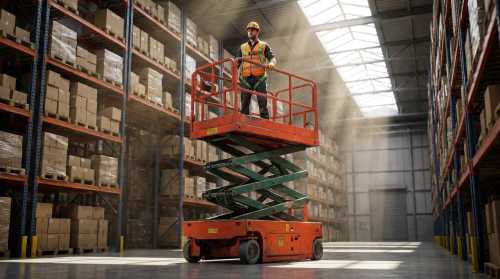
Guardrails formed the primary fall protection system for scissor lifts under both OSHA and ANSI guidance. A robust strategy combined properly designed guardrails, correct harness use where required, and disciplined operating practices. Effective programs treated scissor lift fall protection as a hierarchy: eliminate exposure, then rely on guardrails, and only then add personal fall protection where it truly reduced risk.
When Guardrails Alone Meet Fall Protection Rules
Guardrails met OSHA fall protection requirements on scissor lifts when they were intact, continuous, and correctly installed. Under current interpretations, a compliant guardrail system on a scissor lift satisfied 29 CFR 1926.501 fall protection obligations at and above 1.8 m. This required a top rail at 1.0–1.1 m height, mid-rails, and toe boards where material fall hazards existed, consistent with 29 CFR 1910.29(b) and 1926.451(g). Operators had to keep both feet on the platform, avoid climbing or sitting on rails, and keep their work within comfortable reach to maintain protection. In this configuration, no additional personal fall arrest system (PFAS) was typically required unless the manufacturer or site policy imposed it.
When A Harness And Lanyard Are Required Or Recommended
Harness and lanyard use on scissor lifts depended on manufacturer instructions, jobsite rules, and guardrail condition. If guardrails were missing, damaged, or temporarily removed, OSHA fall protection rules triggered PFAS use or alternative controls. Some owners adopted blanket policies requiring full-body harnesses and lanyards on all aerial platforms, leading manufacturers to provide designated anchor points. However, technical guidance highlighted that tethering on narrow or light scissor lifts could increase tip-over risk if a worker fell and the lanyard loaded the platform laterally. Therefore, harnesses were recommended only when anchor points were engineered, guardrails could not provide full protection, or exposure justified added control. In boom lifts, by contrast, tying off was always mandatory, which often caused confusion if policies did not clearly distinguish equipment types.
Fall Restraint Versus Fall Arrest On Scissor Lifts
Fall restraint systems limited worker travel so the user could not reach a fall edge, which aligned better with scissor lift geometry. Short lanyards or adjustable restraint devices kept the center of mass inside the guardrail envelope and minimized dynamic loading on the platform. Fall arrest systems allowed a fall to occur and then stopped it, imposing higher forces on anchor points and the machine structure. On compact scissor lifts, these arrest forces could contribute to instability or tip-over, especially with side loading. OSHA and ANSI interpretations therefore favored using guardrails as the primary control and, where PFAS was applied, configuring it as restraint rather than arrest whenever feasible. Training had to clearly explain this distinction so operators did not assume any harness use automatically improved safety.
Common Misuses: Climbing, Leaning, And Wrong Anchor Points
Common misuse patterns undermined otherwise compliant fall protection systems on scissor lifts. Operators sometimes climbed or stood on guardrails, buckets, or ladders placed on the platform to gain extra reach, defeating guardrail effectiveness and violating OSHA rules. Excessive leaning over rails or reaching beyond the platform footprint increased both fall risk and tipping risk, particularly on uneven or sloped surfaces. Another frequent error involved clipping lanyards to non-rated points such as mid-rails, top rails, or control boxes, which were not designed as fall arrest anchors. Using guardrails as anchor points could deform the rail or transfer high loads into the scissor structure. Proper practice required using only manufacturer-identified anchorage points, maintaining three points of contact while accessing the platform, and repositioning the lift instead of overreaching. Focused training and supervision were essential to eliminate
Engineering Controls, Inspections, And Training
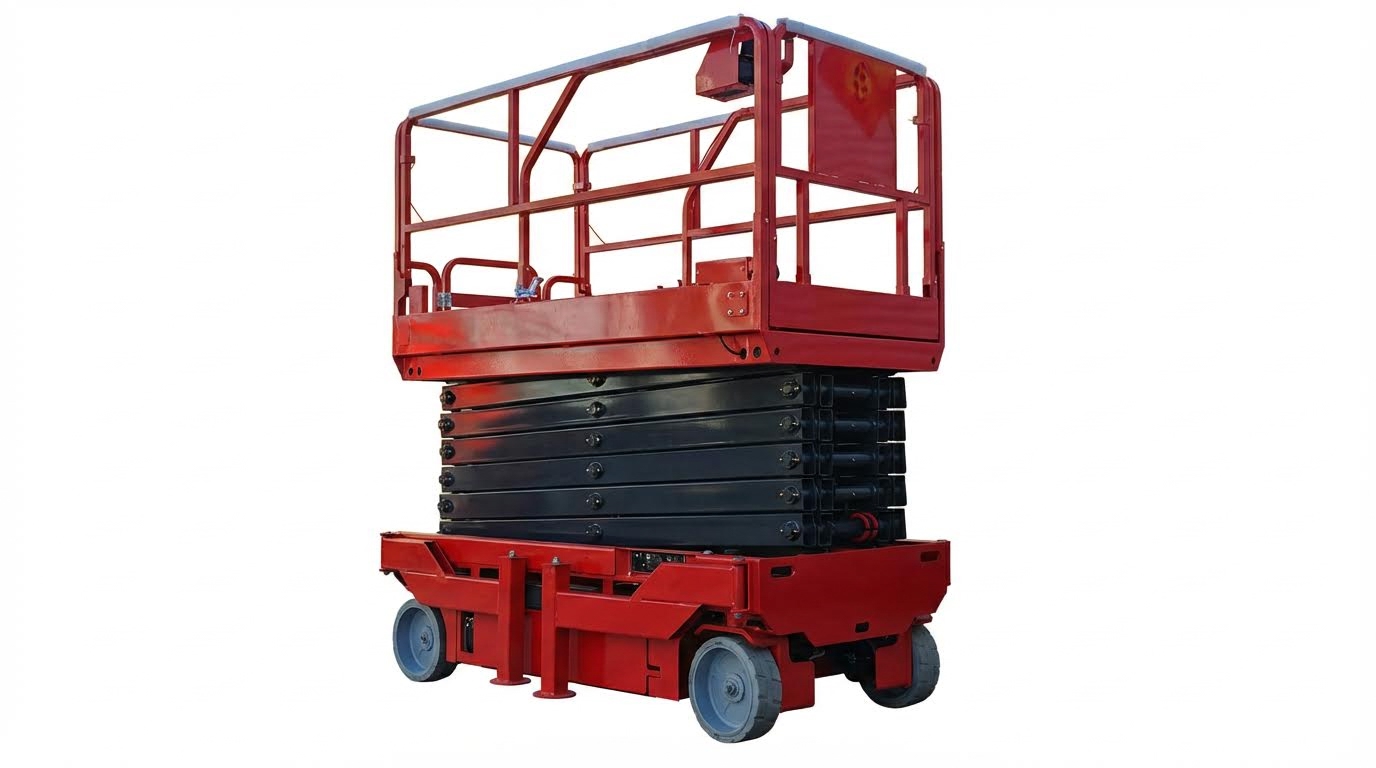
Engineering controls, structured inspections, and competent training formed the backbone of effective scissor lift fall protection. Manufacturers integrated mechanical and control-system safeguards, while OSHA and ANSI standards defined inspection and training expectations. Organizations that combined robust design features with disciplined inspection regimes and scenario-based operator training achieved the lowest incident rates. Digital tools and data-driven maintenance strategies then enhanced consistency, traceability, and long-term reliability.
Design Features That Reduce Fall And Tip-Over Risk
Modern scissor lifts incorporated multiple engineering controls to minimize falls and tip-overs. Guardrail systems with mid-rails, top rails, and toeboards created a passive barrier that met OSHA 1910.29(b) or 1926.451(g) criteria when correctly maintained. Automatic braking systems and graded parking brakes held the unit stationary on level, firm surfaces, reducing roll-away and instability risk. Interlocked gate or station door locks ensured the access gate remained closed during elevation, preventing unintended egress. Designers also used emergency stop circuits at both platform and ground controls, explosion-proof or rupture-resistant hydraulic lines, and load-sensing systems to prevent overload conditions. Height, base-width ratios, and wind-rating limits were engineered to resist tipping, with outdoor use typically restricted below wind speeds of about 13 m/s (28 mph).
Pre-Use, Frequent, And Annual Inspection Practices
OSHA 1926.451 and ANSI A92.6 required structured inspection layers for scissor lifts. Pre-use or pre-start inspections occurred daily or before each shift and focused on operational readiness and obvious hazards. Operators checked guardrail integrity, gate latches, anti-slip platform surfaces, tires, brakes, steering, emergency stop buttons, and function of both ground and platform controls. They also inspected for hydraulic, fuel, or battery leaks and verified that decals, load charts, and warning labels remained legible. Frequent inspections, typically every three months or 150 operating hours, involved qualified personnel and covered hydraulic systems, structural members, welds, pins, and safety interlocks in greater depth. Annual inspections required partial disassembly, non-destructive testing of critical components, and comprehensive functional checks by specialized technicians. All findings needed written or digital records, and any defect required immediate removal from service until corrected.
Hazard Assessment, Rescue Planning, And Operator Training
Effective fall protection programs started with formal hazard assessments for each job location and task. Safety professionals evaluated surface conditions, slope, proximity to overhead power lines, nearby traffic, and potential crushing or entrapment points near fixed structures. Based on these risks, they selected appropriate controls, usually relying on compliant guardrails as primary protection and adding personal fall protection only when required by the manufacturer or site policy. Rescue planning formed a mandatory element, especially where harnesses and lanyards were used. Plans defined prompt retrieval methods, communication protocols, and roles for trained responders, in line with OSHA expectations for fall rescue capability. Operator training, as required in 29 CFR 1926.503 and 1910.30, covered equipment operation, load limits, inspection steps, safe positioning, weather limits, and correct fall protection use. Refresher training followed near-misses, procedural changes, or evidence of unsafe behavior.
Digital Checklists And Predictive Maintenance Trends
Digital inspection checklists improved consistency and documentation compared with paper forms. Mobile applications guided operators through model-specific pre-use inspections, enforced completion of critical items, and time-stamped each record for auditability. Centralized databases allowed safety managers to trend recurring defects, track inspection completion rates, and schedule frequent or annual inspections before regulatory deadlines. Integration with telematics and onboard sensors supported predictive maintenance, where parameters like operating hours, hydraulic temperature, fault codes, and vibration data triggered proactive service tasks. This data-driven approach reduced unplanned downtime and helped identify components that degraded before failure, including those affecting fall protection such as brakes, tilt sensors, or platform control circuits. When implemented correctly, digital systems strengthened OSHA and ANSI compliance, improved fleet reliability, and provided defensible evidence during incident investigations or regulatory inspections.
Summary And Practical Compliance Recommendations

Scissor lift fall protection relied on a layered approach that combined compliant guardrails, controlled operating practices, and targeted use of personal fall protection. OSHA treated scissor lifts as mobile supported scaffolds and applied scaffold and fall protection rules, while also using the General Duty Clause and aerial lift provisions by interpretation. ANSI A92 defined how scissor lifts should be designed, inspected, and maintained, and ANSI Z359 governed the performance and use of harnesses, lanyards, and connectors when employers or manufacturers required tie-off. Together, these frameworks established clear expectations for guardrail performance, inspection intervals, training content, and documentation.
Industry practice moved away from default harness use on scissor lifts and toward a risk-based strategy: intact, properly designed guardrails generally satisfied OSHA fall protection requirements, while body harnesses and lanyards were reserved for cases where guardrails were compromised, manufacturer instructions required tie-off, or site-specific rules imposed higher controls. Future trends pointed to wider adoption of digital inspection systems, integrated diagnostics, and telematics to track usage hours and trigger maintenance, as well as more explicit OSHA and ANSI guidance that distinguished between boom lift and scissor lift fall protection duties. These developments aimed to reduce both falls and secondary hazards such as tip-overs caused by poorly configured fall arrest systems.
For practical compliance, employers needed to: classify the work correctly under construction or general industry rules; verify that guardrails, access gates, and anti-slip surfaces remained in place and functional; and enforce strict rules against climbing, leaning, or using ladders on platforms. They also had to implement pre-use, frequent, and annual inspections to ANSI A92, maintain written records, and remove defective lifts from service until repaired. A robust program included documented hazard assessments, a written fall protection and rescue plan, operator training to 29 CFR 1926.503 or 1910.30, and periodic refresher training after incidents or equipment changes. A balanced strategy treated guardrails as the primary control, used harnesses only where they added net safety benefit, and relied on engineering controls, inspections, and training to keep scissor lift operations within OSHA and ANSI expectations.