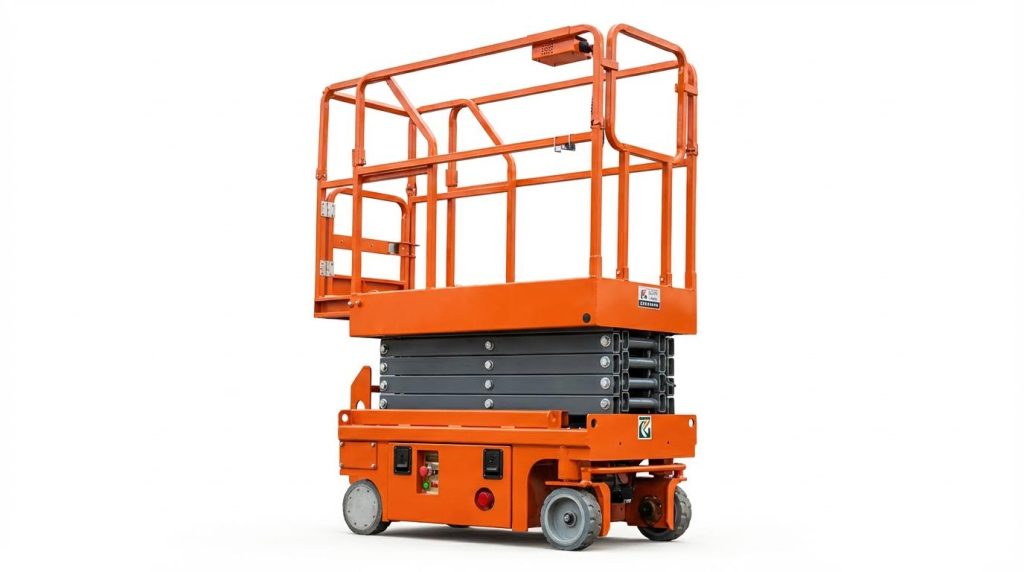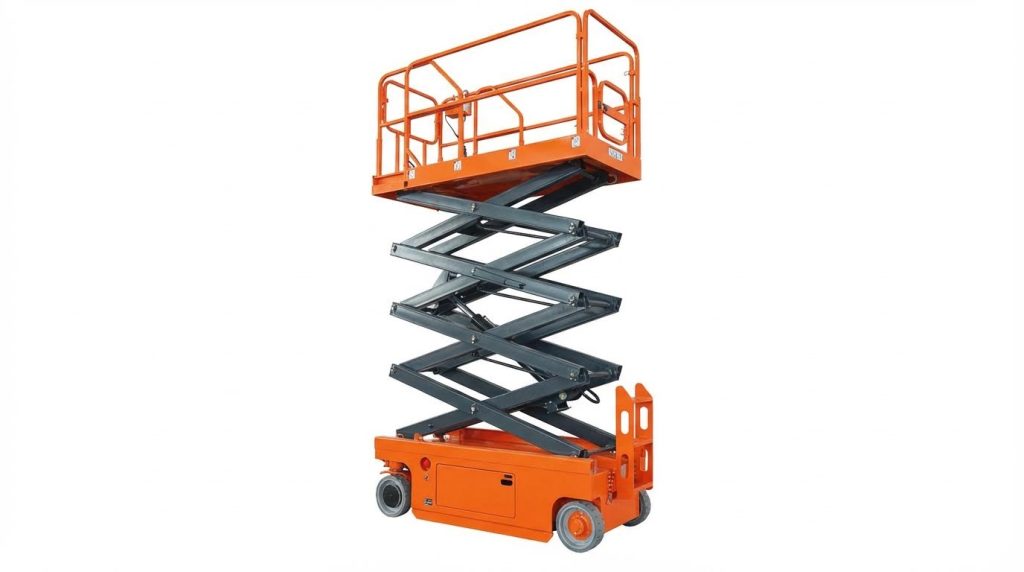
Industrial facilities relied on scissor lifts as mobile elevated work platforms for maintenance, construction, and material handling. This article examined how regulatory frameworks, including OSHA and ANSI/MEWP standards, shaped safe design and operation. It then moved through operational risk controls such as pre-use inspections, site engineering, stability management, and traffic and crush-zone controls. Finally, it addressed maintenance strategies, emerging digital technologies, and lifecycle reliability practices to integrate safety, compliance, and cost control across the scissor lift fleet.
Regulatory Framework And Design Standards
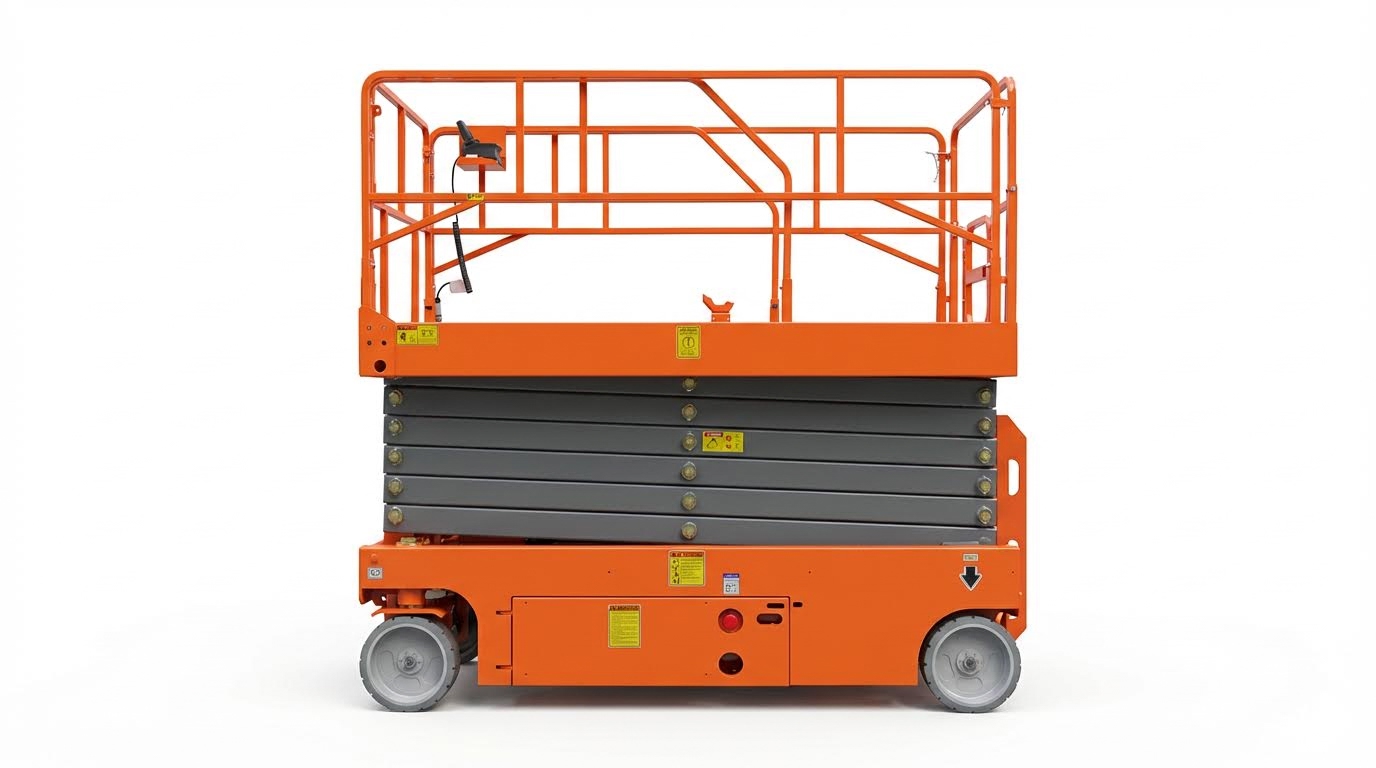
Regulatory frameworks for scissor lifts in industrial facilities established clear minimum safety baselines. OSHA standards defined employer duties for training, fall protection, and safe use, while ANSI standards specified design, performance, and test criteria. Together, they governed how lifts were designed, manufactured, operated, and maintained across the equipment lifecycle. Industrial safety programs had to integrate both sets of requirements into site procedures, engineering controls, and procurement specifications.
OSHA And ANSI Requirements For Scissor Lifts
OSHA treated scissor lifts as mobile supported scaffolds and applied 29 CFR 1926.451, 1926.452(w), and 1926.454. These rules required guardrails, stable support surfaces, fall protection, electrical clearance, and documented operator training. OSHA 1926.454 mandated training for anyone operating or working on or near scissor lifts, including hazard recognition and safe operating procedures. In parallel, ANSI A92.3-2006 and A92.6-2006 defined technical requirements for lift design, manufacturing quality, stability testing, and safety devices. Facilities typically referenced ANSI in purchase specifications, while OSHA formed the basis for enforcement and citations.
MEWPs: Implications Of New A92.22 And A92.24 Rules
In 2020, ANSI/SAIA A92.22 and A92.24 reclassified scissor lifts as Mobile Elevating Work Platforms (MEWPs). These standards shifted focus from equipment-only compliance to integrated safe-use planning, risk assessment, and documented training programs. A92.22 addressed responsibilities of owners, users, and supervisors, including site risk assessments, rescue planning, and selection of appropriate MEWP categories. A92.24 defined detailed training content, familiarization requirements, and retraining triggers, such as new hazards or different MEWP types. For industrial facilities, the new rules required updates to written procedures, training matrices, and contractor management to maintain alignment with best practice and OEM guidance.
Engineering Controls For Fall And Crush Protection
Engineering controls formed the primary defense against falls and crush injuries on scissor lifts. Guardrail systems with correctly dimensioned top rails, midrails, and toe boards provided collective fall protection and had to remain intact and closed during operation. Platforms and access gates were designed to prevent climbing or standing on rails, and to keep workers within the protected envelope. For crush and pinch hazards, manufacturers incorporated interlocked gates, emergency stop buttons, tilt sensors, and overload limiters that inhibited unsafe movement. Industrial users often supplemented these with physical exclusion zones, overhead obstruction mapping, and height or travel limit settings where available on advanced MEWPs.
Electrical Clearance And Arc-Flash Risk Controls
Electrical safety requirements focused on maintaining safe approach distances and preventing unintended contact with energized conductors. OSHA expected a minimum approach distance of at least 3.05 m from overhead power lines, with greater distances for higher voltages under electrical safety standards. Site planning had to identify overhead lines, bus ducts, and exposed conductors before positioning a lift. For indoor facilities with switchgear or bus bars, arc-flash risk assessments under NFPA 70E informed restricted approach boundaries and PPE categories. Engineering controls included physical barriers, warning signage, travel limit zones, and lockout or de-energization of nearby equipment where feasible. Integration of these controls into standard lift permits and job safety analyses helped keep operators outside arc-flash and shock hazard zones.
Operational Risk Controls And Site Engineering
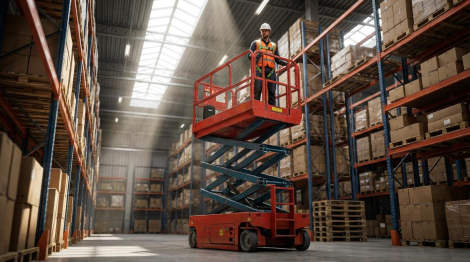
Operational risk controls for scissor lifts relied on a structured combination of pre-use inspections, engineered site preparation, and disciplined operating practices. Industrial facilities used these controls to convert generic OSHA and ANSI requirements into site-specific, verifiable procedures. Effective programs treated scissor lifts as mobile supported scaffolds with MEWP-level risk, integrating them into broader contractor control, permit-to-work, and maintenance regimes.
Pre-Use Inspections And Functional Safety Checks
Pre-use inspections formed the first barrier against mechanical failure and unsafe operation. Operators performed a daily walkaround at each shift change, checking for hydraulic leaks, damaged hoses, weld cracks, bent scissor arms, and corrosion on structural members. They verified guardrails, gates, toe boards, and access ladders, ensuring latches closed positively and no components were missing. OSHA guidance required checks of fluid levels, tire condition, wheel fasteners, brakes, steering, emergency lowering, horns, lights, and backup alarms.
Functional tests followed visual checks in a clear, obstruction-free area. Operators cycled all platform and ground controls, confirming smooth proportional response without jerks or unexpected delays. They tested emergency stops and interlocks, including tilt, overload, and pothole protection devices, and confirmed that defeating any safety device was prohibited. Documentation of inspections, using checklists tied to equipment ID, supported regulatory compliance and allowed trending of recurring defects. Equipment with unresolved defects remained out of service until qualified technicians completed repairs and returned it to a safe state.
Site Assessment: Ground Bearing And Wind Load Limits
Site assessment addressed whether the planned work location could safely support and stabilize the lift. Engineers and supervisors evaluated ground bearing capacity, considering slab thickness, subgrade condition, and point loads from wheels or tracks. They avoided voids, trenches, service ducts, and underground utilities that could compromise support, and prohibited operation on slopes or uneven surfaces outside manufacturer limits. Where necessary, they specified outrigger pads or load-spreading mats with known bearing area and material strength.
Wind and weather conditions significantly influenced safe operating envelopes. Outdoor-rated scissor lifts carried a maximum allowable wind speed, typically below 12.5 metres per second, and operators monitored on-site wind using anemometers rather than estimates. Work at height stopped when gusts approached limits or when nearby structures caused turbulence or channelled winds. The site assessment also identified overhead obstructions and power lines, maintaining at least 3 metres clearance from energized conductors, and more where local codes demanded. These evaluations were documented in job hazard analyses or lift plans for critical tasks.
Load Rating, Stability, And Tip-Over Prevention
Load management directly affected scissor lift stability and tip-over risk. Operators respected the rated work platform load, which included people, tools, and materials, and they referred to the manufacturer plate for distributed and point load limits. They positioned heavy items centrally on the platform and avoided stacking materials above guardrail height, which raised the centre of gravity and increased overturning moments. Standing on guardrails, using ladders on the platform, or reaching far outside the rail envelope was prohibited because it shifted the combined centre of mass beyond the wheelbase.
Dynamic effects were also controlled to prevent tip-overs. Operators drove at reduced speed with the platform elevated only where the manufacturer allowed, and they avoided sudden starts, stops, or sharp turns. They did not traverse ramps or transitions at full height unless specifically rated for that condition. Engineering controls such as tilt sensors, overload sensors, and travel speed limiters helped enforce safe conditions and locked out unsafe movements. Procedures required lowering the platform before relocating across uneven surfaces, and supervisors enforced exclusion zones beneath and around the lift to protect personnel from falling objects or collapse.
Traffic Management And Crush Zone Mitigation
Traffic management addressed collision and crush hazards between scissor lifts and other mobile equipment or fixed structures. Facilities implemented designated MEWP routes, speed limits, and one-way systems in congested aisles, supported by floor markings and signage. Physical barriers, cones, and chains defined exclusion zones around the lift footprint, keeping pedestrians and forklifts clear of swing, travel, and lowering paths. Where work occurred near vehicle routes, additional spotters or banksmen coordinated movements and controlled crossings.
Crush and entrapment risks existed at overhead pinch points and between the platform and adjacent structures. Engineering controls included platform-mounted bump bars, pressure-sensitive edges, and emergency descent controls accessible to ground personnel. Operators maintained line-of-sight to potential pinch
Maintenance Strategy And Emerging Technologies
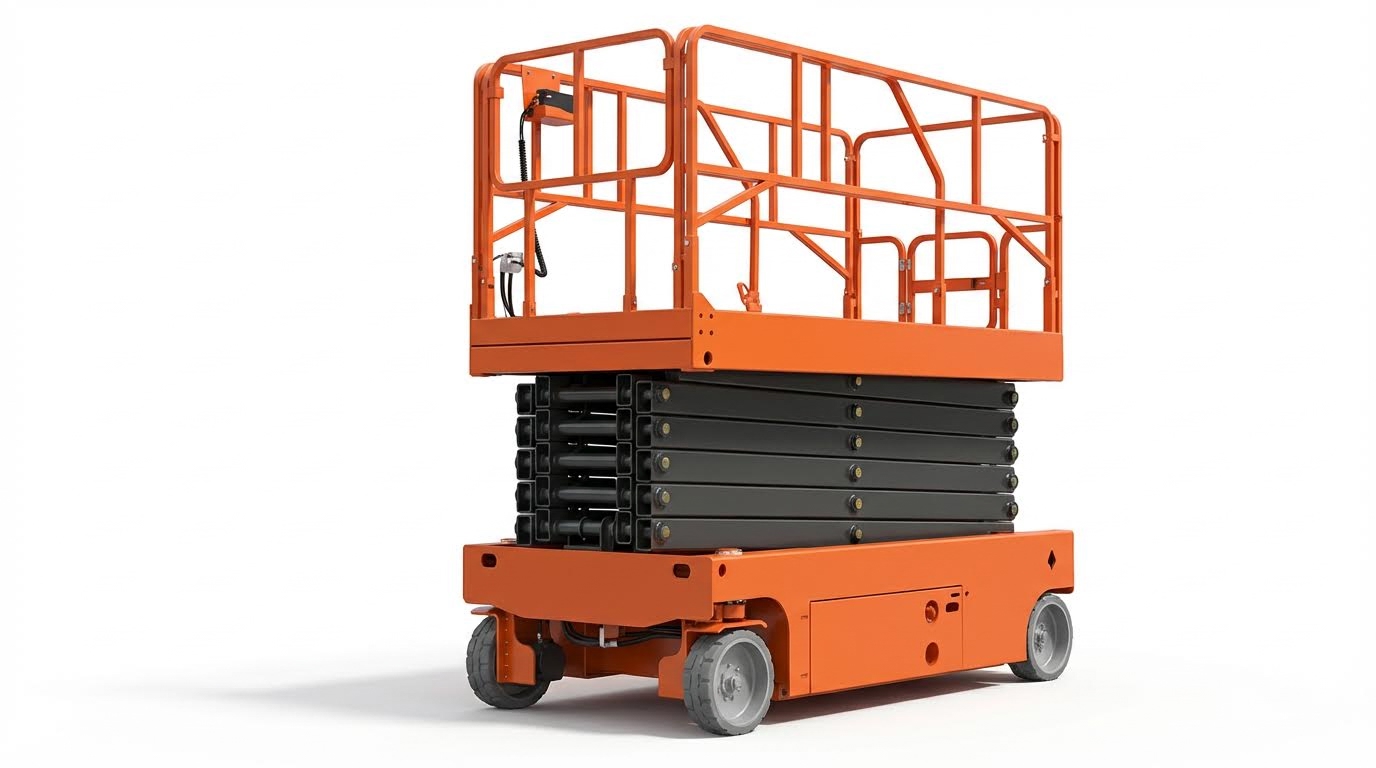
Industrial facilities relied on structured maintenance strategies to keep scissor lifts safe, compliant, and available. A risk-based approach linked inspection intervals to duty cycles, environment, and regulatory minimums. Emerging digital technologies enhanced fault detection, reduced downtime, and supported data-driven lifecycle decisions. This section examined how preventive maintenance, health monitoring, and advanced analytics integrated into a coherent reliability strategy.
Inspection Intervals And Preventive Maintenance Tasks
Facilities typically defined four inspection layers: pre-start, daily, weekly or monthly, and annual. Pre-start checks occurred at each shift change or operator handover and focused on visual walkarounds and basic function tests. Operators inspected for fluid leaks, damaged components, illegible placards, and verified that emergency stops, horns, and limit switches operated correctly. These frequent checks detected early-stage failures before they escalated into safety incidents.
Daily inspections covered hydraulic hoses, cylinders, scissor arms, platform gates, guardrails, tires, and wheels. Operators verified hydraulic fluid levels, battery charge status, and brake holding capability on level ground. Weekly or monthly maintenance added lubrication of scissor pivots and linkages, deeper checks of drive systems, and testing of emergency lowering systems. Electric units required verification of charger output and connector integrity to avoid chronic undercharging.
Annual or semi-annual inspections usually involved qualified technicians following manufacturer and ANSI A92 maintenance schedules. These tasks included comprehensive structural checks for corrosion, cracks, or weld fatigue, especially on outdoor fleets. Technicians validated the integrity of mechanical fasteners, locking pins, stabilizers, and guardrail posts. Documented inspection results supported OSHA compliance and provided traceability for future failure investigations.
Hydraulic, Structural, And Battery Health Management
Hydraulic health management focused on leak prevention, contamination control, and system efficiency. Maintenance teams monitored fluid levels and appearance, looking for discoloration, foaming, or metal particles that indicated wear. They inspected hoses, fittings, and cylinders for abrasion, blistering, and seepage, replacing components at the first sign of degradation. Scheduled filter changes and fluid replacement intervals reduced internal wear and maintained consistent lifting performance.
Structural integrity assessments targeted high-stress regions such as scissor arm pin joints, weld toes, and platform attachment points. Technicians checked for deformation, rust pitting, and hairline cracks that could propagate under cyclic loading. Outdoor storage conditions accelerated corrosion, so facilities often specified covered storage and periodic coating touch-ups. Guardrails, gates, and toe boards required close examination because their failure directly impacted fall protection.
Battery health management was critical for electric scissor lifts because batteries represented a major lifecycle cost. Maintenance personnel cleaned battery tops to prevent surface discharge and verified electrolyte levels where applicable. They used digital testers to perform amp-draw and charge retention tests, comparing results against manufacturer specifications. Well-maintained batteries typically achieved two to three years of service, while neglected units could fail within a single year.
AI Diagnostics, Digital Twins, And Remote Monitoring
Advances in electronics and connectivity enabled continuous monitoring of scissor lift health. Integrated sensors captured data on duty cycles, lift heights, temperatures, battery currents, and fault codes. Onboard diagnostic systems provided operators with real-time alerts for out-of-range parameters and guided troubleshooting steps. Some newer all-electric lifts simplified maintenance further by eliminating hydraulic circuits and using self-lubricating components.
Remote monitoring platforms transmitted operating and fault data to centralized dashboards. Fleet managers used these tools to compare utilization, schedule maintenance based on actual run-hours, and identify high-failure components. AI-based analytics detected patterns that preceded failures, such as rising current draw or repeated minor fault codes. This predictive capability allowed interventions before breakdowns disrupted production schedules.
Digital twin concepts extended this approach by creating virtual models of specific lift configurations and usage profiles. Engineers simulated stress histories, remaining useful life of structural components, and battery degradation trajectories. These models supported optimized inspection intervals and retrofit decisions, such as upgrading to higher-capacity batteries or enhanced control modules. Remote diagnostics also reduced technician travel and improved first-fix rates by enabling pre-arrival fault confirmation.
Lifecycle Cost Control And Reliability Engineering
Lifecycle cost control required balancing capital expenditure, maintenance intensity, and downtime risk. Reliability engineers combined failure data, inspection findings, and utilization statistics to build reliability block diagrams and failure mode and effects analyses. They identified dominant failure modes, such as hydraulic leaks, battery capacity loss, or structural corrosion,
Summary: Integrating Safety, Compliance, And Reliability
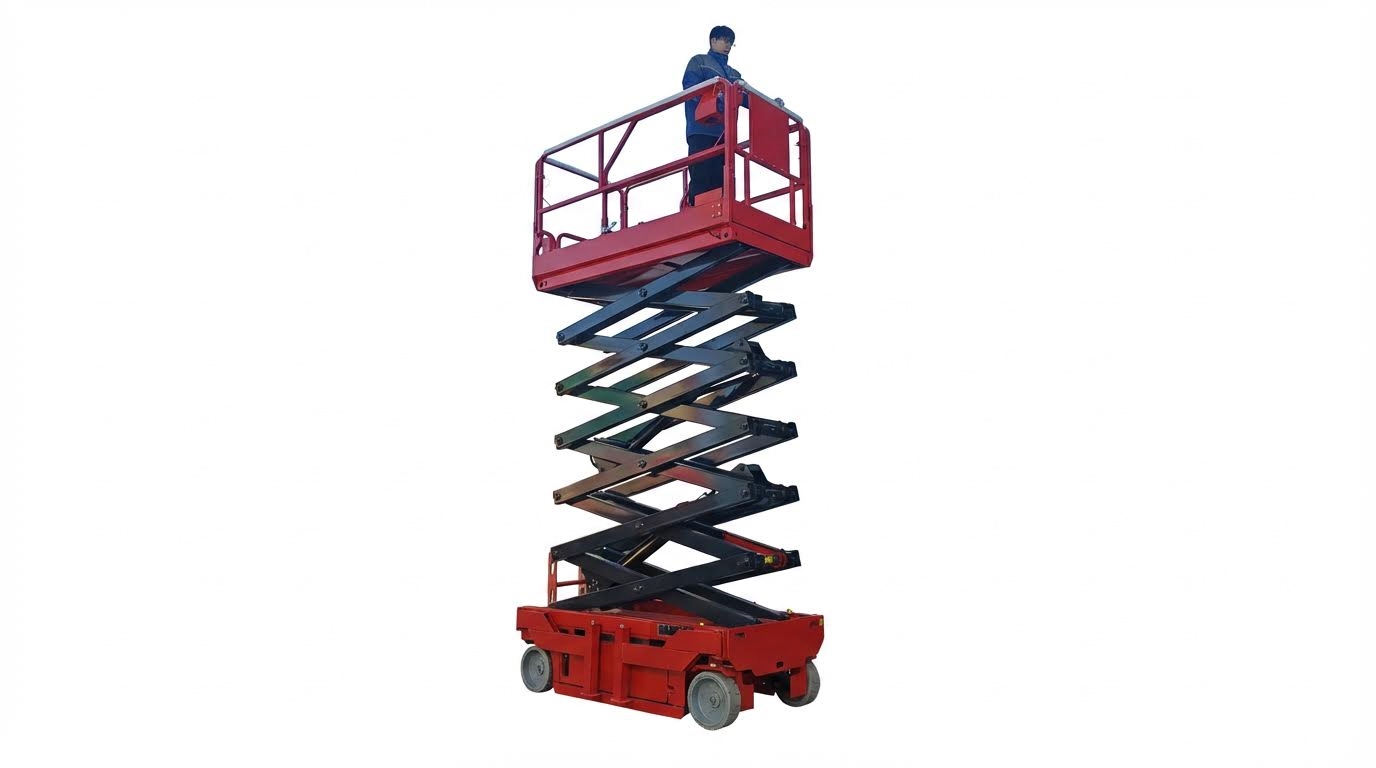
Scissor lift safety in industrial facilities depended on a tightly integrated approach that combined regulatory compliance, engineered controls, disciplined operations, and robust maintenance. OSHA requirements for scaffolds and aerial platforms, together with ANSI A92 series standards, defined the minimum baseline for design, training, inspection, and use. Facilities that exceeded these baselines, for example by formalizing MEWP-specific risk assessments and standard operating procedures, typically achieved lower incident rates and higher equipment availability.
From an industry perspective, the shift to MEWP-focused standards and the 2020 adoption of ANSI/SAIA A92.22 and A92.24 reshaped responsibilities. Owners and users assumed clearer duties for risk assessment, operator training, and maintenance documentation. At the same time, manufacturers increasingly embedded engineering controls such as interlocks, tilt and overload sensors, guarded controls, and enhanced guardrail systems to reduce fall, crush, and electrocution risks. Future trends pointed toward all-electric architectures, reduced hydraulics, and software-defined safety functions that simplified maintenance and reduced environmental impact.
Practical implementation required structured programs rather than ad hoc measures. Facilities needed written procedures for pre-use inspections, site assessments, wind and ground bearing checks, and load verification. Maintenance plans had to define daily, weekly, monthly, and annual tasks, including structural inspections and battery diagnostics, with clear criteria for removing equipment from service. Digital recordkeeping supported traceability for audits and incident investigations.
Technology evolution offered clear benefits but also introduced new dependencies. AI diagnostics, remote monitoring, and digital twins improved fault detection and lifecycle cost control, yet they demanded cybersecurity controls, data governance, and updated skills for technicians. A balanced strategy treated these tools as enablers, not substitutes, for competent operators and rigorous procedures. Industrial facilities that aligned design standards, operational discipline, and reliability engineering created a resilient scissor lift program that reduced risk exposure while sustaining productivity over the full equipment lifecycle.