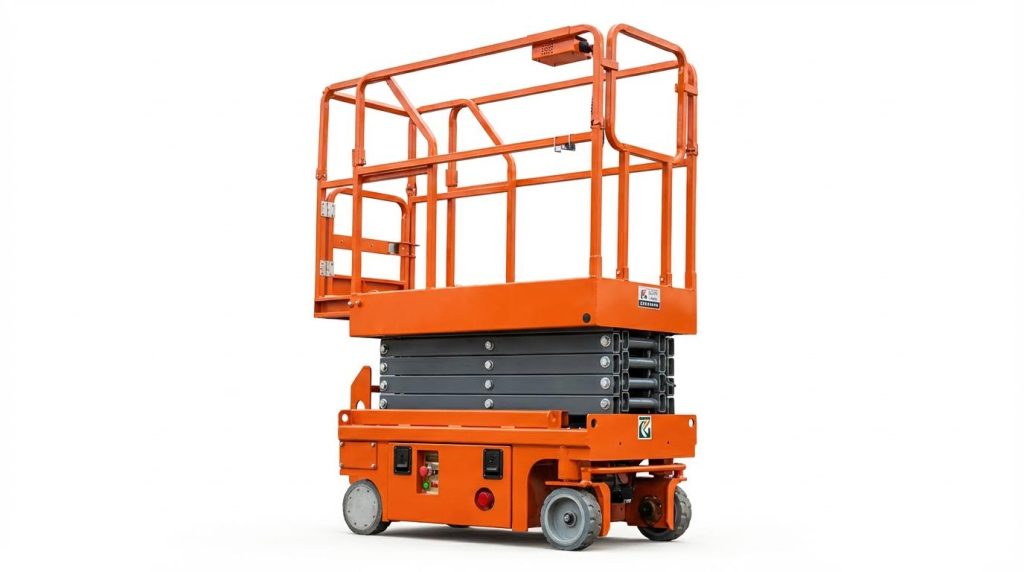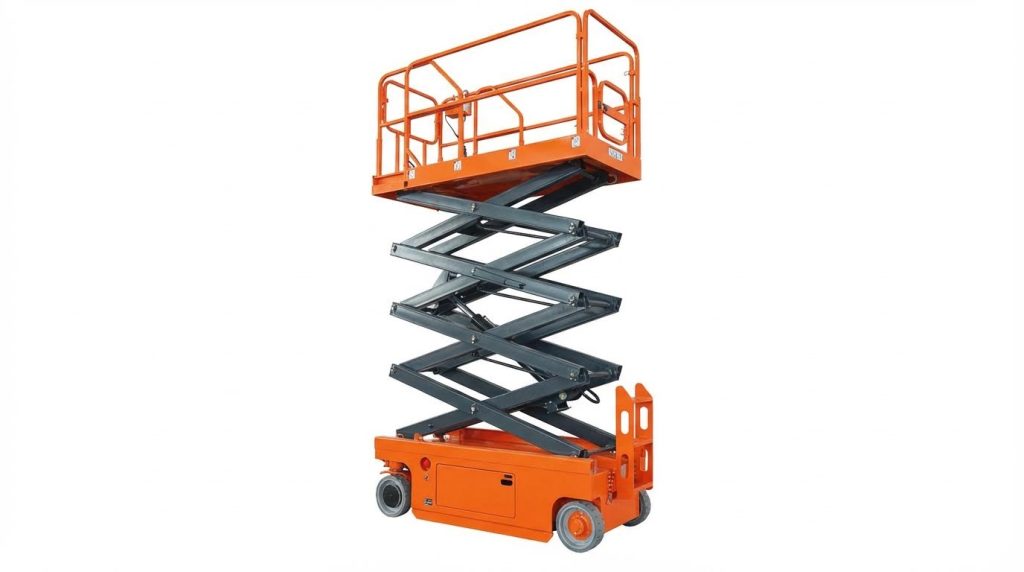
Industrial users who ask can scissor lifts work with standard pallets need clear answers on geometry, loading, and safety. This article explains how scissor lift tables interface with Euro, CHEP, and other pallet standards, and how platform dimensions, U-shaped frames, and full-deck designs affect fit and access.
You will see how low-profile heights around 85 mm, ramp options, and pit foundations influence pallet truck loading and line integration. Later sections cover stroke, duty, hydraulic safety circuits, and digital monitoring so engineers can specify lift tables that handle standard pallets efficiently while staying within structural and ergonomic limits.
Core Compatibility With Standard Pallet Sizes
Engineers asking can scissor lifts work with standard pallets must match pallet standards with platform geometry, stroke, and capacity. Compatibility depends on pallet footprint, truck access, and closed height, not only on rated load. This section explains how Euro and CHEP pallets sit on typical lift tables, how platform size affects overhang, and when U-shaped decks work better than full decks. It also reviews net capacity, load spread, and deflection limits so the lift, pallet, and floor all work as one system.
Euro, CHEP, And Other Common Pallet Standards
Standard pallets use fixed footprints, so the lift platform must cover these sizes with margin. Common dimensions in Europe include 800 × 1200 millimetres for Euro pallets and 1000 × 1200 millimetres or 1100 × 1200 millimetres for CHEP and similar block pallets. Low-profile scissor lift tables often use platforms around 1450 × 1140 millimetres or 1450 × 1250 millimetres, which fully support these pallets with limited overhang. This sizing lets operators place pallets centrally while keeping the load inside the safety edge and guarding zones.
In practice, engineers check three points. The pallet must sit fully on the platform without unsupported corners. The deck must allow pallet truck fork entry where needed. The lift stroke, for example 85 to 860 millimetres, must match the working height for picking or feeding lines. When these three conditions hold, scissor lifts can handle standard pallets safely and repeatably in loading, packing, and line-feed roles.
Platform Dimensions Vs. Pallet Footprint
Platform dimensions drive how the pallet load transfers into the scissor structure. A typical low-profile table with a 1450 × 1140 millimetre platform can carry an 800 × 1200 millimetre Euro pallet with generous side margins. Larger platforms, such as 1600 × 1200 millimetres, suit wider loads or overhanging packaging fixtures. Engineers usually target at least 50 to 100 millimetres clearance around the pallet for placement tolerance and side guarding.
| Platform size (mm) | Pallet type | Fit comment |
|---|---|---|
| 1450 × 1140 | 800 × 1200 Euro | Full support, small side margins |
| 1450 × 1250 | 1000 × 1200 block | Good fit, more lateral margin |
| 1600 × 1200 | 1100 × 1200 CHEP | Support for pallet plus fixtures |
Closed height is also critical. Ultra-low tables with 85 millimetre minimum height let pallet trucks load directly using a short ramp. This avoids pits and cuts civil work. Engineers still check ramp length and slope so trucks can climb safely without excessive push force. When the platform footprint, pallet size, and approach geometry align, the lift becomes a natural extension of the floor for pallet handling.
U-Shaped Vs. Full-Deck Tables For Pallets
U-shaped tables and full-deck tables solve different pallet handling problems. U-shaped platforms leave an open centre so a pallet truck can drop an open-bottom pallet directly on the outer legs. This suits Euro pallets and similar designs and keeps the minimum height around 85 millimetres. Typical U-shaped models use platform sizes near 1450 × 1140 millimetres, tuned for European pallets.
Full-deck tables provide continuous support. They work better for closed-bottom pallets, skids, or mixed load types. These tables often use separate ramps for pallet truck access. When choosing between the two, engineers compare:
- Truck type: open-bottom pallets favour U-shaped decks.
- Load type: mixed loads or small items favour full decks.
- Cleanliness: full decks are easier to clean and seal.
Cycle time also matters. U-shaped tables with capacities from 600 to 1500 kilograms show lift times roughly 25 to 40 seconds over the full stroke. This range suits packing and assembly cells where operators index the pallet to keep work at ergonomic height.
Net Capacity, Load Distribution, And Deflection
Net capacity ratings assume a centred and evenly spread load over the platform. Typical low-profile pallet lift tables carry rated loads from 600 to 1500 kilograms, with some models around 1000 kilograms as a standard choice. Engineers must separate pallet gross mass, including goods and packaging, from the table rating and apply a safety margin. Overloading risks excessive deflection, slow lifting, or structural damage.
Load distribution is as important as total mass. Problems arise when one side of the platform carries several heavy pallets while the other side stays nearly empty. Uneven loading increases bending in the platform and scissor arms and can twist the base frame. For complex conveyor or multi-pallet systems, designers may use wider scissors, double scissors, or hydraulic balance control circuits to keep platforms level under offset loads.
Deflection limits protect both structure and process accuracy. Manufacturers usually design platforms so elastic deflection under rated load stays within a few millimetres. Engineers verify this with worst-case pallet layouts, such as a single heavy pallet at one edge. When deflection stays within limits and foundations meet stiffness needs, scissor lifts can work with standard pallets safely over long duty cycles.
Clearance, Foundations, And Integration Constraints
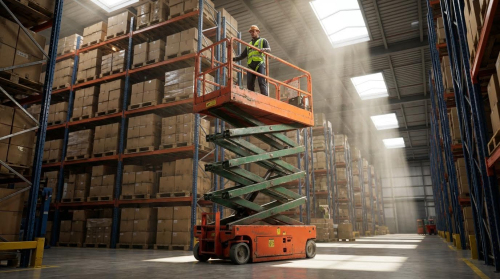
Engineers who ask can scissor lifts work with standard pallets must study clearance and foundation limits first. Low-profile designs, ramp geometry, and pit details all affect how Euro and CHEP pallets enter the platform. Concrete strength, flatness, and drainage then control long-term stability and safety. Correct access clearances protect technicians during inspection and service.
Low-Profile Designs And 85 Mm Closed Height
Low-profile scissor lift tables with an 85 mm closed height sit almost at floor level. This small step height lets pallet trucks load standard pallets without deep pits. Typical platforms for European pallets measure about 1450 × 1140 mm or 1450 × 1250 mm. These sizes give enough margin around 800 × 1200 mm or 1100 × 1200 mm pallets for positioning and guarding.
When users ask can scissor lifts work with standard pallets, low-profile units give a direct answer. The 85 mm height works with short-entry pallet trucks and keeps ramp angles moderate. A lifting range from about 85 mm to 860 mm covers most ergonomic working heights. Designers must still check that fork length, wheel diameter, and pallet overhang do not foul the platform edges.
Ramp Access Vs. Pit-Mounted Installations
Ramp-access scissor lifts stay on the floor slab. A steel ramp, often about 1140 × 905 × 85 mm, lets pallet trucks climb onto the platform. This option avoids civil work and suits leased facilities. However, the ramp occupies floor space and adds an approach slope that can affect heavily loaded manual trucks.
Pit-mounted installations recess the lift so the platform top sits flush with the floor at closed height. This removes the ramp and gives straight entry for pallet trucks. Pit lifts work well in high-throughput pallet lines where traffic density is high. For either concept, engineers must check turning radii, pallet length, and truck maneuvering space so operators can place standard pallets without reverse corrections.
Concrete Thickness, Leveling, And Drainage
Ultra-thin and pit-mounted scissor lifts need correctly designed foundations. Typical guidance includes:
- Use at least 160 mm thick concrete for ultra-thin lifts on slabs.
- Use about 150 mm thick concrete for pit bottoms and side walls.
- Select concrete grade C25 or higher for compressive strength.
Leveling tolerance should stay within ±3 mm across the support area. Poor flatness causes uneven leg loading and platform tilt under pallet loads. Designers should add a 2–3% slope or drainage channel in pits. This prevents standing water, which can corrode scissor arms, pins, and base frames. Load testing after curing checks for cracks or settlement before regular pallet handling starts.
Safety Clearances For Access And Maintenance
Safe integration needs clear access around the lift for both operators and technicians. A typical layout keeps passages on both long sides of the table to avoid collision during service work. Front clearance of at least 1.6 m allows technicians to place tools, jacks, and lockout devices. Platform lengths around 4.5 m in larger systems still need side access zones for inspection.
Designers must combine these clearances with pallet traffic paths. Guardrails, toe boards, and safety skirts should not block emergency escape routes. Control stations with 24 V circuits, emergency stop, and key switches must sit within easy reach but outside crush zones. This balance lets scissor lifts work with standard pallets while still meeting plant safety rules and maintenance standards.
Design Features, Controls, And Modern Enhancements
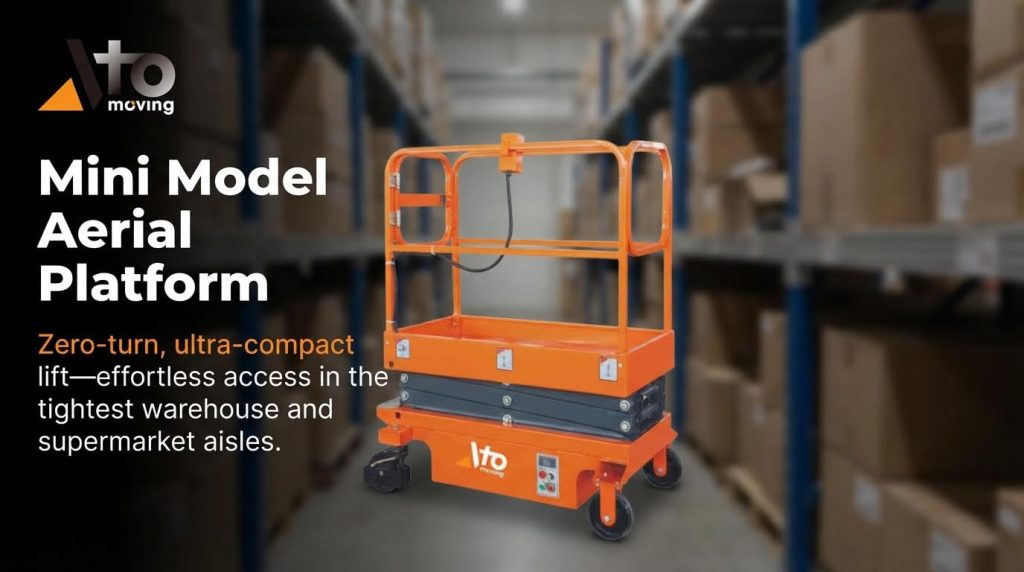
Engineers who ask can scissor lifts work with standard pallets must look beyond basic dimensions. Design features, control architecture, and modern enhancements decide real-world compatibility, throughput, and safety. This section explains how stroke, hydraulics, ergonomics, and digital tools align scissor lift tables with Euro and other standard pallet formats.
Lift Stroke, Cycle Time, And Duty Expectations
Lift stroke must match the height difference between floor, pallet truck forks, conveyors, and workstations. Typical low-profile pallet scissor lifts offer about 85 millimetres closed height and around 860 millimetres raised height. This range covers most loading dock, packing bench, and line-feed interfaces for standard 800 × 1200 millimetre Euro pallets.
Cycle time affects line capacity and operator waiting time. Common pallet lifts raise 600 to 1500 kilogram loads in roughly 20 to 40 seconds, depending on capacity and stroke. Faster cycles increase throughput but raise hydraulic and structural fatigue, so designers balance speed with duty rating.
Duty expectations define motor sizing, oil cooling, and structural life. For continuous palletizing or depalletizing, engineers specify higher duty motors, larger reservoirs, and conservative stress limits in the scissor arms and pins. For low-frequency maintenance lifts, simpler systems with longer cycle times can still handle Euro or CHEP pallet work safely.
Hydraulic Power Units, Valves, And Safety Circuits
Hydraulic power units for pallet scissor lifts usually run on 220 to 240 volt single phase or 380 to 415 volt three phase supplies. Power selection depends on site infrastructure, expected duty cycle, and peak load. Units that handle 600 to 1500 kilogram pallets require robust pumps and motors sized for both lift speed and pressure margin.
Valve selection controls safety and motion quality. Relief valves protect the structure by limiting maximum pressure under overload. Flow control or compensating valves set lowering speed, keeping descent stable even when pallet mass changes between cycles.
Safety circuits add a second protection layer. Typical features include hose burst valves that lock the platform if a line fails, and perimeter safety bars or skirts that stop descent on contact with an obstruction. External power packs simplify maintenance and keep heat and noise away from the operator zone.
Ergonomics, Guarding, And Compliance Measures
Ergonomic design proves that scissor lifts can work with standard pallets while reducing strain. Low-profile designs with 85 millimetres closed height let pallet trucks place Euro pallets directly on the platform without deep ramps or pits. Operators then raise the pallet to a comfortable working height, which reduces bending and twisting.
Guarding prevents contact with shear points in the scissor mechanism. Common measures include mesh screens, bellows, or fixed guards around the base frame, especially when pallets overhang the platform. Anti-slip platform surfaces and clear markings for pallet position help keep loads stable during lift and rotation.
Compliance measures cover electrical safety, emergency stops, and safe access. A 24 volt control box with up, down, and emergency stop buttons keeps control voltage low and safer. Interlocks, safety labels, and documented inspections help align the installation with regional machinery and workplace regulations while handling Euro or CHEP pallets.
Digital Twins, Monitoring, And Predictive Maintenance
Digital tools now extend how engineers answer can scissor lifts work with standard pallets over the full life cycle. A digital twin can model the scissor table, pallet load, and duty cycle before installation. This allows checks on deflection, stability, and motor loading for different pallet sizes and handling patterns.
Monitoring systems track actual usage. Sensors can log lift cycles, load profiles, oil temperature, and fault events. Engineers use this data to refine maintenance intervals, adjust hydraulic settings, and confirm that Euro pallet handling stays within design limits.
Predictive maintenance uses trends rather than fixed schedules. Rising cycle times, higher motor current, or unusual vibration can trigger planned inspections before a breakdown. This approach reduces unplanned downtime on palletizing lines and extends the life of cylinders, pins, and bushings under repetitive pallet handling duty.
Summary: Ensuring Safe, Efficient Pallet Lift Integration
Facilities that ask can scissor lifts work with standard pallets need a structured answer. Compatibility depends on platform size, closed height, pallet access method, and foundation design. Correct selection and installation turn a scissor lift table into a reliable link between floor, pallet truck, and racking. Poor matching creates impact loads, uneven support, and long-term damage.
Standard pallets such as Euro 800 × 1200 millimetres and CHEP 1100 × 1200 millimetres worked well with platforms around 1450 × 1140 or 1450 × 1250 millimetres. Low-profile designs with 85 millimetre closed height allowed direct loading by pallet trucks, often through a short ramp. U-shaped tables supported open-bottom pallets, while full-deck tables with ramps handled closed pallets or mixed formats. Typical lift ranges from 85 to about 860 millimetres covered most packing, assembly, and loading stations.
From an engineering view, users needed to match net capacity, duty cycle, and hydraulic controls to the real work pattern. Concrete foundations had to meet thickness, flatness, and drainage rules before commissioning. Safety circuits, toe-edge protection, and perimeter bars reduced crush risks during descent.
Looking ahead, digital monitoring, simple twin or multi-table balancing, and predictive maintenance tools will support higher uptime. However, core decisions will still start with pallet standard, platform envelope, and access route. Plants that document these constraints and apply conservative clearances will integrate pallet scissor lift tables safely and efficiently across their lines.
,
Frequently Asked Questions
Can scissor lifts work with standard pallets?
Scissor lifts are not typically designed to handle standard pallets like forklifts. Their primary purpose is to provide a stable elevated platform for workers and tools. However, some scissor lifts come with attachments or modifications that allow them to carry materials, including pallets. If you need to use a scissor lift for pallet handling, ensure the lift has the appropriate load capacity and attachments.
- Check the lift’s load capacity before use.
- Ensure the scissor lift has proper attachments for pallet handling.
- Operate on stable, level ground to prevent tipping.
What are the main disadvantages of using a scissor lift?
The main disadvantage of using a scissor lift is its limited functionality compared to specialized material handling equipment like forklifts. Scissor lifts are primarily designed for lifting personnel rather than heavy materials. Uneven or unstable ground conditions can compromise stability, increasing the risk of tipping when the platform is elevated. For safe operation, always ensure the ground is stable and level.
- Not ideal for heavy material handling.
- Risk of tipping on uneven surfaces.
- Limited to lifting personnel and light materials without modifications.