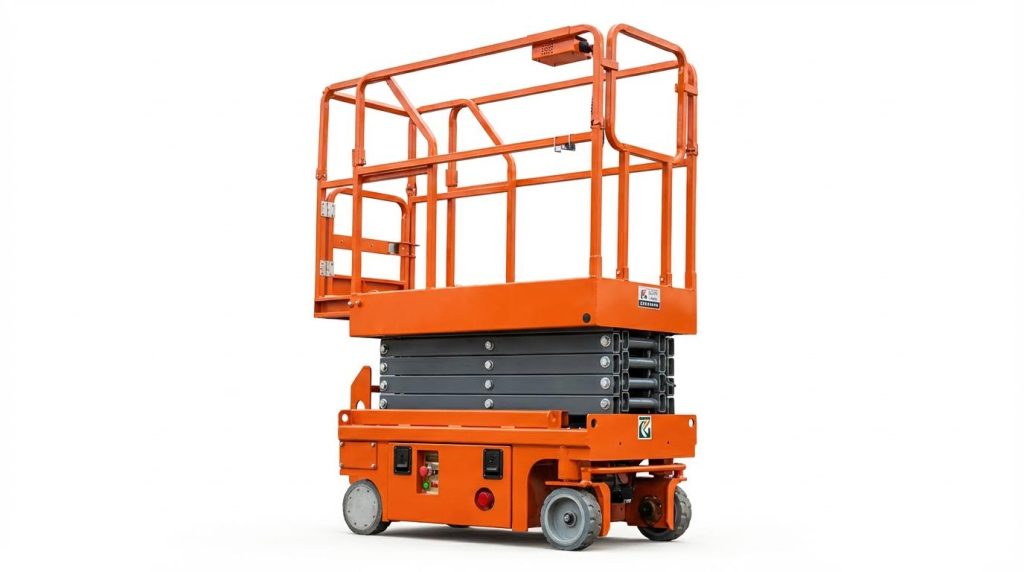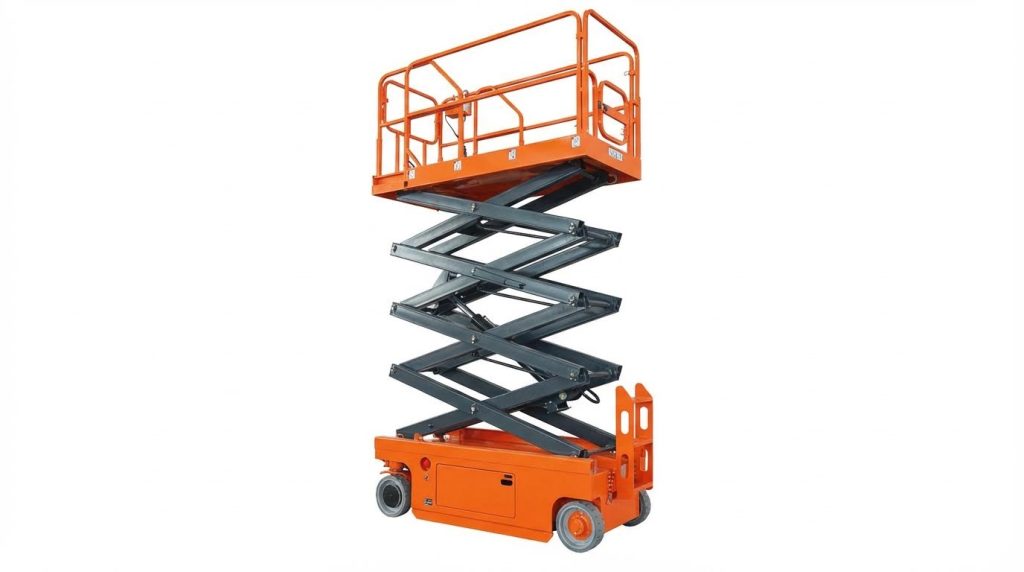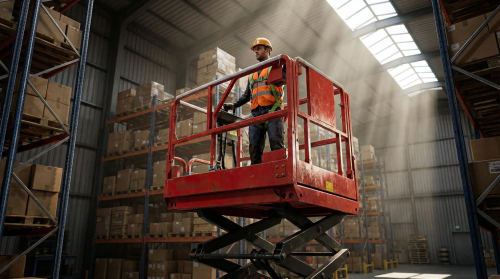
If you are asking “how much does a small scissor lift weigh,” the answer is usually 360–1,600 kg for compact powered units and as low as 40–150 kg for manual tables. This guide explains how those weights affect floor loading, slab design, and safe equipment selection inside real facilities. You will learn typical weight ranges, how height and capacity drive mass, and how to check whether your floors can safely carry scissor platform lifts in everyday use.
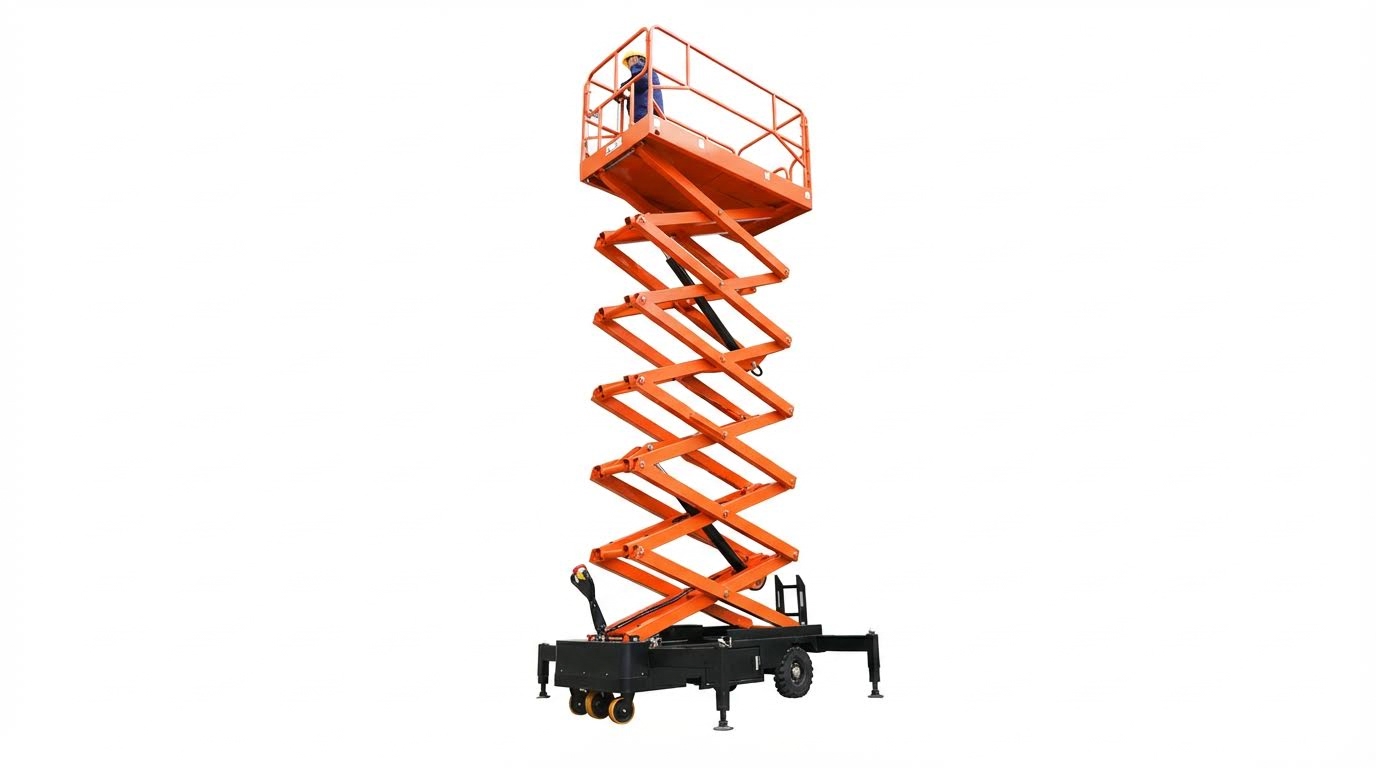
Typical Weights Of Small Scissor Lifts
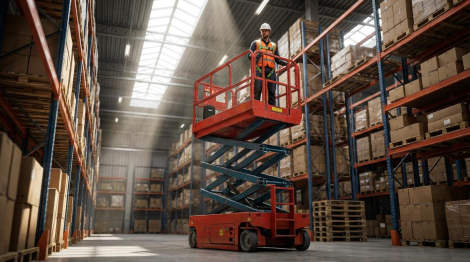
Typical small scissor lifts weigh from about 40 kg for manual tables up to around 3,000 kg for compact powered units. If you are asking “how much does a small scissor lift weigh,” the answer depends on lift type, height, and capacity. This section benchmarks realistic weight ranges so you can match lifts to floor capacity and handling methods.
Weight ranges by lift type and use case
Small scissor lift weights typically range from 40 kg to 3,000 kg, with manual tables on the low end and narrow-aisle powered units on the high end. Understanding where your lift sits in this band is the first step in answering how much does a small scissor lift weigh for your application and floor design.
| Lift Type / Use Case | Typical Weight Range | Typical Platform Height Range | Typical Capacity Range | Operational Impact / Best For… |
|---|---|---|---|---|
| Manual table scissor lift | 40–150 kg reference | 0.7–1.0 m reference | Up to ~750 kg reference | Light-duty work positioning; easy to push by hand; negligible effect on most industrial slabs. |
| Compact “mini” self-propelled scissor lift (indoor) | 360–990 kg reference | 3.0–6.8 m platform / working heights up to ~6.8 m reference | 200–320 kg reference | One person plus tools in tight aisles; low overall weight helps on thinner slabs and mezzanines. |
| General compact slab scissor lift (stock picker / maintenance) | Approx. 544–1,588 kg (1,200–3,500 lbs) reference | 3–6 m reference | ~225–250 kg reference | Most common “small scissor lift” on warehouse floors; wheel loads start to govern slab design. |
| Stationary goods scissor lift (dock / conveyor interface) | 780–2,200 kg reference | ~3–4.5 m stroke reference | 300–3,000 kg reference | Fixed locations with engineered foundations; ideal where pallets or equipment move between levels. |
| Ultra-compact / narrow-aisle self-propelled scissor lift | 2,100–3,000 kg reference | 6–12 m platform height reference | Typically 200–350 kg (varies by model) | High reach in 0.8–0.9 m aisles; very high contact pressure, critical for mezzanines and suspended slabs. |
If you want a quick rule-of-thumb for how much does a small scissor lift weigh on a warehouse slab, most compact self-propelled units you see indoors fall roughly between 500 kg and 1,600 kg, while ultra-compact high-reach machines can be closer to 3,000 kg.
How these weights relate to “standard” small scissor lifts
When people say “small scissor lift,” they usually mean compact slab or mini electric units used indoors. Those typically weigh 360–1,588 kg, offer 3–6.8 m platform or working height, and carry 200–320 kg capacities. reference reference
💡 Field Engineer’s Note: For mezzanines and older slabs, I always ask for the exact machine weight and wheel layout. A “small” 3,000 kg narrow-aisle lift can exceed design wheel loads where a 1,000 kg mini lift would be acceptable.
How height, capacity, and duty cycle drive weight
Scissor lift weight increases as platform height, rated capacity, and duty cycle go up because each requires heavier steel sections, larger pins, and more robust power systems. When you ask how much does a small scissor lift weigh, you are really asking how far up, how much load, and how often it will work.
- Platform height: Taller lifts need longer, stronger scissor arms and a heavier base – this keeps the centre of gravity inside the wheel footprint at full elevation, improving tip resistance.
- Rated capacity: Higher capacities demand thicker arm plates, bigger pins, and stiffer platforms – this prevents permanent bending and joint wear under repeated full-load cycles.
- Duty cycle / usage intensity: Frequent, multi-shift use pushes designers to oversize structures and power packs – this reduces fatigue cracking and hydraulic overheating in high-utilisation sites.
- Structural materials: High-strength structural steel allows thinner sections – this controls weight while still limiting deflection and sway at height. reference
- Power and drive system: Hydraulic cylinders, oil volume, and larger batteries all add mass – this increases runtime and lift speed but also raises wheel loads on the floor. reference reference
- Safety features and platform size: Guardrails, toe boards, extension decks, and larger platforms add dead weight – this improves usability and fall protection but must be considered in floor load checks. reference
| Design Change | Example Data Point | Effect on Lift Weight | Operational Impact |
|---|---|---|---|
| Increase platform height | Compact slab lift: ~560 kg at 3 m vs 900–1,560 kg at 6–8 m platform height reference | Weight can roughly double as height increases from ~3 m to 8 m. | Heavier base improves stability but may exceed slab design on mezzanines or suspended decks. |
| Increase rated capacity (manual tables) | ~40 kg lift for 100 kg load vs ~137 kg lift for 750 kg load reference | Lift weight more than triples as capacity increases 7.5×. | Still pushable by hand, but floor contact pressure and ramp handling get noticeably higher. |
| Increase rated capacity (stationary goods lifts) | 780 kg at 300 kg capacity vs 2,200 kg at 3,000 kg capacity reference | Lift weight increases by ~1,420 kg to handle 10× payload. | Requires engineered foundation; unsuitable for light slabs without local thickening or supports. |
| Battery / drive upgrade | 2×12 V / 80 Ah to larger 24 V packs with longer runtime reference | Heavier batteries and drive components can add tens of kilograms. | Longer runtime and higher duty cycle, but higher wheel loads on sensitive floors. |
In practice, when you ask how much does a small scissor lift weigh for a given job, you should specify:
- Required platform height (m).
- Required rated capacity (kg).
- Expected duty cycle (hours per day, shifts per week).
- Whether the lift is mobile or stationary.
Those four inputs largely determine whether you end up with a 360 kg mini indoor lift, a 1,500 kg compact slab machine, or a 3,000 kg narrow-aisle high-reach unit.
💡 Field Engineer’s Note: On projects with tight floor limits, I often trade a bit of platform height or capacity to drop one weight class. Moving from a 1,500 kg to a 900 kg lift can be the difference between “no structural upgrade” and “add beams under the slab.”
Floor Loading And Structural Design Checks
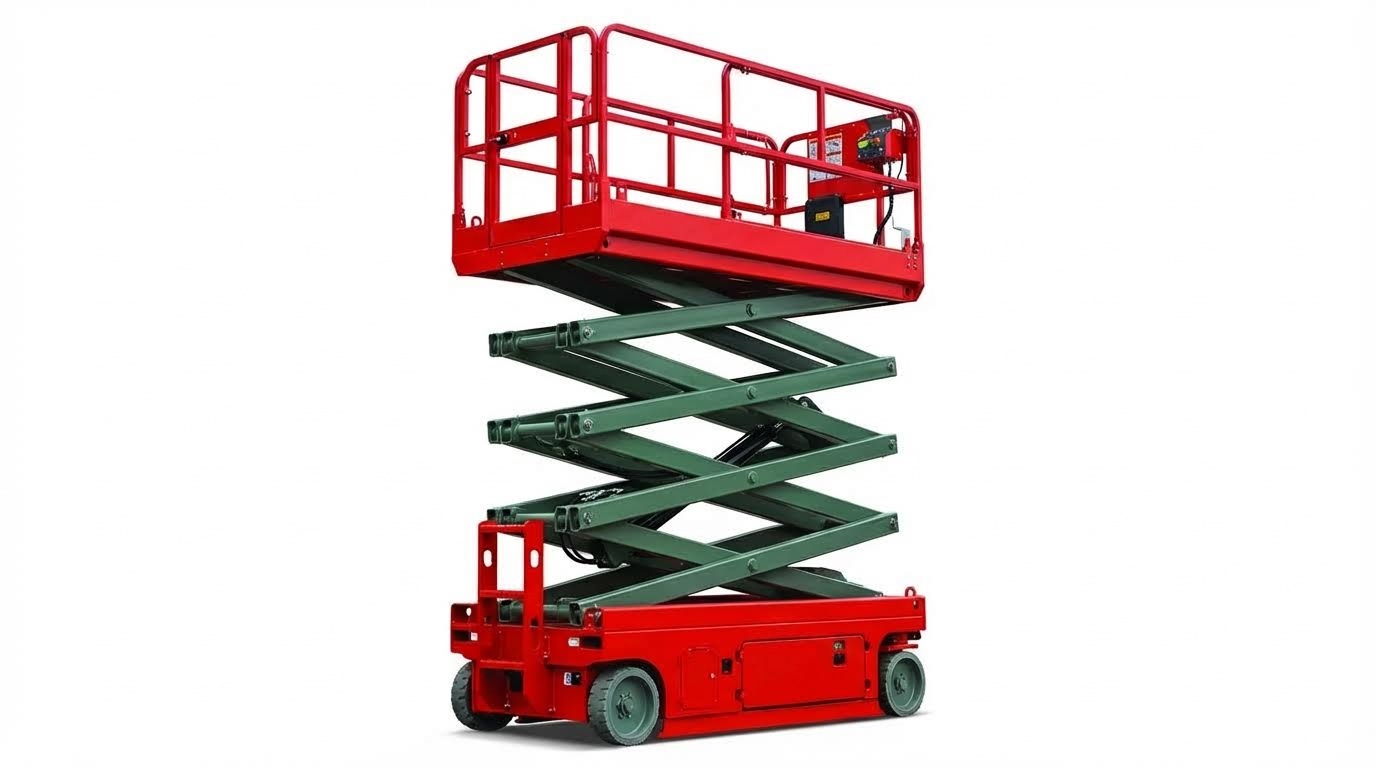
Floor loading and structural checks for small scissor lifts focus on wheel loads and contact pressure, not just “how much does a small scissor lift weigh”. Engineers must compare these loads with slab capacity, reinforcement, and use patterns before approving traffic.
Most small scissor lifts weigh between about 360 kg and 1,600 kg, with compact units typically around 650–930 kg and capacities of 200–320 kg. These machines can safely operate on many standard slabs, but only if wheel loads and contact pressures are checked against the actual floor design. Typical compact lift weights and capacities and floor load guidance show why you must look beyond total weight when approving lift use.
Wheel loads vs total machine weight
Wheel loads on small scissor lifts can reach roughly one quarter of the total loaded weight on a single wheel, so they often govern slab design instead of the overall machine weight. You must understand how weight concentrates at each wheel before deciding if a floor is adequate.
| Lift Type / Example | Typical Total Weight (Self‑weight only) | Rated Capacity | Approx. Max Static Load on One Wheel* | Operational Impact |
|---|---|---|---|---|
| Manual table lift | 40–150 kg (typical range) | Up to ~750 kg | ≈ 50–225 kg | Very low wheel loads; usually safe on standard industrial slabs and mezzanines. |
| Compact slab scissor lift | ≈ 544–1,588 kg (1,200–3,500 lbs) weight range | ≈ 225–250 kg | ≈ 200–460 kg per wheel (static) | Concentrated wheel loads; deck slabs, mezzanines, and suspended floors must be checked. |
| Stationary goods lift | 780–2,200 kg depending on capacity | 300–3,000 kg | Transferred into pit / foundation, not wheels | Requires engineered foundation; usually not moved across slabs. |
| Ultra‑compact / narrow‑aisle lift | ≈ 2,100–3,000 kg typical range | Varies (often 230–450 kg) | ≈ 650–950 kg per wheel (static) | Very high local wheel loads; critical on suspended slabs and trench covers. |
*Engineers often approximate static wheel load as up to 25% of the total loaded weight on a single wheel for four‑wheel lifts. Wheel loads frequently govern slab design rather than total machine weight.
- Total machine weight: Self‑weight of the lift only – underestimates risk if you ignore payload and dynamic effects.
- Loaded machine weight: Lift plus rated capacity (operator, tools, materials) – this is the minimum you should use for checks.
- Wheel load: Portion of loaded weight carried by a single wheel – this is usually what cracks slabs and decks.
- Dynamic amplification: Extra load due to braking, turning, or bouncing – increases peak wheel loads over static estimates.
When you ask “how much does a small scissor lift weigh” for floor design, you really need “what is the worst‑case wheel load when fully loaded and moving.” That is the number you compare with slab and deck capacity, not just the brochure weight.
💡 Field Engineer’s Note: On suspended slabs, the governing wheel is often the one closest to a beam or opening. Always place the heaviest wheel where the structure is strongest, and keep lifts away from slab edges, trenches, and infill patches unless an engineer signs off.
Calculating contact pressure on slabs
Contact pressure from small scissor lifts is the wheel load divided by the actual contact area of the tyre or wheel, and it often exceeds the average floor design pressure by a large margin. You must check this local pressure to avoid crushing concrete or punching through thin toppings.
| Parameter | Typical Value / Range | How to Estimate | Operational Impact on Slab |
|---|---|---|---|
| Example compact lift weight | 650–930 kg self‑weight typical compact range | Use data plate or manual | Base value for wheel load and pressure calculations. |
| Rated capacity | 200–320 kg for small indoor lifts | Add to self‑weight for loaded weight | Drives total load; heavier tools or materials raise pressures. |
| Loaded machine weight (example) | ≈ 850–1,250 kg (lift + payload) | Self‑weight + rated capacity | Use this, not bare weight, for safety checks. |
| Static wheel load (4 wheels) | ≈ 210–310 kg per wheel (¼ of total) | Total loaded weight ÷ 4 | First‑pass estimate; refine if manufacturer gives wheel data. |
| Wheel contact area | Based on 100–150 mm diameter wheels (common sizes) | Approx. width × effective contact length | Smaller, harder wheels give higher contact pressure. |
| Contact pressure | Wheel load ÷ contact area | Convert to kN/m² or MPa | Compare with slab bearing strength and topping capacity. |
- Step 1 – Get real weights: Use the manufacturer’s weight plus rated capacity, not just “how much does a small scissor lift weigh” from marketing material.
- Step 2 – Estimate wheel load: Divide loaded weight by the number of wheels; add a factor for braking or dynamic effects if the lift moves at speed.
- Step 3 – Determine contact area: Measure tyre width and approximate contact length (usually less than the wheel diameter for hard wheels).
- Step 4 – Compute pressure: Contact pressure = wheel load ÷ contact area, expressed in kN/m² or MPa.
- Step 5 – Compare with slab capacity: Check against concrete strength, topping thickness, and any manufacturer or code limits for floor loading.
How engineers treat contact pressure vs. uniform floor loads
Floor design loads like 5 kN/m² are area averages, not local tyre pressures. Scissor lifts create high, localized pressures under each wheel, similar to point loads. Engineers therefore treat them as concentrated loads and check punching, local crushing, and deck rib bending, often using specialized tables and methods such as those in the Steel Deck Institute’s Floor Deck Design Manual for deck slabs. Reference for scissor lift wheel loads on deck slabs.
💡 Field Engineer’s Note: Thin toppings (≤50 mm) over insulation or old slabs are the first to fail under high contact pressure. If you see hollow sounds, debonded patches, or hairline cracking, keep lifts off until an engineer has checked the build‑up.
Verifying new and existing floors for lift traffic
Verifying floors for small scissor lift traffic means matching lift wheel loads and contact pressures to the slab’s thickness, reinforcement, and support conditions, then adding safety factors for dynamic use. New slabs can be designed for this; existing slabs must be checked and sometimes strengthened before use.
| Floor Situation | Key Data to Gather | Engineering Check | Best For… |
|---|---|---|---|
| New ground‑bearing slab | Concrete grade, thickness, sub‑base, joint layout, design live load | Design for expected lift wheel loads in addition to uniform loads. | Warehouses and plants planning routine scissor lift use. |
| New suspended slab / metal deck | Slab thickness, reinforcement, deck profile, beam spacing | Use deck manuals and finite checks for wheel loads and crack control. Guidance on scissor lift deck checks. | Mezzanines, elevated platforms, parking decks. |
| Existing ground slab | As‑built drawings, thickness (if known), visible cracks/joints, soil conditions | Compare lift wheel loads with original design; inspect for distress. | Retrofitting lifts into older warehouses or workshops. |
| Existing suspended slab / deck | Original design loads, reinforcement, deck type, beam layout, deflection history | Engineer calculates capacity for concentrated wheel loads and dynamic effects. | Offices converted to light industrial, upper‑floor storage, data centres. |
| Retrofit / strengthening | Areas where lift must travel or work | Options include steel plates, bonded toppings, added beams or joists. Common retrofit strategies. | Allowing limited lift routes on marginal slabs. |
- For new floors: Tell your designer early that scissor lifts will be used – they can size thickness, reinforcement, and joints specifically for those wheel loads.
- For existing floors: Collect lift data (weight, capacity, wheel size, footprint) and original slab drawings – engineers need both to answer if the floor is safe.
- For marginal cases: Limit routes, lift size, and payload, or add local strengthening – this is often cheaper than full slab replacement.
Common retrofit methods when capacity is borderline
When checks show that wheel loads from a small scissor lift are close to or slightly above slab capacity, engineers may specify: local steel plates to spread wheel loads, bonded concrete toppings to increase thickness, or added beams/joists under suspended slabs to cut spans. These measures were widely used where deck slabs were not originally designed for lift traffic. Examples of retrofit options.
💡 Field Engineer’s Note: Never rely on “it feels solid” as proof a slab can take a lift. I have seen 150 mm suspended slabs that held pallet jacks for years crack within days once a 1,500 kg compact scissor lift started running the same route.
Selecting A Small Scissor Lift For Your Facility
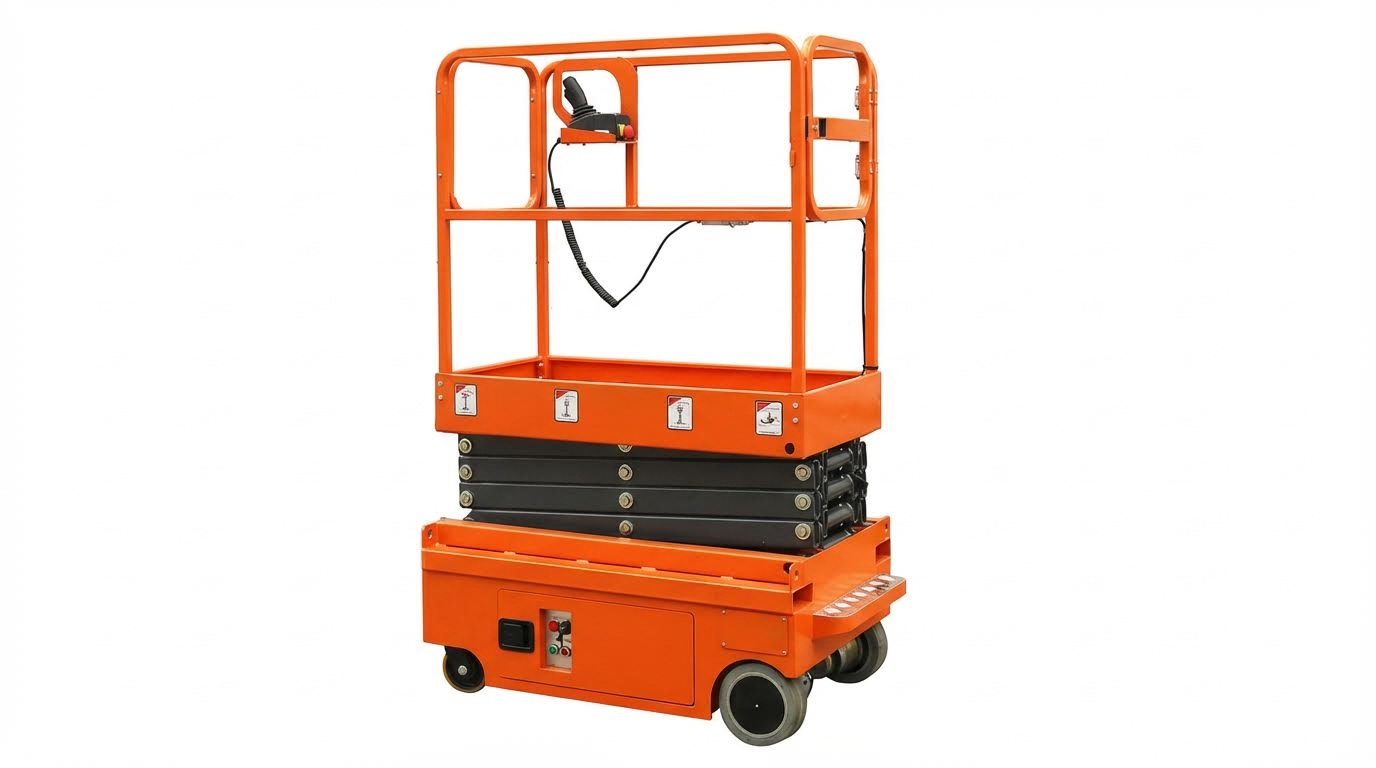
Select a small scissor lift by matching its total weight, wheel loads, and duty cycle to your slab capacity and work pattern, then choosing a battery and drive system that delivers enough runtime without overloading your floors or budget.
Facility managers often ask “how much does a small scissor lift weigh” because floor capacity, door clearances, and handling routes all depend on that number. Most compact electric units fall roughly between 360 kg and 1,600 kg, with weight increasing as height and capacity go up. Typical compact models weigh 360–990 kg, while some “compact slab” lifts reach 544–1,588 kg. Heavier narrow-aisle units can run 2,100–3,000 kg and need more careful floor checks.
| Key Question | Typical Range / Rule | Operational Impact |
|---|---|---|
| How much does a small scissor lift weigh? | ≈360–990 kg for very compact electrics; up to ≈1,600 kg for larger slab units | Drives whether existing slabs, mezzanines, and lifts can safely support the machine |
| Typical platform capacity | 200–320 kg for small electrics (single operator + tools) | One person plus tools or light materials; not suitable for heavy pallets |
| Typical platform height | 3.0–6.8 m working height (≈4.8 m platform) | Covers most indoor maintenance, racking, and MEP access up to ~2–3 storeys |
| Battery runtime | ≈4–8 hours per charge for small electrics | Defines how many shifts or jobs you can complete before recharging |
| Drive speed (stowed / raised) | Up to ≈4 km/h stowed, ≈0.8 km/h elevated for compact units | Impacts travel time between work zones and productivity on large sites |
💡 Field Engineer’s Note: When you ask “how much does a small scissor lift weigh,” also ask “how much does it weigh when fully loaded?” Your slab sees the combined self‑weight plus rated load, not just the empty machine.
Matching lift weight to floor capacity and use pattern
Match lift weight to floor capacity by comparing the lift’s total weight and wheel loads to your slab design, then selecting a model whose duty cycle and travel routes stay within safe limits for repeated daily use.
From an engineering standpoint, you never look at weight in isolation. You look at: total machine + rated load, how that weight splits into individual wheel loads, and how often and where the lift will travel. Smaller electric scissor lifts in the 360–990 kg range with 200–320 kg capacity distribute load over a compact base and typically work well on standard industrial slabs, provided wheel loads are checked. Typical compact units are designed for indoor slabs, but that does not guarantee compatibility with older mezzanines or light-duty suspended floors.
| Lift Category | Typical Empty Weight | Typical Capacity | Floor Sensitivity | Best For… |
|---|---|---|---|---|
| Manual table lift | 40–150 kg (lightest) | Up to ≈750 kg (goods only) depending on model | Very low; minimal slab impact | Benches, packing lines, small workshops |
| Small electric “mini” scissor lift | ≈360–990 kg (compact indoor) | 200–320 kg | Moderate; usually OK on 125–150 mm industrial slabs with checks | Indoor maintenance, light stock picking up to ~6.8 m |
| Compact slab scissor lift | ≈544–1,588 kg (heavier frames) | ≈225–250 kg | Higher; wheel loads may govern slab design | Busy warehouses, construction fit‑outs, heavier use |
| Ultra‑compact / narrow‑aisle | 2,100–3,000 kg (tall, narrow) | Higher capacities; up to 12 m height | High; small footprint raises contact pressure | High‑bay racking, tight aisles with engineered slabs |
- Start with slab data: Get thickness, reinforcement, and design load from drawings or engineers – this tells you the safe range before you even ask how much does a small scissor lift weigh.
- Compare total loaded weight: Add lift self‑weight plus rated capacity – this is the maximum static load your floor must support.
- Consider wheel loads, not just total weight: Wheel loads can reach roughly a quarter of total weight per wheel under static conditions – this is what drives cracking and punching in thin slabs.
- Map travel routes: Check the weakest path (ramps, joints, mezzanines) – the lift is only as safe as the weakest slab it crosses.
- Match to duty cycle: Occasional maintenance use is very different from all‑day picking – frequent traffic justifies a more conservative weight limit.
How to roughly screen a floor for a candidate lift
As a quick screening step, compare your candidate lift’s total loaded weight to any posted floor load ratings (often in kN/m²). For a small electric lift around 900 kg with a 250 kg load, assume ≈1,150 kg total. If your floor was designed for typical warehouse loads and has a 150 mm reinforced slab, it is often acceptable for occasional use, but you still need an engineer to verify wheel loads and local punching around joints and pits.
💡 Field Engineer’s Note: If you are close to the floor’s limit, stepping down one size in lift height or capacity often drops several hundred kilograms of machine weight and can avoid expensive slab upgrades.
Battery, drive system, and runtime trade-offs
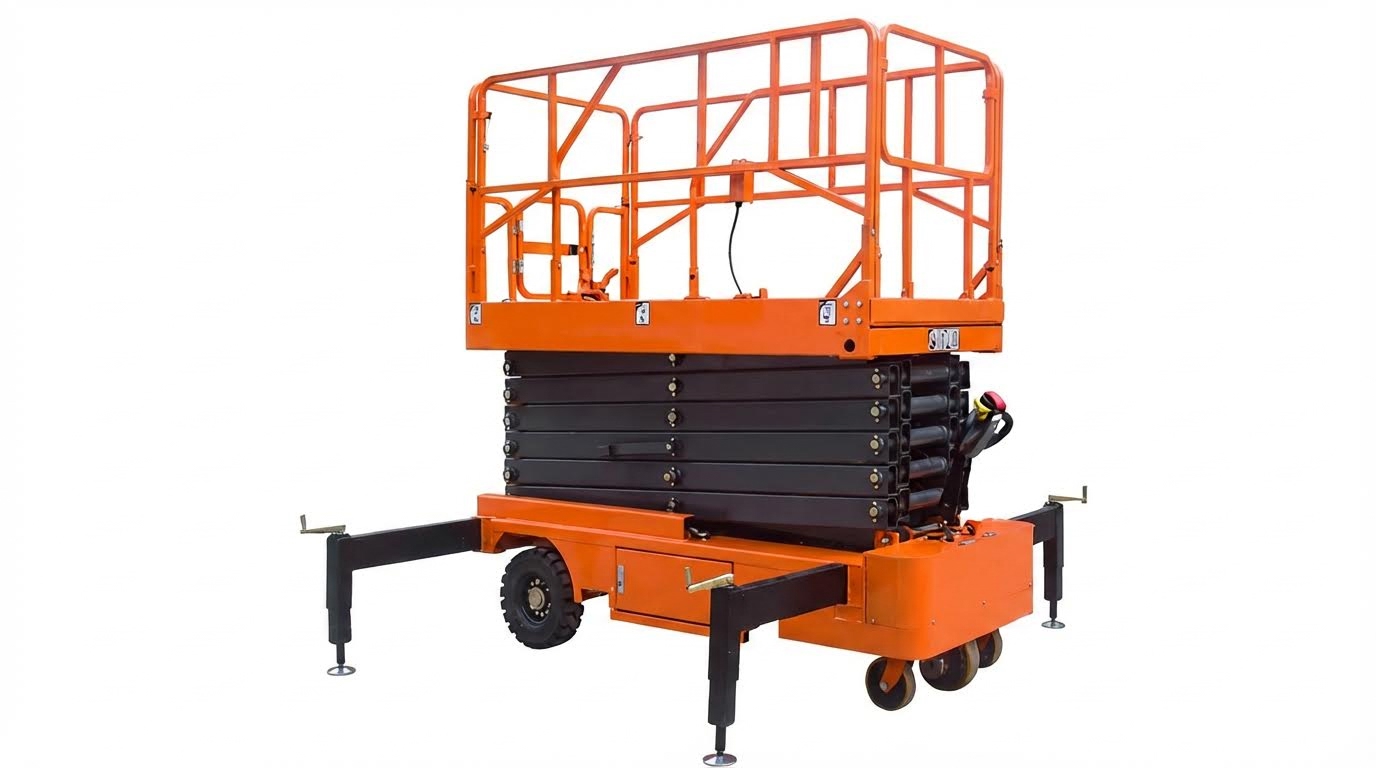
Battery and drive system choices trade runtime and performance against extra weight and higher wheel loads, so you must balance shift length and travel speed needs with what your floor and charging infrastructure can safely handle.
Small electric scissor lifts typically use 24 V battery systems in the 2×12 V / 80 Ah class, giving roughly 4–8 hours of operation per charge. These systems power both the drive and lift functions, with travel speeds up to about 4 km/h when stowed and around 0.8 km/h when elevated. Larger amp‑hour batteries extend runtime but add significant mass to the chassis, increasing the answer to “how much does a small scissor lift weigh” and therefore raising wheel loads.
| Design Choice | Typical Spec / Effect | Operational Impact |
|---|---|---|
| Battery capacity | ≈2×12 V / 80 Ah to 24 V packs; ≈4–8 h runtime per charge for compact units | Higher Ah = longer runtime but more weight and higher wheel loads |
| Drive type | Electric drive with automatic brakes and emergency stop for small lifts | Smooth control indoors; braking adds short‑term dynamic loads during stops |
| Travel speed (stowed) | Up to ≈4 km/h | Faster between work areas; more cycles per shift, but more frequent loading of slabs |
| Travel speed (elevated) | ≈0.8 km/h | Improves safety and stability; reduces dynamic effects while elevated |
| Hydraulic vs. purely electric lifting | Hydraulic cylinders and oil add mass but deliver high power density in small lifts | Heavier but robust; better for frequent lifting and higher capacities |
- Choose runtime to match shifts, not wishes: Size batteries for realistic daily hours – oversizing just adds unnecessary kilograms and floor load.
- Account for charging windows: If you only have short breaks, higher Ah may be justified – but confirm your floor can handle the added mass.
- Consider travel distance: Long routes across a large plant benefit from higher travel speed – yet more run time means more load cycles on the same slabs.
- Check braking and slopes: Automatic brakes and slopes up to about 2° are typical – stopping on a ramp can momentarily spike wheel loads uphill.
- Integrate with energy policy: Electric lifts give quiet, zero local emissions operation – ideal for food, pharma, and office‑adjacent areas, as long as charging is well‑planned.
When to step up to a heavier, higher‑capacity battery pack
Step up in battery size if your lift routinely runs out of charge before the end of a shift, or if you cannot practically schedule mid‑shift charging. However, once you cross from a sub‑1,000 kg machine into the 1,200–1,500 kg class, you should re‑check floor loading, particularly on suspended slabs, mezzanines, and any area with cutouts, trenches, or pits. The extra runtime is only a benefit if your floor can safely carry the extra weight.
💡 Field Engineer’s Note: In many facilities, two smaller, lighter lifts with modest batteries are safer for the floors than one oversized machine with a huge pack that never rests. Distributing traffic often beats concentrating it.
## Final Considerations For Safe Small Lift Use
Safe small scissor lift use depends on matching machine weight and floor capacity, training operators, and enforcing inspection and traffic rules, especially in tight indoor spaces where a single mistake can overload slabs or strike people and racking.
Even after you understand how much does a small scissor platform lift weigh, you still need simple rules so the lift, the slab, and the people around it all stay within safe limits.
- Confirm lift class before use: Know if it is a 40–150 kg manual table, ~360–990 kg compact mini unit, 544–1,588 kg slab lift, or heavier goods lift. This avoids sending an overweight machine onto a marginal floor.
- Lock in a “max weight per zone” rule: Mark which floors or mezzanines can accept which lift classes based on prior engineering checks. This prevents on-the-fly guesses when operators move equipment.
- Account for full live load, not just machine weight: Add rated platform capacity (typically 200–320 kg on small units) to the machine self‑weight in your floor checks. This reflects real worst‑case loads, not empty‑machine values.
- Control travel paths: Define approved lift routes away from slab openings, trenches, and lightly reinforced toppings. This keeps high wheel loads off the weakest parts of the floor.
- Speed and steering discipline: Limit speed around edges, slopes, and mezzanine perimeters, especially when the platform is raised. Lower dynamic loads and better control reduce tipping and impact risks.
- Pre‑use inspections every shift: Check for leaks, damaged wheels, loose guardrails, and faulty emergency stops. Small defects can quickly become major failures when lifting people.
- Respect platform height vs weight: Remember that higher platforms (up to 6.8 m working height) need heavier bases for stability. Never “upsize” height on the same floor without re‑checking structural capacity.
- Battery and runtime awareness: Bigger batteries (for 4–8 hour runtimes) add mass and wheel load. Do not swap to higher‑Ah packs on a borderline slab without an engineer’s review.
- Training on floor signs and limits: Teach operators to read posted floor load signs and internal “lift allowed” labels. This shifts decisions from guesswork to clear rules.
- Emergency procedures in tight spaces: Establish clear rules for evacuation, ground‑level emergency lowering, and exclusion zones below the platform. This reduces injury risk if a component fails at height.
When to call an engineer before using a small scissor lift
Get a structural or mechanical engineer involved when:
- You plan to run lifts on mezzanines, suspended slabs, or floors with unknown design data.
- You upgrade from a 360–650 kg mini lift to a 900–1,500 kg compact slab unit.
- You notice cracking, excessive deflection, or vibration where the lift travels.
- You add heavier batteries or attachments that increase total machine mass.
They can compare wheel loads and contact pressures against the original slab design and, if needed, propose local strengthening options such as topping slabs or steel plates.
💡 Field Engineer’s Note: In many facilities, the first scissor platform lift goes onto a mezzanine “just for a quick job” without checks. That one shortcut has caused more cracked toppings and bent metal deck than any design error. Treat every change in lift weight, height, or route as a trigger to re‑confirm floor capacity before you roll.
Final Considerations For Safe Small Lift Use
Small scissor lifts stay safe when you treat weight, wheel loads, and floor capacity as a single system, not as separate checks. Lift geometry, platform height, and capacity drive machine mass and wheel loads. The slab then either carries those loads with margin, or it cracks, deflects, or punches through. Good engineering closes that gap before work starts.
Operations teams should always begin with real data. Use the manufacturer’s self‑weight, rated capacity, and wheel layout, then calculate loaded wheel loads and contact pressure. Compare those values with known slab thickness, reinforcement, and support. If drawings are missing or the floor shows distress, bring in an engineer before any lift moves.
In practice, the safest approach is to set clear internal limits. Define which lift classes each zone can accept, mark approved routes, and train operators to respect those rules. Avoid quiet “upgrades” to taller or heavier lifts, batteries, or attachments without re‑checking the structure. When in doubt, choose the lightest lift that still meets the job need, or strengthen the floor locally. That simple discipline keeps Atomoving lifts, your slabs, and your people within safe working limits for the long term.
Frequently Asked Questions
How much does a small scissor lift weigh?
Small scissor lifts typically weigh between 1,600 lbs (725 kg) and 2,000 lbs (907 kg), depending on the model and manufacturer. For example, a compact 13-foot scissor lift may weigh approximately 1,950 lbs (885 kg). Scissor Lift Specs.
What factors influence the weight of a small scissor lift?
The weight of a small scissor lift is influenced by several factors, including:
- Platform height and size
- Material used in construction (steel or aluminum)
- Load capacity and stability design
- Additional features like battery type or safety mechanisms
For reference, lighter models are often designed for indoor use, while heavier ones are built for outdoor applications. Scissor Lift Weight Guide.