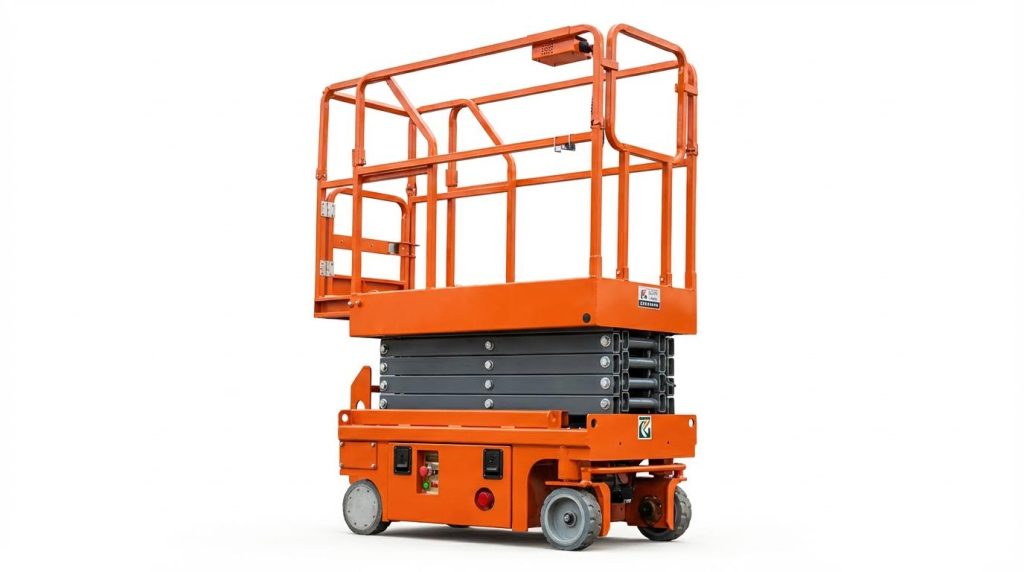
If you are asking yourself “will a scissor lift fit through door openings in my building?”, you are not alone. This guide walks you through standard door sizes, key lift dimensions, and how recent ANSI A92.20 changes affected scissor lift heights and rail designs. You will learn how to measure doors, corridors, and elevators correctly, compare narrow, standard, and towable lifts, and match each type to your building and application. The goal is to help you avoid costly mistakes, lost time at the jobsite, and safety risks by selecting a lift that actually fits where it needs to go.
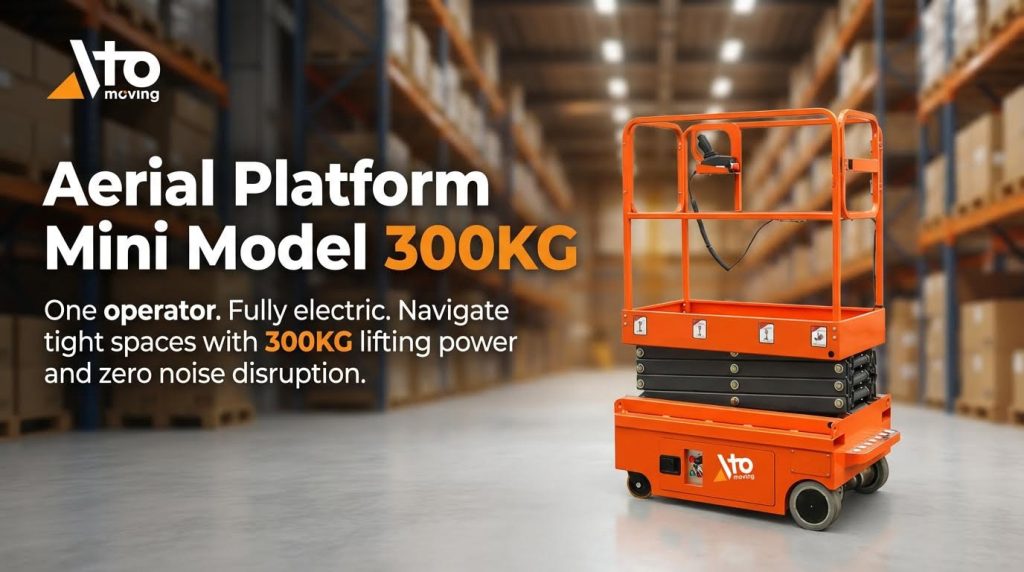
Understanding Doorway Constraints And Lift Basics
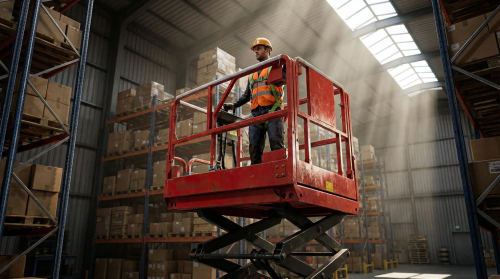
Standard Door Sizes And Key Lift Dimensions
When you ask “will a scissor lift fit through door openings in my building,” you are really comparing two sets of dimensions: the building envelope and the machine envelope. Most commercial and residential swing doors are about 80 inches high and 32 inches wide, which is the baseline many lift manufacturers used when designing compact electric units. Only scissor platform with a stowed height under 80 inches and a width under 32 inches can pass through these doors without changing the opening or folding components. Modern 19‑foot class slab scissors often sit in a band of roughly 69–85 inches stowed height and 30–32 inches overall width, so some will pass cleanly while others will not. Typical 19-foot scissor lift dimensions versus door size
To decide if a given model will a scissor platform lift fit through door clearances on your route, focus on three “must‑check” dimensions: stowed height, overall width, and turning radius. Narrow electric scissors designed for indoor work typically measure about 760–810 mm wide, which allows them to clear standard door leaves and tight aisles. Narrow electric scissor width range Their compact footprint is paired with a turning radius around 1.4–1.8 m, which helps you pivot through corridors and into rooms without repeated three‑point turns. Maneuverability of narrow scissor lifts
Key doorway vs. lift checks
- Door height ≥ lift stowed height (including rails, control box, and any antennas).
- Door width ≥ lift overall width (including tires and any protruding steps).
- Clearance for turning radius in lobbies and corridors.
- Elevator car width, depth, and door height if you must change floors.
| Item | Typical Range | Doorway Impact |
|---|---|---|
| Standard door opening | 80 in H × 32 in W | Baseline limit for most indoor routes |
| Narrow scissor width | 760–810 mm | Designed to pass through standard doors |
| 19 ft scissor stowed height | ≈69–85 in | Taller units may not clear 80 in doors |
How ANSI A92.20 Changed Scissor Lift Heights
The 2020 update to ANSI A92.20 raised the minimum guardrail height requirement on mobile elevating work platforms. Railings now need to be about 43.3 inches high, which pushed the overall stowed height of many slab scissor lifts upward. ANSI A92.20 rail height requirement As a result, some 19‑foot models that once slipped comfortably under an 80‑inch header now sit too tall to roll through without modification. This is why many buyers who had older fleets started asking again: will a scissor platform lift fit through door openings in renovated or code‑compliant buildings.
To balance safety and access, some manufacturers added fold‑down or swing‑down rails on their taller units. Folding the rails can bring the stowed height below a standard 80‑inch doorway, but it adds handling time and introduces the risk of damage if operators rush the process. Field experience showed that it can take up to 10 minutes per door to safely fold and re‑erect the rails on certain 19‑foot scissors, which has a direct impact on productivity when crews pass multiple doors per shift. Folding rail time impact For projects with many rooms and frequent moves, it is often more efficient to choose a model that meets ANSI A92.20 while still staying under common door heights in its fixed, rail‑up configuration.
Practical implications of ANSI A92.20 for doors
- More models now exceed 80 in stowed height because of taller rails.
- Fold‑down rails solve access issues but slow job progress at each doorway.
- Spec sheets should be checked for both “rails up” and “rails folded” heights.
- For repetitive indoor work, prioritize lifts that clear doors with rails up.
Measuring, Clearances, And Model Selection
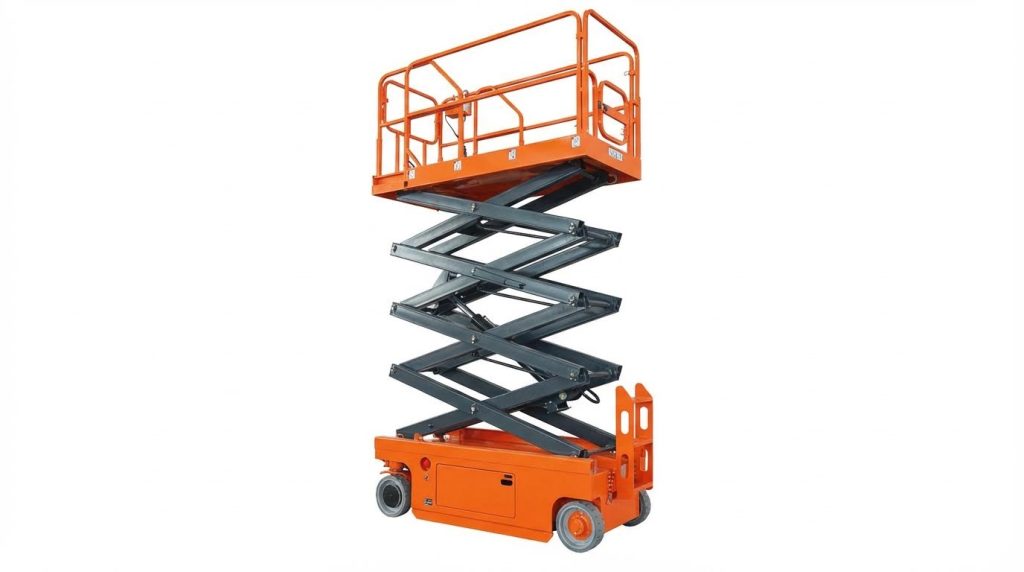
How To Measure Doors, Corridors, And Elevators
Start by measuring every restriction point on the route, not just the first door. This is the only way to answer “will a scissor lift fit through door” with confidence. For each doorway, record clear opening width and height with the door fully open; standard doors are often about 80 inches high and 32 inches wide, but you must verify on site. Compare these to the lift’s stowed width and stowed rail height, because many 19‑foot scissor lifts now stand roughly 69–85 inches tall and 30–32 inches wide in the stowed position and only units under 80 inches high and 32 inches wide will pass through a typical door without modification. Corridors and turns require extra clearance for the chassis and turning radius, so check the narrowest point along walls, columns, and handrails. For elevators, verify car door width and height, interior car length and width, and the elevator’s rated capacity, then compare to the lift’s stowed footprint and total machine weight to ensure both fit and weight limits are respected. Sensitive floors, such as tiled lobbies or mezzanines, may also require a lighter, compact lift because lightweight machines exert lower floor load pressure and are more likely to be acceptable in personnel elevators and on delicate finishes.
Comparing Narrow, Standard, And Towable Scissor Lifts
When you ask “will a scissor lift fit through door,” narrow electric scissor lifts are often the best match for indoor buildings. These compact units typically measure about 760–810 mm wide so they can pass through standard doorways and aisles, and still offer working heights of roughly 5–10 m for common interior tasks such as office or retail maintenance. Standard or wide slab scissor lifts provide much larger platforms, with widths around 46–60 inches and capacities up to about 450 kg for two‑person crews and more materials, but their extra width and weight can prevent them from fitting through internal doors or into elevators. Towable scissor lifts are a different category: they offer capacities from about 300 kg up to 2000 kg and lifting heights up to roughly 18 m and are well suited for yards, docks, and outdoor industrial sites. However, towable units usually rely on outriggers, have larger footprints, and are rarely compatible with tight indoor doorways or corridors, so they are usually chosen for external access work rather than deep interior routes.
Rail Designs, Folding Rails, And Productivity Impact
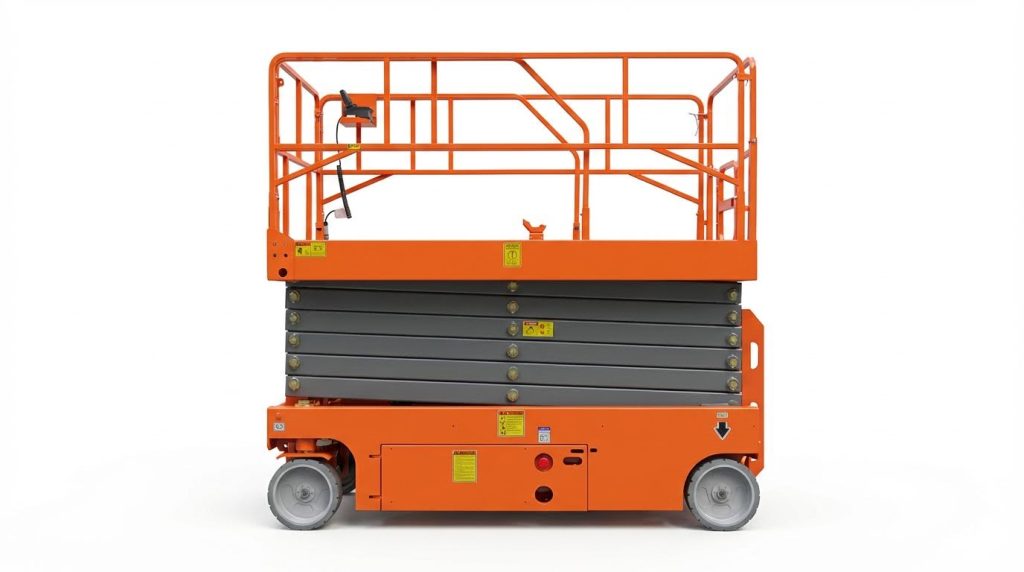
Modern guardrail height rules changed how often a scissor lift will fit through a door. The ANSI A92.20 standard required rail heights of about 43.3 inches, which made many 19‑foot class lifts too tall to clear an 80‑inch doorway unless the rails could fold down even when their platform specifications stayed similar. Some models adopted folding rails to solve this, but folding and re‑securing those rails can take several minutes at each doorway; in some cases, up to about 10 minutes per door which adds significant non‑productive time on multi‑door routes. Every fold/unfold cycle also introduces handling risk: missed pins, damaged hinges, or bent rails can all affect safety and inspection outcomes. Where possible, selecting a model with fixed rails that still has a stowed height under 80 inches eliminates the need for folding at doors and keeps operators moving efficiently. For projects with many doorways or tight time constraints, factoring rail design into model selection is as important as platform height and capacity.
Matching Lift Types To Your Building And Application
When A Scissor Lift Works, And When It Does Not
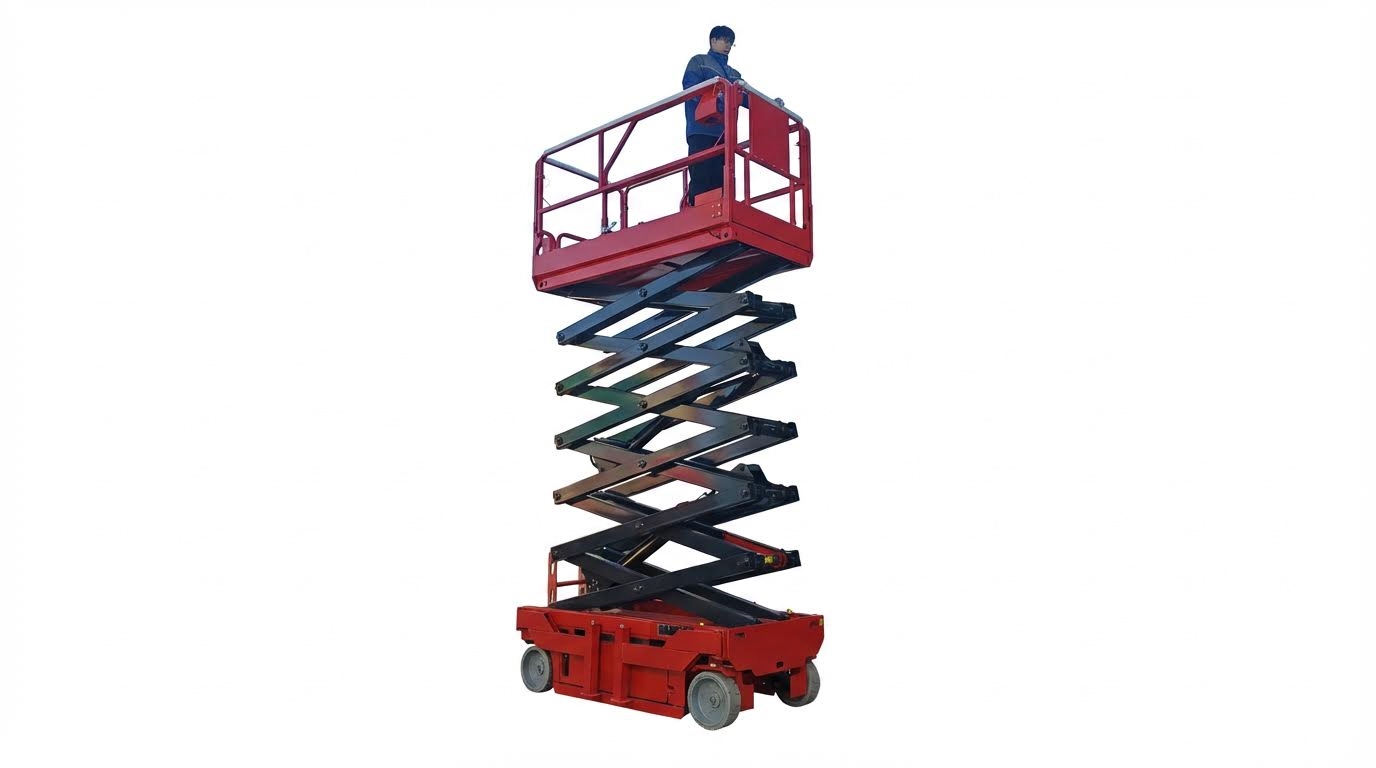
The first filter is simple: will a scissor platform lift fit through door openings, corridors, and elevators on your site. Many 19‑foot units now stand between 69 and 85 inches high and 30 to 32 inches wide in the stowed position, so they only pass standard 80 inch by 32 inch doors if both height and width stay under those limits. Only machines below about 80 inches tall and 32 inches wide move through a standard doorway without folding rails. If repeated door moves are required, every rail‑folding cycle adds handling time and increases the risk of damage to walls or the lift.
A scissor platform is usually the right choice when you need straight‑up access, a relatively large platform, and minimal outreach. For tight interior spaces, narrow electric scissors or compact vertical masts are better suited because they offer small turning radii and reduced widths that pass easily through standard doors and narrow aisles. Compact vertical masts and zero‑turn scissors are often preferred in confined corridors and small rooms. Where the job needs horizontal outreach, access over obstacles, or work above machinery or atriums, boom lifts, spider lifts, or other MEWP types provide safer, more efficient positioning than a scissor.
Typical cases where a scissor lift is not ideal
Scissor lifts are poor matches when you have to reach over production lines, need long horizontal outreach, work on steep or soft ground, or must pass through very tight internal doorways where even narrow units cannot turn or fit safely. In these scenarios, articulated or telescopic booms, tracked spider lifts, or personnel lifts usually provide better access and stability. Different MEWP types are optimized for vertical access, outreach, or ultra‑narrow access routes.
Power Source, Floor Loads, And Indoor Safety Factors
Once you know that a scissor platform lift will physically pass through your doors, match the power source to the environment. Electric scissors and other electric MEWPs run quietly and emit no fumes, so they suit indoor work, occupied buildings, and low‑emission zones. Diesel or rough‑terrain units provide higher duty cycles and better gradeability outdoors, but noise and exhaust usually make them unsuitable inside. Hybrid or bi‑energy machines bridge both worlds, allowing battery operation indoors and engine power outside. Power source choice directly affects where and how safely you can operate.
Floor loading is critical in older buildings, mezzanines, and areas with sensitive finishes. Lightweight electric scissors exert lower floor pressure and are more likely to be accepted on delicate floors or in passenger elevators. Lightweight machines reduce the risk of floor damage and improve elevator compatibility. Where hydraulic oil leaks are a concern, consider all‑electric models or lifts with built‑in fluid containment that can hold the machine’s full hydraulic volume. This protects finished surfaces and reduces cleanup risk if a hose or fitting fails.
Indoor safety also depends on operating envelope, wind rating, and maneuverability. Many scissors carry separate indoor and outdoor ratings, and using a lift outdoors above its rated wind speed, often around 28 mph, increases tip‑over risk. Machines must be used only within their stated wind and surface conditions. Indoors, prioritize units with proportional electric drive, tight turning radii, and compact footprints so operators can maneuver safely around racking, MEP services, and occupants without striking walls or door frames while confirming will a scissor lift fit through door openings along the route.
Final Considerations Before You Commit To A Lift
Before you sign a rental or purchase order, step back and confirm that the lift matches your building, work pattern, and long‑term constraints. The question is not only “will a scissor platform lift fit through door openings,” but also whether it will stay productive and safe over years of use. Use the checklist below to validate your choice.
Confirm Access And Doorway Compatibility
Start by rechecking every pinch point between storage, work area, and loading dock. Standard doors are about 80 inches high and 32 inches wide, so only machines with stowed height under 80 inches and width under 32 inches can pass without modification. Many 19‑foot scissor lifts now sit between 69–85 inches tall and 30–32 inches wide, which makes the margin tight. If you must fold rails at every doorway, factor in several extra minutes per move and the risk of impact damage to the rails or frames. In multi‑door routes, a compact or narrow lift with fixed rails is usually more productive.
Match The Lift To Floors, Wind, And Ground Conditions
Check floor strength, surface type, and slope along the full travel path. Lightweight electric slab lifts put less pressure on sensitive floors and are more likely to meet elevator and mezzanine limits. For rough or uneven ground, you may need a rough‑terrain or towable unit with suitable stability features and gradeability ratings. Always verify that outdoor work is within the machine’s wind rating; operating a unit not rated for winds above typical site conditions increases tip‑over risk. Many lifts have different indoor and outdoor ratings, so choose based on the worst‑case environment, not the average day.
Check Power, Runtime, And Maintenance Downtime
Confirm that the power source fits your shift pattern and building rules. Electric units are preferred indoors for low noise and zero emissions, but you must plan for charging windows; typical batteries support only a few hours of operation before needing a full charge cycle. Battery systems often require around 8 hours to recharge after several hours of work, which matters in multi‑shift facilities. For outdoor or long‑duty cycles, consider whether an internal‑combustion or hybrid MEWP is allowed on site. Ask for a preventive‑maintenance schedule and parts lead times so you understand the real availability of the lift over its life.
Validate Capacity, Safety Features, And Future Needs
Confirm that platform capacity covers the heaviest combination of people, tools, and materials you expect. Load ratings specify both total weight and maximum number of occupants; you must respect both limits to maintain stability. Look for guardrail design, anchor points, and any anti‑entrapment or overload protection that aligns with your safety policies. If you expect your projects to grow in height or crew size, consider whether today’s model will still be suitable in a few years. A structured pre‑purchase review that includes “will a scissor platform fit through door and corridor constraints, and will it stay safe and productive as our work changes” reduces the risk of costly re‑selection later.
Final Considerations Before You Commit To A Lift
Doorway size, lift geometry, and standards like ANSI A92.20 all connect to one goal: safe, repeatable access. If stowed height, width, turning radius, and floor loads do not match your building, every move becomes slow, risky, and expensive. Tight clearances force rail folding, three‑point turns, and elevator workarounds that waste time and increase damage risk.
The most reliable approach is simple but strict. Measure every door, corridor, turn, and elevator. Compare those numbers to the lift’s stowed envelope, weight, and rail options, not just its working height. Favor machines that clear your tightest doorway with rails up and stay within floor and wind ratings for the worst conditions you expect.
Match power source to the environment and shift pattern, and confirm that platform capacity and safety features align with your tasks and policies. When in doubt between two models, choose the one that fits the building more easily, even if the platform is slightly smaller. That lift will move faster, suffer less damage, and keep crews safer over its life.
Use this process on every project, and you turn “will a scissor lift fit through door openings” into a known, managed constraint instead of a costly surprise. Atomoving can support that decision with lift options sized for real buildings, not just spec sheets.
Frequently Asked Questions
Will a scissor lift fit through a door?
Scissor lifts come in different widths, and whether they fit through a door depends on the model. Narrow scissor lifts are designed to fit through standard doorways, typically measuring 32 inches wide. Wide scissor lifts, however, are usually 46 inches wide and will likely require at least a double-door for passage. For more details, check this Electric Scissor Lift Guide.
What scissor lift can fit through a door?
Several 19-foot scissor lift models are narrow enough to fit through standard doorways. These include lifts with widths of 30 to 32 inches. Ensure you measure your doorway and compare it to the equipment specifications before renting or purchasing. For additional insights, refer to this Scissor Lift Comparison Chart.