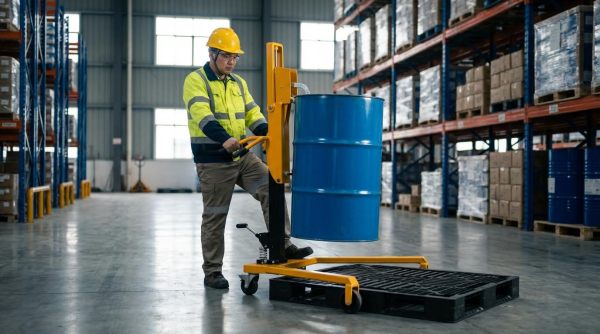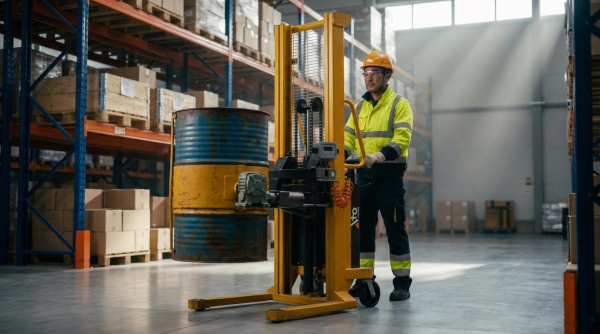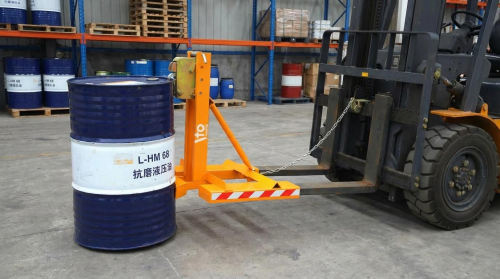
Industrial facilities relied on drum dollies to move heavy 30–55 gallon drums safely, efficiently, and with minimal manual strain. Effective use depended on understanding drum geometries, dolly frame design, ergonomic force limits, and how dollies compared with drum carts and caddies.
Risk engineering around tip-over, pinch points, spills, and hazardous contents required structured procedures, PPE, and alignment with OSHA expectations, increasingly supported by digital JSA tools. At the same time, facilities needed robust selection checklists, disciplined preventive maintenance, and awareness of how AGVs, cobots, sensors, and telematics reshaped drum handling equipment strategies.
Core Functions And Design Of Drum Dollies
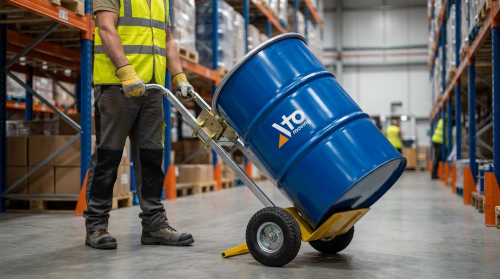
Drum dollies served as fundamental devices for horizontal transport of filled drums on finished floors. Their primary function was to transfer vertical drum loads into rolling support, reducing manual lifting and carrying distances. Typical use cases included moving 30-gallon and 55-gallon drums containing liquids, chemicals, or bulk solids within warehouses, process plants, and loading areas. Design decisions around frame geometry, caster layout, and ergonomics directly affected stability, operator effort, and incident rates.
Drum Types, Capacities, And Load Cases
Industrial drum dollies typically carried 30-gallon or 55-gallon drums made from steel, plastic, or fiber. A fully loaded 55-gallon drum often approached 450 kg, so designers rated dollies for at least 500–600 kg to include safety factors. Load cases included static vertical load, dynamic loads during acceleration, deceleration, and turning, and impact loads when casters crossed joints or small thresholds. Engineers also considered off-center loading when operators pushed high on the drum, which shifted normal forces toward the leading casters and increased tipping moments. For hazardous contents, designs needed to limit spill risk by maintaining drum uprightness under specified floor slope and surface irregularity conditions.
Dolly Frame Geometry, Casters, And Stability
Frame geometry governed how drum weight distributed to the casters and how resistant the system was to tipping. Round drum dollies with continuous circular rings or cross-braced spiders supported the drum chime while minimizing local stress concentrations on plastic or fiber drums. Four-caster configurations with a wide footprint improved static stability but required careful caster selection to avoid shimmy and uneven loading. Casters typically used rubber or polyurethane treads sized to roll over small debris while keeping rolling resistance acceptable on smooth concrete. Engineers evaluated stability using the projected center of gravity relative to the caster polygon, checking worst cases such as pushing at the drum top, crossing shallow ramps, or contacting floor defects.
Ergonomics And Force Requirements For Operators
Ergonomic design focused on keeping push and pull forces within accepted limits from standards and guidance documents. Without auxiliary handles, operators often pushed near the top of the drum, which increased overturning moments and transferred weight to the front casters, raising required force and tipping risk. Accessories such as low-mounted clamp-on handles, like Clamp+Go style devices, allowed users to apply forces closer to the floor and closer to the dolly’s center of mass. This configuration spread load more evenly across all four wheels and reduced starting and rolling forces. Designers also aimed to minimize initial breakaway force by selecting low-friction bearings and appropriate wheel diameters, while limiting required steering effort through swivel caster placement and toe-in control.
Comparing Dollies, Drum Carts, And Caddies
Drum dollies primarily provided low-profile rolling bases for drums that remained upright during short-distance moves on level floors. In contrast, drum carts or caddies incorporated frames, handles, and often tilt mechanisms that allowed an operator to tip and transport a drum with greater control across mixed surfaces. Drum carts typically used larger-diameter wheels with rubber or polyurethane treads and sometimes featured adjustable cradles, clamps, or straps to secure the drum for longer moves or mild ramps. Dollies offered superior maneuverability in tight spaces and under pallets but relied heavily on correct operator technique to avoid tip-over, especially when pushed high. Facilities often used a combination: dollies for in-aisle repositioning and drum handlers or caddies for transfers between areas, where enhanced retention and stability justified the larger footprint and higher capital cost.
Safety Engineering, Risk Controls, And Compliance
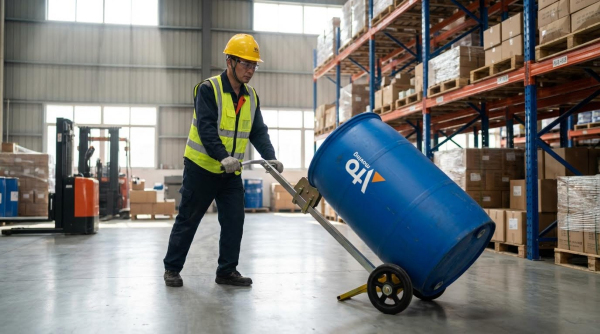
Safety engineering for drum dollies required a structured view of mechanical hazards, human factors, and regulatory obligations. Industrial facilities handled 30–55 gallon drums that could weigh up to 450 kg, so uncontrolled motion created high kinetic energy and severe injury potential. Effective risk control combined engineered features on dollies and carts, procedural safeguards, and continuous training and documentation. This section focused on how facilities analyzed, controlled, and documented risks to align with OSHA expectations and internal EHS standards.
Tip-Over, Pinch-Point, And Spill Risk Analysis
Risk analysis started with identifying dominant failure modes: tip-over, finger and hand pinch, and loss of containment. A drum on a dolly shifted its center of gravity above the caster plane, so pushing high on the drum wall transferred load to the front casters and increased overturning moment, especially at floor transitions or slopes. Engineers evaluated stability using basic statics: drum mass, dolly track width, caster offset, and floor friction to estimate tipping thresholds and stopping distances. Pinch points occurred between drum and door frames, racks, or adjacent drums; analysis mapped operator hand positions during typical moves and loading sequences. Spill risk depended on drum closure integrity, contents properties, and impact scenarios; HAZOP-style reviews considered worst cases such as a 1 000 kg drum striking a floor obstruction and breaching. Controls followed the hierarchy: wider wheelbase and low-pull handles for stability, guarded pinch zones, and secondary containment or drip pans in high-consequence areas.
Safe Handling Procedures And Operator Training
Safe handling procedures translated risk analysis into repeatable field behaviors. Standard practice required pushing or pulling from the lower third of the drum or from a purpose-designed low handle, which kept vertical force application close to the caster plane and reduced tip-over risk. Written procedures defined the loading sequence: verify drum closure, inspect dolly and casters, ensure a clear, level route, position the dolly at the drum base, engage any locking or clamping mechanism, then move at a controlled walking speed. Operators learned to avoid sudden direction changes, diagonal travel on ramps, and traversing over hoses, thresholds, or floor drains with an elevated center of gravity. Training programs covered device-specific features such as clamp-on handles, drum locks, and brakes, and included hands-on practice with typical load weights and route constraints. Refresher training and observation-based coaching helped correct drift from procedures, especially in high-throughput warehouses where time pressure tempted shortcuts.
PPE, Hazardous Contents, And Fire Protection
PPE selection depended on drum contents and foreseeable exposure modes rather than the handling device alone. When drums contained corrosives, flammable liquids, or toxic chemicals, facilities specified chemical-resistant gloves, safety goggles or face shields, and safety footwear with toe protection as a baseline. Additional PPE such as aprons or respirators followed the site’s hazard communication and exposure assessment. Workers needed clear labeling and Safety Data Sheet access so they understood whether a drum contained flammable, oxidizing, or water-reactive material. Fire protection engineering looked at both spill ignition and fire growth: storage and handling zones required compliant sprinkler coverage, appropriate fire ratings, and segregation of incompatible materials. Secondary containment, spill kits, and non-sparking tools reduced escalation if a drum leaked or toppled during dolly transport. Procedures required keeping egress routes clear of parked dollies and drums to maintain evacuation capacity during a fire event.
JSAs, Digital Safety Tools, And OSHA Alignment
Job Safety Analyses structured how facilities documented drum-moving tasks and aligned them with OSHA’s general duty and materials handling requirements. A JSA for “moving drums by dolly” broke the task into steps, identified hazards such as tripping, finger pinch, back strain, or chemical exposure, and defined specific controls for each step. Digital tools, including mobile JSA applications, enabled supervisors to capture photos of actual routes, record near-misses, and issue corrective actions, all stored as searchable PDFs. Integration with platforms such as document management or EHS systems supported version control, training sign-offs, and audit trails. This documentation helped demonstrate that the employer had evaluated risks, implemented controls, and trained staff, which supported compliance during OSHA or insurer inspections. Periodic review of JSAs, incident data, and equipment inspection reports allowed continuous improvement of dolly selection, route design, and training content.
Selection, Maintenance, And Emerging Technologies
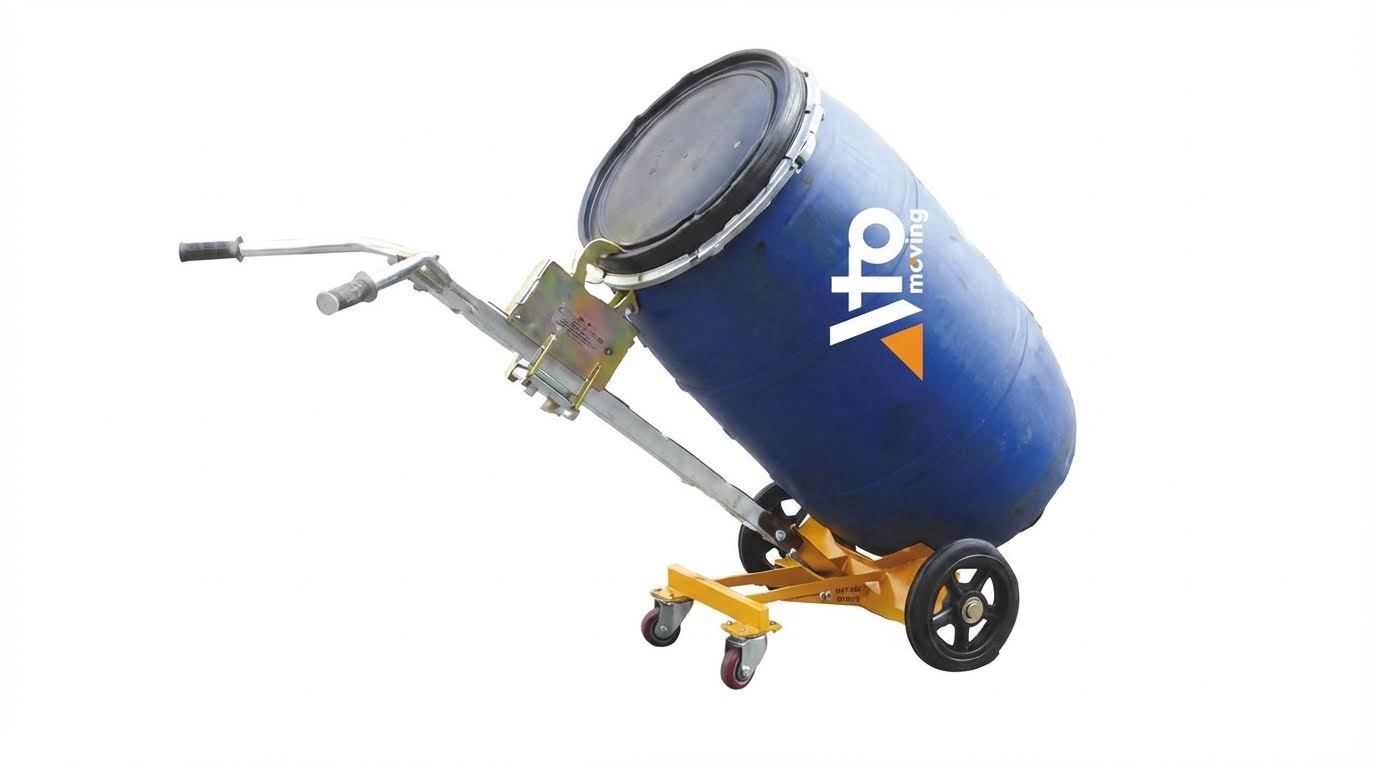
Selection, maintenance, and technology integration determined the lifecycle cost and safety performance of drum dollies and carts. Engineers needed to match equipment specifications to drum mass, contents, and floor conditions, then sustain that performance through structured preventive maintenance. Recent advances in automation, sensing, and connectivity started to link simple mechanical dollies with AGVs, cobots, and digital safety systems. This section examined how to specify, maintain, and progressively digitize drum handling assets in industrial facilities.
Key Selection Criteria And Specification Checklist
Selection started with drum characteristics: volume (typically 114 L or 208 L), material (steel, plastic, fiber), and filled mass. A fully loaded 208 L drum often approached 450 kg, so the rated capacity of the dolly or cart needed at least a 25% safety margin. Engineers evaluated frame material and construction, usually welded steel, against expected impact loads, corrosion exposure, and cleaning chemicals. Wheel and caster specification depended on floor type: hard rubber or polyurethane casters with sealed bearings performed well on smooth concrete, while larger diameters improved traversal of joints or minor defects.
Stability criteria included wheelbase width, caster layout, and drum support geometry to resist tipping during acceleration, deceleration, and turning. For drum carts and caddies, adjustable cradles, clamps, or straps had to match drum diameter and prevent axial or radial movement, especially with hazardous liquids. Handle position and optional low-mounted pulling devices, such as clamp-on dolly handles, reduced overturning moments and improved control on level floors. The checklist also covered compatibility with ancillary tools, such as forklift pockets, AGV tow hooks, and dock levelers, plus compliance with internal standards and OSHA-related material handling guidance.
Procurement specifications documented rated capacity in kilograms, drum size range, wheel material and diameter, frame coating, and environmental limits. They also defined required test certifications, such as proof-load testing or weld inspection records, and any electrostatic discharge or spark-resistance requirements in flammable-liquid areas. Finally, buyers considered lifecycle factors: availability of spare casters and fasteners, ease of field repair, and options for future retrofits with sensors or tow interfaces.
Preventive Maintenance Of Dollies And Drum Carts
Preventive maintenance programs treated drum dollies and carts as safety-critical devices rather than consumables. Daily or pre-use checks focused on wheels and casters, looking for flat spots, excessive wear, debris entrapment, or loose fasteners that could increase push forces or cause sudden stops. Operators inspected frames, welds, and handles for deformation or cracking that indicated overload or impact damage. Retention systems, including cradles, clamps, and straps, required verification for integrity, correct adjustment, and positive locking.
Weekly tasks typically included cleaning with mild detergents and thorough drying to limit corrosion, followed by lubrication of caster bearings, swivel joints, and hinges according to manufacturer guidance. Facilities scheduled monthly inspections to tighten bolts and nuts, check any hydraulic or mechanical assist features on advanced carts, and confirm that rated capacity labels remained legible. Annual maintenance often involved more formal inspections, non-destructive testing of critical welds on heavily used units, and planned replacement of worn casters or straps.
Maintenance personnel documented defects and corrective actions in a centralized system, aligning with regulatory expectations for equipment records. Integration with Job Safety Analysis tools allowed linking recurring issues, such as frequent caster failures, to specific tasks or floor areas. Training emphasized lockout or isolation of damaged equipment so operators could not continue using compromised dollies. A structured preventive maintenance regime reduced incidents such as tip-overs, finger injuries, and back strain, while also lowering unplanned downtime and replacement costs.
Integration With AGVs, Cobots, And Digital Twins
As intralogistics automation expanded, facilities increasingly interfaced drum dollies and carts with automated guided vehicles and collaborative robots. Mechanical integration started with standardized tow points or hitch geometries that allowed AGVs to pull loaded dollies while maintaining even weight distribution across casters. Engineers designed low tow heights to minimize tipping risk and ensured sufficient clearance for AGV sensors and bumpers. For cobots, integration often used end-effectors that engaged handles or custom brackets, allowing the robot to push or guide carts at controlled speeds.
Digital twins of material handling flows modeled drum movements, queue times, and congestion using accurate representations of dolly dynamics and floor friction. These models required realistic acceleration limits, turning radii, and stability constraints to avoid unsafe routing in tight aisles or on slopes. Simulation outputs helped determine where manual handling remained necessary and where AGV or cobot assistance delivered value. They also supported evaluation
Summary And Strategic Takeaways For Facilities
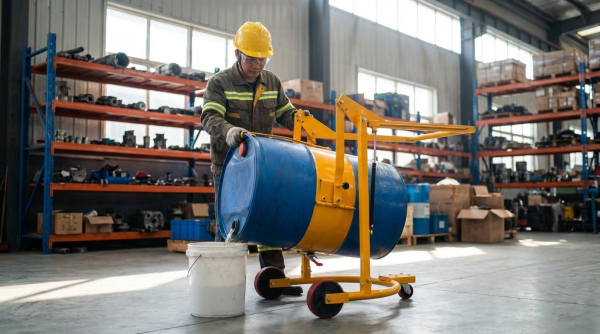
Drum dollies, drum carts, and related handling tools played a central role in reducing manual handling risk and improving material flow in industrial facilities. Their performance and safety depended on matching design parameters such as frame geometry, caster selection, and rated capacity to actual drum types, floor conditions, and load cases. Effective safety engineering required structured control of tip-over, pinch-point, and spill hazards through procedures, PPE, and alignment with regulatory expectations. Digital tools such as JSAs and mobile safety apps supported documentation, training, and continuous improvement.
For facilities, the primary strategic takeaway was that drum handling equipment selection should follow a formal specification process rather than ad‑hoc purchasing. Engineers needed to define drum sizes, maximum filled mass, floor gradients, and route characteristics, then select dollies or carts with adequate capacity, stable wheelbase, and appropriate wheel materials. Preventive maintenance plans, similar in rigor to those used for drum rollers and cylinder carts, helped avoid caster failures, structural cracks, and brake malfunctions that could trigger incidents. Integration with AGVs, cobots, and digital twins created opportunities for higher automation, but also required clear interface standards and updated risk assessments.
Looking ahead, facilities could expect wider adoption of sensors, telematics, and predictive maintenance even on relatively simple handling assets such as dollies and carts. Load, tilt, and usage sensors enabled early detection of overloads, misoperation, or deteriorating components, while connected maintenance platforms supported data-driven inspection intervals. A balanced strategy combined robust mechanical design, disciplined maintenance, and targeted digitalization, rather than relying solely on new technology. Facilities that treated drum handling as a system—equipment, people, procedures, and data—were best positioned to improve safety metrics, maintain compliance, and sustain high throughput with lower life-cycle cost.