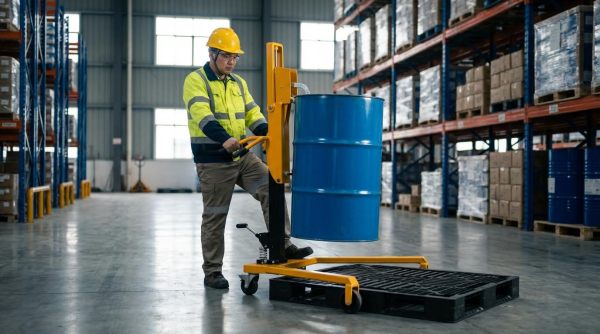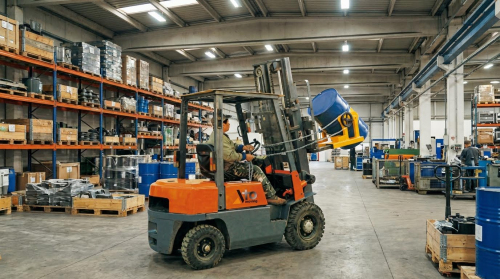
Forklift drum handling allowed plants to move heavy, hazardous, or high-throughput drums more safely and efficiently than manual methods. This article examined when forklifts were the right choice versus pallet or manual handling, and how typical plant scenarios shaped that decision. It then compared key attachment types, from universal beak and strap heads to fully powered hydraulic systems, across steel, plastic, and mixed drum fleets. Finally, it presented engineering criteria for selecting attachments and concluded with a structured approach to choosing safe, efficient drum handling strategies.
When Forklift Drum Handling Is The Right Choice
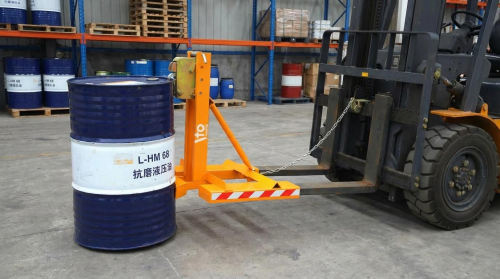
When should a forklift be used to handle drums depends on load, distance, and risk. Forklift drum handling becomes the right choice once manual or pallet-based methods create unacceptable safety, ergonomic, or throughput constraints. Engineers and safety managers should evaluate drum mass, contents, travel paths, and stacking requirements before defining the handling strategy. The goal is to match attachment type and forklift capability to drum geometry and plant workflow while maintaining regulatory compliance.
Typical Drum Handling Scenarios In Plants
Forklift drum handling fits best in repetitive, medium-to-high volume flows between receiving, storage, and process lines. Typical scenarios include unloading 200 L steel or plastic drums from trucks, transferring them to bulk storage rows, and feeding batching or mixing stations. In these cases, using dedicated drum attachments reduces manual rolling and tipping, which historically caused crush and strain injuries. Forklift drum clamps or beak-and-strap attachments also support movements in hazardous material areas where spills and exposure must be minimized. Engineers should specify forklifts when drums require vertical lifting, controlled placement on racks, or stacking beyond what pallet jacks or dollies can safely achieve. Plants that run mixed fleets of steel, plastic, and fiber drums also benefit from universal attachments that adapt to different diameters and rim geometries.
When Forklifts Beat Manual And Pallet Methods
Forklifts outperform manual and pallet-based methods once drum weights approach or exceed typical ergonomic limits, usually above 25 kg per person. A single 200 L drum frequently weighs 200–400 kg loaded, which makes manual rolling or tilting a high-risk method. Forklifts with purpose-built drum attachments keep the center of gravity low and controlled, allowing smooth acceleration, deceleration, and turning. Compared with pallet transport, forklifts handle drums directly, eliminating the extra steps of pallet inspection, shrink-wrapping, and banding. Attachments that grip the drum body or rim also allow secure handling of individual drums in congested aisles where full pallets do not fit. When engineers target higher throughput, forklifts enable multi-drum handling, controlled stacking heights, and integration with racking, which pallet jacks and dollies cannot match safely.
Limits Of Forklifts For Drum Handling Tasks
Forklifts are not always the correct answer for drum handling, even when they are available. Narrow, highly congested areas or mezzanines with limited floor loading may favor drum dollies or compact stackers instead. Forklifts also introduce risk when operators lack specific drum-handling training, especially for hazardous chemical contents or uneven ground. If the attachment does not match drum type, size, or rim configuration, grip reliability decreases and spill risk rises sharply. Engineers must respect rated capacities for both truck and attachment; exceeding these limits compromises stability, particularly during mast tilt or when traveling on slopes. In very short shuttles over smooth floors, non-powered drum movers can be more economical and easier to control. Therefore, when should a forklift be used to handle drums should remain a deliberate engineering and safety decision, not a default habit. Additionally, specialized equipment like a forklift drum grabber can enhance efficiency in specific scenarios.
Key Drum Attachment Types And Use Cases
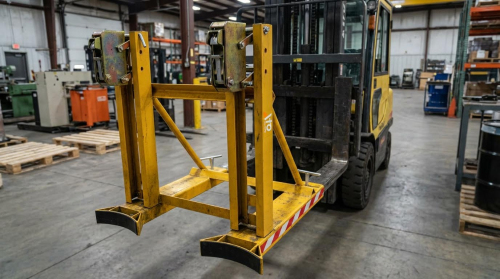
Forklift drum attachments determine when should a forklift be used to handle drums versus pallet jacks or manual gear. Each attachment style targets specific drum materials, diameters, and handling tasks such as transport, tilting, or dumping. Matching attachment capability to drum type, weight, and workflow reduces spill risk and improves throughput. The following subsections compare major attachment families and show where each delivers the best engineering fit.
Beak And Strap Style Universal Attachments
Beak and strap universal attachments suit operations that handle mixed drum inventories with frequent changeovers. The beak style engages the lipped rim of a drum, provided the rim sits at least 610 mm above the floor. This design works well when should a forklift be used to handle drums that are steel or have a robust chime, and when operators mainly pick drums from the ground or low pallets. Strap style units use dual ratchet straps around the drum body for diameters roughly 356–610 mm, including cylinders. These attachments fit plants that move both drums and gas cylinders without investing in multiple dedicated tools. Beak and strap systems typically rely on mechanical self-locking features, so they require no external power and suit standard counterbalance forklifts.
Steel Drum Attachments: Economy To Deluxe
Steel drum attachments focus on common 30 and 55 gallon steel drums and prioritize secure jaw engagement on the drum wall. Economy models often target 208 liter drums only and support around 360 kg, which fits low to moderate duty cycles and non-critical products. Industrial versions handle both 114 and 208 liter drums, with steel jaws and higher structural robustness for intensive shifts. Deluxe steel attachments add adjustable guides for diameters about 457–711 mm and rubber-lined jaws with capacities near 680 kg. These features protect drum surfaces and improve centering, which matters when should a forklift drum grabber be used to handle drums containing hazardous liquids that must not deform or slip. Plants choose between economy and deluxe based on spill consequences, daily move counts, and drum mix.
Plastic Drum Attachments And Mixed Fleets
Plastic drums deform more easily than steel, so they require attachments that distribute clamping forces and avoid sharp jaw edges. Dedicated plastic drum attachments usually include quick-adjust jaws and fork pocket width changes, covering diameters about 457–711 mm with capacities near 450 kg. These units excel when should a forklift be used to handle drums made of high-density polyethylene, especially for chemicals or food ingredients where surface damage is unacceptable. In mixed fleets that run both steel and plastic drums, universal or deluxe plastic-compatible jaws reduce changeover time and attachment inventory. Engineers should verify jaw lining materials, clamping range, and rated capacity for the lightest and heaviest drum types in the fleet. This ensures consistent grip performance across variable wall thicknesses and fill levels.
Fully Powered Hydraulic Drum Attachments
Fully powered hydraulic drum attachments support advanced functions such as lift, tilt, rotation, dumping, and precise placement from the forklift seat. These systems usually cover 18–28 inch (about 457–711 mm) drum diameters and capacities up to roughly 900 kg. They use hydraulic-actuated jaws with adjustable pressure and variable speed, which allows operators to tune clamping force for steel, plastic, or fiber drums. Facilities adopt these attachments when should a forklift drum grabber double grips be used to handle drums in high-risk or high-throughput processes, such as dosing reactors, feeding mixers, or dumping into elevated hoppers. Keeping operators seated reduces exposure to spills and pinch points while speeding cycle times. However, powered attachments demand compatible hydraulic circuits, more rigorous maintenance, and formal operator training on pressure settings and motion control.
Engineering Criteria For Selecting Attachments
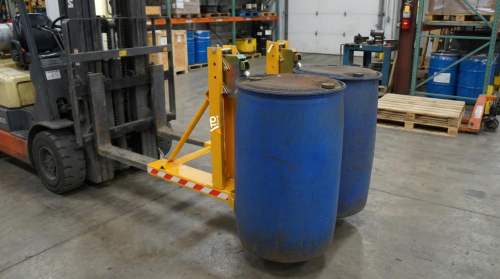
Engineering teams should define clear criteria before deciding when should a forklift be used to handle drums and which attachment to specify. The right choice depends on drum geometry, weight, contents, workflow, and risk profile. This section explains how to translate those factors into technical requirements for drum attachments, so procurement and safety teams can make defensible decisions.
Drum Types, Sizes, And Load Capacities
Engineers should first map the drum population handled on site. Record material (steel, plastic, fiber), nominal volume, and typical fill mass. Forklift drum attachments in the market historically covered diameters from roughly 14 millimetres to 710 millimetres and capacities from 360 kilograms to about 900 kilograms per drum. Universal beak style attachments required a lipped rim and a minimum rim height of about 610 millimetres from the floor. Strap style attachments instead referenced drum or cylinder diameter, typically between 360 millimetres and 610 millimetres. When deciding when should a forklift be used to handle drums, engineers should compare drum weight plus dynamic factors to the attachment rating and the residual capacity of the truck at the actual load centre. Fully powered hydraulic attachments reached up to roughly 900 kilograms per drum and supported lift, tilt, and rotation, which suited viscous or hazardous contents that required controlled pouring.
Safety, Compliance, And Operator Training
Safety requirements usually drove the decision to move from manual or pallet-based handling to forklifts. Forklifts reduced musculoskeletal injuries from rolling or tipping drums but introduced collision and tip-over risks. Regulations in most regions required that powered industrial truck operators receive formal training, evaluation, and periodic refreshers, with specific instruction for drum handling tasks and emergency procedures. Attachments had to match or exceed the drum mass, include secure gripping mechanisms, and remain compatible with the truck’s rated capacity plate. Beak, jaw, or clamp systems needed positive locking to prevent release during travel or tilt. Facilities handling hazardous chemicals also needed spill response plans, compatible personal protective equipment, and containment systems sized for the largest drum volume. Engineers should specify that operators keep drums low to the ground during travel, use smooth acceleration, and avoid tight turns with elevated loads.
Workflow Efficiency And Space Constraints
Deciding when should a forklift be used to handle drums also depended on layout and throughput. Forklift drum clamps significantly increased handling speed for repetitive moves between filling lines, staging zones, and storage racks. In high-density warehouses, attachments that gripped a single drum offered precise positioning in tight aisles, while dual-drum clamps improved productivity in wider aisles but required more clearance. Fully powered hydraulic attachments allowed lift, rotation, and dumping without the operator leaving the seat, which reduced cycle time for mixing, dosing, or waste decanting operations. Engineers should evaluate turning radii, rack opening widths, and floor gradients to ensure that the selected attachment and truck combination could manoeuvre without striking drums or structures. Where space was extremely constrained, alternative methods such as drum palletizers or stackers might handle vertical moves, with forklifts limited to pallet transport outside the congested area.
Lifecycle Costs, Maintenance, And Upgrades
Lifecycle analysis helped justify when a forklift-based drum system was preferable to manual or pallet methods. Basic mechanical beak or strap attachments had low initial cost and minimal maintenance, mainly inspection of pivots, beaks, and straps for wear or deformation. Steel jaw and deluxe plastic drum attachments cost more but offered higher capacities, adjustable guides, and rubber or polyurethane contact surfaces that reduced drum damage. Fully powered hydraulic attachments introduced hoses, cylinders, and valves that required scheduled inspection and periodic seal replacement. Engineers should factor attachment weight into forklift maintenance because heavier front-end equipment increased tyre and mast wear. Planned upgrades might include adding rotation capability, increasing capacity, or standardising on attachments that handled steel, plastic, and fiber drums in one design. A structured maintenance plan with pre-use checks, documented inspections, and timely component replacement preserved safety margins and extended attachment service life. Additionally, facilities may consider integrating forklift drum attachments to enhance versatility across various drum types.
Summary: Choosing Safe, Efficient Drum Handling
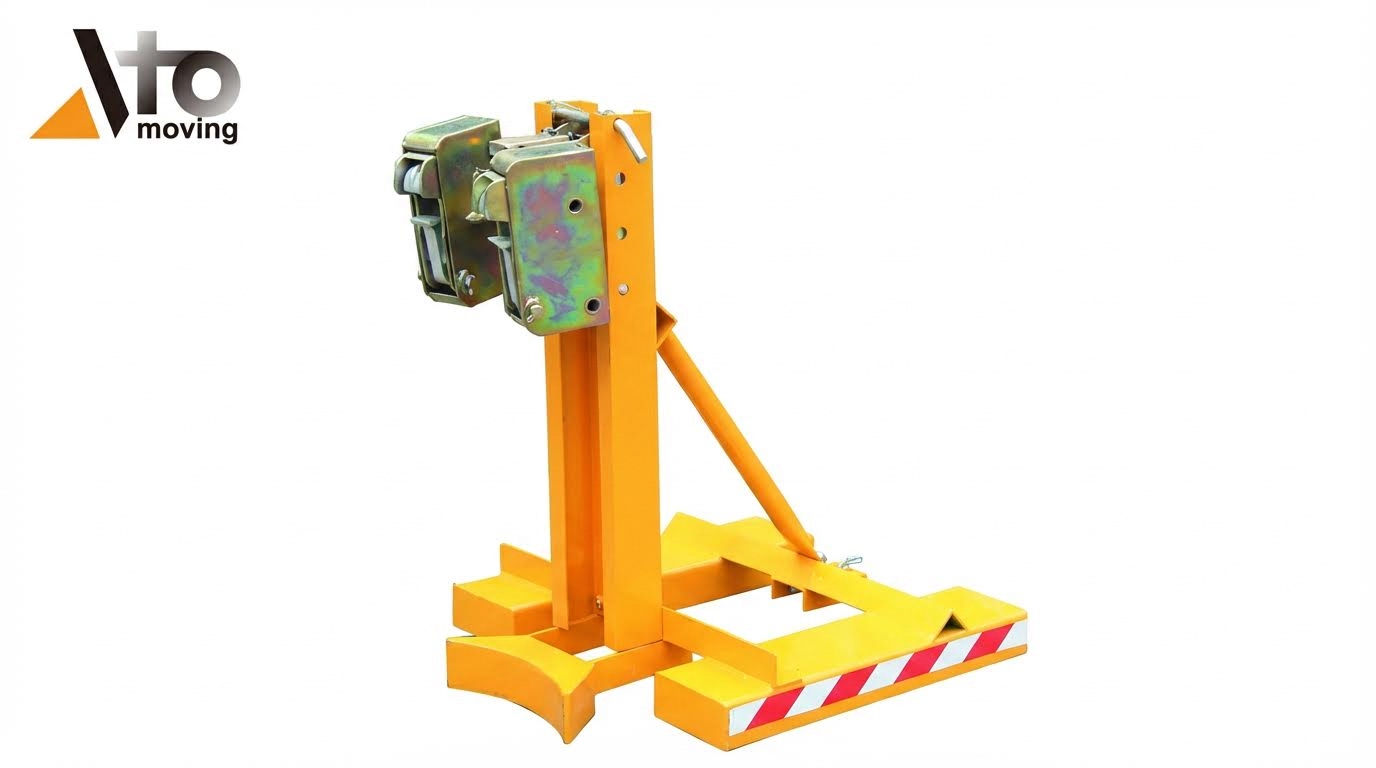
Forklift drum handling worked best when loads exceeded safe manual limits, when drums contained hazardous materials, or when workflows required repetitive stacking, staging, or high-bay storage. The central question, “when should a forklift be used to handle drums,” depended on weight, frequency, travel distance, and risk profile. Forklift drum attachments allowed controlled lifting, rotation, and transport of drums while reducing manual handling injuries and spill incidents. Correct attachment selection and disciplined operating practices determined whether drum handling stayed both productive and compliant.
From an engineering view, users first defined drum types, diameters, and mass, then matched them to attachment capacities and grip geometry. Beak, strap, steel, plastic, and fully powered hydraulic attachments each covered specific use envelopes, from simple 55-gallon steel drum moves up to 2,000 kg-class hydraulic systems handling mixed fleets and intensive tilt or dump cycles. Facilities needed to validate that attachment ratings exceeded drum weight, that fork pockets suited the truck carriage, and that the overall center of gravity remained within the forklift stability triangle.
Safety and regulations required trained operators, suitable personal protective equipment, and validated procedures for hazardous contents. Plants that used forklifts to handle drums had to manage traffic routes, lighting, and floor conditions, and avoid outdated rolling or pushing methods. Over the lifecycle, the lowest total cost solution came from pairing appropriate attachment complexity with actual duty cycles, then supporting it with preventive maintenance of both truck and attachment. As automation and sensor technologies evolved, future drum handling solutions would likely integrate smarter clamps, better spill prevention, and data-driven maintenance, while forklifts and attachments remained the core mechanical platform for high-throughput drum operations.