Safe, efficient palletization of 55-gallon drums depends on matching drum geometry, pallet size, and load ratings with proven patterns, dunnage, and securing methods. This article explains the key drum and pallet dimensions, typical 2×2 layouts, and stacking strategies that control gaps and center of gravity for stable unit loads. You will also see how to combine wood, foam, paper, airbags, strapping, and stretch wrap into a complete securing system, from manual pallet jack handling through forklift barrel grabber operations. By the end, you will have a structured, engineering-based approach for how to palletize 55 gallon drums that meets safety and regulatory expectations while supporting high-throughput warehouse and plant logistics.
Drum And Pallet Basics For Stable Unit Loads
This section explains the geometric and structural basics that control how to palletize 55 gallon drums safely. It links drum dimensions, pallet footprints, and floor ratings to stable unit-load design. It also outlines the main regulatory and safety factors that influence compliant drum palletization in industrial facilities.
Key Dimensions Of 55-Gallon Drums
A standard 55-gallon steel drum typically had a diameter of about 572 mm and a height of about 851 mm. This cylindrical geometry drove how to palletize 55 gallon drums without excessive overhang or unsafe gaps. The circular footprint created point and line contacts on rectangular pallets, so engineers evaluated contact stresses and friction coefficients. Nominal capacity was 208 L, but fill level, product density, and headspace determined actual mass and center-of-gravity height. When planning pallet patterns, users confirmed each drum’s outside diameter including chime, since even 5–10 mm differences affected fit on 1 219 mm by 1 016 mm pallets. Tolerances on roundness and denting also influenced how tightly drums nested and how much dunnage was required to prevent rocking.
Common Pallet Sizes And Load Footprints
In North America, the workhorse pallet size measured 1 219 mm by 1 016 mm. On this pallet, a 2×2 pattern of four 55-gallon drums fit with limited edge clearance, which was a standard answer to how to palletize 55 gallon drums for general freight. In Europe and much of Asia, ISO pallets around 1 000 mm by 1 200 mm carried similar 2×2 layouts, but orientation changed to keep overhang within site standards, often below 25 mm. Engineers checked top-deck board spacing, since guidelines required gaps below about 20 mm for drum bases to remain fully supported. For export or automated systems, block pallets with full-perimeter bases reduced point loading and improved compatibility with conveyors and turntables. Facilities also defined maximum pallet footprint envelopes for trailers and containers, so planners validated that drum overhang did not exceed these transport constraints.
Allowable Loads And Floor Load Ratings
Each palletized set of four 55-gallon drums could weigh over 800 kg depending on product density. Users therefore verified pallet rated capacity under uniformly distributed load and under concentrated drum contact. For wood pallets, engineers considered stringer or block design, deck board thickness, nail patterns, and moisture content when validating safe working loads. Warehouse slab design loads, typically expressed in kN/m², governed how many drum pallets could be stored per bay and whether stacking was allowed. Racking introduced additional limits, because point loading on front and rear beams differed from floor loading; drum pallets often required full-depth support or wire decking. When calculating allowable stacking heights, practitioners combined pallet and drum mass, dynamic factors from handling equipment, and safety factors from applicable standards. This ensured that compression stresses remained below drum buckling limits and pallet crush resistance.
Regulatory And Safety Compliance Factors
Regulations for hazardous materials and industrial packaging strongly influenced how to palletize 55 gallon drums. Where drums contained dangerous goods, users followed relevant transport codes and packaging instructions that specified approved pallets, maximum stack heights, and securing methods such as minimum two straps per pallet. Occupational safety rules required adequate personal protective equipment, including gloves and eye protection during banding and stretch wrapping. Facilities also implemented traffic management plans so walkie pallet truck approached drum pallets squarely, reducing impact loads on chimes and pallets. Fire codes affected storage height, aisle spacing, and segregation of incompatible materials, especially for flammable or corrosive contents. International shipments needed compliance with wood packaging rules for pallets and dunnage, including heat treatment and marking. Documented procedures, operator training, and regular inspections of pallets and drums closed the loop between regulatory text and day-to-day palletizing practice.
Proven Palletizing Patterns For 55-Gallon Drums
This section explains how to palletize 55 gallon drums using stable, repeatable patterns. It focuses on layout geometry, stacking methods, gap control, and interfaces with manual, forklift, and cobot handling. Engineers and operators can use these guidelines to design safe, efficient unit loads that comply with typical plant and carrier constraints.
2×2 Drum Layouts On 48×40 And ISO Pallets
A 2×2 layout was the standard answer for how to palletize 55 gallon drums on both 48×40 and ISO pallets. A typical 55-gallon drum had a diameter near 572 millimetres and a height near 851 millimetres. On a 48×40 pallet, operators placed two drums along the 1 219 millimetre length and two along the 1 016 millimetre width. The drum footprint slightly overhung the deck in one or two directions, so plants controlled this with tight positioning and strapping. On 1 000×1 200 millimetre ISO pallets, the 2×2 pattern fit with reduced overhang along the 1 200 millimetre side. Facilities kept plank gaps below 20 millimetres to avoid point loading under the drum chimes. For hazardous or high-value product, operators added cardboard trays or plywood sheets to distribute load and improve friction under the drums.
Stacked Drum Patterns And Staggering Methods
When plants stacked drums, they rarely exceeded two pallet loads high due to stability and floor rating limits. Within a single pallet load, some operations double-stacked drums directly on top of each other, chime-to-chime, especially for robust steel drums. A safer pattern used a staggered layout where upper drums sat in the valleys formed by the four lower drums, reducing the risk of columnar tipping. Operators often placed fiberboard, plywood, or molded plastic trays between layers to spread contact pressure and prevent chime damage. For triple stacking of pallets, carriers usually required documented procedures, verified compressive strength, and clear labels defining maximum stack height. Plants always combined stacking patterns with strapping and wrap to create a single rigid unit.
Gap Management And Center-Of-Gravity Control
Gap control played a central role in how to palletize 55 gallon drums safely. Ideally, operators minimized gaps between drums to less than 25 millimetres to prevent rolling and to increase frictional locking. Where voids remained, they filled them with wood, foam, or paper dunnage or with dunnage air bags to block drum motion. Engineers kept the combined center of gravity close to the pallet geometric center by using symmetric layouts and avoiding unbalanced partial loads. For mixed-height or partial-drum loads, they placed heavier drums inboard and lower, then used blocking on the light side to maintain balance. Facilities avoided overhang that shifted the center of gravity beyond the outer stringers, which increased tipping risk during forklift turning or dock impacts.
Manual, Forklift, And Cobot Handling Interfaces
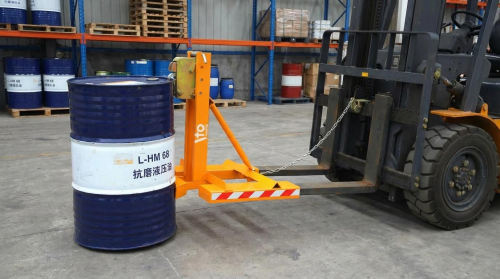
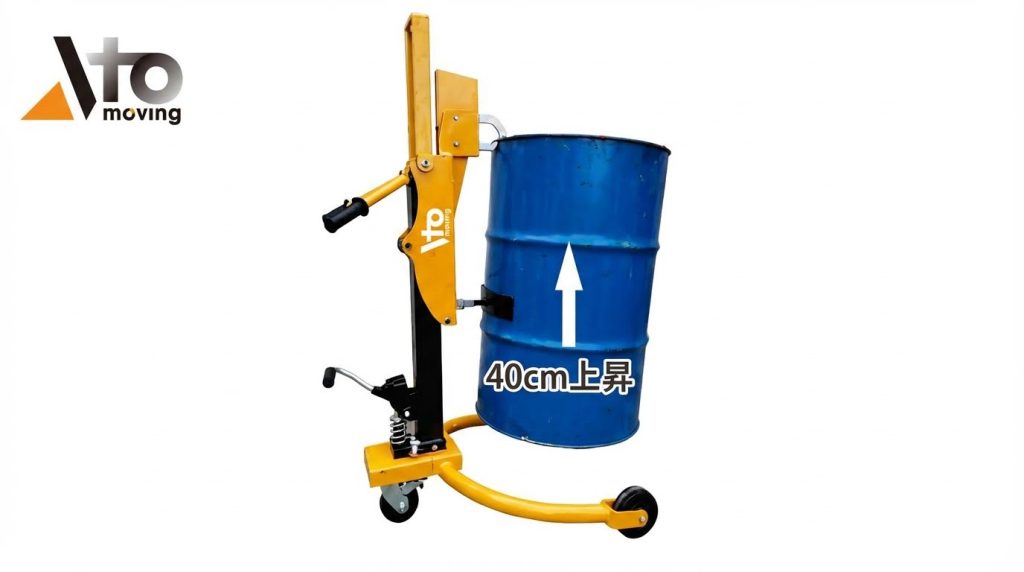
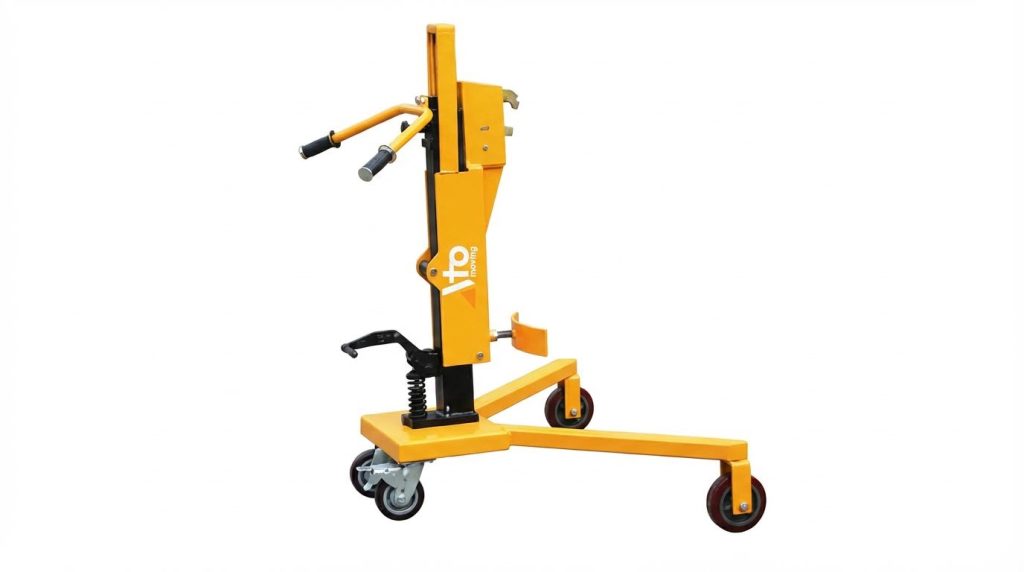
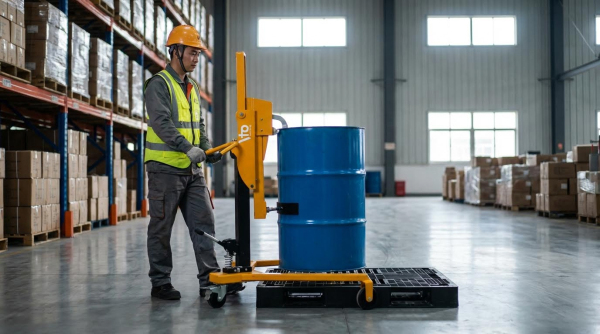
Pallet patterns needed to work with the chosen handling interface, whether manual, forklift, or cobot systems. For manual palletizing, operators required at least one open side with safe access and sufficient aisle width for drum trucks or manual pallet jack. Forklift handling demanded clear fork entry on the 48-inch or 1 200-millimetre side and no dunnage blocking the fork pockets or stringers. Facilities often used drum clamp attachments, which gripped the drum body and reduced the need to push drums by hand, lowering ergonomic risk. Automated and cobot palletizers needed consistent drum positions, so engineers defined tight tolerances on drum pitch and row spacing in the pattern. Integration teams also checked that grippers or clamps cleared strapping, stretch wrap, and pallet overhang while meeting guarding and emergency-stop requirements.
Dunnage And Load Securing Methods For Drums
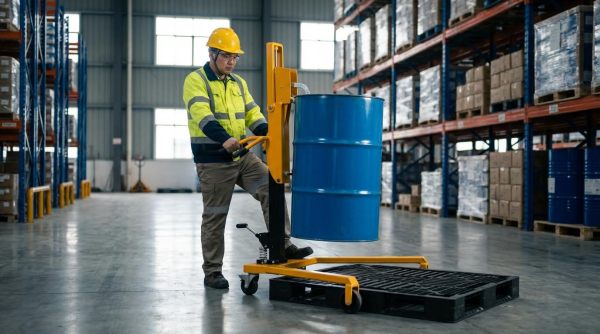
Engineers who study how to palletize 55 gallon drums focus heavily on dunnage and securing systems. Correct selection and placement of these elements control drum movement, load transfer into the pallet, and center-of-gravity behavior under dynamic transport forces. The following subsections describe proven dunnage and securing options that align with regulatory expectations for heavy cylindrical containers.
Wood, Foam, And Paper Dunnage For Drum Stability
Wood dunnage provides primary structural support under and between 55-gallon drums. Blocks and stringers of softwood or hardwood bridge pallet deck gaps smaller than 20 millimeters and create continuous bearing surfaces under the drum chimes. This reduces point loading, limits local pallet deflection, and improves stability when forklift barrel grabber accelerate or brake. Foam and paper dunnage serve mainly as energy absorbers and gap fillers rather than primary supports. High-density foam pads or rings around drum chimes damp vibration and minor impacts during road or rail transport. Paper-based elements such as corrugated pads, honeycomb blocks, and kraft void-fill stabilize small gaps between drums and between drum bodies and overpack sleeves. For engineered loads, combine wood for load path integrity with foam or paper for cushioning and micro-movement control. Always verify that selected dunnage materials resist moisture, chemicals, and compression at the expected static and dynamic loads.
Dunnage Air Bags And Grooved Lumber Applications
Dunnage air bags work well when you palletize 55 gallon drums inside trailers or containers with residual voids. Inflatable bags fill lateral or longitudinal gaps between palletized drum units and trailer walls, minimizing load shift during cornering, braking, or ship roll. Typical air bags tolerate voids up to 200 millimeters and restrain loads in the 1–2 tonne range when inflated to specified pressures. Place bags against drum sidewalls or overpack faces, never against exposed chimes that could puncture the bag. Grooved lumber, or banding groove stock, interfaces directly with strapping systems. Lengthwise or crosswise grooves keep steel or polyester straps flush with the timber surface and prevent lateral strap migration under vibration. For 55-gallon drums, position grooved boards at the pallet perimeter or between drum rows, then route straps through the grooves. Hardwood variants support high strap tension and heavy multi-tier drum stacks, while softwood versions reduce total mass for airfreight or weight-sensitive lanes. Specify groove width and depth to match strap width and gauge, and apply heat treatment when export regulations require ISPM 15 compliance.
Strapping, Corner Protection, And Overpack Use
Strapping is a primary mechanical restraint when defining how to palletize 55 gallon drums for over-the-road and intermodal transport. Use at least two independent strap tiers per pallet, typically one near the lower chime and one near the upper third of the drum body. Steel or high-tensile polyester straps provide sufficient stiffness and tension retention for four-drum 2×2 units up to approximately 900 kilograms. Install corner protection or strap protectors wherever straps contact drum edges or chimes. These devices spread strap pressure, prevent coating damage, and reduce the risk of strap cut-through under impact. Overpack slipcovers made from 2-ply or 3-ply corrugated board create a continuous outer surface around the drum cluster. They protect against abrasion, minor impacts, and incidental contact with adjacent freight. After fitting the overpack, apply vertical banding in two orthogonal directions to tie the overpack, drums, and pallet into a single unit load. Confirm that strap placement does not interfere with manual pallet jack tine entry or pallet jack pockets.
Stretch Wrap, Top Caps, And Pallet-To-Pallet Tying
Stretch wrap supplements but does not replace structural restraints when you palletize 55 gallon drums. Use machine-grade or high-performance hand wrap with adequate pre-stretch and overlap to create a continuous membrane from pallet deck to the upper drum body. Anchor the first film layers to the pallet deck or stringers, then spiral upward with at least 50% overlap. Add two or three containment bands at the drum mid-height and near the top chime to resist lateral drift. Top caps made from corrugated board, plywood, or high-density fiberboard distribute vertical loads and protect drum closures. They also provide a flat interface for secondary pallet layers or mixed freight stacking. When stacking pallets of drums, apply pallet-to-pallet tying methods such as vertical straps or extended stretch wrap columns that connect the lower pallet, drums, and upper pallet. This reduces the risk of the upper unit walking off under vibration. Always verify that combined stack height, gross mass, and restraint method comply with carrier rules and relevant dangerous goods or chemical packaging regulations.
Summary: Safe, Efficient Drum Palletization Practices
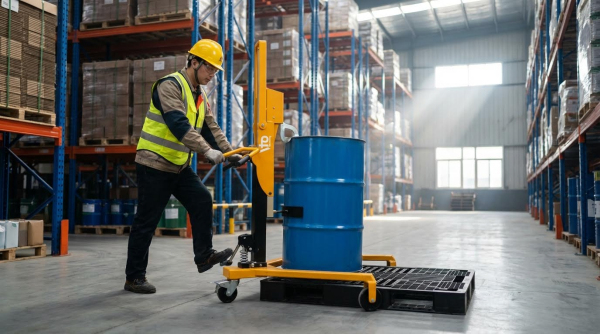
Safe, efficient methods for how to palletize 55 gallon drums relied on three pillars: correct drum–pallet matching, robust dunnage, and verified securing systems. Operators first selected pallets with adequate deck board coverage and floor ratings, then applied proven 2×2 layouts and controlled stacking patterns. They finished loads with engineered dunnage, strapping, and wrap systems that passed regulatory and internal safety checks.
From a technical standpoint, stable unit loads used 48×40 or ISO pallets with deck gaps below approximately 20 millimetres and four-drum 2×2 footprints. Weight distribution stayed symmetrical about the pallet centreline, and any second tier used staggered drum positions to keep the combined centre of gravity low and inside the pallet perimeter. Dunnage solutions combined wood, foam, paper, or air bags to fill voids, protect chimes, and create flat bearing surfaces between drum tiers and under top caps. Straps, corner protectors, and overpacks controlled lateral movement, while stretch wrap and pallet-to-pallet tying limited column instability in stacked storage.
Industry practice moved toward more automation, including cobot palletizers, forklift drum grabber, and powered conveyors, but manual and forklift-based methods remained common where volumes were moderate. Future trends pointed to wider use of load-stability testing, sensor-based monitoring of high-value hazardous cargo, and standardised pallet patterns for 55-gallon drums in digital warehouse management systems. Implementers needed to verify pallet specifications, load ratings, and compatibility with local and international transport rules, especially for dangerous goods. A balanced approach combined conservative stacking heights, validated securing methods, and periodic training so facilities could improve throughput without increasing handling risk.