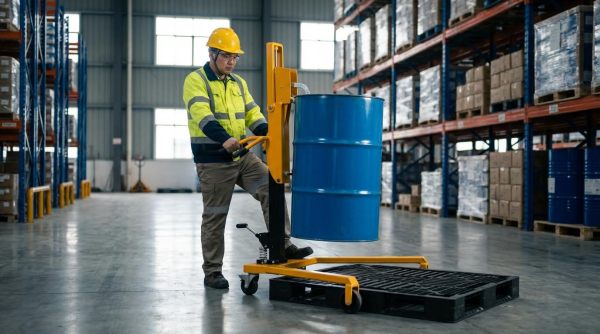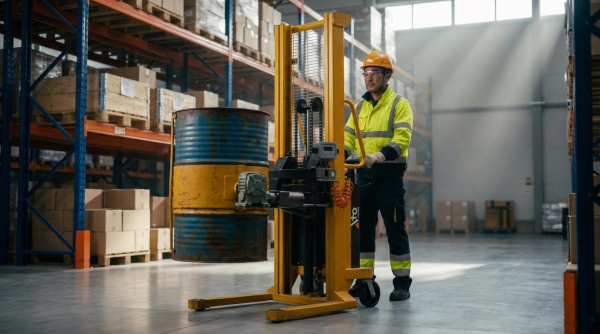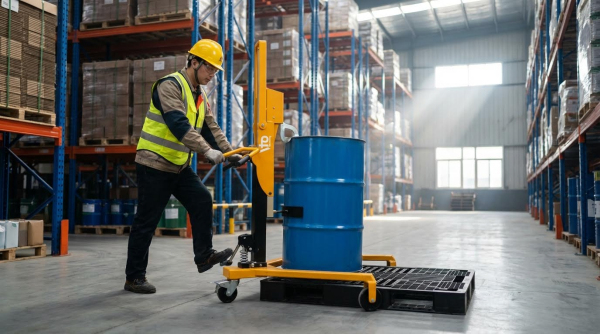
Safe drum transport required a coordinated approach that linked drum design, regulatory compliance, handling equipment, and operating discipline. This article examined drum types, typical failure modes, and the regulatory framework governing hazardous and non‑hazardous contents. It then compared engineered handling solutions such as forklift attachments, mobile drum karriers, dumpers, and weighing systems, including ATEX and other specialized designs. Subsequent sections addressed safe procedures, operator training, inspections, and facility layout to control spill, injury, and compliance risks. The conclusion integrated these elements into a practical strategy for engineering teams, safety professionals, and operations managers responsible for drum logistics.
Drum Types, Risks, And Regulatory Requirements
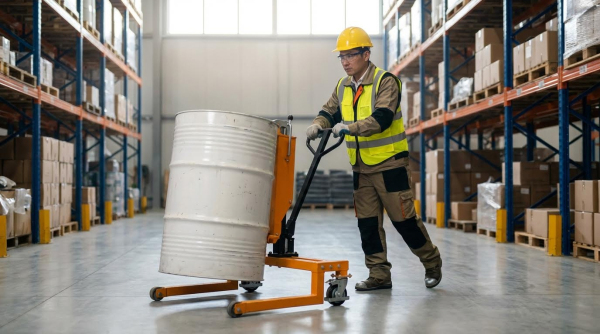
Industrial drum selection and use directly affect containment integrity, worker safety, and regulatory compliance. Engineers must align drum material, construction, and capacity with product properties, transport mode, and legal requirements. Failure to do so increases the probability of leaks, structural collapse, and hazardous materials incidents. This section links drum design and degradation mechanisms to classification, reconditioning rules, and risk exposure.
Common Drum Materials, Sizes, And Failure Modes
Steel, plastic, and fibreboard drums historically covered the majority of liquid and solid bulk packaging from 150 L to 220 L. Typical steel drums for hazardous and non-hazardous liquids held 400–600 lb (≈180–270 kg) and offered high mechanical strength and puncture resistance. Plastic drums, including “L-ring” and open-head variants, provided superior chemical resistance and lower corrosion risk, while fibre drums primarily carried dry or semi-solid materials. Failure modes depended on material and handling conditions. Steel drums were vulnerable to forklift tine puncture, seam fatigue, and external corrosion, especially at chimes and welds. Plastic drums exhibited creep, UV embrittlement, impact cracking at low temperatures, and bung thread damage. Fibre drums failed through moisture ingress, crushing, and loss of ring clamp tension. Poor pallet quality, insufficient blocking, and rolling drums by hand increased deformation, instability, and closure damage. Engineers mitigated these modes by specifying appropriate wall thickness, coatings, closure systems, and handling equipment such as pallet-based forklift transport instead of manual rolling.
Hazard Classification And Packaging Codes (UN, 49 CFR)
Hazard classification governed which drum constructions were legally acceptable for a given product. Under the Hazardous Materials Transportation Act framework, 49 CFR Parts 171–180 defined material classes, packing groups, and packaging performance requirements. UN-type codes identified drum material and design, for example 1A1 for non-removable-head steel drums, 1A2 for removable-head steel drums, 1H1 for tight-head plastic drums, and 1H2 for open-head plastic drums. For liquid hazardous materials in Packing Group I, 49 CFR 173.201 required non-bulk packagings to meet general requirements of subpart B and pass performance tests at the PG I level. Authorized outer packagings included steel, aluminum, other metal, plywood, fibre, and plastic drums with corresponding UN designations. Single packagings for PG I liquids, except on passenger aircraft, included steel, aluminum, other metal, and plastic drums that satisfied the specified test regime. Engineers therefore needed to match the UN code and test level to the product’s class, packing group, and transport mode, ensuring closures and inner packagings also complied with Part 173 and Part 178 performance standards.
Reuse, Reconditioning, And CAN/CGSB Compliance
Drum reuse introduced additional risk unless reconditioning followed recognized technical standards. In Canada, steel and plastic drums with a capacity ≥150 L could not be reused for liquid dangerous goods in Classes 3, 4, 5, 6.1, 8, or 9 unless reconditioned in accordance with CAN/CGSB-43.126. Reconditioned drums required a durable, legible mark at least 12 mm high, formatted with “CAN”, the Transport Canada registration number of the facility, the last two digits of the reconditioning year, and the letters “RL”. Facilities performing remanufacturing, repair, or reconditioning had to obtain a Certificate of Registration, valid for five years, and maintain a quality assurance system meeting CGSB-43.126 minimum requirements. From an engineering management perspective, procurement teams needed to verify markings, track supplier registration status, and integrate periodic audits. Using unmarked or improperly reconditioned drums for dangerous goods increased leakage probability, non-compliance findings, and potential incident severity during transport.
Environmental, Legal, And Insurance Risk Exposure
Poor drum selection and handling historically drove a significant share of transport incidents recorded by agencies such as PHMSA. Common root causes included forklift impact, dropping packages, inadequate blocking and bracing, and human error, all of which could turn minor packaging weaknesses into spills. Environmental consequences ranged from localized soil contamination to surface water pollution, triggering reporting obligations to authorities such as the National Response Center for oil and hazardous substance releases under 40 CFR 110 and 40 CFR 116. Legal exposure included violations of hazardous materials regulations, environmental statutes, and transport codes, leading to fines, consent decrees, and mandated corrective actions. Civil liability extended to third-party property damage
Equipment Selection For Secure Drum Handling
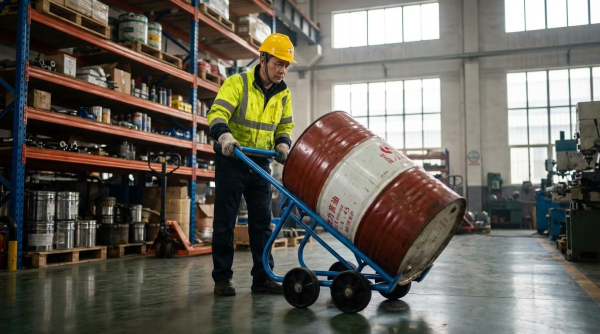
Engineering teams needed to match drum handling equipment precisely to drum type, mass, and contents. Incorrect selection increased the probability of puncture, tipping, or loss of containment, especially with hazardous materials. A structured selection process considered drum geometry, surface condition, environment classification, and regulatory constraints. The following subsections outlined key equipment families and their design and application criteria.
Forklift Drum Attachments And Design Criteria
Forklift drum attachments allowed direct engagement of drums without manual rolling, which reduced musculoskeletal injury and impact damage. Designs included rim, waist, and base grippers, each suited to specific drum profiles such as steel, plastic L-ring, Mauser, and fibre drums. Engineers specified attachments based on safe working load, drum diameter range, center-of-gravity location, and required operations such as lift-only or lift-and-rotate. Attachments had to lock positively to the forks or carriage and remain within the truck’s rated capacity to maintain stability. In regions governed by LOLER or equivalent regulations, periodic inspection and proof testing of these lifting accessories were mandatory.
Dedicated Drum Trucks, Karriers, And Dumpers
Dedicated drum handling devices such as hand trucks, mobile karriers, and hydraulic dumpers provided controlled movement where forklifts were impractical or undesirable. Manual drum trucks with two or four wheels typically carried loads up to about 450 kg and suited short internal transfers on flat floors. Mobile drum karriers and rotators enabled operators to lift, tilt, and pour 210 liter drums through 360 degrees, with mechanical locks to fix the dispensing angle for safety. Hydraulic drum dumpers handled higher capacities, often up to approximately 680 kg, and tipped drums into process hoppers or waste compactors. Selection criteria included drum material compatibility, lift height, rotation range, caster configuration for maneuverability, and whether spark-resistant or stainless steel construction was required.
Pallets, Blocking, Bracing, And Load Securing
Pallet choice was critical because the pallet carried the contact stresses from drums into forklift tines and trailer decks. Engineers preferred high-quality timber or composite pallets with intact deck boards and adequate load rating to prevent board punch-through under drum chimes. Drums were normally placed upright on pallets, aligned in tight patterns, and secured with straps, chains, or ropes to prevent shifting during handling and transit. Within road or intermodal trailers, blocking and bracing followed guidance from bodies such as the Institute of Packaging Professionals to resist lateral and longitudinal accelerations. Dunnage, chocks, and friction mats helped maintain drum position, while operators avoided excessive stacking heights that could destabilize loads or exceed pallet compressive limits.
Emerging Tech: Sensors, Load Cells, And ATEX Designs
Newer drum handling equipment integrated sensors and weighing technology to reduce handling steps and improve traceability. Drum lifters with built-in load cells weighed drums during lifting with typical accuracies near 0.1 kg, eliminating separate floor scales and reducing double handling. Electric-hydraulic lift systems reduced operator effort and supported high-frequency operations, but required appropriate overload protection and emergency stop functions. In potentially explosive atmospheres, ATEX-compliant designs used anti-static wheels, conductive components, and controlled surface temperatures to minimize ignition risk. Engineers evaluated these advanced features alongside traditional criteria such as safe working load, drum compatibility, and maintainability to select solutions that balanced productivity and safety.
Safe Operating Practices And Facility Layout
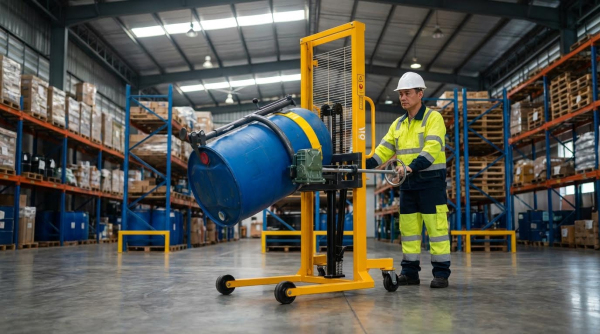
Loading, Transport, And Unloading Procedures
Safe drum movement started with controlled loading. Operators positioned drums upright on sound pallets or in purpose-designed drum lifters, avoiding manual rolling whenever possible. They aligned drums tightly with minimal gaps and distributed weight evenly to prevent shifting during transport. Forklift or pallet jack tines engaged the pallet fully, keeping the mast vertical and the load low to maintain stability.
During internal transport, operators drove at low speed, avoided sudden braking, and took wide turns to reduce lateral forces on drums. For road transport, blocking and bracing inside trailers or containers prevented drum movement under acceleration, deceleration, and vibration. Straps, chains, or tensioned load bars restrained pallets without contacting drum chimes or closures directly. At unloading, workers inspected drums and pallets for damage, leaks, or bulging before moving them to a flat, well-drained, and structurally adequate surface. Spill kits and portable bunds remained available at all transfer points to contain any loss of containment immediately.
Operator Training, SOPs, And Safety Committees
Effective drum transport depended on operators trained in both equipment use and material hazards. Training programs covered forklift fundamentals, use of drum attachments, load charts, and limits, as well as recognition of drum labels, UN numbers, and hazard classes. Instructors demonstrated correct methods for lifting, rotating, and pouring, then verified competence through practical assessments. Refresher training at defined intervals reinforced safe habits and introduced updated procedures or equipment.
Written standard operating procedures (SOPs) described step-by-step tasks for loading, securing, moving, and unloading drums, including emergency steps for leaks or punctures. Facilities used toolbox talks and visual work instructions near drum handling zones to keep SOPs visible and actionable. Safety committees, including operators, supervisors, and EHS professionals, periodically reviewed incident data, near-miss reports, and PHMSA or regulatory guidance. They used these reviews to refine procedures, specify new engineering controls, and verify that training content matched current risks and equipment.
Inspection, Maintenance, And LOLER Compliance
Routine inspection and maintenance of drum handling equipment reduced failure risk significantly. Operators performed pre-use checks on forklifts, drum grabs, trucks, and dumpers, looking for cracked welds, worn pivots, damaged wheels, leaking hydraulics, and deformed clamping surfaces. Any attachment with unclear identification, missing capacity labels, or visible distortion was removed from service. Facilities kept inspection checklists specific to each equipment type and documented findings for traceability.
Under UK LOLER requirements and similar lifting regulations elsewhere, lifting accessories such as drum grabs and mobile lifters required thorough examination by a competent person at defined intervals, often at least annually. Service providers tested attachments to their stated safe working load (SWL) and checked locking mechanisms, quick-release systems, and hydraulic integrity. Maintenance programs included periodic lubrication, seal replacement, and wheel or caster renewal, particularly for chemical-resistant components exposed to aggressive liquids. Compliance records supported audits and demonstrated that lifting operations met legal obligations and internal corporate standards.
Workplace Layout, Lighting, And Spill Readiness
Facility layout strongly influenced drum transport safety. Planners defined segregated forklift routes with adequate aisle width for turning radii of trucks carrying drums on pallets or specialized lifters. Clear floor markings and signage differentiated pedestrian walkways, drum storage areas, and transfer points. Racking or floor storage zones for drums incorporated rated containment or bunding where hazardous liquids were present. Surfaces remained level, free of potholes, and capable of supporting concentrated wheel loads.
Uniform, glare-free lighting allowed operators to see drum labels, floor hazards, and other traffic. Ventilation design considered potential vapour accumulation near drum storage and decanting areas. Spill readiness included strategically placed spill kits, absorbents, portable bunds, and drain covers sized for credible worst-case releases. Facilities pre-positioned emergency stop controls, eyewash stations, and communication points along drum routes. Regular drills and layout reviews ensured that routes, lighting, and spill resources supported rapid, safe response when a drum leaked, toppled, or was damaged during handling.
Summary: Integrated Strategy For Secure Drum Transport
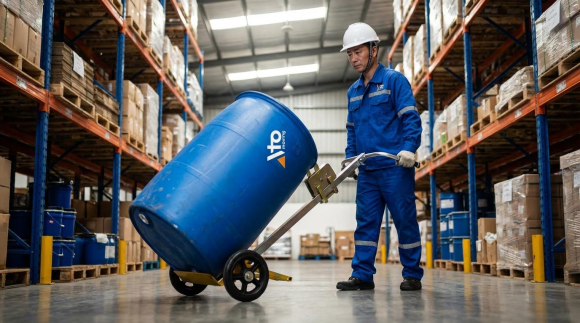
Safe drum transport relied on an integrated approach that linked packaging compliance, engineered equipment, and disciplined operations. Steel, plastic, fibre, and composite drums behaved differently under impact and vibration, so selection and maintenance had to follow UN performance standards, 49 CFR packaging rules, and where applicable CAN/CGSB-43.126 reconditioning requirements. Facilities that tracked reconditioning marks, packing group ratings, and drum reuse limits reduced failure modes such as seam leaks, bung failures, and sidewall puncture during handling and transit.
Engineering controls formed the second pillar. Properly specified forklift drum attachments, mobile karriers, powered dumpers, and pallet-straddling lifters with side-shift and integrated load cells allowed controlled lifting, rotation, and dispensing within defined safe working loads. ATEX-rated tires, anti-sparking components, and chemical-resistant wheels supported hazardous and flammable materials handling. Correct pallet design, blocking, and bracing inside trailers, combined with adherence to equipment capacity ratings, minimized shifting, tip-over, and impact damage that PHMSA incident data previously associated with human error and inadequate securing.
The third pillar was operational discipline. Written SOPs for loading, transport, and unloading, backed by operator training, refresher courses, and active safety committees, reduced errors such as overstacking, rolling drums by hand, or exceeding attachment limits. Routine inspection and preventive maintenance of trucks, attachments, and drum-handling devices, aligned with LOLER and OSHA/ANSI expectations, kept control measures reliable over time. Facilities that combined clean, well-lit, well-marked layouts with spill containment, bunds, and rapid reporting to the National Response Center when required, limited environmental and legal exposure.
Looking ahead, wider deployment of integrated weighing, sensor-based stability monitoring, and telematics on drum-handling equipment will enable real-time overload detection, traceability, and condition monitoring. However, these technologies only add value when embedded in a coherent management system that respects regulatory frameworks, maintains robust QA for drum reconditioning, and treats drum transport as a lifecycle engineering problem rather than a series of isolated moves.