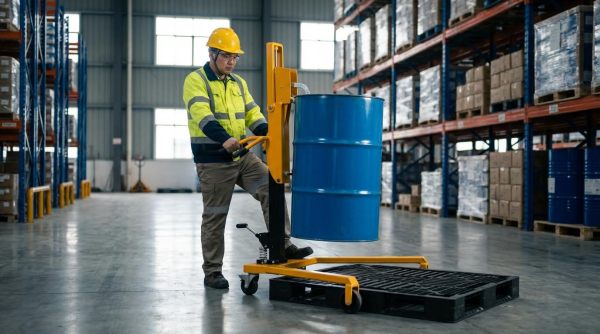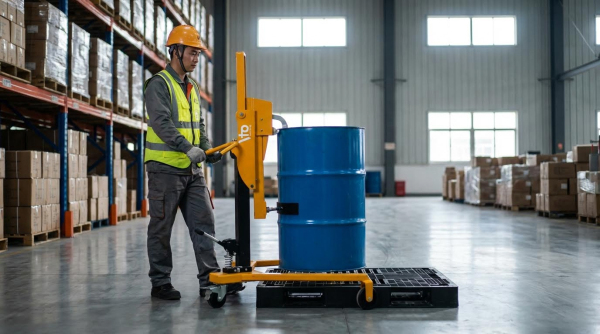
Hazardous material drums required rigorous engineering controls for storage, handling, and transfer to prevent worker injury and environmental releases. This article covered regulatory-compliant drum storage design, including container compatibility, secondary containment capacity, segregation, and indoor versus outdoor layout decisions. It then addressed safe movement and transfer operations, from pre-handling assessment and equipment selection to ergonomic manual techniques and closed-transfer systems. Inspection, maintenance, and emergency preparedness practices were also detailed, including checklists, smart monitoring, spill response, training, PPE, and integration with site-specific Hazardous Waste Operations and Emergency Response Plans. Together, these sections provided a practical framework for designing and operating drum handling systems that met modern regulatory and safety expectations.
Regulatory-Compliant Drum Storage Design
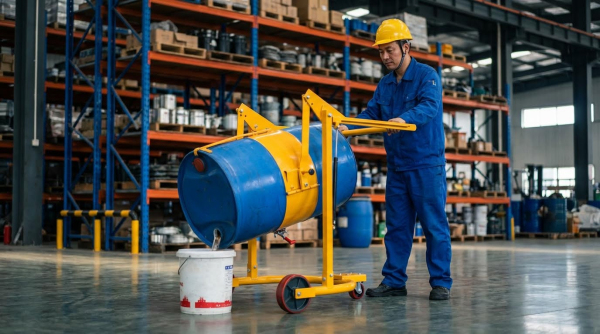
Regulatory-compliant drum storage design ensured containment integrity, worker safety, and environmental protection. Engineers had to align layouts with hazardous waste rules such as 40 CFR 265 Subpart I and equivalent provincial or state codes. Designs addressed container compatibility, secondary containment, segregation, access for emergency response, and structural loading. The following subsections outlined key engineering criteria for safe drum storage installations.
Container Compatibility And Construction Requirements
Containers and lids needed chemical compatibility with the stored hazardous material across the full temperature and aging envelope. Polyethylene or other compatible plastics were preferred for corrosive acids and alkalis, while conductive steel drums that could be bonded and grounded suited flammable liquids. Engineers specified drums free from holes, leaks, severe corrosion, or structural deformation, and ensured closure hardware such as drum rings, bungs, and funnels provided liquid-tight seals under handling loads. Regulatory guidance required containers to remain closed except during filling or emptying, and prohibited placing incompatible wastes in the same container or in unwashed containers that previously held incompatible materials.
Designers also considered vapor management and air emissions rules for volatile organic compounds, referencing requirements such as 40 CFR 265.1080–265.1090 where applicable. Container selection had to support safe venting where permitted, without compromising explosion protection or leak tightness. For flammable materials, bonding and grounding provisions, non-sparking tools, and electrical classification of nearby equipment formed part of the container system specification. For highly reactive, dioxin-bearing, or acutely toxic wastes, facilities often implemented additional containment layers or salvage overpacks to mitigate worst-case release scenarios.
Secondary Containment Sizing And Layout
Secondary containment systems for liquid hazardous wastes, and for ignitable, reactive, or dioxin-bearing solids, required sufficient hydraulic capacity and structural robustness. Regulations typically mandated containment volume equal to the greater of 10% of the total volume of all liquid containers or 100% of the largest single container. Engineers implemented this by sizing concrete sumps, lined berms, or spill pallets for one to four 208 litre drums, verifying freeboard for rainfall where outdoor storage occurred. Bases needed to be free of cracks and gaps, with coatings or liners compatible with the stored chemicals and resistant to anticipated spill durations.
Containment layouts had to prevent drums from sitting in accumulated liquids, which accelerated corrosion and obscured leaks. Designers used sloped floors that drained away from drums toward sumps, or elevated platforms and grating above collection pans. Curbing, diked areas, or modular spill pallets defined containment cells that also helped segregate incompatible classes. For outdoor systems, engineers designed to prevent rainwater run-on and either roofed the area or increased containment capacity to account for storm events. Regular integrity testing and visual inspection of concrete, joints, sealants, and liners formed part of the engineered containment program.
Aisle Spacing, Segregation, And Stack Height Limits
Regulations required adequate aisle space, typically at least 760 millimetres, between rows of drums to permit inspection and emergency access. Facilities commonly spaced rows 760–900 millimetres apart to accommodate responders with tools and absorbents. Dangerous waste guidance also required at least 760 millimetres between drum rows and sufficient clearance from walls for leak detection. Ignitable or reactive wastes had to be stored at least 15 metres from the property line, and incompatible wastes required physical separation using dikes, berms, walls, or dedicated containment cells.
Engineers limited stack heights to preserve stability and inspection access. For 208 litre drums, recommended practice restricted stacking to two drums high and two drums wide in rows, avoiding higher stacks that increased tipping risk and hid corrosion. For large indoor flammable liquid stores, process safety guidance limited total stack volumes, for example to 300 cubic metres with at least 4 metres between stacks, and prohibited stacking beyond the structural rating of racks or mezzanines. Segregation strategies grouped chemicals by hazard class using safety data sheets, ensuring oxidizers, acids, bases, flammables, and toxics did not share containment cells unless compatibility was demonstrated.
Indoor Vs. Outdoor Drum Storage Considerations
Indoor drum storage offered superior environmental control but required ventilation, fire protection, and structural design aligned with flammable and toxic material codes. For flammable liquids stored indoors, guidance specified mechanical ventilation at approximately five air changes per hour, plus explosion-protected electrical equipment and clearly posted “No Smoking” zones
Safe Handling, Movement, And Transfer Operations
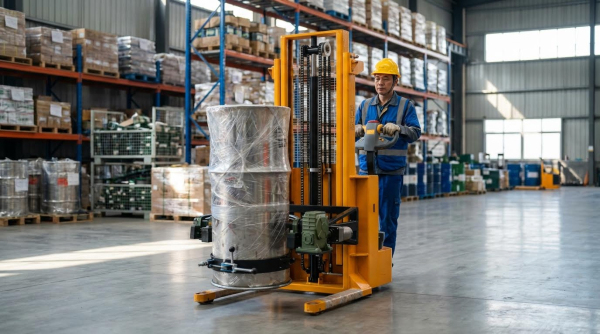
Safe drum handling operations relied on structured assessments, engineered handling devices, and disciplined transfer procedures. Facilities that integrated these elements reduced injury rates, spills, and regulatory non-compliance. This section focused on the workflow from first visual assessment through to closed, controlled liquid transfer.
Pre-Handling Drum Assessment And Weight Estimation
Operators first evaluated each drum as potentially hazardous until confirmed otherwise. They read the label, hazard symbols, and accumulation dates, then cross-checked the Safety Data Sheet (SDS) for specific risks such as flammability, corrosivity, toxicity, or reactivity. If a drum was unlabeled or markings were illegible, facilities treated it as hazardous waste and held it for identification and sampling under the site-specific Hazardous Waste Operations and Emergency Response (HAZWOPER) plan. Personnel visually inspected the drum for bulging, corrosion, punctures, missing bungs, or seepage at seams and closures before any movement.
Workers replaced and tightened missing bungs or lids and verified that closures were secure to prevent releases during transport. They estimated drum weight based on volume, density of contents, and drum size; for example, a 208 liter (55 gallon) drum typically weighed 180–360 kilograms. If weight exceeded manual handling limits from the site ergonomics program, supervisors required mechanical aids such as drum trucks or forklifts. For buried or partially covered drums, crews used ground-penetrating detection systems and cautious uncovering methods to avoid rupture, following Washington Administrative Code 296-843-18005 where applicable.
Drum Handling Equipment Selection And Use
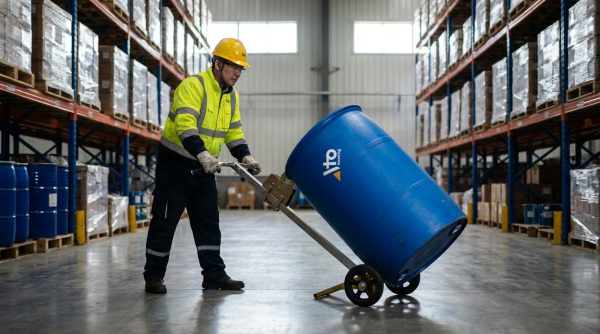
Engineering controls started with correct selection of material handling equipment. Facilities used forklifts with drum clamps, drum trucks, pallet jacks, and dedicated drum carts designed to support the full static and dynamic loads of filled drums. Only trained and authorized operators drove forklifts or powered drum handlers, and they followed site speed limits and route controls through bunded storage areas. Where flammable vapors were possible, sites specified non-sparking tools and equipment rated for the hazardous area classification to avoid ignition.
Operators positioned forks, clamps, or grippers to avoid piercing or crushing the drum body, and they never lifted drums by bungs or improvised lifting points. For salvage operations or compromised containers, crews transferred contents to Department of Transportation (DOT)-specified salvage drums using pumps classified for the material, instead of dragging or pushing leaking drums. Movement of drums was minimized to reduce risk; planners optimized storage layouts and transport routes to limit handling steps. During loading or unloading from vehicles, workers applied wheel chocks, verified surface stability, and maintained clear communication with drivers to prevent sudden movements.
Manual Handling Techniques And Ergonomic Controls
Manual drum handling occurred only when engineering controls could not fully eliminate the task and when risk assessments supported it. Workers wore appropriate personal protective equipment (PPE) such as safety shoes, chemical-resistant gloves, eye protection, and sometimes aprons or respiratory protection depending on SDS guidance. Before attempting to upend or roll a drum, personnel confirmed that closures were tight and that no leaks were present. They avoided rolling drums on the sidewall; instead, they rolled on the chimes to protect the shell and maintain control.
When a drum required upending without mechanical aids, workers crouched with feet apart, kept the back straight, grasped the chime firmly, and lifted using leg muscles while keeping the drum close to the body. Supervisors enforced limits on manual tasks based on drum mass, surface conditions, and worker capability to prevent back strains and crush injuries. Stacking practices also affected manual access; guidance typically limited storage to two drums high and two drums wide, which allowed inspection without ladders and reduced instability. Ergonomic programs combined task rotation, training, and job design to minimize repetitive strain and acute overexertion during manual handling.
Pumping, Dispensing, And Closed-Transfer Systems
Transfer operations presented some of the highest spill and exposure risks, so facilities favored closed-transfer systems. Drums, pails, and intermediate bulk containers (IBCs) were placed on impermeable secondary containment such as spill pallets or bunded pads before pumping or dispensing. Operators selected pumps, hoses, and valves made of materials compatible with the chemical and rated for expected pressure and temperature. For flammable liquids, they used bonding and grounding to control static
Inspection, Maintenance, And Emergency Preparedness
Inspection, maintenance, and emergency preparedness formed the backbone of compliant hazardous drum storage. Facilities that structured these programs around regulatory requirements reduced leak frequency, minimized spill volumes, and improved incident response times. Engineering controls, documented procedures, and trained personnel worked together to detect deteriorating containers early, maintain containment integrity, and ensure coordinated actions during abnormal events. This section focused on practical frameworks that aligned technical best practice with OSHA HAZWOPER, RCRA-style container rules, and environmental emergency regulations.
Routine Inspection Checklists And Recordkeeping
Routine inspections identified corrosion, leaks, labeling errors, and containment failures before they escalated into releases. Weekly inspections of central accumulation areas were standard, with some facilities adopting daily visual walkdowns for high-risk zones. Checklists typically covered container condition, closure status, labels and dates, aisle spacing, segregation of incompatibles, secondary containment capacity, and housekeeping. Inspectors also verified that containers remained closed except during filling or emptying, and that no drums sat in accumulated liquid. Records of inspections, findings, and corrective actions were retained for at least five years, supporting regulatory audits and internal trend analysis. Digital logs with timestamps and photographs allowed engineers to track recurring defects and prioritize capital repairs.
Predictive Maintenance And Smart Monitoring Tools
Predictive maintenance strategies reduced unplanned releases from storage and transfer systems. Engineers used risk-based inspection intervals driven by drum age, material class, corrosion potential, and spill history. Smart monitoring tools included level sensors in diked areas, leak-detection probes, and pressure or vacuum monitoring on transfer lines and tanks. Some facilities integrated these sensors into SCADA or building management systems, generating alarms for high sump levels, abnormal flows, or valve misalignment. Infrared thermography and ultrasonic thickness measurements supported condition-based maintenance of tanks, piping, and metal containment structures. Data from these systems informed targeted coating repairs, drum rotation policies, and replacement schedules, lowering lifecycle risk and maintenance cost.
Spill Containment, Cleanup, And Reporting Protocols
Spill protocols began with immediate containment, isolation of the area, and protection of drains and surface waters. Facilities maintained absorbents, non-sparking tools, DOT-rated salvage drums, and compatible pumps to transfer leaking contents into sound containers. Procedures required leaving forklift tines in punctured drums until temporary containment was in place to avoid worsening leaks. Collected liquids and contaminated absorbents were packaged, labeled, and managed as hazardous waste according to jurisdictional rules. Engineers defined reportability thresholds, internal notification chains, and external reporting to environmental agencies. Post-incident reviews documented root causes, corrective actions, and design changes, such as improved secondary containment, modified unloading layouts, or upgraded transfer equipment.
Training, PPE, And Site-Specific HASP Integration
Training programs aligned daily drum operations with the site-specific Hazardous Waste Operations and Emergency Response Plan (HASP). Workers learned hazard recognition from labels, SDS review, and compatibility charts, and treated unlabeled drums as hazardous until characterized. Only trained personnel operated forklifts, drum handlers, and pumps, and specialists handled bulging or damaged containers. PPE selection reflected material hazards and tasks, typically including chemical-resistant gloves, safety footwear, eye and face protection, and sometimes respirators or aprons. The HASP integrated spill response, evacuation routes, communication systems, and fire-extinguisher use with regulatory requirements such as Washington’s drum-handling rules and RCRA emergency provisions. Regular drills and refresher training verified that personnel could execute procedures under realistic conditions.
Summary And Key Engineering Takeaways

Engineering robust systems for hazardous drum storage and handling required a fully integrated view of design, operations, and compliance. Regulatory frameworks mandated compatible containers, closed during storage, with secondary containment sized to at least 110% of the largest single container or 10% of total liquid volume, whichever was greater. Facilities had to maintain 30 inches of aisle space, segregate incompatible and ignitable wastes, and respect distance limits from property lines and sensitive receptors. These constraints strongly influenced layout, rack design, and selection of indoor versus outdoor storage solutions.
Operational safety depended on structured handling procedures and appropriate equipment. Engineers needed to specify forklifts, drum trucks, carts, and pumps rated for the materials, with non-sparking tools and bonding/grounding for flammable liquids. Designs had to minimize drum movement, enforce pre-handling inspections, and embed ergonomic controls for any residual manual handling. Closed-transfer and spill-containment hardware, including spill pallets, drip trays, and diked areas, reduced chronic losses and acute spill risks.
Inspection, maintenance, and emergency preparedness formed the third pillar of safe drum management. Weekly inspections, documented for at least five years in some jurisdictions, supported early detection of corrosion, leaks, and structural damage. Modern practice increasingly incorporated smart monitoring, such as level sensors and leak detection in sumps, to supplement visual checks. Emergency response plans, aligned with site-specific HASPs and Environmental Emergency Regulations, defined containment, evacuation, cleanup, and reporting workflows, supported by on-hand fire extinguishers, absorbents, and PPE.
Looking ahead, facilities trended toward higher automation, more closed systems, and tighter integration of environmental management systems with plant control data. However, engineering judgment remained central: designs had to remain simple enough to operate reliably while meeting evolving standards on air emissions, spill prevention, and waste minimization. Successful implementations balanced capital cost, operational practicality, and regulatory robustness, ensuring that hazardous drum systems protected workers, the environment, and asset integrity over the full lifecycle of storage and handling operations.