Facilities that search for how to safely move a 55 gallon drum usually face two linked problems. They must prevent crushing and chemical injuries while still keeping material flows efficient. This article walks through hazard identification, pre-move checks, route planning, and safe handling methods for 55-gallon drums. It then closes with a concise summary of best practices and compliance priorities that EHS, operations, and engineering teams can apply as a shared standard.
You will see how injury modes, OSHA and PHMSA rules, and Safety Data Sheet (SDS) reviews shape each move decision. The checklist structure shows what to inspect on the drum, what PPE to wear, and how to choose between manual techniques and mechanical aids. Storage layout, stacking limits, and blocking and bracing are also covered so handling remains safe from loading to final placement.
Hazard Identification And Regulatory Context
This section explains how to safely move a 55 gallon drum by first understanding hazards and rules. It links real injury modes, chemical risks, and labels to daily handling tasks. It also connects OSHA and PHMSA requirements to a simple, repeatable risk check before every move. The goal is a clear checklist that safety, operations, and maintenance teams can all use.
Common Injury Modes In Drum Handling
Moving a 55-gallon drum exposes workers to heavy loads and awkward postures. A filled drum often weighs 180–360 kilograms, so manual errors quickly cause harm. Typical injuries include back strains from bending and twisting, smashed toes or fingers from tipping drums, and lacerations from burrs or sharp chimes.
Crush injuries can occur when a drum tips or rolls onto legs or feet. Loss of grip due to wet or oily surfaces increases this risk. Poor technique during push, pull, or rolling moves also creates hernia and shoulder strain risks. The table below links typical actions to likely injury modes.
| Task | Main Risk |
|---|---|
| Manual push or pull | Back strain, hernia, shoulder overload |
| Rolling on chime | Foot crush, loss of control, hand pinch |
| Upending a drum | Back injury, knee strain, drum fall |
| Working near grouped drums | Chain reaction tip, trapped limbs |
| Handling damaged drums | Cuts from burrs, sudden leak |
Understanding these patterns helps teams design routes, choose tools, and set clear “no manual lift” limits for heavy drums.
Chemical Hazards, Labeling, And SDS Review
Anyone asking how to safely move a 55 gallon drum must first know what is inside. Labels, placards, and markings show if the contents are corrosive, toxic, flammable, or reactive. If a drum is unlabeled or the label is unreadable, workers should treat the contents as hazardous until identified.
Before movement, operators should:
- Read the label and hazard symbols.
- Confirm the product name and concentration.
- Locate and review the relevant Safety Data Sheet (SDS).
- Note required PPE and incompatibilities from the SDS.
The SDS sections on handling, storage, and exposure controls guide PPE choices and emergency steps. For example, corrosive acids may need splash goggles and acid-resistant gloves. Flammable liquids may require grounding and bonding during transfer and strict control of ignition sources. Inspecting for leaks or residue on the drum surface is also essential, since even a small drip can cause skin burns or vapor exposure.
Clear labeling and ready access to SDS documents turn a simple route plan into a controlled chemical handling task.
OSHA And PHMSA Requirements For Drum Operations
OSHA standards set baseline rules for safe drum use and storage in workplaces. For 55-gallon drums with flammable or toxic liquids, OSHA required secondary containment with at least 35% of total volume. OSHA also required protection from heat sources and impact, plus suitable fire extinguishers near storage and use areas.
OSHA rules did not allow pressurizing drums to remove contents unless the system had proper relief and was certified safe. The general duty clause applied when pressurization or other nonstandard practices created serious hazards not covered in a specific rule. Employers needed proof, such as manufacturer data or insurance certification, that any pressurized setup was safe.
PHMSA regulations governed drums in transport. They covered packaging performance, closure instructions, and incident reporting. Typical PHMSA incident data showed frequent damage from forklifts, drops, and poor blocking and bracing. This data reinforced a key message for anyone learning how to safely move a 55 gallon drum: use purpose-built equipment, secure drums against movement, and follow closure instructions exactly.
Together, OSHA and PHMSA created a framework that tied workplace handling, storage, and transportation into one safety system.
Risk Assessment Before Each Drum Move
A short, structured risk check before each move greatly reduces incidents. The assessment should be quick enough for daily use but detailed enough to catch real hazards. A simple four-part checklist works well.
- Drum condition: Check for dents, bulging, rust, leaks, warped shells, sharp burrs, or loose bungs.
- Contents and weight: Confirm product from label and SDS. Estimate weight and decide if mechanical aids or extra people are needed.
- Route and destination: Inspect floors for liquids, slopes, gaps, and tight turns. Confirm that storage at the end point meets height and containment rules.
- People and equipment: Verify PPE, choose the right truck, cart, or attachment, and confirm operators are trained.
Workers should stop the move if any factor looks unsafe. For example, a leaking drum, a blocked route, or missing PPE should trigger a pause and supervisor review. Embedding this risk check into standard work instructions turns “how to safely move a 55 gallon drum” from a one-time question into a repeatable habit.
Pre-Move Inspection, PPE, And Route Planning

Pre-move checks are the first control step when planning how to safely move a 55 gallon drum. A short, disciplined checklist reduces crush injuries, leaks, and chemical exposure. This section links drum condition, personal protection, and travel path so engineers and supervisors can standardize safe moves across shifts. The same logic applies whether operators roll drums by hand or use pallet-based mechanical handling.
Verifying Drum Integrity, Closures, And Weight
Always treat drum inspection as a go / no-go decision step. Look for dents, warping, or bulged heads that change how the drum rolls or seats on pallets. Check for rust, cuts, or burrs on chimes and body surfaces, since these can cut gloves and reduce grip. Inspect for wet spots, stains, or crusted product around seams and bungs that indicate leaks.
Verify both bungs or lids are present and tight. A loose bung can turn a slow move into a spill event under vibration or impact. For pallet moves, inspect pallet deck boards and stringers for cracks, missing boards, or protruding nails. Reject pallets that can concentrate load or puncture the shell.
Estimate weight before choosing a handling method. A typical full 55-gallon drum often weighs 180–360 kilograms depending on contents. If the weight is uncertain or near manual limits, specify mechanical handling and, if needed, additional operators. Record any suspect drums for maintenance or disposal instead of forcing them into normal flow.
Required PPE For Mechanical And Chemical Risks
PPE must match both the mechanical load and the chemical hazard. Start with safety shoes with protective toecaps, because crush and pinch injuries are common when drums tip or shift. Add cut-resistant gloves to protect against sharp chimes and burrs, and choose chemical-resistant materials when liquids are corrosive or toxic. For eye and face protection, use safety glasses or a face shield when leaks, splashes, or pressurized residue are possible.
Use long sleeves or chemical aprons when handling corrosive, oxidizing, or solvent-based products. Respiratory protection depends on the Safety Data Sheet and site industrial hygiene rules. Supervisors should confirm that PPE ratings match the drum label and SDS, not assumptions from previous batches.
From an engineering control view, PPE is the last barrier. Combine it with safe handling tools such as dedicated drum trucks, pallet systems, or Atomoving drum attachments to reduce direct contact. Include PPE checks in pre-job briefings so operators verify condition, fit, and compatibility before they touch the drum.
Evaluating Floor Conditions, Space, And Travel Paths
Route planning is central to any procedure on how to safely move a 55 gallon drum. Walk the full path before the move and clear obstacles like loose materials, hoses, or low pallets. Check floor surfaces for liquids, powders, or uneven joints that can cause slips or sudden drum shifts. Mark or cordon off wet cleaning areas until they dry.
Measure available width at doors, turns, and between racks. Ensure there is enough clearance for the chosen method, whether rolling, using a drum truck, or moving pallets with a forklift. Avoid steep slopes; even small gradients can let a drum run away from the operator. If a ramp is unavoidable, define direction of travel, speed limits, and additional spotters.
Plan stopping points and set-down locations in advance. The final position should be level, away from heat sources, and outside main pedestrian routes. Keep emergency exits, eye-wash stations, and fire equipment clear along the route. Document standard routes for frequent transfers, and review them when layouts, storage density, or product mix change.
Safe Handling Methods And Equipment Selection

This section explains how to safely move a 55 gallon drum using manual methods and mechanical equipment. It links technique, layout, and training so engineers and supervisors can build a repeatable handling standard. The focus stays on injury prevention, chemical control, and compliance while keeping material flow efficient.
Manual Push, Pull, And Rolling Techniques
Manual handling still occurred in tight spaces, short moves, and maintenance areas. A single filled 55 gallon drum could weigh 180–360 kilograms, so technique mattered more than strength. Operators first checked gloves, footwear, and grip surfaces on the chime to avoid slips and pinch points.
Four basic methods were used to tip a standing drum onto the lower chime: pull, push, drag/pull, and push/pull. Pulling worked best in close drum groups, while pushing suited open floor areas. Drag/pull helped in congested corners, and push/pull worked when a wall gave extra reaction force.
Rolling also followed a set pattern. The operator kept one hand high and one low on the chime, side‑stepped, and never crossed hands. Feet stayed apart, knees bent, and the torso turned slightly away from the drum to protect against sudden shifts. If a drum started to fall, the safe action was always to step clear and never try to catch it.
Mechanical Aids: Drum Trucks, Forks, And Attachments
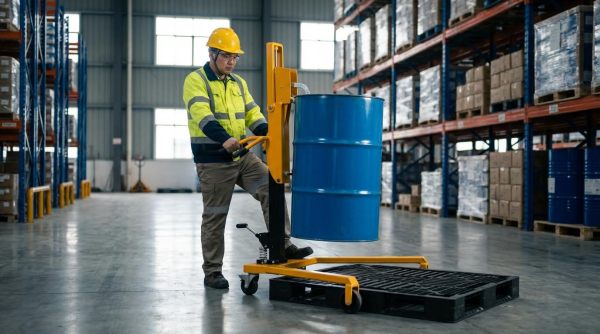
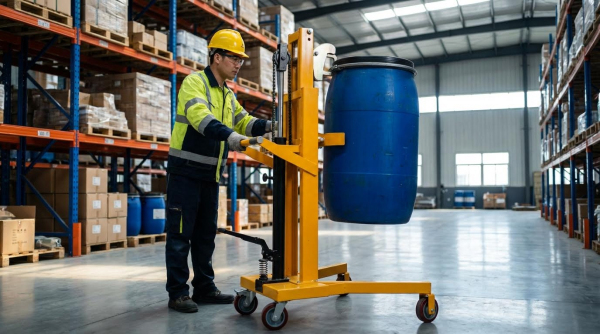
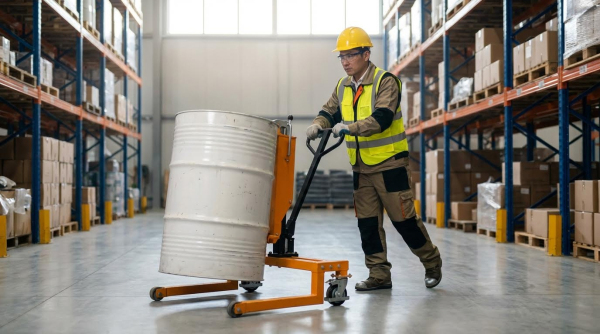
When planning how to safely move a 55 gallon drum over distance, mechanical aids gave the best risk reduction. Drum trucks and carts supported the load on wheels, so leg and back forces stayed low. Design features such as curved backs, chime hooks, and cinch straps improved control on ramps and uneven floors.
Forklifts moved drums on pallets or with dedicated drum attachments. Pallet handling required sound pallets without broken boards, protruding nails, or loose deck boards. Attachments such as fork‑mounted clamps or grabbers locked onto drum chimes so drums did not roll off during braking or turning.
Engineers specified equipment based on drum type, weight range, and travel distance. They also checked floor ratings, aisle widths, and turning radii to avoid side impacts that could puncture drums. Mechanical aids reduced manual strain injuries but demanded operator training, pre‑use checks, and clear speed limits to control impact energy.
Stacking, Storage Layout, And Blocking And Bracing
Safe layouts treated every drum as both a load and a container for hazardous material. Storage rows of 55 gallon drums stayed at or below two high and two wide. This limit supported visual inspection for leaks, corrosion, and swelling without ladders or platforms.
Engineers designed pallet patterns so drum centers aligned and no drum overhung the pallet edge. Before loading, they inspected pallets for broken stringers, splinters, and nails that could puncture steel or plastic shells. Floor flatness and load capacity also mattered, because a four‑drum pallet could exceed 700 kilograms.
Blocking and bracing became critical in transport and in seismic regions. In trailers or containers, dunnage, load bars, and wedges removed free space so drums could not shift. Typical blocking plans ensured contact at both chimes and the pallet, not only at mid‑height. For flammable or toxic contents, bunds or pans sized to at least 35 percent of the stored volume helped meet spill control rules and reduced secondary damage from a single drum failure.
Training, Procedures, And Digital Safety Tools
Written procedures gave operators a step‑by‑step answer to how to safely move a 55 gallon drum in each scenario. They covered pre‑move checks, selection of manual or mechanical methods, and emergency actions for leaks or drops. Supervisors used these procedures to standardize work across shifts and contractors.
Training sessions combined classroom content with hands‑on practice. Operators learned correct body posture, chime hand positions, and how to use drum trucks, pallet jacks, and forklift attachments. Scenario drills included handling leaking drums, isolating areas, and following spill response plans.
Digital tools started to support these programs. Facilities used checklists on tablets or phones to record pre‑move inspections and route checks. Some sites linked barcodes or RFID tags on drums to inventory systems, so contents, hazard class, and weight were visible before each move. However, even with digital aids, management still relied on clear procedures, visible signage, and regular refresher training to keep drum handling incidents low.
Summary Of Best Practices And Compliance Priorities
This section pulls together how to safely move a 55 gallon drum into a short, practical checklist. It links daily handling steps with OSHA and PHMSA expectations and common incident patterns in plants and warehouses.
First, treat every drum as high risk until proven otherwise. Read labels and assume unknown contents are hazardous. Review the Safety Data Sheet before work. Confirm bungs and lids are present and tight, and verify there are no leaks, warping, burrs, or product on the shell that could reduce grip. Estimate weight, since a full 55-gallon drum often weighs 180–360 kilograms, and decide if you need help or equipment.
Second, plan the move before touching the drum. Walk the route. Remove trip hazards, liquids, and clutter. Check floor condition, slope, and lighting. Confirm there is enough space for push, pull, or rolling, or for powered equipment and turning. Use safety shoes and suitable PPE for both mechanical and chemical hazards.
Third, match method and equipment to the task. Use drum trucks, carts, forklifts, or attachments whenever possible instead of pure manual handling. Apply correct manual push, pull, drag, or rolling techniques when equipment is not available. Never try to catch a falling drum. For storage, keep rows to a maximum of two high and two wide, and use sound pallets, blocking, and bracing.
Finally, align operations with OSHA rules on pressurization, fire exposure, spill containment, and guarding of large containers. PHMSA incident data showed that drops, poor blocking, and forklift damage caused many transport failures. Future practice will rely more on standard procedures, operator training, and simple digital checklists, but core controls stay the same: inspect, plan, use the right tool, and keep stacks low and stable.
Frequently Asked Questions
How to safely move a 55-gallon drum?
Moving a 55-gallon drum safely requires proper technique. You can use methods like pulling, pushing, or a combination of both. Pulling works best when drums are tightly packed, while pushing is ideal when space allows. To push the drum, place your hands near the chime at shoulder width. Move your shoulders low and close to the drum. Slowly push forward with your legs until you feel the drum reach its balance point. USDA Drum Moving Guide.
What are the dimensions and weight considerations for a 55-gallon drum?
A typical 55-gallon drum has inside dimensions of 572 mm diameter and 851 mm height, with outside dimensions slightly larger at 584 mm diameter and 876 mm height. When full of water, a 55-gallon drum weighs approximately 208 kg (water density is 1 kg per liter). Always consider the weight and size before moving to ensure proper equipment and safety measures are in place.