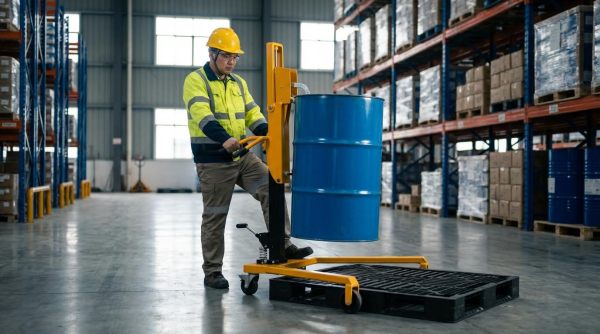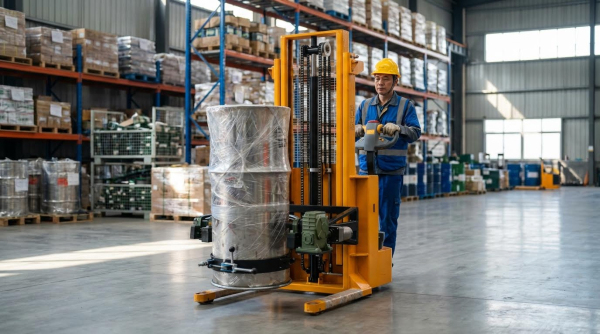
Facilities that ask “can you stack 55 gallon drums safely?” must balance capacity, regulatory compliance, and structural stability. This article explains how to design and operate safe drum stacks from the ground up, using OSHA requirements and engineering principles for heights, tiers, and inspection access. You will see how pallet patterns, floor loads, and aisle clearances affect both warehouse layouts and containerized export plans for drums and pails. The final section consolidates best practices so EHS, operations, and engineering teams can align on a single, defensible stacking standard. drum stacker, forklift drum grabber, and drum dolly solutions are often integral to these processes.
Core Standards for Drum Stacking Safety
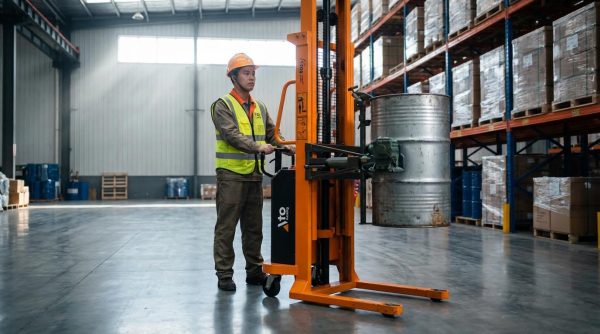
When facility managers ask “can you stack 55 gallon drums,” the correct answer depends on OSHA rules, container condition, and engineered stability. Core standards address how high you can stack, how to block and chock tiers, and how to control spills and fire risk. These requirements apply whether drums sit on pallets, racks, or directly on the floor. Proper PPE, training, and handling procedures complete the safety envelope for any drum storage operation.
OSHA Rules on Tiers, Blocking, and Stability
OSHA did not prescribe a universal fixed number of tiers for 55-gallon drums, but it required that any tiered storage remain stable against sliding, falling, or collapse. General Industry Standard 1910.176(b) and Construction Standard 1926.250(a)(1) mandated that materials stored in tiers be stacked, blocked, interlocked, or otherwise secured. For drums on end, good practice placed planks, plywood dunnage, or pallets between tiers to create a flat bearing surface and distribute load. Bottom tiers had to be chocked on each side when stacking two or more tiers high, while drums stored horizontally required blocking to prevent rolling. Facilities also needed clear aisles and passageways for safe movement of drum handling equipment, and posted signs indicating maximum stacking heights and clearances. Housekeeping rules under 1910.176(c) and 1926.250(c) required storage areas to stay free of debris and obstructions that could introduce tripping, fire, or explosion hazards around stacked drums.
Height Limits: Rows, Tiers, and Inspection Access
In practice, “can you stack 55 gallon drums” safely translated into strict limits on rows and tiers. Safety guidance from OSH Academy recommended storing 55-gallon drums in rows no more than two drums high and two drums wide when on the floor. This configuration allowed direct visual inspection of every drum surface for leaks, corrosion, or damage without moving other units or climbing ladders. Stacking above two high significantly reduced inspection access and increased risk due to variability in drum strength and condition. Even when pallets carried a single layer of drums, engineers had to check floor load ratings and pallet capacity before adding a second pallet layer above. Container loading examples showed that 20-foot and 40-foot freight containers could accommodate one or two pallet layers of drums, but only if total mass, product density, and stacking geometry stayed within structural limits. In fixed storage, facilities often imposed lower internal height limits than container examples, prioritizing inspection access, emergency response, and sprinkler clearance over maximum capacity.
Spill Containment, Diking, and Fire Protection
When stacking 55-gallon drums with flammable or toxic liquids, containment volume governed layout as much as height. OSHA standard 1915.173(e) required containers of 55 liters or more capacity with flammable or toxic liquids to be surrounded by dikes or pans holding at least 35% of the aggregate container volume. For dedicated drum storage buildings, industry practice followed spill sump capacities of at least 10% of the total stored volume or the volume of the largest container, whichever was greater, while Factory Mutual guidance pushed this to 25%. Diked areas and sumps had to capture leaks from any drum in the stack, including upper tiers. Fire protection standards required suitable extinguishers near drum storage and prohibited storing flammable drums near open flames, hot metal, or artificial heat sources. Stacks could not block access to extinguishers, alarms, or emergency exits, and clearances around sprinklers, piping, and electrical lines had to be maintained. These constraints often limited how tightly operators could group high-density drum stacks, even where structural capacity allowed taller arrangements.
PPE, Training, and Handling Procedures
Safe answers to “can you stack 55 gallon drums” also depended on how workers handled and inspected the containers. A filled 55-gallon drum could weigh roughly 180–360 kilograms, which made manual handling impractical and hazardous. Guidance recommended using mechanical aids such as forklifts, manual pallet jack, drum trucks, or drum grabs for virtually all moves. Before stacking, personnel had to read labels, treat unlabeled drums as hazardous until identified, and review Safety Data Sheets for specific chemical risks. Workers needed to inspect drums for leaks, rust, bulging lids, dents, or missing bungs; any drum showing structural compromise or internal reaction signals was unsuitable for stacking in drum storage buildings. PPE selection focused on protecting hands, feet, back, and face, typically including safety shoes, gloves compatible with the chemical, eye and face protection, and in some cases chemical-resistant clothing or respiratory protection. Training programs covered chemical hazard recognition, emergency response plans, proper lifting techniques, and the site’s specific rules on maximum tiers, row widths, and equipment use, ensuring that engineered stacking limits were consistently respected in daily operations. Additionally, specialized equipment like forklift drum grabber or hydraulic drum stacker played a critical role in safe drum handling.
Engineering Drum Stack Layouts and Tiers
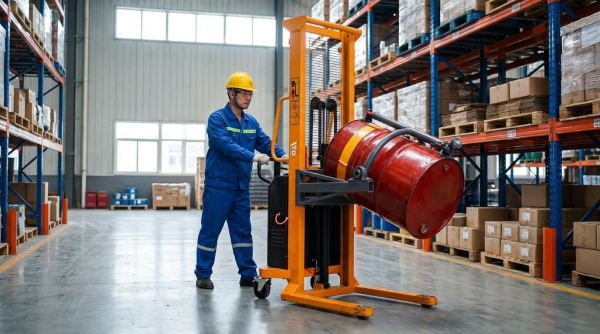
Engineering safe layouts for 55-gallon drum stacks requires a structured approach to pallet patterns, tier interfaces, floor loading, and aisle geometry. Designers must answer a recurring question from safety audits and search queries alike: can you stack 55 gallon drums without compromising stability or compliance. The answer depends on how the layout controls load symmetry, restraint, and access rather than height alone.
Pallet Patterns, Drum Counts, and Load Symmetry
When evaluating can you stack 55 gallon drums on pallets, start with footprint and pattern. A standard pallet typically carries three drums without overhang, while a larger 1 140 mm by 1 270 mm pallet can support four drums in a square pattern. Four-drum patterns provide better symmetry and reduce eccentric loading, provided drum diameters match and rings align. Engineers should avoid mixed counts on adjacent pallets within the same tier because three-drum pallets next to four-drum pallets introduce staggered load paths and lateral gaps. For stacked tiers, most safety guidance limited 55-gallon drums to a single drum layer per pallet, then stacked pallets rather than bare drums. This approach maintained a flat bearing surface and allowed verification that pallet capacity and drum weight, typically 180–360 kg per drum, stayed within design limits.
Chocking, Blocking, and Dunnage Between Tiers
For layouts where you ask can you stack 55 gallon drums two tiers high, chocking and dunnage become critical. Guidance required the bottom tier of upright drums to be chocked on both sides to prevent translation in either principal direction. When designers stacked more than one drum tier, they specified planks, plywood sheets, or full pallets between tiers to create a continuous, flat interface and to distribute point loads from chimes. On side-stored drums, blocking of the bottom course prevented rolling and reduced torsional loads on upper drums. The dunnage stiffness and thickness had to support the combined mass of upper tiers without excessive deflection, typically verified against pallet manufacturer data or internal structural calculations. Any dunnage scheme needed to maintain friction and prevent polishing, which could otherwise allow slow creep and eventual stack distortion.
Floor Load Limits and Racking System Design
Answering can you stack 55 gallon drums vertically also requires checking floor and rack capacities. A single full drum could weigh up to 800 pounds, so a four-drum pallet might impose over 1 400 kg plus pallet mass on a footprint near 1.3 m². Engineers compared this imposed load with the slab’s allowable uniformly distributed load and local punching shear capacity, including safety factors. For racking systems, beam levels had to carry the palletized drum mass while meeting deflection criteria, often span/200 or tighter to maintain drum stability. Rack bracing, base plates, and anchors were sized to resist seismic and impact loads from material handling equipment. Designers also considered containerized layouts, where 20-foot containers could accept eight pallets per layer and potentially a second layer, provided the combined drum and pallet weight remained below container and floor ratings.
Aisle Clearances and Access for Inspection
Even when calculations show you can stack 55 gallon drums safely by strength, aisle design often drives final tier height. Safety guidance limited rows to two drums high and two drums wide to allow direct visual inspection for leaks, corrosion, or bulging. Aisles and passageways had to remain clear for equipment and emergency egress, with no material encroaching into marked travel ways. Engineers provided additional clearance near sprinklers, lighting, and pipework to prevent impact and to preserve fire protection performance. Signage and painted height markers on walls or uprights helped operators respect designed stack limits. Layout models factored turning radii of forklift drum grabber or drum cart so operators could place and retrieve drum pallets without side loading stacks, which would otherwise erode the stability margins designed into the tiered system. Additionally, proper use of a hydraulic drum stacker ensures efficient handling during stacking operations.
Storage, Transport, and Container Utilization
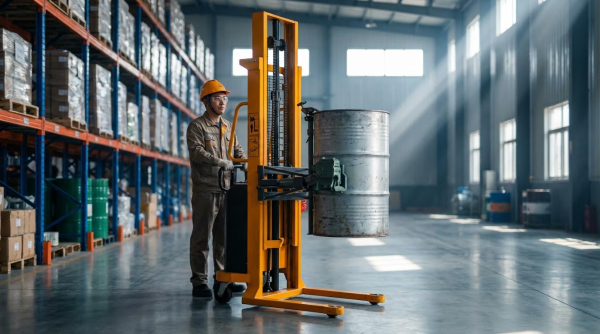
Storage, transport, and container utilization strategies determined whether facilities could safely answer the question “can you stack 55 gallon drums” in real-world operations. Engineers evaluated pallet patterns, container geometry, and floor load limits together with regulatory constraints to control both static and dynamic risks. Effective layouts balanced drum count per container with inspection access, spill control, and emergency response needs.
Containerized Loading Plans for Drums and Pails
Containerized loading plans for 55-gallon drums relied on fixed pallet and container footprints. A typical 20-foot container held eight pallets on the floor, each carrying one to four drums depending on pallet size and pattern. With one layer, this configuration yielded 32 drums; with two layers, capacity ranged from 48 to 64 drums, limited by drum weight and container rating. A 40-foot container supported about 44 drums in a single layer and 64 to 88 drums in two layers, again constrained by density and stacking stability. Engineers confirmed that steel 55-gallon drums were usually stacked only one drum high per pallet in transit, then pallets were stacked in one or two layers in the container to maintain a low center of gravity and prevent column overloading. For 5-gallon pails, plans allowed up to three pallet layers of pails, with 20-foot containers holding 216 to 480 pails and 40-foot containers holding 648 to 864 pails, depending on layer count and carton use. These values guided “can you stack 55 gallon drums” decisions by contrasting drum and pail behavior under transport accelerations.
Hazardous Material Segregation and Guarding
Hazardous contents dictated additional segregation and guarding within storage and transport containers. Regulations required that drums containing flammable or toxic liquids stayed away from open flames, hot metal, and artificial heat sources to avoid ignition. Facilities used physical barriers or guards for containers of 30-gallon capacity or more when they were not in out-of-the-way areas, reducing collision and puncture risks from vehicles. Diking or pan systems around 55-gallon drums holding flammable or toxic liquids had to enclose at least 35 percent of the total stored volume, providing passive containment for worst-case spill scenarios. Inside drum storage buildings, engineers specified sumps sized to at least 10 percent of stored volume or the largest container, whichever was greater, with some insurers requiring 25 percent. Segregation schemes also separated incompatible chemicals and ensured labeled identification, while unlabeled drums were treated as hazardous until characterized. These measures framed how high operators could stack 55-gallon drums without compromising emergency egress, fire protection, or spill management performance.
Stability Risks from Mixed Loads and Densities
Stability risks increased significantly when operators mixed drum counts, drum types, or product densities on the same pallet or in the same container. A pallet carrying three 55-gallon drums instead of four created asymmetric support points and a higher overturning moment under lateral acceleration. Variability in drum wall thickness, corrosion state, or minor dimensional differences added uncertainty to load paths when drums were stacked more than one high on a pallet. Heavier, higher-density products concentrated mass at particular pallet positions, which could cause racking or floor loads to exceed design at local points even when total mass stayed within nominal limits. Engineers therefore preferred symmetrical four-drum patterns on suitable pallets and discouraged stacking drums more than one high per pallet in transport, especially for liquids. For static warehouse storage, recommendations limited rows to two drums high and two drums wide, which allowed inspection access and reduced the risk of collapse due to weaker lower drums. Answering “can you stack 55 gallon drums” safely required explicit verification of density, pallet geometry, and support conditions for every configuration.
Digital Tools and Predictive Safety Monitoring
Digital tools supported predictive evaluation of drum stacking and container utilization. Layout and finite element software modeled pallet deflection, drum-to-drum contact pressures, and container floor stresses under vertical and lateral loads. Planners used these models to test “can you stack 55 gallon drums” scenarios before deployment, comparing one-tier and two-tier pallet stacking strategies with different drum densities. Warehouse management systems tracked drum weights, contents, and locations, enabling automatic checks against floor load ratings and maximum stacking rules. Sensor-based monitoring in some facilities recorded tilt, impact events, or pallet displacement during transport, flagging stacks that experienced accelerations above design thresholds. Integrated safety dashboards combined inspection data, leak detections, and housekeeping status to identify locations where corrosion, bulging lids, or poor blocking increased collapse risk. Over time, these digital feedback loops allowed engineers to refine stacking limits, container loading patterns, and guarding strategies to maintain compliance while maximizing safe storage density.
Summary of Best Practices and Compliance Essentials
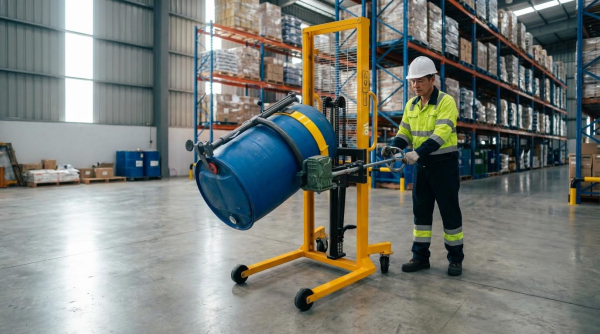
Facilities that ask “can you stack 55 gallon drums” must treat the question as an engineering and regulatory problem, not just a space issue. Safe layouts integrate OSHA stacking rules, container strength limits, spill containment sizing, and transport constraints for pallets and freight containers. The goal is stable stacks, verifiable inspection access, and documented compliance for both hazardous and non‑hazardous contents.
From a technical standpoint, best practice is to limit free-standing 55-gallon drum rows to two high and two wide to keep all container surfaces visible and reduce load uncertainty from variable drum condition. On pallets, typical guidance allowed only a single drum layer per pallet in static storage, while containerized export loads sometimes used two pallet layers when the combined drum mass stayed within pallet and container ratings. Engineering checks must confirm floor load limits, racking capacities, and the effect of partial pallets with three rather than four drums on stability. Between tiers, flat dunnage or pallets create uniform bearing surfaces, and chocks or blocks restrain drums from shifting or rolling.
Compliance essentials extend beyond height limits. OSHA standards required that drums be stacked, blocked, and interlocked to prevent sliding or collapse, that aisles remain clear for handling equipment, and that storage never obstruct emergency egress or fire equipment. For flammable or toxic liquids in 55-gallon containers, dikes or pans needed capacity of at least 35% of the stored volume, while building sumps often followed 10–25% design rules from environmental and insurance guidance. Fire protection, compatible segregation of hazardous classes, PPE, labeling, and routine inspection for leaks, corrosion, or bulging heads formed the operational layer of control.
Looking ahead, facilities increasingly combined these physical practices with digital tools that track drum locations, densities, and stack heights, and flag overload or segregation violations in real time. However, no software replaced the need for conservative stacking heights, disciplined housekeeping, and trained operators who understand that the practical answer to “can you stack 55 gallon drums” is yes, but only within rigorously defined limits for height, containment, access, and structural capacity. Tools like hydraulic drum stacker, drum dolly, and forklift drum grabber play a critical role in ensuring safe and efficient material handling.